Blank white background with no objects or features visible.

Ask TFY:AIゲートウェイ内のあらゆる事象をデバッグ、分析、実行 詳細はこちら

TrueFoundryはSeldon AIの買収を発表し、エンタープライズAI向けコントロールプレーンを拡張します。プレスリリース全文はこちら→

EU AI法への準拠:ゲートウェイとプラットフォームを活用したAIガバナンスの構築

By サハジミート・カウル

Published: July 6, 2026

Introduction

The EU AI Act has transformed AI compliance from a legal concern into a core platform engineering challenge. For enterprise leaders responsible for AI systems, It now directly affects:

  • How training data is governed
  • How models are built, versioned, and deployed
  • How inference is monitored
  • How audit trails are produced
  • How human oversight is operationalized

Modern AI compliance cannot be achieved with process documents alone -it requires infrastructure that enforces governance by design.

The central question enterprises now face is: How do we build AI systems that ship safely and remain compliant at scale without slowing innovation?

The answer is increasingly clear:
compliance must be built into AI infrastructure, across the full lifecycle, not bolted onto applications one by one.

What the EU AI Act Requires?

The EU AI Act introduces a risk-based regulatory framework for AI systems, with stricter obligations applied to high-risk and general-purpose AI deployments. For enterprise AI leaders, the law translates into very specific technical expectations, not high-level ethical guidance.

At its core, the regulation requires that organizations operating regulated AI systems must be able to demonstrate:

Compliance Domain What the Regulation Requires Engineering Controls to Implement
Training Data Governance Datasets must be documented, representative, validated, and auditable. Dataset registry, dataset versioning, source metadata tracking, schema checks, bias and distribution validation in preprocessing pipelines.
Model Traceability (Lineage) Ability to trace any prediction back to the model, pipeline, and training datasets. Model registry, reproducible training pipelines, pipeline–artifact linkage, end-to-end lineage graphs from data to deployed model.
Pre-Production Evaluation Models must be tested for accuracy, fairness, robustness, and risk before deployment. Standardized evaluation workflows, benchmark suites, fairness and robustness checks, threshold gates enforced before promotion to production.
Human Oversight Controls High-risk AI must allow human review, escalation, and override. Role-based deployment permissions, explicit approval workflows, manual review pipelines, rollback and override mechanisms.
Runtime Safety Controls Unsafe or unlawful outputs must be prevented in live systems. AI gateway filtering rules, PII detection and redaction, policy-based blocking, safety classifiers and content moderation for prompts and outputs.
Transparency Compliance Users must be informed when they are interacting with AI or AI-generated content. Automated disclosure banners, response labeling, API response tagging for AI-generated outputs, UI components that indicate “AI-assisted”.
Continuous Monitoring Systems must detect drift, bias amplification, and performance regression. Real-time monitoring dashboards, drift and anomaly detection pipelines, model health metrics, alerting on policy or performance violations.
Incident Management AI safety incidents must be detected, recorded, investigated, and mitigated. Event pipelines for incident logging, severity tagging, remediation workflows, post-incident review processes.
Auditability & Reporting Organizations must retain records demonstrating operational compliance. Centralized compliance dashboards, structured log retention, linking between datasets, models, deployments, and evaluations.
Security & Data Residency Data protection and regional isolation must be enforced. VPC or on-prem deployments, region-aware routing rules, RBAC, encryption at rest and in transit, environment isolation for sensitive workloads.

In summary, the EU AI Act reframes compliance as an engineering discipline - demanding transparency, governance, and operational safety controls be designed directly into AI systems. Meeting its requirements requires infrastructure that can continuously enforce standards across the entire AI lifecycle, rather than piecemeal controls layered onto individual applications.

Why Application-Based Compliance Breaks at Enterprise Scale

A common first reaction to regulatory pressure is attempting to “solve compliance at the application layer.” Teams adapt existing AI-powered services with custom controls:

  • Each product team implements its own logging logic
  • Individual services build local prompt or response filters
  • Applications define separate transparency and disclosure messaging
  • PII redaction varies by microservice or SDK
  • Some experimental or internal AI usage remains completely outside governance workflows

This approach may appear workable during early adoption, but it fails rapidly at enterprise scale. As the number of AI services, models, LLM providers, and internal agent workflows grows, governance becomes fragmented and inconsistent.

Compliance cannot be reliably maintained when controls are distributed across hundreds of application codebases owned by different teams with varying maturity, priorities, and interpretations of policy.

Fragmentation Effects

Application-driven compliance results in systemic weaknesses:

  • Inconsistent governance - Policies drift between teams as filters, logging standards, and disclosure rules are implemented differently across services.
  • Incomplete visibility - AI usage lacks a single audit source of truth, making it impossible to answer fundamental questions like “Which models processed customer data this month?”
  • Shadow AI adoption - Teams deploy unregistered models or external LLM integrations outside formal compliance workflows to move faster.
  • Undocumented lifecycle lineage - Training datasets, evaluation pipelines, and deployment artifacts become disconnected, making it difficult to trace outcomes back to the data and models that produced them.
  • Unverifiable compliance - Audit preparation degenerates into documentation exercises rather than producing operational evidence drawn directly from system telemetry.

At scale, application-layer compliance becomes not just error-prone, it becomes unmanageable. Governance requirements demand centralization, standardization, and automation at the infrastructure level, rather than piecemeal enforcement scattered throughout application code.

Centralizing Runtime Governance with an AI Control Plane

To address fragmentation at the application layer, enterprises are increasingly moving toward a runtime control-plane architecture for AI - a centralized gateway layer through which all model traffic flows.

Instead of embedding safety, privacy, and compliance logic inside every service, this approach places governance at the infrastructure edge of AI usage.

What an AI Control Plane Does?

A control plane operates as the single enforcement point for inference-time policies across all applications, models, and providers. It enables organizations to apply compliance once and enforce it everywhere.
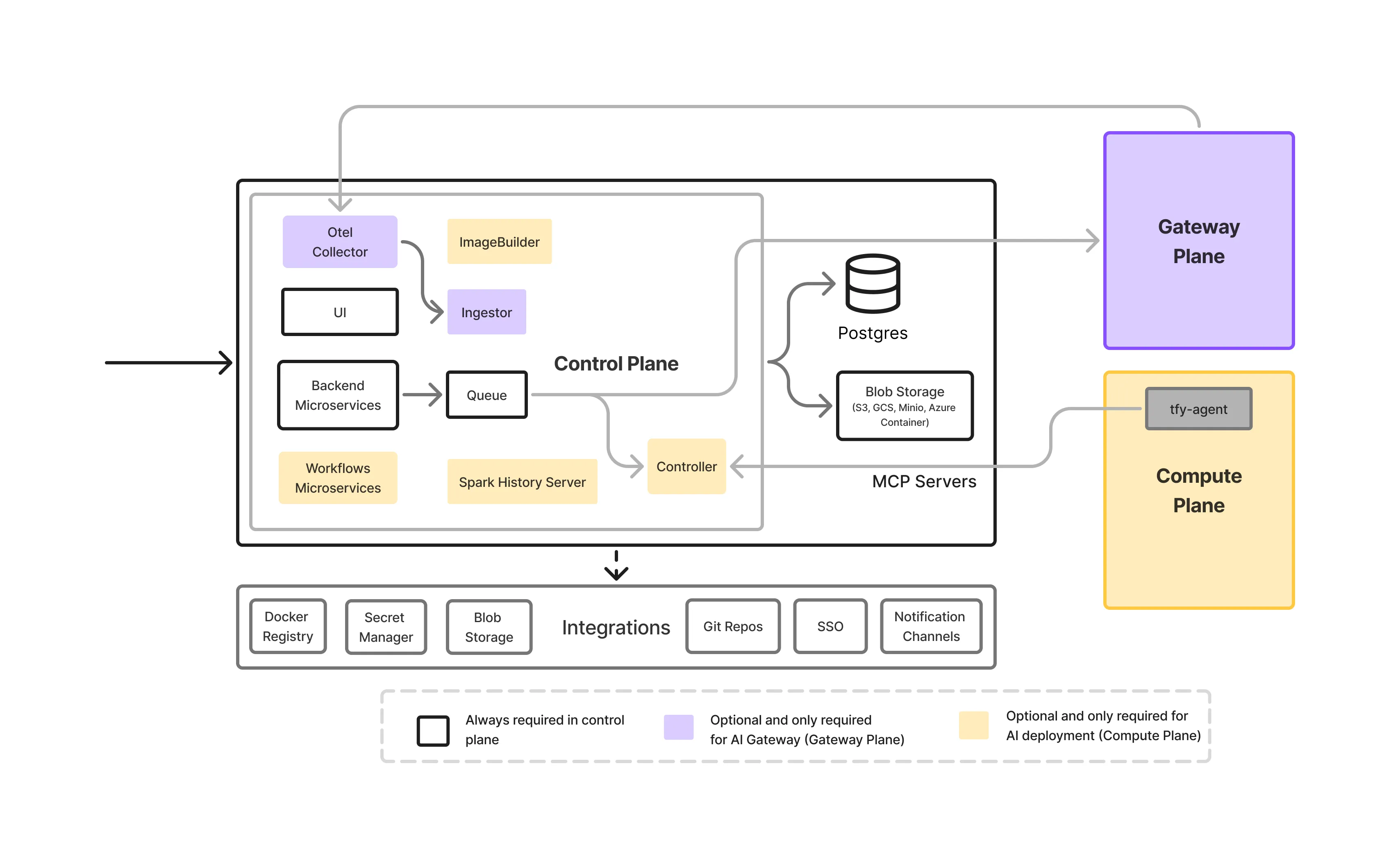
Truefoundry Control-Plane

Key capabilities include:

  • Centralized prompt and response filtering
    • Removal or masking of sensitive data before requests reach external models
    • Blocking unsafe instructions or prohibited content patterns
  • Standardized request logging
    • Unified schema capturing prompt content, model metadata, response payloads, latency, and user or application identifiers
    • Creation of a single auditable record for all AI interactions
  • Policy enforcement across providers
    • Routing controls that allow or deny specific models based on geography, data sensitivity, or use-case classification
    • Fallback safety rules when providers fail or produce disallowed outputs
  • Automated transparency requirements
    • Injection of required “AI-generated” disclosures into responses where applicable
    • Consistent labeling for AI-assisted interactions across products

By consolidating all inference traffic into one system layer, enterprises regain visibility and uniform control:

  • There is one place to update policies instead of dozens.
  • Audit logs become consistent and complete.
  • Sensitive data handling becomes predictable and enforceable.
  • Shadow AI activity is dramatically reduced.

For inference governance, this architectural shift is essential. It transforms compliance from distributed application hacks into continuous infrastructure enforcement.

However, while control planes solve safety and transparency challenges at runtime, they do not address the most complex regulatory obligations introduced by the EU AI Act - those related to the training lifecycle, risk classification, documentation, evaluation, and approvals of high-risk AI systems.

Runtime governance answers how AI is used.

It does not ensure governance for:

  • How training data was sourced and validated
  • Which datasets trained each model
  • How models were evaluated or stress-tested
  • Who approved deployment of high-risk models
  • What evidence exists of bias testing and post-launch monitoring

Meeting these obligations requires governance across the full AI lifecycle, not just at inference time.

That is why enterprises need more than a control plane - they need a governance platform that integrates directly into data pipelines, training workflows, and deployment systems.

Governing Enterprise AI at Scale: The MCP Gateway Blueprint
$2 Million
The
Wake-Up Call
Your integration architecture determines whether AI becomes a competitive advantage or unmanageable risk.
A Fortune 500 Spent $2M Fixing Ungoverned AI
Don't let this be you, get the complete Al governance blueprint.
Thank you! Your submission has been received!
Oops! Something went wrong while submitting the form.

Compliance Lives Across the AI Stack and Not in a Single Tool

The EU AI Act makes one thing clear: compliance is not a runtime-only concern. It applies to every phase in the AI lifecycle - from the moment data is collected to how predictions are monitored long after deployment.

Layer of AI System Primary Responsibility Example Controls
AI Control Plane (Gateway Layer) Runtime policy enforcement PII redaction, prompt/output filters, transparency banners, unified request logs
ML Governance Platform (TrueFoundry) Full lifecycle governance Dataset registry, model registry, lineage, evaluation workflows, deployment gates
Human Oversight Layer Decision accountability Manual review queues, approval workflows, override paths
Observability & Audit Layer Continuous verification Drift detection, performance dashboards, immutable audit logs
Security & Data Residency Layer Data protection & locality Regional isolation, VPC/on-prem deployment, RBAC, encryption

While an AI control plane governs how models are used, true regulatory compliance depends equally on how models are built, validated, deployed, and continuously monitored. These lifecycle obligations cannot be satisfied at the gateway alone.

Enter the concept of full-stack AI governance - an architecture where compliance flows across integrated layers rather than existing as isolated point solutions.

In practice, this means enterprises need governance mechanisms at four key levels:

1. Data & Feature Governance

Data is the foundation of regulated AI.

Compliance begins where data enters the system:

  • Dataset registration and versioning
  • Source documentation and schema validation
  • Data representativeness checks
  • Bias and leakage detection during preprocessing

Without this layer, organizations cannot demonstrate that the training data behind regulated models meets quality and fairness standards.

2. Model Lifecycle Governance

Once data is prepared, governance must extend to model training and evaluation:

  • Model registries linking each model to specific training datasets
  • Evaluation workflows capturing accuracy, stability, robustness, and bias metrics
  • Repeatable training pipelines enabling reproducibility
  • Model approval records documenting deployment readiness

This creates a transparent technical record demonstrating that models were tested, validated, and reviewed before reaching production — which is essential for high-risk classifications under the EU AI Act.

3. Deployment & Oversight Governance

Deployment is where technical control becomes regulatory accountability.

For high-risk AI systems, simply allowing teams to push models to production is unacceptable. Instead, governance requires:

  • Role-based deployment permissions
  • Environment isolation for staging vs. production
  • Manual approval gates for regulated models
  • Transparent deployment logs with reviewer attribution

This layer operationalizes the human-in-the-loop requirement — ensuring that regulated models cannot go live without explicit oversight and signoff.

4. Continuous Monitoring & Audit

Compliance does not stop when a model ships.

Production governance requires:

  • Ongoing drift detection
  • Bias amplification monitoring
  • Output safety and effectiveness checks
  • Alerting for policy or performance violations
  • Immutable log retention

Monitoring dashboards must be capable of serving both engineering teams and compliance auditors with the same underlying telemetry turning governance into a measurable operational activity rather than periodic documentation.

When combined with a runtime AI control plane, these lifecycle layers form a true enterprise compliance fabric - governance that is systemic, continuous, and automated rather than reactive or manual. This integrated architecture eliminates the need for fragmented controls and enables enterprises to confidently scale AI adoption into regulated domains.

But infrastructure alone is not enough - tooling must make this governance usable for real engineering organizations.

How TrueFoundry Enables End-to-End EU AI Act Compliance

TrueFoundry is designed to operationalize AI governance 後付けのポリシーチェックリストとしてではなく、あらゆるコンプライアンス層にわたる組み込みのインフラとして.

安全性、ドキュメント作成、承認、監視を並行する手動プロセスとして扱うのではなく、TrueFoundryはこれらをML開発ライフサイクルに直接組み込み、チームが規制義務を遵守しながら迅速に作業を進められるようにします。以下に、EU AI法における主要な要件がどのようにして プラットフォームネイティブなワークフロー としてTrueFoundryの内部で実現されるかを示します。

1. 管理されたデータとデータセットのトレーサビリティ

コンプライアンスは、トレーニングが開始される前から始まります。 TrueFoundry はデータセットを バージョン管理され、監査可能なアセット として扱います。アドホックなファイルやノートブックの成果物とは一線を画します。

  • データセットレジストリ ソース、ラベル、スキーマ、変換、所有権、および意図された用途を記述するメタデータを含む
  • 不変のデータセットバージョン管理 パイプラインの出力と連携
  • 自動検証フック スキーマの一貫性、分布ドリフト、データ品質チェック用
  • 文書化されたバイアス検査ワークフロー データ前処理に統合

これにより、チームは、トレーニングデータが非公式に収集されたものではなく、代表的であり体系的にレビューされていることを検証し、証明できます。

2. モデルの完全な系統と評価ガバナンス

TrueFoundryでデプロイされた各モデルは 元データとパイプラインに遡る完全な系統を保持します:

  • モデルレジストリ モデルを以下にリンク:
    • 訓練データセットとバージョン
    • 特徴量パイプライン
    • ハイパーパラメータ
    • 評価指標と実験結果
  • 再現可能な訓練パイプラインは 監査や調査で必要とされた場合、どのモデルも同じように再訓練できることを保証します。
  • デプロイ前の評価ゲートは 以下を適用します:
    • 精度ベンチマーク
    • バイアス許容閾値
    • エッジケース入力に対するストレステスト

評価結果は モデルバージョンに添付されたアーティファクトとして保存され、個別のドキュメントやスプレッドシートよりもはるかに強力な、説明可能なコンプライアンス記録を作成します。

3. デプロイメントガバナンスと人的監視

規制対象AIには、CIによる自動デプロイ以上のものが求められます。TrueFoundryは、リリース時に直接ガバナンスを適用します。

  • ロールベースのデプロイ権限 (RBAC) – 承認されたロールのみが規制対象モデルを本番環境にデプロイできるようにします
  • 多段階承認ワークフロー リスクの高いリリースの場合、ビジネスレビュー担当者、法務関係者、プラットフォーム責任者を統合します
  • デプロイタグと用途分類 モデルをコンプライアンスリスクカテゴリに明示的に関連付けるため
  • レビュー担当者の完全な特定とタイムスタンプ付きのデプロイ決定

これにより、EU AI法における 人的監視要件 を、理想的な方針ではなく具体的な運用管理へと転換します。
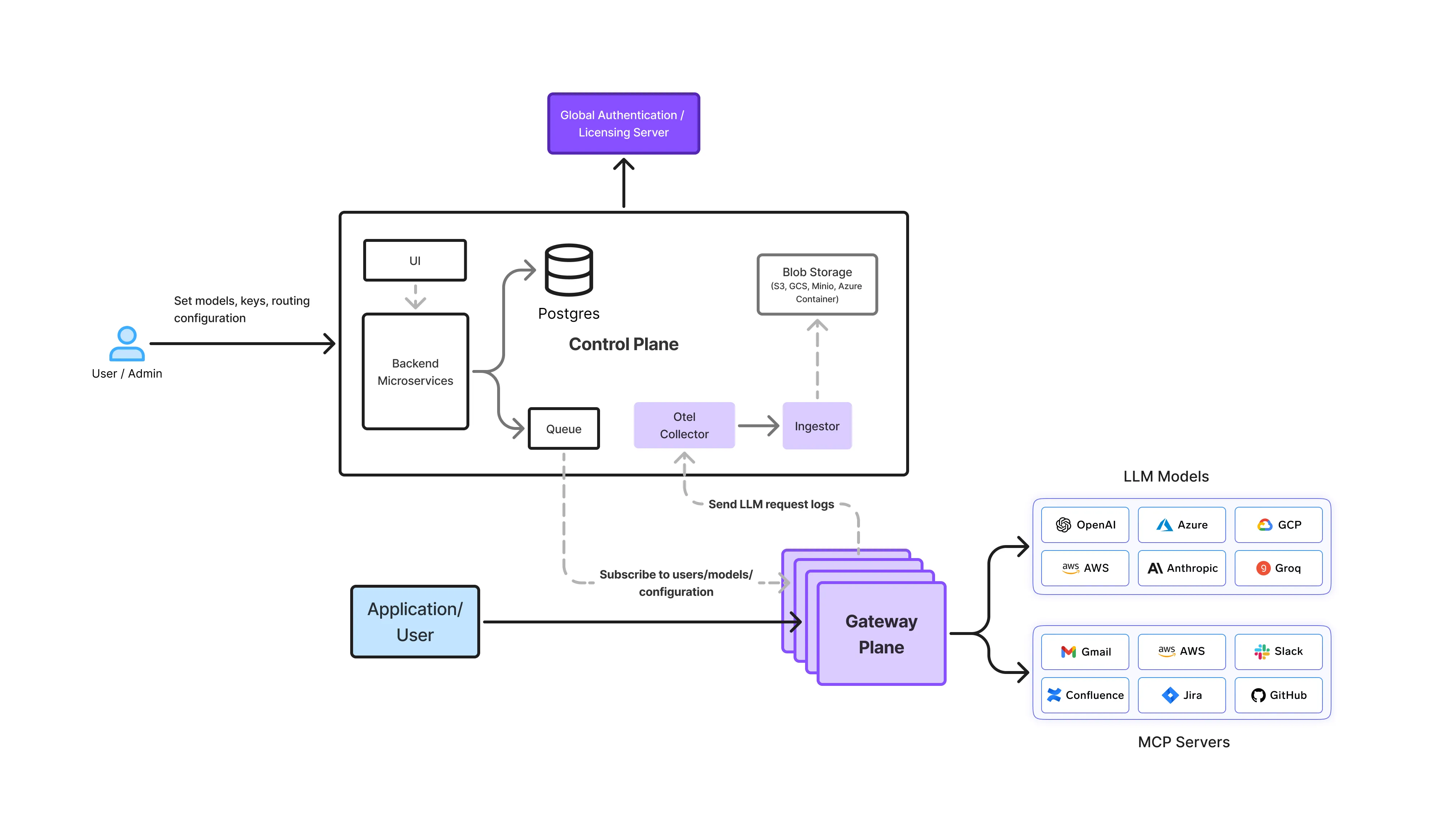
4. 統合された AIゲートウェイ ランタイムコンプライアンスのための

TrueFoundry AI Gateway Architecture
TrueFoundry AIゲートウェイアーキテクチャ

ライフサイクルガバナンスが安全な開発とリリースを保証する一方で、効果的な コンプライアンス には、 稼働中のAI利用におけるリアルタイム制御。TrueFoundryの統合された AIゲートウェイエージェントゲートウェイ は、一元的な実行時制御を提供します:

  • プロンプトと出力のフィルタリングポリシー
  • PIIの検出と匿名化
  • エージェントに対するツールアクセス制御
  • 安全フォールバックルールを備えたマルチモデルルーティング
  • 統合されたリクエストとレスポンスのログ記録

すべてのランタイムリクエストは以下に関連付けられます:

ユーザー → アプリケーション → モデル → データセット → トレーニングパイプライン

この監査証跡は 継続的なエンドツーエンドのトレーサビリティ を提供します。これは、モデルが実験段階を離れ、分散型本番システムに移行すると、多くの組織が欠いている重要なコンプライアンス機能です。

5. 継続的な監視とリスク検出

デプロイは終点ではありません。TrueFoundryは、コンプライアンス検証を本番環境の監視に組み込みます:

  • モデルドリフト検出 コアとなるパフォーマンスと分布のメトリクスに基づく
  • バイアス増幅の監視
  • ハルシネーションと不適切な出力の追跡
  • アラートワークフロー モデルがポリシーのしきい値を超過した場合
  • モデルバージョン間の比較スコアリングダッシュボード

これらのダッシュボードは、以下の両方を可能にします:

  • エンジニアリングチーム 技術的な健全性を維持するため
  • コンプライアンスおよびガバナンスチーム 継続的な規制遵守を確認するため

継続的な監視は静的な認証に代わるものであり、EU AI法が重視する運用上の説明責任と完全に一致します。

6. セキュアでリージョン対応のインフラストラクチャ

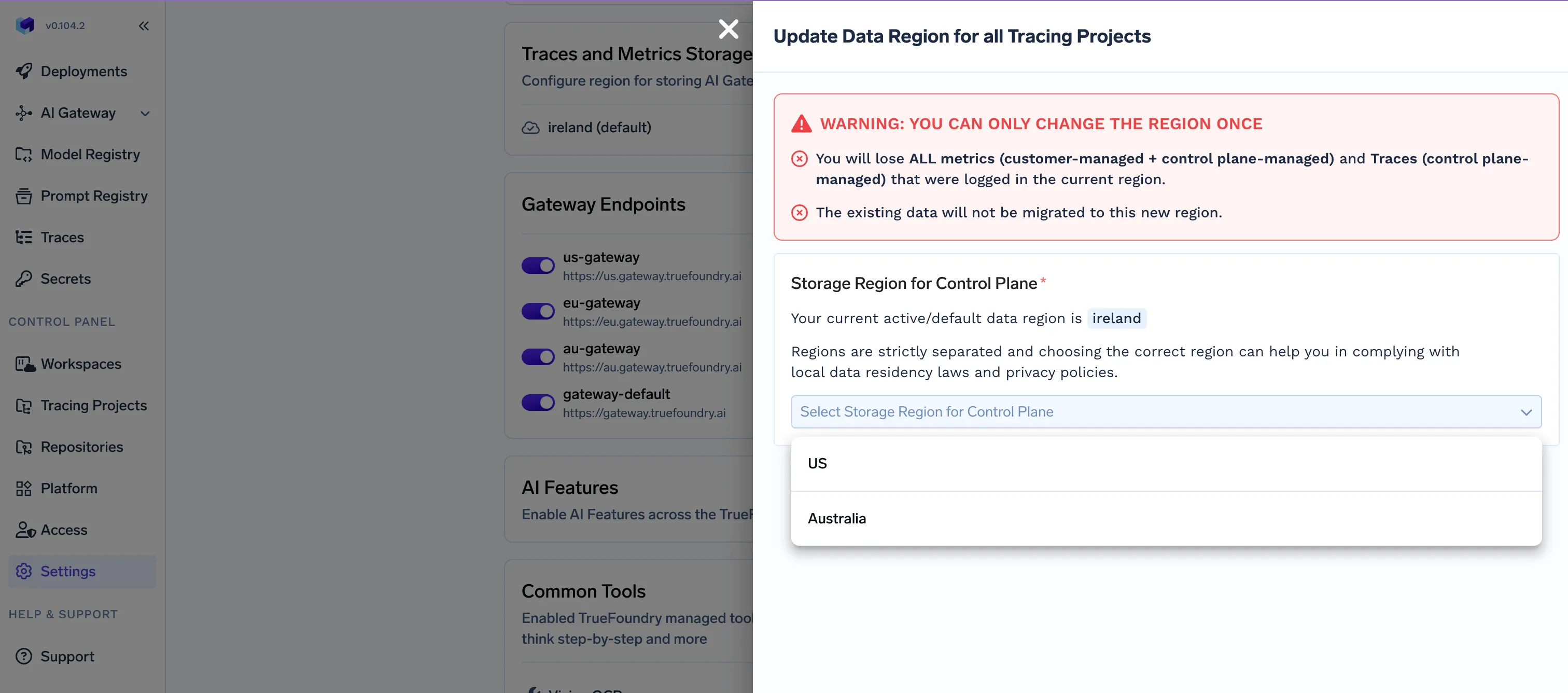
エンタープライズAIの導入は、ガバナンス原則だけでなく、 データ主権とインフラストラクチャ制御。TrueFoundryは、以下の方法でコンプライアンスに準拠した実行環境をサポートします:

これらの機能により、企業はEUのデータローカライゼーション義務や社内セキュリティ基準を満たすことができます 地域ごとにプラットフォームを分断することなく。組み合わせることで:
  • ガバナンスされたデータパイプライン
  • モデルの系統管理および評価システム
  • デプロイ承認ワークフロー
  • 統合されたAIランタイムゲートウェイ制御
  • 継続的なコンプライアンスオブザーバビリティ
  • AIゲートウェイのリクエストとメトリクスを保存する場所を設定します - これは、現地のデータレジデンシー法およびプライバシーポリシーの遵守に役立ちます。

TrueFoundryは 統合されたAIガバナンス基盤 - 規制対象のAI環境全体で、分断されたツールやコンプライアンス対応の場当たり的な対処の必要性をなくします。

結論

EU AI法はAIイノベーションを減速させるものではなく、 AIが大規模に構築・運用されるべき方法の基準を引き上げます。

企業リーダーにとって、進むべき道は明確です。コンプライアンスは、法的な後付けやアプリケーションレベルのパッチとして扱われるべきではありません。それは AIプラットフォーム自体に直接組み込まれる必要があります ガバナンスされたデータパイプラインやモデルの系統から、一元化されたランタイム制御、継続的な監視に至るまで。このインフラストラクチャ優先のアプローチを採用する組織は、規制要件をより効率的に満たすだけでなく、より強固な運用規律、高い顧客信頼、そして迅速な企業導入も実現するでしょう。責任あるAIはもはや差別化要因ではなく、持続可能な規模拡大の基盤となりつつあります。

AIライフサイクル全体にわたってガバナンスと監視を組み込むことで、 TrueFoundry のようなプラットフォームは、チームが規制された環境内で自信を持ってイノベーションを起こせるようにします。これにより、強力であるだけでなく、 設計段階から透明性、説明責任、コンプライアンスを備えたAIシステムを構築できます

Try now.

One gateway for all your models, MCP servers, and agents.
No credit card needed.

Start free
Table of Contents

One Gateway for Every LLM, Agent and MCP Server

Book a 30-min with our AI expert

Book a Demo

The fastest way to build, govern and scale your AI

Book Demo
Summarize with
ChatGPT logo by OpenAI
Perplexity AI logo
Blurry red snowflake on white background, symmetrical frosty design with soft edges and abstract shape.

Discover More

No items found.
August 17, 2026
|
5 min read

Sandboxed Code Agents: Let Models Execute Without Letting Them Roam

No items found.
Portkey AI Gateway Pricing
August 15, 2026
|
5 min read

2026年版 Portkey AI Gateway 料金:完全ガイドと比較

No items found.
MCP registry connecting agents to governed MCP servers
August 15, 2026
|
5 min read

2026年版 最高のMCPレジストリ:開発者と企業向け比較

No items found.
TrueFoundry AI gateway powers enterprise AI platform engineering at scale
August 15, 2026
|
5 min read

AIプラットフォームエンジニアリングとは?エンタープライズチームのための実践ガイド

No items found.
No items found.

Recent Blogs

Black left pointing arrow symbol on white background, directional indicator.
Take a quick product tour
Start Product Tour
Product Tour