October 9, 2026
|
5 min read


Published: October 6, 2026
Blazingly fast way to build, track and deploy your models!
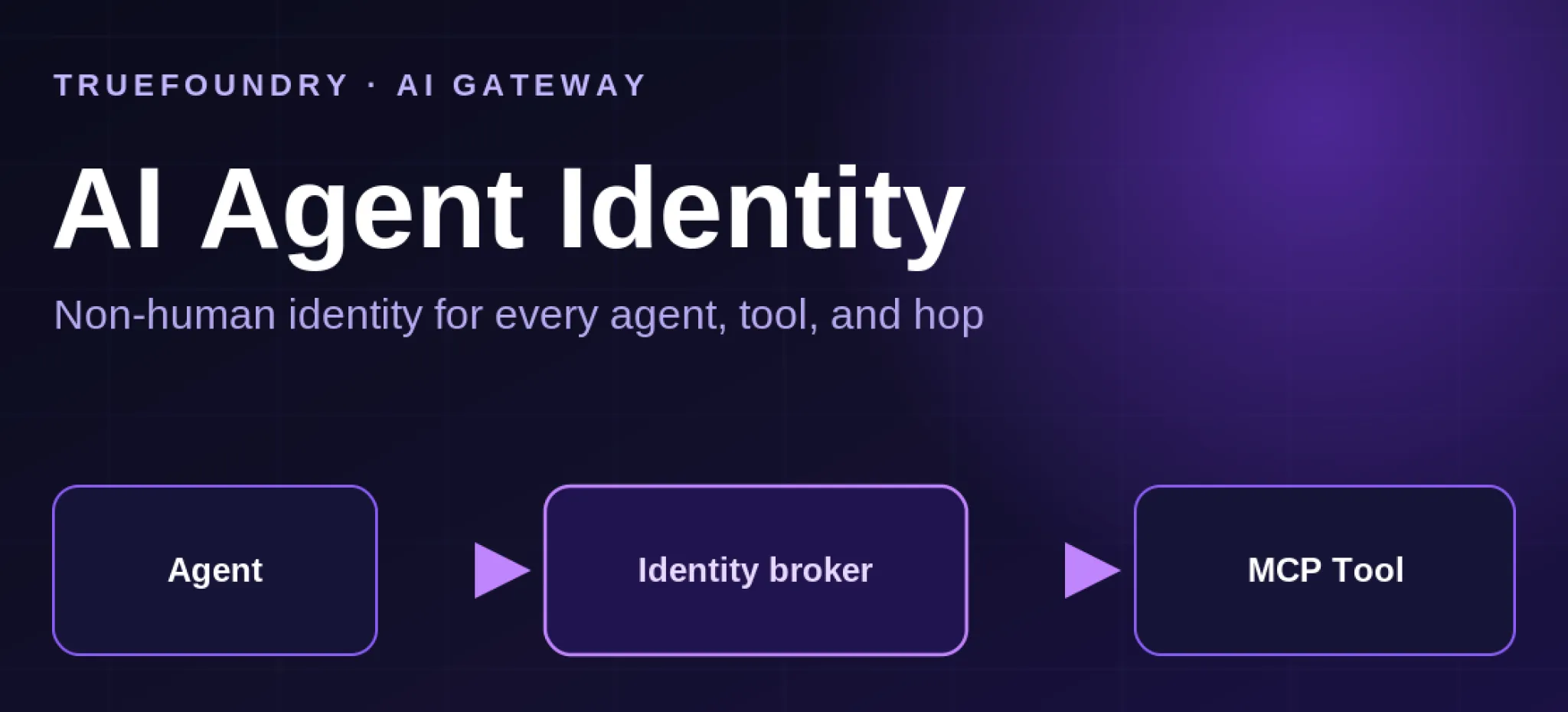
AIエージェントIDは、登録済みエージェントが呼び出しを行うたびに提示する検証可能な認証情報です。これはトークンだけでは答えられない問い、つまり「有効な認証情報が提示されたか」ではなく、「どのエージェントが呼び出しており、今誰のために行動しているのか」という問いに答えるものです。
TrueFoundryではすでに2種類のプリンシパルを認識しており、エージェントIDはそれに続く3番目の種類となります。
重要なのは「委任」の境界線です。仮想アカウントは自分自身としてしか行動できないため、MCPサーバーに設定すると、誰がプロンプトを出したかに関わらず、すべての呼び出しが同じものに見えてしまいます。一方、エージェントIDは他者の代理として行動できるため、何百人ものユーザーにサービスを提供する単一の登録済みエージェントであっても、各リクエストが誰のためのものかを追跡しつつ、エージェント自身も識別可能です。この特性こそが、エージェントのトラフィックを監査可能にするのです。
「非人間ID(NHI)」とは、背後に人間が存在しない状態で認証を行うあらゆるもの(サービスアカウント、ワークロードID、APIクライアント、そしてエージェント)を指すセキュリティチームの包括的な用語です。エージェントはこのファミリーの中で最も扱いが困難です。なぜなら、固定されたサービスアカウントとは異なり、自律的に動作するからです。エージェントはコンテキストを解釈し、ツールを選択し、呼び出しを連鎖させるため、サービスアカウントに必要な管理(認証情報のローテーション、インベントリ管理)に加え、委任ルール、責任の所在、ホップごとの追跡、キルスイッチといった新たな管理機能が必要となります。
エージェントを「単なるサービスアカウント」として扱うことは、追跡不可能な過剰権限を持つエージェントを生む原因となります。エージェントの非人間ID管理は、まず各エージェントに独自のファーストクラスのIDを付与することから始まります。
各エージェントに個別のIDを付与することは、ガバナンスモデル全体を機能させるための重要な決定です。
この最後の点は、静かながらも大きなメリットです。IDが行動の必須条件となれば、レジストリは単なるドキュメントではなく、他のあらゆる制御を可能にするための重要なゲートウェイとなります。
TrueFoundryにおいて、エージェントIDは作成して後付けする別個のオブジェクトではありません。エージェント登録プロセスの一環として生成されるため、IDとエージェントは1対1で対応します。エージェントを登録すればIDが生成され、エージェントを削除すればIDも同時に消滅します。
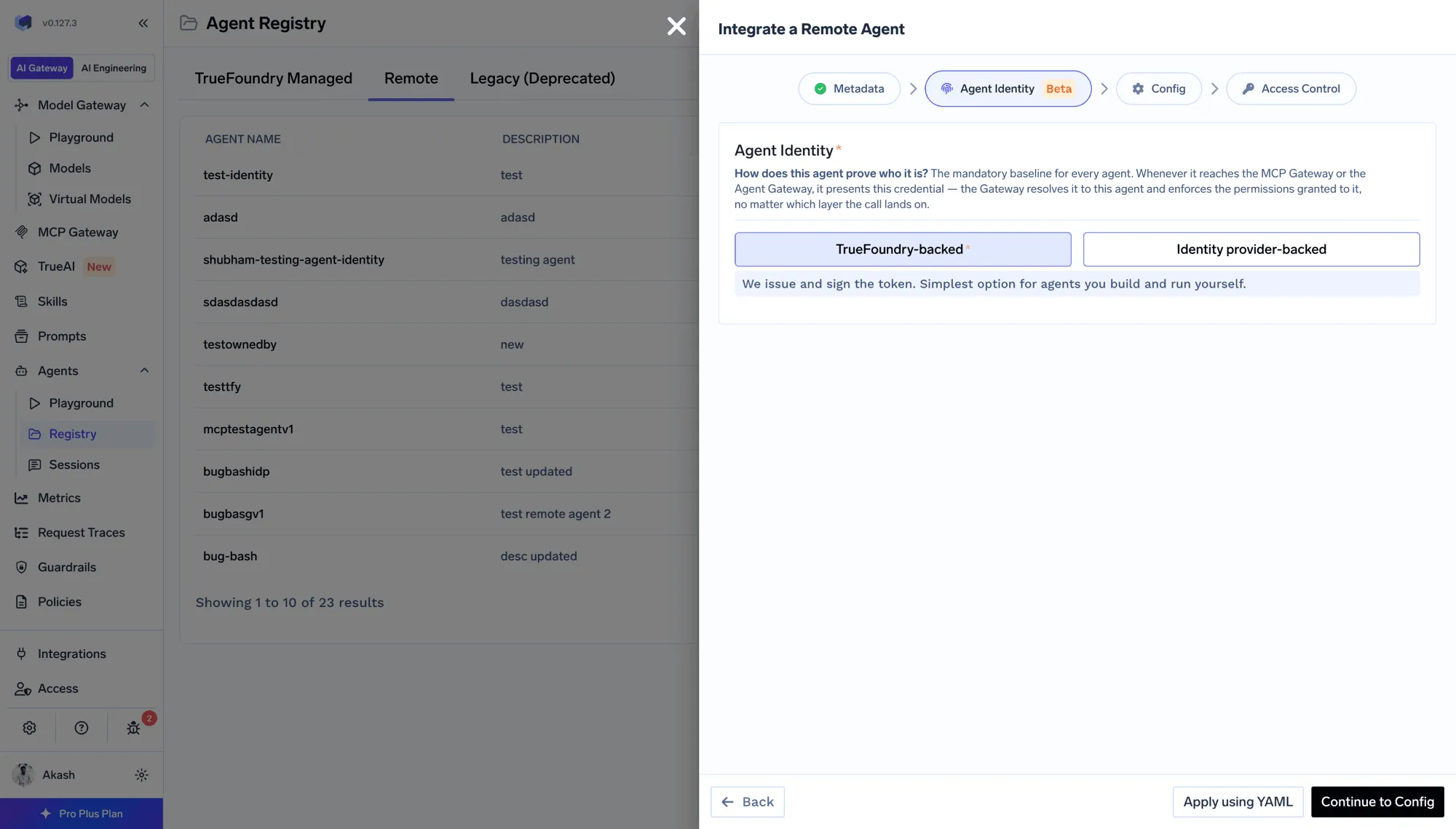
TrueFoundryドキュメントの製品スクリーンショット:エージェント登録時の「エージェントID」ステップ。
登録時に、エージェントが自身の身元を証明する方法を選択します。
どちらの方法でもIDが持つ意味は同じです。異なるのは発行元のみであり、1つのテナント内でエージェントごとに発行元を混在させることも可能です。
ご利用のIDプロバイダーにエージェントID機能が備わっていない場合、TrueFoundryがコントロールプレーンの3つの役割すべてを担うことができます。各エージェントのID発行、Agent GatewayおよびMCP Gatewayでの全呼び出しの認可、そしてトークン交換による各ホップ用のスコープ付き認証情報の生成を行います。企業のSSOは、これまで通り人間(ユーザー)の認証に専念します。呼び出し時には、エージェントは自身のIDをユーザーのIDと併せて提示するため、両方のIDが同時に可視化されます。
curl https://gateway.truefoundry.ai/api/llm/chat/completions \
-H "Authorization: Bearer $USER_TOKEN" \
-H "x-tfy-agent-authorization: $AGENT_TOKEN" \
-H "Content-Type: application/json" \
-d '{
"model": "openai-main/gpt-4o",
"messages": [{"role": "user", "content": "未解決の課題を要約して"}]
}'
エージェントは、仮想アカウントと同様の方法で、レジストリから自身のトークンを取得します(エージェントの「トークン取得」アクション)。
委任には制限があります。その範囲は、登録時のアクセス制御ステップで設定されたエージェントのコラボレーターによって決まります。誰がエージェントを呼び出せるかを決定するリストが、誰の代理としてエージェントが行動できるかも決定します。
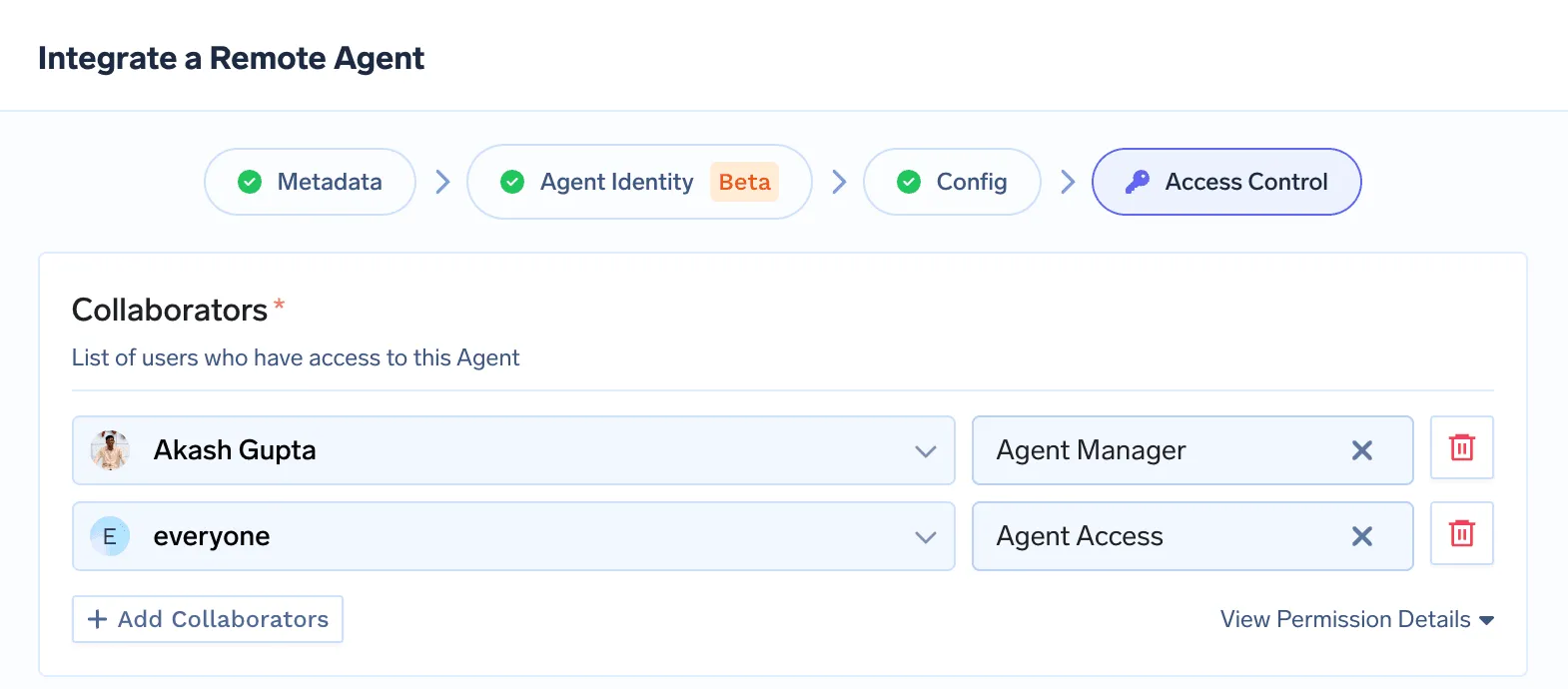
TrueFoundryドキュメントの製品スクリーンショット:エージェントのコラボレーターとロール。
エージェントの 管理者(Agent Manager) は、エージェントを編集できます。 エージェントのアクセス権を持つユーザー は、エージェントを呼び出し、代理として行動させることができます。また、 オーナー チームは別途設定され、作成から廃止に至るまでエージェントに対して責任を負います。これらの権限付与がエージェントの定義された権限となります。つまり、誰の代理として行動できるか、どのMCPサーバーやモデルにアクセスできるかが決まります。
TrueFoundry AI Gateway delivers ~3–4 ms latency, handles 350+ RPS on 1 vCPU, scales horizontally with ease, and is production-ready, while LiteLLM suffers from high latency, struggles beyond moderate RPS, lacks built-in scaling, and is best for light or prototype workloads.




Non-human identity is the category for anything that authenticates without a person behind it, including service accounts, workload identities, API clients, and agents. Agents are the demanding case because they act autonomously, so they need delegation rules, an owner, per-hop attribution, and a kill switch on top of the rotation and inventory a service account needs.
A service account or virtual account can only ever act as itself, so calls from many callers look identical. An agent identity can act on behalf of a specific user or service, so a single agent serving many people still produces calls that stay attributable to each one. TrueFoundry keeps all three principal types distinct and enforces them at the gateway.
You register the agent. Identity is created as part of registration, either TrueFoundry-backed or issued by your own provider such as Okta, Entra, or SPIFFE. The agent then fetches its token from the registry and presents it on every call, and the gateways deny any caller without a registered identity.
Yes. It includes an MCP Gateway, an Agent Gateway, and an MCP and Agents Registry with tool-level access control, so agents from LangGraph, CrewAI, AutoGen, or a custom framework can be governed centrally.
.png)
.png)
.png)
.png)
.png)
.png)