Source and independence note. This article is grounded in Yuchen Ling, Shengcheng Yu, Zhenyu Chen, and Chunrong Fang, Toward Secure LLM Agents: Threat Surfaces, Attacks, Defenses, and Evaluation (arXiv:2606.10749, revised August 23, 2026), which synthesizes 247 papers. The mapping from the survey's security framework to TrueForge and TrueFoundry products is TrueFoundry editorial analysis; the paper does not evaluate or endorse TrueFoundry.
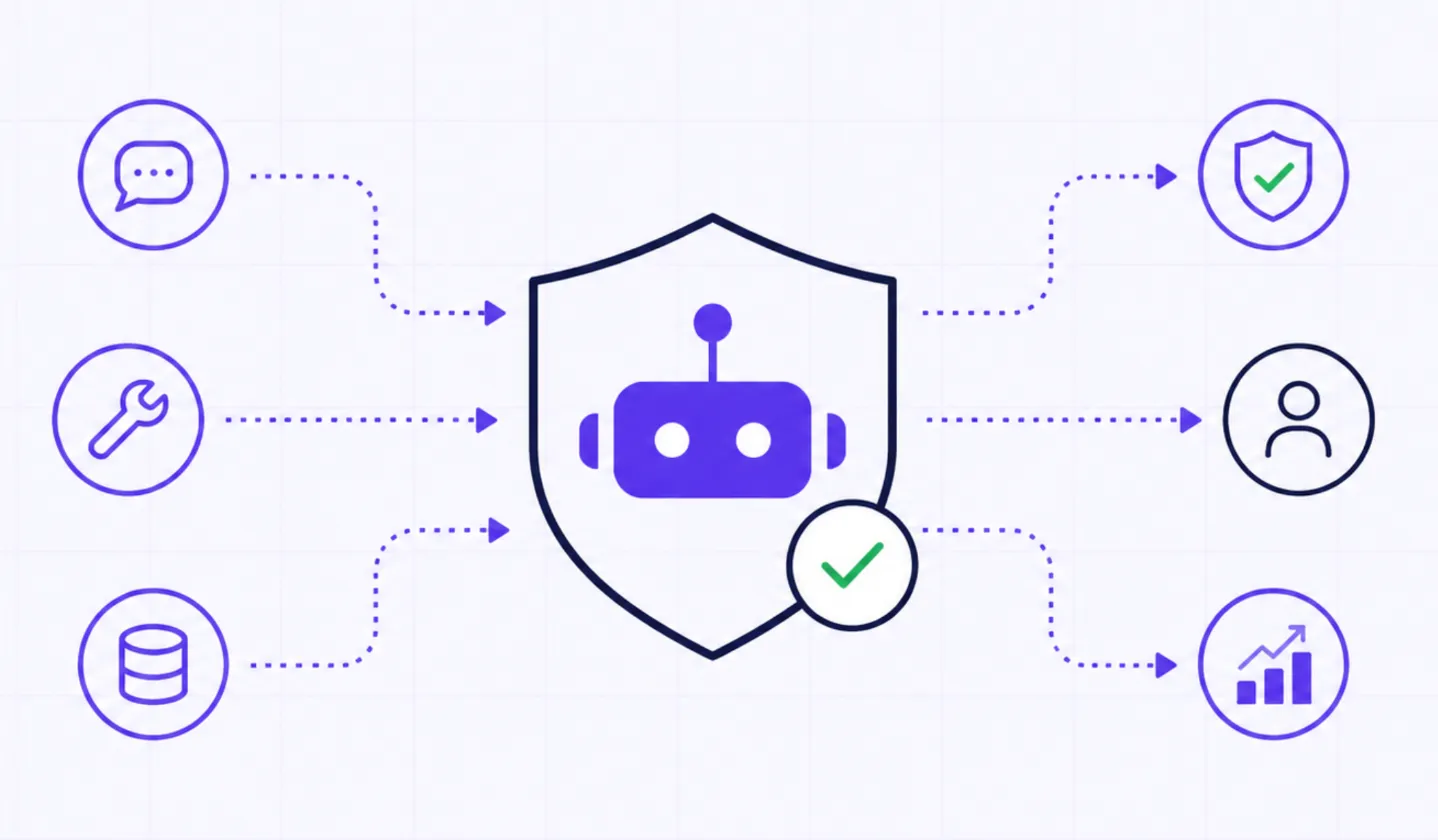
The infrastructure thesis: secure agents need more than model-level safety. The runtime should make trust boundaries and state transitions explicit; shared gateways should enforce identity, access, policy, credentials, budgets, guardrails, and evidence at model, tool, and agent boundaries; and systems of record should remain authoritative for business state and side effects.
Key Takeaways
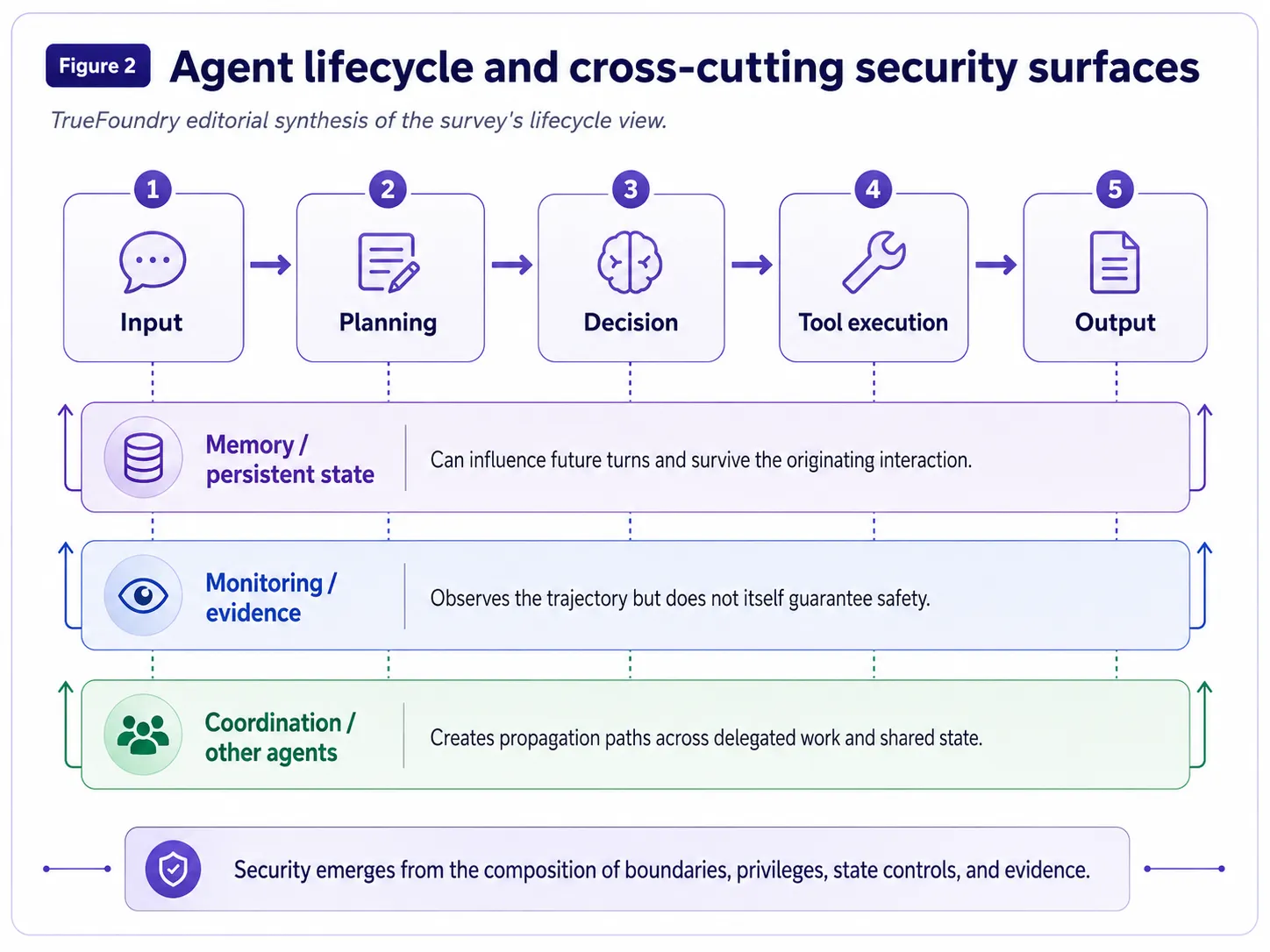
Prompt injection is only one part of the problem. The survey finds tool-mediated control-flow hijacking remains prominent, while persistent-state corruption and multi-agent propagation are increasingly important.
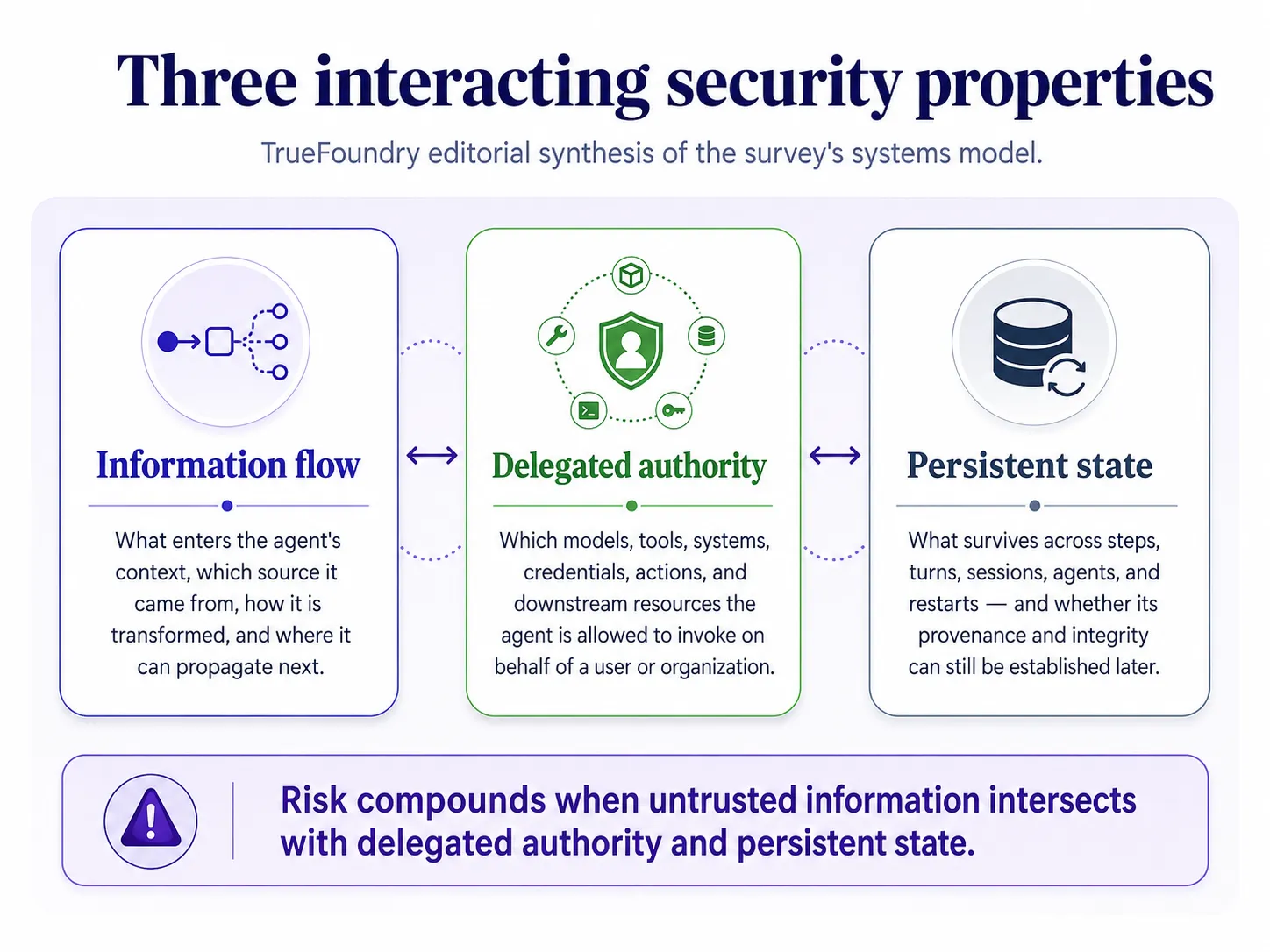
Agent security has three coupled dimensions. Information enters the agent, authority lets it act, and persistent state lets an attack outlive the original interaction.
Controls need to compose across layers. A sandbox, guardrail, approval workflow, or gateway is useful, but none establishes security for the entire agent by itself.
TrueForge maps to the runtime boundary. It provides the execution loop, context management, tools, sandboxing, approvals, sessions, and events for agents built on it.
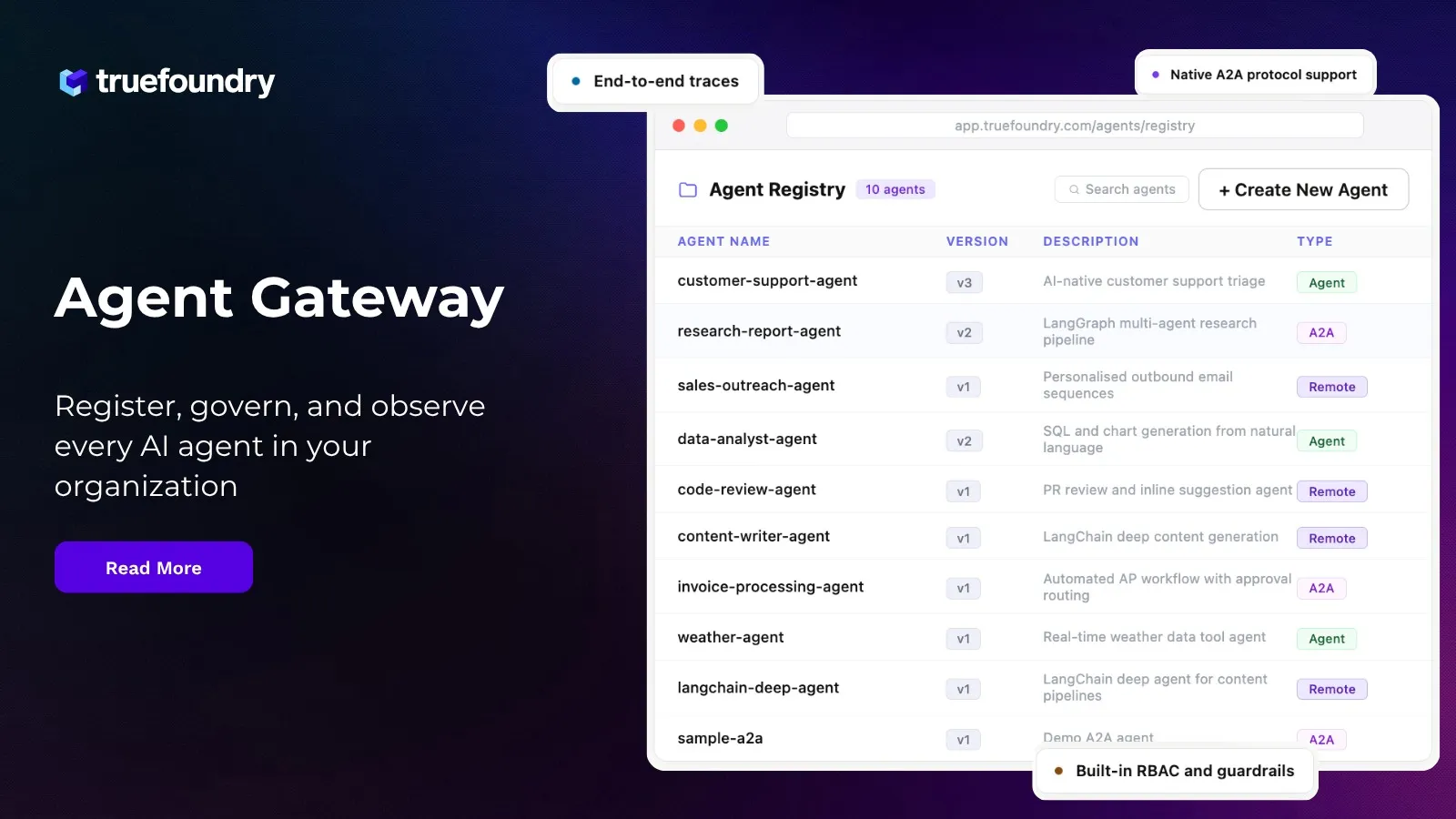
TrueFoundry Gateways map to shared control planes. AI Gateway governs routed model calls; MCP Gateway governs routed tool/data access; Agent Registry establishes identity, ownership, and access for registered agents, while broader Agent Gateway controls can add quotas, budgets, and traces for routed agent traffic.
Provenance-aware state remains an application responsibility. Persisting events is not the same as proving the integrity or trustworthiness of every piece of memory or business state.
TrueFoundry AI Gateway delivers ~3–4 ms latency, handles 350+ RPS on 1 vCPU, scales horizontally with ease, and is production-ready, while LiteLLM suffers from high latency, struggles beyond moderate RPS, lacks built-in scaling, and is best for light or prototype workloads.








.png)
.png)
.png)
.png)
.png)
.png)