


October 1, 2026
|
5 min read


Published: August 15, 2026
.webp)
Blazingly fast way to build, track and deploy your models!
Artificial Intelligence is entering a new chapter. A few years ago, what began with simple chatbots and copilots has evolved into systems that can act, adapt, and execute tasks with minimal supervision.
These are Agentic AI systems. Unlike traditional automation and AI assistants, which depend solely on your explicit instructions, the best agentic AI platforms with a system of AI agents can interpret intent, plan tasks and choose the right tools, and adjust their actions in real time.
From customer support to IT operations and Finance, Agentic AI has the potential to reduce manual effort and transform how enterprises scale their process. The market is already filling with platforms that promise varied levels of autonomy and orchestration. With this guide, we aim to explain what makes a platform truly agentic, why enterprises need them, how to evaluate, and the leading solutions available today.
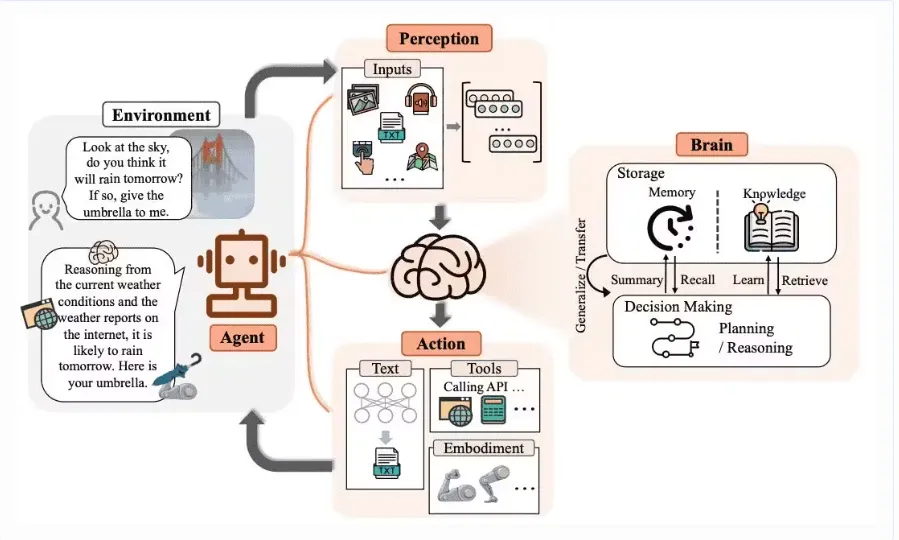
Well, copilots wait for prompts. Automation scripts break when the screen changes, and chatbots loop when they face anything outside their knowledge. These tools assist, but don't own the outcome. The best agentic AI platforms flip this model. Instead of waiting for commands, they take direction at a higher level, the goal itself.
You tell an agent to “reconcile last month’s invoices,” and it not only drafts an email, but also breaks tasks into steps, logs into the system, pulls the right data, checks progress, and adjusts if something goes wrong. Here, the difference is subtle but profound. These platforms manage systems of AI agents like teammates rather than utilities. In enterprises where workflows span dozens of tools and teams, this shift from passive assistance to active ownership changes everything.
Agentic AI platforms combine large language models, orchestration systems, memory, and external tools to build autonomous AI workflows. Instead of only answering prompts, these systems can understand goals, break them into tasks, and decide the best sequence of actions needed to complete an objective. This allows AI agents to operate more like digital teammates rather than simple assistants.
These platforms connect with APIs, databases, enterprise applications, and productivity tools to execute tasks across multiple systems. AI agents can retrieve information, trigger workflows, analyze data, and adapt their actions in real time based on changing inputs or failures. The best agentic AI platforms support multi-step reasoning, tool usage, and collaboration between multiple AI agents within a shared workflow.
Enterprise-grade agentic AI tools also include observability, governance, and security layers for production deployment. Organizations can monitor prompt execution, token usage, agent behavior, and infrastructure performance while enforcing compliance policies, access controls, and audit logging. This enables businesses to deploy reliable, scalable, and secure autonomous AI systems across complex operational environments.
The agentic AI market is moving fast, with new vendors entering every quarter, but only a handful are proving they can handle enterprise scale. These platforms don’t just showcase clever demos; they run live workflows, integrate with complex stacks, and deliver measurable cost and reliability gains.
We start this agentic AI platforms list with a deep dive into TrueFoundry, recognized by Gartner as a Top AI Gateway provider, before covering nine other tools shaping the enterprise agentic landscape.
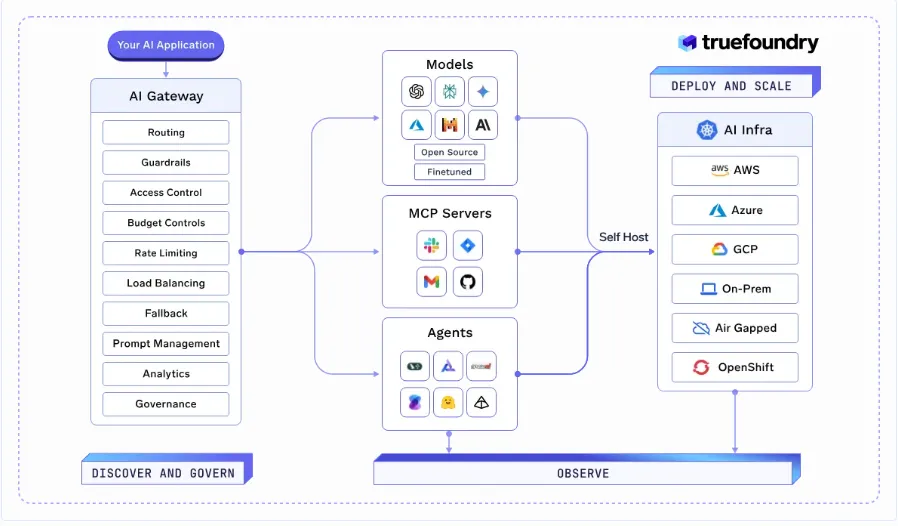
TrueFoundry is an enterprise platform for building and operating agentic AI systems at scale. It helps teams deploy AI agents, manage models, control infrastructure, and monitor production workloads from a single environment.
Unlike lightweight orchestration tools or standalone model gateways, TrueFoundry combines deployment, governance, observability, and scaling into one production-ready platform built for enterprise AI adoption.
TrueFoundry provides the infrastructure layer required to run AI agents reliably in production.
Teams can connect models, tools, prompts, and workflows through the AI Gateway while managing routing, authentication, rate limiting, fallbacks, and observability centrally. The platform supports popular agent frameworks like LangGraph, CrewAI, and AutoGen, along with custom-built architectures.
Developers can deploy open-source or proprietary models using optimized inference engines such as vLLM, Triton, and TGI, while platform teams manage scaling, monitoring, and governance through centralized controls.
TrueFoundry is designed for enterprises moving beyond AI experimentation into production deployment.
It is well suited for:
Industries with strict security and governance requirements, including healthcare, finance, SaaS, and manufacturing, use TrueFoundry to operationalize agentic AI securely and efficiently.
1. AI Gateway for Agent Workflows
The AI Gateway centralizes model access, routing, fallback handling, authentication, caching, and tool orchestration for agentic workflows. It enables secure and low-latency communication across models and external systems.
2. MCP and Prompt Lifecycle Management
TrueFoundry includes MCP and Agents Registry capabilities for managing tools, APIs, schemas, and prompt workflows. Teams can version prompts, test changes, monitor performance, and maintain consistent agent behavior across environments.
3. Flexible Model Deployment
Teams can deploy foundation models, fine-tuned models, embedding models, and custom inference stacks using frameworks like vLLM, Triton, and TGI. The platform supports both managed and self-hosted model deployments.
4. Built-In Observability
The platform captures detailed telemetry including token usage, latency, fallback events, prompt execution, and infrastructure metrics. Integrations with Grafana, Prometheus, Datadog, and OpenTelemetry provide deeper operational visibility.
5. Enterprise Security and Governance
TrueFoundry supports VPC, hybrid, on-prem, and air-gapped deployments with RBAC, SSO, audit logging, and compliance support for SOC 2, HIPAA, and GDPR requirements.
6. GPU Optimization and Autoscaling
The platform includes autoscaling, workload scheduling, batching, and fractional GPU allocation to improve infrastructure utilization and reduce operational costs for large-scale AI deployments.
By unifying orchestration, deployment, compliance, and observability, TrueFoundry stands apart as a purpose-built enterprise platform for agentic AI. For organizations looking to operationalize agents with trust and scale, it delivers the foundation to move from an agentic AI pilot to production with confidence.
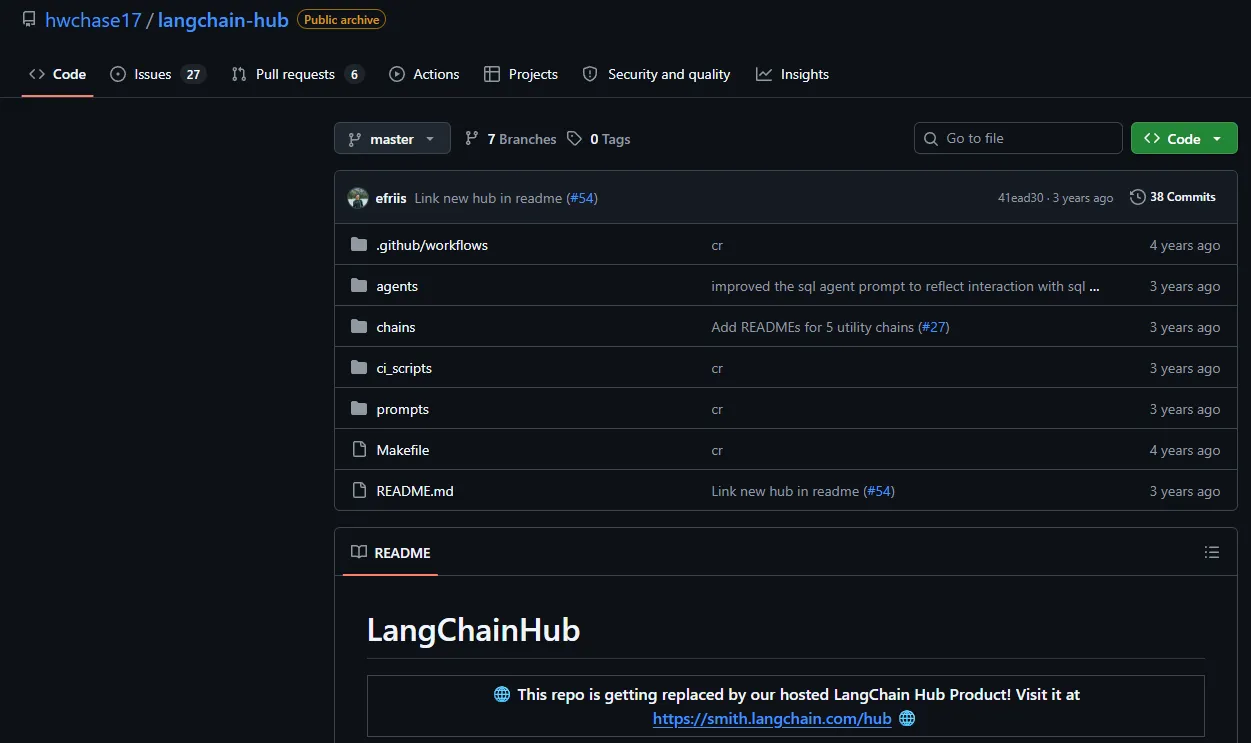
LangChain Hub is a collaborative platform for building, managing, and sharing LLM-powered workflows and agentic AI applications. It helps developers organize prompts, chains, tools, and agents in a reusable and reproducible way, making experimentation and deployment significantly easier.
The platform is especially popular among teams prototyping AI assistants, retrieval-augmented generation (RAG) pipelines, and autonomous agents using the broader LangChain ecosystem.
LangChain Hub enables developers to create modular AI workflows using reusable building blocks such as prompts, chains, memory, retrieval systems, and external tools.
Teams can version and share workflows across projects while integrating vector databases like Pinecone and Weaviate alongside APIs and third-party services. This allows developers to build context-aware agents capable of reasoning, retrieving information, and interacting with external systems.
Because LangChain integrates with multiple LLM providers and frameworks, developers can rapidly prototype and operationalize AI applications without building orchestration logic from scratch.
Pros
Cons
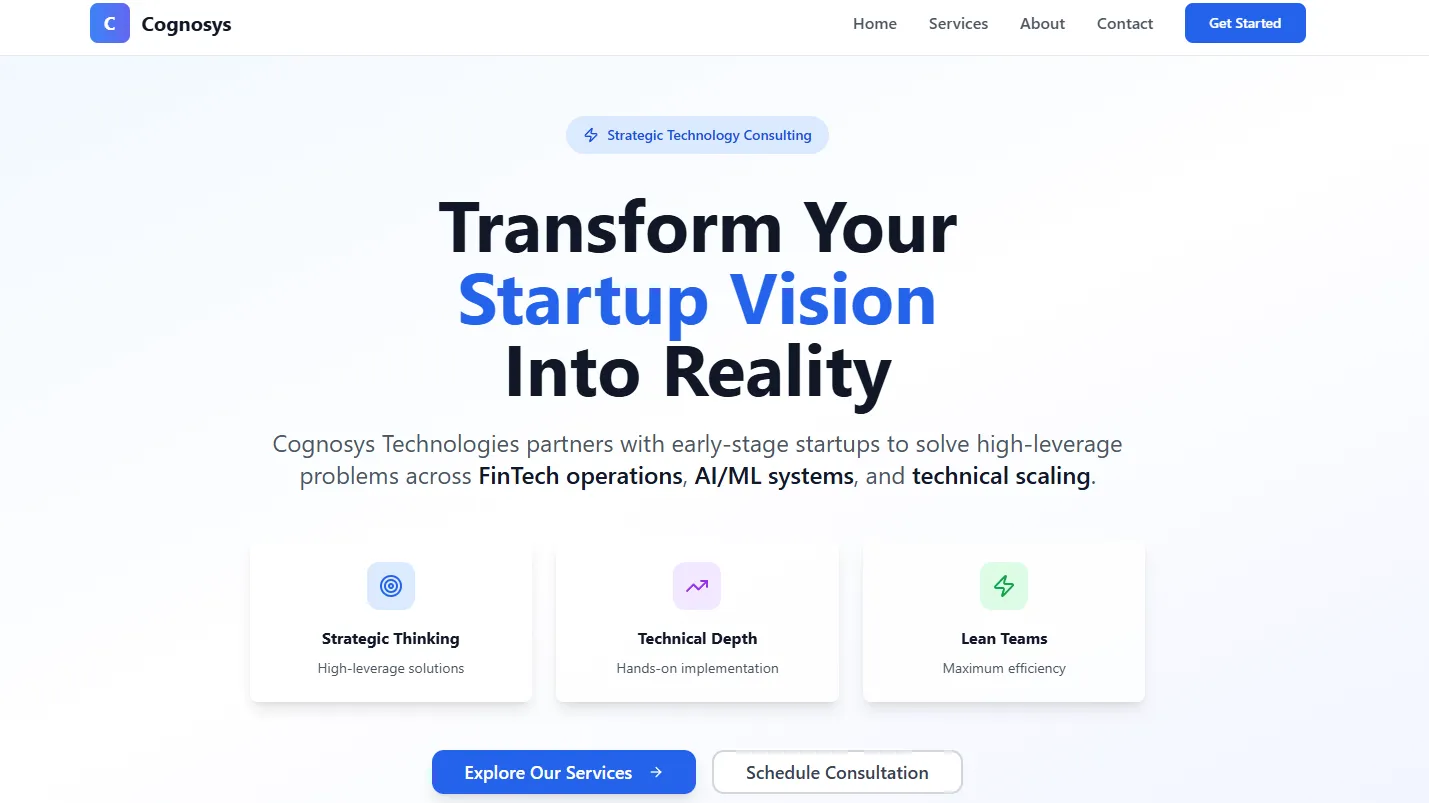
Cognosys is an agentic AI platform built for enterprises that want autonomous AI systems capable of planning, reasoning, and executing tasks across business workflows. The platform focuses heavily on governance, observability, and secure orchestration, making it suitable for regulated industries and production-scale AI operations.
Cognosys enables organizations to create AI agents that can break down objectives into multi-step tasks, interact with APIs and enterprise tools, and execute workflows autonomously. The platform continuously monitors agent behavior, tracks actions and costs, and enforces enterprise-defined guardrails to ensure reliability, compliance, and controlled decision-making throughout execution.
Pros
Cons
.webp)
CrewAI is an open-source framework for building collaborative multi-agent AI systems. It enables developers to create teams of specialized agents that work together to solve complex tasks through coordinated reasoning, planning, and execution. CrewAI is widely used for research automation, operations workflows, coding assistants, and enterprise AI orchestration.
CrewAI allows developers to assign specific roles, goals, and responsibilities to individual AI agents such as researchers, planners, analysts, or executors. These agents collaborate within a shared workflow, exchange context, delegate subtasks, and coordinate actions to complete larger objectives. The framework supports Python-based customization, external tool integrations, and flexible orchestration logic for production-ready deployments.
Pros
Cons
.webp)
AutoGen is an open-source multi-agent AI framework developed by Microsoft for building collaborative and conversational AI systems. It enables multiple LLM-powered agents to communicate with each other, interact with humans, and use external tools to solve complex tasks across enterprise and research workflows.
AutoGen allows developers to create specialized AI agents that collaborate through structured conversations. Agents can exchange information, delegate tasks, call APIs, execute code, and interact with enterprise systems while maintaining context throughout the workflow. The framework supports customizable orchestration patterns, human-in-the-loop interactions, and integrations with external tools for scalable real-world deployments.
Pros
Cons
Also Read: AutoGen vs LangGraph
.webp)
UiPath is an enterprise automation platform that combines robotic process automation (RPA) with agentic AI capabilities. By integrating AI-driven reasoning with workflow automation, UiPath enables organizations to automate complex business processes involving both structured and unstructured data across enterprise systems.
UiPath uses AI agents alongside traditional RPA bots to analyze information, make contextual decisions, and execute workflows automatically. These agents can interact with enterprise applications, process documents, trigger actions across systems, and collaborate with human users when needed. The platform integrates deeply with ERP, CRM, and productivity tools to streamline enterprise operations at scale.
Pros
Cons
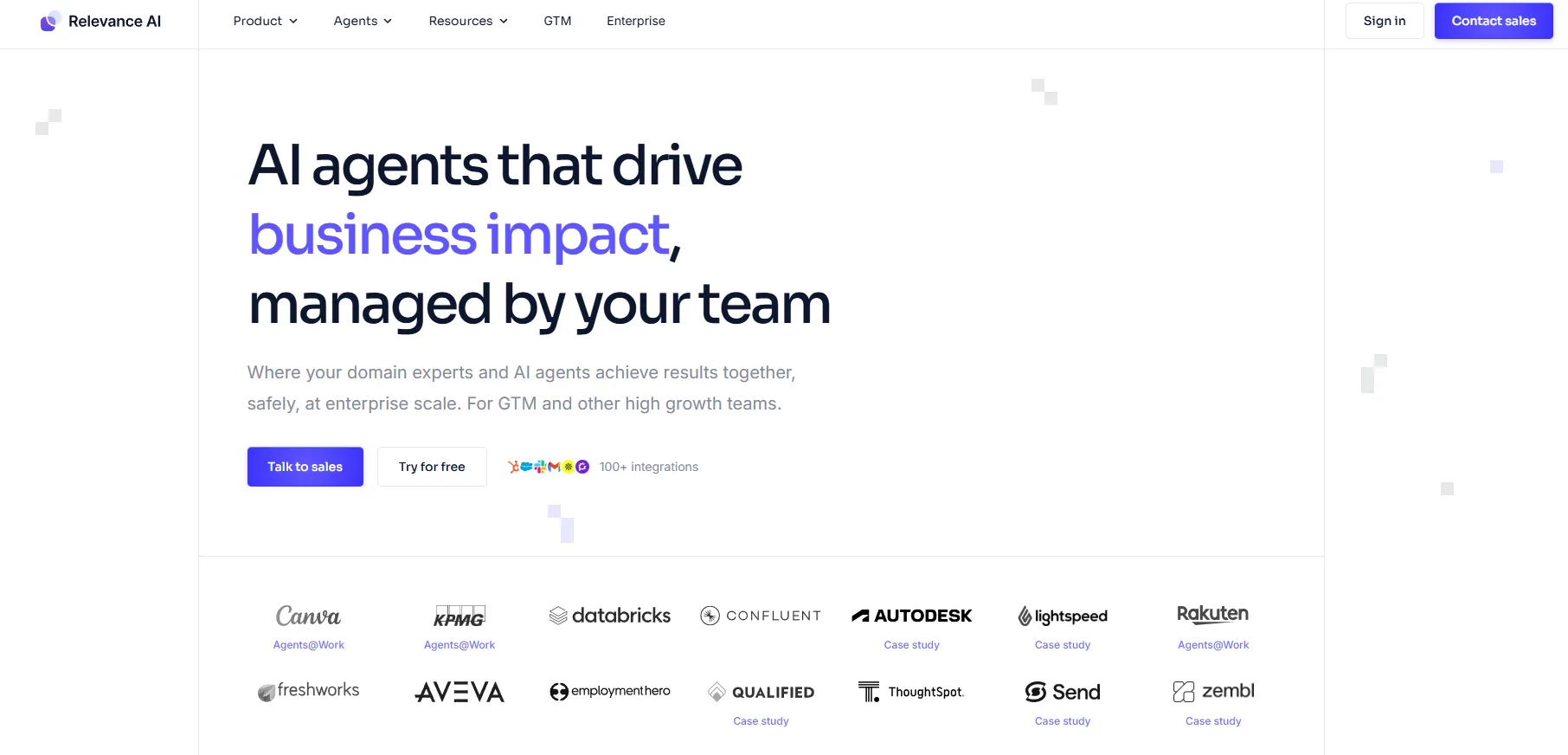
Relevance AI is a no-code and low-code platform for building, deploying, and managing agentic AI workflows. The platform helps teams rapidly prototype and productionize AI agents with minimal engineering effort, making it popular for enterprises looking to scale AI adoption across technical and non-technical teams.
Relevance AI provides a visual workflow builder where users can design multi-step AI pipelines using drag-and-drop components. Agents can perform reasoning, maintain memory, call external tools, and automate workflows across business systems. The platform also includes collaboration tools, analytics, deployment controls, and monitoring features to support production-scale AI operations.
Pros
Cons
.webp)
Adept AI develops action-oriented AI agents designed to operate software applications, APIs, and digital tools similarly to human users. Unlike traditional chatbots focused mainly on conversation, Adept AI focuses on enabling AI systems to execute real tasks across enterprise workflows and productivity platforms.
Adept AI trains agents to understand interfaces, interact with software systems, execute commands, and automate multi-step digital workflows. These agents can navigate applications, use APIs, and complete operational tasks while maintaining context throughout execution. Human-in-the-loop controls allow enterprises to supervise actions, validate outputs, and maintain compliance during automation processes.
Pros
Cons
.webp)
IBM Watson Orchestrate is an AI-powered digital worker platform from IBM designed to automate enterprise workflows and operational tasks. The platform combines natural language understanding, reasoning, and enterprise integrations to help organizations streamline repetitive work across departments.
IBM Watson Orchestrate uses AI-powered digital workers to understand user requests, interact with enterprise applications, and automate multi-step business processes. These digital agents can schedule meetings, process HR workflows, generate reports, and retrieve information from connected systems like CRM, ERP, and collaboration platforms without requiring extensive coding or manual intervention.
Pros
Cons
.webp)
Orby AIは、企業ワークフローの実行と運用自動化のために設計された自律型AIエージェントプラットフォームです。このプラットフォームは、AIエージェントがシステムを監視し、事前に対策を決定し、人間の介入を最小限に抑えながらタスクを実行できるようにすることに重点を置いています。同時に、透明性、説明可能性、エンタープライズレベルの信頼性を維持します。
Orbyは自律型AIエージェントを活用し、企業システムを継続的に監視し、運用上のシグナルを分析します。問題やワークフローの機会が検出された際には、事前に対策を講じます。このプラットフォームは、エージェントの決定、行動、推論プロセスを記録することで説明可能なAIを重視しており、企業が自動化されたワークフロー全体で可視性、ガバナンス、コンプライアンスを維持できるよう支援します。
長所
短所
「エージェント型」と謳うすべてのプラットフォームが、エンタープライズ規模に対応できるわけではありません。サンドボックス環境では機能しても、実際のワークロードでは破綻してしまうものもあります。表面的なプラットフォームと本格的なプラットフォームを見分けるには、企業は以下の6つの重要な側面に着目すべきです。
1. 自律性 & タスク計画: 真のエージェント型プラットフォームは、ビジネス目標をより小さなタスクに分解し、その順序を計画し、確実に実行できる必要があります。さらに重要なのは、問題が発生した場合に人間の介入なしに自己修正できることです。
2. APIとツール連携: 企業はすでにCRM、ERP、データウェアハウス、クラウドサービスを運用しています。プラットフォームは、限られた既製のコネクタにのみ依存するのではなく、これらのシステムに直接かつ柔軟に接続できる必要があります。
3. ワークフローオーケストレーション: 実際の企業プロセスは、複数のステップと依存関係にまたがります。プラットフォームは、条件ロジック、並行タスク、イベントトリガーを処理し、プロセス中にシステムが1つでも失敗した場合に適応できる必要があります。
4. カスタマイズ性 & 拡張性: 同じ企業は2つとありません。ビジネスユーザー向けのローコードツールと、開発者向けのSDK/APIをサポートするプラットフォームを探しましょう。これにより、チームはベンダーロックインなしに機能を拡張できます。
5. セキュリティとガバナンス: すべてのアクションはログに記録され、監査可能である必要があります。ロールベースアクセス、ポリシー適用、およびコンプライアンスへの準拠(GDPR、SOC2、HIPAAなど)は、追加機能ではなく必須要件です。
6. エンタープライズ対応: 数千人のユーザーと数百万のイベントにスケールできますか?SaaSとオンプレミス両方のデプロイメントをサポートしていますか?そして、ベンダーはビジネスに不可欠なワークフローを稼働させ続けるために必要なサポートを提供していますか?
真のテストはデモではなく、本番環境にあります。APIが失敗したときに経路を再設定し、大規模なコストを管理し、ワークフロー全体でコンプライアンスを維持できるプラットフォームこそが、エンタープライズ対応です。それができないプラットフォームは、実際の負荷がかかった最初の瞬間に破綻するでしょう。
企業が単純なチャットボットやコパイロットを超え、実際のビジネスワークフローを自律的に実行できるAIシステムへと移行するにつれて、エージェントAIプラットフォームが台頭しています。大規模言語モデル、推論能力、API連携、ワークフローオーケストレーションの進歩により、AIエージェントはタスクを計画し、ツールを使用し、記憶を保持し、エンタープライズ環境全体で動的に意思決定を適応させることが可能になりました。
同時に、組織は運用効率の向上、手作業の削減、複雑なシステム全体での自動化の拡大という高まるプレッシャーに直面しています。従来の自動化ツールは非構造化データや動的なワークフローに苦戦することが多いですが、エージェントAIツールは多段階の推論とリアルタイムの意思決定をより効果的に処理できます。
クラウドインフラストラクチャ、ベクトルデータベース、オープンソースのエージェントフレームワーク、エンタープライズAIガバナンスプラットフォームの台頭も、導入を加速させています。これらのテクノロジーが一体となることで、企業は顧客サポート、運用、財務、IT、ソフトウェア開発のワークフロー全体にわたって、安全でスケーラブルな、本番環境に対応した自律型AIシステムを展開できるようになります。
大規模なエージェントAIの導入は、現在の企業運営における具体的な課題を浮き彫りにします。プラットフォームの統合は困難です。企業はERP、CRM、データウェアハウス、カスタムミドルウェアを運用しており、これらを信頼性高く安全に接続する必要があります。単純なコネクタだけでは不十分であり、安定した監査済みの統合と変更管理プロセスが必要です。
ガバナンスとコンプライアンスは譲れません。チームはロールベースのアクセス、 不変の監査ログ、およびポリシーの適用を要求し、データ漏洩、 プロンプトインジェクション、および不正な操作を防ぎます。これらの制御がなければ、自律性はコンプライアンス上の負債となります。
運用上の信頼性と可観測性には、新たな実践が必要です。モデルの停止、ドリフト、ハルシネーション、トークンコストの急増に対して、プロンプト、ツール呼び出し、インフラ全体にわたるリアルタイムの追跡が必要です。
主要なサービスに影響を与えた最近の障害は、 大規模言語モデルプロバイダー の脆弱なAIスタックがビジネスに与える影響を示しています。可観測性は、モデルの健全性、データの整合性、リソース利用率をカバーする必要があります。
人材とプロセスのギャップは残っています。導入を成功させるには、MLOpsとDevOpsを統合し、ビジネスオーナー向けのガードレールを追加し、スキルアップに投資する必要があります。それがなければ、パイロットプロジェクトは停滞し、ROIは消滅します。
エージェントAIプラットフォームは、実験的なパイロット段階からエンタープライズグレードのソリューションへと移行しており、ビジネスがワークフロー、意思決定、顧客とのやり取りを処理する方法を変革しています。しかし、成功は派手なデモよりも、規律ある選定、ガバナンス、統合にかかっています。
適切なプラットフォームは、実際のプロセスに合致し、責任を持って拡張可能であり、厳格なコンプライアンスフレームワーク内で運用されるべきです。戦略的に投資する企業は、定型業務を自動化するだけでなく、AIシステムが自律性と説明責任を持って行動できるようにすることで、新たな価値創造を解き放つでしょう。
TrueFoundryのようなプラットフォームは、すでにベンチマークを設定しており、企業が信頼性と規模を伴ってこの変革を加速するのを支援しています。パイロット段階を超えて、TrueFoundryで安全な自律型エージェントを展開しましょう。TrueFoundryは、エンタープライズ規模とコンプライアンスのために設計された最高のAIエージェントプラットフォームです。 今すぐ始める 複雑なワークフローをオーケストレーションし、真のビジネス価値を推進するために。
TrueFoundry AI Gateway delivers ~3–4 ms latency, handles 350+ RPS on 1 vCPU, scales horizontally with ease, and is production-ready, while LiteLLM suffers from high latency, struggles beyond moderate RPS, lacks built-in scaling, and is best for light or prototype workloads.



優れたエージェント型AIプラットフォームは、企業が複雑なビジネスプロセスを安全かつ確実に自動化することを可能にします。TrueFoundryは、既存のインフラストラクチャとのシームレスな統合を実現しつつ、厳格な規制遵守を保証する点で際立っています。チームは、真のビジネス価値を生み出す自律型エージェントを管理・拡張できるため、エンタープライズレベルでの導入に最適な選択肢となります。
エージェント型AIツールの中でも、LangChain、CrewAI、AutoGenといったフレームワークは、その柔軟性とコミュニティによるサポートの厚さから広く認知されています。これらのフレームワークを活用することで、技術的な専門知識を持つ開発者は、大規模言語モデルを用いた高度なエージェントシステムを構築できます。TrueFoundryはこれらのフレームワークを全面的にサポートしており、コンテナ化された本番環境対応のエージェントをデプロイすることが可能です。
最先端のエージェント型AIプロバイダーは、請求書の照合といった金融サービスの自動化や、人間のオペレーターを介さないカスタマーサービス対応など、さまざまなアプリケーションの可能性を広げています。これらの自律型システムは、自ら計画を立て、新しい情報に適応しながら複雑なタスクを実行することで、企業全体の業務効率化と不正検知能力を大幅に向上させます。
エージェント型AIプラットフォームのリーダーであるTrueFoundryは、Model Context Protocolレジストリと多様なモデルとのシームレスな統合を通じて、業務効率化を実現します。企業がAI運用を統制し、コスト最適化とデータセキュリティの確保によってビジネス価値を拡大できるよう支援し、チームが自信を持ってパイロット運用から本番環境へと移行できるよう導きます。
.png)
.png)
.png)
.png)
.png)
.png)
.png)
.png)
.png)
.png)
.png)





