


July 20, 2023
|
5 minutos de lectura


Obtenga acceso instantáneo a un entorno TrueFoundry en vivo. Implemente modelos, dirija el tráfico de LLM y explore la plataforma completa: su sandbox estará listo en segundos, sin necesidad de tarjeta de crédito.


¡Una forma increíblemente rápida de crear, rastrear e implementar sus modelos!
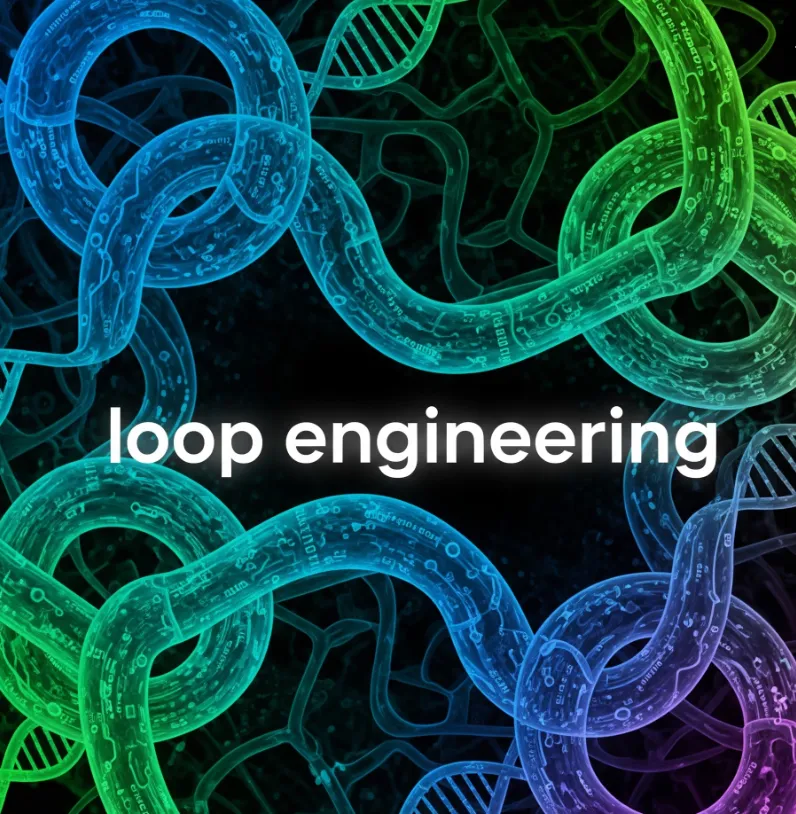
In the first week of June 2026, the AI-coding conversation reorganized itself around one idea. Peter Steinberger — creator of the OpenClaw agent project — posted that the skill is no longer prompting coding agents but designing the loops that prompt them; Boris Cherny, who heads Claude Code at Anthropic, put his own job the same way: "My job is to write loops." Addy Osmani's widely shared essay gave the practice a name — loop engineering — and an anatomy: automations, worktrees, skills, connectors, sub-agents, and external state. The idea is real and worth taking seriously. It's also, as practiced, an individual-developer pattern running on individual laptops — and the gap between a loop in your terminal and a loop an enterprise can run unattended at 3 a.m. is exactly the gap this post is about.
Noor, a staff engineer, built the loop everyone now describes: a morning automation that reads overnight CI failures and open issues, drafts fixes in isolated checkouts, has a second agent review them, opens PRs, and leaves a tidy state file saying what's done and what's next. For three weeks it was the best tool on the team — and then it became the subject of three uncomfortable meetings. Finance asked why one weekend's token bill spiked: the loop had spent two days enthusiastically retrying against a broken test environment with nobody watching. Security asked where the loop's credentials lived: a config file on Noor's laptop, holding her personal tokens, running under her identity at 6 a.m. And her director asked the question with no answer at all: four other engineers had copied the pattern, each differently — so how many loops did the org have, what could each touch, and who approved any of it? The loop worked. The runtime was a laptop, and everything wrong traced back to that.
This post takes loop engineering seriously on its own terms — what it is, why it's genuinely the next layer of the discipline, where its sharp edges are — and then does the mapping Noor's director was implicitly asking for: each primitive of the loop, translated from laptop convention to governed infrastructure. The vocabulary follows Osmani's essay and the surrounding discussion; the enterprise half follows TrueFoundry's Agent Harness documentation. The honest summary of the gap is one sentence: loops are a runtime problem wearing a workflow costume.
Strip the discourse and the definition is compact. For two years, working with a coding agent meant holding it: you prompt, you read, you prompt again — the human is the loop. Loop engineering replaces that with a designed system: something finds the work (a schedule scanning CI, issues, error feeds), hands it to an agent, checks the result with a verifier that isn't the maker, records what happened in state that outlives the conversation, and decides what's next. You build it once; it prompts the agents from then on. Osmani places it "one floor above" harness engineering — the harness runs one agent through one task; the loop decides which tasks, when, and what counts as done. Some writers describe it as two nested loops: an inner loop doing work against a spec, an outer loop watching the world and writing the next spec.
If that sounds familiar from this series, it should — the loop is the plan→act→observe pattern promoted one level up, with the same anatomy our harness deep dive took apart: stop conditions (here, "run until the tests pass," judged by a separate model), error handling, and state. Simon Willison was writing about designing agentic loops back in September 2025; what changed in mid-2026, as Osmani notes, is that the primitives stopped being a pile of personal bash and started shipping inside the products — which is exactly the moment a practice stops being a hack and starts being infrastructure. Infrastructure, as we'll see, with infrastructure's requirements.
Osmani's breakdown — which maps near-identically onto both the Codex app and Claude Code, the convergence being his most interesting observation — gives the loop six parts. Automations are the heartbeat: prompts that fire on a schedule, do discovery and triage, and surface findings to an inbox; plus run-until-done primitives where a goal executes until a verifiable condition holds. Isolated workspaces (git worktrees, in the coding case) keep parallel agents from colliding on the same files. Skills — the SKILL.md pattern — codify project knowledge once, so the loop stops re-deriving your conventions every cycle. Connectors, built on MCP, plug the loop into real systems — the difference between an agent that says "here's the fix" and a loop that opens the PR and updates the ticket. Sub-agents split the maker from the checker, because the model that wrote the code grades its own homework too kindly. And external state holds what's done and what's next, because the model forgets everything between runs and the memory has to live outside the context.

Two things stand out before we translate this list. First, almost none of it is novel machinery — schedules, isolation, packaged knowledge, integrations, delegation, durable state are the oldest ideas in operations, newly arranged around a model. Second, and more importantly: every primitive is a capability grant. An automation is standing permission to act on a schedule; a connector is standing access to a real system; a sub-agent is a delegated identity. On a laptop those grants are invisible. At an organization's scale, they're the whole question.
The discourse is days old and already has a healthy skeptical wing, which deserves airtime before the enterprise translation — translating a bad idea into governed infrastructure just yields governed waste. The practitioners' own conditions for loops paying off, as early commentary converged on them: the task repeats (a loop amortizes design cost across runs; for a one-off, a good prompt is faster); verification is automatable ("all tests pass and lint is clean" is a real stop condition, "looks good" is not); the token budget can absorb the waste (Osmani's own essay leads with the cost warning, and Noor's weekend bill is the canonical incident); and the agent already has the tools the task needs. Miss one and the loop costs more than it returns.
There's also a deeper caution the brute-force-loop enthusiasm tends to skip: failure rates stack. A loop chaining five steps, each 95% reliable, completes cleanly about three-quarters of the time — and an unattended loop's mistakes compound into state, where tomorrow's run builds on them. This is why the maker/checker split is load-bearing rather than decorative, and why Willison's old joke — an agent as "an LLM wrecking its environment in a loop" — is the right thing to keep taped above the automation tab. None of this argues against loops; it argues that a loop is a production system — and the rest of this post treats it as one.
Now run Noor's three meetings as an engineering review. Lifecycle: her loop's runtime was her machine — it dies with the laptop lid, doesn't survive a crash mid-run, and can't pause for a three-day approval, because nothing durable holds the run. One early playbook drew exactly this line: the moment a loop must run at 3 a.m. with no terminal open, survive crashes, and wait indefinitely on a human, you've left tool territory for runtime territory. Credentials: the loop ran as Noor — her tokens, in plaintext config, exercising her permissions on a schedule, indistinguishable in any audit log from Noor herself; a standing automation holding a person's keys is the non-human-identity problem in miniature. Cost: nothing stood between the loop and the provider's meter — no budget, no rate limit, no per-run attribution; the spend was discovered on the invoice. Inventory: five engineers, five divergent copies, zero registry — our coding-agent governance and agent-sprawl story arriving through the side door of productivity tooling.
None of these are flaws in loop engineering; they're properties of the laptop as a runtime, invisible right up until the loop is good enough to matter. The fix isn't banning the pattern — bans produce shadow versions of it — but giving the same six primitives a home built for unattended, multi-tenant, audited operation. That's the mapping the rest of this post does.
Here is the translation, primitive by primitive, with TrueFoundry's Agent Harness as the worked example. Skills translate almost verbatim: the same SKILL.md artifact, but published to the Skills Registry with versions, provenance, and RBAC, and mounted on demand — codified knowledge as a governed catalog instead of a folder on five laptops. Connectors translate to the MCP Gateway: the same MCP servers, reached through a registry with central auth, per-tool RBAC, guardrails, and per-user OAuth delegation — scoped, rotatable credentials instead of whatever tokens were in Noor's config file. Sub-agents translate to harness sub-agents: each checker or explorer with its own isolated context, scoped tool access, and trace — the maker/checker split with an identity boundary, not just a prompt boundary. Isolated workspaces translate to the harness Sandbox: a secure execution environment per run — the worktree idea generalized into "every agent gets its own machine." State becomes durable, platform-held run state that survives crashes and laptop lids. And automations become triggered runs: the same agent definition invoked on schedule or event via REST API or SDK, results landing in traces and notifications rather than a terminal scrollback.

The structural difference the translation buys is the one the laptop can't: no keys anywhere in the loop. Agent definitions reference models, MCP servers, and skills by name; provider credentials live in the AI Gateway, tool auth in the MCP Gateway, configured once by the platform team. Noor's loop, rebuilt this way, runs as itself — a registered agent with its own identity and grants — and "what can this loop touch?" turns into a configuration lookup, not an archaeology project.
Noor's morning loop as a governed agent definition (illustrative)
agent:
  name: morning-triage-loop
  model: claude-sonnet-4-6            # by name — keys live at the gateway
  instructions: ./triage.md@v4         # versioned scaffold
  skills: [ci-triage-runbook@v2]       # from the Skills Registry, RBAC'd
  mcp_servers: [github, ci, linear]    # via MCP Gateway: scoped, rotatable auth
  subagents:
    - { name: fix-drafter,  mcp_servers: [github] }
    - { name: fix-reviewer, mcp_servers: [] }      # checker ≠ maker, read-only
  harness:
    max_steps: 60
    max_tokens_per_run: 1_500_000      # the weekend incident, capped
  approvals: { merge_pr: pause_for_human }          # waits days if it must
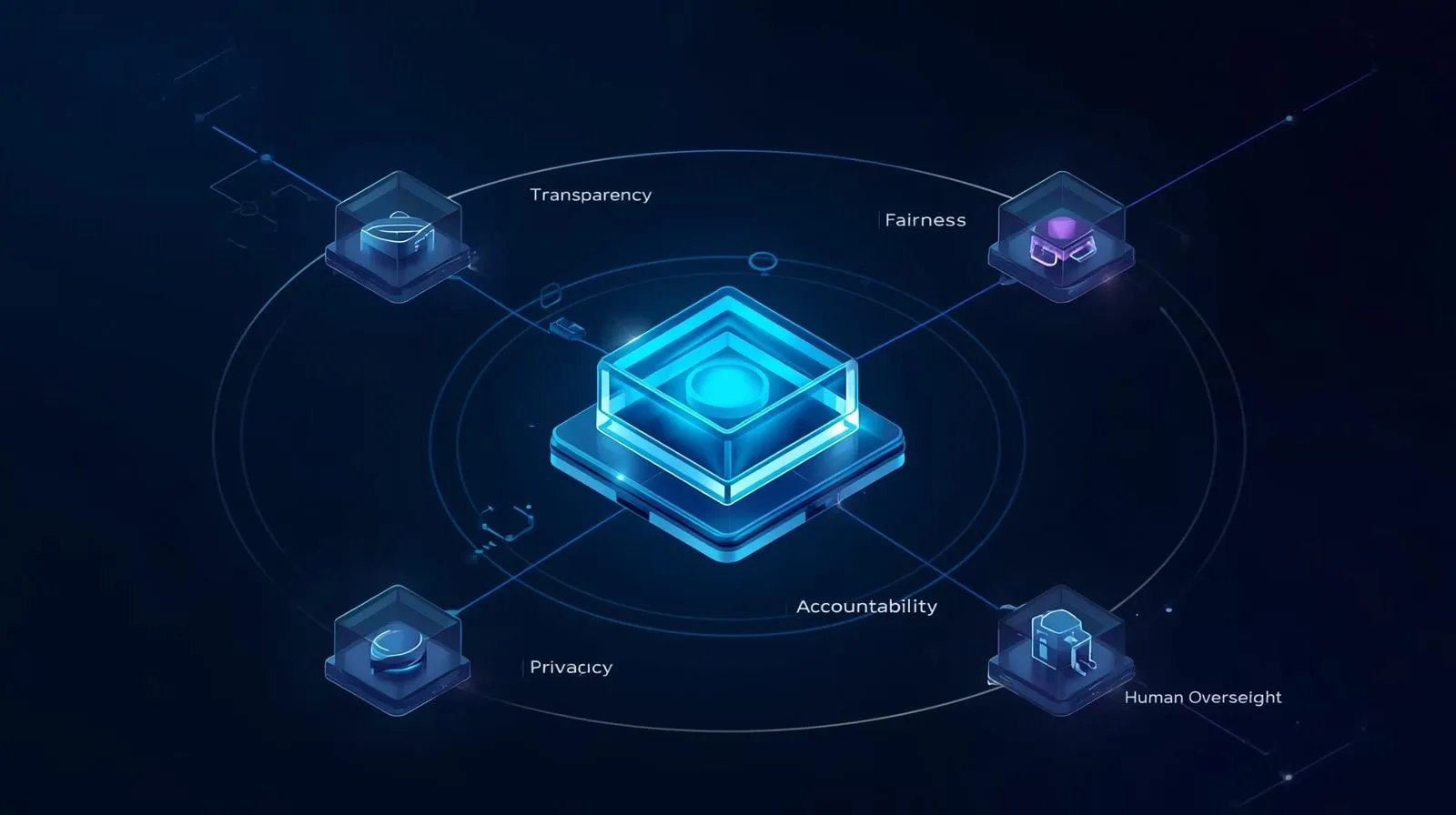
trigger: { schedule: "0 6 * * 1-5" } # the heartbeat — no laptop requiredThe defining property of a loop is that nobody is watching, so the runtime's job is to make "nobody is watching" safe. Three mechanisms carry that load. Human-in-the-loop gates: the harness pauses a sensitive tool call — merging a PR, mutating a production system — and holds the run's state durably until someone approves; the loop doesn't die because a human took the weekend. Critically, destructive tools are flagged once at the MCP Gateway, org-wide — the policy applies to every loop automatically, instead of depending on each of five engineers remembering to configure it. Guardrails: every model call and tool call passes the gateway's pre- and post-call checks — PII, content policies, custom rules — so a loop processing real tickets at 6 a.m. is screened exactly like an interactive session at 2 p.m. Stop conditions: run-until-done is only as safe as its bounds, so step ceilings, token budgets, and stall detection are harness configuration, not hope — the difference between "the loop converged" and "the loop stopped when its budget said so," with the trace telling you which.

TrueFoundry AI Gateway ofrece una latencia de entre 3 y 4 ms, gestiona más de 350 RPS en una vCPU, se escala horizontalmente con facilidad y está listo para la producción, mientras que LitellM presenta una latencia alta, tiene dificultades para superar un RPS moderado, carece de escalado integrado y es ideal para cargas de trabajo ligeras o de prototipos.





Las últimas noticias, artículos y recursos enviados a tu bandeja de entrada


.webp)


.png)
.png)
.png)
.png)
.png)
.png)
.png)
.png)
.png)
.png)
.png)


