


October 19, 2026
|
5 minutos de lectura


Obtenga acceso instantáneo a un entorno TrueFoundry en vivo. Implemente modelos, dirija el tráfico de LLM y explore la plataforma completa: su sandbox estará listo en segundos, sin necesidad de tarjeta de crédito.



Published: October 10, 2026
¡Una forma increíblemente rápida de crear, rastrear e implementar sus modelos!
A medida que las aplicaciones de IA escalan, optimizar la inferencia de LLM se vuelve tan importante como elegir el modelo adecuado. Los equipos necesitan reducir la latencia, mejorar la fiabilidad, gestionar los costes y enrutar el tráfico sin problemas entre múltiples proveedores, todo ello manteniendo la visibilidad y el control sobre cada solicitud.
Aquí es donde entran en juego las puertas de enlace de IA. Al actuar como una capa inteligente entre tus aplicaciones y los proveedores de LLM, optimizan la inferencia mediante funciones como el enrutamiento inteligente, los reintentos, el almacenamiento en caché, la limitación de velocidad y la observabilidad, ayudando a los equipos a crear aplicaciones de IA más rápidas y fiables.
En esta guía, comparamos las mejores puertas de enlace de IA para la optimización de inferencia de LLM en 2026, evaluando su rendimiento, capacidades de enrutamiento, opciones de despliegue y funciones empresariales para ayudarte a elegir la solución adecuada.
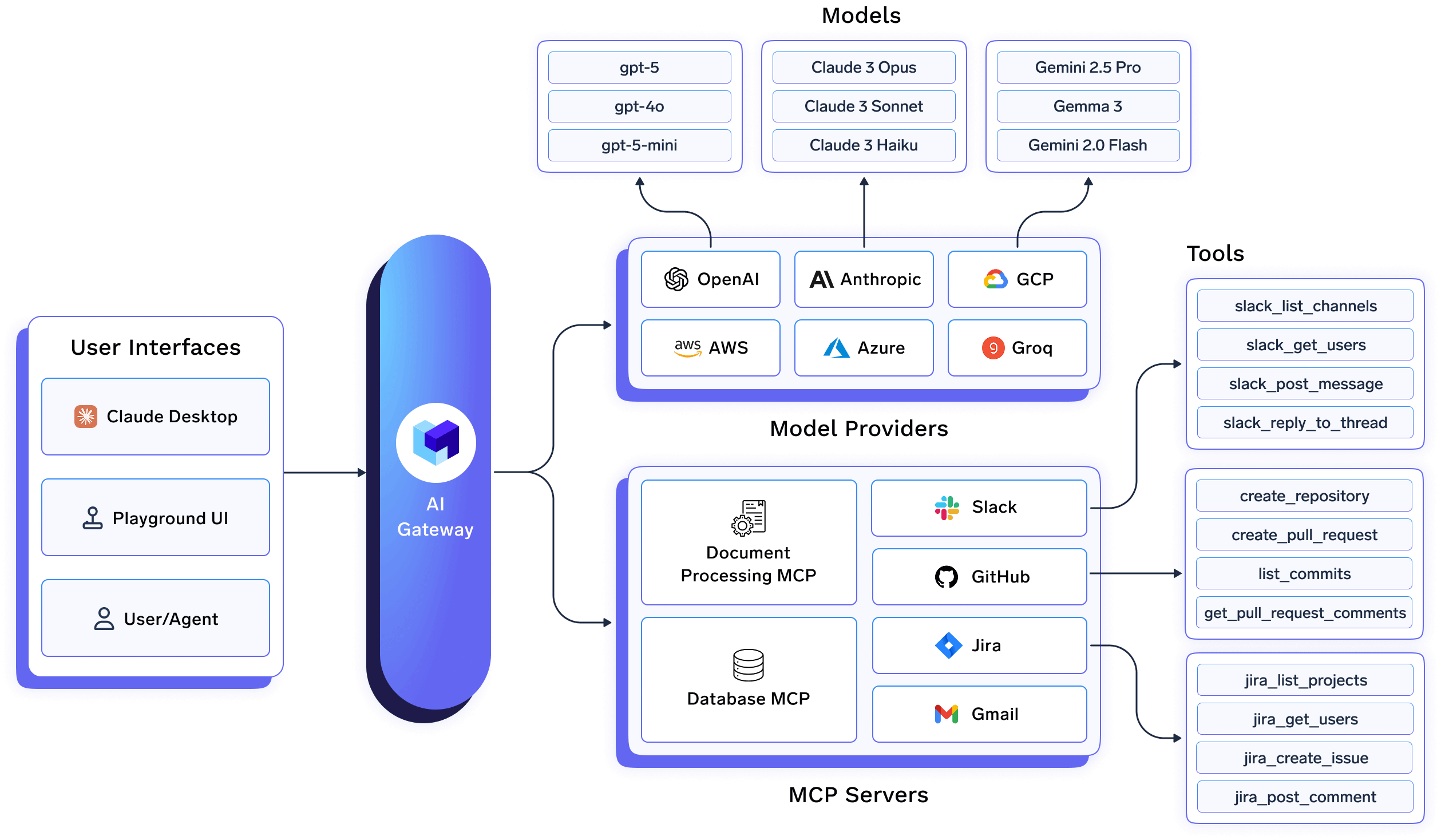
TrueFoundry Puerta de enlace de IAes la capa de proxy que se sitúa entre tus aplicaciones y los proveedores de LLM (y servidores MCP), ofreciéndote una API unificada, además de la observabilidad y la gobernanza necesarias, en lugar de conectar cada aplicación directamente a cada proveedor. La versión de TrueFoundry de esa capa admite el almacenamiento en caché en dos niveles: caché de prompts (a nivel de proveedor, transmitido al modelo subyacente) y a nivel de pasarela caché semántica que compara las solicitudes mediante la similitud de coseno de los embeddings en lugar de requerir una coincidencia exacta, de modo que los prompts semánticamente similares pueden aprovechar la caché incluso cuando la redacción difiere. Esa capa semántica es lo que separa la optimización de inferencia real de una simple caché de clave-valor, y elimina la llamada al modelo por completo en lugar de solo reducir el tiempo hasta el primer token.
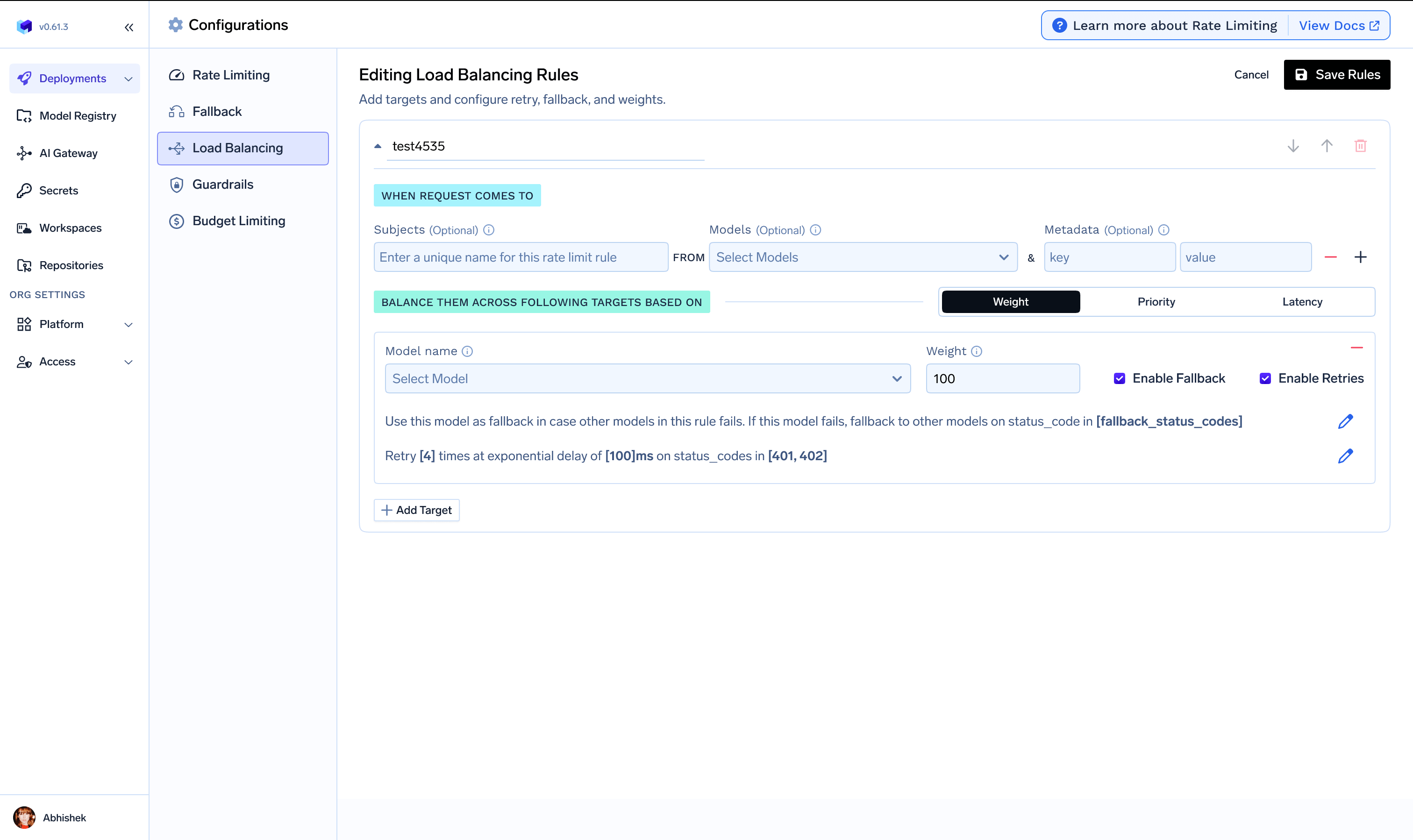
En cuanto a la fiabilidad, el equilibrio de carga incluye conmutación por error automática: si un destino falla por una razón ajena a HTTP, como credenciales incorrectas, DNS o errores de TLS, la pasarela intenta con el siguiente destino en lugar de hacer fallar toda la solicitud. Las reglas de enrutamiento admiten estrategias basadas en peso, latencia y prioridad, configurables a través de un archivo YAML o la interfaz de usuario que se muestra a continuación.
La pasarela gestiona más de 350 solicitudes por segundo en una sola vCPU con un sobrecoste general de entre 3 y 4 ms, y una API de procesamiento por lotes (Batch API) gestiona grandes cargas de trabajo asíncronas a un coste menor y con mayor rendimiento que la inferencia síncrona. Todo esto funciona con más de 1.000 LLMs a través de una única API compatible con OpenAI, por lo que redirigir el tráfico para evitar un proveedor lento o degradado no requiere tocar el código de la aplicación.
Ventajas:
Contras: Los precios completos para empresas requieren hablar con el equipo de ventas en lugar de una compra autoservicio, lo cual se ajusta al modelo de despliegue empresarial, pero supone un inicio más lento que un registro con tarjeta de crédito.
Ideal para: equipos que desean que la caché, el equilibrio de carga y el procesamiento por lotes se gestionen en la pasarela con cifras de rendimiento reveladas, no solo promesas de marketing, junto con el servicio de modelos en la misma plataforma.
Prueba la AI Gateway de TrueFoundry →
El Router de LiteLLM gestiona el equilibrio de carga, reintentos, periodos de enfriamiento y alternativas (fallbacks) entre múltiples despliegues y proveedores de LLM, realizando un seguimiento de los tiempos de respuesta por despliegue y utilizando esos datos para informar las decisiones de enrutamiento. Admite despliegues ponderados, por lo que el tráfico puede repartirse entre proveedores respetando los límites de tasa configurados, con políticas de reserva que reintentan una solicitud con un proveedor alternativo cuando uno falla. En cuanto a la caché, LiteLLM admite caché semántica a través de Redis o Qdrant, comparando los embeddings de los prompts para detectar consultas semánticamente similares en lugar de solo coincidencias exactas, con umbrales de similitud y TTL configurables.
Los inconvenientes son principalmente operativos. La caché semántica requiere configurar específicamente Redis Stack (con el módulo RediSearch), que muchas ofertas de Redis en la nube gestionada no incluyen por defecto, añadiendo una pieza de infraestructura que la mayoría de los equipos no utilizan. Y dado que el proxy de LiteLLM está basado en Python, puede añadir una latencia medible bajo cargas pesadas en comparación con pasarelas construidas en un lenguaje de menor sobrecoste; el enrutamiento autohospedado suele mantenerse en milisegundos de un solo dígito, pero vale la pena realizar pruebas de carga antes de asumir que se mantendrá en sus picos de tráfico.
Ventajas: Núcleo gratuito y de código abierto; caché semántica mediante Redis o Qdrant; router flexible con despliegues ponderados y políticas de reserva; comunidad grande y activa.
Contras: La caché semántica requiere un despliegue específico de Redis Stack que la mayoría de los equipos no tiene; el proxy basado en Python puede añadir latencia bajo cargas pesadas; su equipo opera toda la infraestructura.
Ideal para: equipos que desean flexibilidad en la caché y el enrutamiento de código abierto y que se sienten cómodos configurando y operando la infraestructura de Redis o Qdrant de la que depende la caché semántica.
La pasarela principal de Portkey abarca más de 250 modelos a través de un único punto de conexión, con almacenamiento en caché semántico y simple integrado para reducir la latencia y los costes en consultas repetidas, además de funciones automáticas de respaldo, equilibrio de carga, reintentos y disyuntores. Es una de las opciones alojadas más completas para equipos que buscan funciones de caché y fiabilidad sin tener que ensamblarlas a partir de herramientas independientes.
El nivel empresarial añade alojamiento en VPC, RBAC, SSO y cumplimiento de normativas SOC2/HIPAA/GDPR, pero estas funciones de gobernanza están restringidas a dicho plan de pago, cuyos precios suelen oscilar entre unos pocos miles y más de diez mil dólares al mes, dependiendo del volumen y el modelo de despliegue.
Ventajas: Almacenamiento en caché semántico y simple integrado; amplia cobertura de modelos; funciones automáticas de respaldo y disyuntores para mayor fiabilidad.
Contras: La gobernanza empresarial y el despliegue en VPC requieren el plan empresarial de pago en lugar de formar parte del producto base; el servicio de modelos no está incluido, por lo que funciona junto a una capa de servicio independiente.
Ideal para: equipos que desean funciones de caché semántica y fiabilidad alojadas para un amplio catálogo de modelos y que se sienten cómodos gestionando el servicio de modelos como una tarea independiente.
Cloudflare AI Gateway sirve solicitudes idénticas directamente desde su caché global en el borde (edge), lo que, según informa, puede reducir la latencia hasta en un 90 % en los aciertos de caché, al tiempo que reduce el coste de las llamadas repetidas al proveedor subyacente. La limitación de tasa es flexible y admite ventanas deslizantes o fijas según el modelo, el proveedor o metadatos personalizados como el usuario o el equipo. Además, desde mayo de 2026, una API REST unificada permite llamar a cualquier modelo a través de un único punto de conexión.
Las funciones principales, el análisis del panel de control, el almacenamiento en caché y la limitación de tasa son gratuitos con solo tener una cuenta de Cloudflare, lo cual es una ventaja real para los equipos sensibles a los costes. La contrapartida es que se trata de un almacenamiento en caché en el borde basado en coincidencias exactas, vinculado a la red de Cloudflare, en lugar de un almacenamiento en caché semántico basado en incrustaciones (embeddings) que detecta prompts similares pero no idénticos. Asimismo, el volumen de registros en el nivel gratuito está limitado a 100 000 al mes antes de requerir un plan Workers de pago.
Ventajas: Almacenamiento en caché y limitación de tasa principales gratuitos; aciertos de caché en el borde realmente rápidos; configuración sencilla en una sola línea.
Contras: El almacenamiento en caché se basa en coincidencias exactas en lugar de ser semántico; el volumen de registros está limitado en el nivel gratuito; vinculado a la plataforma y la red de Cloudflare.
Ideal para: equipos que ya utilizan la plataforma de Cloudflare y desean un almacenamiento en caché de coincidencia exacta rápido y gratuito, así como limitación de tasa, sin necesidad de una relación con otro proveedor.
El almacenamiento en caché de prompts de Helicone funciona de forma inmediata en su pasarela compatible con OpenAI, almacenando automáticamente en caché los prompts de más de 1024 tokens, con un prompt_cache_key parámetro para un control más preciso. Para Anthropic específicamente, admite puntos de interrupción de control de caché (hasta cuatro por solicitud) con control de TTL, y cada solicitud se registra y analiza automáticamente sin configuración adicional, ya que la observabilidad viene integrada por defecto en lugar de añadirse posteriormente.
Los precios escalan desde un nivel Hobby gratuito (10 000 solicitudes al mes) hasta un nivel Team de 799 $/mes que añade SOC2 y HIPAA, con un nivel Enterprise que incluye SAML SSO y despliegue local (on-premises). Para los equipos que desean caché y observabilidad a nivel de solicitud en la misma herramienta sin tener que configurar una canalización de registro independiente, esa combinación es su principal atractivo.
Ventajas: Precios sin recargos; caché y observabilidad integradas en el mismo producto por defecto; controles de caché avanzados específicos para el proveedor Anthropic.
Contras: Las certificaciones de cumplimiento y el despliegue local están restringidos a los niveles de pago superiores; no se posiciona como una plataforma completa de servicio de modelos.
Ideal para: equipos que desean combinar el almacenamiento en caché de prompts y la observabilidad automática de solicitudes sin configurar una pila de registro o monitorización independiente.
Elegir la pasarela de IA adecuada puede tener un impacto significativo en el rendimiento, la fiabilidad y el coste de sus aplicaciones de IA. Aunque todas las soluciones ofrecen una forma de conectar con múltiples proveedores de LLM, las mejores pasarelas van más allá del simple reenvío de solicitudes al optimizar la inferencia mediante enrutamiento inteligente, almacenamiento en caché, conmutación por error, observabilidad y gobernanza.
Si está creando aplicaciones de IA empresariales, busque una pasarela que no solo mejore la latencia y la fiabilidad, sino que también proporcione la seguridad, el cumplimiento normativo y los controles operativos necesarios para ejecutar cargas de trabajo de producción a escala. TrueFoundry AI Gateway combina la optimización de la inferencia con gobernanza de nivel empresarial, enrutamiento entre múltiples proveedores, almacenamiento en caché semántico y soporte para más de 1000 LLM, lo que la convierte en una opción sólida para las organizaciones que buscan optimizar tanto el rendimiento como la eficiencia operativa.
A medida que las cargas de trabajo de IA sigan creciendo en 2026, invertir en la pasarela de IA adecuada le ayudará a ofrecer respuestas más rápidas, reducir los costes de infraestructura y crear sistemas de IA más resilientes.
Una pasarela de IA es una capa de middleware que se sitúa entre su aplicación y los proveedores de LLM como OpenAI, Anthropic y Google Gemini. Optimiza la inferencia gestionando el enrutamiento inteligente, los reintentos, la conmutación por error, el almacenamiento en caché, la limitación de tasa y la observabilidad, lo que ayuda a mejorar el rendimiento y reducir la complejidad operativa.
Las pasarelas de IA optimizan la inferencia dirigiendo las solicitudes al modelo o proveedor con mejor rendimiento, almacenando en caché las consultas repetidas, equilibrando el tráfico entre puntos finales, reintentando automáticamente las solicitudes fallidas y reduciendo el tiempo de inactividad mediante la conmutación por error. Estas capacidades conducen a una menor latencia y una mayor fiabilidad.
Sí. Muchas pasarelas de IA reducen los costes mediante el almacenamiento en caché semántico o de consultas, el enrutamiento de modelos basado en precio y rendimiento, controles presupuestarios y análisis que identifican el uso innecesario de tokens. Esto ayuda a las organizaciones a optimizar tanto la infraestructura como el gasto en API.
Para despliegues empresariales, busque pasarelas que combinen la optimización de la inferencia con la gobernanza y la seguridad. TrueFoundry, por ejemplo, ofrece enrutamiento entre múltiples proveedores, almacenamiento en caché semántico, observabilidad, autenticación empresarial, cumplimiento normativo y soporte para más de 1000 LLM, lo que la hace muy adecuada para cargas de trabajo de IA en producción.
TrueFoundry AI Gateway ofrece una latencia de entre 3 y 4 ms, gestiona más de 350 RPS en una vCPU, se escala horizontalmente con facilidad y está listo para la producción, mientras que LitellM presenta una latencia alta, tiene dificultades para superar un RPS moderado, carece de escalado integrado y es ideal para cargas de trabajo ligeras o de prototipos.





Las últimas noticias, artículos y recursos enviados a tu bandeja de entrada
.png)
.png)
.png)
.png)
.png)
.png)
.png)
.png)
.png)

.png)
.png)
.png)


