


September 21, 2026
|
Lesedauer: 5 Minuten


Erhalten Sie sofortigen Zugriff auf eine TrueFoundry-Live-Umgebung. Stellen Sie Modelle bereit, leiten Sie den LLM-Verkehr weiter und erkunden Sie die gesamte Plattform — Ihre Sandbox ist in Sekundenschnelle einsatzbereit, ohne dass eine Kreditkarte erforderlich ist.



Published: June 23, 2026
.webp)
Unglaublich schnelle Methode zum Erstellen, Verfolgen und Bereitstellen Ihrer Modelle!
Ihre Systeme scheinen basierend auf Ihrem Dashboard der Infrastrukturebene gut zu funktionieren, mit bereitgestellten KI-Modellen und aktiven autonomen Agenten. Doch niemand in Ihrer Organisation weiß, welcher Agent welche Tools aufruft, auf welche sensiblen Daten zugegriffen wird, wer verantwortlich ist und was dies die Organisation insgesamt kostet.
Genau diese Art von Problem soll eine KI-Steuerungsebene lösen. Während große Unternehmen von isolierten LLM-basierten Experimenten zu produktionsreifen KI-Systemen übergehen, die über Geschäftsanwendungen und Infrastrukturen hinweg denken, agieren und kommunizieren, wird die Governance-Ebene, die diese KI-Systeme verwaltet, ebenso wichtig wie die KI-Modelle selbst.
Dieser Artikel behandelt, was eine KI-Steuerungsebene ist, wie sie sich von traditionellen Infrastrukturkonzepten unterscheidet, was sie für agentenbasierte KI-Workloads abdecken muss und wie TrueFoundry eine einheitliche Steuerungsebene für Unternehmen, die produktionsreife KI-Systeme in großem Maßstab verbinden und steuern, bereitstellt.
Eine KI-Steuerungsebene ist der zentrale Governance-Hub, der unternehmensweite Regeln über die vielen KI-Systeme einer Organisation hinweg steuert, verfolgt und durchsetzt, einschließlich LLM-Interaktionen, KI-Agenten, MCP-Tool-Integrationen und Agent-zu-Agent-Verbindungen.
Das Konzept der KI-Steuerungsebene ist aus der Netzwerktechnik adaptiert, wo die Trennung von Steuerungs- und Datenebene seit Jahrzehnten eine grundlegende Infrastruktur darstellt. In der Netzwerktechnik verwaltet die Steuerungsebene Routing-Entscheidungen und die Durchsetzung von Richtlinien, während die Datenebene den eigentlichen Datenverkehr transportiert. Dieselbe Unterscheidung gilt auch für KI.
Die KI-Steuerungsebene verwaltet, auf welche Modelle und Tools zugegriffen werden kann, wie Agentenanfragen weitergeleitet werden, welche Governance-Richtlinie angewendet wird und welche Aufzeichnungen im Audit-Trail geführt werden. Die eigentliche agentenbasierte Ausführung – Inferenzaufrufe an einen GPU-Pool, Tool-Aufrufe über MCP, Nachrichten zwischen Agenten – wird unabhängig von der Datenebene gehandhabt. Dies ermöglicht es Plattformteams, Routing, Budgets und Redaktionen anzupassen, ohne die Agentensoftware neu codieren oder bereitstellen zu müssen.
In den Anfängen der KI-Implementierung in Unternehmen war der Prozess unkompliziert. Teams führten einige API-Aufrufe an große Sprachmodelle durch, unterhielten ein kleines Team und bauten ein grundlegendes Protokollierungssystem auf.
Diese Zeiten sind vorbei, jetzt haben wir:
Mit der Einführung autonomer Agenten vervielfacht sich die Komplexität in einem Maße, das bei einfachen Prompts nie erreicht wurde. Eine einzelne Benutzeranfrage kann 15 verschiedene Aufrufe über ebenso viele Tools hinweg auslösen und mindestens fünf verschiedene Systeme involvieren, jedes mit eigenen Zugriffsrechten, Kostenimplikationen und Sensibilitätsstufen für sensible Daten.
Ohne eine zentrale KI-Kontrollebene (AI Control Plane):
Da autonome Agenten im Namen von Benutzern mit tatsächlicher Berechtigung handeln, schaffen unkontrollierte KI-Systeme ein erhebliches Risiko hinsichtlich regulatorischer Anforderungen, nicht nur Kostenprobleme.
.webp)
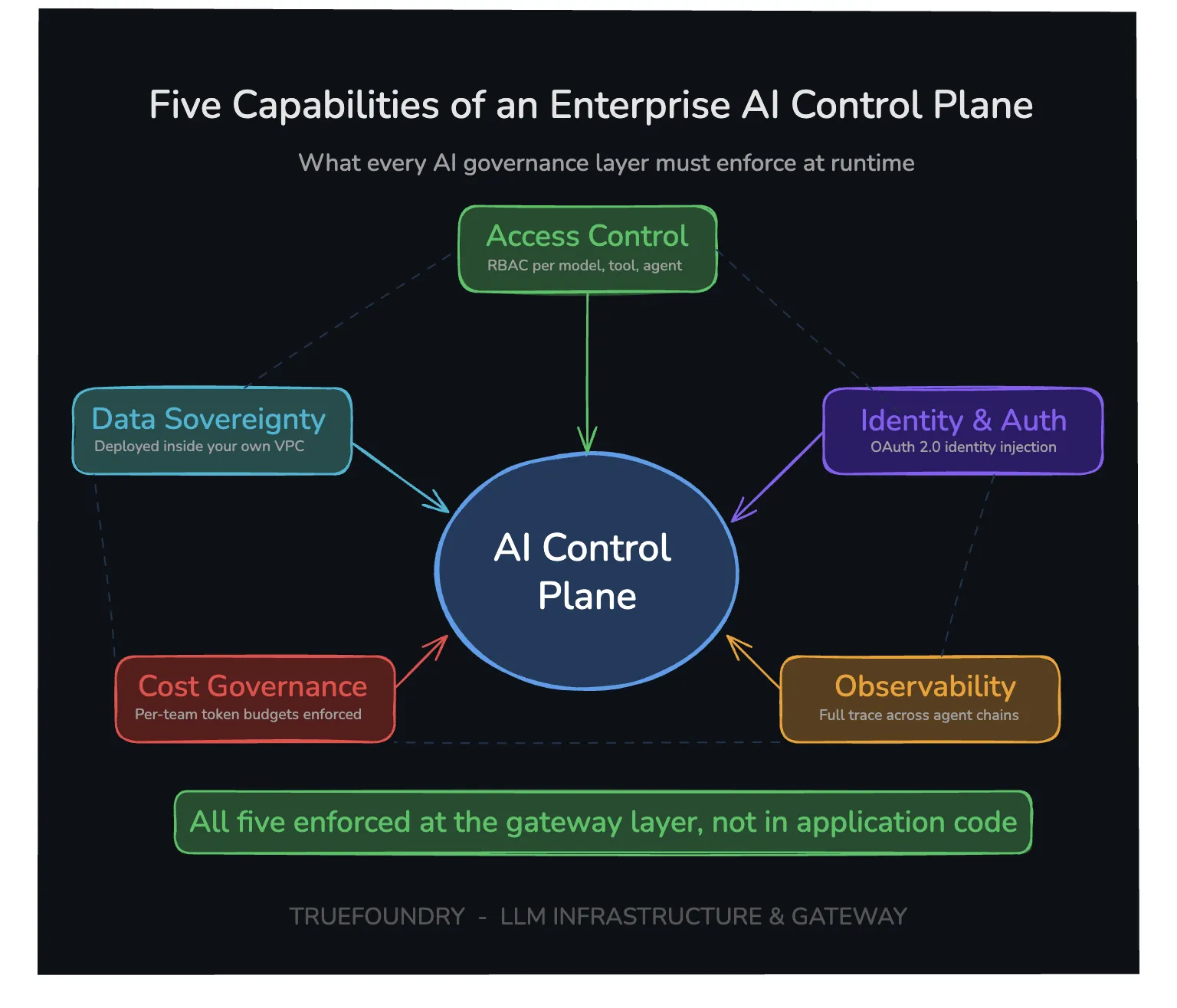
Fünf Kernfunktionen unterscheiden eine funktionale KI-Kontrollebene von einem einfachen Wrapper über einem Gateway. Jede davon muss auf der Infrastrukturebene und nicht im Anwendungscode arbeiten, um effektiv zu sein.
Nur autorisierte Teams und Benutzer können Modelle, Tools und KI-Agenten nutzen. Die Richtliniendurchsetzung erfolgt auf der Gateway-Ebene, bevor Agentenanfragen an Backend-Systeme gesendet werden, und wird nicht nachträglich durch Anwendungscode erzwungen.
Zu den Anforderungen gehören RBAC für Teams und Benutzer, Autorisierung auf Tool-Ebene statt nur auf API-Ebene, Richtliniendurchsetzung vor der Ausführung statt danach und eine konsistente Richtlinie, die auf alle Dienste angewendet wird. Wird eine dieser Anforderungen nicht erfüllt, wird die Zugriffslogik teamübergreifend fragmentiert und inkonsistent, was das Problem der Schattenagenten in großem Maßstab schafft.
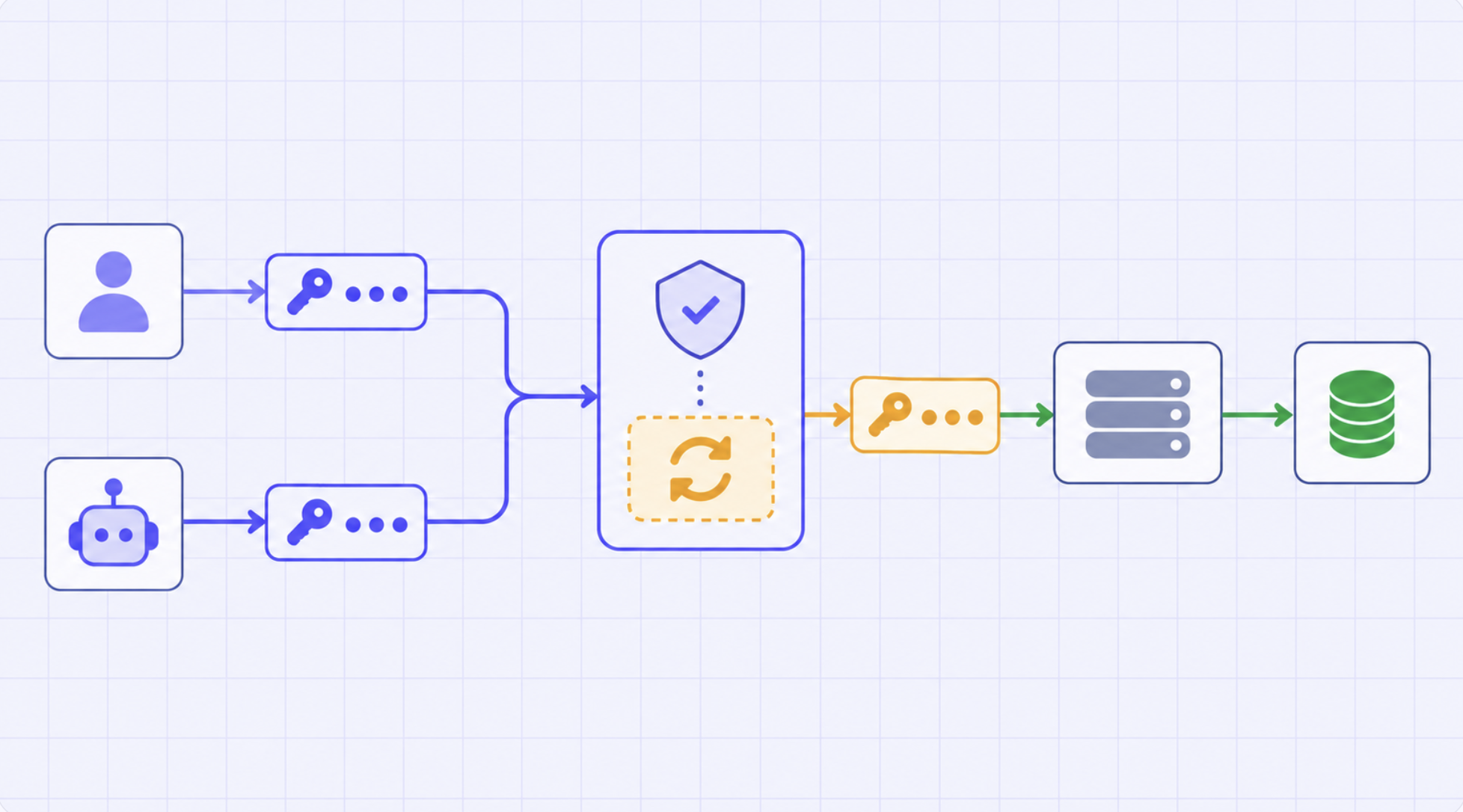
Gemeinsame Dienstkonten erhöhen den potenziellen Schaden (Blast Radius) dramatisch, wenn Anmeldeinformationen kompromittiert werden. Wenn ein Agenten-Dienst-Token verloren geht, kann es jede Datenbank lesen und jede API aufrufen, jedes Mal, wenn es im Namen eines Benutzers gehandelt hat.
Eine ordnungsgemäße KI-Kontrollebene muss die Benutzeridentität in jede Anfrage injizieren, sicherstellen, dass autonome Agenten stets im Einklang mit der Identität eines echten Benutzers handeln, Benutzeridentitäten spezifischen, bereichsbezogenen Berechtigungen zuordnen und sich in Unternehmens-Identitätsanbieter wie Okta und Microsoft Azure AD integrieren. Dies wandelt KI von anonymer Automatisierung in ein identitätsbasiertes Ausführungsmodell um, das regulatorische Rahmenbedingungen und Compliance-Prüfanforderungen erfüllt.
Jede Anfrage muss mit Benutzeridentität, Modell, Tool, Kosten, Latenz und Ausgabe in einem strukturierten, durchsuchbaren Format protokolliert werden, um agentenbasierte Workflows mit Nachvollziehbarkeit durch vollständige Ausführungsketten mehrstufiger Prozesse zu unterstützen, nicht nur den finalen Input und Output.
Speziell für KI-Agenten-Workflows erfordert die Beobachtbarkeit zusätzliche Tiefe. Schrittweise Ausführungsnachvollziehbarkeit, Aufzeichnungen über Zwischenentscheidungen sowie Telemetrie und Metadaten der Tool-Aufrufkette. Ohne dies Grad der Beobachtbarkeit, das Debugging eines KI-Systemausfalls ist eher ein Ratespiel als evidenzbasiert. Metriken zu Agenten-Workflows müssen über ein einheitliches Dashboard mit Echtzeit-Transparenz zugänglich sein.
Die Token-Nutzung muss überwacht werden, wobei konfigurierbare Budgetgrenzen durchgesetzt werden, bevor Kosten entstehen. Echtzeit-Transparenz über die Kosten aller LLMs eliminiert unerwartete Rechnungen und verhindert, dass KI ohne Rechenschaftspflicht läuft.
Die Durchsetzung ist ebenso wichtig wie die Nachverfolgung. Die KI-Steuerungsebene muss ein definiertes Budgetlimit pro Team, Dienst und Endpunkt, einen definierten maximalen Kostenbetrag pro Transaktion und Kostenschätzungen vor der Ausführung von Transaktionen anwenden. Ohne diese Kontrollen häufen sich Gebühren ohne Rechenschaftspflicht an und werden erst am Ende des Abrechnungszyklus sichtbar. Unternehmensleiter benötigen eine ROI-Zuordnung auf Workload-Ebene, nicht eine konsolidierte Cloud-Rechnung.
Das Routing von KI-Verkehr über externe SaaS-Plattformen für Governance und/oder Analysen setzt Unternehmen sowohl Datenabflussrisiken als auch Compliance-Verbindlichkeiten aus. Jeder Prompt kann PII, PHI, Quellcode, Kundendaten und die interne Strategie einer Organisation enthalten. In vielen Fällen ist das Senden von Kopien all dieser Elemente an einen Drittanbieter für Beobachtbarkeit im Austausch für eine hübsche Trace-Ansicht für die meisten regulierten Unternehmen kein akzeptabler Kompromiss.
Für eine ordnungsgemäße Governance/Kontrolle muss die neue Steuerungsebene vier Dinge leisten:
1) Sie muss von Ihrer Infrastruktur aus betrieben werden, entweder in Ihrer VPC oder vor Ort (d.h. im Gegensatz zur Cloud)
2) Sie muss Daten innerhalb der richtigen Sicherheitsgrenzen halten Ihrer Organisationsinfrastruktur
3) Sie muss unnötige Datentransfers minimieren von der Infrastruktur Ihrer Organisation
4) Sie muss einen vollständigen Compliance-Nachweis erbringen (z.B. SOC 2, HIPAA usw.) für regulatorische Anforderungen.
Dieser Faktor spielt typischerweise eine große Rolle bei Entscheidungen zur unternehmensweiten Bereitstellung.
Viele Organisationen versuchen, eine KI-Kontrollebene mit Tools zu schaffen, die sie bereits besitzen, doch alle Kombinationen weisen immer noch dieselben strukturellen Mängel auf.
Alle diese Tools waren ursprünglich für Herausforderungen konzipiert, die vor den spezifischen Governance-Anforderungen für KI-Agenten lagen. Zusammengenommen machen ihre Lücken es unmöglich, die Durchsetzung von Richtlinien bei Live-Agentenanfragen vor der Ausführung über jedes Modell und Tool innerhalb der Netzwerkbegrenzung einer Organisation hinweg zu gewährleisten.
Die KI-Kontrollebene von TrueFoundry ermöglicht es Organisationen, alle autonomen Agenten über mehrere Cloud-Anbieter hinweg von einer einzigen Schnittstelle aus zu verbinden, zu überwachen und zu verwalten, anstatt separate Tools für Agenten, Proxys und andere Komponenten zu pflegen. Durch die Vereinheitlichung des LLM-Gateways, MCP-Gateways und Agenten-Gateways in einer einzigen Kontrollebene steuern Organisationen agentische Workloads von einer einzigen Governance-Schicht aus, anstatt von drei getrennten Systemen.
Das TrueFoundry KI-Gateway wird ausschließlich innerhalb des AWS-, GCP- oder Azure-Kontos der Organisation bereitgestellt. Alle Inferenzaufrufe, KI-Agenten-Orchestrierung, Tool-Ausführung und MCP-Interaktionen werden verwaltet, ohne dass Daten außerhalb der Netzwerkbegrenzung der Organisation gelangen, wodurch die Einhaltung der HIPAA-, SOC 2- und ITAR-Regulierungsanforderungen gewährleistet wird.
Das bedeutet, ein Plattformteam kann einen neuen Anbieter aktivieren, 10 % des Datenverkehrs dorthin leiten, eine Regel zur Durchsetzung der PII-Redaktionsrichtlinie anwenden, die täglichen Ausgaben auf 2.000 $ begrenzen und alle Aufrufe prüfen, ohne Anwendungen neu bereitstellen zu müssen.
Demo buchen um zu sehen, wie TrueFoundry die KI-Governance vereinheitlicht, Agenten-Workflows sichert, Kosten kontrolliert und produktionsreife Kontrolle über Unternehmensbereitstellungen hinweg bietet.
.webp)
TrueFoundry AI Gateway bietet eine Latenz von ~3—4 ms, verarbeitet mehr als 350 RPS auf einer vCPU, skaliert problemlos horizontal und ist produktionsbereit, während LiteLM unter einer hohen Latenz leidet, mit moderaten RPS zu kämpfen hat, keine integrierte Skalierung hat und sich am besten für leichte Workloads oder Prototyp-Workloads eignet.





Die neuesten Nachrichten, Artikel und Ressourcen werden in Ihren Posteingang gesendet
.png)
.png)
.png)
.png)
.png)
.png)
.png)
.png)


