


September 22, 2026
|
Lesedauer: 5 Minuten


Erhalten Sie sofortigen Zugriff auf eine TrueFoundry-Live-Umgebung. Stellen Sie Modelle bereit, leiten Sie den LLM-Verkehr weiter und erkunden Sie die gesamte Plattform — Ihre Sandbox ist in Sekundenschnelle einsatzbereit, ohne dass eine Kreditkarte erforderlich ist.



Published: May 9, 2026
.webp)
Unglaublich schnelle Methode zum Erstellen, Verfolgen und Bereitstellen Ihrer Modelle!
Every system that routes, manages, or governs data traffic is built on a fundamental division between two distinct layers. One layer specifies what will occur. The second layer carries out those specifications.
The distinction between the control plane and the data plane is the foundation upon which virtually every modern technology system is designed, from networking and cloud computing infrastructure to Kubernetes and cloud environments. In 2026, the same architectural principle determines how enterprise AI systems are governed.
For teams building and scaling AI deployments, this boundary ultimately determines whether their systems are:
This guide defines the control plane and data plane from first principles, examines how the separation applies across different environments, and explains what control plane vs data plane separation means for governing enterprise AI at scale.
The control plane is responsible for the strategic planning and operation of a system. Although the control plane does not process the primary workload, it is responsible for:
This role remains consistent across different environments. In networking, the control plane constructs routing tables and enforces access policies, while in Kubernetes it handles cluster state management and workload scheduling. In AI systems, the control plane manages access to models, enforces authentication and RBAC, tracks cost, and logs activity.
The control plane serves as the central processing layer of the system, developing rules, making strategic decisions, and facilitating their execution by the data plane.
The data plane, also known as the forwarding plane, is the layer that implements the decisions made by the control plane.
The actual movement of data occurs here across all environments:
The data plane is optimized for speed, scale, and throughput. It executes what the control plane directs, applying packet-forwarding rules and managing the actual movement of data packets with minimal latency, without making its own governance decisions.
.webp)
Modern systems consistently exhibit a clear division between the Control and Data Planes.
The control plane processes routing protocols such as Open Shortest Path First (OSPF) and Border Gateway Protocol (BGP) to build routing tables and determine the best path for network traffic. The data plane uses those tables to forward data packets at line speed.
The separation of control elements between these two planes enabled the development of the SDN architecture, which introduced centralized, programmable routing protocol logic. Multiprotocol Label Switching (MPLS) is another example where the control plane assigns labels and the data plane forwards traffic based on those labels, enabling traffic management at scale.
The Control Plane contains the following resources:
The Control Plane is responsible for managing the state of the cluster and determining where workloads should run.
The Data Plane contains the following resources:
The Data Plane is where pods actually execute.
The control plane handles identity and access management, provides APIs for resource provisioning, and enforces network policies on resource use. The data plane executes compute resources, accesses storage, and passes network traffic.
The separation of control allows cloud providers to update their management logic without affecting running workloads. Managed services such as EKS and AKS abstract the control plane management from customers, but the two planes remain architecturally separate in the background. The control plane governs cloud environments while the data plane handles the transfer of data and workload execution.
Without a control plane, AI systems are unobservable, cost-uncontrolled, and difficult to secure against unauthorized access. The data plane vs control plane gap in AI is not a theoretical concern; it is the operational reality that most organizations discover after deployment.
.webp)
Most teams have made progress in their data plane capabilities in 2026. They have deployed their models; their agents are executing a multitude of workflows and their inference is happening on an enterprise level across both products and internal systems.
Where the organizations are currently struggling is not with their execution, but instead, their ability to define a governance strategy.
Without a clearly defined Control Plane, the organization has several issues:
The pattern repeats consistently: organizations invest in building their data plane capabilities and treat the control plane as an afterthought. The result is a highly productive but completely ungoverned data plane where data transfer and agent activity happens at scale with no enforcement layer above it.
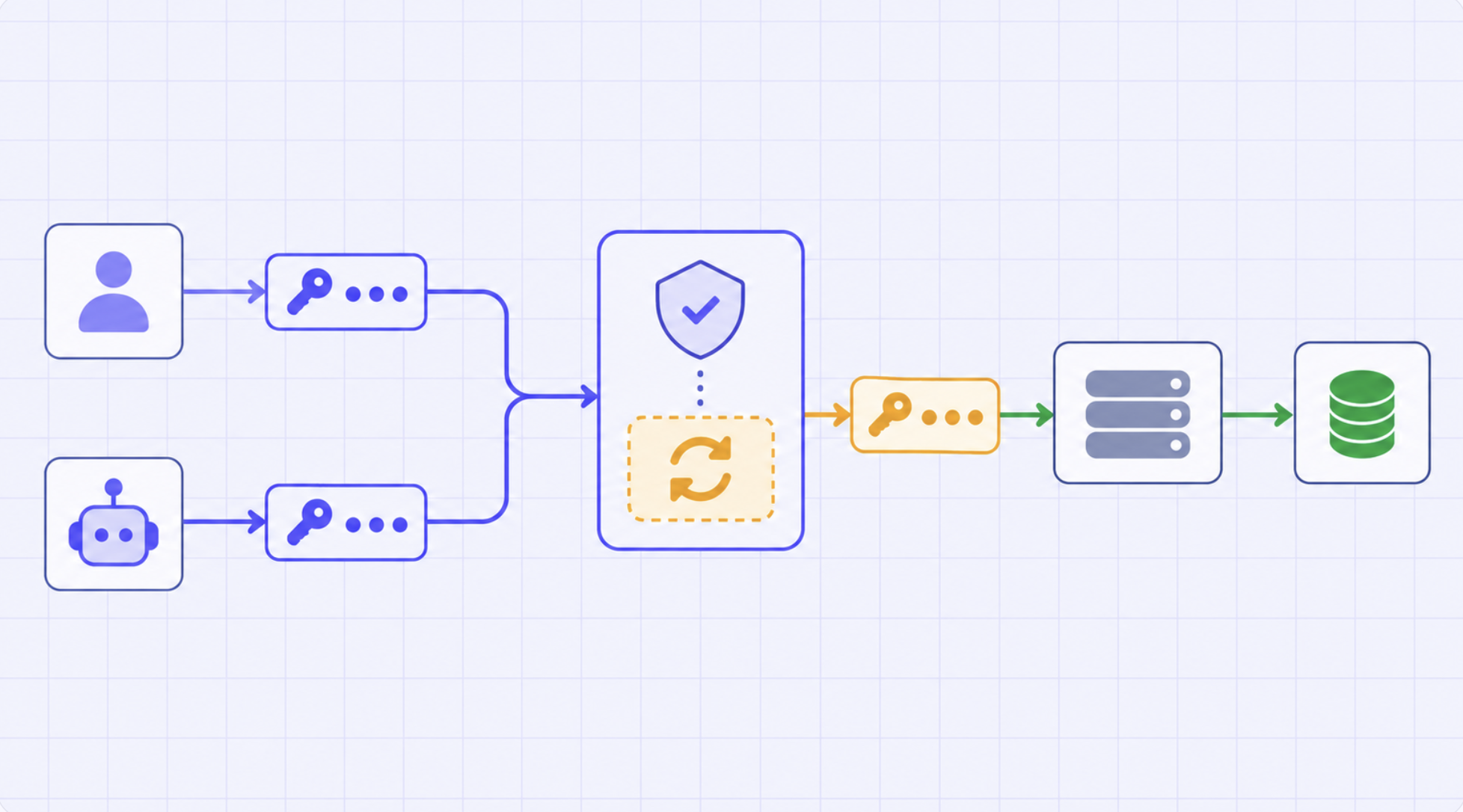
TrueFoundry provides a complete and integrated AI gateway for enterprises running agentic AI across multiple providers. The platform unifies LLM access, tool integrations through MCP, and agent orchestration through a single host, following the same architectural pattern that separates decision-making from execution in Kubernetes and SDN architecture.
The control plane provides governance. The data plane executes model inference and agent workflows. TrueFoundry governs the boundary between them.
Book a demo to experience TrueFoundry’s AI control plane in action, streamline governance, secure agents, optimize costs, and scale enterprise AI confidently.
.webp)
TrueFoundry AI Gateway bietet eine Latenz von ~3—4 ms, verarbeitet mehr als 350 RPS auf einer vCPU, skaliert problemlos horizontal und ist produktionsbereit, während LiteLM unter einer hohen Latenz leidet, mit moderaten RPS zu kämpfen hat, keine integrierte Skalierung hat und sich am besten für leichte Workloads oder Prototyp-Workloads eignet.





Die neuesten Nachrichten, Artikel und Ressourcen werden in Ihren Posteingang gesendet
.png)
.png)
.png)
.png)

.png)
.png)


