


September 22, 2026
|
Lesedauer: 5 Minuten


Erhalten Sie sofortigen Zugriff auf eine TrueFoundry-Live-Umgebung. Stellen Sie Modelle bereit, leiten Sie den LLM-Verkehr weiter und erkunden Sie die gesamte Plattform — Ihre Sandbox ist in Sekundenschnelle einsatzbereit, ohne dass eine Kreditkarte erforderlich ist.



Published: September 14, 2026
Unglaublich schnelle Methode zum Erstellen, Verfolgen und Bereitstellen Ihrer Modelle!
Am 30. April, als Palo Alto Networks seine Absicht bekannt gab, Portkey zu übernehmen, hatte ich zwei Reaktionen.
Die erste war aufrichtig: Glückwunsch an das Portkey-Team. Sie waren schnell, haben mit Überzeugung aufgebaut und sich dieses Ergebnis verdient. Wir haben direkt mit ihnen im Bereich der AI Gateways konkurriert und gesehen, wie sie sich von einem reinen LLM-Observability-Tool zu einer vollständigen Plattform entwickelt haben. Eine solche Entwicklung in so kurzer Zeit ist nur mit ausgeprägtem Produktinstinkt und unermüdlicher Umsetzung möglich. Wohlverdient.
Die zweite Reaktion war strategischer: Dies ist das bisher deutlichste Signal, dass AI Gateways sich von einem „interessanten Infrastruktur-Experiment“ zu einer „kategoriedefinierenden Unternehmensanforderung“ entwickelt haben. Und wenn Sie ein Software-Engineering-Leiter oder Plattform-Team sind, das heute noch keine AI-Gateway-Strategie hat, ist diese Übernahme Ihr Weckruf.
Wir sind schon seit einiger Zeit im Bereich der AI Gateways tätig, und ehrlich gesagt mussten wir lange erklären, was ein AI Gateway überhaupt ist. Nicht mehr.
Gartner identifizierte AI Gateways erstmals 2024 als aufstrebende Kategorie. 2025 veröffentlichten sie den Market Guide und Innovation Insight. Und 2026 veröffentlichen sie ihren ersten Magic Quadrant für AI Gateways – und etablieren es damit offiziell als wichtige Unternehmensanforderung. Das sind zwei Jahre von „Beobachten Sie diesen Bereich“ bis zu einem vollständigen Magic Quadrant. Ich bin lange genug in der Infrastrukturbranche, um zu wissen, dass dies eine außergewöhnlich schnelle Entwicklung für eine Kerninfrastrukturkategorie ist.
Die Übernahme durch Palo Alto ist besonders aufschlussreich. Wenn eine der weltweit größten Cybersecurity-Plattformen eine solche Entscheidung trifft, ist das keine Absicherung. Es ist ein Statement. AI Gateways, die Kontrollschicht zwischen Ihren Teams und jedem Modell, Agenten und jeder AI-API, mit denen sie interagieren, gelten nun als essenzielle Infrastruktur.
So wie API-Gateways für die Verwaltung von Microservices unverzichtbar wurden, werden AI Gateways zur Steuerungsebene für jedes Modell, jeden Agenten und jeden AI-Workflow, der in Ihrem Unternehmen läuft. Die Kategorie ist real. Die Dringlichkeit ist real.
Ich habe dies ausführlich in einem kürzlichen Podcast-Episode mit Tesseract Talks.
Palo Alto ist ein Sicherheitsunternehmen. Das ist ihre Kernthese, ihre Plattformstrategie und die Linse, durch die sie Portkey zukünftig ausrichten werden. Und das ist in Ordnung, es ist logisch für sie.
Aber es ist nicht das ganze Bild, und hier möchte ich direkt sein mit AI-Engineering- und Plattform-Leitern, die ihre eigene AI-Infrastrukturstrategie bewerten.
AI Gateways sind nicht nur ein Sicherheitstool.
Sie sind bereichsübergreifende Middleware, die jedes Team in Ihrem Unternehmen aus völlig unterschiedlichen Gründen nutzt:
Gartners neueste Forschung macht dies deutlich: KI-Gateways befinden sich an der Schnittstelle mehrerer Teams, wobei jedes Team sie aus einer anderen funktionalen Perspektive betrachtet. API-Teams sehen sie als erweiterte API-Gateways. KI-Ingenieure sehen sie als Modell-Router. Die Finanzabteilung sieht sie als Kostenkontrollen. Jede Perspektive ist gültig – und genau diese Breite ist der Grund, warum ein in eine Sicherheitsplattform eingebettetes KI-Gateway immer von den Prioritäten dieser Plattform geprägt sein wird, nicht von Ihren.
Gartners eigene Empfehlung zur Portkey-Akquisition ist es wert, direkt zitiert zu werden:
„Organisationen müssen ihre KI-Gateway-Strategie unabhängig von den in größeren Plattformen eingebetteten KI-Gateways verwalten, aufgrund der wahrscheinlichen Einschränkungen eingebetteter KI-Gateways.“ — Gartner First Take: Palo Alto Networks' Portkey-Deal signalisiert die Bedeutung von KI-Gateways
(1. Mai 2026)
Das ist keine Kritik an Palo Alto Networks oder Portkey. Es ist eine strukturelle Realität, wie Plattformkonsolidierung funktioniert. Wenn ein Sicherheitsanbieter ein Infrastruktur-Tool erwirbt, wird dieses Tool für den Sicherheitsanwendungsfall optimiert. Das mag einen Teil dessen abdecken, was Sie benötigen. Es wird nicht alles abdecken.
Unter all dem steckt ein tieferer Punkt, der meiner Meinung nach in der Akquisitionsüberschrift verloren geht: Wem gehört Ihre KI-Steuerungsebene?
Wenn der KI-Verkehr in Ihrer Organisation skaliert (eingehende Prompts, ausgehende Modellaufrufe, Agent-zu-Agent-Workflows, MCP-Interaktionen), werden Sie keinen einzigen Engpass haben, an dem ein Gateway sitzen kann. Dies ist kein theoretischer zukünftiger Zustand. Es trifft bereits auf die meisten Organisationen zu, die heute ernsthaft mit KI arbeiten. Sie benötigen eine verteilte KI-Gateway-Architektur, die von einer einheitlichen Steuerungsebene verwaltet wird.
Und diese Steuerungsebene muss Ihrem Plattformteam gehören, nicht in Ihrem LLM-Anbieter verborgen und schon gar nicht in Ihrem Sicherheitsanbieter eingebettet sein.
Die Parallele, auf die ich immer wieder zurückkomme, ist das, was mit API-Gateways geschah. Anfangs ließen Teams die Funktionen von API-Gateways in angrenzende Plattformen integrieren: Lastverteiler, Service Meshes, Cloud-Anbieter. Und dann verbrachten sie Jahre damit, das wieder zu entwirren, weil das eingebettete Gateway immer auf die Prioritäten der Host-Plattform optimiert war, nicht auf die des Entwickler-Plattformteams. AI-Gateways befinden sich genau jetzt an diesem Wendepunkt.
Gartners Empfehlung ist die Einführung eines föderierten AI-Gateway-Ansatzes mit einer zentralisierten Steuerungsebene – einer, die Ihnen konsistente Standards und Governance im gesamten Unternehmen bietet, unabhängig von einem einzelnen Anbieter.
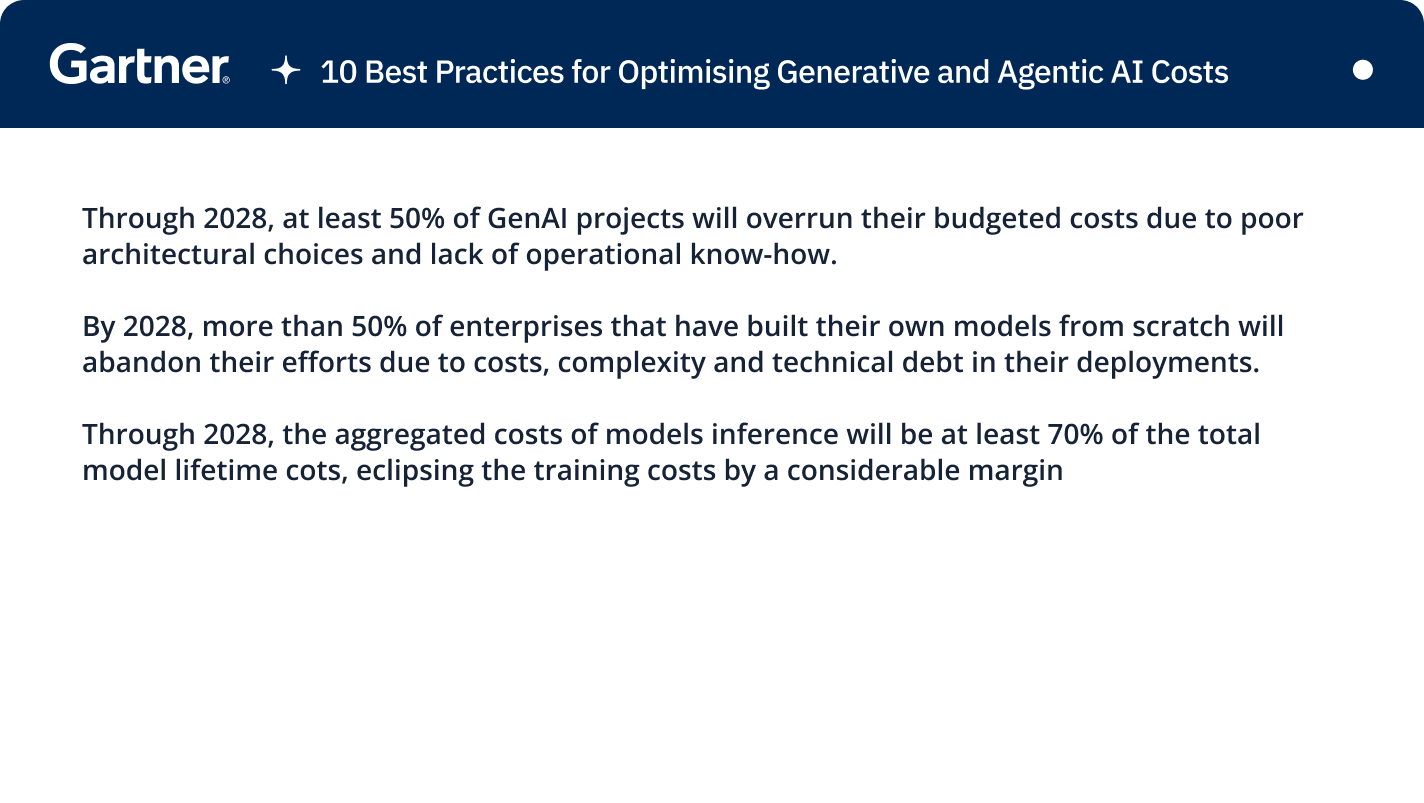
Wenn Sie mehr über Gartners Forschung zu AI-Gateways erfahren möchten, bieten wir Ihnen kostenlosen Zugang zu seinem 2026 10 Best Practices zur Optimierung der Kosten für generative und agentische KI Bericht.
Wir sind in diesem Bereich tätig, weil wir zutiefst davon überzeugt sind, dass Plattformteams eine Steuerungsebene für KI verdienen, die wirklich ihnen gehört. Nichts, was von einer Sicherheitsplattform geerbt wurde. Nichts, was in einem verwalteten Angebot eines Hyperscalers angesiedelt ist. Ein einheitliches AI-Gateway, das Engineering-Teams volle Transparenz und Kontrolle über jede KI-Interaktion, über Modelle, Agenten und Teams hinweg bietet und das sie nach ihren eigenen Vorstellungen betreiben und steuern können.
TrueFoundry ist in mehreren Gartner-Berichten als spezialisierter AI-Gateway-Anbieter aufgeführt, und wir haben diese Kategorie von innen heraus reifen sehen. Die Übernahme durch Palo Alto bestätigt alles, was wir über die Entwicklung dieser Kategorie geglaubt haben.
Die Kategorie ist da. Der Magic Quadrant kommt. Die Frage ist nun, wer sie in Ihrem Unternehmen verantwortet.
Wenn Sie keine AI-Gateway-Strategie haben, beginnen Sie jetzt.
Wenn Sie Optionen bewerten, bewerten Sie nicht nur den heutigen Anwendungsfall (der für die meisten Teams mit Sicherheit und Observability beginnt). Bewerten Sie den gesamten Funktionsumfang: Kostenmanagement, Modell-Routing, Governance, Integration, Zuverlässigkeit. Ein AI-Gateway, das nur einen dieser Bereiche abdeckt, wird Sie dazu zwingen, die Strategie in 18 Monaten neu aufzubauen.
Und am wichtigsten: Machen Sie sich Ihre Steuerungsebene zu eigen. Sie sollte zentral von Ihrem Plattformteam gesteuert werden, unabhängig von den Anbietern, deren Tools darüber laufen.
Die Kategorie hat gerade eine sehr nachdrückliche Bestätigung erhalten. Stellen Sie sicher, dass Ihre Strategie umfassender ist, als es eine einzelne Plattform bieten kann.
TrueFoundry AI Gateway bietet eine Latenz von ~3—4 ms, verarbeitet mehr als 350 RPS auf einer vCPU, skaliert problemlos horizontal und ist produktionsbereit, während LiteLM unter einer hohen Latenz leidet, mit moderaten RPS zu kämpfen hat, keine integrierte Skalierung hat und sich am besten für leichte Workloads oder Prototyp-Workloads eignet.





Die neuesten Nachrichten, Artikel und Ressourcen werden in Ihren Posteingang gesendet
.png)
.png)
.png)
.png)
.png)
.png)
.png)


