10 Best Practices for Optimizing Generative & Agentic AI Costs | 2026

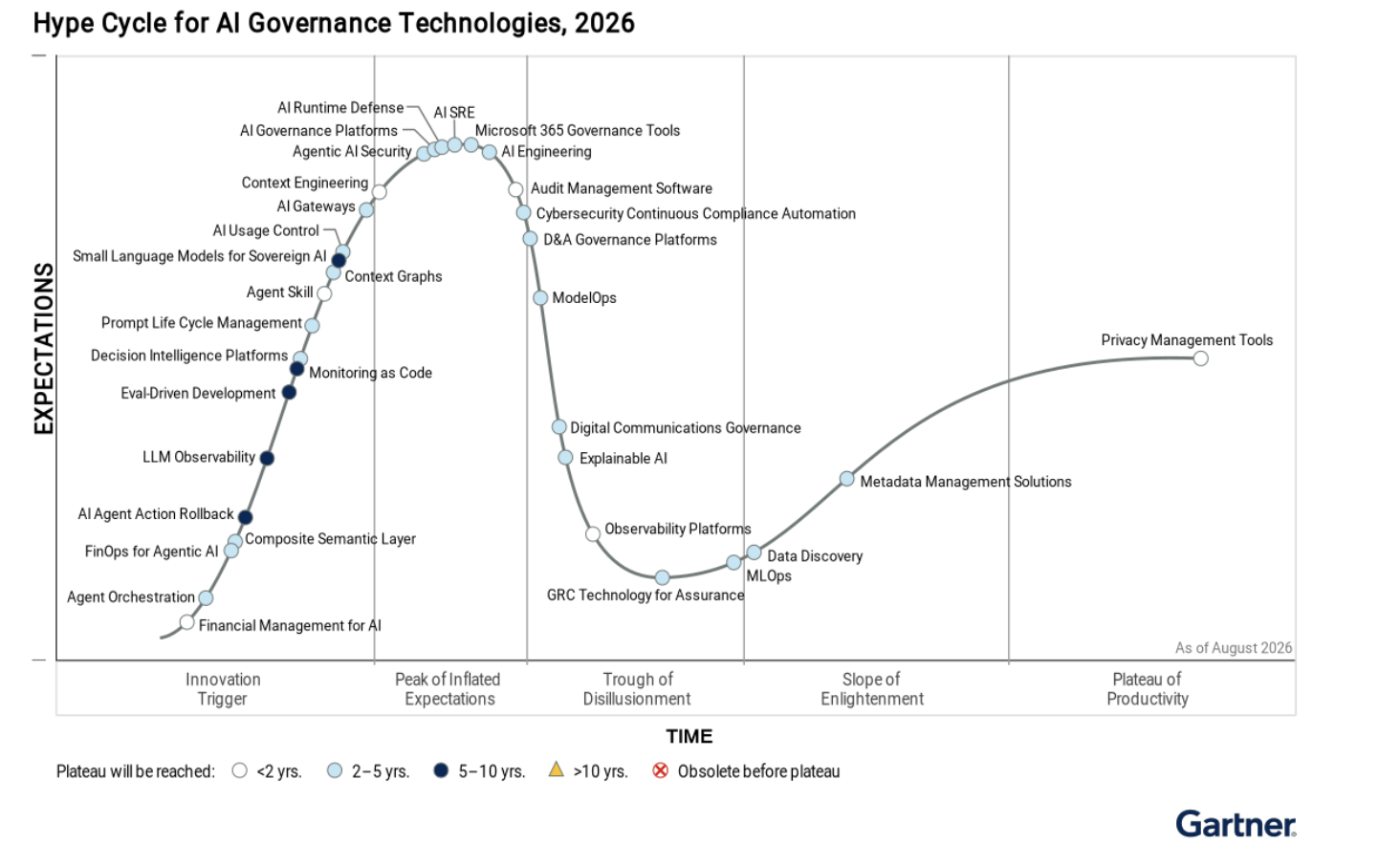
TrueFoundry is named in the report
Our key findings:
As GenAI moves from pilot to production, costs increase exponentially, catching many organizations off guard
Through 2028, the aggregated costs of model inference will be at least 70% of the total model lifetime costs
Enterprises need centralized control layers (like AI gateways) to enforce policies, optimize routing, and manage costs

Get the Full Report in Your Inbox

Thank you! Your submission has been received!
Oops! Something went wrong while submitting the form.
Through 2028, at least
50%

of GenAI projects will overrun their budget due to poor architectural choices and lack of operational know-how.

Download Report
arrow1
Download the complete report by Gartner to learn more about:
  • How to balance model accuracy, performance, and cost trade-offs
  • The hidden cost drivers most teams miss
  • How AI gateways and model routing reduce waste
  • Strategies for governance, pricing, and cost transparency
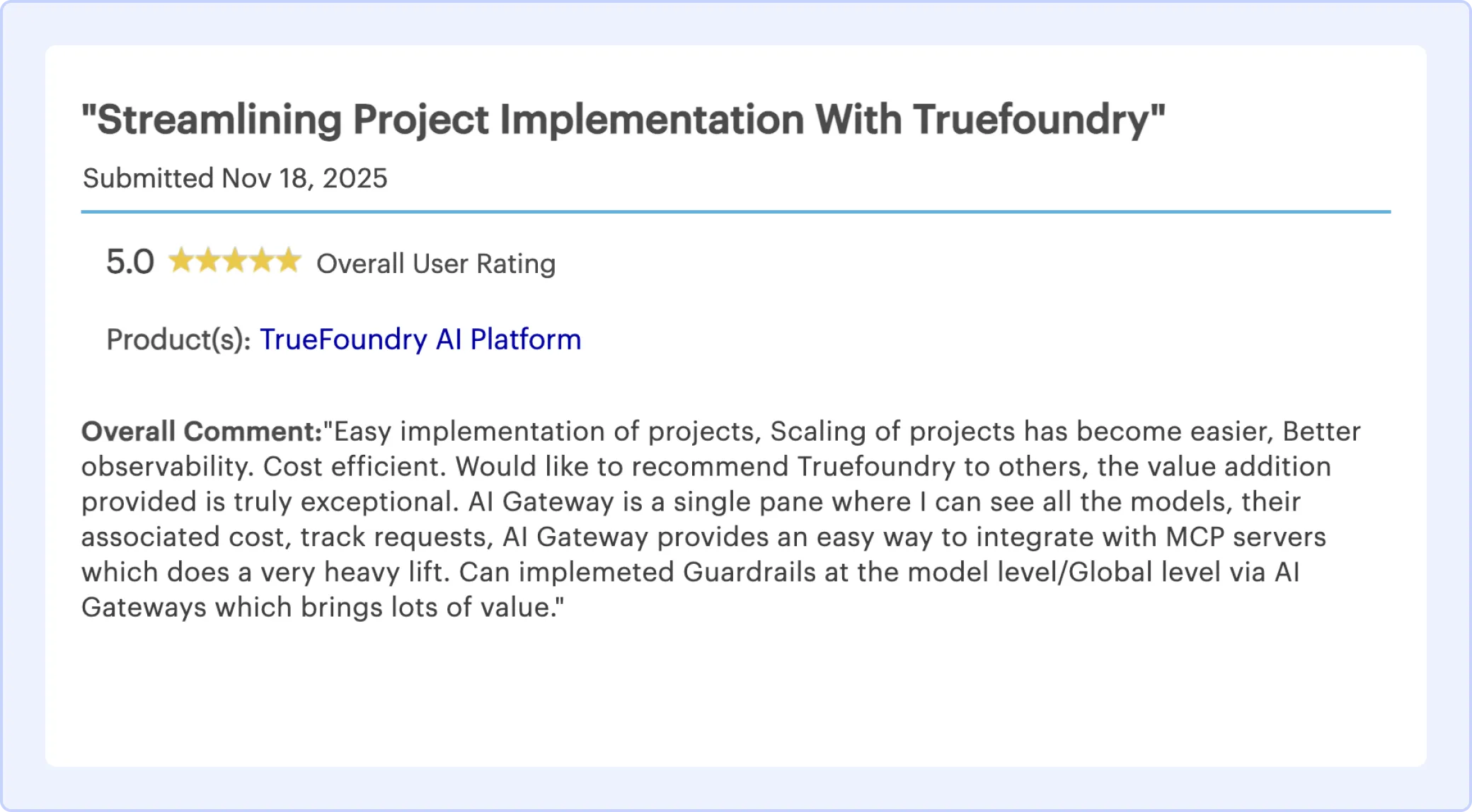
Rated 4.7 on Gartner Peer Insights

TrueFoundry is the AI Gateway platform of choice for leading enterprises and Fortune 500 companies. 96% of reviewers are likely to recommend TrueFoundry and our users have rated us 4.9 for ease of deployment, administration, and maintenance.

Why AI Cost Optimization Is the Biggest Challenge in Enterprise GenAI

As generative AI moves from experimentation to production, enterprises are facing a new and unexpected challenge: AI cost optimization.

While early pilots often appear inexpensive, scaling AI systems introduces a completely different cost dynamic. In our view, the report indicates that organizations underestimate the complexity of running production-grade AI, leading to rising generative AI cost, budget overruns, and inefficient deployments.

The Hidden Drivers of Generative AI Cost

The core issue lies in how AI systems operate. Unlike traditional software, generative AI workloads are usage-driven and non-linear. A single user request can trigger multiple model calls, tool executions, and retrieval steps—especially in agentic workflows. This makes costs harder to predict and significantly more volatile.

At the same time, pricing models across providers are rapidly evolving. Enterprises must navigate a mix of token-based pricing, API usage fees, subscription tiers, and even outcome-based pricing in some cases. Without clear visibility, comparing costs across vendors becomes extremely difficult.

This is where architectural decisions start to matter.

Organizations that succeed in controlling AI costs focus on three key areas:
1. Smart Model Selection

Not every use case requires the most advanced (and expensive) model. Choosing the right model for each task is one of the fastest ways to achieve AI cost reduction while maintaining performance.

2. Observability and Governance

Without proper monitoring, AI usage can grow unchecked. Teams need visibility into token usage, cost per request, and model performance to make informed decisions.

3. AI Gateways and Routing Layers

A new category of infrastructure—AI gateways—is emerging to address this challenge. These systems act as a control layer, enabling organizations to route requests to the most cost-efficient models, enforce usage policies, and optimize performance in real time.

In our view, Gartner specifically highlights this category as critical to cost optimization and names TrueFoundry as a vendor offering AI gateway tools in the space, which we feel is signaling strong enterprise adoption of this architectural pattern.

Beyond infrastructure, there’s also a human factor. Developers and end users often lack awareness of how their usage patterns impact costs. Educating teams on efficient prompting, model selection, and responsible usage is becoming a critical part of AI cost management.

Enterprises that build cost-aware AI systems today will be better positioned to scale faster, experiment more, and unlock long-term value from AI investments.

If you're building or scaling AI applications, understanding these cost dynamics is essential to proving the ROI of these investments.

Real Outcomes at TrueFoundry

Why Enterprises Choose TrueFoundry

3x

faster time to value with autonomous LLM agents

80%

higher GPU‑cluster utilization after automated agent optimization

Aaron Erickson

Founder, Applied AI Lab

TrueFoundry turned our GPU fleet into an autonomous, self‑optimizing engine - driving 80 % more utilization and saving us millions in idle compute.

5x

faster time to productionize internal AI/ML platform

50%

lower cloud spend after migrating workloads to TrueFoundry

Pratik Agrawal

Sr. Director, Data Science & AI Innovation

TrueFoundry helped us move from experimentation to production in record time. What would've taken over a year was done in months - with better dev adoption.

80%

reduction in time-to-production for models

35%

cloud cost savings compared to the previous SageMaker setup

Vibhas Gejji

Staff ML Engineer

We cut DevOps burden and simplified production rollouts across teams. TrueFoundry accelerated ML delivery with infra that scales from experiments to robust services.

50%

faster RAG/Agent stack deployment

60%

reduction in maintenance overhead for RAG/agent pipelines

Indroneel G.

Intelligent Process Leader

TrueFoundry helped us deploy a full RAG stack - including pipelines, vector DBs, APIs, and UI—twice as fast with full control over self-hosted infrastructure.

60%

faster AI deployments

~40-50%

Effective Cost reduction of across dev environments

Nilav Ghosh

Senior Director, AI

With TrueFoundry, we reduced deployment timelines by over half and lowered infrastructure overhead through a unified MLOps interface—accelerating value delivery.

<2

weeks to migrate all production models

75%

reduction in data‑science coordination time, accelerating model updates and feature rollouts

Rajat Bansal

CTO

We saved big on infra costs and cut DS coordination time by 75%. TrueFoundry boosted our model deployment velocity across teams.

Enterprise-Ready

Your data and models are securely housed within your cloud / on-prem infrastructure.

  • Fully Modular Systems

    Integrates with and complements your existing stack
  • True Compliance

    SOC 2, HIPAA, and GDPR standards to ensure robust data protection
  • Secure By Design

    Flexible Role based access control and audit trails
  • Industry-standard Auth

    SSO Integration via OIDC or SAML
Notes & Disclaimers

Gartner, 10 Best Practices for Optimizing Generative and Agentic AI Costs, By Arun

Chandrasekaran et. al, 20 March 2026

GARTNER is a trademark of Gartner, Inc. and/or its affiliates.

Gartner does not endorse any company, vendor, product or service depicted in its publications, and does not advise technology users to select only those vendors with the highest ratings or other designation. Gartner publications consist of the opinions of Gartner’s business and technology insights organization and should not be construed as statements of fact. Gartner disclaims all warranties, expressed or implied, with respect to this publication, including any warranties of merchantability or fitness for a particular purpose.