|
Lesedauer: 5 Minuten


Erhalten Sie sofortigen Zugriff auf eine TrueFoundry-Live-Umgebung. Stellen Sie Modelle bereit, leiten Sie den LLM-Verkehr weiter und erkunden Sie die gesamte Plattform — Ihre Sandbox ist in Sekundenschnelle einsatzbereit, ohne dass eine Kreditkarte erforderlich ist.



Published: November 25, 2026
Unglaublich schnelle Methode zum Erstellen, Verfolgen und Bereitstellen Ihrer Modelle!
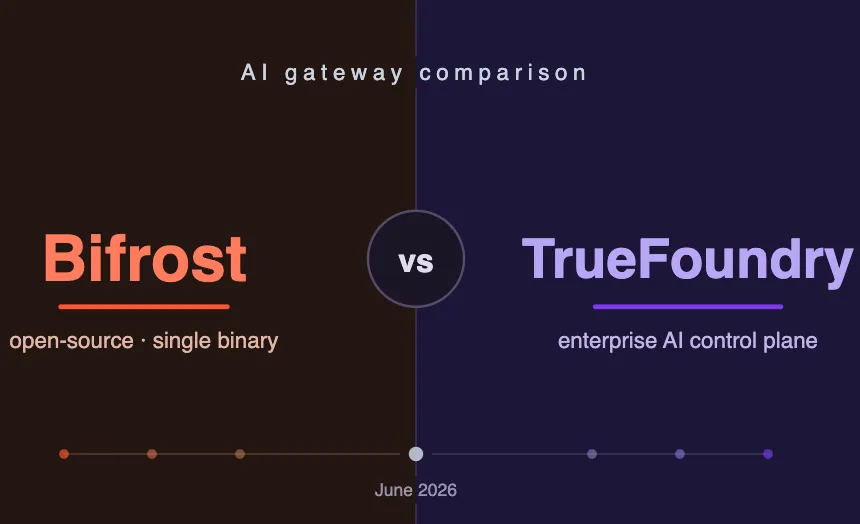
Bifrost vs agentgateway is the rare comparison where both sides are open source, self-hosted and fast. Bifrost, from Maxim AI, is an LLM gateway first: routing, budgets, caching and cost tracking for model calls, with an MCP gateway alongside. agentgateway, started by Solo.io and now a Linux Foundation project, is an agent gateway first: model calls, MCP tool calls and agent-to-agent (A2A) traffic under one access-control model, built in Rust and native to Kubernetes. Both are Apache-2.0, and both put multi-instance coordination behind a commercial tier. The question is which kind of traffic you need to govern most.
Bifrost's free tier covers what most LLM applications need from a gateway: weighted routing and CEL routing rules, fallbacks and retries, virtual keys with hard-stop budgets and per-key rate limits, exact-match and semantic caching, an MCP gateway with tool filtering, Prometheus metrics labelled by key, team and customer, OpenTelemetry traces and a built-in request log and dashboard. It runs as a container, a binary or a Helm chart.
The paid line falls on identity and scale. SSO, RBAC, audit logs, guardrails and PII redaction, external secret managers and live clustering are Enterprise. In OSS, replicas don't share config, budgets or counters. In our testing of v2.0.0, a fresh install also starts with no authentication on the gateway or the admin API, and the dashboard's Create Team button silently failed. More on the paid line in our Bifrost pricing breakdown.
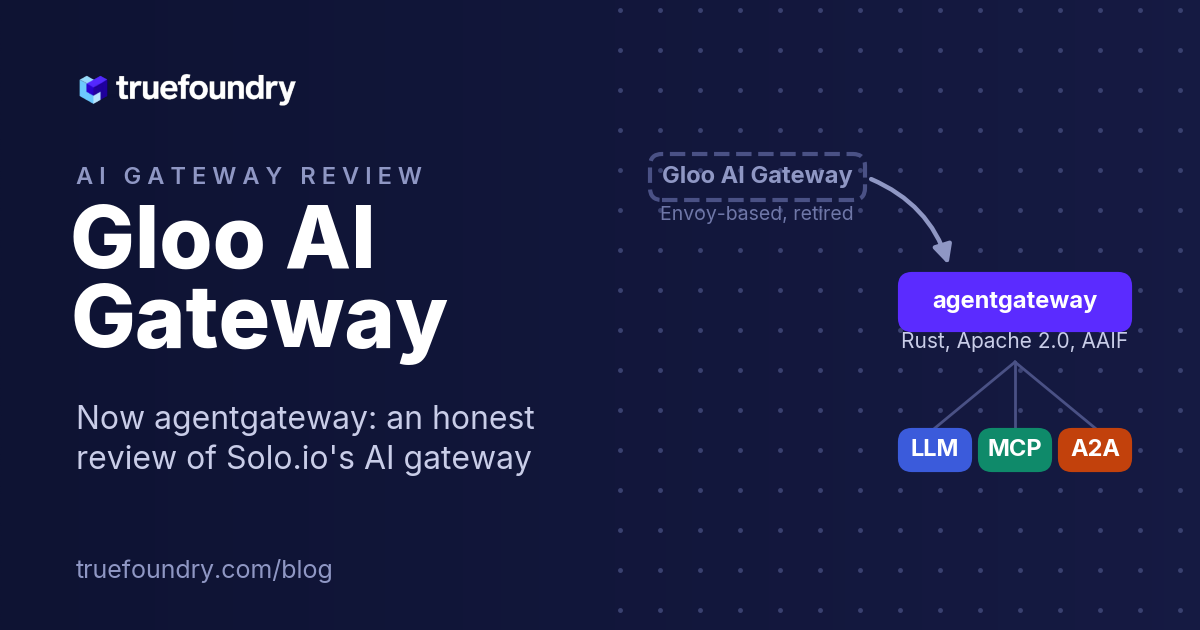
agentgateway replaces Solo's older Gloo AI Gateway rather than extending it. It runs as a single binary or as a split control plane and data plane on Kubernetes, where it is listed as conformant with the Gateway API (Core conformance for HTTPRoute, GRPCRoute and TLSRoute). Our team found it very quick to start: under 11 seconds from nothing to serving traffic, with about 18 MB of memory at idle, and nothing phoning home on an isolated network.
Its free tier is generous on identity and safety. It validates JWT and OIDC tokens against your identity provider, restricts models per key, enforces per-key spending budgets in the standalone build (the open-source Kubernetes resources have no budget or virtual-key fields), and can strip PII such as emails and card numbers before a prompt reaches the provider. Its standout feature is MCP: per-tool authorization, including filtering the tool list each caller sees, with the same access-control model applied to model, tool and agent traffic. What's paid is anything shared across instances: shared budgets, shared rate limits and a consolidated cost view. Our agentgateway review goes deeper.
Solo Enterprise for agentgateway has no public price list and no self-service trial; trial keys come from Solo's sales team. It adds fleet-wide rate limits, a budget resource with a cost management UI, on-behalf-of identity, FIPS builds and support.
Bifrost reflects our testing of OSS v2.0.0 and its documentation. agentgateway reflects our team's testing of OSS v1.5.0 (standalone), re-checked on v1.6.0 where noted, and its documentation; the current release is v1.7.0, from October 2026.
Both gateways were tested on the same method: one vCPU, 2 GB of memory, a mock provider with a fixed 50 ms response time, and added latency measured against calling the mock directly. On that setup, both add only a few milliseconds per request at the median, roughly 2 to 6 ms for Bifrost and 2 to 5 ms for agentgateway on non-streaming traffic. That is not a difference anyone will feel next to a model call. agentgateway also idled at about 18 MB of memory, sustained at least 3,200 requests per second on one vCPU (a floor, because the load generator ran out first), and added no more than about 12 ms to time to first token against a live provider. The two test runs defined maximum throughput differently, so we don't rank them on it; our Bifrost performance review has Bifrost's full numbers.
Each has a load pattern to watch. Bifrost's memory is the limit on one vCPU: with very large payloads it ran out of its 2 GB at 150 requests per second and above. agentgateway's limit showed up only when streaming very long documents (around 20,000 tokens), which degraded at around 30 requests per second; small streaming requests were clean at every load our team tested.
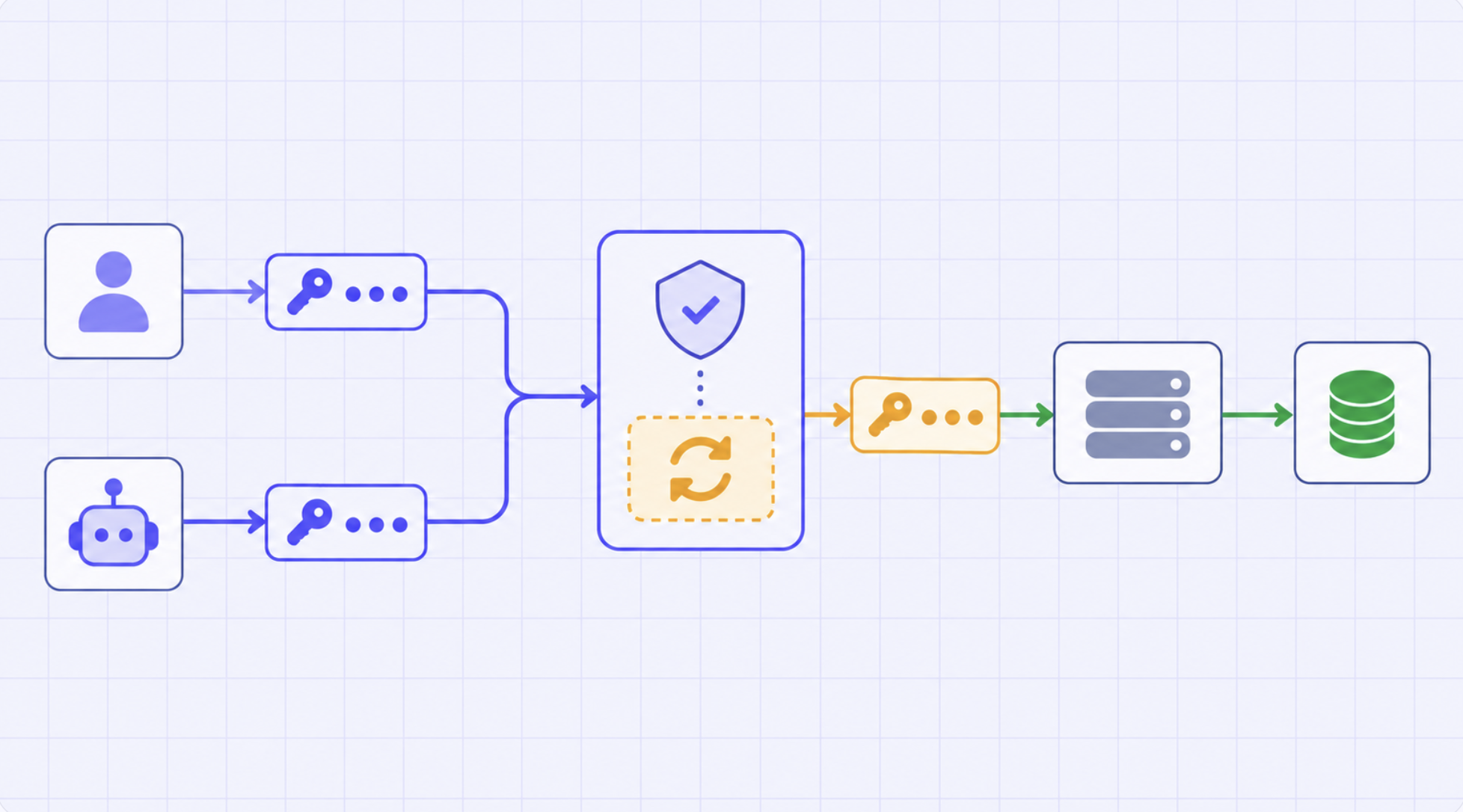
Both open-source gateways stop at the same place: shared state across instances. Budgets, rate limits and cost views that hold across replicas need Bifrost Enterprise or Solo's commercial tier, and someone still has to run the cluster. In the TrueFoundry AI Gateway, gateway pods receive config, access rules and limit counters from a control plane in real time, so consistency across replicas is how the product works rather than a paid upgrade. It governs LLM, MCP and agent traffic with per-tool access control, gives every application its own virtual account with token rotation, and runs as managed SaaS, a gateway plane in your cloud, or fully self-hosted.
If you are choosing between these two because you need both LLM cost control and agent governance, see how the TrueFoundry AI Gateway covers both or book a demo.
Bifrost vs agentgateway is a choice between two good open-source gateways aimed at different traffic. Choose Bifrost when LLM cost control, caching and per-team metrics matter most; choose agentgateway when agents, MCP tools and free identity controls matter most. If you need both, and shared state across replicas without a second license, book a TrueFoundry demo.
TrueFoundry AI Gateway bietet eine Latenz von ~3—4 ms, verarbeitet mehr als 350 RPS auf einer vCPU, skaliert problemlos horizontal und ist produktionsbereit, während LiteLM unter einer hohen Latenz leidet, mit moderaten RPS zu kämpfen hat, keine integrierte Skalierung hat und sich am besten für leichte Workloads oder Prototyp-Workloads eignet.



Ja. TrueFoundry umfasst ein MCP Gateway mit Zugriffskontrolle auf Werkzeugebene und Pre-/Post-Tool-Guardrails, ein Agent Gateway mit Agenten-Identitäten sowie ein Agent Harness, sodass dieselbe Policy Engine, die Modellaufrufe steuert, auch Werkzeugaufrufe und Agentenausführungen verwaltet.



Die neuesten Nachrichten, Artikel und Ressourcen werden in Ihren Posteingang gesendet