


October 26, 2026
|
5 min de lecture


Accédez instantanément à un environnement TrueFoundry en direct. Déployez des modèles, acheminez le trafic LLM et explorez la plateforme complète : votre sandbox est prête en quelques secondes, aucune carte de crédit n'est requise.



.webp)
Une méthode incroyablement rapide pour créer, suivre et déployer vos modèles !
Les applications utilisant des grands modèles de langage dépendent des fournisseurs de modèles d'IA pour chaque requête d'inférence. OpenAI, Anthropic et Google proposent des services, mais aucun fournisseur de LLM n'est à l'abri des limites de débit, des pannes ou des pics de latence. Un problème chez un fournisseur peut donc perturber les applications et les flux de travail basés sur les LLM.
Sans mécanisme de repli, une requête peut échouer, dépasser les objectifs de réponse ou créer une expérience utilisateur incohérente. Ce modèle redirige les requêtes concernées vers un autre modèle ou fournisseur lorsque la route initiale ne répond pas aux exigences définies. Il préserve la continuité du service sans exposer les défaillances de l'infrastructure aux utilisateurs de l'application.
Une implémentation fiable est essentielle dès lors que les systèmes de production utilisent plusieurs modèles, régions ou fournisseurs. Une passerelle LLM peut centraliser le routage, la résilience et l'application des politiques derrière une interface unique. Cette architecture permet aux équipes de production d'éviter d'intégrer une logique de récupération spécifique à chaque fournisseur dans l'ensemble de leurs applications.
Ce modèle de fiabilité transfère automatiquement une requête lorsque le modèle principal ne parvient pas à respecter les exigences définies en matière de disponibilité, de latence ou de qualité. Les déclencheurs peuvent inclure une réponse HTTP 429, une erreur serveur, une erreur réseau ou un délai d'attente configuré. La requête est alors dirigée vers un modèle de repli approprié via une route alternative.
La signification du repli LLM va au-delà de la simple récupération d'erreurs isolées. Il représente une couche de résilience au sein de l'architecture d'accès aux modèles. Cette approche réduit la dépendance vis-à-vis d'un fournisseur de LLM unique tout en aidant les applications à rester disponibles en cas d'instabilité du fournisseur.
Les replis peuvent fonctionner entre différents fournisseurs, modèles, régions ou seuils de qualité. Un modèle unique peut également basculer vers un autre déploiement chez le même fournisseur. La conception choisie doit préserver la compatibilité entre les prompts, les jetons, les fenêtres de contexte, la prise en charge des outils et les formats de réponse.
Le mécanisme de repli LLM suit une séquence contrôlée après l'échec d'une requête. Son routeur évalue le déclencheur, lit la chaîne de repli configurée et sélectionne la cible éligible suivante. Le prompt original, le contexte et les paramètres de génération sont alors transmis via la route de repli choisie.
Les tentatives doivent traiter les échecs transitoires avant de changer de fournisseur. Les politiques limitées utilisent un backoff exponentiel, une gigue et des conseils de réponse avant de rediriger. OpenAI recommande un backoff aléatoire, tandis qu'Anthropic documente les limites de débit, les délais d'attente et les réponses en cas de surcharge.
.webp)
Le fallback, le failover et les tentatives résolvent des problèmes connexes dans différents champs d'application. Le fallback gère les échecs de requêtes individuelles, tandis que le failover redirige un trafic plus large en cas de dégradation prolongée. Les tentatives répètent une requête vers le même point de terminaison avant qu'une autre cible ne la reçoive.
Ces modèles courants fonctionnent généralement ensemble au sein d'architectures résilientes. Un nombre limité de tentatives peut résoudre des erreurs de courte durée sans changer de fournisseur. L'équilibrage de charge LLM distribue le trafic normal, tandis que le failover protège la continuité lors des pannes prolongées. Le fallback gère les échecs restants au niveau de la requête.
Différentes stratégies de fallback favorisent la disponibilité, la qualité, le coût et l'indépendance vis-à-vis des fournisseurs. Chaque stratégie nécessite des conditions de déclenchement claires et des capacités de modèle compatibles. Les équipes doivent comparer la latence attendue, la qualité de sortie, les limites de contexte et la prise en charge des outils avant de définir les priorités de routage.
Une limitation de débit efficace doit être coordonnée avec chaque stratégie plutôt que de déclencher un réacheminement incontrôlé. Des contrôles de limitation de débit peuvent appliquer des quotas aux utilisateurs, aux modèles, aux applications et aux environnements. Google documente les réponses HTTP 429 lorsque les charges de travail Gemini dépassent les quotas applicables.
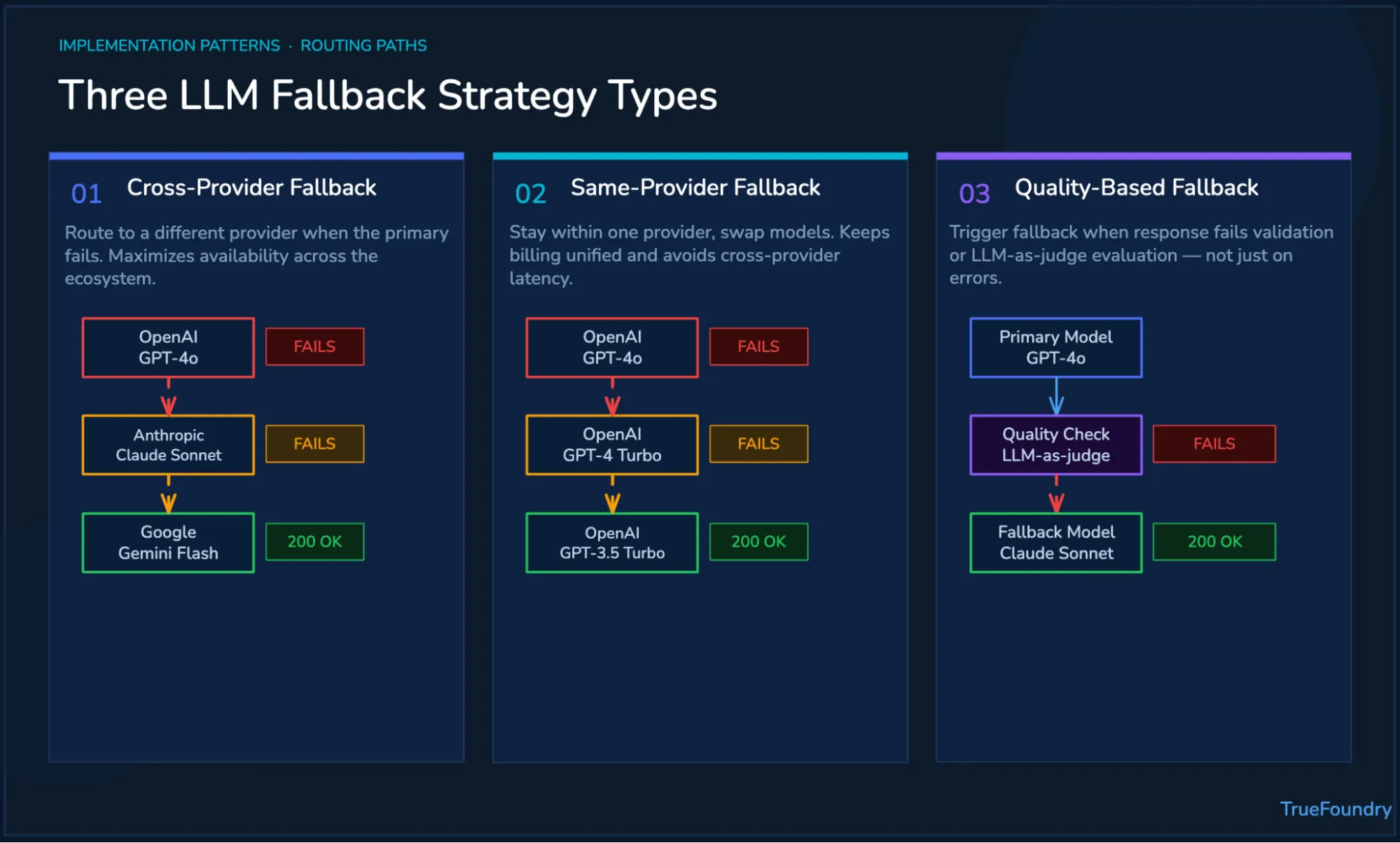
Intégrer une logique de secours directement dans le code de l'application semble gérable au début du développement. La complexité augmente toutefois lorsque l'architecture s'étend sur plusieurs fournisseurs, versions de modèles et environnements. Chaque SDK expose des erreurs, des valeurs par défaut, des structures de réponse et des comportements de nouvelle tentative différents.
Les équipes peuvent évaluer Portkey, Bifrost ou Vercel lorsqu'elles comparent les options de passerelle. Quelle que soit la plateforme choisie, les bonnes pratiques exigent des tentatives limitées, un routage tenant compte de l'état de santé, des identifiants sécurisés et une récupération mesurable. Une observabilité LLM robuste doit afficher la latence, les erreurs, la fréquence des secours et le taux de réussite final.
La passerelle IA TrueFoundry centralise l'accès aux modèles, le routage, les contrôles de fiabilité et l'observabilité. Sa configuration de routage global prend en charge l'équilibrage de charge, le basculement et les règles de nouvelle tentative à partir d'une couche de gouvernance unique. Les applications peuvent utiliser une seule API sans avoir à reconstruire la logique de récupération pour chaque fournisseur.
La plateforme prend en charge des chaînes entre un fournisseur principal et des cibles alternatives. Les tentatives automatiques gèrent les erreurs temporaires des fournisseurs avant toute redirection. La surveillance continue de l'état de santé réduit les délais de récupération en cas de perturbation.
Pour les agents IA, la passerelle d'agent régit l'exécution en plusieurs étapes. La passerelle MCP contrôle l'accès aux outils d'entreprise connectés. Ensemble, elles protègent l'ensemble du système lorsqu'une route de modèle devient indisponible.
Créez des applications IA résilientes avec la passerelle IA de TrueFoundry. Centralisez le routage, les tentatives, l'observabilité et le basculement LLM entre les fournisseurs. Réserver une démo gratuite dès aujourd'hui pour commencer.
Le mécanisme de secours (fallback) pour les LLM est une exigence architecturale pour toute application fiable utilisant des modèles externes. Les fournisseurs peuvent imposer des restrictions ou subir des pannes temporaires. Les applications doivent être capables d'absorber ces aléas sans répercuter chaque interruption sur les utilisateurs.
Une implémentation au niveau de l'application reste possible, mais la complexité augmente dans les environnements multi-modèles. Une passerelle permet de centraliser les règles de nouvelle tentative, l'ordre de secours, les contrôles de santé, la gestion des identifiants et le monitoring. Cette approche améliore la résilience tout en préservant l'indépendance du code applicatif vis-à-vis des spécificités de chaque fournisseur.
Les équipes doivent définir des déclencheurs, valider la compatibilité des modèles et surveiller chaque route après le déploiement. Elles doivent également tester les chaînes de secours épuisées et le comportement de récupération avant d'augmenter le trafic en production. TrueFoundry fournit un plan de contrôle unique pour régir les décisions d'accès aux modèles.
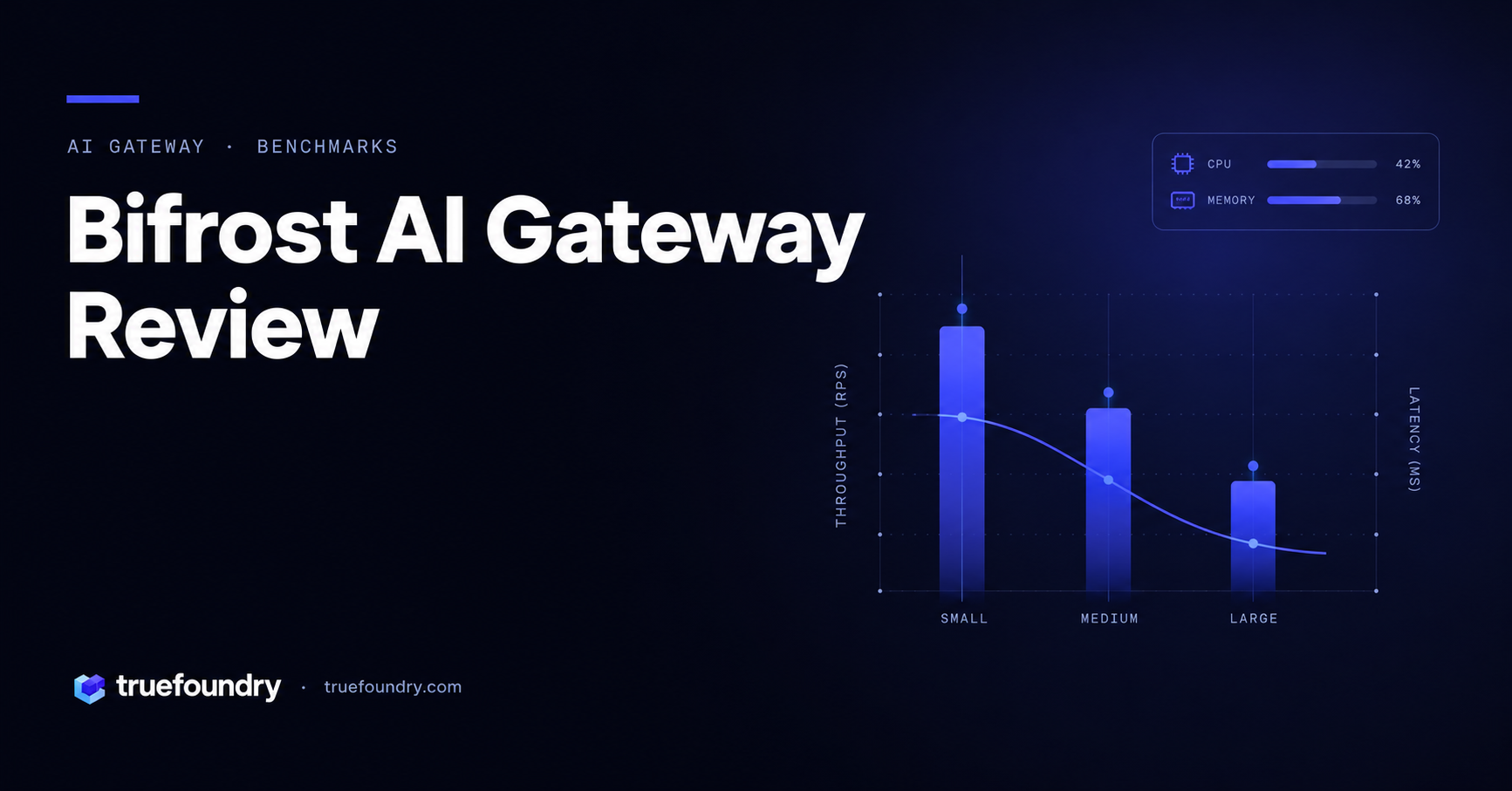
TrueFoundry AI Gateway offre une latence d'environ 3 à 4 ms, gère plus de 350 RPS sur 1 processeur virtuel, évolue horizontalement facilement et est prête pour la production, tandis que LiteLM souffre d'une latence élevée, peine à dépasser un RPS modéré, ne dispose pas d'une mise à l'échelle intégrée et convient parfaitement aux charges de travail légères ou aux prototypes.





Les dernières nouvelles, articles et ressources envoyés dans votre boîte de réception
.webp)
.webp)

.png)
.png)
.png)
.png)
.png)
.png)
.png)
.png)
.png)
.png)
.png)


