


October 17, 2026
|
5 min de lecture


Accédez instantanément à un environnement TrueFoundry en direct. Déployez des modèles, acheminez le trafic LLM et explorez la plateforme complète : votre sandbox est prête en quelques secondes, aucune carte de crédit n'est requise.



Published: October 17, 2026
.png)
Une méthode incroyablement rapide pour créer, suivre et déployer vos modèles !
“Agent gateway” and “LLM gateway” get used as if they were the same product. They are not. They solve two halves of one problem. An LLM gateway stands in front of your models and governs the exchange with a model: which model answers, what it costs, and what is in the prompt and response. An agent gateway stands in front of your tools and governs what an agent does once it starts acting on its own: which tools it may call, as whom, with what authority, and with what left behind in the log.
For a plain “prompt in, text out” application, the first gateway is all you need. The moment your application starts calling tools, retrieving documents, and chaining sub-agents, a second problem appears that the first gateway has nothing to say about — and that is the problem an agent gateway exists to solve.
The cleanest way to tell these apart is to ask what each one wraps. An LLM gateway wraps a request: one call to a model, stateless, that ends when the response comes back. An agent gateway wraps a call path: the chain of hops that starts with one human request and fans out into model calls, tool calls, and sub-agent calls, each possibly owned by a different team or vendor.
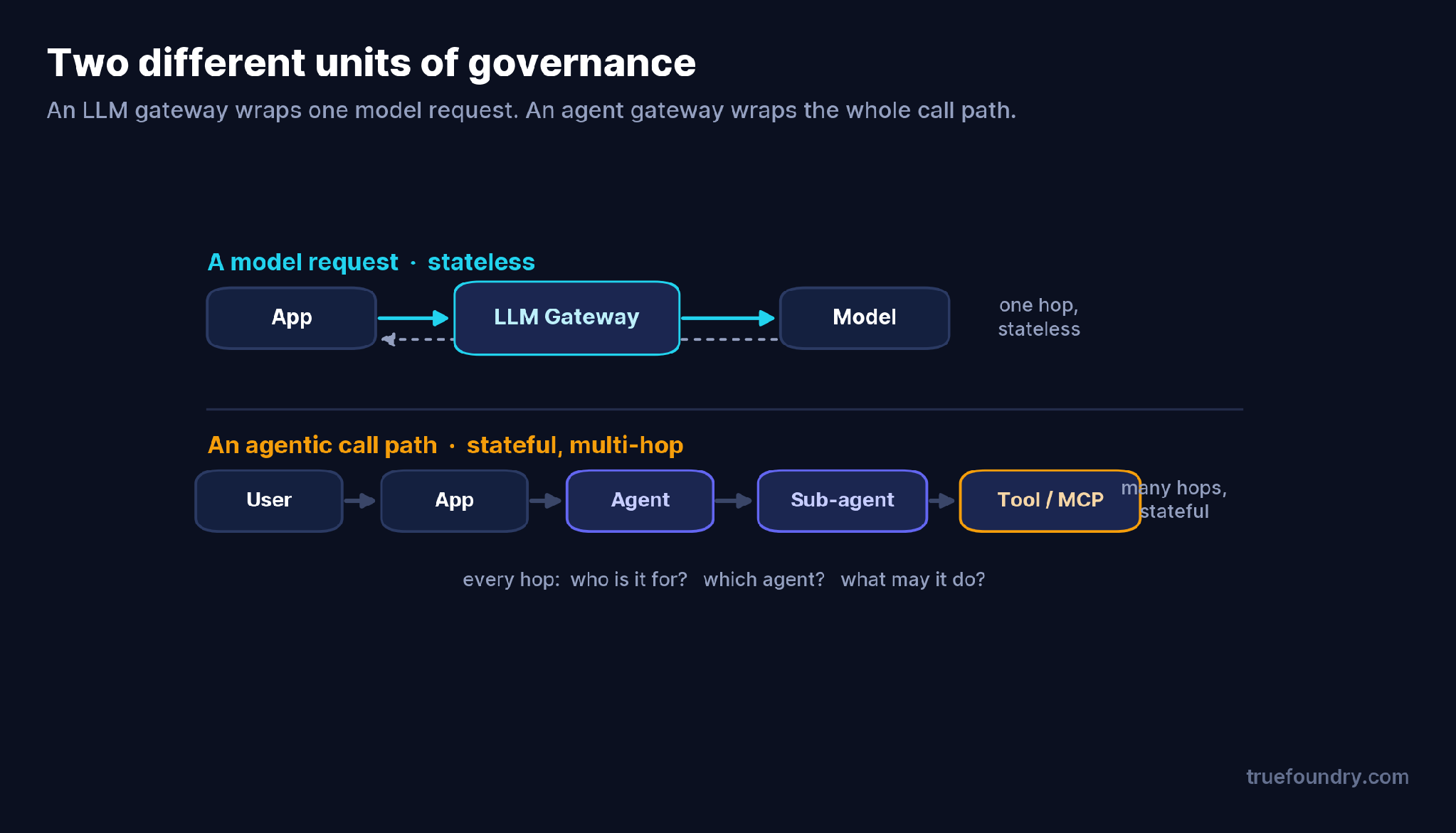
That difference drives everything else. A stateless request is governed by rules about the request itself — cost, model, prompt content. A multi-hop call path is governed by rules about identity and authority that have to hold at every hop: who this call is for, which agent is making it, and what that agent is allowed to do. By the third hop of an agent chain, none of those questions answer themselves.
The LLM gateway is the mature half, and most teams adopt it first. It sits in the path of every model call and governs the request: it routes a logical model name to a real provider, load-balances and fails over across providers, caches repeated answers, enforces per-team budgets and rate limits, runs guardrails on the prompt and the response, and records tokens, cost, latency, and errors for every call. (We cover those mechanics in depth in our post on how AI gateways cut cost and improve reliability.)
Everything it does is scoped to the model request. It is excellent at that, and it is blind to what happens after the model returns a tool call for your agent to execute. That next step — the agent actually doing something — is outside its unit of governance.
An agent gateway governs the call path, and its central job is identity. Every access-control system you already run assumes a user sits behind each request, that the caller is that user, and that the scope of the call is what the user consented to. An agent calling a sub-agent calling a tool breaks all three assumptions quietly — nothing throws an error, and you find out during an audit.
So an agent gateway treats an agent as a third kind of principal — not a user, not a shared service account, but a registered agent with its own verifiable identity.
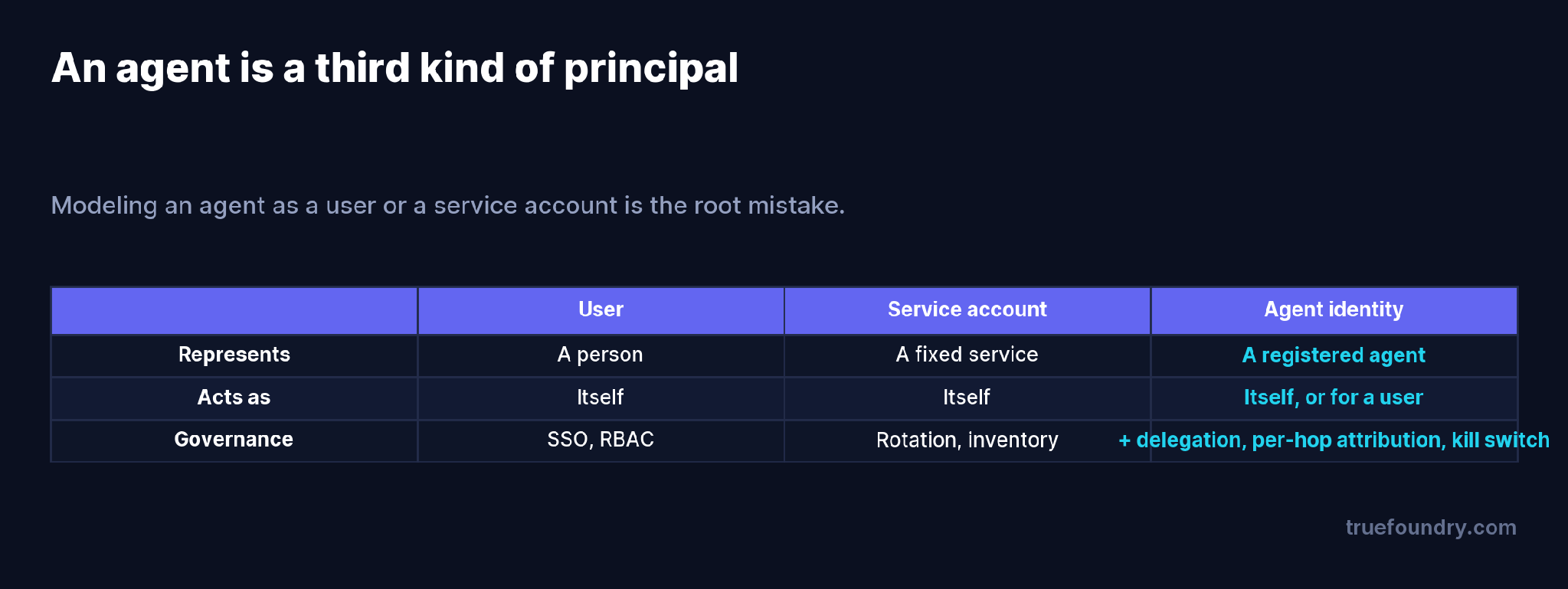
User versus service account versus agent identity
On that foundation it enforces, at every hop: per-hop delegation (each hop presents its own identity plus proof of the delegation it received and gets a new token scoped to exactly that callee, for exactly that user, for that hop — delegation, not impersonation); OAuth2, RBAC, and metadata policies on every tool invocation; tool-level access control, so each agent can reach only the tools it is registered for; pre- and post-tool guardrails that inspect tool arguments and tool results for PII, injection, and unsafe actions; retries, timeouts, and fallbacks on tool steps so a stalled tool or an infinite loop is contained; and an audit trail of every agent-initiated tool action. Because enforcement and logging happen at the same point, the audit log is a byproduct rather than a separate project.
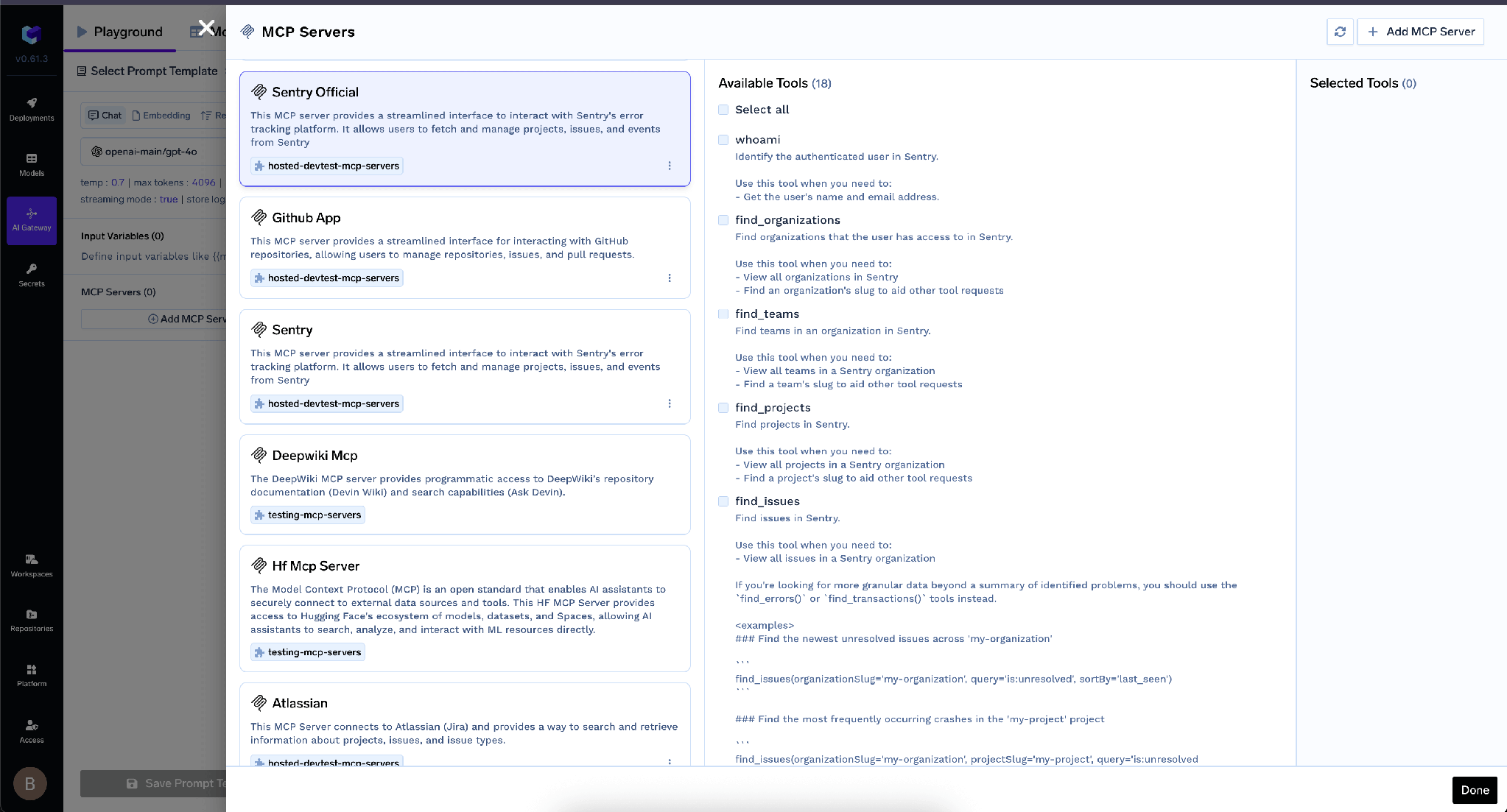
Enabling, disabling, and scoping individual tools on a registered MCP server. Source: TrueFoundry docs.
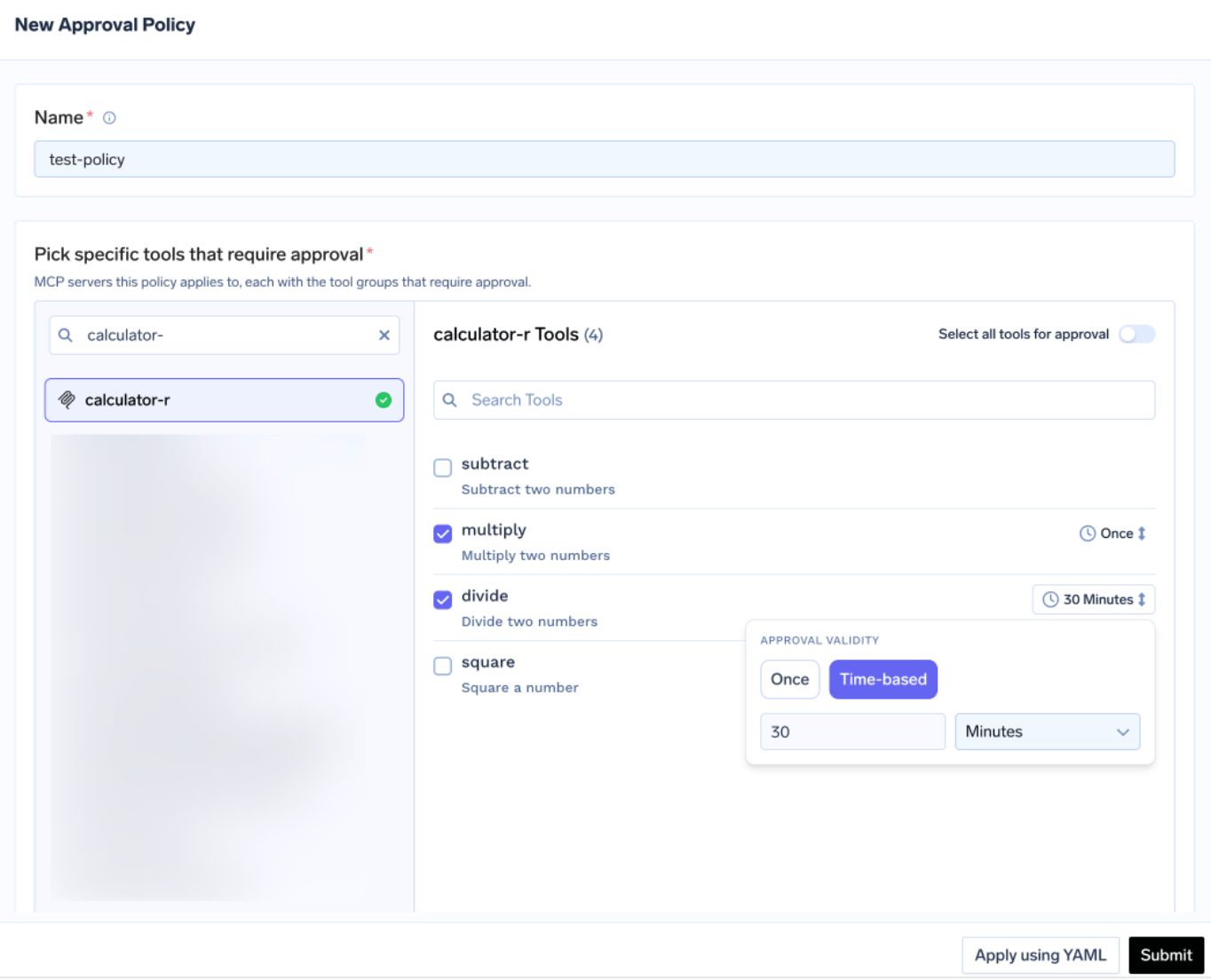
An approval policy gating high-risk tool calls before they execute. Source: TrueFoundry docs.
If you try to govern agents with only an LLM gateway, four failures show up, and none of them are about the model.
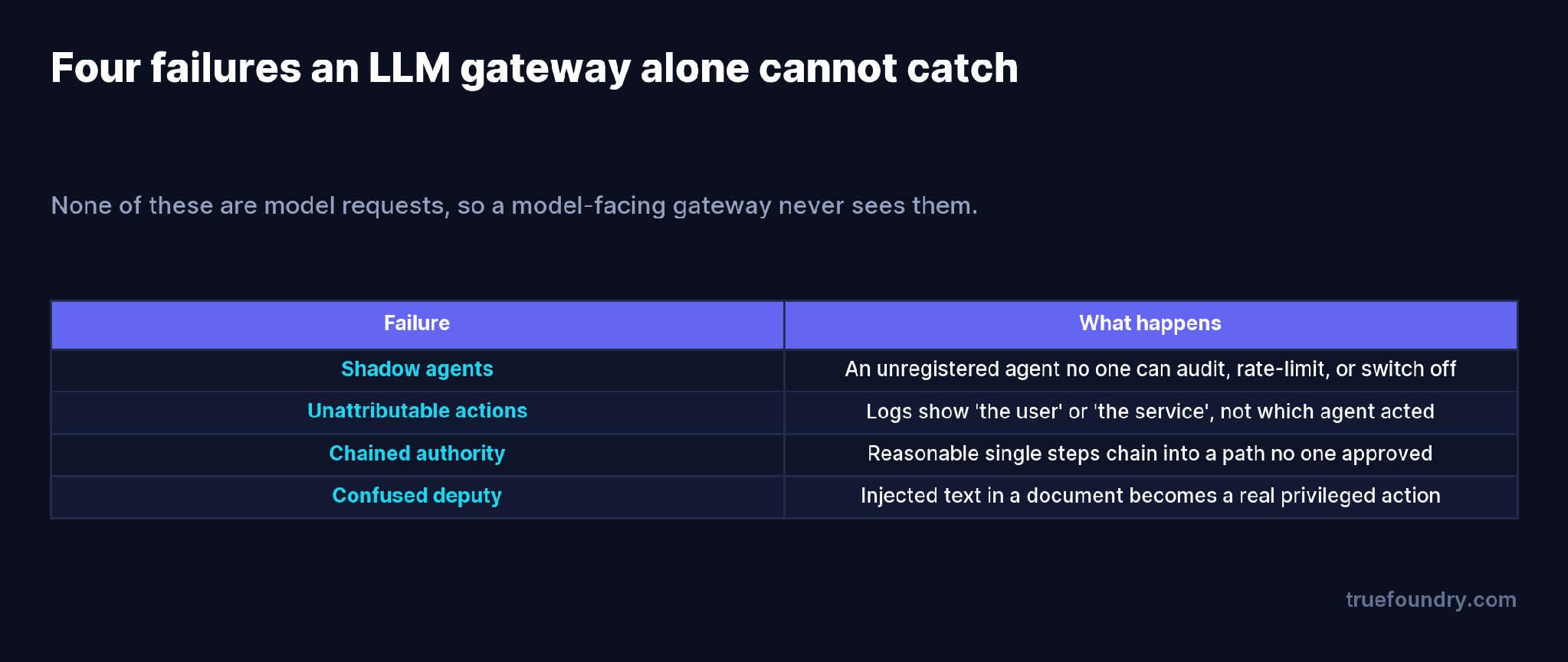
Four failures an LLM gateway alone cannot catch
Shadow agents. A team ships a CrewAI agent that queries Salesforce with a shared key. It works, and no central system knows it exists — so it cannot be discovered, audited, rate-limited, or switched off. Unattributable actions. When an agent forwards the user’s token, downstream logs show only “Jane”; when it uses a shared service account, they show only “the service.” After an incident, “the retrieval agent exposed that data” is unprovable either way. Chained authority nobody approved. Three individually reasonable agents — create a vendor, read its banking data, initiate a payment — chain into an end-to-end payment path no reviewer signed off on. The confused deputy. An agent with broad access takes instructions from content it read, and a prompt injection in a Jira ticket becomes a real Salesforce write, because the agent’s token cannot tell “what Jane asked for” from “what the ticket said.” An LLM gateway sees none of this, because none of it is a model request.
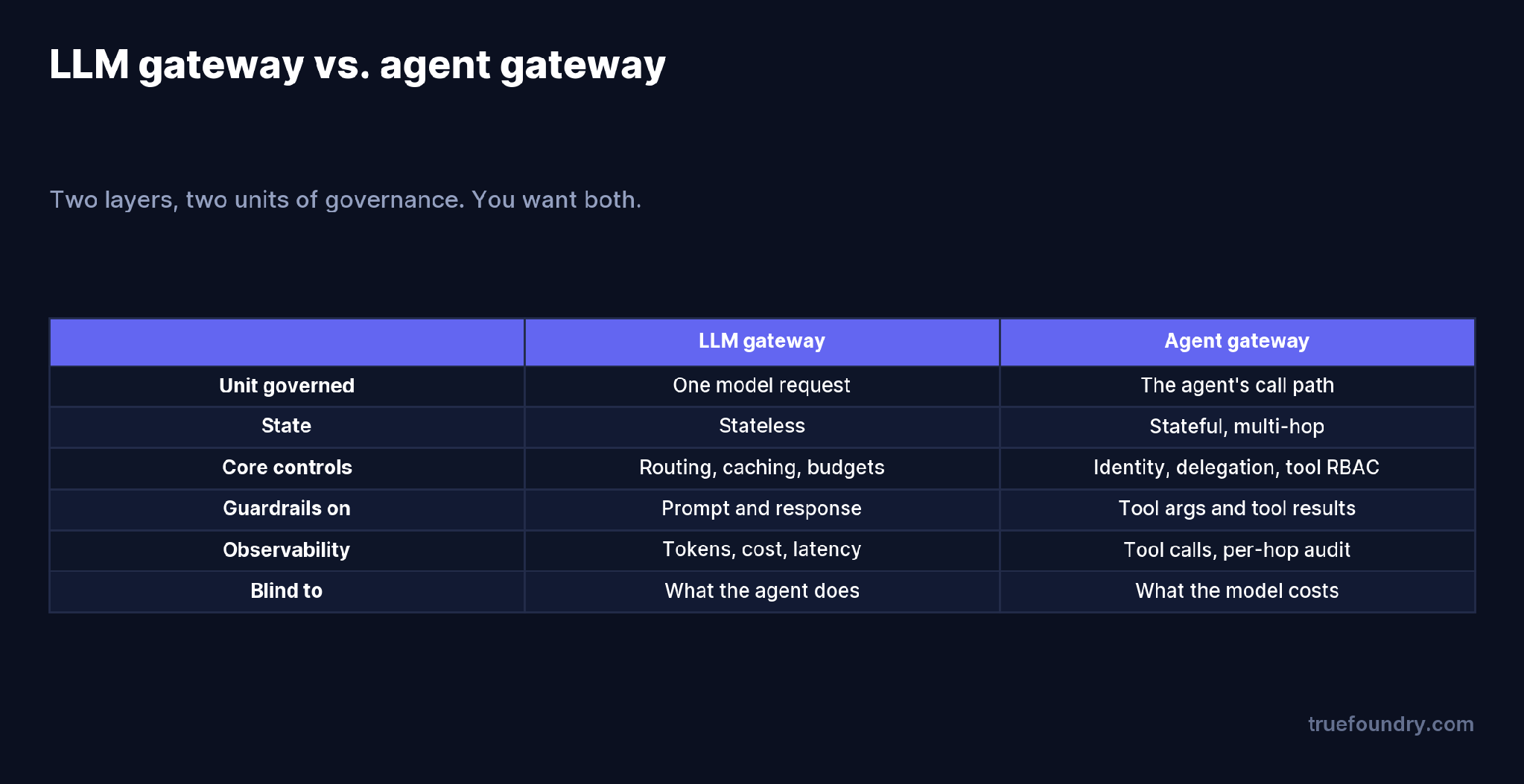
LLM gateway versus agent gateway, compared across what they govern
The short version: the LLM gateway secures the conversation with the model; the agent gateway secures the agent’s conduct in your systems. A guardrail that redacts PII from a prompt does nothing about an agent calling a payments tool it was never authorized to touch — and vice versa.
They are not competing products; they are two layers of one platform. TrueFoundry’s AI Gateway governs model traffic, and the MCP Gateway governs tool traffic — giving agents and MCP clients one connection point with authentication, access control, and observability applied in one place. Agents and IDE clients connect to a unified endpoint; the gateway handles authorization (OAuth 2LO and 3LO), smart tool selection, guardrails, and a full audit trail, and routes each call to the right registered MCP server.
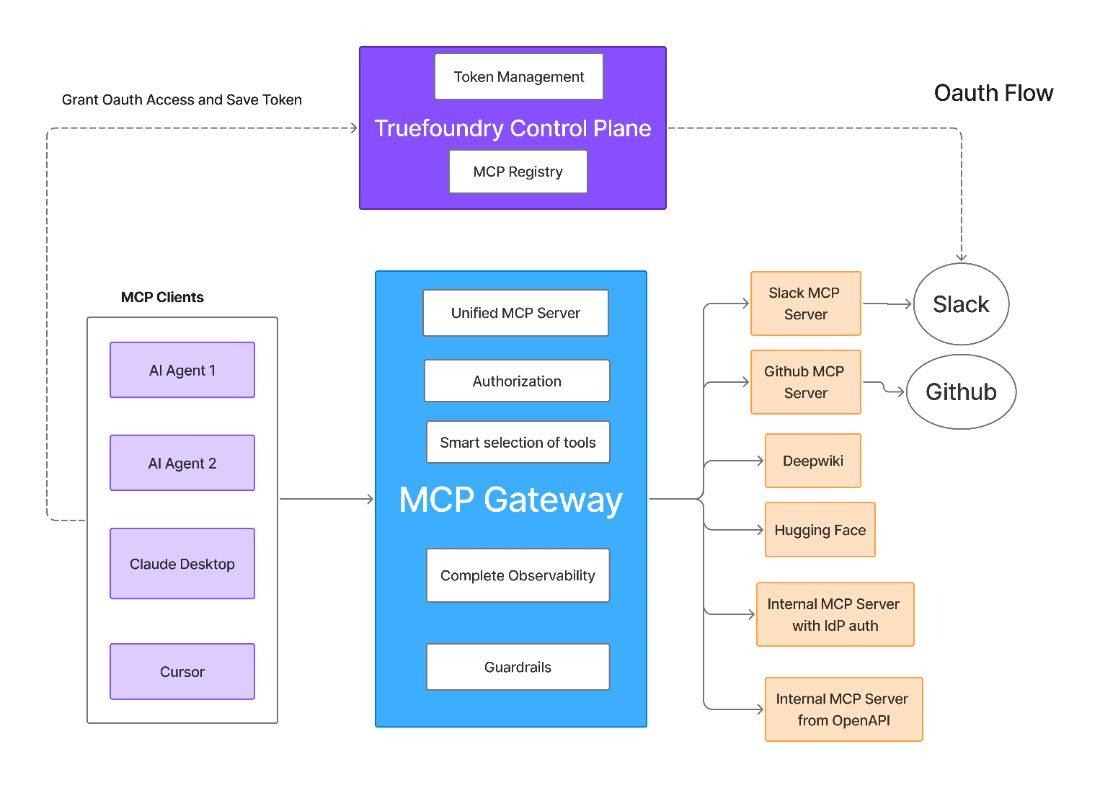
MCP clients connect through one gateway; the control plane holds the registry and token management. Source: TrueFoundry docs.
Because both layers share identity, policy, and observability, a single request that calls a model and then calls three tools is governed end to end — cost and prompt safety on the model side, identity and tool authority on the agent side — and shows up as one coherent trace.
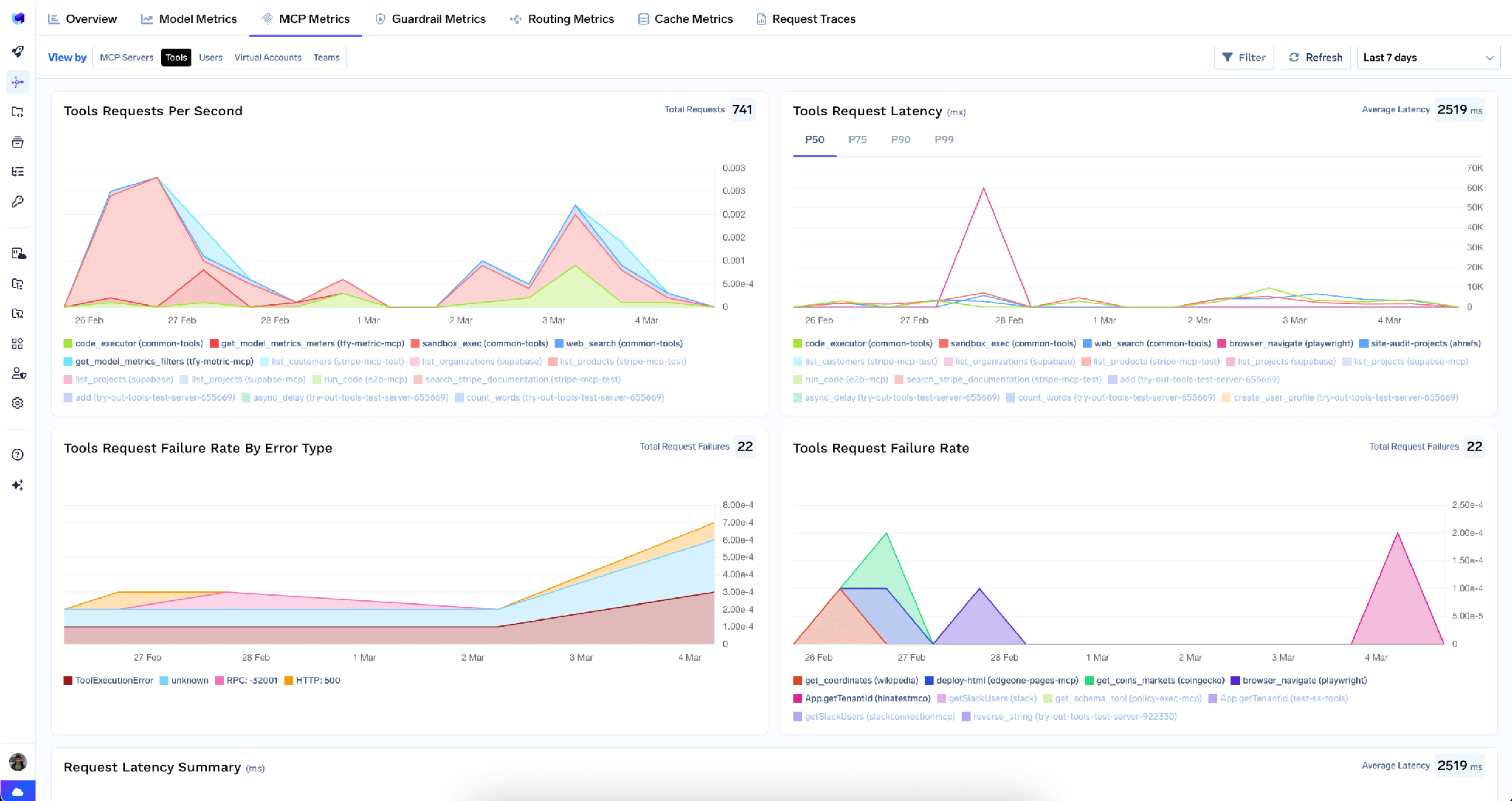
Per-tool request rates, latency, and failures alongside model metrics. Source: TrueFoundry docs.
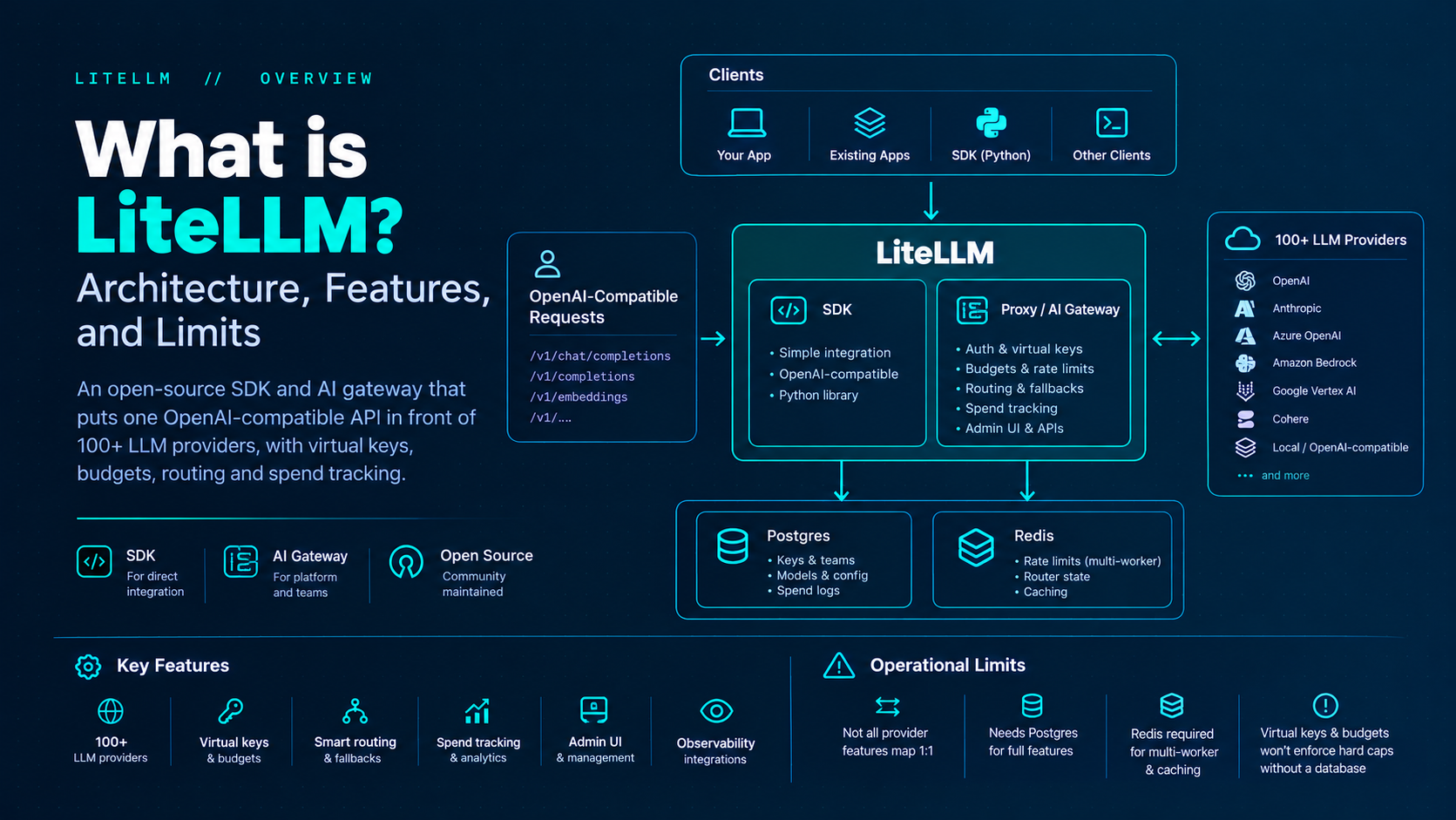
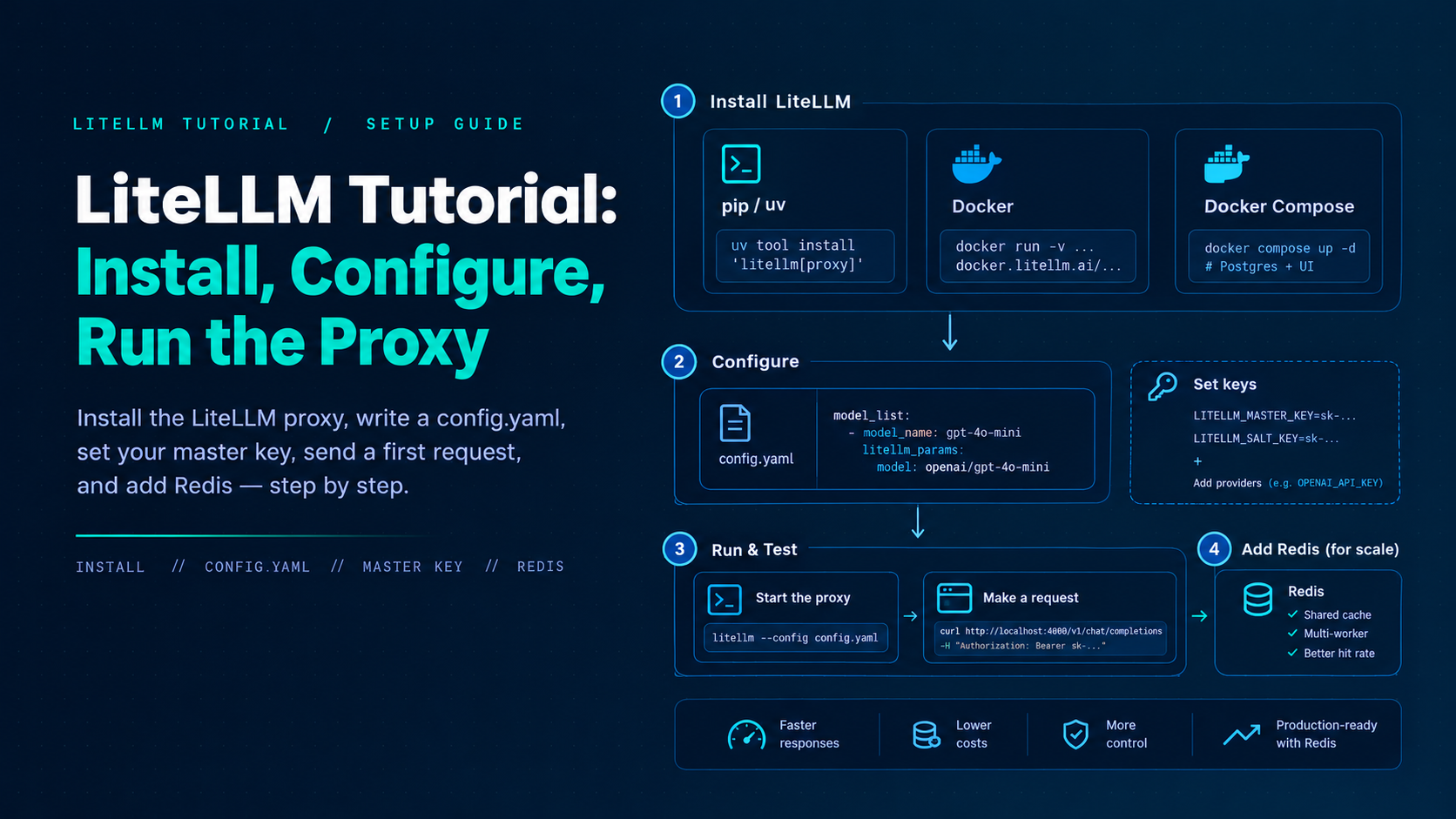
TrueFoundry AI Gateway offre une latence d'environ 3 à 4 ms, gère plus de 350 RPS sur 1 processeur virtuel, évolue horizontalement facilement et est prête pour la production, tandis que LiteLM souffre d'une latence élevée, peine à dépasser un RPS modéré, ne dispose pas d'une mise à l'échelle intégrée et convient parfaitement aux charges de travail légères ou aux prototypes.




An LLM gateway governs a single, stateless model request — routing, caching, budgets, prompt and response guardrails, and cost observability. An agent gateway governs the multi-hop call path an agent takes across tools — agent identity, per-hop delegation, tool-level access control and guardrails, and an audit of every tool action. One secures the model call; the other secures what the agent does.
If your application only sends prompts and gets text back, an LLM gateway is enough. Once it calls tools, retrieves documents, or chains sub-agents, you need an agent gateway too — the LLM gateway has no visibility into tool calls.
They are closely related. The MCP gateway is the tool-facing layer — a registry of MCP servers with OAuth, tool-level access control, guardrails, and audit. The agent gateway governs the agents that call those tools, enforcing identity and delegation across the whole call path.
Through token exchange: instead of forwarding the inbound token, each hop presents its own identity plus proof of the delegation it received and gets a new token scoped to exactly that callee, for that user, for that hop. The downstream token is useless to any other callee and expires quickly.
Yes. TrueFoundry’s gateway deploys as SaaS, in your VPC, on-prem, or air-gapped, so model and tool traffic can stay entirely inside your network.



Les dernières nouvelles, articles et ressources envoyés dans votre boîte de réception
.png)
.png)
.png)
.png)
.png)
.png)
.png)
.png)

.png)


