Blank white background with no objects or features visible.

¡Hola, EMEA! TrueFoundry está ampliando su presencia en Europa, Oriente Medio y África. Leer más →

Bifrost vs agentgateway: two open-source AI gateways built for different jobs

Por Mahizh Vannan

Published: noviembre 25, 2026

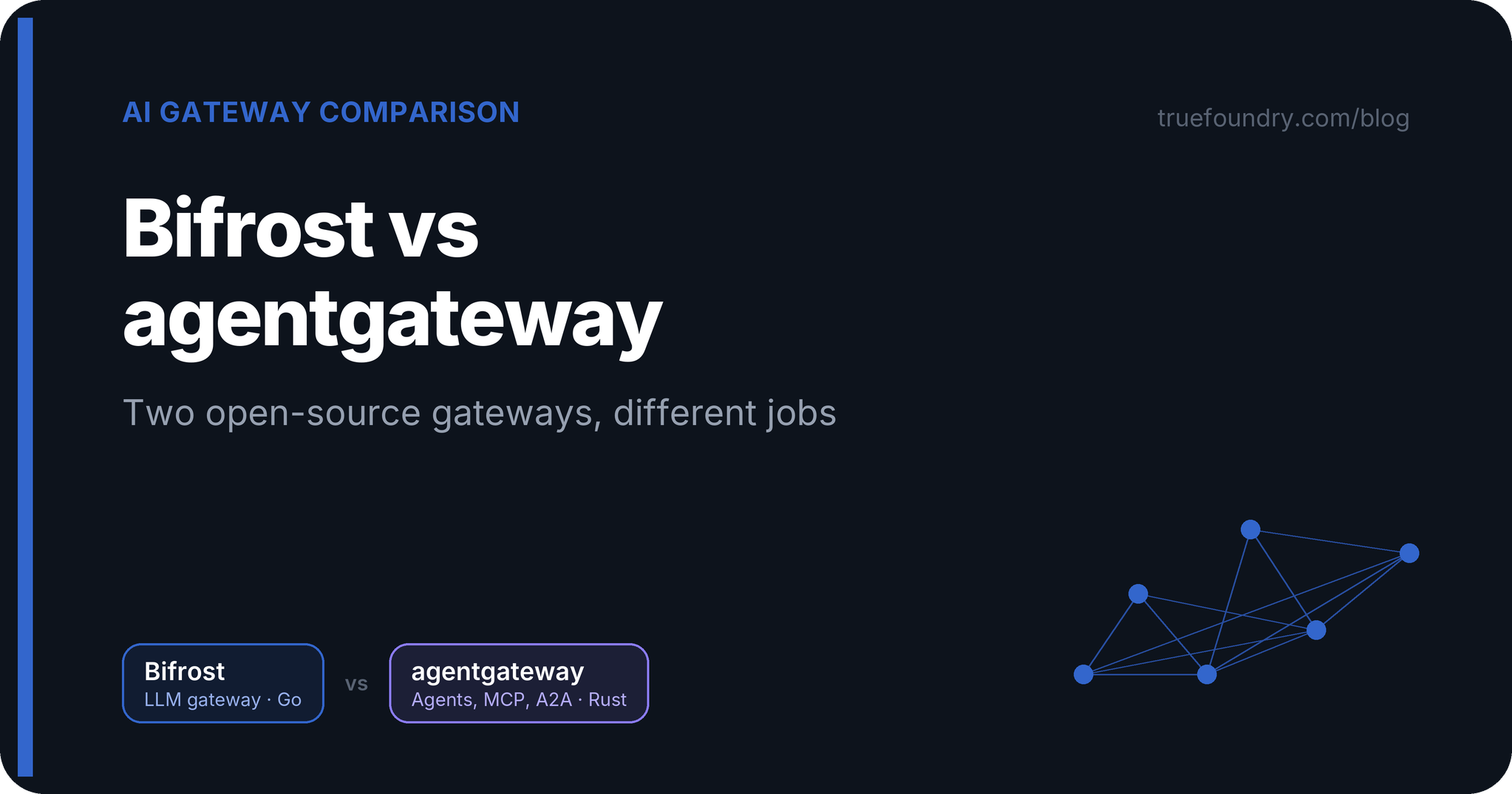
Bifrost vs agentgateway is the rare comparison where both sides are open source, self-hosted and fast. Bifrost, from Maxim AI, is an LLM gateway first: routing, budgets, caching and cost tracking for model calls, with an MCP gateway alongside. agentgateway, started by Solo.io and now a Linux Foundation project, is an agent gateway first: model calls, MCP tool calls and agent-to-agent (A2A) traffic under one access-control model, built in Rust and native to Kubernetes. Both are Apache-2.0, and both put multi-instance coordination behind a commercial tier. The question is which kind of traffic you need to govern most.

Dimension Bifrost agentgateway
What it is LLM gateway in Go with an MCP gateway Gateway for LLM, MCP and A2A traffic, in Rust
License and governance Apache-2.0; run by Maxim AI Apache-2.0; a Linux Foundation project in the Agentic AI Foundation
Commercial tier Bifrost Enterprise (quote) Solo Enterprise for agentgateway (quote)
Best for AI teams that want LLM cost control and routing depth Platform teams running agents and MCP on Kubernetes

Bifrost: overview

Bifrost's free tier covers what most LLM applications need from a gateway: weighted routing and CEL routing rules, fallbacks and retries, virtual keys with hard-stop budgets and per-key rate limits, exact-match and semantic caching, an MCP gateway with tool filtering, Prometheus metrics labelled by key, team and customer, OpenTelemetry traces and a built-in request log and dashboard. It runs as a container, a binary or a Helm chart.

The paid line falls on identity and scale. SSO, RBAC, audit logs, guardrails and PII redaction, external secret managers and live clustering are Enterprise. In OSS, replicas don't share config, budgets or counters. In our testing of v2.0.0, a fresh install also starts with no authentication on the gateway or the admin API, and the dashboard's Create Team button silently failed. More on the paid line in our Bifrost pricing breakdown.

agentgateway: overview

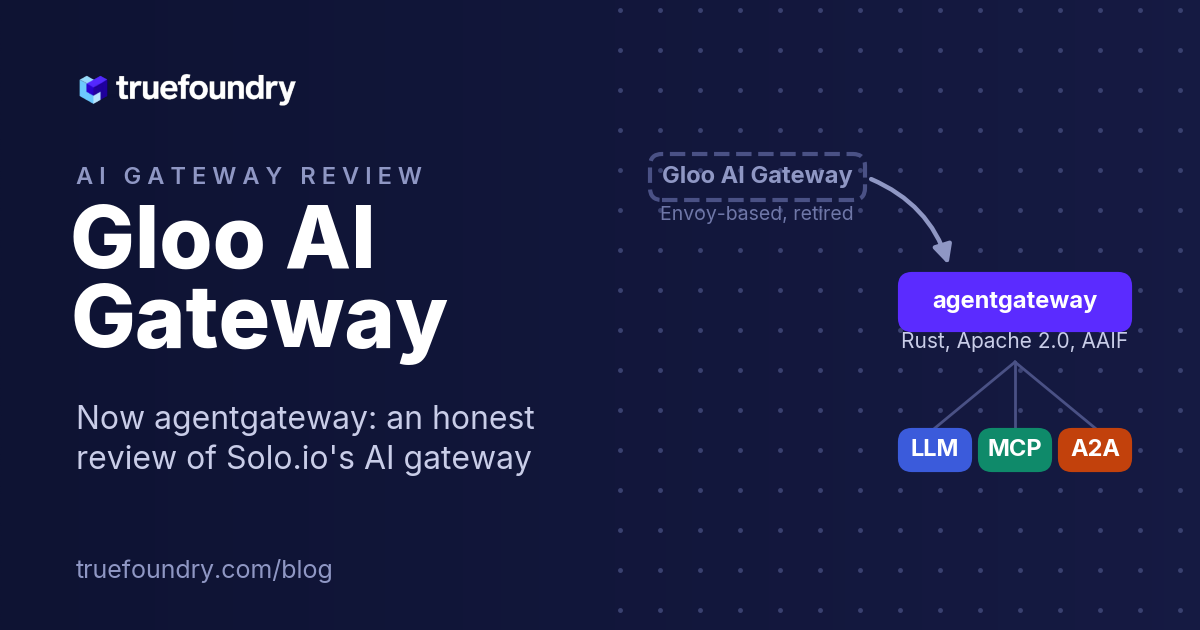
agentgateway replaces Solo's older Gloo AI Gateway rather than extending it. It runs as a single binary or as a split control plane and data plane on Kubernetes, where it is listed as conformant with the Gateway API (Core conformance for HTTPRoute, GRPCRoute and TLSRoute). Our team found it very quick to start: under 11 seconds from nothing to serving traffic, with about 18 MB of memory at idle, and nothing phoning home on an isolated network.

Its free tier is generous on identity and safety. It validates JWT and OIDC tokens against your identity provider, restricts models per key, enforces per-key spending budgets in the standalone build (the open-source Kubernetes resources have no budget or virtual-key fields), and can strip PII such as emails and card numbers before a prompt reaches the provider. Its standout feature is MCP: per-tool authorization, including filtering the tool list each caller sees, with the same access-control model applied to model, tool and agent traffic. What's paid is anything shared across instances: shared budgets, shared rate limits and a consolidated cost view. Our agentgateway review goes deeper.

Solo Enterprise for agentgateway has no public price list and no self-service trial; trial keys come from Solo's sales team. It adds fleet-wide rate limits, a budget resource with a cost management UI, on-behalf-of identity, FIPS builds and support.

Head-to-head comparison

Bifrost reflects our testing of OSS v2.0.0 and its documentation. agentgateway reflects our team's testing of OSS v1.5.0 (standalone), re-checked on v1.6.0 where noted, and its documentation; the current release is v1.7.0, from October 2026.

Capability Bifrost OSS agentgateway OSS
Traffic governed LLM and MCP LLM, MCP, A2A, and general HTTP and gRPC
Deployment Container, binary, Helm Binary, container, Kubernetes with Gateway API
Caller identity Virtual keys; SSO and OIDC in Enterprise Access keys or JWT/OIDC, free; OIDC sign-in for the standalone UI (v1.6.0+)
MCP tool access control Tool filtering per virtual key; federated auth in Enterprise Per-tool authorization with per-caller tool lists
Budgets Hard stop per key, team, customer, provider and model; per pod Per key in the standalone build only; the crossing request completes; per instance
Rate limits Per key and provider Local to each instance, including per-key limits (v1.6.0+); fleet-wide limits are commercial
Caching Exact-match and semantic No built-in response cache; caching needs an external component such as vLLM Semantic Router
PII redaction before the provider Enterprise only Free
Metrics by team or user Yes, key, team and customer labels No user or team labels in Prometheus; v1.7.0 adds built-in analytics by user from the request log
Shared state across instances Enterprise Commercial tier

Where agentgateway is stronger

  • Agent and tool traffic. A2A support and per-tool MCP authorization with filtered tool lists are ahead of Bifrost's MCP gateway, and they share one policy model with LLM calls.
  • Free identity and safety. JWT/OIDC validation, OIDC sign-in for the standalone UI and outbound PII redaction cost nothing. In Bifrost, admin SSO and PII redaction are Enterprise.
  • Neutral governance. A Linux Foundation project is harder to relicense or reprioritize than a single vendor's repository.
  • Kubernetes fit. Gateway API conformance means it slots into clusters that already route traffic that way.
  • Control-plane resilience. Our team cut the control plane for 66 seconds with zero failed requests, and leader failover took 16 to 17 seconds with no failures.

Where Bifrost is stronger

  • Caching. Exact-match and semantic caching are in the free tier. agentgateway has no built-in response cache as of v1.7.0; its docs show semantic caching through an external vLLM Semantic Router.
  • Budgets at more levels. Hard-stop budgets per key, team, customer, provider and model, versus per-key budgets only in agentgateway's standalone build. Both now offer per-key rate limits.
  • Attribution in Prometheus. Bifrost's metrics carry virtual key, team and customer labels, so per-team cost dashboards come straight from /metrics. agentgateway's Prometheus metrics have no user or team labels, though v1.7.0 adds built-in per-user analytics from its request log.
  • LLM routing depth. CEL routing rules can react to headers, team and budget usage, and every request records its retry and key-selection trail.

Performance

Both gateways were tested on the same method: one vCPU, 2 GB of memory, a mock provider with a fixed 50 ms response time, and added latency measured against calling the mock directly. On that setup, both add only a few milliseconds per request at the median, roughly 2 to 6 ms for Bifrost and 2 to 5 ms for agentgateway on non-streaming traffic. That is not a difference anyone will feel next to a model call. agentgateway also idled at about 18 MB of memory, sustained at least 3,200 requests per second on one vCPU (a floor, because the load generator ran out first), and added no more than about 12 ms to time to first token against a live provider. The two test runs defined maximum throughput differently, so we don't rank them on it; our Bifrost performance review has Bifrost's full numbers.

Each has a load pattern to watch. Bifrost's memory is the limit on one vCPU: with very large payloads it ran out of its 2 GB at 150 requests per second and above. agentgateway's limit showed up only when streaming very long documents (around 20,000 tokens), which degraded at around 30 requests per second; small streaming requests were clean at every load our team tested.

Gotchas worth knowing

  • agentgateway retries one more time than you might expect. The retry setting counts retries, not total attempts, so a setting of 1 makes two provider calls. With no backoff by default, retries fired within about 1.4 ms of each other.
  • agentgateway failover changed in v1.6.0. In v1.5.0 and earlier, priority failover stayed inert unless health checking was configured. v1.6.0 evicts failing targets by default, though the request that hits the failure still reaches the client as an error.
  • Set a response idle timeout on agentgateway streaming routes. v1.6.0 added responseIdleTimeout, which cut a stalled stream at 5 seconds in our team's re-test, and v1.7.0 applies it to MCP responses too. It is opt-in: without it, a stream that stalls mid-response stays open.
  • agentgateway records unpriced models at zero cost. Self-hosted or in-house models without pricing data never trip a budget, even with the built-in price catalog added in v1.6.0.
  • agentgateway minor releases ship about monthly, with breaking changes. v1.6.0 had five. v1.7.0 makes prompt guards inspect tool outputs by default, always encrypts standalone MCP sessions and blocks dynamic backends from reaching loopback addresses. Read the release notes before upgrading.
  • Bifrost starts open. Set up an admin account, a setup token and virtual-key enforcement before the gateway is reachable.
  • Bifrost OSS replicas don't sync. Key revocations, budgets and config edits stay on the pod where they happen until restart.

When to choose Bifrost

  • Your traffic is mostly model calls and cost control is the priority.
  • You want built-in caching and budgets at team, customer, provider and model level without a commercial license.
  • You want per-team cost dashboards straight from Prometheus.

When to choose agentgateway

  • You run agents that call MCP tools and other agents, and need per-tool access control.
  • You want OIDC validation and PII redaction in the free tier.
  • Your platform team runs Kubernetes with the Gateway API and prefers foundation-governed projects.

The TrueFoundry alternative

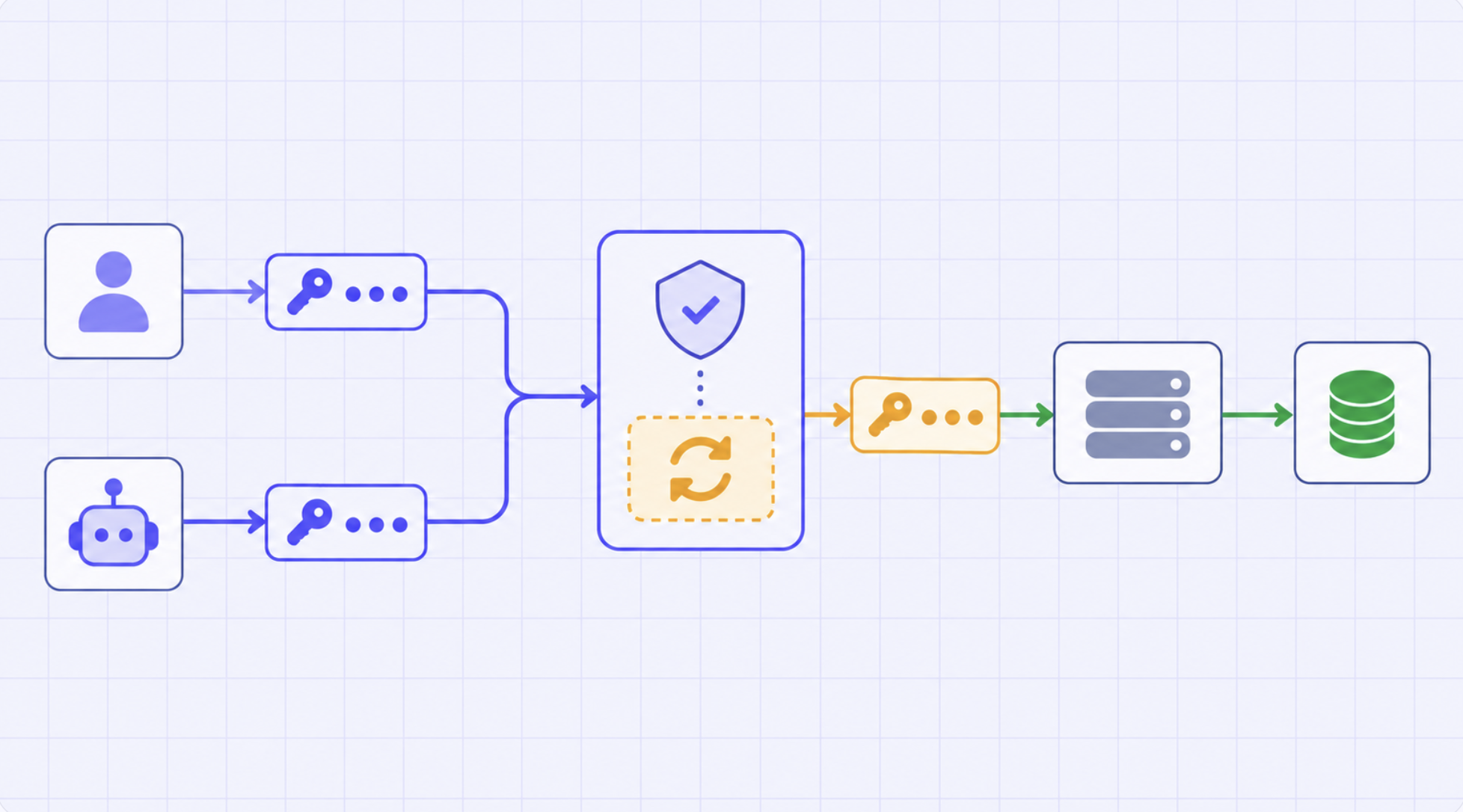
Both open-source gateways stop at the same place: shared state across instances. Budgets, rate limits and cost views that hold across replicas need Bifrost Enterprise or Solo's commercial tier, and someone still has to run the cluster. In the TrueFoundry AI Gateway, gateway pods receive config, access rules and limit counters from a control plane in real time, so consistency across replicas is how the product works rather than a paid upgrade. It governs LLM, MCP and agent traffic with per-tool access control, gives every application its own virtual account with token rotation, and runs as managed SaaS, a gateway plane in your cloud, or fully self-hosted.

If you are choosing between these two because you need both LLM cost control and agent governance, see how the TrueFoundry AI Gateway covers both or book a demo.

Conclusion

Bifrost vs agentgateway is a choice between two good open-source gateways aimed at different traffic. Choose Bifrost when LLM cost control, caching and per-team metrics matter most; choose agentgateway when agents, MCP tools and free identity controls matter most. If you need both, and shared state across replicas without a second license, book a TrueFoundry demo.

Try now.

One gateway for all your models, MCP servers, and agents. No credit card needed.

Inscríbase
Tabla de contenido

Controle, implemente y rastree la IA en su propia infraestructura

Reserva 30 minutos con nuestro Experto en IA

Reserve una demostración

La forma más rápida de crear, gobernar y escalar su IA

Demo del libro
Summarize with
ChatGPT logo by OpenAI
Perplexity AI logo
Blurry red snowflake on white background, symmetrical frosty design with soft edges and abstract shape.

Descubra más

|
5 minutos de lectura

Bifrost vs Kong AI Gateway: who should own your AI gateway?

|
5 minutos de lectura

Bifrost vs Vercel AI Gateway: build it or buy it?

|
5 minutos de lectura

Precios de Kong Konnect: qué es y cuánto cuesta en 2026

|
5 minutos de lectura

Kong AI Gateway Benchmark Review: Open-Source Kong + ai-proxy on 1 vCPU

|
5 minutos de lectura

Bifrost vs agentgateway: two open-source AI gateways built for different jobs

comparación
Herramientas LLM
|
5 minutos de lectura

Bifrost vs Vercel AI Gateway: build it or buy it?

comparación
Herramientas LLM
|
5 minutos de lectura

Bifrost vs Kong AI Gateway: who should own your AI gateway?

comparación
Herramientas LLM
what is llm observability
noviembre 25, 2026
|
5 minutos de lectura

Qué es la observabilidad de los LLM: una guía completa

Herramientas LLM
noviembre 20, 2026
|
5 minutos de lectura

agentgateway (anteriormente Gloo AI Gateway): una reseña honesta del AI gateway de Solo.io

No se ha encontrado ningún artículo.
Solo AI Gateway Pricing: Open Source vs. Enterprise Costs
abril 22, 2026
|
5 minutos de lectura

Precios de Solo AI Gateway: un desglose completo para 2026

No se ha encontrado ningún artículo.
Your guide to understanding key aspects of Bifrost pricing
noviembre 3, 2026
|
5 minutos de lectura

Precios de Bifrost: OSS, costes Enterprise y lo que los equipos deben saber

No se ha encontrado ningún artículo.
noviembre 3, 2026
|
5 minutos de lectura

TrueFoundry frente a Bifrost: una plataforma de IA empresarial frente a un gateway de código abierto en un solo binario

No se ha encontrado ningún artículo.
noviembre 3, 2026
|
5 minutos de lectura

Autenticación en MCP explicada: identidad entrante, credenciales salientes y delegación

No se ha encontrado ningún artículo.

Blogs recientes

Black left pointing arrow symbol on white background, directional indicator.

Preguntas frecuentes

What is the difference between Bifrost and agentgateway?

Both are open-source, self-hosted gateways. Bifrost focuses on LLM traffic, with caching, routing rules and detailed cost controls. agentgateway focuses on agent traffic, governing LLM, MCP and agent-to-agent calls with one access-control model, and adds free OIDC validation and PII redaction.

Is agentgateway open source?

Yes. agentgateway is Apache-2.0 and is hosted by the Linux Foundation as part of the Agentic AI Foundation. Solo.io sells a commercial edition that adds multi-instance features and support.

Does agentgateway support caching?

Agentgateway has no built-in response cache as of v1.7.0; caching needs an external component such as vLLM Semantic Router. Bifrost includes exact-match and semantic caching in its free tier.

¿Admite TrueFoundry MCP y agentes de IA?

Sí. TrueFoundry incluye un MCP Gateway con control de acceso a nivel de herramienta y guardrails previos y posteriores a la herramienta, un Agent Gateway con identidades de agente y un agent harness, de modo que el mismo motor de políticas que gobierna las llamadas a modelos gobierna las llamadas a herramientas y las ejecuciones de agentes.

Realice un recorrido rápido por el producto
Comience el recorrido por el producto
Visita guiada por el producto