September 15, 2026
|
Lesedauer: 5 Minuten


Erhalten Sie sofortigen Zugriff auf eine TrueFoundry-Live-Umgebung. Stellen Sie Modelle bereit, leiten Sie den LLM-Verkehr weiter und erkunden Sie die gesamte Plattform — Ihre Sandbox ist in Sekundenschnelle einsatzbereit, ohne dass eine Kreditkarte erforderlich ist.



Published: June 16, 2026
Unglaublich schnelle Methode zum Erstellen, Verfolgen und Bereitstellen Ihrer Modelle!
A single agent handling research, analysis, and reporting often fails in predictable ways. It runs out of context, chooses the wrong tool, or loses state midway. The issue is rarely the single AI model alone. It is usually the architecture around the agent.
Multi-agent orchestration tools solve this by splitting work across specialized AI agents. They coordinate handoffs, preserve shared state, and guide the entire workflow across multiple steps. This becomes critical when agents need to handle complex tasks, retrieve from data sources, and interact with external tools.
Gartner expects 40% of enterprise applications to include task-specific AI agents by 2026. That shift makes agent orchestration a serious architecture decision for platform teams. The gap between a strong demo and a reliable production system often comes down to the orchestration layer you choose.
This guide compares the best multi-agent orchestration tools and multi-agent orchestration platforms across developer frameworks, enterprise platforms, and cloud-native services. These categories solve different problems. Knowing the difference helps teams choose the right platform for business outcomes, governance, and production scale.
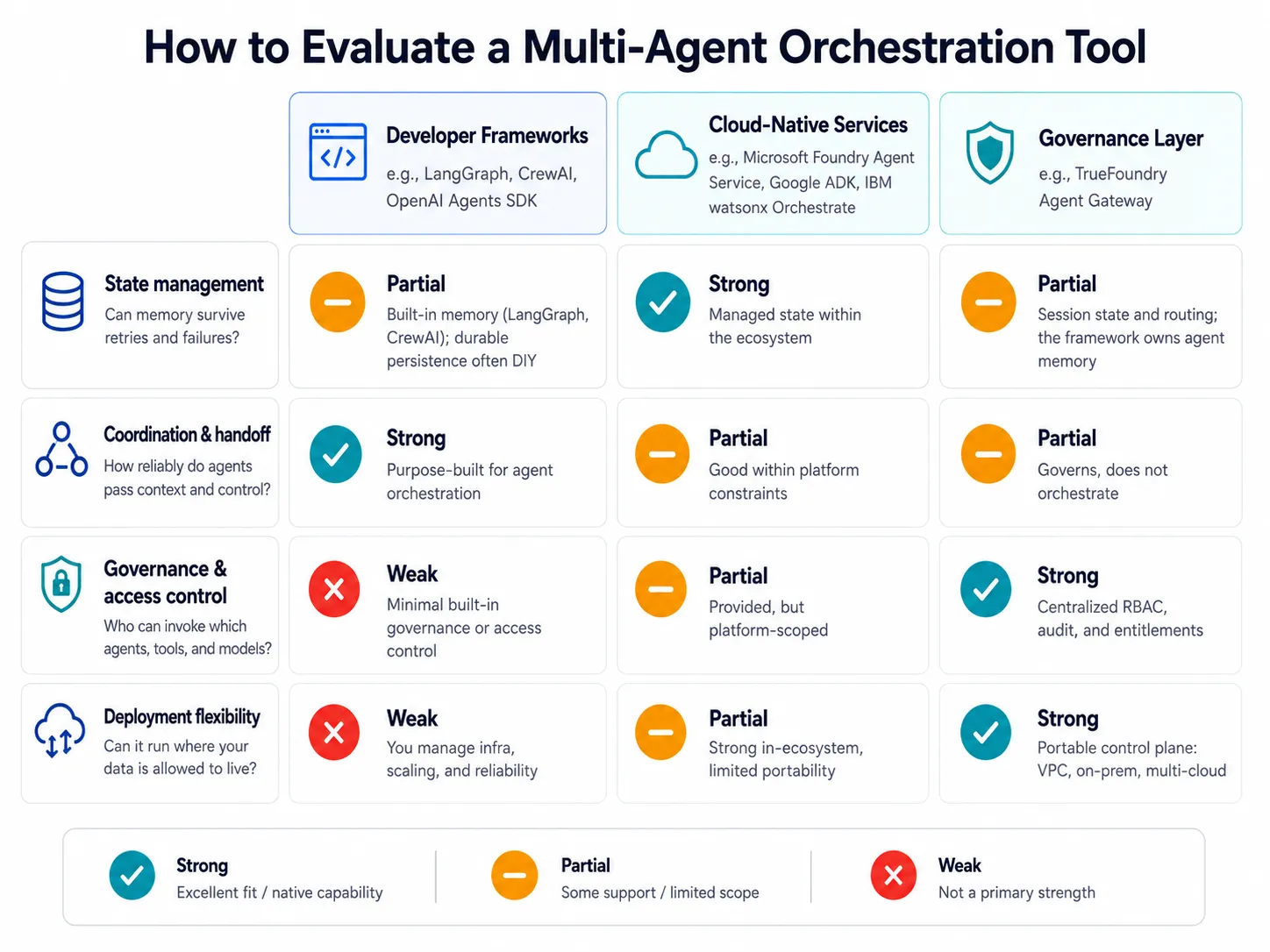
Before comparing names, get the evaluation criteria right. A tool that works in a prototype may struggle in production. Four capabilities separate multi-agent orchestration tools that demo well from tools that support real enterprise deployments.
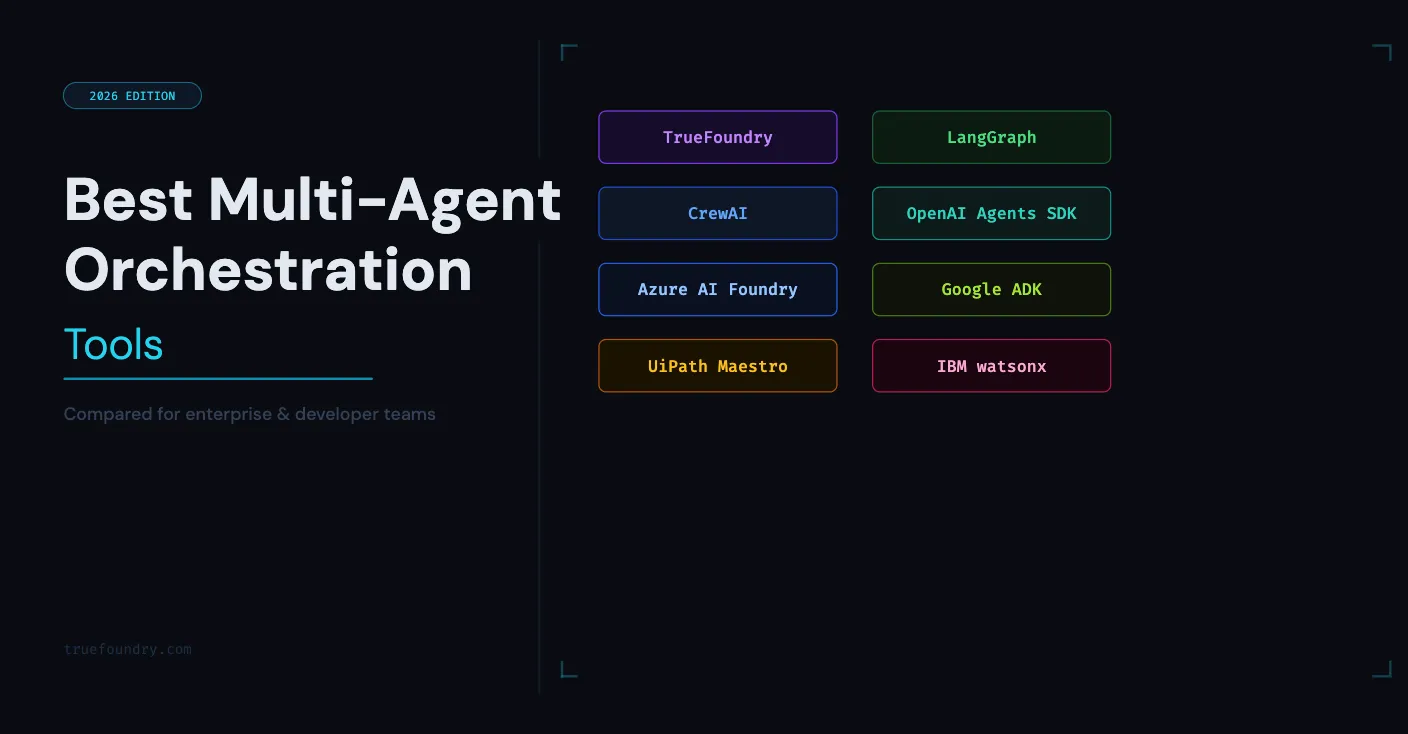
These multi-agent orchestration tools solve different layers of the agent stack. Some coordinate logic, while others govern access, state, cost, observability, compliance, and production control for enterprise teams at scale.
.webp)
TrueFoundry Agent Gateway is the governed infrastructure layer above the frameworks enterprise teams already use. It supports LangGraph, CrewAI, Google ADK, OpenAI Agents SDK, and custom stacks. Teams keep their framework choices while TrueFoundry standardizes governance across production environments.
At the gateway layer, it enforces RBAC, identity-aware execution, tool policies, token budgets, and audit trails. It also routes model calls, preserves session state, and logs cost metadata. This helps agentic AI move from experiments into enterprise deployments.
TrueFoundry has public pricing across four tiers. Developer is free for early builders and supports prototyping. Pro starts at $499 per month for teams shipping AI features. Pro Plus starts at $2,999 per month, while Enterprise is custom for advanced governance, VPC deployment, and mission-critical reliability.
TrueFoundry is best for enterprises running agents across several frameworks, providers, and clouds. It suits teams needing governance, observability, state control, and private deployment.
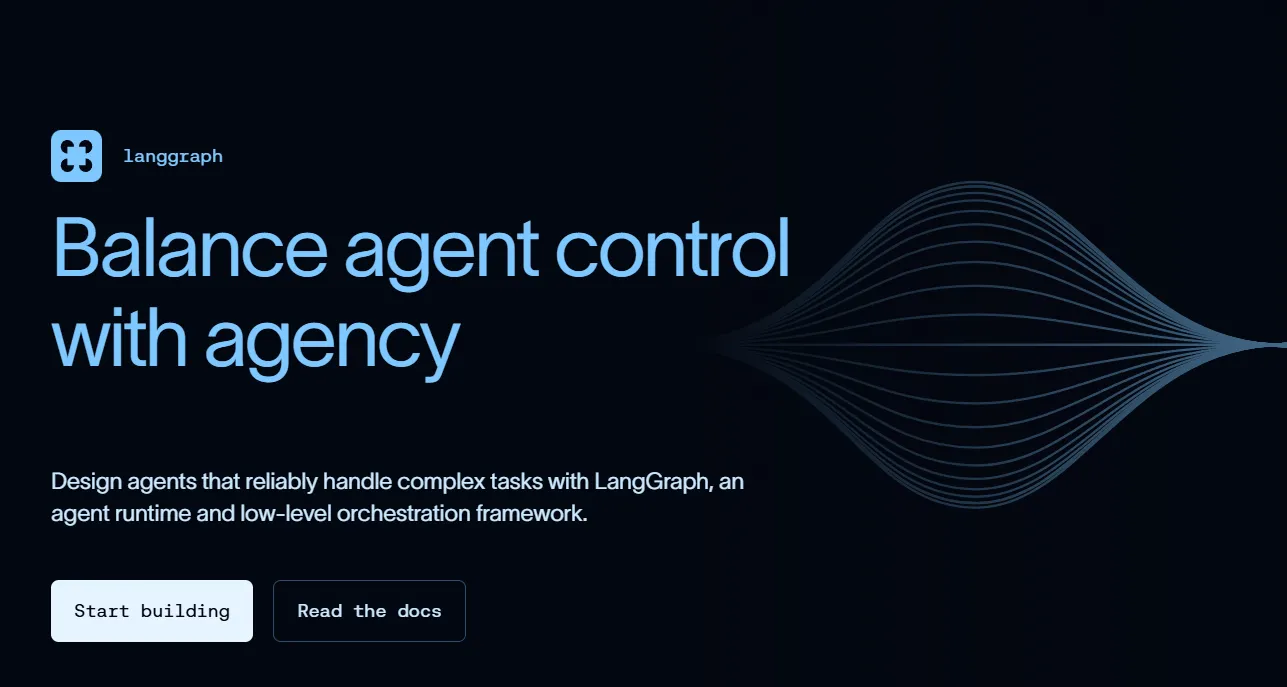
LangGraph gives developers explicit state that persists across agent interactions. Control flow is modeled as a graph, which helps teams define branches, loops, and retries. It is strong for complex workflows, although teams must own production infrastructure around it.
LangGraph is a developer framework, not a full enterprise platform. Deployment, access control, observability, durable state, and governance remain engineering responsibilities across production environments.
LangGraph is best for engineering teams that want maximum control over coordination logic. It fits teams with platform capacity to manage surrounding infrastructure.
LangGraph defines how agents coordinate. TrueFoundry governs what those agents can do in production. Teams can keep LangGraph and route its model and tool calls through TrueFoundry for RBAC, audit trails, budgets, and VPC control.
.webp)
CrewAI organizes agents around roles, goals, and collaboration patterns. That model is approachable for teams describing business processes through clear responsibilities. It is useful for quick agent creation, although production governance still needs separate infrastructure.
CrewAI focuses on framework-level coordination. Teams still need to handle persistent state, credential governance, access control, observability, and runtime policies for production use.
CrewAI is best for developer teams building role-based AI workflows. It fits customer service, content pipelines, and structured automation where readability matters.
CrewAI handles how a crew collaborates. TrueFoundry controls who can run that crew and which tools it can reach. It also logs every call and caps spend before runaway loops increase operational risk.
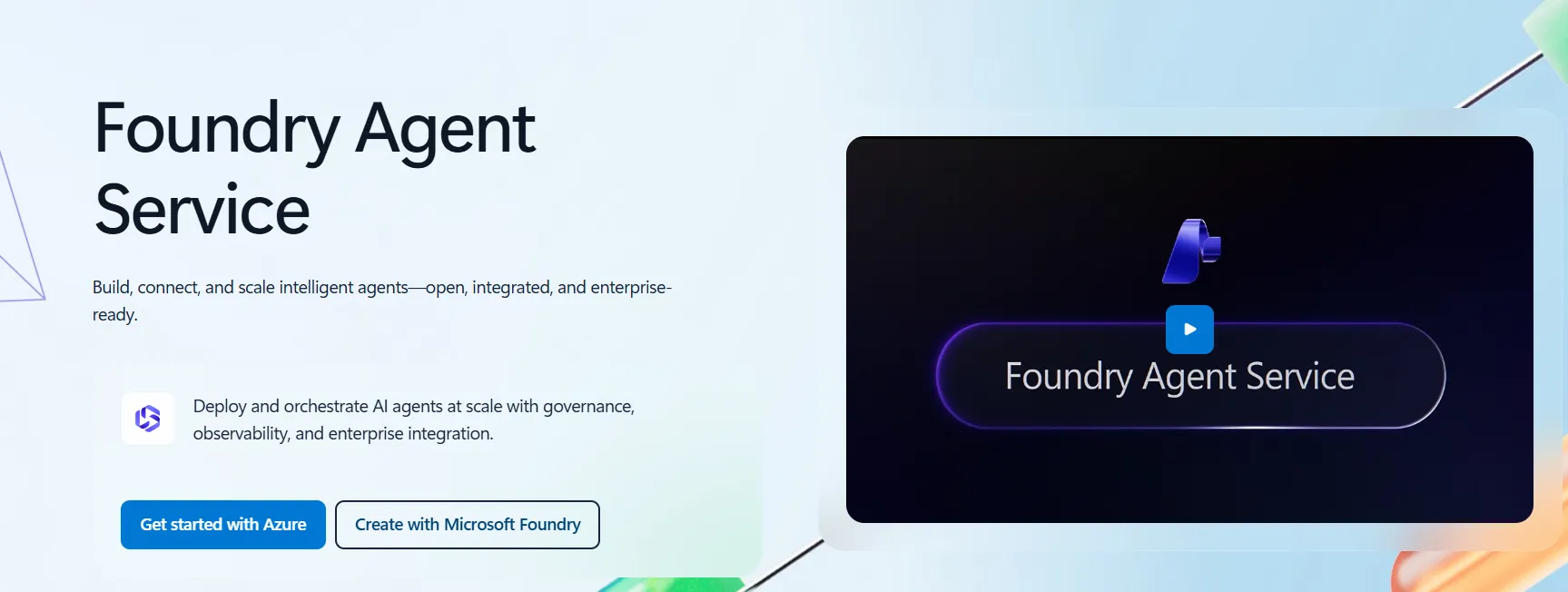
Microsoft Foundry Agent Service is a managed platform for building, deploying, and scaling agents. It integrates with Microsoft identity and supports managed agent workflows. It is valuable for Azure-first teams, although multi-cloud governance can create added operational overhead.
Governance is strongest inside Azure. Multi-cloud deployments, non-Microsoft frameworks, strict VPC isolation, and provider-neutral policies may require extra integration work.
It is best for organizations standardized on Azure and Microsoft identity. These teams usually want managed agent infrastructure without building orchestration plumbing internally.
Microsoft Foundry works well inside Azure. TrueFoundry applies the same access rules, audit logging, and cost limits across AWS, GCP, and Azure. Multi-cloud teams usually benefit from the vendor-neutral layer.
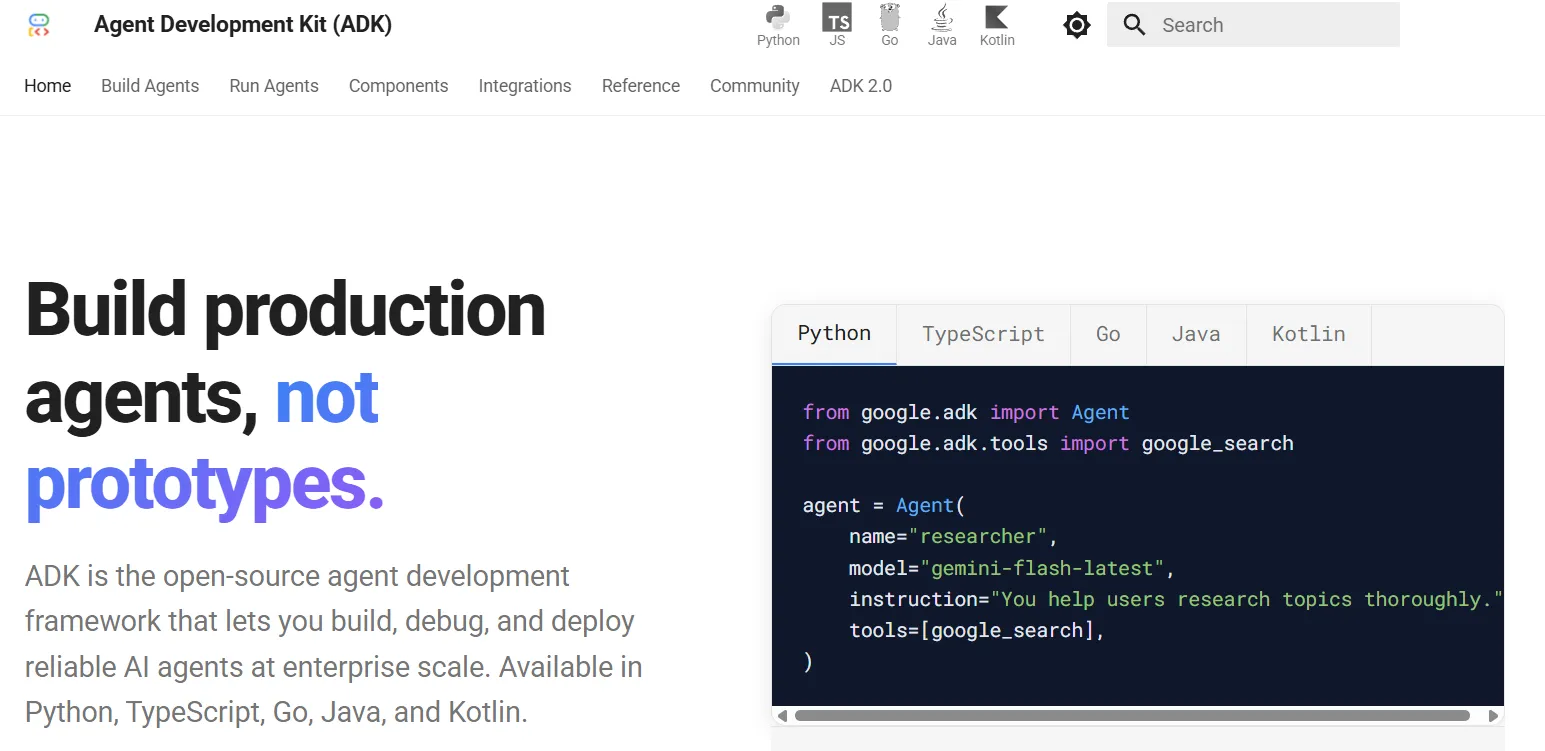
Google ADK supports the Agent2Agent protocol and helps developers build reliable agents at enterprise scale. It supports hierarchical agent systems, Gemini integration, and multimodal agent development. It fits Google Cloud environments well, although portability should be reviewed carefully.
ADK is open-source and model-agnostic, yet it aligns strongly with Google’s ecosystem. Hybrid or multi-cloud architectures may face vendor-alignment constraints.
Google ADK is best for teams building on Google Cloud. It fits organizations using Gemini, Vertex AI, and A2A-based agent interoperability.
ADK supports agent building inside the Google ecosystem. TrueFoundry adds cross-cloud governance across models, agents, tools, and providers. The two can work together when enterprises need Google-native development and vendor-neutral governance.
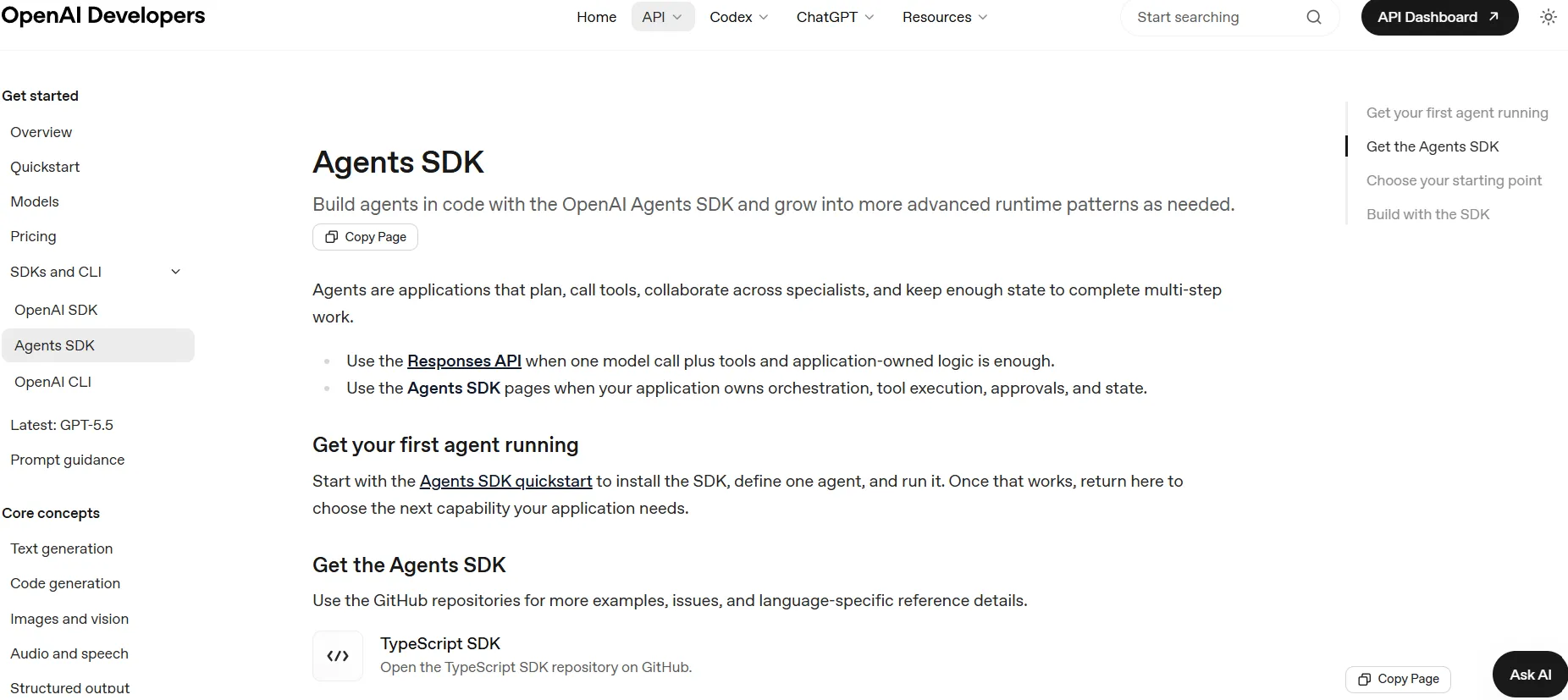
The OpenAI Agents SDK provides primitives for agents, handoffs, guardrails, and tracing. It gives teams a clean path to build agent chains with OpenAI models. It is useful for OpenAI-centric projects, although enterprise teams still need durable state and broader governance.
The SDK is optimized around OpenAI models and workflows. Durable session state, multi-provider routing, enterprise RBAC, and compliance-grade logging need extra infrastructure.
OpenAI Agents SDK is best for teams committed to OpenAI models. It suits moderate-complexity projects needing clear handoffs, tracing, and guardrails.
The SDK provides handoffs, guardrails, and tracing inside an OpenAI-centric flow. TrueFoundry adds durable state, role-based permissions, multi-provider routing, and compliance logs. Teams can write logic in the SDK and govern it through TrueFoundry.
.webp)
UiPath Maestro combines deterministic process control with AI-directed orchestration. Teams can model workflows using BPMN, define business rules using DMN, and include human agents or bots. It fits RPA-heavy organizations where automation and human intervention must work together.
Maestro is most valuable inside the UiPath ecosystem. Teams seeking purely AI-native orchestration may find the broader RPA platform heavier than required.
UiPath Maestro is best for enterprises combining AI agents, RPA, and human review. It fits regulated workflows that need deterministic process execution.
Maestro shines at process orchestration across bots, humans, and rules. TrueFoundry governs the AI side: model routing, tool permissions, identity, and audit. Teams can use both when process automation and agent governance must align.
.webp)
IBM watsonx Orchestrate coordinates agents, tools, and workflows across enterprise systems. It is aimed at regulated industries and large organizations with existing IBM investments. It can support governed workflows, although tight ecosystem alignment may increase integration effort.
IBM watsonx Orchestrate works best when teams already use IBM infrastructure. Organizations outside that stack may face higher integration effort than cloud-agnostic alternatives require.
IBM watsonx Orchestrate is best for large regulated enterprises already aligned with IBM. It suits teams seeking a managed agent ecosystem within that stack.
watsonx Orchestrate works best for IBM-centered teams. TrueFoundry remains vendor-neutral and cloud-neutral across frameworks, providers, and environments. It is stronger when multi-cloud governance is already on the roadmap.
.webp)
Developer frameworks such as LangGraph, CrewAI, and OpenAI Agents SDK give teams the building blocks for agent orchestration. They help agents reason, hand off work, and coordinate steps. They usually leave durable state, credential governance, access control, and observability to the engineering team.
Cloud-native services from Microsoft, Google, and IBM provide a managed backbone inside their ecosystems. That can work well for single-cloud teams. The gaps arise when agents from different platforms must adhere to a single access policy across multiple providers, clouds, and enterprise systems.
Here is the pattern underneath most multi-agent orchestration tools. They give teams either the framework layer or the infrastructure layer. They rarely provide teams with unified governance across all frameworks, models, tools, users, and environments.
This creates stitching work. Teams combine a framework for agent logic, a gateway for access control, a database for state, and a separate system for audit logs. That stitching often creates edge cases, unclear ownership, and reliability issues.
The critical question is whether the tool can govern the next step before an agent acts. If the agent reaches raw data, incoming tickets, private APIs, or customer systems, teams need real-time policies. The same applies when new agents enter production.
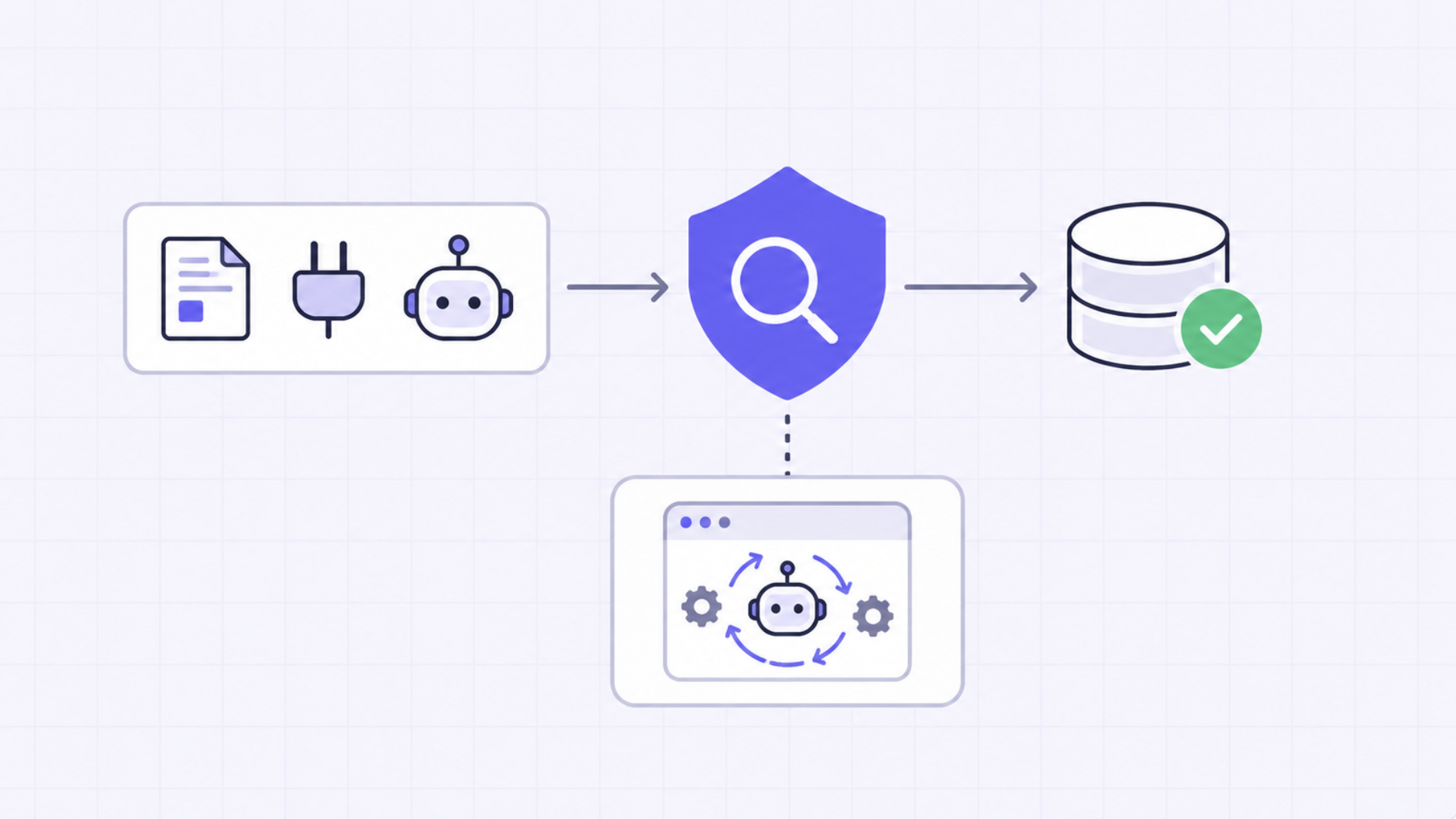
TrueFoundry does not replace the frameworks teams already use. It provides the governed backend that makes them production-safe. This gives business leaders, engineering teams, and security teams the right balance between framework flexibility and centralized governance.
That is the core idea. Keep your frameworks, move governance to a layer they all share. This helps teams turn artificial intelligence, machine learning, and generative AI experiments into governed AI systems that safely support real business outcomes.
Book a demo to see how TrueFoundry moves multi-agent systems from local experiments to governed production deployments.
.webp)
TrueFoundry AI Gateway bietet eine Latenz von ~3—4 ms, verarbeitet mehr als 350 RPS auf einer vCPU, skaliert problemlos horizontal und ist produktionsbereit, während LiteLM unter einer hohen Latenz leidet, mit moderaten RPS zu kämpfen hat, keine integrierte Skalierung hat und sich am besten für leichte Workloads oder Prototyp-Workloads eignet.





Die neuesten Nachrichten, Artikel und Ressourcen werden in Ihren Posteingang gesendet
.webp)
.webp)
.webp)
.webp)