


.webp)
October 16, 2026
|
Lesedauer: 5 Minuten


Erhalten Sie sofortigen Zugriff auf eine TrueFoundry-Live-Umgebung. Stellen Sie Modelle bereit, leiten Sie den LLM-Verkehr weiter und erkunden Sie die gesamte Plattform — Ihre Sandbox ist in Sekundenschnelle einsatzbereit, ohne dass eine Kreditkarte erforderlich ist.



.webp)
Unglaublich schnelle Methode zum Erstellen, Verfolgen und Bereitstellen Ihrer Modelle!
Anwendungen, die auf Large Language Models basieren, sind bei jeder Inferenzanfrage von KI-Modellanbietern abhängig. OpenAI, Anthropic und Google bieten zwar Dienste an, doch kein LLM-Anbieter ist frei von Ratenbegrenzungen, Ausfällen oder Latenzspitzen. Ein Problem beim Anbieter kann daher LLM-Anwendungen und Arbeitsabläufe unterbrechen.
Ohne einen Fallback-Pfad kann eine Anfrage fehlschlagen, Antwortziele verfehlen oder zu einer inkonsistenten Benutzererfahrung führen. Dieses Muster leitet betroffene Anfragen über ein anderes Modell oder einen anderen Anbieter um, wenn die ursprüngliche Route definierte Anforderungen nicht erfüllt. Dies sichert die Servicekontinuität, ohne dass Infrastrukturausfälle für die Endbenutzer der Anwendung sichtbar werden.
Eine zuverlässige Implementierung ist immer dann wichtig, wenn Produktionssysteme mehrere Modelle, Regionen oder Anbieter nutzen. Ein LLM-Gateway kann Routing, Ausfallsicherheit und Richtliniendurchsetzung hinter einer einzigen Schnittstelle zentralisieren. Diese Architektur hilft Produktionsteams dabei, anbieterspezifische Wiederherstellungslogik nicht in jede App einzeln einbetten zu müssen.
Dieses Zuverlässigkeitsmuster leitet eine Anfrage automatisch weiter, wenn das primäre Modell die definierten Anforderungen an Verfügbarkeit, Latenz oder Qualität nicht erfüllt. Auslöser können eine HTTP-429-Antwort, ein Serverfehler, ein Netzwerkfehler oder ein konfigurierter Timeout sein. Die Anfrage wird dann über eine alternative Route an ein geeignetes Fallback-Modell weitergeleitet.
Die Bedeutung von LLM-Fallback geht über die isolierte Fehlerbehebung hinaus. Es stellt eine Resilienzschicht innerhalb der Architektur für den Modellzugriff dar. Dieser Ansatz reduziert die Abhängigkeit von einem einzelnen LLM-Anbieter und trägt dazu bei, dass Anwendungen auch bei Instabilität des Anbieters verfügbar bleiben.
Fallbacks können über Anbieter, Modelle, Regionen oder Qualitätsschwellenwerte hinweg funktionieren. Ein einzelnes Modell kann auch auf eine andere Bereitstellung innerhalb desselben Anbieters zurückgreifen. Das gewählte Design sollte die Kompatibilität bei Prompts, Token, Kontextfenstern, Tool-Unterstützung und Antwortformaten wahren.
Der LLM-Fallback-Mechanismus folgt nach einem Anfragenfehler einer kontrollierten Sequenz. Der Router bewertet den Auslöser, liest die konfigurierte Fallback-Kette und wählt das nächste geeignete Ziel aus. Der ursprüngliche Prompt, der Kontext und die Generierungseinstellungen werden dann über die gewählte Fallback-Route übertragen.
Wiederholungsversuche sollten vor einem Anbieterwechsel bei vorübergehenden Fehlern ansetzen. Begrenzte Richtlinien nutzen exponentielles Backoff, Jitter und Antwortvorgaben vor einer Umleitung. OpenAI empfiehlt randomisiertes Backoff, während Anthropic Ratenbegrenzungen, Timeouts und Überlastungsmeldungen dokumentiert.
.webp)
Fallback, Failover und Wiederholungsversuche lösen verwandte Probleme in unterschiedlichen Betriebsbereichen. Fallback behandelt einzelne Anforderungsfehler, während Failover den breiteren Datenverkehr bei anhaltender Beeinträchtigung umleitet. Wiederholungsversuche wiederholen eine Anfrage an denselben Endpunkt, bevor ein anderes Ziel sie erhält.
Diese gängigen Muster arbeiten in resilienten Architekturen meist zusammen. Begrenzte Wiederholungsversuche können kurzzeitige Fehler beheben, ohne den Anbieter zu wechseln. LLM-Lastverteilung verteilt den normalen Datenverkehr, während Failover die Kontinuität bei anhaltenden Ausfällen schützt. Fallback behandelt verbleibende Fehler auf Anforderungsebene.
Verschiedene Fallback-Strategien unterstützen Verfügbarkeit, Qualität, Kosten und Anbieterunabhängigkeit. Jede Strategie erfordert klare Auslösebedingungen und kompatible Modellfähigkeiten. Teams sollten die erwartete Latenz, Ausgabequalität, Kontextgrenzen und Tool-Unterstützung vergleichen, bevor sie Routing-Prioritäten festlegen.
Ein effektives Rate Limiting sollte auf die jeweilige Strategie abgestimmt sein, anstatt unkontrolliertes Rerouting auszulösen. Zentrale Rate-Limit-Steuerungen können Quoten für Benutzer, Modelle, Anwendungen und Umgebungen festlegen. Google dokumentiert HTTP-429-Antworten für den Fall, dass Gemini-Workloads die geltenden Quoten überschreiten.
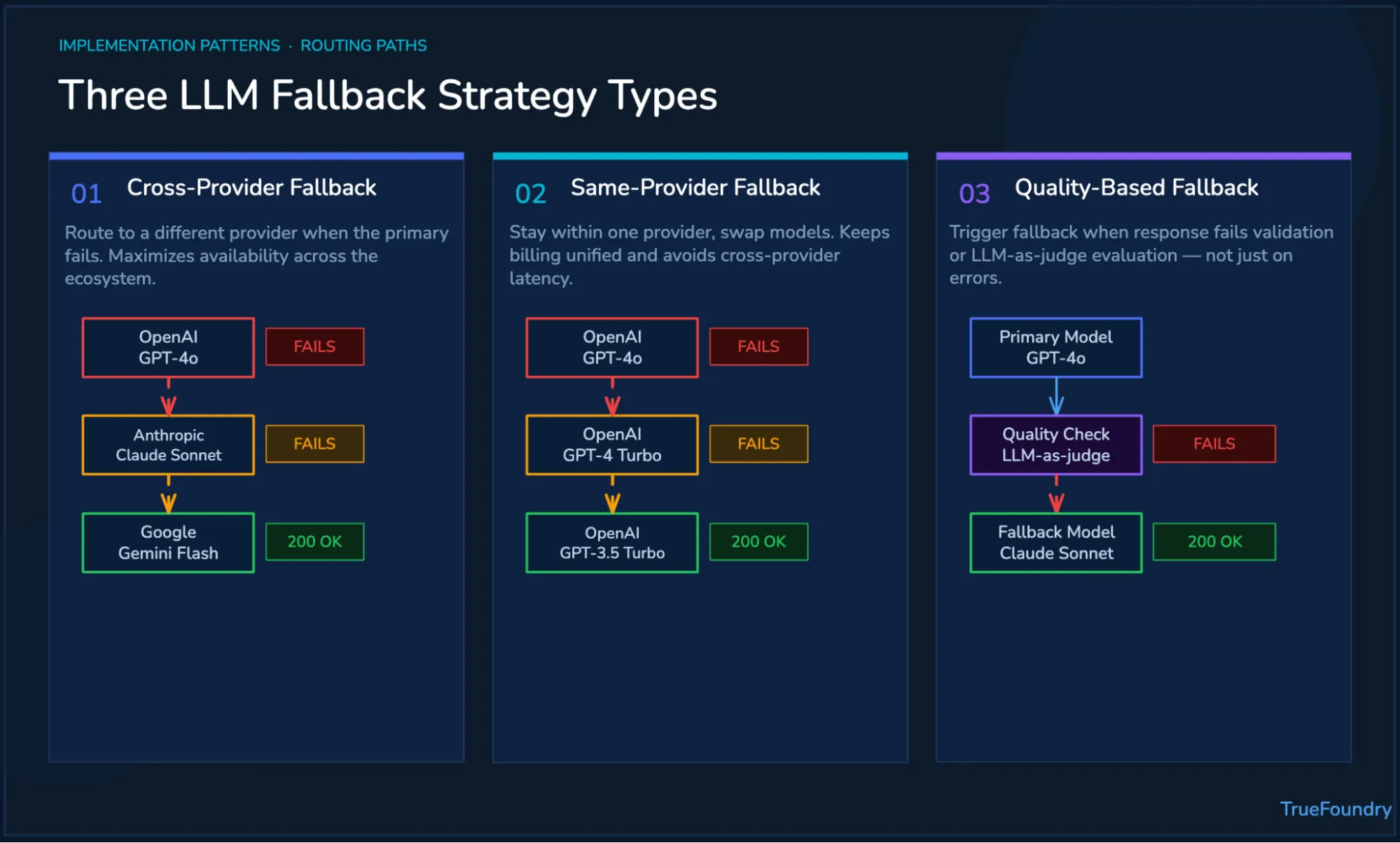
Fallback-Logik direkt im Anwendungscode zu implementieren, wirkt in der frühen Entwicklungsphase noch überschaubar. Die Komplexität steigt jedoch, sobald das Setup mehrere Anbieter, Modellversionen und Umgebungen umfasst. Jedes SDK bietet unterschiedliche Fehlermeldungen, Standardeinstellungen, Antwortstrukturen und Wiederholungsmechanismen.
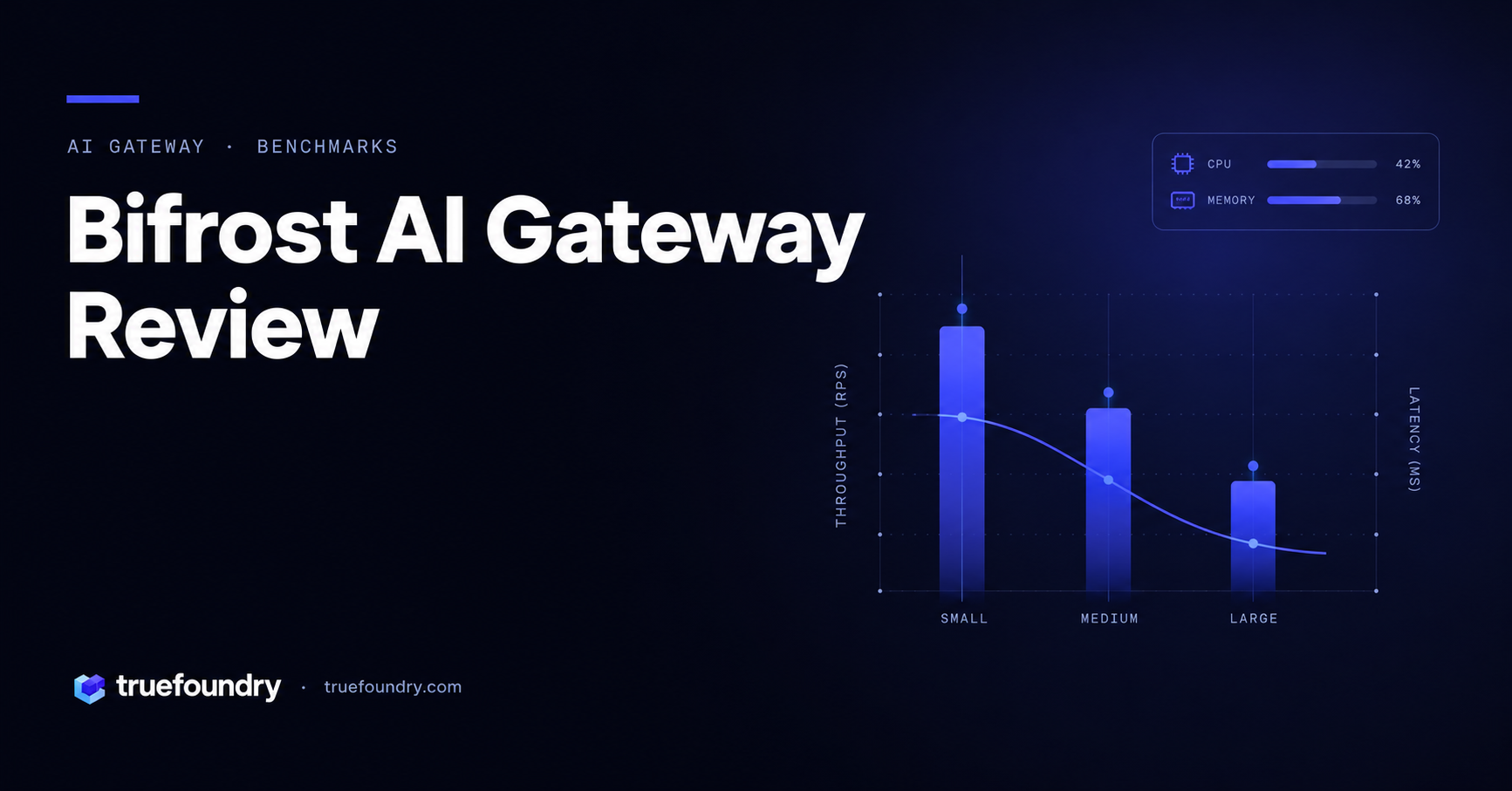
Teams ziehen beim Vergleich von Gateway-Optionen möglicherweise Portkey, Bifrost oder Vercel in Betracht. Unabhängig von der gewählten Plattform erfordern Best Practices begrenzte Wiederholungsversuche, zustandsbewusstes Routing, sichere Zugangsdaten und messbare Wiederherstellungsprozesse. Eine starke LLM-Observability sollte Latenz, Fehler, Fallback-Häufigkeit und die endgültige Erfolgsrate aufzeigen.
Das TrueFoundry AI Gateway zentralisiert den Modellzugriff, das Routing, Zuverlässigkeitskontrollen und die Observability. Die globale Routing-Konfiguration unterstützt Lastverteilung, Fallback-Mechanismen und Wiederholungsregeln über eine einzige Steuerungsebene. Anwendungen können eine einheitliche API nutzen, ohne für jeden Anbieter eigene Wiederherstellungslogiken entwickeln zu müssen.
Die Plattform unterstützt Ketten über einen primären Anbieter und alternative Ziele hinweg. Automatische Wiederholungsversuche fangen temporäre Anbieterfehler ab, bevor eine Umleitung erfolgt. Eine kontinuierliche Zustandsüberwachung minimiert Verzögerungen bei der Wiederherstellung während Störungen.
Für KI-Agenten steuert das Agent Gateway die mehrstufige Ausführung. Das MCP Gateway kontrolliert den Zugriff auf verbundene Unternehmens-Tools. Gemeinsam schützen sie das gesamte System, falls ein Modellpfad ausfällt.
Entwickeln Sie robuste KI-Anwendungen mit dem AI Gateway von TrueFoundry. Zentralisieren Sie Routing, Wiederholungsversuche, Observability und LLM-Fallbacks über verschiedene Anbieter hinweg. Kostenlose Demo buchen heute, um loszulegen.
Ein LLM-Fallback ist eine architektonische Grundvoraussetzung für zuverlässige Anwendungen, die auf externe Modelle setzen. Anbieter können Einschränkungen auferlegen oder während des Betriebs vorübergehende Ausfälle erleben. Anwendungen sollten diese Bedingungen abfangen, ohne jede Störung an die Nutzer weiterzugeben.
Eine Implementierung auf Anwendungsebene ist zwar möglich, doch die Komplexität nimmt in Umgebungen mit mehreren Modellen schnell zu. Ein Gateway kann Wiederholungsregeln, Fallback-Reihenfolgen, Gesundheitsprüfungen, Anmeldedaten und Überwachung zentralisieren. Dieser Ansatz verbessert die Ausfallsicherheit und hält den Anwendungscode gleichzeitig unabhängig vom spezifischen Verhalten der Anbieter.
Teams sollten Auslöser definieren, die Modellkompatibilität validieren und jede Route nach der Bereitstellung überwachen. Zudem sollten sie erschöpfte Ketten und das Wiederherstellungsverhalten testen, bevor der produktive Datenverkehr zunimmt. TrueFoundry bietet eine zentrale Steuerungsebene für die Verwaltung von Entscheidungen beim Modellzugriff.
TrueFoundry AI Gateway bietet eine Latenz von ~3—4 ms, verarbeitet mehr als 350 RPS auf einer vCPU, skaliert problemlos horizontal und ist produktionsbereit, während LiteLM unter einer hohen Latenz leidet, mit moderaten RPS zu kämpfen hat, keine integrierte Skalierung hat und sich am besten für leichte Workloads oder Prototyp-Workloads eignet.





Die neuesten Nachrichten, Artikel und Ressourcen werden in Ihren Posteingang gesendet
.webp)

.png)
.png)
.png)
.png)
.png)
.png)
.png)
.png)
.png)
.png)
.png)


