


October 1, 2026
|
5 min read


Published: July 4, 2026
Blazingly fast way to build, track and deploy your models!
A single agent handling research, analysis, and reporting often fails in predictable ways. It runs out of context, chooses the wrong tool, or loses state midway. The issue is rarely the single AI model alone. It is usually the architecture around the agent.
Multi-agent orchestration tools solve this by splitting work across specialized AI agents. They coordinate handoffs, preserve shared state, and guide the entire workflow across multiple steps. This becomes critical when agents need to handle complex tasks, retrieve from data sources, and interact with external tools.
Gartner expects 40% of enterprise applications to include task-specific AI agents by 2026. That shift makes agent orchestration a serious architecture decision for platform teams. The gap between a strong demo and a reliable production system often comes down to the orchestration layer you choose.
This guide compares the best multi-agent orchestration tools and multi-agent orchestration platforms across developer frameworks, enterprise platforms, and cloud-native services. These categories solve different problems. Knowing the difference helps teams choose the right platform for business outcomes, governance, and production scale.
Before comparing names, get the evaluation criteria right. A tool that works in a prototype may struggle in production. Four capabilities separate multi-agent orchestration tools that demo well from tools that support real enterprise deployments.
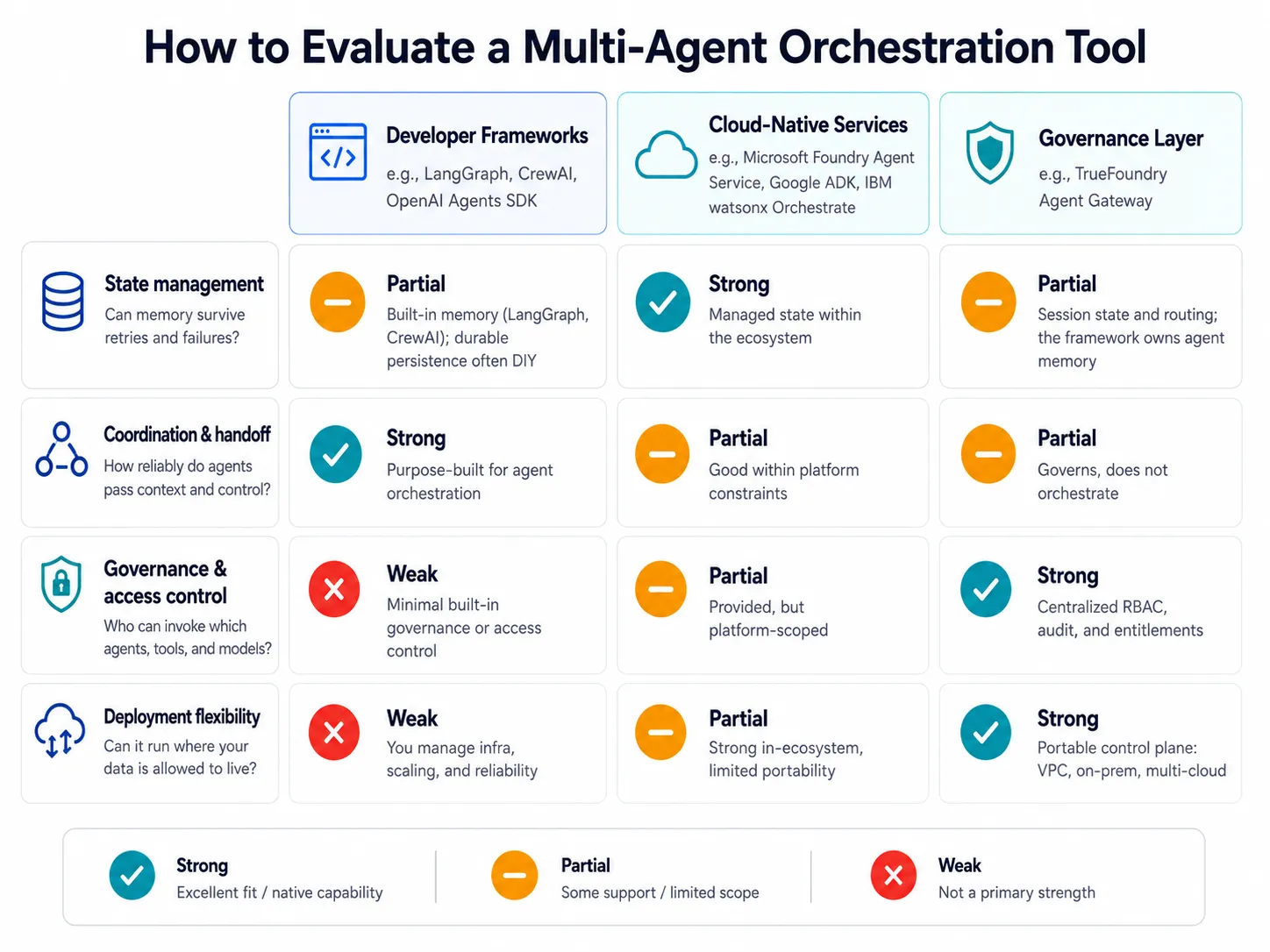
These multi-agent orchestration tools solve different layers of the agent stack. Some coordinate logic, while others govern access, state, cost, observability, compliance, and production control for enterprise teams at scale.
.webp)
TrueFoundry Agent Gateway is the governed infrastructure layer above the frameworks enterprise teams already use. It supports LangGraph, CrewAI, Google ADK, OpenAI Agents SDK, and custom stacks. Teams keep their framework choices while TrueFoundry standardizes governance across production environments.
At the gateway layer, it enforces RBAC, identity-aware execution, tool policies, token budgets, and audit trails. It also routes model calls, preserves session state, and logs cost metadata. This helps agentic AI move from experiments into enterprise deployments.
TrueFoundry has public pricing across four tiers. Developer is free for early builders and supports prototyping. Pro starts at $499 per month for teams shipping AI features. Pro Plus starts at $2,999 per month, while Enterprise is custom for advanced governance, VPC deployment, and mission-critical reliability.
TrueFoundry is best for enterprises running agents across several frameworks, providers, and clouds. It suits teams needing governance, observability, state control, and private deployment.
LangGraph gives developers explicit state that persists across agent interactions. Control flow is modeled as a graph, which helps teams define branches, loops, and retries. It is strong for complex workflows, although teams must own production infrastructure around it.
LangGraph is a developer framework, not a full enterprise platform. Deployment, access control, observability, durable state, and governance remain engineering responsibilities across production environments.
LangGraph is best for engineering teams that want maximum control over coordination logic. It fits teams with platform capacity to manage surrounding infrastructure.
LangGraph defines how agents coordinate. TrueFoundry governs what those agents can do in production. Teams can keep LangGraph and route its model and tool calls through TrueFoundry for RBAC, audit trails, budgets, and VPC control.
.webp)
CrewAI organizes agents around roles, goals, and collaboration patterns. That model is approachable for teams describing business processes through clear responsibilities. It is useful for quick agent creation, although production governance still needs separate infrastructure.
CrewAI focuses on framework-level coordination. Teams still need to handle persistent state, credential governance, access control, observability, and runtime policies for production use.
CrewAI is best for developer teams building role-based AI workflows. It fits customer service, content pipelines, and structured automation where readability matters.
CrewAI handles how a crew collaborates. TrueFoundry controls who can run that crew and which tools it can reach. It also logs every call and caps spend before runaway loops increase operational risk.
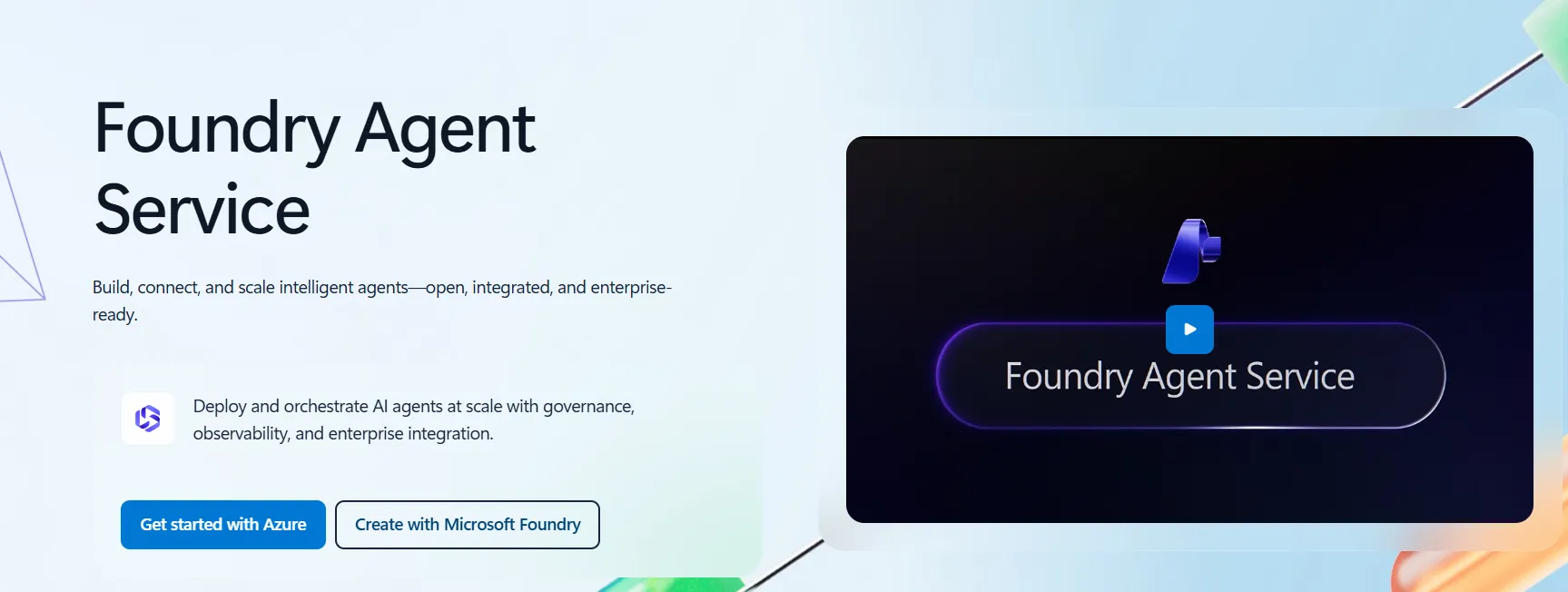
Microsoft Foundry Agent Service is a managed platform for building, deploying, and scaling agents. It integrates with Microsoft identity and supports managed agent workflows. It is valuable for Azure-first teams, although multi-cloud governance can create added operational overhead.
Governance is strongest inside Azure. Multi-cloud deployments, non-Microsoft frameworks, strict VPC isolation, and provider-neutral policies may require extra integration work.
It is best for organizations standardized on Azure and Microsoft identity. These teams usually want managed agent infrastructure without building orchestration plumbing internally.
Microsoft Foundry works well inside Azure. TrueFoundry applies the same access rules, audit logging, and cost limits across AWS, GCP, and Azure. Multi-cloud teams usually benefit from the vendor-neutral layer.
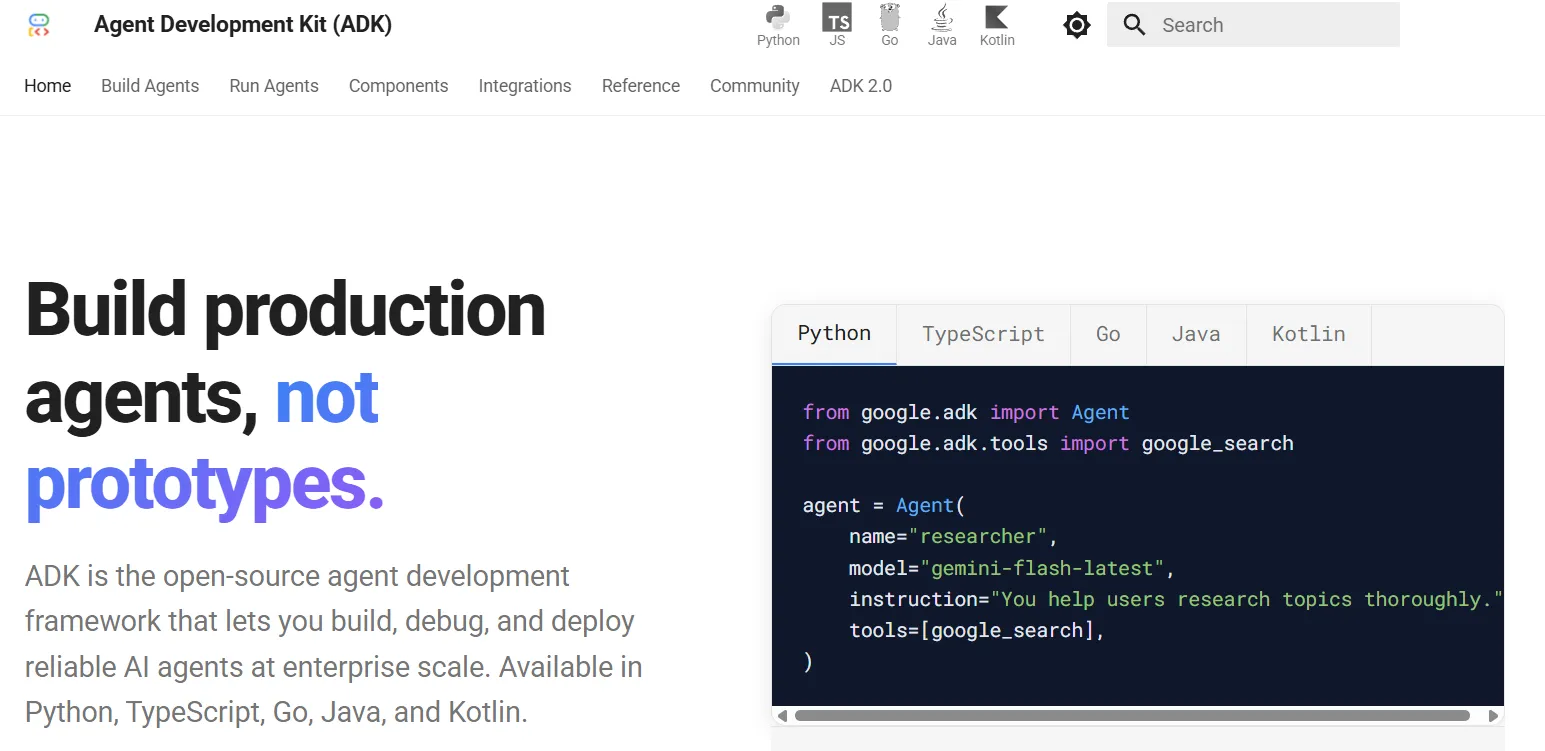
Google ADK supports the Agent2Agent protocol and helps developers build reliable agents at enterprise scale. It supports hierarchical agent systems, Gemini integration, and multimodal agent development. It fits Google Cloud environments well, although portability should be reviewed carefully.
ADK is open-source and model-agnostic, yet it aligns strongly with Google’s ecosystem. Hybrid or multi-cloud architectures may face vendor-alignment constraints.
Google ADK is best for teams building on Google Cloud. It fits organizations using Gemini, Vertex AI, and A2A-based agent interoperability.
ADK supports agent building inside the Google ecosystem. TrueFoundry adds cross-cloud governance across models, agents, tools, and providers. The two can work together when enterprises need Google-native development and vendor-neutral governance.
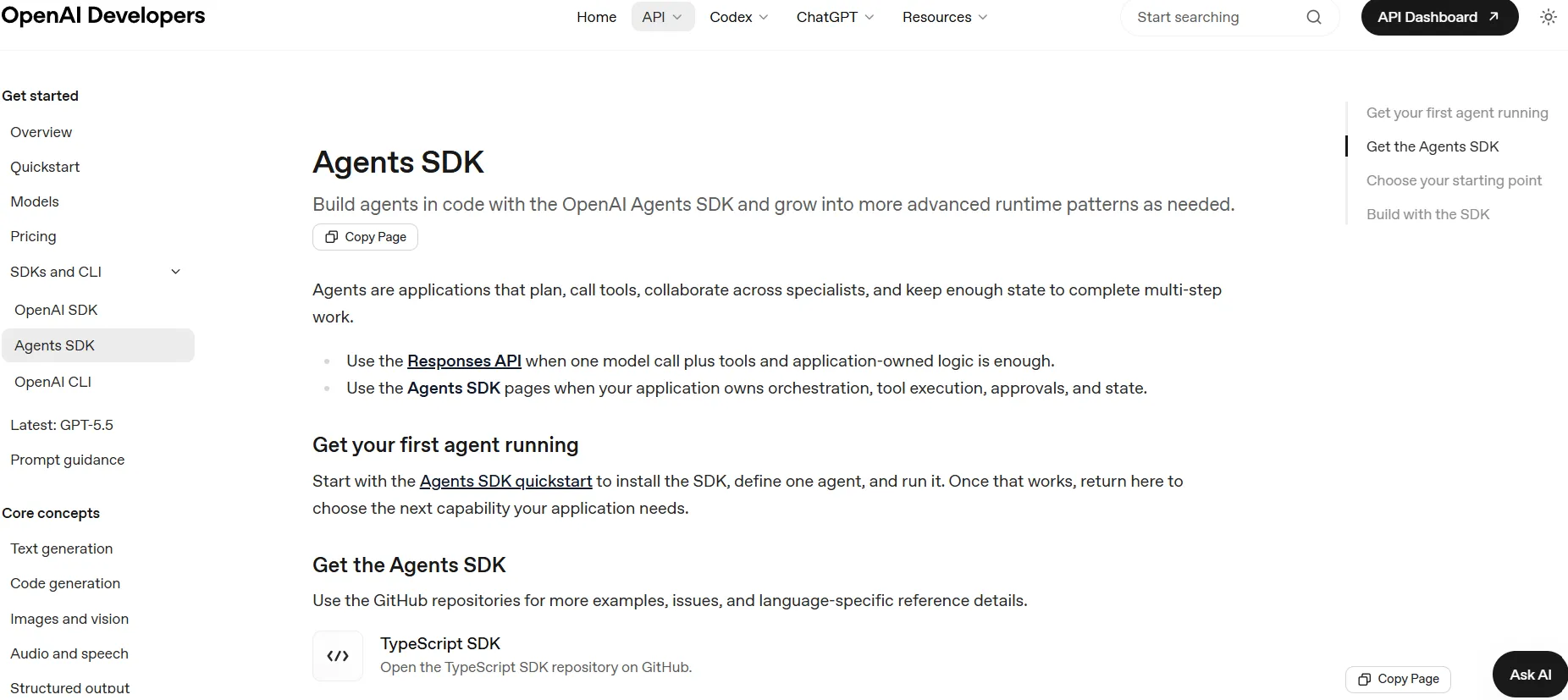
The OpenAI Agents SDK provides primitives for agents, handoffs, guardrails, and tracing. It gives teams a clean path to build agent chains with OpenAI models. It is useful for OpenAI-centric projects, although enterprise teams still need durable state and broader governance.
The SDK is optimized around OpenAI models and workflows. Durable session state, multi-provider routing, enterprise RBAC, and compliance-grade logging need extra infrastructure.
OpenAI Agents SDK is best for teams committed to OpenAI models. It suits moderate-complexity projects needing clear handoffs, tracing, and guardrails.
The SDK provides handoffs, guardrails, and tracing inside an OpenAI-centric flow. TrueFoundry adds durable state, role-based permissions, multi-provider routing, and compliance logs. Teams can write logic in the SDK and govern it through TrueFoundry.
.webp)
UiPath Maestro combines deterministic process control with AI-directed orchestration. Teams can model workflows using BPMN, define business rules using DMN, and include human agents or bots. It fits RPA-heavy organizations where automation and human intervention must work together.
Maestro is most valuable inside the UiPath ecosystem. Teams seeking purely AI-native orchestration may find the broader RPA platform heavier than required.
UiPath Maestro is best for enterprises combining AI agents, RPA, and human review. It fits regulated workflows that need deterministic process execution.
Maestro shines at process orchestration across bots, humans, and rules. TrueFoundry governs the AI side: model routing, tool permissions, identity, and audit. Teams can use both when process automation and agent governance must align.
.webp)
IBM watsonx Orchestrate coordinates agents, tools, and workflows across enterprise systems. It is aimed at regulated industries and large organizations with existing IBM investments. It can support governed workflows, although tight ecosystem alignment may increase integration effort.
IBM watsonx Orchestrate works best when teams already use IBM infrastructure. Organizations outside that stack may face higher integration effort than cloud-agnostic alternatives require.
IBM watsonx Orchestrate is best for large regulated enterprises already aligned with IBM. It suits teams seeking a managed agent ecosystem within that stack.
watsonx OrchestrateはIBM中心のチームに最適です。TrueFoundryは、フレームワーク、プロバイダー、環境を問わず、ベンダーニュートラルかつクラウドニュートラルを維持します。マルチクラウドガバナンスがすでにロードマップにある場合に、その強みを発揮します。
.webp)
LangGraph、CrewAI、OpenAI Agents SDKなどの開発者向けフレームワークは、エージェントオーケストレーションの構成要素をチームに提供します。これらはエージェントが推論し、作業を引き渡し、手順を調整するのに役立ちます。通常、永続的な状態、認証情報ガバナンス、アクセス制御、可観測性はエンジニアリングチームに任されます。
Microsoft、Google、IBMのクラウドネイティブサービスは、各エコシステム内でマネージドバックボーンを提供します。これはシングルクラウドのチームにはうまく機能します。しかし、異なるプラットフォームのエージェントが、複数のプロバイダー、クラウド、エンタープライズシステムにわたる単一のアクセスポリシーに従う必要がある場合に、ギャップが生じます。
ほとんどのマルチエージェントオーケストレーションツールに共通するパターンは次のとおりです。これらはチームにフレームワーク層かインフラストラクチャ層のいずれかを提供します。すべてのフレームワーク、モデル、ツール、ユーザー、環境にわたる統合されたガバナンスをチームに提供することはほとんどありません。
これにより、つなぎ合わせる作業が発生します。チームは、エージェントロジック用のフレームワーク、アクセス制御用のゲートウェイ、状態管理用のデータベース、監査ログ用の別システムを組み合わせます。このつなぎ合わせる作業は、しばしばエッジケース、不明確な所有権、信頼性の問題を引き起こします。
重要な問題は、エージェントが行動する前にツールが次のステップを管理できるかどうかです。エージェントが生データ、受信チケット、プライベートAPI、または顧客システムにアクセスする場合、チームはリアルタイムのポリシーを必要とします。新しいエージェントが本番環境に導入される際も同様です。
TrueFoundry は、チームがすでに使用しているフレームワークを置き換えるものではありません。それらを本番環境で安全にする、管理されたバックエンドを提供します。これにより、ビジネスリーダー、エンジニアリングチーム、セキュリティチームは、フレームワークの柔軟性と集中型ガバナンスの適切なバランスを得ることができます。
それが核となる考え方です。フレームワークはそのままに、ガバナンスをすべてのフレームワークが共有するレイヤーに移行します。これにより、チームは人工知能、機械学習、生成AIの実験を、実際のビジネス成果を安全にサポートする統制されたAIシステムへと転換できます。
デモを予約する TrueFoundryがマルチエージェントシステムをローカルでの実験から、統制された本番環境へのデプロイメントへとどのように移行させるかをご覧ください。
.webp)
TrueFoundry AI Gateway delivers ~3–4 ms latency, handles 350+ RPS on 1 vCPU, scales horizontally with ease, and is production-ready, while LiteLLM suffers from high latency, struggles beyond moderate RPS, lacks built-in scaling, and is best for light or prototype workloads.



2026年における主要なマルチエージェント・オーケストレーションツールは、3つのグループに分類されます。開発者向けフレームワークにはLangGraph、CrewAI、OpenAI Agents SDKなどがあります。クラウドネイティブサービスにはMicrosoft Foundry Agent Service、Google ADK、IBM watsonx Orchestrateなどが含まれます。ガバナンスおよびプロセスレイヤーにはTrueFoundry Agent GatewayやUiPath Maestroなどが挙げられます。
マルチエージェント・オーケストレーション・プラットフォームは、エージェントシステムを本番環境で運用するためのマネージドインフラストラクチャを提供します。これには、デプロイメント、永続的な状態管理、アクセス制御、可観測性、ガバナンス、コスト管理などが含まれます。フレームワークとは異なり、運用、セキュリティ、コンプライアンスのために個別のシステムを継ぎ接ぎする必要性を低減します。
フレームワークとは、LangGraphやCrewAIのように、エージェントの調整ロジックを記述するためのライブラリです。一方、プラットフォームとは、アクセス制御、状態管理、監査証跡、コスト管理など、エージェントを本番環境で実行するための管理されたインフラストラクチャを提供します。つまり、フレームワークがエージェントの振る舞いを定義するのに対し、プラットフォームは運用を管理するものです。
状態管理の手法はツールによって大きく異なります。LangGraphはチェックポイント機能をサポートしていますが、OpenAI Agents SDKでは永続ストレージの管理は各チームに委ねられています。クラウドサービスの場合は、それぞれのエコシステム内で状態を保持します。複数のフレームワークを併用する企業では、ハンドオフの失敗時に安全に再開できるよう、ゲートウェイ層でセッション状態を一元管理するのが一般的です。
堅牢なプラットフォームには、RBAC(ロールベースのアクセス制御)、ID認識型実行、ツールごとのアクセス権限ポリシー、監査証跡、トークン上限、コスト上限、およびVPCデプロイメントが備わっている必要があります。これらの制御機能により、エージェントは実際のユーザー権限を継承し、規制対象データを保護するとともに、SOC 2、HIPAA、ITARなどの審査に必要な証跡をセキュリティチームに提供できるようになります。
.png)
.png)
.png)
.png)
.png)
.png)
.png)
.png)
.png)
.png)
.png)





