Blank white background with no objects or features visible.

Rejoignez notre écosystème VAR & VAD — assurez la gouvernance de l'IA d'entreprise pour les LLM, MCP et Agents. Devenez partenaire →

What Is AI Cost Optimization? A Practical Guide for Enterprise Teams

Par Ashish Dubey

Mis à jour : May 11, 2026

TrueFoundry AI gateway reduces enterprise AI infrastructure costs at scale
Résumez avec
Metallic silver knot design with interlocking loops and circular shape forming a decorative pattern.
Blurry black butterfly or moth icon with outstretched wings on white background.
Blurry red snowflake on white background, symmetrical frosty design with soft edges and abstract shape.

Token budgets overrun. GPU clusters sit at 20% resource utilization. Agent loops burn through thousands of inference calls on tasks that should take ten. Nobody can tell you which team or application is responsible.

That is the AI cost problem most enterprises discover after deploying AI, not before. Traditional software cost management scales predictably with the number of users or requests. AI workloads do not. Spend stays probabilistic, context-dependent, and invisible until the cloud invoice arrives.

AI cost optimization is the practice of reducing the total cost of ownership for AI workloads while preserving the output quality and user experience that make those systems worth running. This guide covers what the discipline includes, why conventional FinOps approaches fall short, and how TrueFoundry enforces cost control from the gateway layer inward.

Consider what happens without proper oversight. A mid-size enterprise rolls out its first customer-facing AI agent in March. Three teams connect it to a frontier model using separate API keys with no token usage tagging, no per-team budget, and no model routing policy. By May, the CFO asks why the AI bill on the cloud invoice grew 11x over two months.

Finance runs a week-long forensic review across four dashboards and still cannot tell which team owns 60% of the spend. That scenario is why AI cost optimization exists as a discipline, and why the controls must sit in the inference path rather than in the reporting pipeline.

Your AI Bill Arrives Monthly. Your Cost Controls Need to Work Daily.

TrueFoundry enforces per-team token budgets, routing policies, and real-time cost attribution across every model your teams use.

What Is AI Cost Optimization?

AI cost optimization is the practice of reducing and managing the total cost of operating AI systems. It focuses on inference, compute, data storage, agent execution while preserving the model performance and response quality that make those systems valuable.

The discipline spans four distinct layers of the AI stack:

  • Inference costs: Token usage from LLM API calls. Spend scales with prompt length, model tier, and token count per request.
  • Infrastructure costs: GPU and CPU resources consumed by model hosting, training costs, fine-tuning, and serving workloads.
  • Agent execution costs: The compounding spend of autonomous agents invoking multiple model usage calls, tool executions, and retrieval steps per user request.
  • Operational overhead: Engineering time lost to fragmented integrations, credential rotation, and debugging cost allocation anomalies without centralized visibility.

Miss any one of these four layers, and the cost optimization strategy breaks in production systems. Token usage controls mean nothing if an idle GPU cluster burns twice the inference spend. GPU governance means nothing if an agent workflow silently triggers 40 calls per user request.

Why AI Costs Spiral Without Governance?

Five drivers compound on one another across various sectors. Fix any one in isolation, and the remaining four still drive the AI cloud cost bill upward.

Token Costs Are Invisible Until They Hit the Invoice From Your Cloud Provider

  • Every LLM call charges for input tokens, output tokens, and in some cases cached or long system messages tokens that teams rarely track individually.
  • When dozens of applications share API keys without per-team cost allocation, accountability becomes impossible until finance raises the monthly invoice.

Agent Loops Multiply Inference Costs in Ways Single-Call Usage Never Does

  • Autonomous agents invoke multiple model usage calls per task. Each retrieval step, tool call, and reasoning loop adds tokens that compound quickly.
  • An agent configured without loop detection or budget limits can generate thousands of inference calls from a single user request, representing a significant cost before anyone notices.

Over-Provisioned GPU Infrastructure Burns Budget Without Delivering Proportional Value

  • Model hosting on GPUs that sit at low resource utilization creates fixed infrastructure costs that teams rarely measure against the inference value actually delivered.
  • Without fractional GPU allocation and autoscaling, teams default to over-provisioning to avoid latency, inflating GPU usage spend accordingly.

Routing Every Request to the Most Expensive Model Is a Hidden Cost Driver

  • Most teams route every request to a frontier model like GPT-4 or Claude Opus regardless of task complexity, paying premium rates for queries that smaller models handle equally well.
  • Model routing that matches model tier to task complexity can cut per-request inference costs meaningfully without degrading response quality for most operational workflows.

Fragmented Tooling Means Cost Anomalies Are Found Too Late to Prevent Damage

  • When each team manages its own API keys, model subscriptions, and deployment configurations, there is no central view of AI cost until billing cycles close.
  • Detecting a cost spike caused by a misbehaving agent or a prompt design affects regression requires forensic investigation across disconnected logs and dashboards, a process that delivers no business value.

A healthcare customer running three separate RAG agents against a shared provider account saw monthly inference spend jump from $12K to $68K in six weeks. The cause was a retrieval regression in one agent that started returning documents 8x longer than the prompt. No individual log showed the issue. Only unified per-request telemetry across all three agents surfaced it, two weeks after the spike had already hit the invoice. (Source: TrueFoundry customer case study, 2025.)

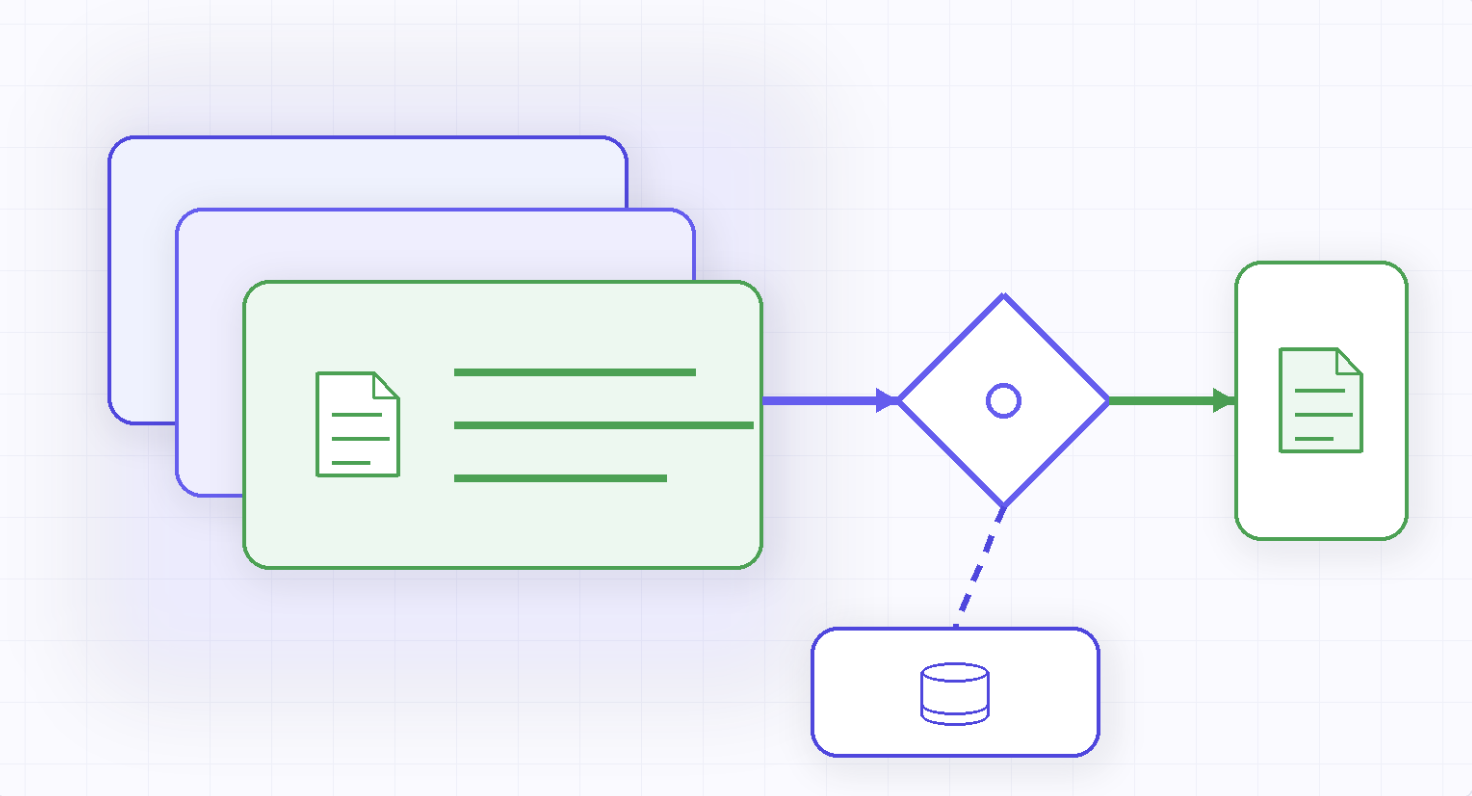
Five compounding drivers of enterprise AI cost showing cumulative monthly spend growth

Why Conventional FinOps Approaches Fall Short for AI?

Classic cloud cost management was designed for resources with predictable consumption patterns. AI workloads break most of those assumptions.

  • Traditional cost allocation attributes spend to resources, not to the reasoning behaviors or prompt design, which affects patterns that actually drive AI cost.
  • Cloud cost optimization dashboards from Google Cloud and other providers show total model API spend by account, not by the team, agent, or application that generated it.
  • Budget alerts fire after spend has occurred, not before execution, when a hard limit could have prevented the AI cloud cost overrun.
  • Agent-driven operational workflows have no inherent cost-efficiency ceiling in conventional infrastructure monitoring because each agent step appears as a standard API call.

The shift that matters: AI cost optimization must operate at the inference path itself, before the request reaches a model. FinOps reports spend. Gateway cost control policies prevent it.

AI Costs Are Already Running. Make Every Token Spend Count From Here.

Create your TrueFoundry account and get real-time token budgets, routing policies, and cost attribution running from day one.

Consider what a typical FinOps alert catches. A team exceeds its cloud budget by 30% over the course of a month. The alert fires on day 28. Two more days of overrun before the team can respond, and the alert itself contains no information about which model, agent, or prompt pattern drove the breach. Gateway-level enforcement reverses the sequence — the budget policy evaluates at request time, the blocked request never reaches the provider, and the team investigating the incident sees the attribution in structured metadata immediately.

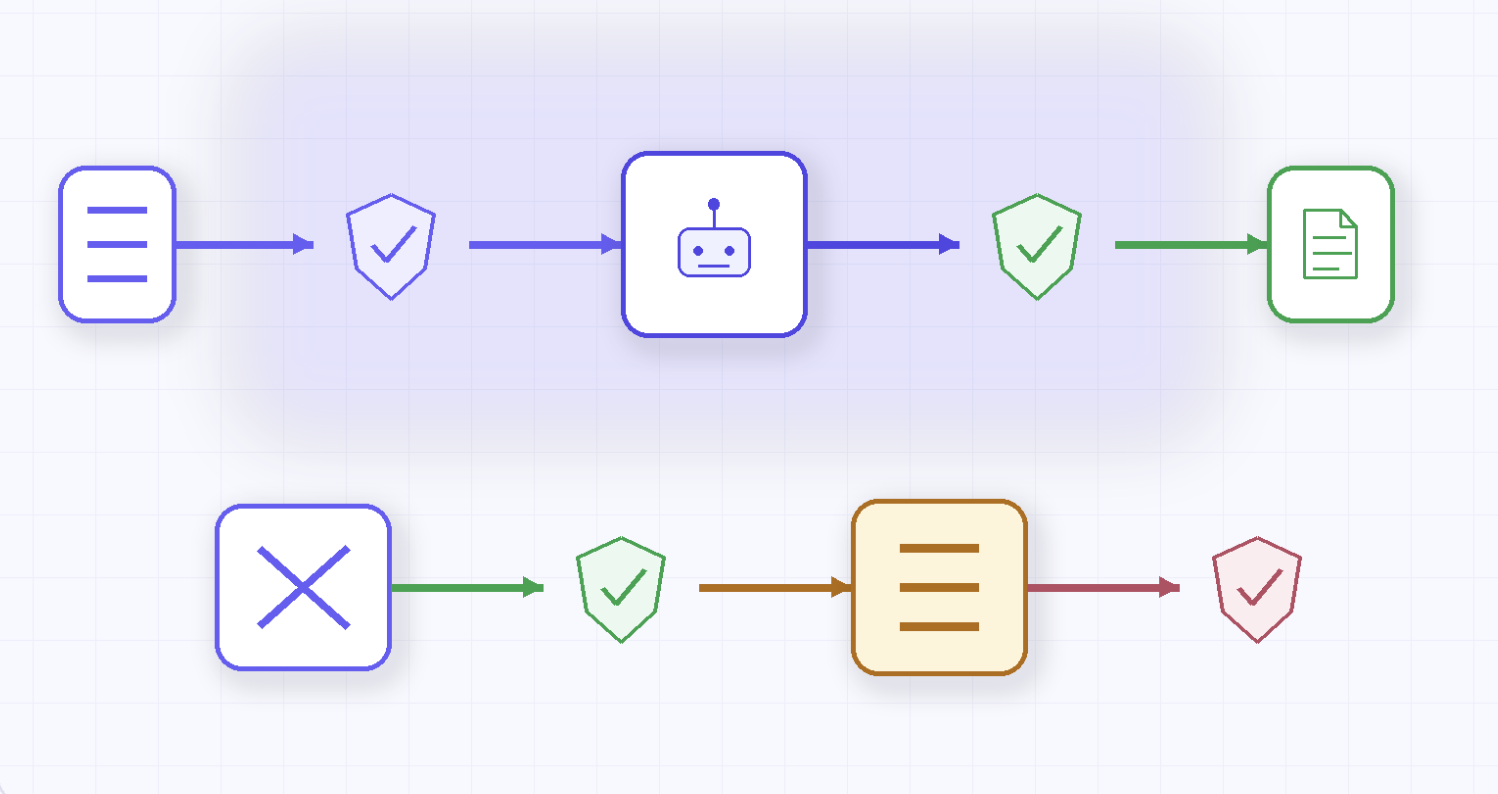
Timeline comparing reactive cloud FinOps against proactive gateway-level AI cost enforcement

Core Strategies for AI Cost Optimization in Production

Five AI infrastructure cost optimization strategies, each enforced at the gateway layer, handle the bulk of enterprise AI cost control and deliver meaningful cost savings.

  • Enforce token usage budgets at the gateway layer so overspending gets blocked before it occurs, not flagged after, creating financial accountability at the team level.
  • Apply model routing so simpler queries go to smaller models and premium frontier model capacity is reserved only for tasks that genuinely require deep reasoning.
  • Serve repeated queries from prompt caching or a semantic cache rather than triggering a new model call each time, capturing cost savings at high request volumes.
  • Set per-task inference budgets and circuit breakers on agents to halt runaway loops automatically, protecting unit economics across production systems.
  • Tag every request with user, team, model, and environment metadata for real time spend attribution, giving finance the cost allocation data they need without custom pipelines.

Each strategy is enforced at a different point in the inference path. Taken together through a single AI gateway control plane, they compound and they enforce uniformly without per-team custom implementation, making AI cost optimization a platform property rather than a team responsibility.

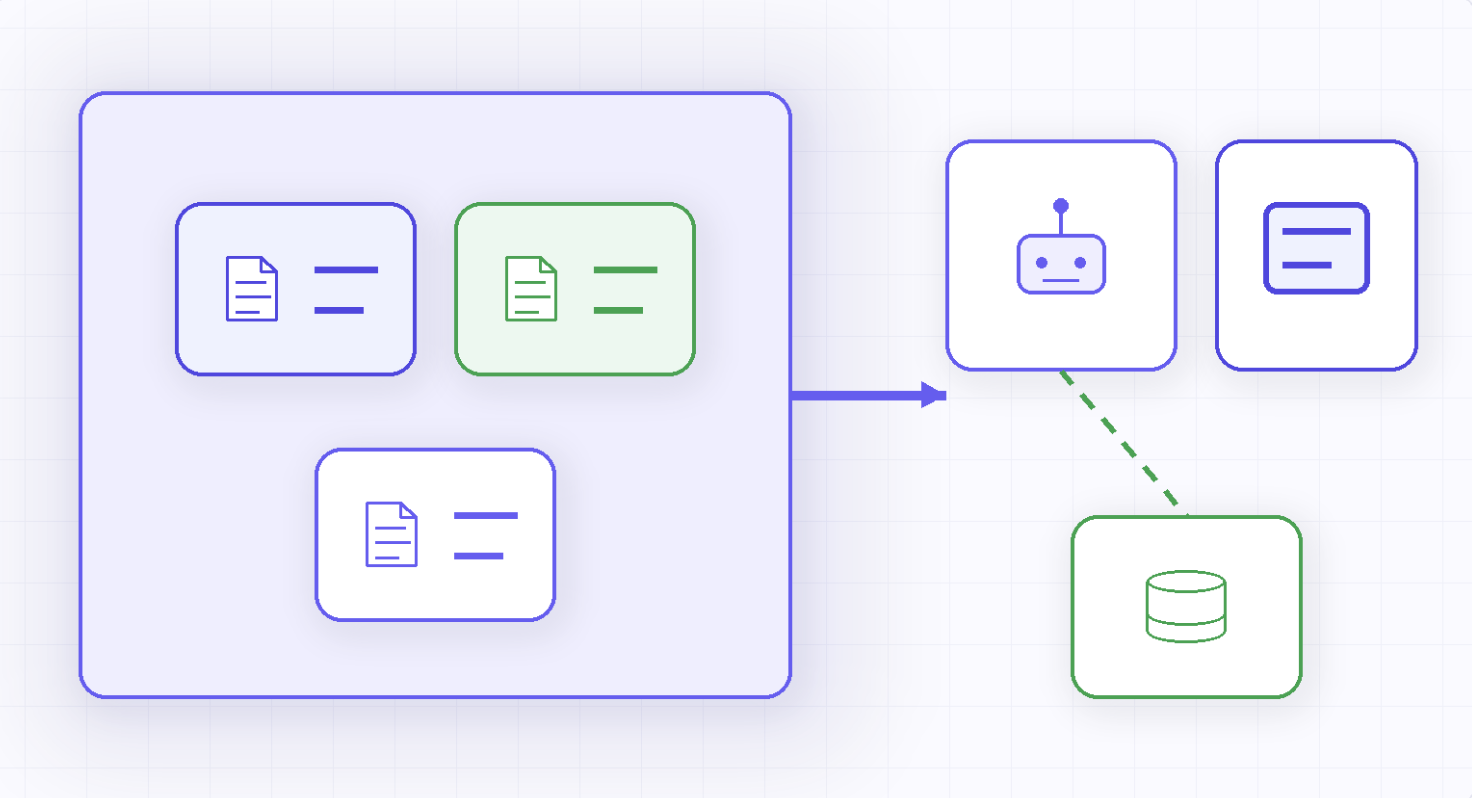
Five AI cost optimization strategies mapped to gateway layer enforcement points

How TrueFoundry Enables AI Cost Optimization at the Gateway Layer

Our AI Gateway enforces cost optimization as infrastructure, not as a reporting exercise. Every LLM call, agent execution, and tool invocation passes through the gateway — so cost controls apply universally, without requiring each team to build budget logic into their own application.

  • Per-team and per-application token budgets with hard limits: Spending limits get configured per team, service, and endpoint, then enforced before execution. Overruns get prevented rather than flagged after the invoice arrives. Both Innovaccer and Aviva route all LLM traffic through the TrueFoundry AI Gateway to cap and track inference costs in real time.
  • Intelligent routing that matches model tier to task requirements: Requests are routed to the appropriate model based on configured policies, eliminating frontier model spend on queries that smaller models handle with equivalent output quality, creating a competitive advantage through sustainable unit economics.
  • Semantic caching to eliminate redundant inference calls: Repeated queries are served from cache at the gateway layer with no application code changes required, reducing token usage costs for high-volume operational workflows.
  • Real-time cost attribution by user, team, model, and environment: Every request is tagged with structured metadata, so platform and finance teams can break down AI spend to the application and team levels without custom analytics pipelines.
  • Agent budget limits and loop detection are built into the execution path: Autonomous agent workloads run within configured inference budgets. Automatic circuit breakers halt runaway execution before costs compound across multi-step tasks.

Enterprises using AI gateways for cost governance report 40–60% reductions in inference costs, along with higher reliability and predictable spend. Gateway architecture adds only ~3–4ms of overhead per request, negligible next to actual model inference latency.

TrueFoundry runs VPC-native within the customer's AWS, Google Cloud, or Azure account, meaning AI cost metadata and token count data never leave the customer environment. Regulated industries get data sovereignty without sacrificing cost allocation visibility, and finance teams get chargeback-ready attribution data flowing through existing observability pipelines.

AI cost optimization and token attribution by team and model tier

Enterprises typically realize they need a gateway-level AI cost optimization control plane around the third month of production AI deployment, right when the first surprise invoice lands. Getting ahead of the invoice is less expensive than responding after it arrives.

Book a demo with TrueFoundry to map your AI cost optimization strategy against a reference gateway deployment and see what real-time cost control, hard token budgets, and semantic caching look like against your current AI workloads.

Le moyen le plus rapide de créer, de gérer et de faire évoluer votre IA

INSCRIVEZ-VOUS
Table des matières

Gouvernez, déployez et suivez l'IA dans votre propre infrastructure

Réservez un séjour de 30 minutes avec notre Expert en IA

Réservez une démo

Le moyen le plus rapide de créer, de gérer et de faire évoluer votre IA

Démo du livre

Découvrez-en plus

Aucun article n'a été trouvé.
May 11, 2026
|
5 min de lecture

Creativity, AI Systems and Truefoundry with Nikunj Bajaj

Aucun article n'a été trouvé.
May 11, 2026
|
5 min de lecture

Exporting TrueFoundry AI Gateway Traces to Middleware via OpenTelemetry

Aucun article n'a été trouvé.
Comparing AI agents and agentic AI workloads in enterprise production
May 11, 2026
|
5 min de lecture

AI Agents vs Agentic AI: What the Difference Actually Means in Production

Aucun article n'a été trouvé.
May 11, 2026
|
5 min de lecture

The Portkey Acquisition Is a Wake-Up Call. Here's What It Means For You.

Aucun article n'a été trouvé.

Blogs récents

Black left pointing arrow symbol on white background, directional indicator.
Faites un rapide tour d'horizon des produits
Commencer la visite guidée du produit
Visite guidée du produit