September 23, 2026
|
5 min de lecture


Accédez instantanément à un environnement TrueFoundry en direct. Déployez des modèles, acheminez le trafic LLM et explorez la plateforme complète : votre sandbox est prête en quelques secondes, aucune carte de crédit n'est requise.



Published: May 21, 2026
.webp)
Une méthode incroyablement rapide pour créer, suivre et déployer vos modèles !
The terms AI agent and agentic AI get used interchangeably across most engineering conversations, and the cost of that habit shows up later, almost always in production. Around an audit. A token-cost spike. A security review nobody can close cleanly. As enterprises deploy broader forms of artificial intelligence, the distinction becomes operationally important rather than semantic.
Three conversations surface the mismatch. Security wants to know who has access to what. Finance wants to know who owns the bill. An on-call engineer needs to know which AI agent kicked off the chain that just broke something. None of those conversations resolves well if the mental model treats one agent and a multi-agent workflow as the same architectural shape.
Modern enterprise environments increasingly combine Generative AI, traditional AI, and other forms of machine learning inside the same operational environment. This guide covers the differences between AI agents vs agentic AI, where the two overlap in real systems, the governance failures that appear most often in production, and how TrueFoundry governs both from a single platform operating across vast amounts of data in real time.
An AI agent is one discrete piece of software. It takes input, reasons about it with a large language model in the loop, and selects an action that moves it toward a goal defined at task completion.
The four core elements behind an AI agent are:
That loop is the architectural element that separates an AI agent from everything else in the stack. Strip it out, and what remains is an API wrapper around a model. Leave it in place, and the AI agent drives its own execution with minimal human supervision until the task is complete or a stop condition is reached.
Depending on the type of ai involved, the reasoning layer may rely on domain-specific training data to improve decision quality and contextual awareness. Most enterprise agents also interpret natural language inputs in a way similar to the way humans interact with operational systems and interfaces.
In practice, an AI agent operates within a fixed scope assigned at configuration time. It calls a defined set of external tools such as APIs, databases, and search endpoints. It complete tasks without requiring human intervention at each step. A support ticket agent is the clearest example: it reads a ticket, checks the relevant knowledge bases, determines whether the user needs escalation, and either replies or routes the ticket. Enterprise agents increasingly integrate with social media platforms, ticketing systems, and internal digital assistants simultaneously. One agent. One specific task. One bounded loop.
Agentic AI describes the broader architectural pattern. It covers any setup in which AI components run with sustained autonomy over time, connecting steps, tools, and other agents to achieve complex tasks that no single AI agent could deliver alone. If an AI agent is the component, agentic AI emerges when those components share memory, plan together, and route results among themselves across complex workflows.
Key characteristics that define a true agentic AI platform:
Anthropic describes this same pattern in its guidance on building effective agents, noting that the model itself runs the planning and tool use rather than executing a hard-coded script. (Source: Anthropic, "Building Effective Agents," 2024.)
The research-and-report workflow common across enterprise deployments is a clear example of agentic AI: pull market data, draft a client report, peer-review the draft, and deliver the final version. Multiple autonomous agents are involved. Memory survives the run. The plan is revised as new context arrives. One user experience on the other side.
.webp)
The framing that lands cleanest with engineering teams: an AI agent is a component; agentic AI is an architecture. In the agentic AI vs AI agents comparison, almost every other difference follows from that distinction.
Key implication: A single AI agent operates safely under unit-level controls, governed in the same way as any other service in the stack. Agentic AI does not survive that approach. The unit of AI governance must be the entire execution chain because one misconfigured permission or careless tool connection eventually reaches every other agent the workflow touches.
The framing of AI agents vs agentic AI as an either-or choice is largely a rhetorical artifact. In real systems, the two coexist, because agentic AI is built from AI agents working in concert. The split is architectural, not categorical, and most production systems contain both layers simultaneously.
A typical agentic AI deployment follows a recognizable shape. The orchestrator AI agent receives the top-level objective and decomposes it into subtasks, routing each to a specialized agent handling retrieval, analysis, drafting, or verification depending on what the complex workflows require.
Each specialized agent returns its result to the orchestrator, which evaluates the output and selects the next step. The loop continues until the system meets the objective, an error escalates, the run exits the loop, or a budget or safety limit halts the chain.
The same structure that gives agentic AI its leverage over AI agents is also what turns the ungoverned version into a real operational problem. One over-permissioned AI agent within a broader workflow can read relevant information, invoke external tools, and trigger downstream actions far beyond what a single user prompt should ever reach.
.webp)
Two patterns of misuse appear consistently in enterprise deployments, and both produce real operational risk in the agentic AI vs AI agents context.
The first: governing an agentic AI system as if it were a single AI agent. Teams put per-agent access controls in place, build confidence in the per-agent posture, and never review the complex workflows that tie those agents together. A narrowly scoped AI agent gets plugged into a wider workflow, and that workflow effectively grants the agent access to enterprise systems and data sources its original scope never anticipated. Reviewed in isolation, the agent passes review. The workflow it now lives inside does not.
The second: building an agentic AI system without a shared control plane. Every AI agent in the workflow handles its own authentication, manages its own external tools connections, and writes its own logs in its own format. Governance is scattered, and no single team can provide a clear answer about what the system accessed, did, or spent during a single run.
Both failures share the same root cause. Teams treat the AI agent as the unit of governance, when an agentic AI system requires the best agent gateway to govern the workflow as a whole. Gartner formally recognized the "agent control plane" as an emerging market category in late 2025, defining it as the layer that inventories, governs, orchestrates, and assures heterogeneous autonomous agents across vendors and dynamic environments. (Source: Gartner, "Emerging Tech: Agent Control Plane," 2025.)
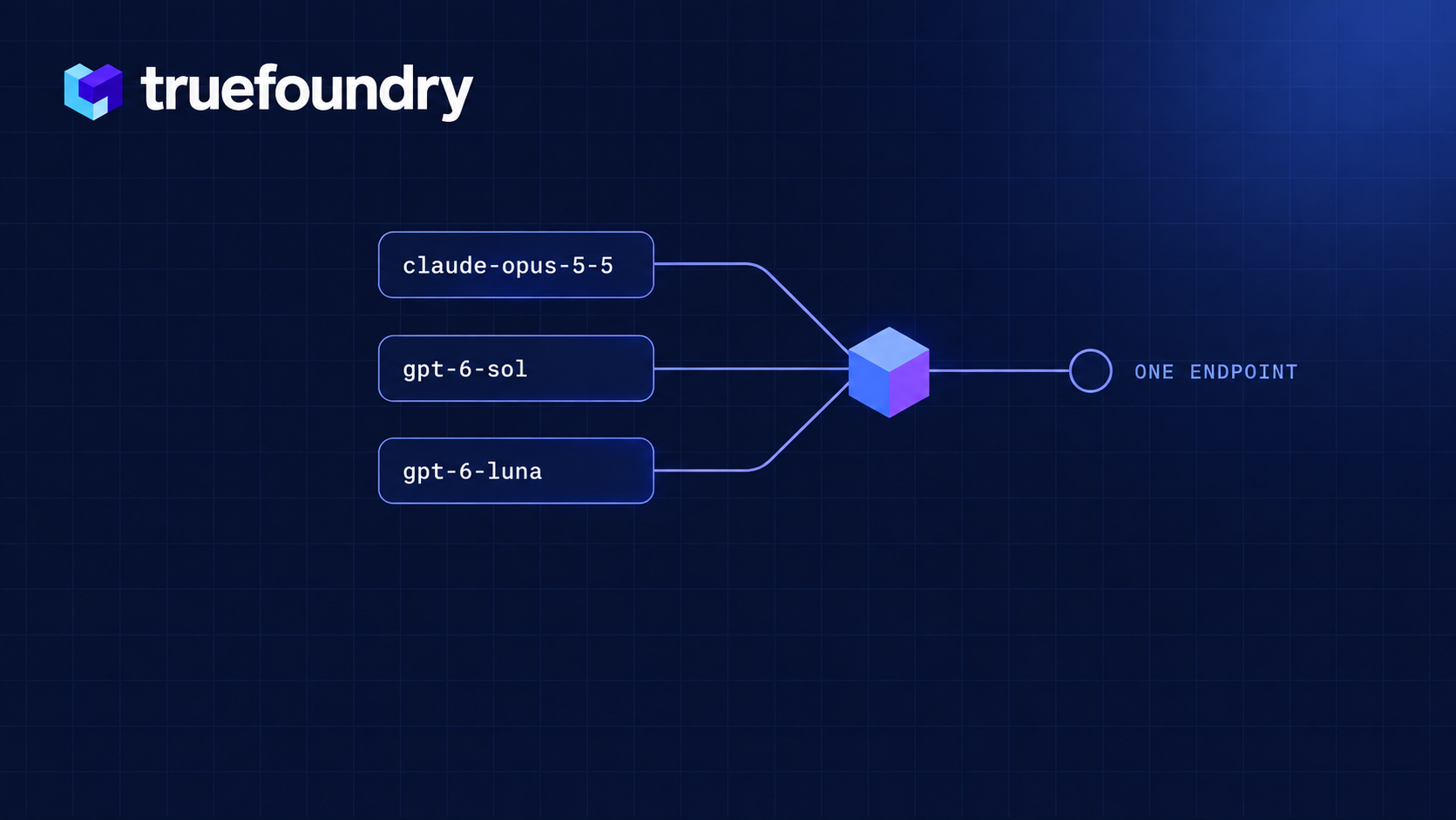
The TrueFoundry AI Gateway bundles three components, i.e., an LLM gateway, an MCP gateway, and an Agent gateway. This ensures that the same control plane covers both the individual AI agent and the agentic AI workflow in which it operates.
Book a demo with TrueFoundry to see how the gateway handles per-agent identity, agentic AI tool routing, and workflow-level cost controls inside your own cloud environment.
.webp)
TrueFoundry AI Gateway offre une latence d'environ 3 à 4 ms, gère plus de 350 RPS sur 1 processeur virtuel, évolue horizontalement facilement et est prête pour la production, tandis que LiteLM souffre d'une latence élevée, peine à dépasser un RPS modéré, ne dispose pas d'une mise à l'échelle intégrée et convient parfaitement aux charges de travail légères ou aux prototypes.





Les dernières nouvelles, articles et ressources envoyés dans votre boîte de réception
.png)

.png)
.png)
.png)
.png)
.png)
.png)
.png)
.png)
.png)