


September 19, 2026
|
5 min de lecture


Accédez instantanément à un environnement TrueFoundry en direct. Déployez des modèles, acheminez le trafic LLM et explorez la plateforme complète : votre sandbox est prête en quelques secondes, aucune carte de crédit n'est requise.



Published: September 11, 2026
.webp)
Une méthode incroyablement rapide pour créer, suivre et déployer vos modèles !
LiteLLM est le proxy LLM open source le plus largement utilisé. Il résout un problème réel avec élégance : vous obtenez une API unifiée compatible OpenAI qui achemine les requêtes vers des dizaines de fournisseurs, et la version communautaire ne coûte rien à exécuter. La logique de routage est solide. L'expérience développeur est bonne. Pour les équipes qui ont juste besoin d'un proxy léger et qui ont la capacité DevOps pour le faire fonctionner, cela fonctionne.
La donne change lorsque les équipes atteignent les limites de la version open source auto-gérée et commencent à évaluer LiteLLM Enterprise. Les références publiques et les discussions avec les fournisseurs citent couramment un niveau Basique d'environ 250 $/mois et un niveau Premium d'environ 30 000 $/an, mais LiteLLM ne publie pas de tarifs standardisés et les coûts finaux sont généralement négociés directement avec le fournisseur. Ces chiffres reflètent des estimations référencées publiquement, mais la tarification de LiteLLM n'est pas entièrement standardisée et doit être vérifiée directement auprès du fournisseur. LiteLLM Enterprise est un produit auto-hébergé. Vous provisionnez l'infrastructure, vous gérez la base de données PostgreSQL et le cache Redis, vous gérez les mises à niveau et les correctifs de sécurité, et vous êtes responsable de l'astreinte lorsque le proxy tombe en panne à 2h du matin. Rien de tout cela n'apparaît sur la page de tarification.
Il ne s'agit pas d'une comparaison de listes de fonctionnalités. Il s'agit d'une analyse honnête du coût total de possession couvrant la tarification de LiteLLM Enterprise, les coûts d'infrastructure, les frais généraux de maintenance d'ingénierie, le déficit de gouvernance MCP, et comment TrueFoundry se compare avant que vous ne vous engagiez avec un fournisseur.
LiteLLM Enterprise est la couche commerciale construite sur le proxy open source. Elle ajoute des fonctionnalités de gouvernance qui ne sont pas disponibles dans la version communautaire : intégration SSO/SAML, RBAC granulaire pour l'accès aux modèles, métriques Prometheus, rappels personnalisés, garde-fous LLM pour le filtrage de contenu, autorisation JWT et support prioritaire.
Deux niveaux ciblent différents profils organisationnels. Vérifiez les détails actuels sur litellm.ai/enterprise avant de prendre des décisions d'achat.
Les acheteurs d'entreprise comparant les options de passerelles IA commencent souvent par les frais de licence et s'arrêtent là. Le véritable tableau des coûts de LiteLLM Enterprise ne devient clair qu'après le déploiement, lorsque la facture d'infrastructure arrive et que la première rotation d'ingénierie est planifiée. Il existe trois catégories de coûts qui dépassent constamment les frais de licence sur un horizon de deux à trois ans.
Les chiffres ci-dessous sont basés sur des déploiements d'entreprise représentatifs et des benchmarks internes plutôt que sur des tarifs fournisseurs standardisés, et doivent être considérés comme des estimations indicatives plutôt que des coûts fixes.
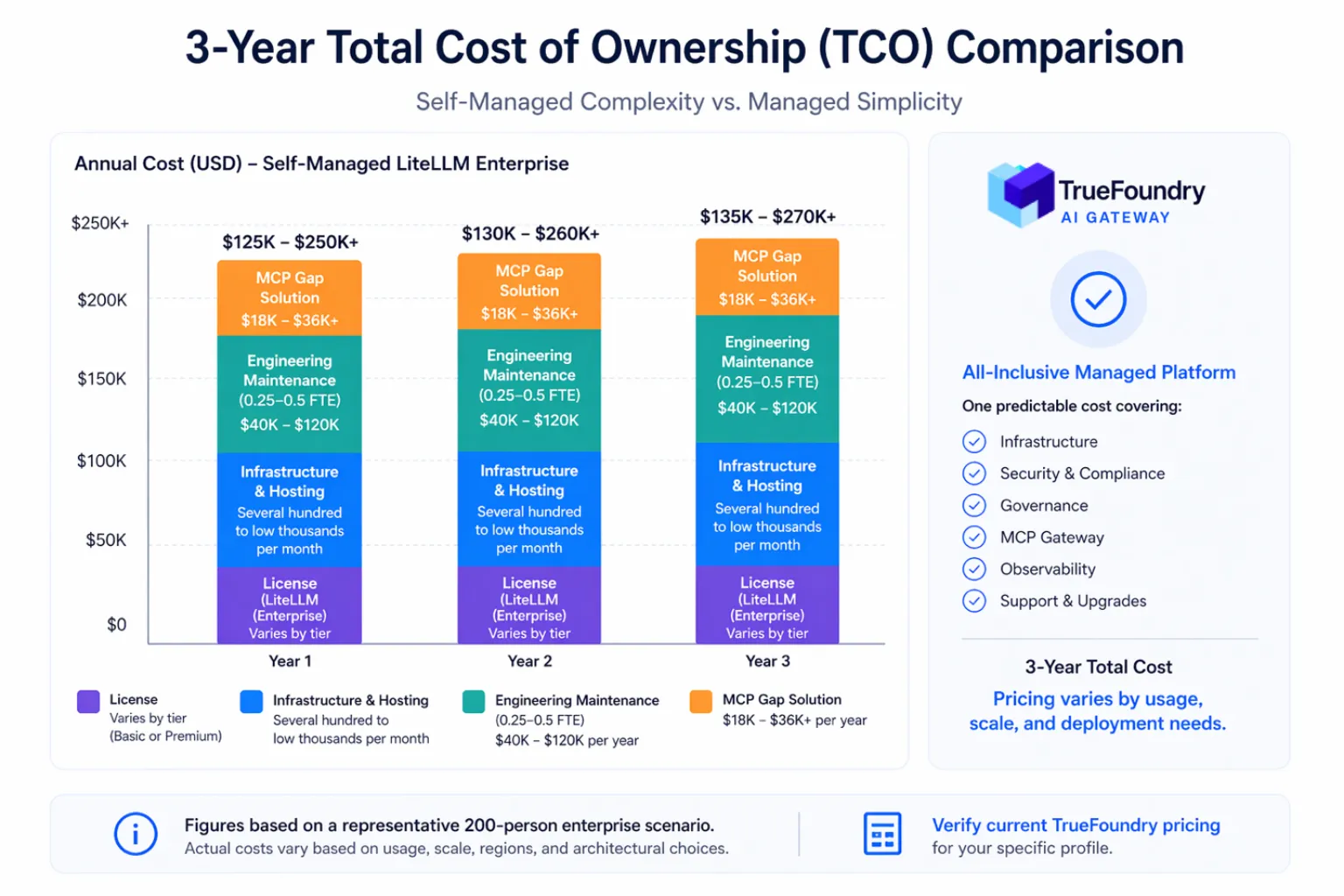
LiteLLM Enterprise fonctionne généralement sur une pile de calcul dédiée : un serveur ou un cluster proxy, souvent accompagné d'une base de données PostgreSQL pour la configuration et la journalisation d'audit, et d'une instance Redis pour la mise en cache et les compteurs de limites de débit. Sur AWS ou Azure, un déploiement de haute disponibilité de qualité production pour un trafic LLM significatif se situe généralement dans une fourchette de plusieurs centaines à quelques milliers de dollars par mois en coûts d'infrastructure cloud, en dehors des frais de licence.
Les équipes qui ont besoin d'une disponibilité de 99,9 % pour leur passerelle LLM, ce qui est une exigence raisonnable lorsque la passerelle se trouve sur le chemin critique des fonctionnalités d'IA en production, nécessitent une redondance multi-régions et une réplication de base de données qui poussent les coûts d'infrastructure mensuels vers la fourchette supérieure. Ces coûts augmentent également. Les changements de tarification des fournisseurs de cloud, les frais de transfert de données et les frais généraux de gestion des logs ajoutent 10 à 15 % par an à une projection d'infrastructure réaliste sur 3 ans.
Une infrastructure auto-hébergée exige une attention technique continue qui n'apparaît pas dans les prix des fournisseurs mais qui est absolument prise en compte dans la planification des effectifs. Les activités comprennent l'application de correctifs de sécurité, la gestion des mises à niveau de version (LiteLLM publie fréquemment des versions, et les mises à niveau nécessitent occasionnellement des modifications de configuration), la gestion des pannes de passerelle et la gestion des configurations à mesure que l'organisation ajoute de nouveaux modèles ou de nouvelles équipes.
Les entreprises qui migrent de LiteLLM auto-géré vers des plateformes gérées sous-estiment souvent la charge technique continue nécessaire pour maintenir le système. En pratique, les organisations allouent généralement environ 0,25 à 0,5 équivalent temps plein (ETP) de capacité d'ingénierie pour soutenir les opérations de LiteLLM, y compris la maintenance, la mise à l'échelle et les travaux de fiabilité. Sur la base d'un coût annuel d'ingénieur senior tout compris de 250 000 $, l'allocation de 0,25 à 0,5 ETP se traduit par un coût estimé de 62 500 $ à 125 000 $ par an en effort d'ingénierie dédié purement à la gestion de l'infrastructure, souvent plus que le coût de la licence. Et cela croît de manière non linéaire : une organisation qui commence avec cinq équipes sur LiteLLM et passe à cinquante constatera que la complexité de la configuration et la charge de maintenance augmentent plus rapidement que le nombre d'équipes.
Selon la documentation actuelle et la disponibilité des fonctionnalités, LiteLLM ne fournit pas de passerelle MCP native. Les organisations déployant des systèmes d'IA agentiques où les agents invoquent des outils via le protocole de contexte de modèle (Model Context Protocol) ont besoin d'une solution distincte pour régir l'accès au serveur MCP. Cela signifie une deuxième évaluation de fournisseur, un deuxième examen de sécurité, un deuxième processus d'approvisionnement et un projet d'intégration distinct pour que deux systèmes de gouvernance produisent une piste d'audit unifiée et appliquent des politiques d'identité cohérentes.
Gartner prévoit que 70 % des équipes d'ingénierie logicielle développant des applications multimodales utiliseront des passerelles d'IA, y compris pour l'accès aux outils agentiques, d'ici 2028. Les organisations qui choisissent LiteLLM pour le routage de LLM aujourd'hui optent pour une plateforme qui nécessitera des compléments à mesure que leur empreinte d'IA agentique se développera. Le coût d'intégration de la connexion de deux systèmes de gouvernance distincts est réel et est constamment sous-estimé lors des décisions d'approvisionnement initiales. Le coût annuel d'un deuxième outil, plus la charge technique continue de maintenance de l'intégration, ajoute un coût annuel supplémentaire significatif en fonction du choix du fournisseur, de la complexité de l'intégration et des exigences de conformité.
Ce qui suit utilise un scénario d'entreprise représentatif : une organisation d'ingénierie de 200 personnes acheminant environ 500 millions de jetons par mois via la passerelle, opérant sur deux fournisseurs de cloud, avec 20 équipes sur la plateforme et des exigences de conformité qui imposent une journalisation d'audit structurée. Ajustez les chiffres à votre profil réel.
LiteLLM Enterprise Premium : Répartition des coûts de l'année 1
La comparaison des coûts tout compris inverse fréquemment ce que suggère la comparaison des licences seules. Les organisations qui tiennent compte de la maintenance technique et de la gouvernance MCP constatent que les plateformes gérées sont compétitives en termes de coûts, et parfois moins chères, que les alternatives auto-hébergées à l'échelle de l'entreprise. La question n'est pas de savoir si la licence LiteLLM Enterprise est à un prix raisonnable. Elle l'est. La question est de savoir si le coût total du modèle auto-hébergé, y compris tout ce que le client opère lui-même, correspond au budget et à la capacité de l'organisation.
Le coût de la licence et le coût de l'infrastructure vous indiquent ce que vous payez. La couverture fonctionnelle vous indique ce que vous obtenez. Ce qui suit couvre les capacités que les équipes d'approvisionnement des entreprises identifient constamment comme critères d'évaluation pour les décisions concernant les passerelles d'IA en 2026.
Comparaison des fonctionnalités : LiteLLM Enterprise vs TrueFoundry
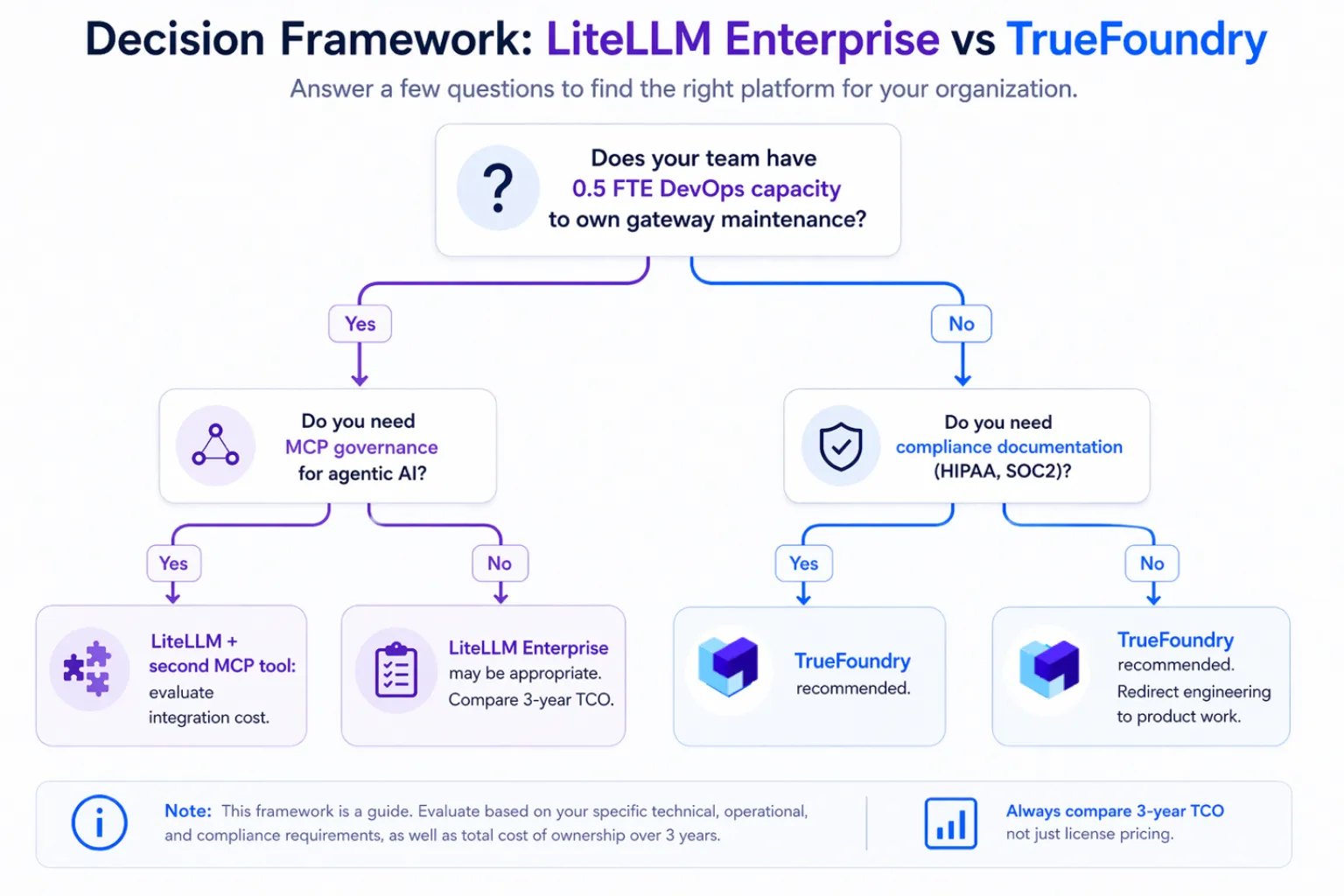
TrueFoundry n'est pas un remplacement de LiteLLM qui fait la même chose avec un prix différent. C'est une plateforme plus large qui comble le fossé de gouvernance qui apparaît à mesure que les déploiements d'IA en entreprise mûrissent au-delà du simple routage de proxy LLM pour évoluer vers une IA agentique avec utilisation d'outils, des déploiements multi-cloud et la gestion de données réglementées.
TrueFoundry AI Gateway offre une latence d'environ 3 à 4 ms, gère plus de 350 RPS sur 1 processeur virtuel, évolue horizontalement facilement et est prête pour la production, tandis que LiteLM souffre d'une latence élevée, peine à dépasser un RPS modéré, ne dispose pas d'une mise à l'échelle intégrée et convient parfaitement aux charges de travail légères ou aux prototypes.




LiteLLM Enterprise Basic, pour environ 250 $ par mois, ajoute l'interface utilisateur de gestion d'entreprise, l'intégration SSO/SAML, les métriques Prometheus, l'authentification JWT, les garde-fous LLM pour le filtrage de contenu et un canal de support Slack dédié à l'ensemble des fonctionnalités open source. Enterprise Premium, pour environ 30 000 $ par an, ajoute un support prioritaire avec des temps de réponse SLA définis, une gestion de compte dédiée, le développement de fonctionnalités personnalisées et une assistance pour les certifications de conformité SOC2 et HIPAA.
La distinction pratique réside dans le support et l'assistance à la conformité. La version Basic vous offre les fonctionnalités de gouvernance. La version Premium vous fournit un partenaire fournisseur pour le déploiement en entreprise. Vérifiez la répartition actuelle des fonctionnalités sur litellm.ai/enterprise avant d'acheter, car la disponibilité des fonctionnalités peut changer avec les nouvelles versions.
LiteLLM Enterprise est auto-hébergé pour tous les niveaux. La licence couvre le logiciel et le support. Le client provisionne et opère toute l'infrastructure : un serveur ou un cluster proxy, une base de données PostgreSQL pour la configuration et la journalisation d'audit, et une instance Redis pour la mise en cache et les compteurs de limitation de débit. Les déploiements à haute disponibilité nécessitent en plus des équilibreurs de charge et la réplication de la base de données. LiteLLM propose des options de déploiement cloud et autogérées, mais la responsabilité opérationnelle incombe au client, quel que soit le modèle de déploiement choisi.
Les entreprises qui sont passées de LiteLLM auto-géré à des plateformes gérées rapportent systématiquement qu'une capacité d'ingénierie continue équivalente à 0,25 à 0,5 ETP (équivalent temps plein) est consacrée à la maintenance. Le déploiement initial nécessite deux à quatre semaines de temps d'un ingénieur DevOps senior pour configurer les clusters Kubernetes, les équilibreurs de charge, établir les pipelines CI/CD et intégrer les systèmes de surveillance. La maintenance continue ajoute 10 à 20 heures par mois pour les correctifs de sécurité, les mises à jour de dépendances, les ajustements de mise à l'échelle et le dépannage de l'infrastructure. La réponse aux incidents en cas de pannes de passerelle incombe entièrement à l'équipe d'astreinte du client.
Avec un coût total d'un ingénieur senior de 250 000 $ par an, les frais généraux de maintenance continue représentent 62 500 $ à 125 000 $ de dépenses d'ingénierie annuelles dédiées uniquement à la gestion de l'infrastructure. Ce chiffre augmente à mesure que le nombre d'équipes et de cas d'utilisation sur la passerelle augmente.
Oui. La passerelle IA de TrueFoundry expose une API compatible OpenAI, ainsi les applications développées avec l'API unifiée de LiteLLM peuvent pointer vers le point d'accès de la passerelle de TrueFoundry sans avoir à réécrire le code de l'application. La migration implique la mise à jour des URL des points d'accès, le déplacement des identifiants des fournisseurs vers le coffre-fort de TrueFoundry, la configuration du contrôle d'accès basé sur les rôles (RBAC) et des budgets d'équipe dans l'interface de gestion de TrueFoundry, et la mise en place de l'intégration SSO avec votre fournisseur d'identité existant.
L'équipe de solutions de TrueFoundry offre un support de migration et peut fournir une comparaison personnalisée du coût total de possession (TCO) pour les équipes qui évaluent le changement. Le calendrier de migration typique pour une organisation d'ingénierie de taille moyenne est de deux à quatre semaines pour la migration technique, plus une période de fonctionnement en parallèle pour valider le comportement avant de décommissionner le déploiement LiteLLM.
Le cache sémantique de TrueFoundry met en correspondance les requêtes (prompts) en fonction de leur similarité sémantique plutôt que d'une correspondance exacte de chaînes de caractères, fournissant des réponses mises en cache pour des requêtes fonctionnellement équivalentes, même si elles sont formulées différemment. Le taux de réduction documenté de TrueFoundry peut atteindre 40 % des appels API LLM redondants. L'implémentation de cache de LiteLLM utilise une correspondance exacte et ne publie pas de benchmarks indépendants pour les taux de réduction basés sur la similarité sémantique. Vérifiez les capacités actuelles de mise en cache de LiteLLM sur docs.litellm.ai avant de comparer.
Pour les organisations présentant une forte répétition dans les modèles de requêtes, comme le support client, la recherche documentaire ou les outils de questions-réponses internes, la différence apportée par le cache sémantique peut être significative. Avec 100 000 $ par mois de dépenses en API LLM, une réduction de 40 % grâce au cache sémantique génère 40 000 $ par mois d'économies directes, ce qui compense une part importante des coûts de passerelle gérée.
La tarification de TrueFoundry est basée sur l'utilisation et le modèle de déploiement plutôt que sur un tarif fixe publié pour cette échelle. L'option SaaS entièrement gérée élimine entièrement les coûts d'infrastructure. L'option de plan de passerelle auto-hébergée représente environ 600 $ par mois en coûts d'infrastructure pour le déploiement de la passerelle elle-même. L'option complète de plan de contrôle auto-hébergé et de passerelle représente environ 800 $ à 1 000 $ par mois.
Pour une organisation spécifique comptant 50 équipes et 1 milliard de jetons par mois, l'équipe de solutions de TrueFoundry élaborera un modèle de tarification et de coût total de possession (TCO) personnalisé qui tiendra compte du volume de jetons, du nombre d'équipes, des exigences de conformité et du modèle de déploiement. Réservez un appel de 20 minutes pour obtenir les chiffres réels pour votre scénario plutôt que de vous baser sur des estimations génériques.



Les dernières nouvelles, articles et ressources envoyés dans votre boîte de réception
.png)
.png)
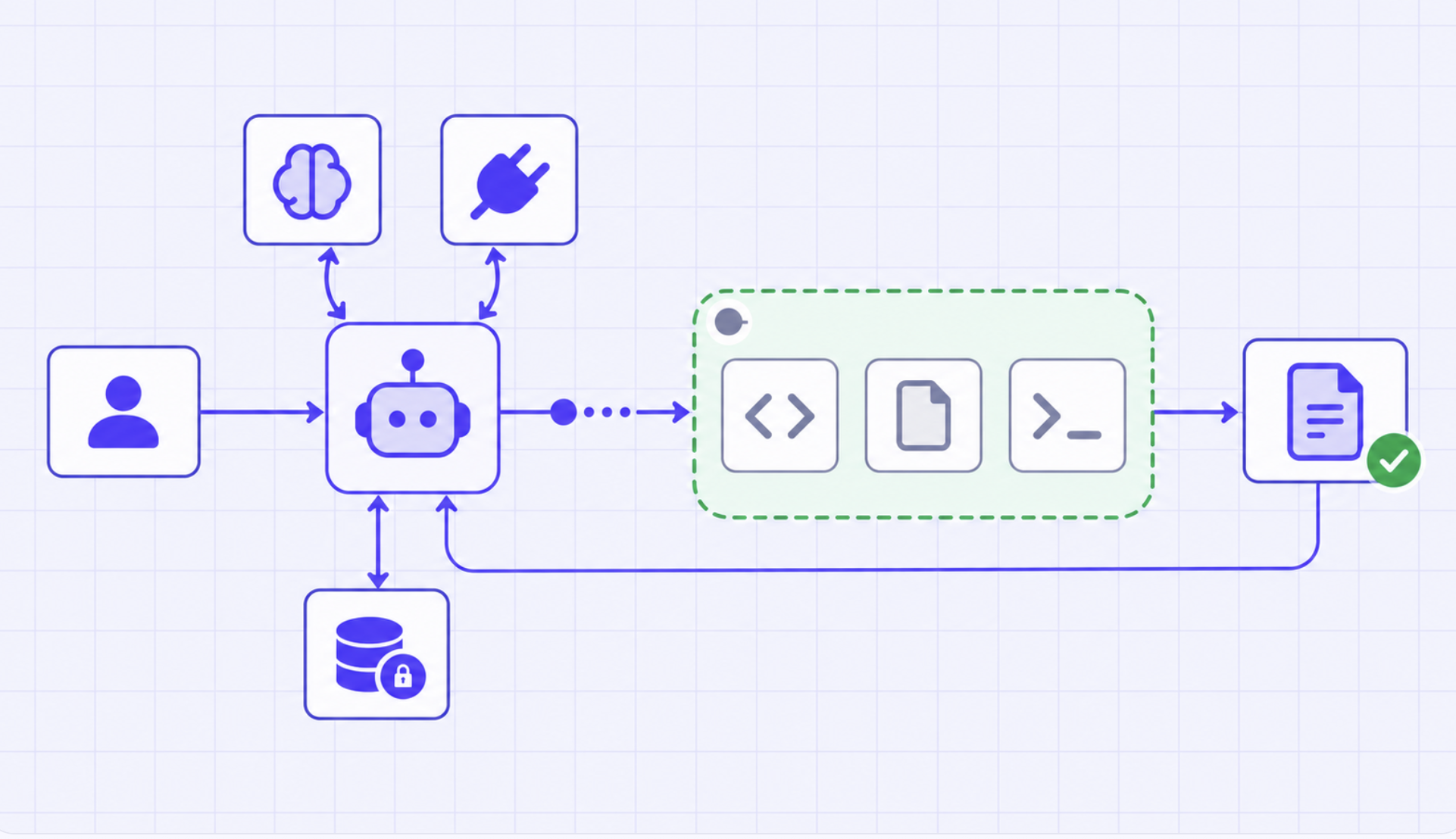
.png)
.png)
.png)
.png)
.png)
.png)
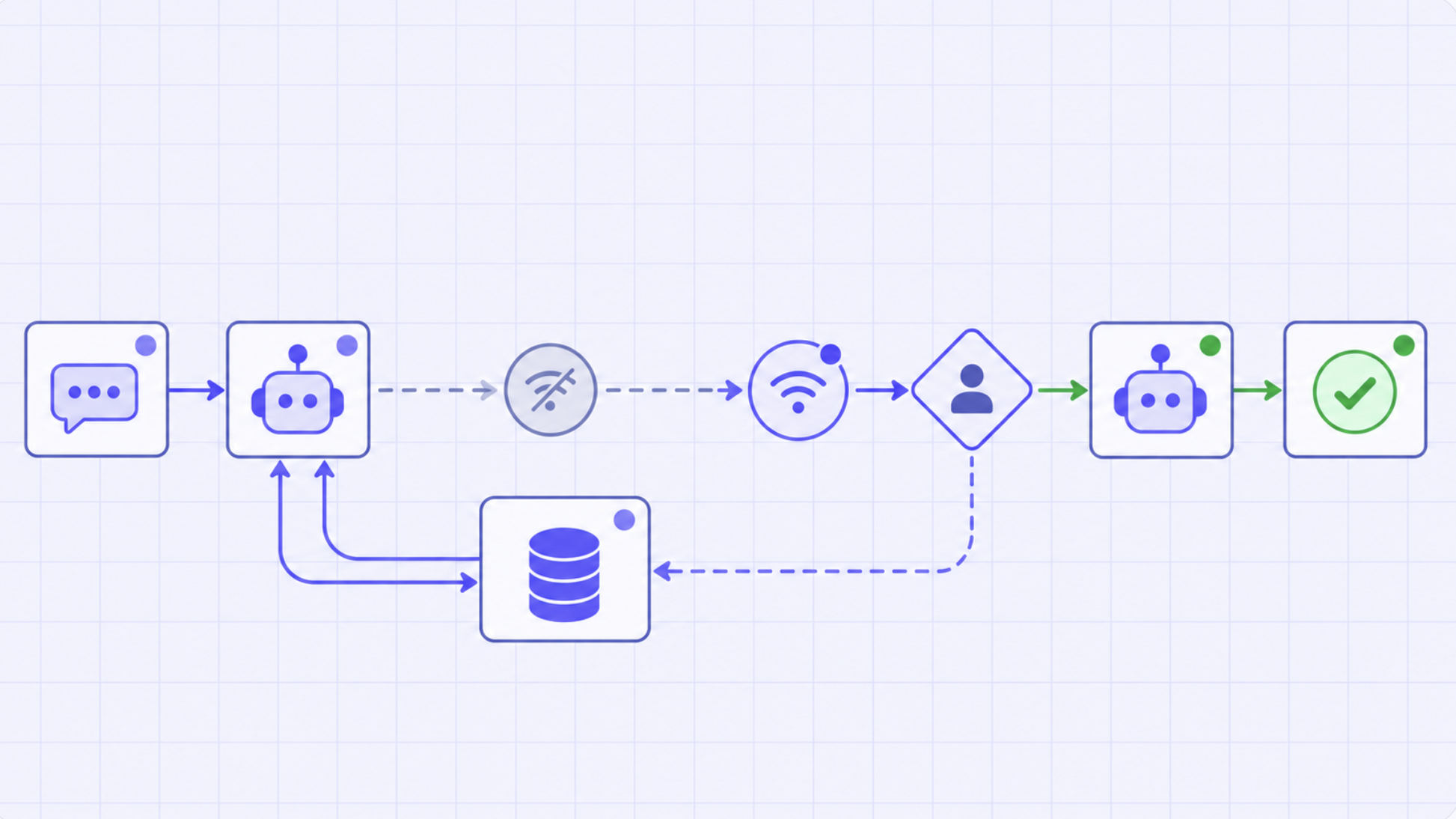
.png)
.png)
.png)


