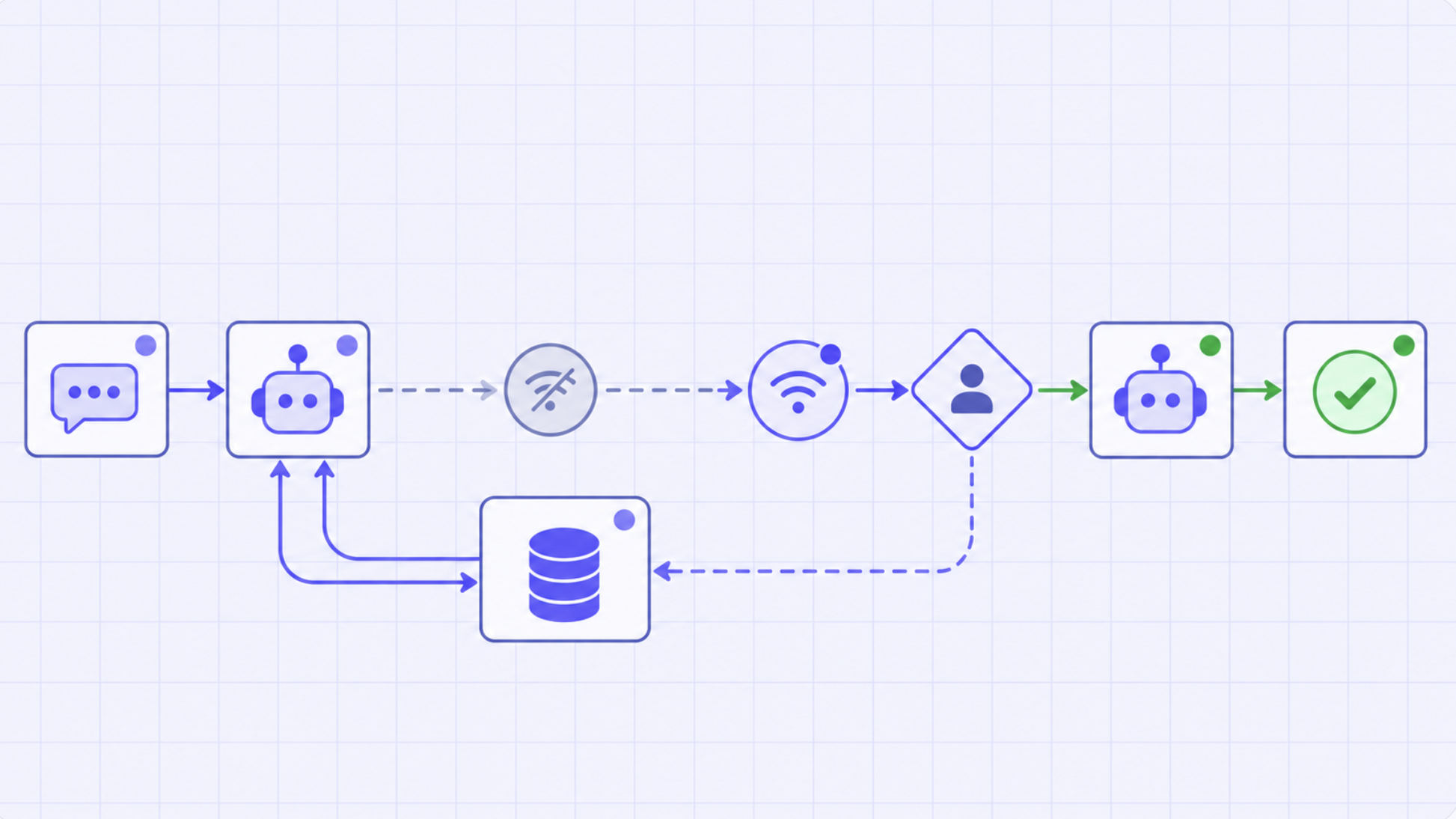
Here’s a scenario that probably sounds familiar. A developer on your team asks Claude Code to refactor an authentication module. Within minutes, the agent has read the codebase, called an MCP server to check the database schema, run a few shell commands, and opened a pull request. Forty-five minutes of work, done in three.
Sounds great. But nobody reviewed what the agent actually did along the way. Nobody checked what got sent to the LLM provider, which MCP servers it connected to, or whether the generated code introduced a SQL injection that the original version didn’t have.
Securing AI coding agents at enterprise scale?
TrueFoundry routes every Claude Code, Cursor, and Copilot request through one governed gateway — MCP tool registry, credential isolation, audit logs, and budgets, deployed in your own VPC.
This isn’t a hypothetical. Veracode’s 2025 GenAI Code Security Report tested more than 100 LLMs across 80 curated coding tasks and found that AI introduced security vulnerabilities in 45% of cases. Aikido Security’s 2026 survey of 450 developers and security leaders paints a similar picture: one in five organizations reported a serious security incident linked to AI-generated code.
Tools are getting better at writing code. They aren’t getting better at writing safe code.
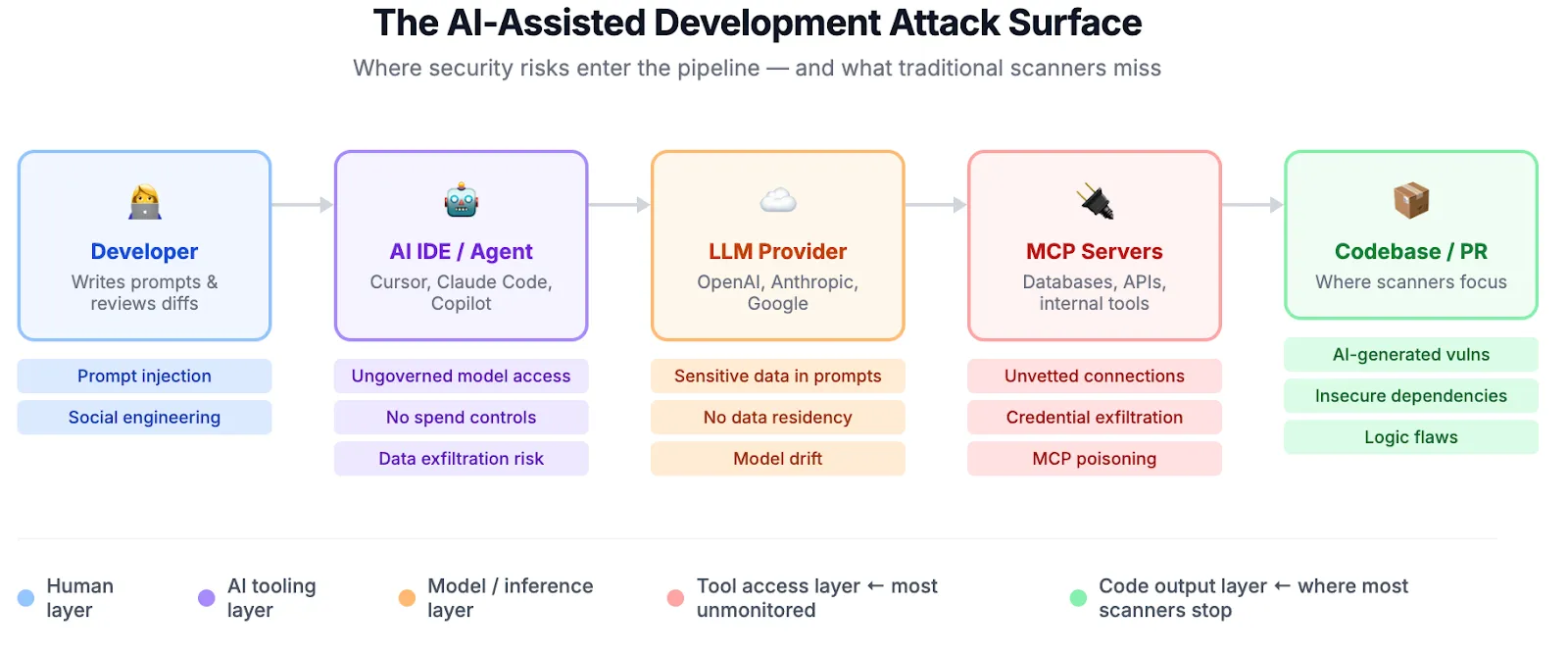
And honestly, the code itself is only half the problem. Claude Code, Cursor, and Copilot run with developer-level privileges now. They execute shell commands, read environment files, and connect to internal APIs through MCP servers that most security teams have never even looked at. One compromised MCP connection and you’ve got credential exfiltration that no static scanner will ever catch, because the vulnerability was never in the code. It was in the workflow.
In 2026, securing AI-assisted development means governing the entire pipeline, not just running a scan after code lands in a pull request.
This guide covers the best AI code security tools that actually help enterprise teams deal with this.
Quick Comparison of Top AI Code Security Tools
Platform
Best For
G2 Rating
Key Features
TrueFoundry
Full-Stack AI Governance & Security
4.6/5
AI Gateway, MCP Gateway, VPC Deployment, Audit Logging
AI Code Detection, SDLC Visibility, AIBOM, MCP Server Detection
Checkmarx One
Enterprise-Scale AppSec Coverage
4.2/5
SAST, SCA, DAST, API Security, Assist AI Agents, Air-Gapped Deployment
1. TrueFoundry: Best Overall AI Code Security Platform
Most security tools in this space are scanners. They look at code after it exists and tell you what went wrong. TrueFoundry does something different. It controls the conditions under which code gets generated in the first place.
At the center of it is the AI Gateway. Think of it as a reverse proxy sitting between every developer on your team and every LLM provider they touch. Claude Code, Cursor, some random OpenAI-compatible CLI tool an intern installed last week. Everything routes through one layer. From there, you enforce which models are available, set spend caps per team, inspect what goes in and out, and fail over across providers without touching any client config. Setup takes about five minutes: point ANTHROPIC_BASE_URL at your gateway endpoint and you’re done.
Where things get really interesting is the MCP Gateway. AI coding agents now talk to databases, internal APIs, and third-party services through MCP servers. This risk category barely existed eighteen months ago, and most organizations have zero visibility into which servers their agents connect to making Agentic AI security a practical requirement rather than a future concern. TrueFoundry lets you allowlist approved servers, inspect every tool invocation, and kill unauthorized connections before they complete. If you’ve ever had to explain to a CISO why an AI agent was querying a production database at 2 AM, you understand why this matters.
One more thing that tends to seal the deal for enterprise buyers: TrueFoundry deploys inside your own cloud account. AWS, GCP, or Azure. Code, prompts, and logs never leave your VPC. For regulated industries where data residency isn’t negotiable, this is often the only reason they need to hear.
Key Features
AI Gateway with model-level governance. Restrict model access per team, enforce rate limits and budget caps, route traffic across providers with automatic failover. One endpoint, full control.
MCP Gateway for tool access control. Allowlist vetted MCP servers, inspect tool calls in real time, apply guardrails with pre-execution checks and post-execution validation, block unauthorized data access at the agent layer.
Enterprise SSO and identity controls. SAML 2.0 and OIDC with Okta, Azure AD (Entra ID), Auth0, Google Workspace. Domain capture routes corporate emails to your workspace automatically. IdP group-to-role mapping handles automatic role assignment.
Managed settings via MDM. Push locked configurations through Jamf, Kandji, Mosyle, or Intune to enforce base URLs, model restrictions, and permission policies on every developer machine (yes, including the remote ones). System-level file locking prevents user modification without root.
Audit logging with OpenTelemetry export. Every LLM request, tool invocation, and agent action gets captured with full user attribution. Pipe it into Splunk, Datadog, Grafana, or whatever your SOC already runs. 90+ day retention for SOC 2 compliance.
On-prem and hybrid deployment. Full platform in your VPC with support for AWS Bedrock and Google Vertex AI routing. Makes SOC 2, HIPAA, and EU AI Act conversations a lot shorter.
Pricing
Usage-based. Scales with request volume and the governance features you enable. Since everything runs in your cloud, infrastructure costs stay transparent. No upfront commitment. Start with one team and expand from there. Pricing details are available on request.
Best For
Enterprises juggling Claude Code, Cursor, and Copilot at the same time and needing one place to govern all of them
Security and platform teams that own AI access control, cost governance, and compliance
Organizations in financial services, healthcare, or government where on-prem deployment isn’t optional
Teams tired of playing catch-up with scanners who want to prevent incidents rather than just detect them
Customer Reviews
TrueFoundry is rated 4.6/5 on G2 (as of early 2026). Reviewers consistently call out the platform’s ability to simplify AI governance without slowing teams down. Common themes include clear visibility into LLM costs and usage across teams, fast deployment (several reviewers mention going live within a week), and responsive support that digs into technical issues quickly. Platform and ML engineering teams make up the bulk of reviewers, and the feedback skews heavily positive on ease of use and infrastructure control.
2. Snyk
Snyk was a developer-security favorite long before AI code generation was a thing, and they’ve adapted well. Their DeepCode AI engine combines symbolic AI with generative AI and data-flow analysis across more than 25 million data flow cases to find and fix vulnerabilities with high accuracy.
The AI story is getting stronger here.
In May 2025, Snyk launched its AI Trust Platform, which specifically addresses AI-generated code security, agentic workflow security, and AI supply chain protection. That’s a meaningful evolution from their traditional scanning roots.
Key Features
DeepCode AI for context-aware static analysis with auto-fix suggestions trained on millions of real-world fixes
SCA covering open-source dependency vulnerabilities across 15M+ packages with 24,000+ new vulnerabilities cataloged in 2024 alone
Container scanning for Docker/OCI images and infrastructure-as-code security for Terraform, CloudFormation, and Kubernetes manifests
Real-time security feedback inside IDEs and pull requests, plus Snyk Agent Fix for autonomous remediation
Pros
Developer experience is genuinely good. Security shows up where engineers already work, not in some separate dashboard they’ll never open
Covers code, dependencies, containers, and IaC in one platform
Vulnerability database updates fast, which matters when new CVEs drop weekly
Public repository scanning is free across all plans, making it easy to evaluate before committing budget
Cons
Scans code that already exists. Can’t govern what models produced it or what data got sent to the LLM during generation
No visibility into MCP server connections or agent behavior
If a developer switches from Copilot to Claude Code mid-sprint, Snyk doesn’t know and doesn’t care
3. GitHub Copilot + Advanced Security
If your entire development workflow lives in GitHub, this combination is worth evaluating. The catch: you need to understand what you’re actually buying, because these are separate products with separate price tags.
GitHub Copilot handles AI-assisted coding. The coding agent does run internal CodeQL checks, secret scanning, and dependency reviews on its own generated code before opening a pull request. That validation happens automatically and doesn’t require an Advanced Security license. The limitation: it only covers code the agent writes. Everything your human developers commit? That’s on you.
GitHub Advanced Security (GHAS) is where the full scanning coverage lives. As of April 2025, GitHub unbundled GHAS into two standalone products: Code Security at $30 per active committer per month (CodeQL scanning, Copilot Autofix for all alerts, security campaigns) and Secret Protection at $19 per active committer per month (secret scanning on private repos, push protection, AI-powered credential detection). Both are available for GitHub Team and Enterprise Cloud accounts.
Secret scanning with push protection that blocks credentials before they hit the repo (requires Secret Protection license)
Copilot coding agent’s built-in security self-validation (included with Copilot, no GHAS license needed)
Dependency review against the GitHub Advisory Database
Enterprise controls for model access, data retention, and org-level policies
Pros
Tightest integration between AI coding and security scanning available today
Autofix doesn’t just flag problems. It generates fixes that often work on the first try
The coding agent’s self-validation catches issues in agent-generated code at no extra cost
Mature enterprise controls: SSO, audit logs, IP indemnity, content exclusions
Cons
Full security scanning requires separate GHAS purchases ($30 + $19 per committer per month adds up fast at scale)
Everything stops at the GitHub boundary. Developers using Cursor or Claude Code? Completely ungoverned
No MCP gateway, no cross-tool model routing, no budget enforcement outside GitHub
For organizations with a multi-tool strategy (most of them by now), you still need something else
4. Cursor Enterprise
Cursor’s growth has been hard to ignore. Developers at more than half the Fortune 500 now use it, a milestone reached roughly two years after launch. According to Cursor’s published case study, Stripe rolled out Cursor to its 3,000+ engineers, with over 70% actively using it. The Enterprise plan adds what security teams actually need: enforced privacy controls, sandboxed agent execution, and the Hooks system that lets you inject custom governance logic directly into the agent loop.
Key Features
Privacy Mode, enforced by default on Business and Enterprise plans, with zero data retention agreements across major model providers including OpenAI, Anthropic, Google Cloud Vertex, and xAI
Sandbox Mode that restricts agent terminal access (network blocked by default, file access scoped to workspace and /tmp/)
SSO via SAML 2.0 and OIDC with SCIM 2.0 provisioning on Enterprise plans
Hooks for custom pre-execution security checks: beforeShellExecution, beforeMCPExecution, and beforeReadFile hooks can allow, warn, or deny actions. Partners include Snyk, 1Password, Endor Labs, and Semgrep
Probably the most mature AI IDE on the market, with deep multi-model support and serious enterprise adoption
Sandbox Mode actually works. Agents can’t hit the network or escape the workspace by default, and admins can enforce network allowlists from the dashboard
Hooks are powerful if your team has the bandwidth to build and maintain them
SOC 2 Type II certified (report available at trust.cursor.com)
Cons
All of this governance applies to Cursor only. Open Claude Code in a terminal and none of it follows
Hooks require per-team scripting. There’s no centralized policy engine pushing rules across the org
No built-in vulnerability scanning, so you’ll still need Snyk or CodeQL running separately
Prompt injection and MCP poisoning remain documented attack vectors
Anthropic announced Claude Code Security on February 20, 2026, claiming it had found vulnerabilities that survived decades of expert review in major open-source projects. There’s real substance behind the claim. Using Claude Opus 4.6, Anthropic’s team found over 500 vulnerabilities in production open-source codebases. Responsible disclosure is underway, and patches have already landed: 22 Firefox vulnerabilities (14 high severity) were fixed in Firefox 148, with additional findings in Ghostscript, OpenSC, and CGIF.
What makes it different from traditional SAST? Instead of matching patterns against a rule database, it reads the codebase holistically. It traces data flows across components, figures out how authentication layers interact with business logic, and flags context-dependent issues that a human security researcher would catch on a deep audit but an automated scanner would walk right past.
Key Features
Code reasoning that goes beyond pattern matching to understand architectural context
Multi-stage verification process that filters false positives before reporting
Severity-rated results with targeted patch suggestions
Human-in-the-loop model where every patch requires explicit developer approval
Available to Enterprise and Team customers in limited research preview, with free expedited access for open-source maintainers
Pros
Catches vulnerability classes that static analysis tools miss consistently: broken access control, logic flaws, subtle auth bypasses
False positive filtering is aggressive enough to be useful, so you don’t drown in noise
Patch suggestions save hours of remediation time per finding
Free access for open-source maintainers is a meaningful contribution to the ecosystem
Cons
Still in limited research preview. You can’t just sign up and start using it today
Cloud-only. Your code goes to Anthropic’s infrastructure for analysis, which is a non-starter for some enterprises
Purely a vulnerability finder. No model governance, no MCP control, no budget enforcement
Doesn’t address the upstream question of how AI tools access your codebase in the first place
6. OpenAI Codex Security
OpenAI’s entry into code security takes the most interesting approach of any scanner on this list. Before running a single check, Codex Security builds a threat model of your repository, mapping system architecture, trust boundaries, exposure points, authentication assumptions, and sensitive data paths. Findings then get ranked against this model, so you see what actually matters in your system’s context instead of getting a generic severity score.
Launched on March 6, 2026 (originally codenamed Aardvark), early results are strong. Fourteen CVEs have been assigned through responsible disclosure, including memory safety bugs in GnuTLS, including a double-free, a heap buffer overread, and a heap buffer overflow (CVE-2025-32988, CVE-2025-32989, CVE-2025-32990), a 2FA bypass in GOGS (CVE-2025-64175), and findings in OpenSSH, libssh, PHP, and Chromium.
Key Features
Automated, editable threat models generated per repository covering entry points, trust boundaries, and priority review areas
Vulnerability discovery grounded in project-specific system context
Findings ranked by real-world impact, not generic severity scores
Three-stage process (identification, validation, remediation) with sandbox-based evidence gathering
Available in research preview for ChatGPT Pro, Enterprise, Business, and Edu customers
Pros
Threat model approach cuts the false positive problem that plagues every other scanner
Already producing real disclosed CVEs in production software, not just benchmark numbers
Free during research preview
Fits naturally into existing ChatGPT Enterprise workflows
Cons
Research preview with restricted access. Not available outside the OpenAI ecosystem
Zero governance capabilities. Can’t control model routing, MCP access, or developer tool policies
Locked to OpenAI’s platform. If your team uses Claude Code or Cursor, this tool won’t help them
7. Cycode
Cycode zeroes in on the question that keeps CISOs up at night: where exactly is AI-generated code in our codebase, and did anyone actually review it before it shipped? Their 2026 State of Product Security report surveyed 400 CISOs and AppSec leaders and found that 100% of organizations had AI-generated code in production. Only 19% had complete visibility into where and how AI was being used, leaving 81% without full oversight.
Key Features
SDLC-wide visibility from code commit to cloud deployment, including AI inventory management across coding assistants, models, and MCP servers
Detection and tracking of AI-generated code across the codebase with AI Bill of Materials (AIBOM)
Software supply chain security with pipeline integrity checks and MCP server configuration detection
Centralized secret detection and remediation workflows
Risk-based alert prioritization
Pros
Directly answers the audit question: “Show me where AI wrote code and whether anyone reviewed it”
Recognized in Gartner’s 2025 Magic Quadrant for Application Security Testing, and ranked #1 in Software Supply Chain Security in the 2025 Critical Capabilities report
Supply chain focus matters a lot when AI tools pull in dependencies nobody vetted
Consolidates fragmented AST tooling into one ASPM view
Cons
Detection happens after the fact. Doesn’t prevent insecure AI code from being generated in the first place
No AI tool governance, model routing controls, or MCP visibility at the generation layer
Integration across the full SDLC takes real engineering effort
8. Checkmarx One
Checkmarx has been in enterprise AppSec longer than most tools on this list have existed. They’re the incumbent for a reason.
In March 2026, they launched the Assist family of agentic AI agents, including Developer Assist, Triage Assist, and Remediation Assist, which autonomously prevent and remediate security vulnerabilities across the development lifecycle. That sits on top of their already broad scanning coverage.
Key Features
Scanning across SAST, SCA, DAST, API security, IaC, and container security in one platform, plus malicious package protection and secrets detection
Agentic AI threat detection (Assist family) with Developer Assist, Triage Assist, and Remediation Assist operating autonomously across the SDLC
Enterprise ASPM with risk-based vulnerability prioritization that aggregates and correlates signals from all testing tools
Air-gapped and on-premises deployment for regulated industries with full infrastructure control
Deep CI/CD integration with most major pipeline tools
Pros
Widest scanning coverage of any platform here. If you need one tool to cover code, APIs, containers, and infrastructure, this is it
Proven at enterprise scale with complex, multi-language application portfolios
Air-gapped deployment option is a big deal for defense, finance, and healthcare
The new Assist agents bring autonomous remediation to a platform that was already comprehensive
Cons
Getting Checkmarx tuned properly across a large org takes dedicated effort. Configuration complexity is real
It’s a scanning platform at heart. No AI tool governance, no model routing, no MCP controls
Pricing is quote-based and, from what I’ve seen in industry conversations, reflects how much it covers. This isn’t a tool you evaluate over a weekend
How to Choose the Right AI Code Security Tool
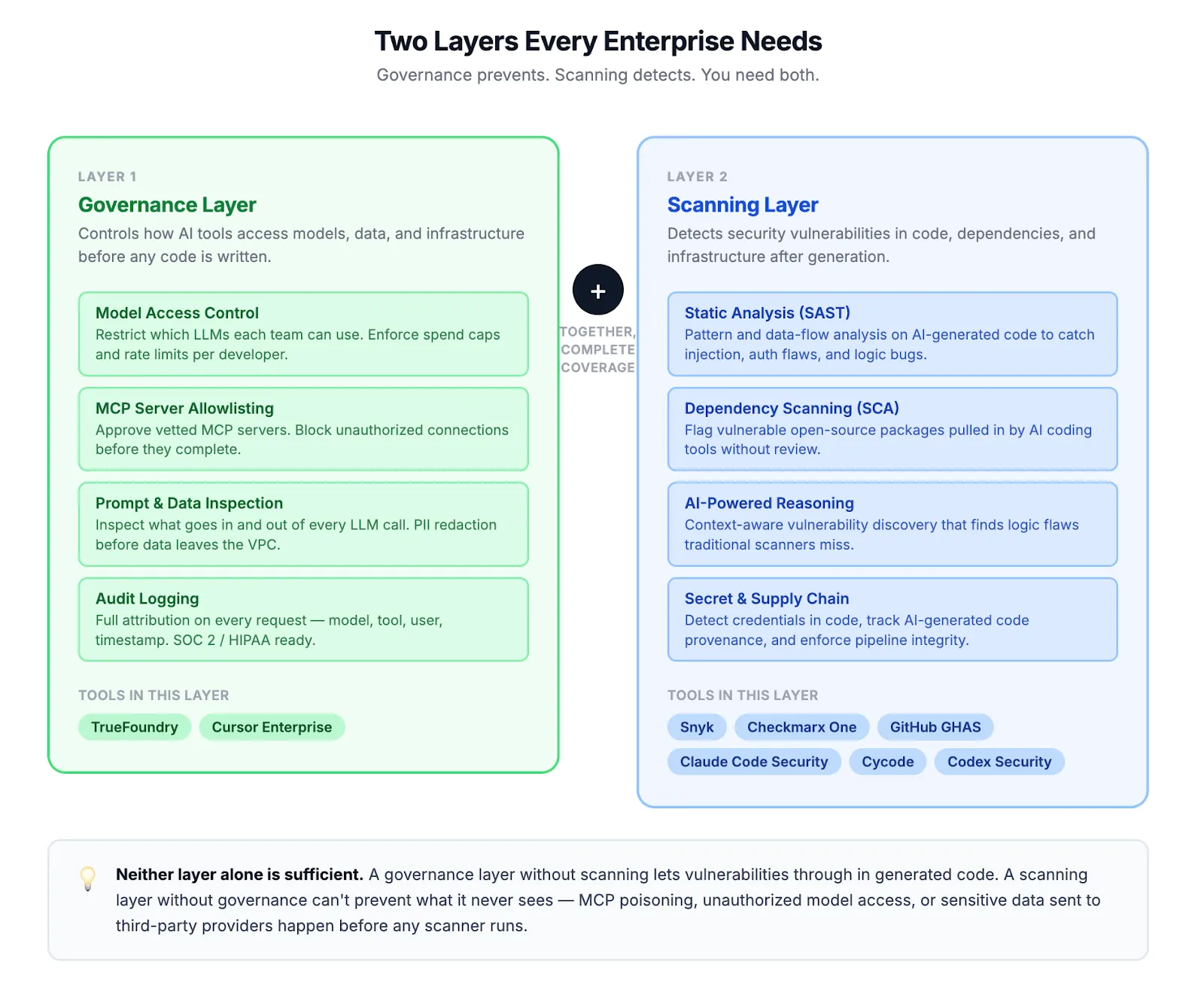
Not every tool on this list solves the same problem, and picking the wrong one means you’re either scanning code that shouldn’t have been generated that way in the first place, or governing tool access while vulnerabilities slip through undetected. Your team probably deals with some combination of both. Here’s a quick checklist:
Does it govern AI tool access, or just scan the output? If your engineers use Claude Code, Cursor, and Copilot interchangeably, you need governance at the tool layer, not just scanning at the PR layer.
Can it control MCP server connections? AI agents now talk to databases and internal APIs through MCP. If your security tool doesn’t even know MCP exists, it’s missing a growing attack surface.
Does it work across your full toolchain? A solution that only covers one IDE or one code host leaves gaps wherever developers switch tools.
Can it enforce budgets and rate limits? Runaway AI spending is a security problem too. Cost governance and access governance often belong in the same platform.
Does it support on-prem or VPC deployment? For regulated industries, SaaS-only tools are often a non-starter. Your code and prompts shouldn’t leave your infrastructure.
Does it provide audit trails? SOC 2, HIPAA, and the EU AI Act all require demonstrable governance over AI systems. If you can’t show who used which model and what data was sent, you have a compliance gap.
Can it detect vulnerabilities in AI-generated code specifically? Traditional SAST tools weren’t designed for AI-generated patterns. Tools that understand AI coding behavior catch more.
Is it built for where the industry is headed? AIコーディングエージェントは四半期ごとに自律性を高めています。セキュリティツールは、シェルコマンドを実行し、ツールを呼び出し、人間のレビューなしでPRを開くエージェントの進化に追いつく必要があります。
Claude Code、Cursor、GitHub CopilotのようなAIコーディングツールは、開発者レベルの権限で動作します。これらはファイルを読み取り、シェルコマンドを実行し、MCPサーバーを介してデータベースやAPIに接続し、リポジトリにコードをコミットできます。セキュリティリスクは、これらのツールが未承認のMCPサーバーに接続したり、脆弱性のあるコードを生成したり、未レビューの依存関係を取り込んだり、機密データをサードパーティのLLMプロバイダーに送信したりする場合に発生します。Veracodeの2025年の調査によると、テストされたコーディングタスクの45%でAIが脆弱性を導入しました。従来の静的解析では、これらのリスクのほとんどを捕捉できません。なぜなら、脅威はコードだけでなくワークフローにも存在するからです。
TrueFoundryはAI支援開発をどのように保護しますか?
TrueFoundryは、AI GatewayとMCP Gatewayを貴社のクラウドアカウント(AWS、GCP、Azure)内にデプロイし、すべてのAIコーディングトラフィックを傍受・管理します。開発者がアクセスできるモデルを制御し、チームごとの予算とレート制限を適用し、承認されたMCPサーバーを許可リストに登録し、実行前チェックと実行後検証によるガードレールを適用し、OpenTelemetry経由でエクスポート可能な完全な監査ログをキャプチャします。すべてが貴社のVPC内で実行されるため、コードとプロンプトが貴社のインフラストラクチャから離れることはなく、SOC 2、HIPAA、EU AI Actに基づく厳格なデータレジデンシーおよびコンプライアンス要件を持つ組織に適しています。
TrueFoundry AI Gateway delivers ~3–4 ms latency, handles 350+ RPS on 1 vCPU, scales horizontally with ease, and is production-ready, while LiteLLM suffers from high latency, struggles beyond moderate RPS, lacks built-in scaling, and is best for light or prototype workloads.




.webp)



.png)
.png)
.png)
.png)
.png)

.webp)
.webp)