September 14, 2026
|
5 min read


Published: September 14, 2026
.webp)
Blazingly fast way to build, track and deploy your models!
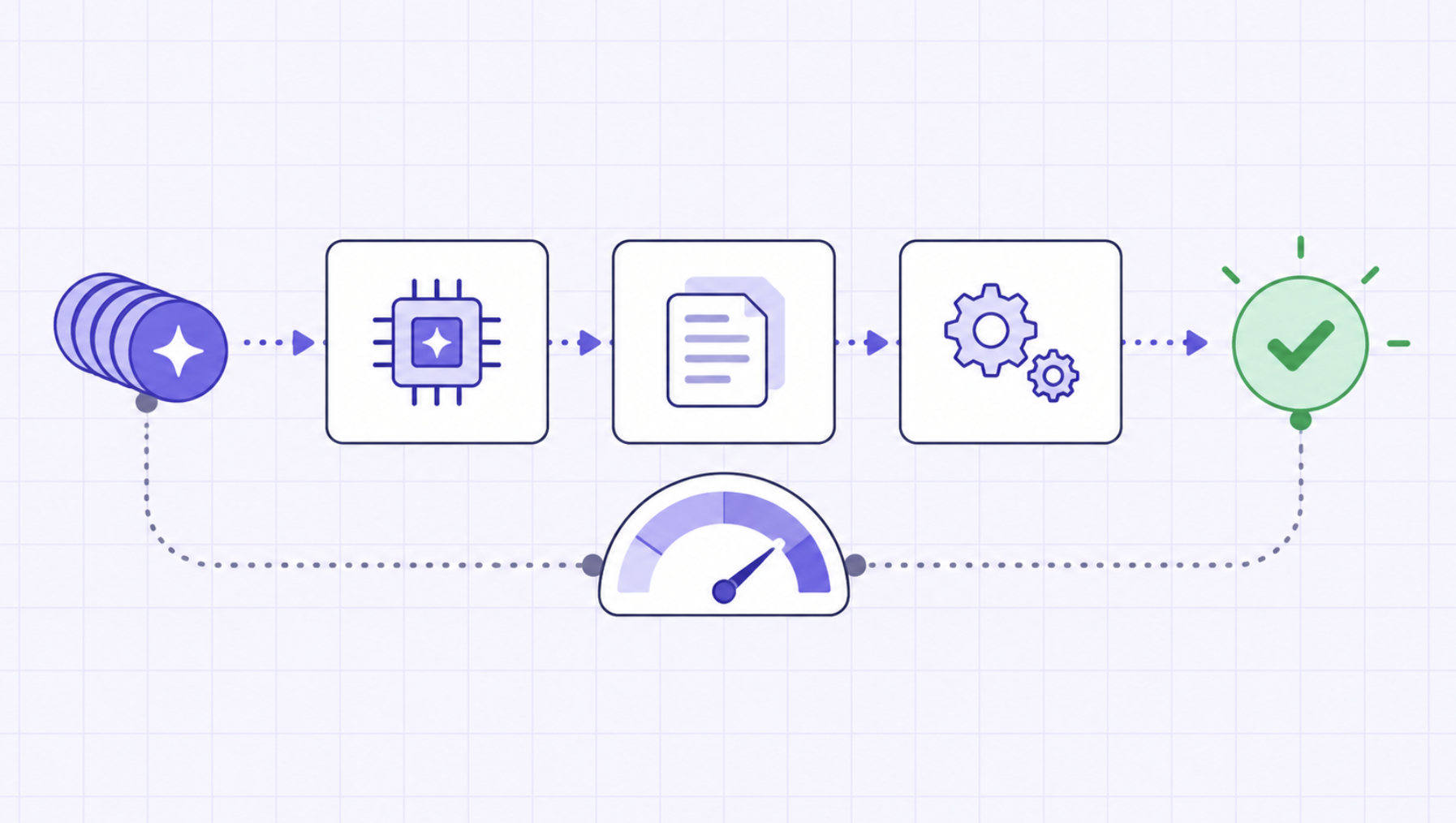
Two products keep appearing on the same shortlist, even though they solve different primary problems. Maxim AI asks whether an AI system behaved correctly. Vercel AI Gateway focuses on how an application accesses models via a single hosted endpoint. Teams can choose poorly when those responsibilities are treated as interchangeable.
The overlap is still meaningful across both products. Maxim now includes Bifrost, an open-source AI gateway for model and MCP traffic. Vercel adds routing, budgets, provider controls, and observability around model access. The comparison becomes clearer when teams separate evaluation, hosted access, and broader governance.
TrueFoundry adds another enterprise option when governance spans models, MCP tools, and agent workflows. Its focus is centralized policy, budgets, observability, and deployment control across production AI infrastructure.
Feature grids flatten differences, so start with the job each platform solves. Maxim AI helps teams test agent behavior across experiments, simulations, evaluations, and production traces. Its platform supports real-world scenarios, human review, and quality checks across AI agents and AI applications.
Bifrost extends Maxim into gateway territory with model routing, budgets, virtual keys, and MCP security. It can govern access to large language models and MCP servers through a shared request path. This makes Maxim broader than a pure evaluation platform.
Vercel AI Gateway solves a more immediate hosted-access problem. One endpoint fronts many model providers through Vercel infrastructure. Teams using the AI SDK can also switch models without rebuilding individual provider integrations. Existing OpenAI-compatible applications can usually migrate by changing the base URL and authentication details.
The procurement question is broader than Vercel AI Gateway vs Maxim AI. One platform begins with quality assurance, while the other begins with access to hosted models. Their gateway capabilities now overlap across routing, spend controls, and observability.
.webp)
Pick Maxim AI when agent behavior keeps breaking rather than model access. The platform covers prompt experiments, agent simulation, offline and online evaluations, distributed tracing, human review, and production monitoring. Its evaluator library includes LLM-as-a-judge, statistical, programmatic, and human scoring methods.
Bifrost, Maxim's AI gateway, expands the platform toward model and tool governance. Its open source edition supports routing, budgets, rate limits, semantic caching, and virtual keys. Enterprise capabilities extend that foundation with RBAC, SSO, audit logs, and private deployment controls.
Its governance model supports access control, model restrictions, budget management, and token usage through virtual keys. Bifrost also supports the Model Context Protocol and tool filtering. Enterprise adds SSO, RBAC, audit logs, vault integrations, federated MCP authentication, and private deployment controls.
That makes Maxim more infrastructure-relevant than a pure evaluation platform. Buyers should still separate evaluation requirements from gateway requirements during procurement. One platform subscription and one gateway decision can involve different owners, budgets, and operational expectations.
For production monitoring, teams can also compare Maxim’s quality-focused approach with TrueFoundry’s AI gateway observability model.
Choose Maxim AI when:
Vercel AI Gateway is designed for teams already building on the Vercel platform. Developers can access many models through a single hosted endpoint. The service supports BYOK, OIDC authentication, budgets, provider routing, and usage reporting without operating a separate data plane.
The main advantage is the developer experience. Teams already building on Vercel can connect models quickly without operating separate gateway infrastructure. Usage, latency, provider selection, and spend remain visible through the Vercel dashboard, giving product teams one place to review model activity.
Vercel also supports BYOK for teams that want to retain their own provider keys. Its routing layer can use automatic failover when the preferred provider becomes unavailable, helping applications continue serving requests without handling every provider failure separately.
The tradeoff appears at the deployment boundary. Vercel AI Gateway remains a hosted service rather than a private gateway installation. Enterprise teams should evaluate data retention, Zero Data Retention, provider agreements, MCP governance, and agent controls separately.
Teams comparing provider routing with a broader gateway architecture can also review this LLM Gateway guidance.
Choose Vercel AI Gateway when:
Both platforms use the term observability, although they focus on different outcomes. Maxim tracks agent behavior, evaluation results, traces, and production quality. Vercel tracks model requests, latency, spend, provider behavior, and request-level usage through its hosted dashboard.
Maxim can show where a multi-step flow failed and evaluate resulting output quality. Vercel can show token usage, provider selection, and gateway cost for each request. Their monitoring value depends on whether teams need behavioral evidence or visibility into operational requests.
TrueFoundry adds request metadata when cost attribution must follow business context. A project, customer, or environment identifier can travel with each request. Teams can then connect cost, policy, and observability without changing downstream model behavior.
Attribution is where gateway telemetry earns its keep. TrueFoundry's gateway reads a custom `X-TFY-METADATA` header, so the same request carries the project, environment, or customer identifier that finance will later ask about.
curl https://<your-gateway-host>/api/llm/chat/completions \
  -H "Authorization: Bearer $TFY_API_KEY" \
  -H "Content-Type: application/json" \
  -H 'X-TFY-METADATA: {"project_id": "proj-123", "environment": "production"}' \
  -d '{
    "model": "openai-main/gpt-4o",
    "messages": [{"role": "user", "content": "Summarize this incident report."}]
  }'
Replace `<your-gateway-host>` with your gateway endpoint and `openai-main` with the provider account name registered in your workspace. Every downstream policy, quota, and cost report can then key off `project_id` without touching application logic.
Compare total cost rather than list prices because these products bill different layers. Maxim lists Professional at $29 per seat monthly and Business at $49. Enterprise pricing remains custom. Bifrost OSS is free for self-managed deployment, while Bifrost Enterprise uses custom pricing.
Vercel AI Gateway charges provider list price without token markup, including BYOK traffic. Gateway usage is charged to prepaid credits, while custom reporting can incur additional usage charges. Production volume should therefore be modeled before procurement.
Deployment creates the sharper distinction. Maxim supports full VPC isolation and hybrid data-plane deployment for its evaluation platform. Bifrost Enterprise supports VPC, on-premises, and air-gapped deployments. Vercel AI Gateway remains hosted, with provider and retention controls rather than private installation.
TrueFoundry prices its governance layer by plan and request volume. Teams should include infrastructure, security reviews, and operational overhead when comparing gateways. This AI gateway cost analysis explains where infrastructure ownership affects total costs.
Maxim AI and Vercel AI Gateway solve meaningful production problems at different layers. Maxim focuses on evaluation and agent behavior, while Vercel simplifies access to hosted models. The remaining challenge arises when agentic workflows connect models to enterprise systems and require consistent governance for every action.
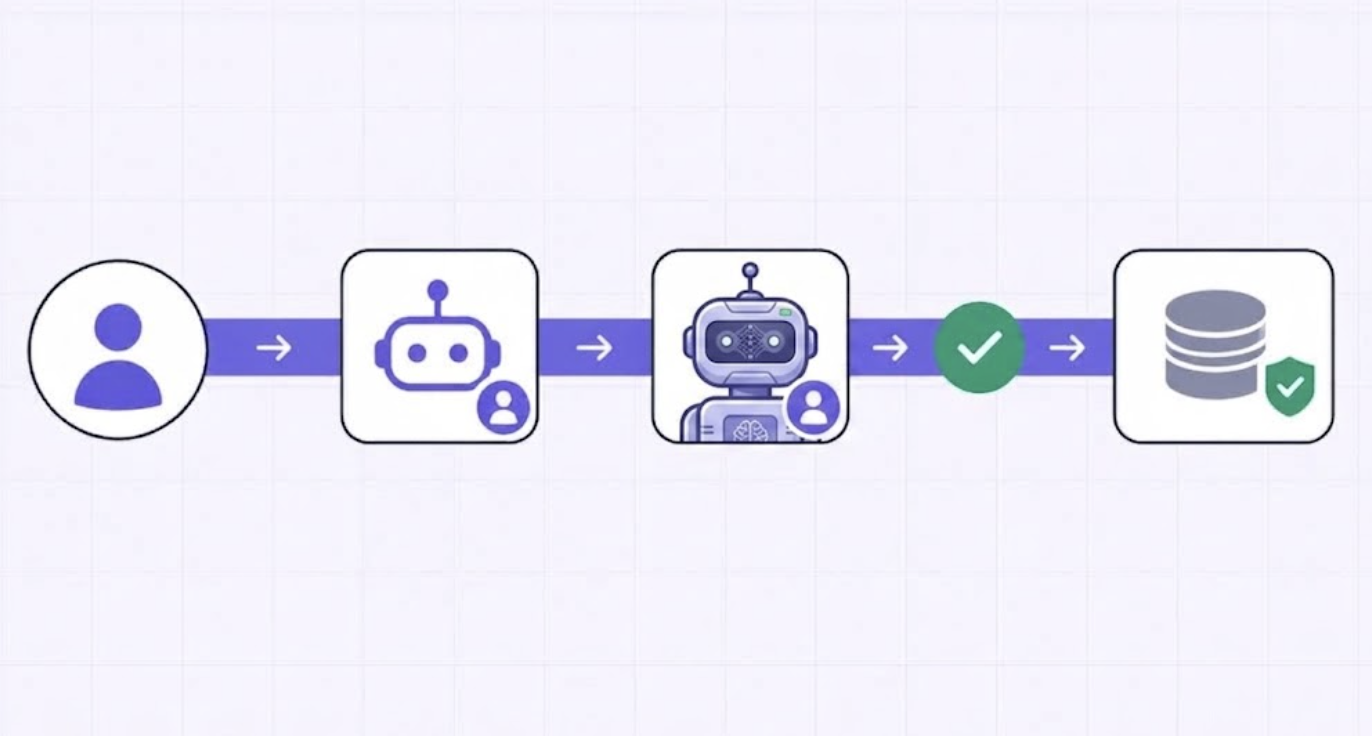
A request may begin with a model call and continue through external tools or MCP tools. It may also access sensitive data before triggering additional tool calls. These transitions can create security gaps when identity, budgets, and policies remain distributed across separate platforms.
An agent identity should therefore remain visible throughout the workflow. This gives teams a consistent way to apply permissions, attribute spending, and reconstruct activity later. Without that connection, observability can develop blind spots across multi-step execution.
Common areas to evaluate include:
The deployment boundary becomes more important for regulated workloads. Enterprises should review data residency requirements before selecting a hosted or private architecture. Prompts, traces, audit records, and tool outputs may need to remain inside approved regions or company-controlled infrastructure.
This MCP access control guide explains why agent-to-tool permissions require their own enforcement boundary.
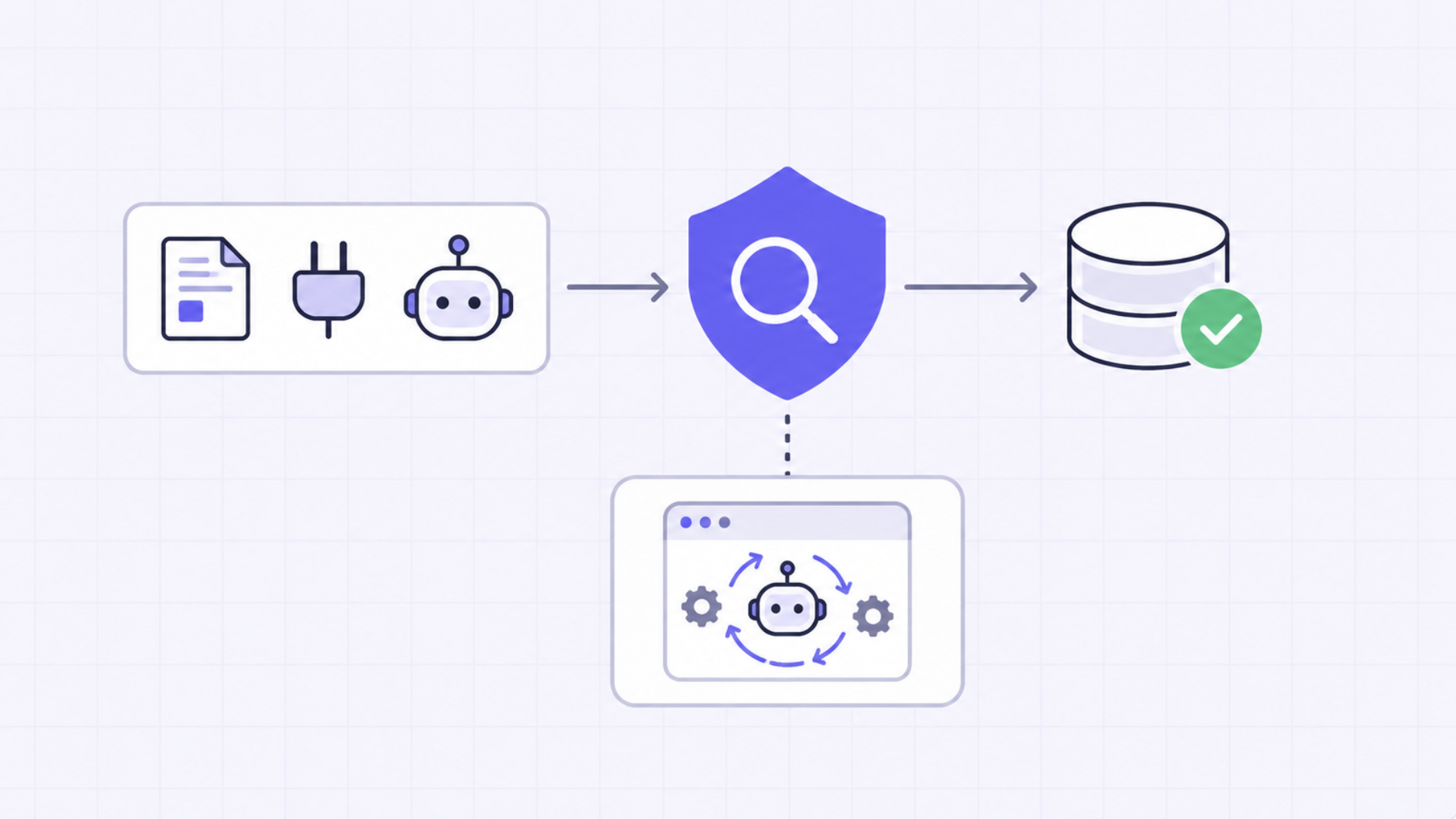
TrueFoundry fits when enterprises need governance across models, tools, and agents rather than another evaluation or routing product. Its AI Gateway centralizes routing, budgets, guardrails, observability, and provider access. These controls can operate across managed and private deployment environments.
This becomes important as agentic AI moves beyond isolated model requests. The MCP Gateway governs tool discovery, authentication, permissions, and credentials. The Agent Gateway adds traceability, workflow limits, and policy enforcement across autonomous execution.
Enforcement remains declarative and version-controlled. Rate-limit rules can scope usage by user, team, model, or metadata. This gives platform engineers a single control point while keeping policy outside the application code.
name: ratelimiting-config
type: gateway-rate-limiting-config
rules:
  # Cap one contractor account on a specific model
  - id: "contractor-gpt4-daily"
    when:
      subjects: ["user:contractor@example.com"]
      models: ["openai-main/gpt4"]
    limit_to: 1000
    unit: requests_per_day

  # Give every user their own independent daily token budget
  - id: "user-daily-limit"
    when: {}
    limit_to: 1000000
    unit: tokens_per_day
    rate_limit_applies_per: ['user']

  # Cap each project separately, keyed off request metadata
  - id: "project-hourly-limit"
    when: {}
    limit_to: 50000
    unit: tokens_per_hour
    rate_limit_applies_per: ['metadata.project_id']
The `rate_limit_applies_per` field creates a separate counter per entity, so a single rule covers all users or projects without generating a rule per identity. Subjects accept `user:`, `team:`, and `virtualaccount:` prefixes, and a rule can combine at most two entities.
Enforcement produces a readable failure rather than a silent drop. A request over its limit returns HTTP 429 with the rule that fired:
{
  "status": "failure",
  "message": "Rate limit exceeded for model: openai-main/gpt4 with rule: contractor-gpt4-daily",
  "error": {
    "message": "Rate limit exceeded for model: openai-main/gpt4 with rule: contractor-gpt4-daily",
    "type": "RateLimitError",
    "code": "429"
  },
  "error_origin_level": "rate_limit_budget"
}
The response also carries an `x-tfy-applied-rules` header naming the violated rule, which turns a support ticket into a one-line answer.
Tool traffic runs through the same discipline. The MCP Gateway splits inbound authentication, access control, and outbound authentication into three independent layers. A developer authenticates once with a Personal Access Token, and the gateway stores all downstream credentials.
Virtual MCP Servers expose a curated subset of tools. That is how a team gets GitHub read access without also getting repository deletion.
Multi-step agent traffic runs through the Agent Gateway, which applies the same identity scoping and workflow limits regardless of which framework built the agent.
Choose TrueFoundry when:
Teams want fewer disconnected governance and infrastructure layers
.webp)
Choose Maxim AI when simulation, evaluation, experimentation, and production-quality monitoring lead the requirement. Bifrost adds meaningful gateway capabilities when teams also need model routing, budgets, and MCP controls.
Choose Vercel AI Gateway when hosted model access, provider switching, BYOK, and rapid setup matter most. It suits product teams already using Vercel and seeking lower operational overhead.
Choose TrueFoundry when governance must span models, tools, agents, budgets, identity, and deployment. Its value increases as agentic systems expand across business workflows and require consistent controls.
The Maxim AI or Vercel AI Gateway decision should start with the unmet requirement. Evaluation and hosted access solve different operational problems. Governance becomes another requirement as model access expands into tools and autonomous workflows.
For the broader Maxim AI vs Vercel AI Gateway decision, teams should plan for future agent autonomy. The chosen architecture should remain manageable as production complexity grows.
To see governed routing, MCP policy, and per-team budgets applied to your own traffic, book a demo with the TrueFoundry team.
TrueFoundry AI Gateway delivers ~3–4 ms latency, handles 350+ RPS on 1 vCPU, scales horizontally with ease, and is production-ready, while LiteLLM suffers from high latency, struggles beyond moderate RPS, lacks built-in scaling, and is best for light or prototype workloads.




.webp)
.webp)
.webp)
.webp)