


.webp)
September 24, 2026
|
5 min de lecture


Accédez instantanément à un environnement TrueFoundry en direct. Déployez des modèles, acheminez le trafic LLM et explorez la plateforme complète : votre sandbox est prête en quelques secondes, aucune carte de crédit n'est requise.



Published: September 24, 2026
.webp)
Une méthode incroyablement rapide pour créer, suivre et déployer vos modèles !
Enterprise teams compare Mint MCP vs Solo.io when AI agents need governed access to internal tools, SaaS applications, data systems, and MCP servers. The Model Context Protocol gives agents a standard path to tools. Enterprises still need identity, permissions, observability, and auditability before those agents act.
Mint MCP focuses on managed MCP access, agent identity, scoped permissions, tool registries, and audit trails. Solo.io is more infrastructure-focused, with agentgateway supporting MCP, LLM, HTTP, and A2A traffic. Mint MCP and Solo.io can even coexist when Mint connects to an MCP server fronted by Solo.
TrueFoundry adds a broader enterprise AI control layer. It governs models, MCP tools, agents, budgets, guardrails, and audit evidence through a unified control plane.
The clearest way to compare Mint MCP vs Solo.io is by risk focus. Mint MCP addresses agents receiving excessive tool or data access without clear ownership. It emphasizes agent identity, per-tool permissions, registries, credential management, and monitoring across AI applications.
Solo.io addresses a broader infrastructure risk. Its agentgateway governs MCP traffic, LLM traffic, HTTP requests, and A2A communication. Solo.io vs Mint MCP therefore becomes an operating-model question rather than a simple feature comparison.
The request paths show the difference. Mint authenticates the caller, applies access control, and exposes approved tools through governed endpoints. Each tool call can then reach hosted, remote, or STDIO-based connectors while Mint manages associated credentials. Mint currently advertises more than 50 managed connectors and role-based virtual servers.
Solo validates identity at its gateway before applying authorization policies to MCP routes and individual tools. The approach fits platform engineering teams that want MCP policy to live alongside gateway infrastructure. Teams familiar with traditional API gateways can review the wider distinction through a detailed AI gateway comparison.
.webp)
Mint MCP is strongest when safe tool access is the immediate requirement. Each agent can receive its own identity, credentials, and least-privilege scope. Administrators can approve MCP servers, organize tools by role, disable destructive actions, and monitor agent activity from one managed gateway.
This identity model is useful when human permissions are too broad for autonomous work. Teams can revoke one agent without changing access for other users or agents. Role-based endpoints also reduce the number of individual MCP connections developers need to maintain.
Mint MCP supports Claude, Cursor, ChatGPT, and other developer tools alongside custom agents. Its hosted runtime can manage STDIO servers and turn them into governed services. The platform also provides OAuth, SAML, SSO, rate limiting, audit logs, PII detection, and secret scanning.
Mint Guard adds policy enforcement around risky content and tool activity. Agent Monitor extends visibility to MCP calls, commands, and file access on developer systems. Full audit histories can be streamed to a SIEM via OTLP, helping security teams investigate off-gateway and governed activity together.
Mint also positions itself for regulated enterprise environments. The company states that it is SOC 2 Type II audited and offers HIPAA documentation with BAAs. US and EU data residency options are available.
Choose Mint MCP when:
Solo.io fits teams that want AI-native gateway infrastructure they can operate directly. Agentgateway is an open source Rust-based data plane hosted by the Linux Foundation. It supports MCP, LLM, HTTP, gRPC, and A2A communication via a single agent-focused proxy.
In Kubernetes mode, the control plane translates Kubernetes Gateway API resources into gateway configuration. This gives platform teams a familiar GitOps model using Gateway API objects and Solo-specific resources. Standalone deployments provide another option when a Kubernetes gateway is unnecessary.
The MCP capabilities are extensive. Solo supports authentication, tool-level policy, token exchange, rate limiting, and virtual server patterns. Its code mode can also expose one run_code tool, allowing models to compose several approved calls while reducing context usage.
Solo also extends into LLM providers and cost controls. Virtual keys can carry token budgets and usage attribution. Model cost catalogs expose realized LLM costs, while intelligent routing can direct requests using model or request content. Passive backend health checking detects outliers when endpoints begin returning errors.
The wider Solo ecosystem matters when MCP sits beside existing service mesh operations. Teams running Gloo Mesh, Solo Enterprise for Istio, or an ambient mesh can keep agent connectivity closer to existing mesh operations. Istio ambient mode uses workload identity and waypoint proxies for selected policy functions. The Gloo Operator can manage supported Istio installations.
That lineage can help organizations moving from older Gloo Cloud environments or expanding an existing API strategy. It also increases the infrastructure surface teams must understand. Platform engineering maturity therefore matters more here than with a managed MCP product.
The operational upside is full ownership of the infrastructure and native connectivity across multiple traffic types. Teams can also design redundancy and zero-downtime patterns for their environment. Solo provides enterprise support for production deployments, including 24x7 coverage for urgent issues.
Choose Solo.io when:
Security sits at the center of the decision between the Mint MCP and Solo.io. Mint MCP emphasizes persistent agent identity, granular permissions, SSO, audit trails, PII controls, and centralized credentials. This approach suits security teams that need to adopt the Model Context Protocol in a governed way without building each control internally.
Mint provides several security layers. Role-based virtual servers determine which tools users or agents can reach. Administrators can disable sensitive operations while retaining read access. Custom policies and DLP integrations can inspect a tool call before it reaches sensitive data.
Solo.io places MCP security inside gateway-native policy. OAuth 2.0 can protect MCP servers, while verified JWT claims can feed downstream authorization and rate limiting. Per-tool limits can also protect expensive operations from abuse or excessive traffic.
The RBAC primitive is a CEL expression evaluated against verified JWT claims and request attributes, so `jwt.sub == "alice" && mcp.tool.name == "add_issue_comment"` grants one user one tool and hides the rest at discovery time. The same policy language governs LLM routes, which is the point of putting both on one data plane.
The budget row needs careful interpretation. Solo supports per-key dollar and token budgets alongside token-based rate limits. Mint exposes usage and cost analytics while expanding its governed LLM access. Buyers should still assess whether budgets span the full agentic workflow rather than isolated calls.
For deeper permission design, TrueFoundry’s MCP access control guide explains why agent-to-tool authorization needs its own enforcement boundary.
.webp)
Mint MCP focuses observability on agents and tool activity. Every governed call can be associated with a person, an agent, a server, and a model. Cost and token usage can also be broken down by team. Audit histories can be exported to enterprise SIEM platforms through OTLP.
Solo.io provides observability closer to its proxy and data plane. Logs, traces, metrics, routing behavior, model cost, and MCP traffic can be captured around gateway activity. This helps platform engineering teams investigate policy failures, routing issues, and infrastructure health.
The two approaches answer different questions. Mint emphasizes who accessed a tool and what the agent did. Solo emphasizes how traffic moved through gateway infrastructure. Neither question should be confused with complete workflow governance when agentic AI crosses models, tools, and downstream systems.
TrueFoundry becomes relevant when observability must connect model calls, MCP tools, agents, identity, budgets, and policy results. Its broader AI Gateway observability model places those events within the same governed request path.
Buyers should compare total ownership costs because the platforms operate on different models. Mint uses custom pricing based on active AI agent users, usage, and team size. Its pricing page also lists flexible deployment options, including self-hosted configurations, as well as enterprise SLAs and dedicated support.
Mint can reduce setup work when organizations want connectors, registries, identity controls, and audit trails quickly. That convenience should still be evaluated against deployment requirements and long-term platform fees.
Solo.io requires more infrastructure ownership. Its open source agentgateway provides the base proxy, while Solo Enterprise adds commercial features and support. Solo states that commercial pricing depends on the environment and use case, rather than on a single public list.
That model can work well for experienced platform teams. Costs rise when teams underestimate the costs of upgrades, policy maintenance, telemetry storage, security reviews, and ongoing service mesh operations. Existing Kubernetes expertise can reduce that operational overhead considerably.
TrueFoundry uses plan-based pricing for its broader governance platform. Developer starts at $0, Pro at $499/month, and Pro Plus at $2,999/month. Enterprise uses custom pricing and supports VPC and air-gapped deployments.
Teams can review AI gateway cost planning before comparing licence fees without infrastructure and staffing costs.
Mint MCP vs Solo.io covers important parts of production MCP adoption. Mint provides fast managed governance around agent access. Solo provides deeper infrastructure control across agent traffic. The remaining missing pieces appear when one enterprise needs consistent governance across models, tools, agents, budgets, and deployment environments.
A model request can trigger several MCP tools before another agent continues the workflow. Separate policy layers can create security gaps when identity, cost, and audit evidence no longer follow that chain. These challenges become more important as agentic workloads gain autonomy.
Common gaps to evaluate:
Two of those fall differently on each side. On private deployment, Solo wins outright: the proxy and its logs run wherever the cluster runs. Mint runs as a managed service with self-hosting on request, and its hosted connectors live in Mint's data plane.
On workflow limits, neither has an answer. Mint's rules can flag a request that exceeds a token threshold, and Solo's rate limits can throttle a tool, but nothing on either side stops an agent that loops through fifty cheap calls instead of one expensive one.
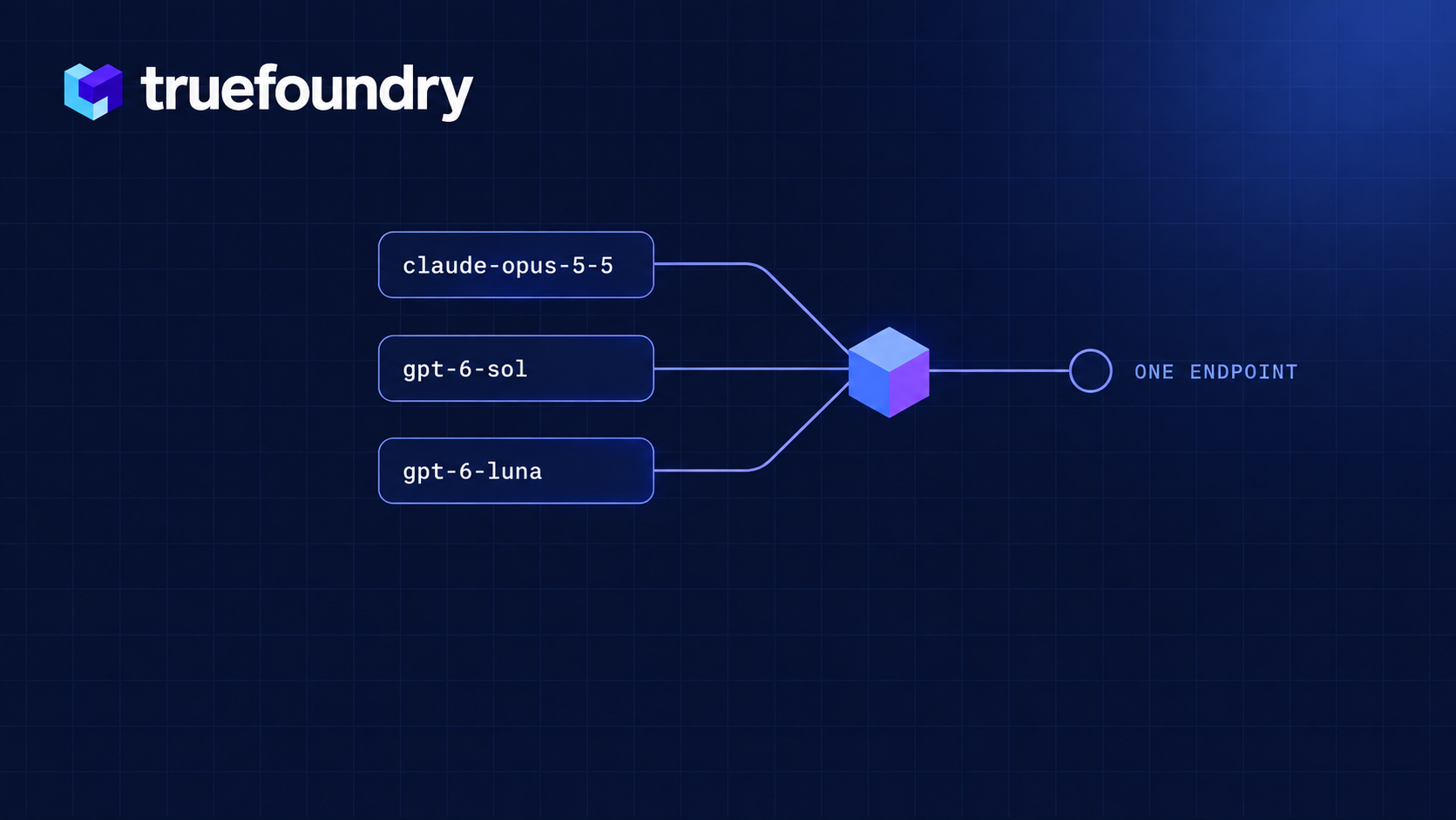
TrueFoundry fits when MCP governance must connect with model and agent governance. Its AI Gateway provides a common control plane for model routing, guardrails, budgets, observability, and provider access. The platform supports more than 1,600 models and private enterprise deployment patterns.
The LLM Gateway centralizes model access, fallback, usage visibility, and cost control. The MCP Gateway governs approved servers, authentication, tool permissions, credentials, and tool-level guardrails. Virtual MCP Servers can expose selected tools through one approved endpoint.
The Agent Gateway extends the same governance model into autonomous workflows. Teams can apply quotas by agent, workflow, or environment while tracing model and tool interactions together:
name: budget-limiting-configtype: gateway-budget-configrules: - id: 'data-agents-monthly' when: subjects: ['team:data-platform'] metadata: environment: 'production' limit_to: 7500 unit: cost_per_month budget_applies_per: ['user'] alerts: thresholds: [75, 90, 100] notification_target: - type: slack-bot notification_channel: 'budget-alerts-channel' channels: ['#ai-spend']When a data platform user crosses $7,500 for the month, the gateway returns a 429 with `error_origin_level: rate_limit_budget` in the body and the violated rule ID in the `x-tfy-applied-rules` header. Audit mode tracks the same rule without blocking.
The MCP Gateway governs tool access through a central registry, per-server RBAC, OAuth 2.0 token management with automatic refresh, and Virtual MCP Servers that expose a curated subset of tools from multiple registered servers as a single endpoint. Guardrails attach to tool calls in the same policy file that governs model calls, so one rule can scan the arguments a data agent passes to Snowflake before the call leaves the gateway:
name: guardrails-controltype: gateway-guardrails-configrules: - id: snowflake-tools-pii when: target: operator: or conditions: mcpServers: values: - snowflake-mcp condition: in subjects: operator: and conditions: in: - team:data-platform llm_input_guardrails: [] llm_output_guardrails: [] mcp_tool_pre_invoke_guardrails: - pii/pii-detection mcp_tool_post_invoke_guardrails: []The Agent Gateway adds workflow limits, circuit breakers, and traceable execution: token- or cost-based quotas per agent, workflow, or environment, timeouts, and loop safeguards for stalled runs, and one trace that shows the step, the model call, the tool call, and the cost. All three run inside the customer's own AWS, GCP, or Azure account, on-prem, or air-gapped on the Enterprise plan.
Choose TrueFoundry when:
Mint MCP is a good choice when controlled adoption of MCP is the immediate priority. It fits teams needing managed agent identity, scoped tool permissions, registries, audit trails, connectors, and faster deployment without operating the complete gateway infrastructure themselves.
Solo.io fits a different operating model. It is stronger for Kubernetes-mature teams that want deeper ownership across MCP, LLM, and A2A traffic. Existing mesh operations, Gateway API expertise, or Solo networking investments can make that model easier to absorb.
TrueFoundry becomes relevant when MCP governance must connect with broader execution control. Its architecture combines model, MCP, and agent governance while retaining deployment flexibility across customer-controlled environments.
The Solo.io and Mint MCP decision therefore depends heavily on gateway ownership. Teams should also ask whether the future requirement stops at MCP or expands into governed multi-agent workflows.
For teams weighing Solo.io or Mint MCP against a consolidated approach, TrueFoundry’s best MCP gateways comparison provides additional category context.
.webp)
TrueFoundry helps enterprises govern models, MCP tools, agents, budgets, and policies through one production control layer. Book a free demo today to get started.
TrueFoundry AI Gateway offre une latence d'environ 3 à 4 ms, gère plus de 350 RPS sur 1 processeur virtuel, évolue horizontalement facilement et est prête pour la production, tandis que LiteLM souffre d'une latence élevée, peine à dépasser un RPS modéré, ne dispose pas d'une mise à l'échelle intégrée et convient parfaitement aux charges de travail légères ou aux prototypes.





Les dernières nouvelles, articles et ressources envoyés dans votre boîte de réception
.webp)
.png)
.png)
.png)
.png)
.png)
.png)
.png)
.png)
.png)
.png)


