Blank white background with no objects or features visible.

Te ofrecemos acceso gratuito al informe completo Gartner Hype Cycle for AI Governance 2026. Consigue tu copia →

Top 6 Apigee Alternatives in 2026

Por Ashish Dubey

Actualizado: November 3, 2026

Published: November 3, 2026

TL;DR:

Apigee is Google Cloud’s enterprise API-management platform — proxies, a developer portal, analytics, monetization and ML-based API security. It is excellent at classic API management. What it is not is AI-native: it does not natively route across LLM providers, track token cost, enforce per-team AI budgets, govern MCP servers, or apply LLM guardrails. As teams put agents and LLMs into production, that gap — plus Apigee’s Google-Cloud gravity and multi-axis pricing — is what sends them looking.

Which alternative depends on what you need:

  • Want an AI-native gateway (LLM routing, token cost, MCP, guardrails) that runs anywhere: TrueFoundry
  • Want a lightweight, plugin-driven gateway with an AI plugin set: Kong
  • Want Apigee-scale lifecycle + integration/iPaaS: MuleSoft Anypoint
  • All-in on AWS or Azure: AWS API Gateway or Azure API Management
  • Want an open-source core with an AI gateway: WSO2
  • Apigee is a mature API-management suite (proxies, portal, analytics, monetization, Advanced API Security), strongest for classic API programs on Google Cloud.
  • Its AI features are Gemini Code Assist and ML-based abuse detection — not native LLM routing, token-cost governance, MCP support or guardrails.
  • Common reasons to switch: Google-Cloud lock-in, complex multi-axis pricing that surprises at scale, heavyweight for AI-focused teams, and the AI-native gap.
  • Need a gateway built for LLMs and agents, not just APIs? See TrueFoundry in your stack. Book a demo →

What Apigee does well

Apigee earns its enterprise reputation on classic API management:

  • Full API lifecycle: proxies and policies for security, rate limiting, quotas and transformation across REST, SOAP, GraphQL and gRPC.
  • Developer portal and monetization: rate plans, revenue tracking and a portal for API consumers.
  • Advanced API Security: ML-based abuse detection plus Google’s WAAP stack (Cloud Armor, reCAPTCHA).
  • Analytics: dashboards for traffic, latency and errors.

If your problem is managing a large catalog of conventional APIs on Google Cloud, Apigee is a strong choice. The question is what happens when the traffic is LLMs and agents.

Where teams look for Apigee alternatives

  1. It isn’t AI-native. Apigee does not natively route across LLM providers, meter token cost, enforce per-team AI budgets, govern MCP servers, or apply LLM guardrails. Those are first-class needs for AI workloads, and bolting them on is work.
  2. Google-Cloud gravity. The control plane and most integrations assume GCP. For multi-cloud, on-prem or air-gapped requirements, that is a constraint.
  3. Pricing has many axes. Per-call charges, per-environment-per-region fees, add-ons and tiers make costs hard to predict at scale.
  4. Heavyweight for AI teams. The breadth that suits a large API program is overkill for a team whose core need is governing models and agents.
  5. Migration cost. Moving off legacy Apigee Edge, or onto Apigee, takes real effort.

Apigee alternatives at a glance

Platform Type AI-native (LLM routing, cost, MCP, guardrails) Deployment Best for
TrueFoundry AI gateway + control plane Yes SaaS, VPC, on-prem, air-gapped LLM + agent + MCP governance in one plane
Kong API gateway + AI plugin set Partial Self-host / Konnect SaaS Lightweight, plugin-driven, Kubernetes
MuleSoft Anypoint API management + iPaaS Partial SaaS / hybrid Apigee-scale lifecycle + integration
AWS API Gateway AWS-native API gateway No AWS All-in on AWS
Azure API Management Azure-native API gateway Partial Azure All-in on Microsoft
WSO2 Open-source API platform + AI gateway Partial Multi-cloud / on-prem Open-source core, self-host
Apigee Enterprise API management No (Gemini-assisted) GCP (+ hybrid) Classic API programs on Google Cloud

How we evaluated them

Criterion What to look for TrueFoundry
AI-native gateway LLM routing, fallbacks and provider-agnostic access ✓
Cost governance Per-team/per-key token budgets and one cross-provider ledger ✓
MCP + agents MCP registry, agent identity and policy ✓
Guardrails PII, prompt-injection and content controls at the gateway ✓
Deployment SaaS, VPC, on-prem and air-gapped; multi-cloud ✓
Pricing clarity Predictable, enterprise-friendly cost model ✓

The 6 best Apigee alternatives in 2026

1. TrueFoundry

TrueFoundry is the AI-native answer to “we need a gateway, but for models and agents.” It puts every LLM provider, MCP server and agent behind one OpenAI-compatible endpoint, with cost-aware routing and fallbacks, per-key and per-team budgets, a cross-provider cost ledger, an MCP registry with agent identity and policy, and guardrails — deployable as SaaS, in your VPC, on-prem or air-gapped.

Against Apigee, the contrast is purpose. Apigee manages conventional APIs on Google Cloud; TrueFoundry governs AI traffic anywhere. If your gateway’s job is LLMs, agents and MCP rather than REST catalogs and monetization, it is the better-fitted tool. For a direct view, see our TrueFoundry vs Apigee comparison.

Top Features:

  • Unified LLM gateway: route across OpenAI, Anthropic, Google, Bedrock, Vertex and self-hosted models with fallbacks.
  • Per-key, per-team budgets and one cross-provider cost and token ledger.
  • MCP registry with agent identity, on-behalf-of delegation and policy.
  • Guardrails and enterprise controls (SSO, RBAC/SCIM, SOC 2); deploy SaaS, VPC, on-prem or air-gapped.

Why it’s an Apigee alternative: it delivers the governance and control enterprises expect from a gateway, but built for AI — and it runs wherever your data must live, not only on one cloud. See the definitive guide to AI gateways.

See an AI-native gateway run in your environment

2. Kong

Kong is a lightweight, plugin-driven API gateway popular in Kubernetes, with an AI Gateway plugin set that adds LLM routing and related controls. It is lighter than Apigee on lifecycle, governance and monetization, but faster to run and extend.

  • Plugin-driven gateway, strong in Kubernetes.
  • AI Gateway plugins for LLM traffic.
  • Self-hosted or Konnect SaaS control plane.

Why it’s an Apigee alternative: a lighter, more cloud-neutral gateway with AI plugins. See our Kong AI alternatives guide for trade-offs.

3. MuleSoft Anypoint

MuleSoft Anypoint (Salesforce) is the closest to Apigee in scope, with full API lifecycle management, but it leans toward integration and iPaaS. For organizations whose real need is connecting systems as much as exposing APIs, it is a natural Apigee competitor.

  • Full API lifecycle plus integration/iPaaS.
  • Strong connector ecosystem.
  • Enterprise-grade, Salesforce-backed.

Why it’s an Apigee alternative: Apigee-scale management with an integration tilt — though, like Apigee, it is not AI-native.

4. AWS API Gateway

AWS API Gateway is the AWS-native choice for exposing and managing APIs, tightly integrated with Lambda and the AWS stack. It is lighter on portal and monetization and is single-cloud, but for AWS-committed teams it is the path of least resistance.

  • Deep AWS integration (Lambda, IAM, CloudWatch).
  • Pay-per-use, serverless-friendly.
  • Simple to adopt within AWS.

Why it’s an Apigee alternative: the obvious gateway for AWS-native teams — pair it with an AI gateway for LLM/agent governance.

5. Azure API Management

Azure API Management is the Microsoft-native equivalent, with layered tiers and tight Azure integration. Microsoft-centric enterprises often pick it by default, and it has been adding AI-gateway capabilities for Azure OpenAI traffic.

  • Native Azure integration and governance.
  • Layered tiers for different scales.
  • Emerging AI-gateway features for Azure OpenAI.

Why it’s an Apigee alternative: the natural gateway for Microsoft estates, with AI features focused on the Azure ecosystem.

6. WSO2

WSO2 offers an Apache-2.0 open-source API platform spanning multi-cloud and on-prem, with a full lifecycle and a multi-gateway runtime. Its AI Gateway can auto-generate MCP servers from OpenAPI specs and govern inbound agent and outbound LLM traffic.

  • Open-source core, multi-cloud and on-prem.
  • AI Gateway with MCP generation from API specs.
  • Full API lifecycle coverage.

Why it’s an Apigee alternative: an open-source, self-hostable alternative with a genuine AI-gateway story.

How to choose

  • AI-native gateway, runs anywhere: TrueFoundry.
  • Lightweight, Kubernetes-first with AI plugins: Kong.
  • Apigee-scale lifecycle + integration: MuleSoft Anypoint.
  • Single-cloud default: AWS API Gateway or Azure API Management.
  • Open-source, self-host: WSO2.

For AI and agent workloads specifically, the honest answer is that Apigee and most classic API gateways were built for a different job. If your gateway’s purpose is models, agents and MCP, start with an AI-native platform.

Conclusion

Apigee remains a strong API-management platform. But “manage our APIs on Google Cloud” and “govern our LLMs and agents anywhere” are different jobs. If it is the second, TrueFoundry is the most complete Apigee alternative — with Kong, MuleSoft, the cloud-native gateways and WSO2 covering other needs.

Want one AI-native gateway for every model, agent and MCP server?

Related reading

Try now.

One gateway for all your models, MCP servers, and agents.
No credit card needed.

Inscríbase
Tabla de contenido

Controle, implemente y rastree la IA en su propia infraestructura

Reserva 30 minutos con nuestro Experto en IA

Reserve una demostración

La forma más rápida de crear, gobernar y escalar su IA

Demo del libro
Summarize with
ChatGPT logo by OpenAI
Perplexity AI logo
Blurry red snowflake on white background, symmetrical frosty design with soft edges and abstract shape.

Descubra más

No se ha encontrado ningún artículo.
November 3, 2026
|
5 minutos de lectura

Top 6 Apigee Alternatives in 2026

No se ha encontrado ningún artículo.
November 3, 2026
|
5 minutos de lectura

Best Non-Human Identity (NHI) Security Tools in 2026

No se ha encontrado ningún artículo.
 What is an LLM Gateway
November 2, 2026
|
5 minutos de lectura

¿Qué es un LLM Gateway? Una guía completa

Ingeniería y producto
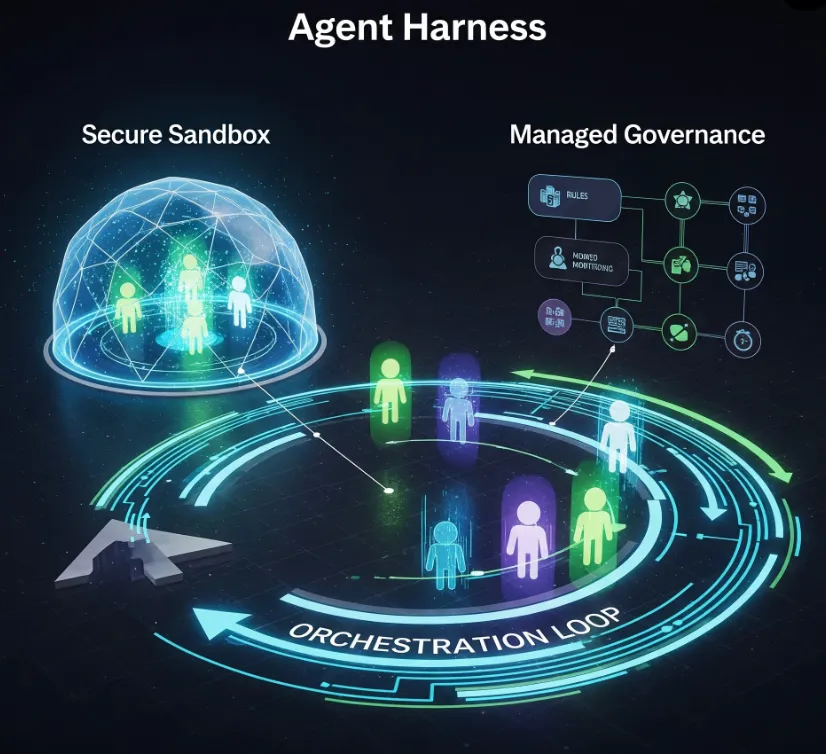
 Everything you need to know about AI agent harness
November 2, 2026
|
5 minutos de lectura

What is an Agent Harness? Running Governed Managed Agents in Production

IA de agencia
No se ha encontrado ningún artículo.

Blogs recientes

Black left pointing arrow symbol on white background, directional indicator.

Preguntas frecuentes

What is the best Apigee alternative?

For AI and agent workloads, TrueFoundry is the most complete alternative — an AI-native gateway with LLM routing, cost governance, MCP and guardrails that runs anywhere. For classic API management, Kong, MuleSoft, the cloud-native gateways or WSO2 may fit better.

Is Apigee an AI gateway?

Not natively. Apigee is an API-management platform; its AI features are Gemini Code Assist and ML-based API abuse detection. It does not natively route across LLM providers, meter token cost, govern MCP, or apply LLM guardrails, so teams running AI workloads often add a dedicated AI gateway.

Why do teams move off Apigee?

Common reasons are Google-Cloud lock-in, multi-axis pricing that is hard to predict at scale, heavyweight breadth for AI-focused teams, and the lack of native AI-gateway capabilities for LLMs, agents and MCP.

Can I use an AI gateway alongside Apigee?

Yes. A common pattern is to keep Apigee for conventional API management and put an AI-native gateway in front of LLM and agent traffic to handle routing, token-cost governance, MCP and guardrails.

Realice un recorrido rápido por el producto
Comience el recorrido por el producto
Visita guiada por el producto