November 1, 2026
|
5 minutos de lectura


Obtenga acceso instantáneo a un entorno TrueFoundry en vivo. Implemente modelos, dirija el tráfico de LLM y explore la plataforma completa: su sandbox estará listo en segundos, sin necesidad de tarjeta de crédito.



¡Una forma increíblemente rápida de crear, rastrear e implementar sus modelos!
Before any model number means anything, you have to know what gets metered. A single Claude API request is billed across up to four token types, each at its own rate:
A long agent loop that re-sends the same context on every step is mostly cache reads if you cache well, and mostly fresh input if you do not. Same workload, very different bill — the real cost math is here.
Here are the current per-million-token (MTok) rates for every model on the Claude Developer Platform.
Notice the shape, not just the numbers: every tier holds the same ratios — output 5x input, cache write 1.25x input, cache read a small fraction of it — so all four prices move together once you know a model's input rate.
The rate card is the starting point. Several modifiers move the real number up or down, and most teams forget at least one.
Caching and batching pull the bill down; residency, fast mode and the cache-write premium push it up. The two upward multipliers are easy to trigger by accident: US-only inference adds 10% to every token, and Opus 5.5 fast mode doubles the rate — turning $4/$20 into $8/$40. If you can tolerate a 24-hour turnaround, batching stacks on top of caching — the trade-offs are in Claude Batch API vs real-time.
Caching is the most misunderstood line on the bill because it costs more before it costs less. A cache write is 1.25x the input rate — a 25% premium over sending those tokens once — so you only come out ahead when the prefix is read back enough times to earn that premium down.
The break-even is faster than most people expect. A fresh prefix costs 1x input every time. Caching it costs 1.25x once, then ~0.05x of input on each read (Opus and Sonnet). So the first reuse recovers the write premium, and from the second on you pay roughly 5% of the uncached path. In practice:
So caching rewards stable, repeated context — a fixed system prompt, a tool schema, a re-queried document — and punishes bursty, one-shot traffic with gaps longer than the five-minute default lifetime. Cache what repeats; leave the volatile tail fresh. Full worked math: Claude prompt caching: the real cost math.
List prices are abstract until you push a real workload through them. Here are three common shapes — a chat assistant, a RAG feature, and an agentic loop — each costed with and without the obvious optimisation. All figures are monthly, real-time (non-batch).
A support bot with a 2,000-token system prompt and tool schema, a 1,000-token rolling conversation per turn, and a 300-token answer — at 500,000 turns a month.
A Retrieval-Augmented-Generation feature that sends a 50,000-token context and generates a 1,000-token answer, 100,000 times a month.
A tool-calling agent that runs 12 steps per task, re-sending ~25,000 tokens of accumulated context and generating ~600 tokens on each step — across 20,000 tasks a month (240,000 steps).
One more agentic multiplier to budget for: multi-agent teams that fan work out to sub-agents can consume roughly 7x the tokens of a single agent — price it before you ship. Model selection is covered in the Opus vs Sonnet vs Haiku routing guide.
The worked examples all point the same way: the model is the first-order lever, and the right default is the cheapest model that passes your quality bar — not the most capable one available. Anchoring each tier's output price against Haiku as 1x shows the stakes.
A workable rule: start one tier below where you think you need to be, and escalate only on measured failure. Pick the cheapest model, run your real evaluation set, and promote a task only where quality actually drops below the bar — not on a hunch. Most teams that do this find Sonnet 5.5 handles the bulk of traffic and Opus is needed for a minority of genuinely hard requests. Routing each request to the right tier automatically, rather than hard-coding one model everywhere, is what turns this framework into real savings.
The rate card tells you what a token costs. It does not tell you which team, feature or developer spent it — the question finance actually asks once more than one app is calling the API. Native reporting meters per key, but a key is not a feature: when three teams share one key it cannot answer 'what did the RAG feature cost' or 'whose agent is driving the Opus bill'.
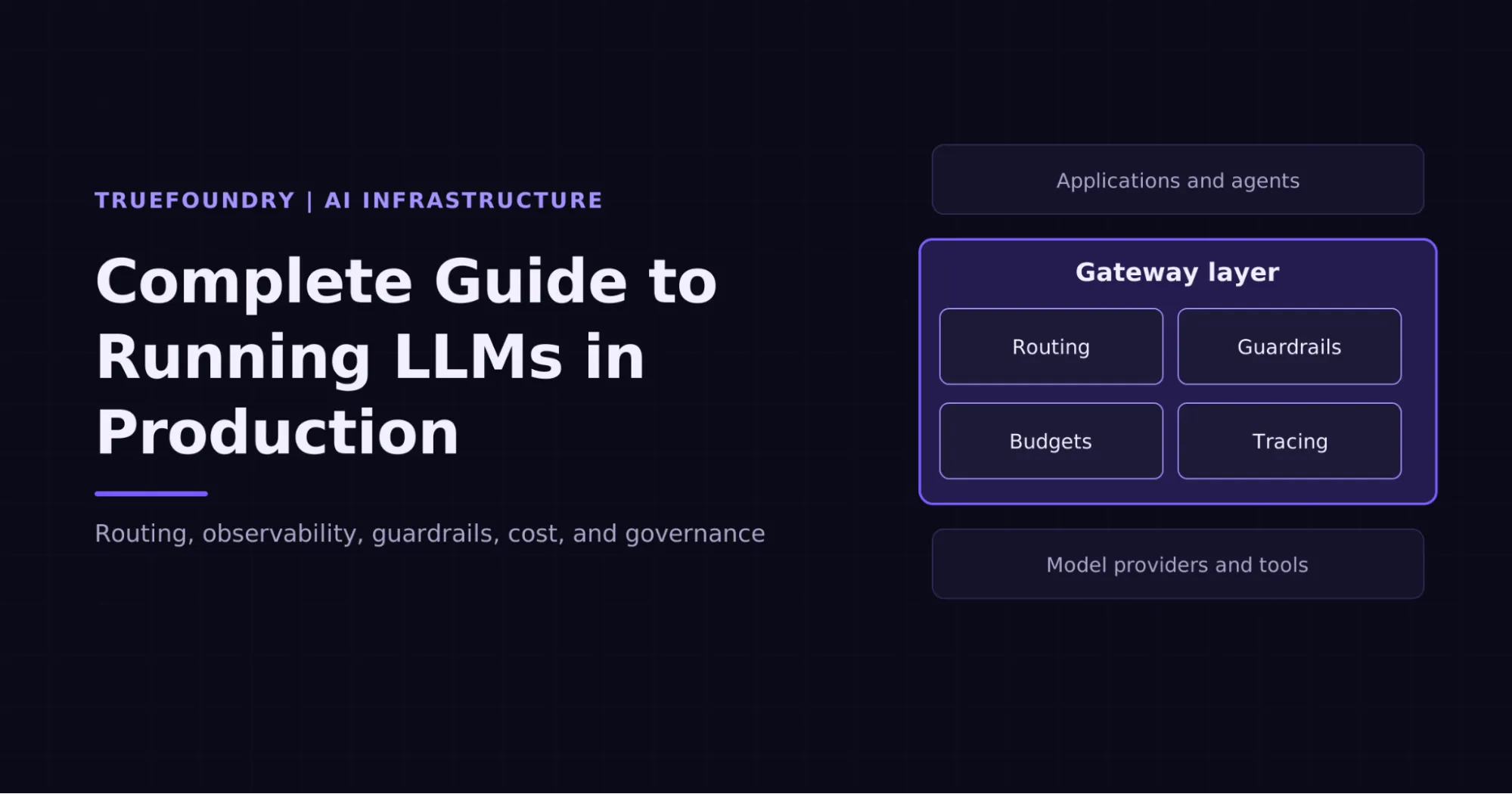
Routing Claude API traffic through the TrueFoundry AI Gateway puts every call on one metered path: spend attributed per team, application, developer and model; model policy so an expensive tier is a deliberate choice; and spend limits that hold before the invoice, not after. Because the gateway sees every request, it is also where the model-selection framework above becomes enforceable by policy rather than by trust. The same view covers your coding agents too — one cost picture across tools. The gateway adds roughly 3–4 ms of overhead and is OpenTelemetry-compliant.
This matters even more off the first-party API: when Claude is billed through Amazon Bedrock, Google Vertex or Microsoft Foundry, the spend lands on your cloud bill and Anthropic's dashboards do not see it at all. A gateway (or OpenTelemetry instrumentation) is then the only place per-team attribution can live.
Claude API pricing reads like a short rate card, but the number you actually pay is set underneath it: which model each request uses, how long the output runs, whether the prefix is cached, and whether the job could have been batched. None of those are on the pricing page — they are decisions in your code, and the worked examples show the same workload swinging 4x to 8x on them alone.
And once more than one team is calling the API, the rate card stops being the hard part. Knowing who spent it — and being able to cap it before the invoice — is what turns a predictable price into a controllable one.
TrueFoundry AI Gateway ofrece una latencia de entre 3 y 4 ms, gestiona más de 350 RPS en una vCPU, se escala horizontalmente con facilidad y está listo para la producción, mientras que LitellM presenta una latencia alta, tiene dificultades para superar un RPS moderado, carece de escalado integrado y es ideal para cargas de trabajo ligeras o de prototipos.



It is billed per million tokens, per model. Sonnet 5.5 is $2 input / $10 output, Opus 5.5 is $4 / $20, Haiku 5.5 starts at $0.10 / $0.50, and Fable 5.1 is $10 / $50. Cached reads and batch processing lower the effective rate substantially, while fast mode and US-only residency raise it.
Input tokens are everything you send (prompt, history, tools); output tokens are what the model generates, including its reasoning. Output is five times the input price on every Claude model, so generation length is the single biggest driver of a request's cost.
You pay a one-time cache-write premium of 1.25x the input rate to store a prompt prefix, then read it back on later requests at roughly a tenth of fresh input or less. It pays off once the same prefix is reused two or more times within the cache lifetime, which defaults to five minutes.
Yes — the Batch API is 50% cheaper than real-time for work that can return within 24 hours. It stacks with prompt caching, so batched, cached workloads are the cheapest way to run large offline jobs like evaluation, enrichment or bulk summarisation.
Haiku 5.5 is the cheapest at $0.10 / $0.50 per million tokens for prompts up to 100K tokens. Above 100K tokens it moves to a 5x tier ($0.50 / $2.50), so keep Haiku prompts under that threshold to stay on the low rate.
Multiply average input and output tokens per request by your model's per-MTok rate, then by monthly volume, and subtract the share of input you can serve from cache. As the worked examples show, caching a stable prefix and matching the model to the task typically moves the estimate by 4x or more — model those two levers first.
Claude API pricing is pay-as-you-go per token on the Developer Platform. Claude Code can be billed that way too, but is usually accessed through a subscription seat with a usage allowance — see Claude Code pricing explained for that side.
Native reporting meters per API key, which stops at the key rather than the feature or developer behind it. For per-team, per-feature and per-model attribution — plus spend limits and model policy — route API traffic through an AI gateway that meters every call and attributes it to the caller.



Las últimas noticias, artículos y recursos enviados a tu bandeja de entrada