October 9, 2026
|
5 minutos de lectura


Obtenga acceso instantáneo a un entorno TrueFoundry en vivo. Implemente modelos, dirija el tráfico de LLM y explore la plataforma completa: su sandbox estará listo en segundos, sin necesidad de tarjeta de crédito.



Published: October 7, 2026
.webp)
¡Una forma increíblemente rápida de crear, rastrear e implementar sus modelos!
La interoperabilidad de agentes es la capacidad de combinar e intercambiar las piezas de una pila de agentes (el framework, el modelo y las herramientas) sin que la gobernanza que los rodea se vea afectada. Un agente creado con un framework puede utilizar las mismas herramientas que uno creado con otro, ambos pueden acceder a los mismos modelos y ambos están sujetos a las mismas reglas de identidad, acceso y auditoría.
Tiene dos vertientes que suelen confundirse:
Sin la segunda parte, la primera solo extiende la fragmentación. La interoperabilidad real es la combinación de ambas: libertad de elección junto con un plano de control coherente subyacente.
La interoperabilidad solo es real si se basa en estándares abiertos en lugar de en conectores propietarios de un solo proveedor. Actualmente, dos estándares soportan la mayor parte de la carga en el ámbito de los agentes.
Una plataforma que utiliza estos estándares puede situarse frente a cualquier agente y cualquier herramienta, manteniendo la visibilidad de lo que ocurre. Una plataforma que depende de conexiones propietarias solo puede gobernar las partes creadas a su medida. Esa diferencia es la razón por la que la distinción entre MCP y A2A es importante: uno define cómo los agentes acceden a las herramientas y el otro cómo los agentes se comunican entre sí; un plano de control neutral debe ser capaz de gestionar ambos.
El papel de TrueFoundry es actuar como el plano de control por el que pasan todos los marcos, modelos y herramientas, para que la libertad de elección en los extremos no se convierta en caos en el centro.
Independientemente de sobre qué esté construido un agente (Bedrock, Vertex AI, LangGraph, un servicio HTTP personalizado, un agente A2A o un copiloto integrado en un producto SaaS), este entra bajo gobernanza al registrarse en el Registro de Agentes, sin necesidad de mover ni reescribir nada.
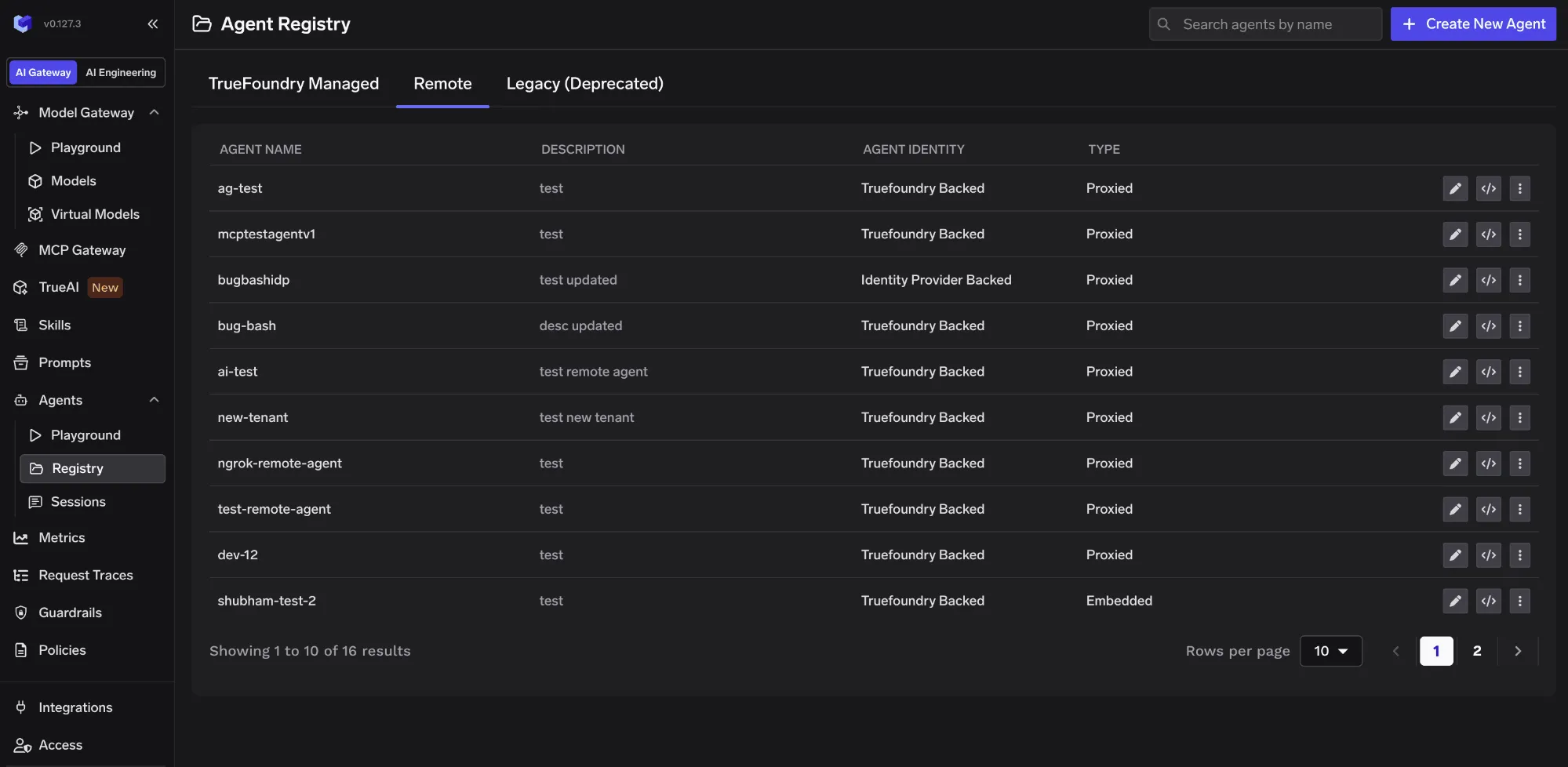
En el caso específico de los agentes A2A, el registro resuelve la tarjeta del agente en su punto de conexión conocido, redirige las llamadas a través de la pasarela y registra la solicitud y respuesta JSON-RPC en cada traza. De este modo, un agente A2A y un agente LangGraph parecen diferentes durante la fase de desarrollo, pero se gobiernan de forma idéntica durante la ejecución: mismo registro, misma identidad y mismo registro de auditoría.
En cuanto a los modelos, cada proveedor se sitúa detrás de una única API compatible con OpenAI, por lo que cualquier marco de trabajo puede acceder a cualquiera de los más de 1000 modelos apuntando a la pasarela y sobrescribiendo su URL base. No es necesario adoptar un SDK de TrueFoundry para conseguirlo. Mantienes tu marco de trabajo y cambias un solo ajuste.
# Any OpenAI-compatible framework or app becomes portable by overriding the base URL.
from openai import OpenAI

client = OpenAI(
    api_key="your-truefoundry-api-key",   # a gateway token
    base_url="https://gateway.truefoundry.ai",
)
# LangChain, CrewAI, AutoGen, LlamaIndex, or a custom loop:
# set the same base_url and they all route through the one control plane.
En cuanto a las herramientas, la pasarela MCP actúa como interfaz para cualquier servidor MCP y estandariza el acceso al mismo, de modo que una herramienta registrada una vez es accesible para todos los agentes gobernados. El ecosistema de TrueFoundry abarca más de 116 integraciones en categorías como asistentes de programación, marcos de trabajo, aplicaciones y barreras de seguridad, todas accesibles a través de la misma pasarela.
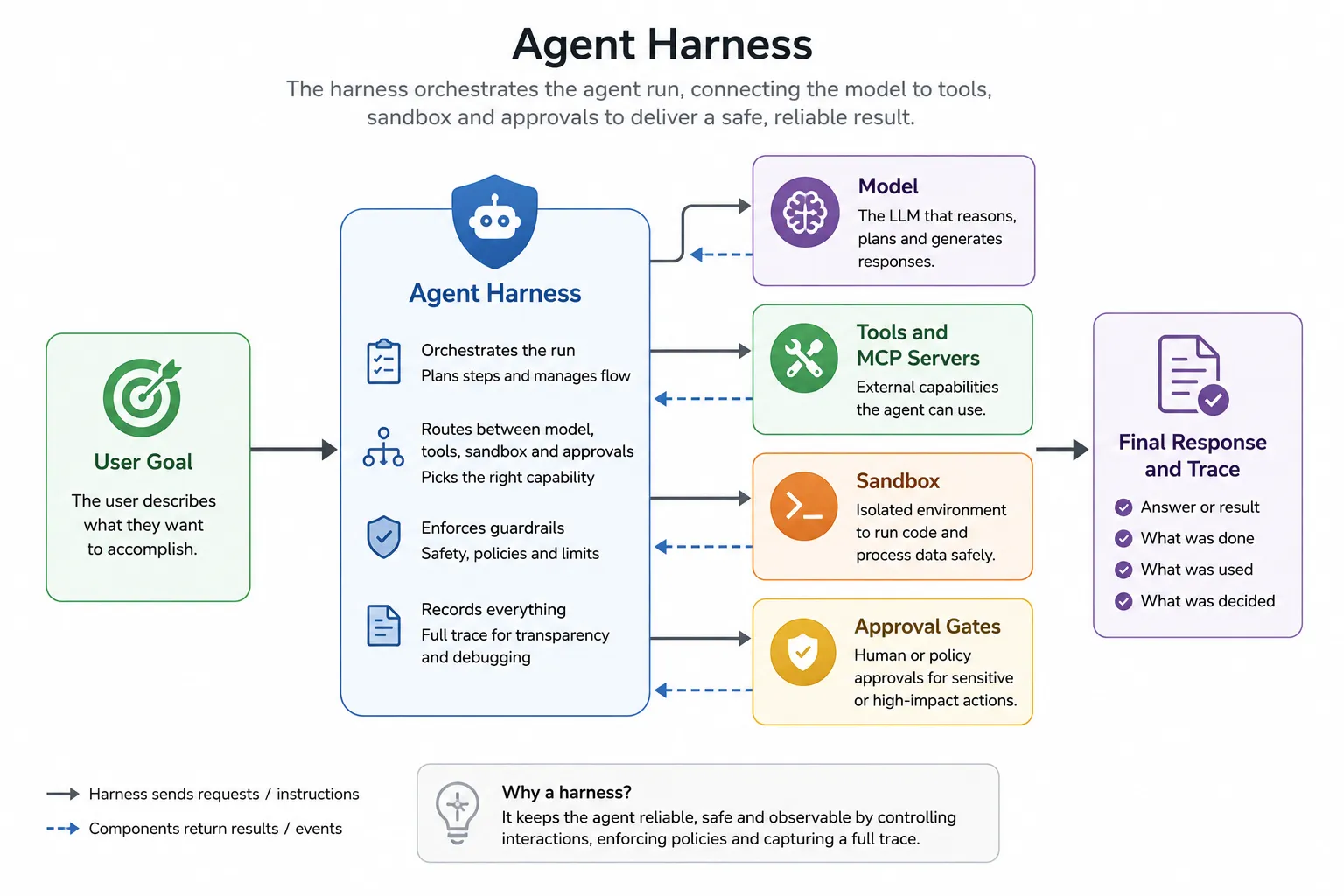
Captura de pantalla del producto, documentación de TrueFoundry: el entorno de ejecución Agent Harness.
Mientras que algunas plataformas ofrecen un catálogo propietario de "plugins para agentes", el modelo de extensión de TrueFoundry es abierto por diseño. Las herramientas se conectan como servidores MCP. La lógica de seguridad y políticas se conecta como barreras de seguridad personalizadas, que no son más que servicios HTTP que siguen un contrato simple de solicitud y respuesta, por lo que puedes añadir validaciones o mutaciones específicas de tu dominio sin tener que esperar a que un proveedor cree un conector. El resultado es la misma ventaja que promete un mercado de plugins, la extensibilidad, sin la dependencia de uno cerrado.
TrueFoundry AI Gateway ofrece una latencia de entre 3 y 4 ms, gestiona más de 350 RPS en una vCPU, se escala horizontalmente con facilidad y está listo para la producción, mientras que LitellM presenta una latencia alta, tiene dificultades para superar un RPS moderado, carece de escalado integrado y es ideal para cargas de trabajo ligeras o de prototipos.




Agent interoperability is the ability to build agents on any framework and connect them to any model and tool while governing all of them consistently. It has a build-time half, freedom from lock-in to one framework or provider, and a run-time half, shared standards like MCP and A2A plus one control plane that applies the same identity, access, and audit rules to every agent.
Yes. Agents built on LangGraph, CrewAI, AutoGen, Bedrock, Vertex AI, a custom HTTP service, or a SaaS-embedded copilot all register in the Agent Registry without being moved or rewritten, and they are governed identically once registered.
Yes. Tools are reached over MCP through the MCP Gateway, and agent-to-agent calls use A2A, where the gateway resolves the agent card, proxies the call, and records the JSON-RPC exchange in traces. Supporting both is what lets one control plane govern how agents reach tools and each other.
TrueFoundry favors open extension points over a closed plugin catalog. Tools plug in as MCP servers and policy logic plugs in as custom guardrails, which are HTTP services that follow a simple contract, so you get extensibility without depending on a single vendor's marketplace.
1,000+ models through one OpenAI-compatible API, plus any MCP server through the MCP Gateway, across an ecosystem of 116+ integrations. Any framework reaches them by pointing at the gateway.



Las últimas noticias, artículos y recursos enviados a tu bandeja de entrada
.png)
.png)
.png)
.png)
.png)
.png)