October 27, 2026
|
Lesedauer: 5 Minuten


Erhalten Sie sofortigen Zugriff auf eine TrueFoundry-Live-Umgebung. Stellen Sie Modelle bereit, leiten Sie den LLM-Verkehr weiter und erkunden Sie die gesamte Plattform — Ihre Sandbox ist in Sekundenschnelle einsatzbereit, ohne dass eine Kreditkarte erforderlich ist.



Unglaublich schnelle Methode zum Erstellen, Verfolgen und Bereitstellen Ihrer Modelle!
Most "Claude vs ChatGPT" write-ups score the two on tone, reasoning, or which drafts a better email. That is the wrong frame for a procurement decision. In an enterprise the model is the easy part — the frontier models are close enough that the differences that survive contact with production are governance differences: where your data goes, who can use which model, how spend is attributed, and what you can prove to an auditor.
So this comparison is organised the way a buyer actually evaluates: data and compliance, deployment, admin and security controls, cost model, and governance. Capability matters but changes with every release; the operational questions are what you live with for the length of the contract.
A fair, dimension-by-dimension view. Treat the specifics as a starting point and confirm the ones that matter against each vendor's current enterprise terms — tiers move quarterly, and the public pricing page rarely reflects what a negotiated enterprise agreement gives you.
The pattern most buyers notice: the two are closer on capability than the marketing suggests, and further apart on the operational details your security and finance teams actually sign off on. Treat the "strengths" rows as tendencies, not walls — both ship across the whole range, and the gaps narrow with each release.
This is where enterprise deals are won or lost. On their business and enterprise tiers, both Anthropic and OpenAI state that they do not train their models on your inputs and outputs by default — table stakes both clear. The differences that matter sit underneath that headline, and none are visible from a pricing page.
The practical move is to treat "does it train on our data?" as a box both vendors tick, and spend your diligence on retention windows, ZDR scope, and regional coverage — the same discipline we lay out in running Claude in regulated environments and is Claude safe for enterprise data. These controls apply per vendor console, so running two vendors means reconciling two retention policies, two sub-processor lists, and two audit exports — unless one layer sits between your apps and both to enforce a single policy.
For a regulated enterprise, the deployment path can decide the vendor outright. Claude is reachable through the Anthropic API and, for teams that want the model inside their own cloud account, through Amazon Bedrock and Google Vertex; ChatGPT's models through OpenAI directly and through Microsoft Foundry. If your policy says inference must run inside your own cloud tenancy, the question becomes "which model is available on the cloud we already trust?" more than "which benchmarks higher?"
The cloud path also changes how cost behaves. When Claude runs on Bedrock, Vertex, or Foundry, usage is billed per token to your cloud account and the vendor's own dashboards do not see it — attribution then has to come from OpenTelemetry instrumentation or a gateway in the path. Most buyers discover that only after the first surprising cloud bill.
A self-hosted AI gateway sits in front of all of these, so "where does the data run" stays your decision regardless of vendor. It also closes the in-cloud observability gap: because every call passes through it, you get consistent token accounting and tracing even when the model is billed through Bedrock or Foundry.
Below data handling sits the day-to-day question of who can do what. Both vendors ship a credible set of enterprise admin controls on their top tiers — single sign-on, role-based access, workspace or project separation, and audit logging, with ChatGPT Enterprise also offering SCIM for automated provisioning. On paper the feature lists converge; the catch is that each lives inside that vendor's own panel and stops at the vendor boundary.
The failure mode is not that any single control is missing — it is that nobody owns the union of them. Two vendors mean two SSO configs, two key sets to rotate, two places to set spend caps, and two audit exports a reviewer stitches together by hand. A gateway collapses that into one policy surface: one identity integration, central virtual keys, one model-access policy, and one audit trail — the control-plane pattern we describe for Claude Code governance with an AI gateway.
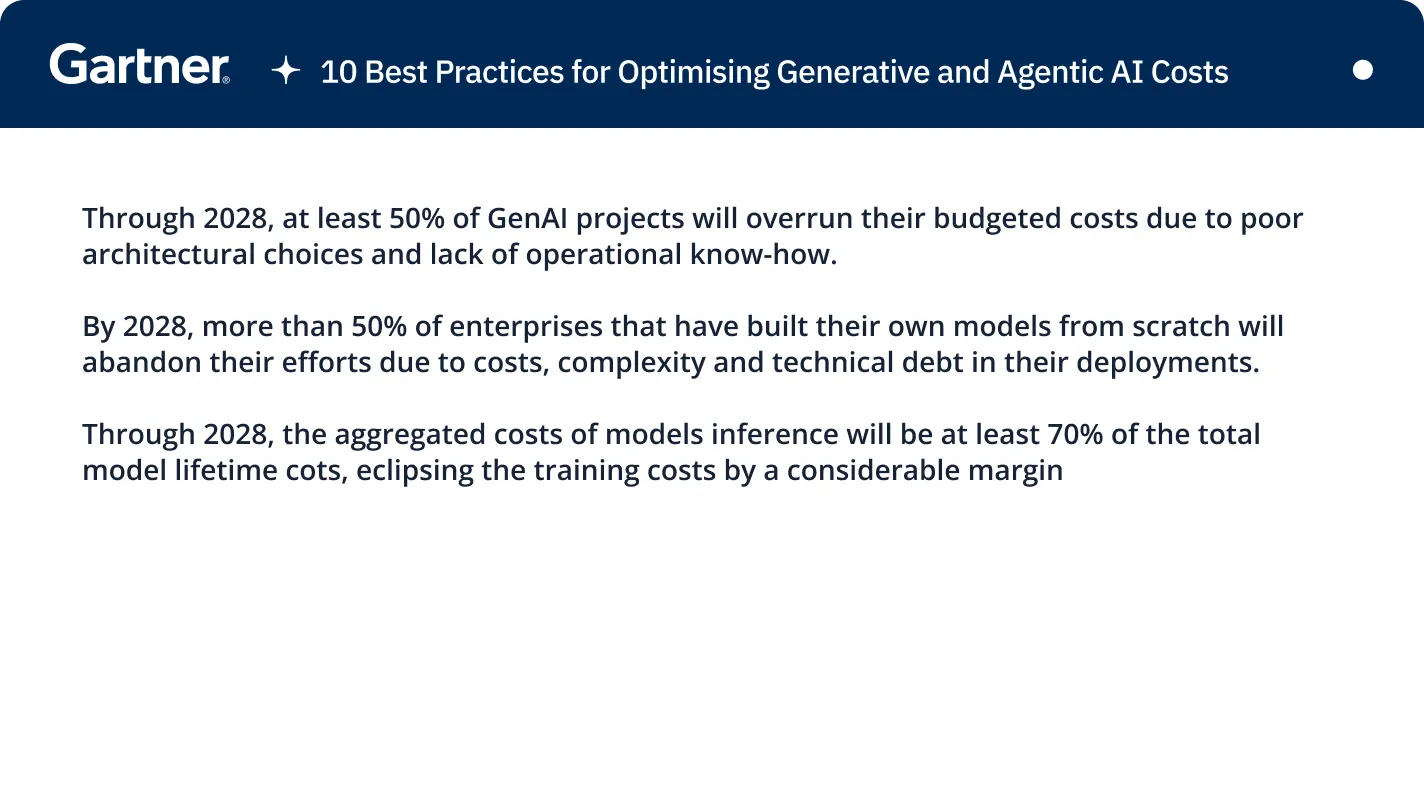
Both vendors sell the same two ways: per-seat subscriptions for the chat apps, and per-token API pricing for anything you build. For enterprise workloads the API side dominates, and there cost is driven by model choice, not vendor loyalty. Claude's API rates run from Haiku 5.5 at $0.10 / $0.50 per million input / output tokens up to Opus 5.5 at $4 / $20 and Fable 5.1 at $10 / $50; Sonnet 5.5 sits in the middle at $2 / $10 and handles most production work at roughly one-fifth of Opus's output cost. OpenAI's lineup spans a similar range from small to frontier models.
Three levers move the bill far more than vendor choice does, and all three are configuration, not negotiation:
The takeaway is not "X is cheaper than Y" — it is that an expensive model left on by default costs far more than switching vendors ever saves. These levers are gateway capabilities, not vendor features: routing, caching, and batch dispatch all live in the path between your apps and the models, exactly where a control plane applies them to Claude and ChatGPT alike. We break down the economics in Claude API pricing.
In practice, the "Claude or ChatGPT" decision rarely resolves to one. Different teams prefer different models, capabilities leapfrog with each release, and single-vendor lock-in is exactly the risk a platform team is paid to avoid. So the mature pattern is multi-model: Claude for long-context and coding work, ChatGPT where its ecosystem and multimodality fit, and the freedom to switch when the leaderboard changes.
That only works if the controls live below the model rather than inside each vendor's console. Put both behind one AI gateway and you get unified guardrails, one place to attribute spend by team and feature, and one audit trail — the same thesis as governing coding IDEs and agents from one control plane. Without that layer every new vendor doubles the governance surface; with it, adding a vendor is a config change, not a project — and a well-built gateway adds only a few milliseconds per call.
Run the same checklist against both vendors, and against your own platform. The rightmost column is the reason a control plane keeps showing up in the answer: most of these questions are easier to answer once, below the model, than twice, inside two consoles.
A financial-services platform wants Claude for document analysis and code, and ChatGPT for a customer-facing assistant its product team already prototyped. Security will not approve two separate data paths, and finance will not approve two un-attributed API bills.
The "Claude vs ChatGPT" argument then stops being a fork in the road and becomes a routing decision — a new winner on any task is a policy edit, not a migration.
The enterprise version of Claude vs ChatGPT is not a winner-takes-all question. Both clear the bar on "don't train on our data," both run inside a major cloud, and both price per token across a wide range of models. The differences that shape your rollout — retention, deployment, admin controls, cost governance, audit — are operational, and the same whichever vendor you lead with.
The durable decision, then, is not which model but what sits underneath it. A single control plane lets you use Claude and ChatGPT side by side, hold one security and spend policy across both, and change your mind next quarter without re-architecting. Pick the model for the task; govern the stack once.
TrueFoundry AI Gateway bietet eine Latenz von ~3—4 ms, verarbeitet mehr als 350 RPS auf einer vCPU, skaliert problemlos horizontal und ist produktionsbereit, während LiteLM unter einer hohen Latenz leidet, mit moderaten RPS zu kämpfen hat, keine integrierte Skalierung hat und sich am besten für leichte Workloads oder Prototyp-Workloads eignet.


Neither is universally better; they have different strengths. Claude is often preferred for long-context analysis, document-heavy work and coding, while ChatGPT leads on ecosystem breadth and multimodality. For a procurement decision, the deciding factors are usually data handling, deployment path and cost governance rather than raw capability — and many enterprises run both.
On their business and enterprise tiers, both Anthropic and OpenAI state that they do not use your inputs and outputs to train their models by default. Retention windows and zero-retention options vary, so confirm the specifics against your own contract rather than the public pricing page.
Yes, in both cases. Claude is available through Amazon Bedrock and Google Vertex, and OpenAI's models through Microsoft Foundry, so inference can run inside your own cloud tenancy. A self-hosted gateway can sit in front of any of these so your data path stays under your control — and it also recovers the spend visibility you lose when usage is billed through the cloud provider instead of the model vendor.
It depends entirely on which models you use and how. Both price per token across a range of model sizes, and the cost swings by an order of magnitude or more between the smallest and largest models. The biggest savings come from routing each request to the cheapest capable model, from prompt caching (cached reads run roughly ten times cheaper than fresh input), and from batch processing (50% cheaper on eligible jobs) — not from picking one vendor over the other.
Both offer enterprise-grade controls on their top tiers: single sign-on, role-based access, workspace or project separation, and audit logging, with ChatGPT Enterprise also offering SCIM for automated provisioning. The limitation is that each vendor's controls live in its own console and stop at its boundary, so running both means reconciling two identity configs, two key sets, and two audit exports unless a gateway unifies them.
No, and most enterprises do not. A multi-model setup lets each team use the best model for its task and keeps you from locking into one vendor. The requirement is a single control plane — one place for security guardrails, spend attribution and audit — so that using both does not double your governance work.
Put both providers behind one AI gateway and apply the same guardrails — PII redaction and prompt-injection detection — on every request, regardless of vendor. That gives you one policy, one audit trail and one spend view instead of two separate consoles to reconcile, and it does so with only a few milliseconds of added latency per call.
A well-built gateway adds only a few milliseconds of overhead per request and emits OpenTelemetry-compliant traces, so observability flows into the tools you already use. Far from adding lock-in, it removes it: because your applications call the gateway rather than a specific vendor, swapping or routing between Claude and ChatGPT becomes a policy change rather than a code change.



Die neuesten Nachrichten, Artikel und Ressourcen werden in Ihren Posteingang gesendet