


.png)
October 27, 2026
|
Lesedauer: 5 Minuten


Erhalten Sie sofortigen Zugriff auf eine TrueFoundry-Live-Umgebung. Stellen Sie Modelle bereit, leiten Sie den LLM-Verkehr weiter und erkunden Sie die gesamte Plattform — Ihre Sandbox ist in Sekundenschnelle einsatzbereit, ohne dass eine Kreditkarte erforderlich ist.



Unglaublich schnelle Methode zum Erstellen, Verfolgen und Bereitstellen Ihrer Modelle!
Die Wahl des besten Open-Source-Agent-Harness ist ein anderes Problem als die allgemeine Wahl eines Harness. Sobald gehostete Plattformen wegfallen, spielen die Kosten pro Lauf keine Rolle mehr, da alles hier kostenlos heruntergeladen werden kann.
Was stattdessen den Ausschlag gibt, ist weniger aufregend, aber weitaus folgenschwerer: Was erlaubt die Lizenz tatsächlich? Wer bestimmt die Richtung des Projekts? Wird das Projekt in zwei Jahren noch weiterentwickelt? Und wie weit bringt es dich in Richtung Produktion, bevor du deine eigene Infrastruktur schreiben musst?
Diese Fragen unterscheiden Projekte, die in einer Feature-Tabelle identisch aussehen. Ein Terminal-Coding-Agent, der von einem einzelnen Unternehmen gepflegt wird, ist kein Ersatz für ein Harness, das eine API und eine einbettbare UI mitbringt – selbst wenn beide bei Modellunterstützung und MCP die gleichen Kriterien erfüllen.
Im Folgenden finden Sie fünf Open-Source-Harnesses, die 2026 produktiv im Einsatz sind, die Kriterien, die sie wirklich voneinander unterscheiden, und für wen sich welches System eignet.
Jedes Projekt hier führt eine Agent-Schleife aus, ruft MCP-Tools auf und streamt Ausgaben. Das ist Standard. Diese sechs Punkte sind entscheidend, wenn Sie darauf ein Unternehmen aufbauen wollen.
Was die Lizenz tatsächlich erlaubt. Freizügige Lizenzen sind nicht austauschbar. MIT ist kurz und großzügig, sagt aber nichts über Patente aus. Apache 2.0 fügt eine ausdrückliche Patentgewährung hinzu und verlangt, dass Sie Ihre Änderungen angeben. Einige Projekte werden unter Source-Available-Bedingungen veröffentlicht, die den Weiterverkauf komplett untersagen. Wenn Sie ein Harness in ein Produkt einbetten, das Sie verkaufen, lassen Sie das von Ihrer Rechtsabteilung prüfen, anstatt nur das README-Badge zu überfliegen.
Governance und Bus-Faktor. Fast alles in dieser Kategorie wird von einem einzigen Unternehmen gepflegt. Das bedeutet, dass das Projekt die Richtung ändern, die Lizenz anpassen oder die Entwicklung stillschweigend einstellen kann, wenn sich die Prioritäten des Unternehmens verschieben. Die praktische Absicherung ist kein Versprechen, sondern eine ausreichend große Entwicklerbasis, damit ein Fork überlebt. Fragen Sie, wer Commit-Rechte hat und wie viele davon nicht für den Sponsor arbeiten.
Modellneutralität und die Frage, ob lokale Modelle zählen. Auf dem Papier sind sie alle providerunabhängig. Die Frage ist, ob lokale Modelle über Ollama oder vLLM ein offiziell unterstützter Pfad oder nur ein Community-Workaround sind – denn genau das entscheidet darüber, ob Sie das System überhaupt in einer isolierten Umgebung (Air-Gapped) betreiben können.
Funktionsumfang jenseits des CLI. Ein Terminal-Agent ist perfekt für einen einzelnen Entwickler. Wenn Sie einen Agenten für ein Team bereitstellen oder in Ihr Produkt integrieren wollen, benötigen Sie eine HTTP-API, ein SDK und idealerweise eine UI, die Sie anpassen können. Einige exzellente Harnesses enden beim Terminal – eine Grenze, an die Sie schnell stoßen werden, wenn Ihr Anwendungsfall ein Produkt-Feature ist.
Wie Erweiterungen funktionieren. Tools, Skills, Sub-Agenten, benutzerdefinierte Provider. Hier wird Ihr Team die meiste Zeit verbringen. Ob Erweiterungen als TypeScript-Module, MCP-Server, YAML oder Python-Klassen implementiert werden, entscheidet darüber, wie viele Ihrer Ingenieure dazu beitragen können.
Der Weg in die Produktion. Lokal auszuführen ist der einfache Teil. Der Betrieb für ein Team erfordert Multi-User-Authentifizierung, Sitzungspersistenz, horizontale Skalierung und ein Konzept für Upgrades. Achten Sie auf einen dokumentierten Docker-Compose- oder Helm-Pfad, nicht nur auf einen Einzeiler zur Installation.
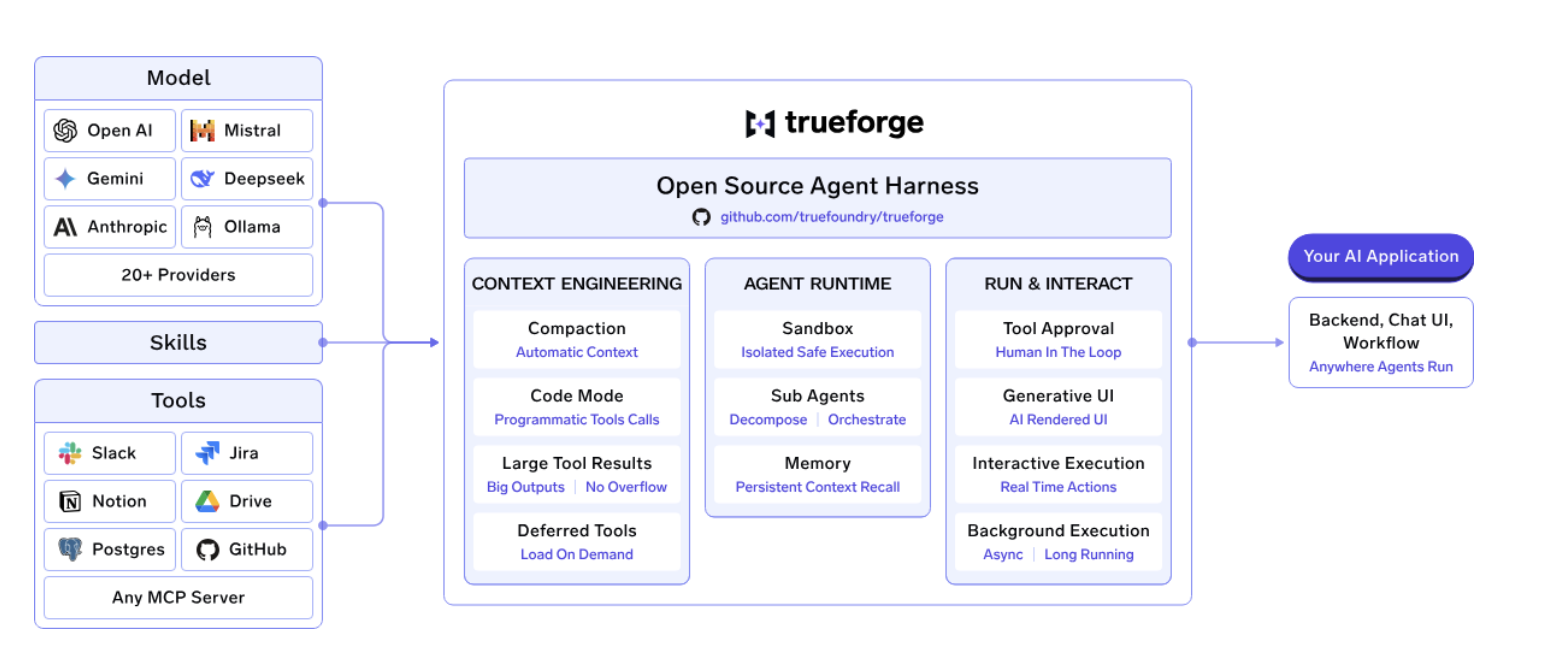
TrueForge ist das unter MIT-Lizenz stehende Harness, das wir im August 2026 als Open Source veröffentlicht haben. Es ist dieselbe Laufzeitumgebung, die auch hinter unserem eigenen AskTFY-Agenten steckt. Wir haben es entwickelt, weil wir die Ergonomie verwalteter Agenten wollten, ohne die Entscheidung über das Modell an einen Anbieter abzugeben – und bisher deckte keine Open-Source-Lösung das gesamte Spektrum ab.
Es besteht aus drei Komponenten statt aus einer. Ein Core-Server steuert die Agent-Harness- Schleife: Streaming, Freigabeprozesse für sensible Aktionen, Delegation an Unteragenten, Kompaktierung und Sitzungen, die Verbindungsabbrüche überstehen. Eine HTTP-API mit TypeScript-SDK (@truefoundry/trueforge-sdk) bietet Ihrem Code alle Funktionen, die auch die Benutzeroberfläche bietet. Zudem gibt es eine Chat-UI mit eigenem SDK (@truefoundry/trueforge-ui), die Sie direkt verwenden, anpassen oder einbetten können. Genau diese dritte Komponente unterscheidet es von den meisten anderen Lösungen auf dieser Liste, die bereits am Terminal enden.
Die Designentscheidung mit dem größten Einfluss auf Ihre Kosten: TrueForge betrachtet die Sandbox als Werkzeug. Sie wird nur dann gestartet, wenn der Agent tatsächlich Code ausführen muss, anstatt die gesamte Sitzung in einen Container zu packen. Ein Server verwaltet viele Agenten gleichzeitig, und Vorgänge, die keinen Code berühren, bleiben kostengünstig. Hinzu kommen verzögertes Laden von Tools, ein Code-Modus für die Verkettung von MCP-Aufrufen innerhalb eines einzigen Sandbox-Skripts, das Auslagern großer Tool-Antworten sowie eine generative Benutzeroberfläche, die mit echten Diagrammen und Formularen antwortet.
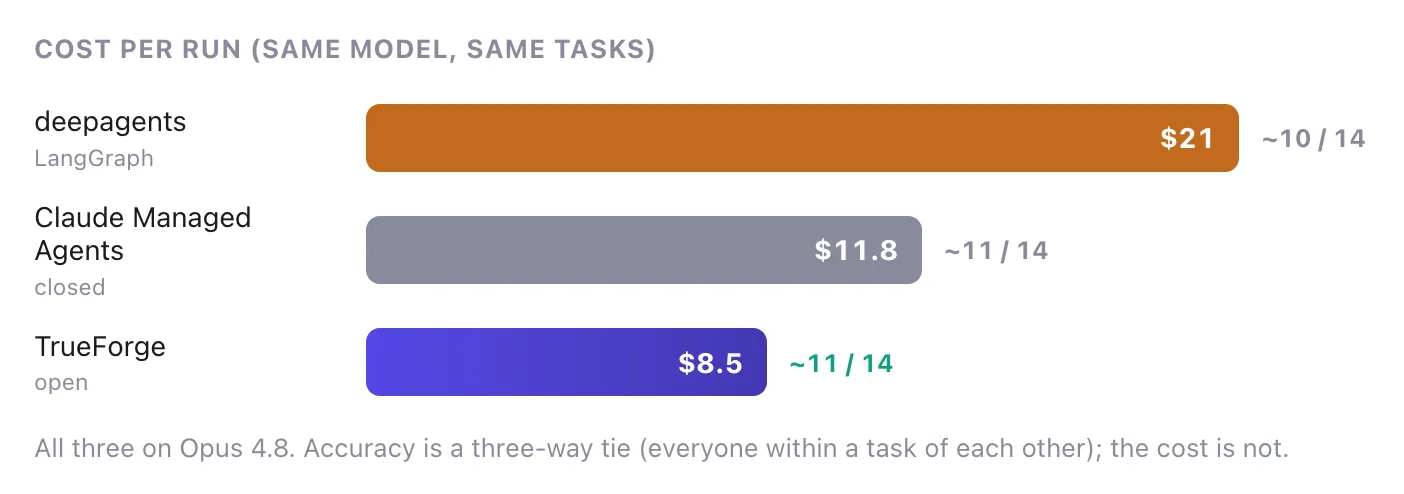
Beim Enterprise-Bench von DevRev – bestehend aus 14 systemübergreifenden Aufgaben über drei MCP-Server hinweg, jeweils mit einer neuen Sitzung und einem blinden LLM-Prüfer – löste TrueForge auf Opus 4.8 dieselben Aufgaben wie die Managed Agents von Claude für 8,5 $ pro Durchlauf gegenüber 11,8 $, bei 3,8 Mio. Token gegenüber 10 Mio.. Der Wechsel zu GLM-5.2 senkte die Kosten auf 2,9 $ pro DurchlaufGegenüber deepagents auf demselben Modell verbrauchte es weniger als ein Viertel der Token.
Es ist MIT-lizenziert, wird von uns gepflegt und offen entwickelt. Die Stärken liegen in diesen drei Bereichen: On-Demand-Sandboxing, ein dokumentierter Pfad von npx bis hin zu Helm mit Postgres, Redis, Replikaten und OIDC sowie veröffentlichte Benchmark-Zahlen, die Sie überprüfen können. Die offensichtliche Schwäche ist das Alter. Es ist das jüngste Projekt hier, daher ist das Ökosystem für Erweiterungen von Drittanbietern im Vergleich zu opencode noch überschaubar.
Ideal für: Teams, die Agenten in ein Produkt integrieren oder für ein Unternehmen betreiben, insbesondere wenn der Prozess in der eigenen Infrastruktur bleiben muss.
In 60 Sekunden ausprobieren: npx @truefoundry/trueforge oder geben Sie uns einen Stern auf GitHub.
opencode ist der am häufigsten mit einem Stern markierte Open-Source-Coding-Agent des Jahres 2026 und zur Standardlösung für Entwickler geworden, die die Erfahrung von Claude Code ohne die Claude-Voraussetzung suchen. MIT-lizenziert, modellunabhängig und verfügbar als Terminal-TUI, Desktop-App für macOS, Windows und Linux sowie als IDE-Erweiterung.
Es ist ein vollständiges Framework, kein reiner Chat-Wrapper. Mit Tool-Loop, LSP-Integration, Sitzungsverwaltung sowie separaten Planungs- und Build-Modi. Nutzen Sie es mit Claude, GPT, Gemini, GLM oder einem lokalen Ollama-Modell oder verwenden Sie OpenCode Zen für eine kuratierte Liste, die bereits von anderen getestet wurde.
Die Community ist der eigentliche Mehrwert. Bei 900 Mitwirkenden existiert die Integration, die Sie benötigen, meist schon, bevor Sie überhaupt daran denken, sie selbst zu bauen.
Wir sagen es ganz offen: Bei der Verbreitung liegt opencode weit vor uns, und zwar mit großem Abstand. Wo es an seine Grenzen stößt, ist die Einbettung. Es ist auf Coding-Workflows ausgelegt und nicht auf allgemeine Business-Agenten; zudem gibt es kein UI-SDK, um es in Ihr eigenes Produkt zu integrieren.
Ideal für: Entwicklerorientierte Programmieraufgaben, bei denen die Breite des Ökosystems und der Feinschliff wichtiger sind als die Einbettbarkeit.
Pi von Earendil Works begründete 2026 die „Minimal-Core“-Schule und wuchs seitdem schneller als alles andere in dieser Kategorie. Das CLI bietet vier Werkzeuge: Read, Write, Edit und Bash. Alles Weitere findet sich in Ebenen, die Sie selbst hinzufügen: TypeScript-Erweiterungen, benutzerdefinierte Tools, eigene Provider, Prompt-Vorlagen, Skills, Themes und Pakete.
Ein Lazy-Loading-Skill-System injiziert Anweisungen nur dann, wenn eine Aufgabe sie erfordert. Das hält den Kontext schlank, ohne auf Komprimierung angewiesen zu sein. Es ist BYOK-fähig, providerunabhängig, unterstützt lokale sowie eigene Modelle und bietet Komprimierung, JSON/RPC-Modi sowie ein SDK.
Pi ist die richtige Wahl, wenn Sie lieber von einem kleinen Kern aus aufbauen, anstatt die vorgefertigten Meinungen anderer zu beschneiden. Wenn Sie eine Komplettlösung „out of the box“ suchen, ist es das falsche Werkzeug – und dafür entschuldigt sich Pi auch nicht.
MIT-lizenziert und gepflegt von Earendil Works. Der Kern ist der kleinste und am besten prüfbare in diesem Vergleich, das TypeScript-Erweiterungsmodell ist ein Vergnügen in der Anwendung und das Design ist auf Token-Effizienz ausgelegt. Zudem ist es ein reines Terminal-Tool ohne einbettbare UI – und „Batteries not included“ ist hier Programm.
Am besten geeignet für: Teams, die ihr eigenes Framework um ihren Workflow herum aufbauen möchten und über die nötigen TypeScript-Kenntnisse verfügen.
OpenHands, früher bekannt als OpenDevin, ist der ausgereifteste autonome Coding-Agent im Open-Source-Bereich. Seine Event-Stream-Architektur durchläuft pro Schleife vier Zustände: Der Agent überlegt, gibt eine Aktion aus, die Umgebung führt sie aus und liefert eine Beobachtung zurück. Jede Sitzung erhält ihre eigene Docker-Sandbox.
Ein ständig aktiver Docker-Container kostet pro Sitzung zwar mehr als eine bedarfsgerechte Bereitstellung, ist aber für den Zweck von OpenHands genau die richtige Entscheidung. Wenn ein Agent unbeaufsichtigt an einem Repository arbeitet, ist Isolation kein unnötiger Overhead, den man wegoptimieren sollte. Sie ist der eigentliche Kernpunkt.
Der Anwendungsbereich ist jedoch begrenzt. Systemübergreifende geschäftliche Aufgaben, die CRM, Tracker und Dokumentenspeicher umfassen, sind nicht sein Spezialgebiet.
Risikokapitalfinanziert mit einer großen Basis an Mitwirkenden. Bietet die fundierteste Erfolgsbilanz für unbeaufsichtigte Repository-Arbeit und das rigoroseste Sandboxing in diesem Vergleich – auf Kosten der Docker-Gebühren pro Sitzung und eines begrenzten Einsatzbereichs außerhalb der reinen Softwareentwicklung.
Am besten geeignet für: Teams, die einen Agenten auf eine Codebasis ansetzen und ihn einfach laufen lassen wollen.
deepagents ist das meinungsstarke Framework von LangChain auf Basis von LangGraph. Während create_agent eine minimale Schleife darstellt, ist deepagents die Komplettlösung: Planungstools, ein virtuelles Dateisystem, Delegation an Sub-Agenten, Kontext-Engineering, persistentes Gedächtnis, Skills, Sandbox-Ausführung und Human-in-the-Loop. Modellunabhängig und produktionsbereit mit Streaming, Persistenz und Checkpointing.
Wenn LangChain bereits Teil Ihres Stacks ist, spart diese Integration bares Geld, da Observability-, Evaluierungs- und Deployment-Tools ohne zusätzlichen Klebecode verbunden sind. Das ist kein kleiner Vorteil, und wir wollen auch nicht so tun, als wäre es einer.
Der Preis dafür ist das Gewicht. Die gesamte mitgelieferte Maschinerie läuft bei jedem Schritt mit, und deepagents liest den angesammelten Kontext bei jedem Durchgang neu ein, anstatt ihn zu komprimieren. Beim Enterprise-Bench mit Opus 4.8 verbrauchte es 16,5 Mio. Token bei 21 $ pro Durchlauf bei etwa 10 von 14 Aufgaben die teuerste Konfiguration, die wir gemessen haben. Kostenloser Download, aber teuer im Betrieb.
Wird von LangChain gewartet. Das Ökosystem ist hier am umfangreichsten und die Dokumentation ist exzellent. Der Token-Verbrauch ist jedoch der höchste aller von uns getesteten Lösungen.
Am besten geeignet für: Teams, bei denen LangGraph bereits produktiv im Einsatz ist.
Die Lizenz kostet nichts. Die Kosten entstehen durch den Betrieb, und genau das ist der Fehler, den wir am häufigsten sehen.
Über die drei von uns bei identischen Aufgaben getesteten Frameworks hinweg war die Genauigkeit gleichauf, da das Modell die Obergrenze des Machbaren vorgibt. Das Framework bestimmt den Preis, um dorthin zu gelangen, und die Unterschiede waren groß. Gleiches Opus 4.8, gleiche Aufgaben: 8,50 $ pro Durchlauf bei einem Framework, 21 $ bei einem anderen. Der Unterschied liegt darin, wie viel Overhead bei jedem Schritt mitläuft, wie viele Tool-Aufrufe die Schleife plant und ob das Framework den Verlauf komprimiert oder erneut abspielt.
Vergleichen Sie also Tokens pro Durchlauf, nicht Sterne pro Repo. Die Methodik finden Sie in unserem Enterprise-Bench-Bericht.
Die anderen Kosten sind operativer Natur und fallen erst später an. Self-Hosting ist übersichtlich, solange man nur wenige Agenten betreibt. Sobald es mehr werden, sind Modell- und MCP-Schlüssel über drei Teams verstreut, niemand kann die Ausgaben begrenzen, und die Beantwortung einer einzigen Audit-Frage bedeutet, Protokolle von jedem einzelnen Agenten zusammenzusuchen. Genau hier zahlt sich eine Governance-Ebene aus. TrueFoundrys Agent Harness führt dieselbe Open-Source-TrueForge-Runtime mit dem vorgeschalteten AI Gateway aus: über 1.000 LLMs hinter einer OpenAI-kompatiblen API bei etwa 3–4 ms zusätzlicher Latenz und über 350 RPS auf einer einzelnen vCPU, plus RBAC, Budgets, Guardrails und einheitliche Traces. Da das Framework darunter dasselbe ist, ist ein Wechsel lediglich eine Deployment-Änderung und keine Migration.
F: Was ist das beste Open-Source-Agent-Framework?
A: Für Teams, die Agenten in ein Produkt integrieren oder unternehmensweit einsetzen, ist TrueForge die stärkste Option, da es unter der MIT-Lizenz steht, modellneutral ist und neben der Agenten-Schleife eine HTTP-API, ein TypeScript-SDK sowie eine einbettbare UI mitliefert. Für Coding-Workflows von Entwicklern ist opencode die bessere Wahl, da dessen Ökosystem und Terminal-Erfahrung kaum zu übertreffen sind.
F: Was ist ein Agent-Framework?
A: Ein Agent-Harness ist die Laufzeitumgebung um ein LLM herum, die es in einen zuverlässigen, dauerhaft aktiven Agenten verwandelt. Es verwaltet die Ausführungsschleife, Tool-Aufrufe, Kontext, Sandboxing, Freigabeprozesse und den Sitzungsstatus, da ein Modell für sich genommen zwar schlussfolgern, aber weder handeln, ausführen noch sich über verschiedene Interaktionen hinweg etwas merken kann.
Q: Ist ein Open-Source-Agent-Harness produktionsreif?
A: Einige sind es. TrueForge, opencode, OpenHands und deepagents werden heute bereits produktiv eingesetzt. Die Einsatzbereitschaft ist nicht das Unterscheidungsmerkmal, sondern der Funktionsumfang. Manche sind Terminal-Tools für einzelne Entwickler; andere bieten die API, Sitzungspersistenz und Multi-User-Bereitstellungsoptionen, die für den Unternehmenseinsatz erforderlich sind.
Q: Welche Open-Source-Agent-Harnesses unterstützen lokale Modelle?
A: Alle fünf sind modellagnostisch. opencode bietet den direktesten Weg über Ollama für die lokale Entwicklung. TrueForge greift über jeden OpenAI-kompatiblen Endpunkt auf lokale Modelle zu, einschließlich vLLM und Ollama, sodass eine isolierte (Air-Gapped) Bereitstellung genauso funktioniert wie eine in der Cloud.
Q: Kann ich einen Agent-Harness in meiner eigenen VPC oder On-Premise betreiben?
A: Ja, und das ist der Hauptgrund, sich hier für Open Source zu entscheiden. TrueForge lässt sich lokal über einen einzigen npx Befehl ausführen oder für Team-Deployments mittels Docker Compose und Helm mit Postgres, Redis, Replikaten und OIDC-Anmeldung bereitstellen. Die verwaltete Version von TrueFoundry lässt sich ebenfalls selbst gehostet, On-Premise, isoliert oder hybrid betreiben, sodass keine Daten Ihre Umgebung verlassen.
Q: Wie verwalte ich Modelle und MCP-Server über viele Agenten hinweg?
A: Über eine Gateway-Schicht. Das AI Gateway von TrueFoundry stellt über 1.000 LLMs hinter einer einzigen OpenAI-kompatiblen API bereit – inklusive RBAC, Budgets, Guardrails und Credential-Rotation. Zusätzlich bietet es ein MCP-Gateway für die Zugriffskontrolle auf Tool-Ebene sowie OpenTelemetry-Traces für Grafana, Datadog oder Prometheus.
Welches Open-Source-Agent-Harness das beste für Ihr Team ist, hängt weit weniger vom Funktionsumfang ab als von dem, was Sie bauen. Ein Terminal-Tool für Entwickler? opencode und Pi sind beide exzellent – hier entscheidet der persönliche Geschmack. Eine Abhängigkeit, die eine Architekturprüfung bestehen muss? Die Lizenz und ein prüfbarer Kern sind wichtiger als die Anzahl der Features. Ein Produkt oder ein Agent für ein ganzes Unternehmen? Dann benötigen Sie eine API, ein SDK und einen echten Deployment-Pfad – und die Auswahl wird schnell sehr klein.
Genau für diesen letzten Fall haben wir TrueForge entwickelt. Es ist MIT-lizenziert, lässt jedes Modell auf Ihrer eigenen Infrastruktur laufen und npx @truefoundry/trueforge bringt es in etwa einer Minute zum Laufen. Das Repository finden Sie auf GitHub.
TrueFoundry AI Gateway bietet eine Latenz von ~3—4 ms, verarbeitet mehr als 350 RPS auf einer vCPU, skaliert problemlos horizontal und ist produktionsbereit, während LiteLM unter einer hohen Latenz leidet, mit moderaten RPS zu kämpfen hat, keine integrierte Skalierung hat und sich am besten für leichte Workloads oder Prototyp-Workloads eignet.





Die neuesten Nachrichten, Artikel und Ressourcen werden in Ihren Posteingang gesendet
.png)
.png)
.png)

.png)
.png)
.png)
.png)
.png)
.png)
.png)
.png)


