


.png)
October 15, 2026
|
Lesedauer: 5 Minuten


Erhalten Sie sofortigen Zugriff auf eine TrueFoundry-Live-Umgebung. Stellen Sie Modelle bereit, leiten Sie den LLM-Verkehr weiter und erkunden Sie die gesamte Plattform — Ihre Sandbox ist in Sekundenschnelle einsatzbereit, ohne dass eine Kreditkarte erforderlich ist.



Published: October 6, 2026
Unglaublich schnelle Methode zum Erstellen, Verfolgen und Bereitstellen Ihrer Modelle!
Eine Studie der NANDA-Initiative des MIT aus dem Jahr 2025 ergab, dass 95 % der generativen KI-Pilotprojekte keinen messbaren ROI liefern. Die Modellqualität ist selten die Ursache. Das häufigere Muster: Die während der Prototyping-Phase gewählte KI-Agenten-Plattform ist nicht für die Governance-, Sicherheits- und Betriebsanforderungen ausgelegt, die im produktiven Einsatz entstehen, sobald ein echter Kunde am anderen Ende steht.
Die Wahl der richtigen KI-Agenten-Plattform im Jahr 2026 bedeutet, sich gleichzeitig für drei Dinge zu entscheiden: Die Umgebung, in der benutzerdefinierte Agenten erstellt werden. Die Infrastruktur, die deren Handlungsspielraum regelt. Und die Verantwortlichkeitsebene, die das Compliance-Team zufriedenstellt, wenn ein Auditor fragt, worauf ein KI-System zugegriffen hat und warum.
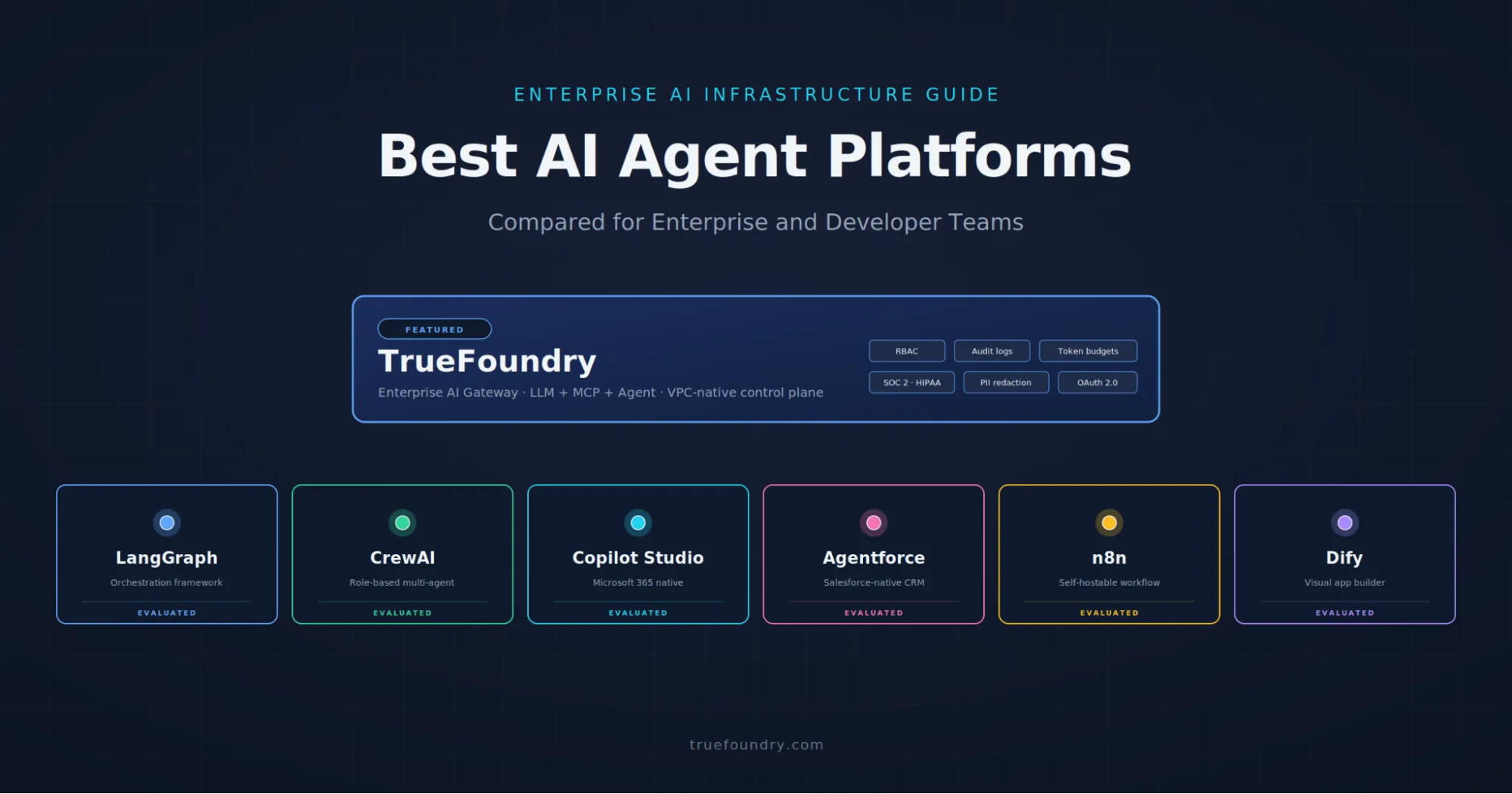
Dieser Leitfaden vergleicht die führenden KI-Agenten-Plattformen anhand der Aspekte, die auf Unternehmensebene entscheidend sind. Die Liste beginnt mit TrueFoundry – der Plattform, die genau die Lücken auf Infrastruktur- und Governance-Ebene schließt, die andere offen lassen – und führt von dort aus durch das Marktumfeld.
Die Grenze zwischen KI-Agenten-Tools und KI-Agenten-Plattformen beeinflusst Beschaffungsentscheidungen stärker als jeder Funktionsvergleich.
Ein KI-Agenten-Tool ist ein spezialisiertes Instrument. Es ist ein Framework für die Agentenentwicklung, ein Workflow-Automatisierungsproduktoder ein visueller Workflow-Builder, um Modelle mit spezifischen Aufgaben zu verknüpfen. Jedes davon löst ein definiertes Problem in einem eng begrenzten Bereich.
Eine KI-Agenten-Plattform agiert auf einer anderen Ebene. Sie ist die umfassende Umgebung, in der Unternehmen Agentenlösungen über Teams, Modelle und Anwendungsfälle hinweg auf einer gemeinsamen Infrastruktur-Basis erstellen, bereitstellen, steuern und skalieren.
Die besten KI-Agenten-Plattformen kombinieren Funktionen zur Agentenentwicklung mit den für den produktiven Einsatz erforderlichen Betriebskontrollen. Zugriffsmanagement, Observability, Kosten-Governance und Compliance-Nachweise müssen einheitlich für jede darauf laufende Workload gelten.
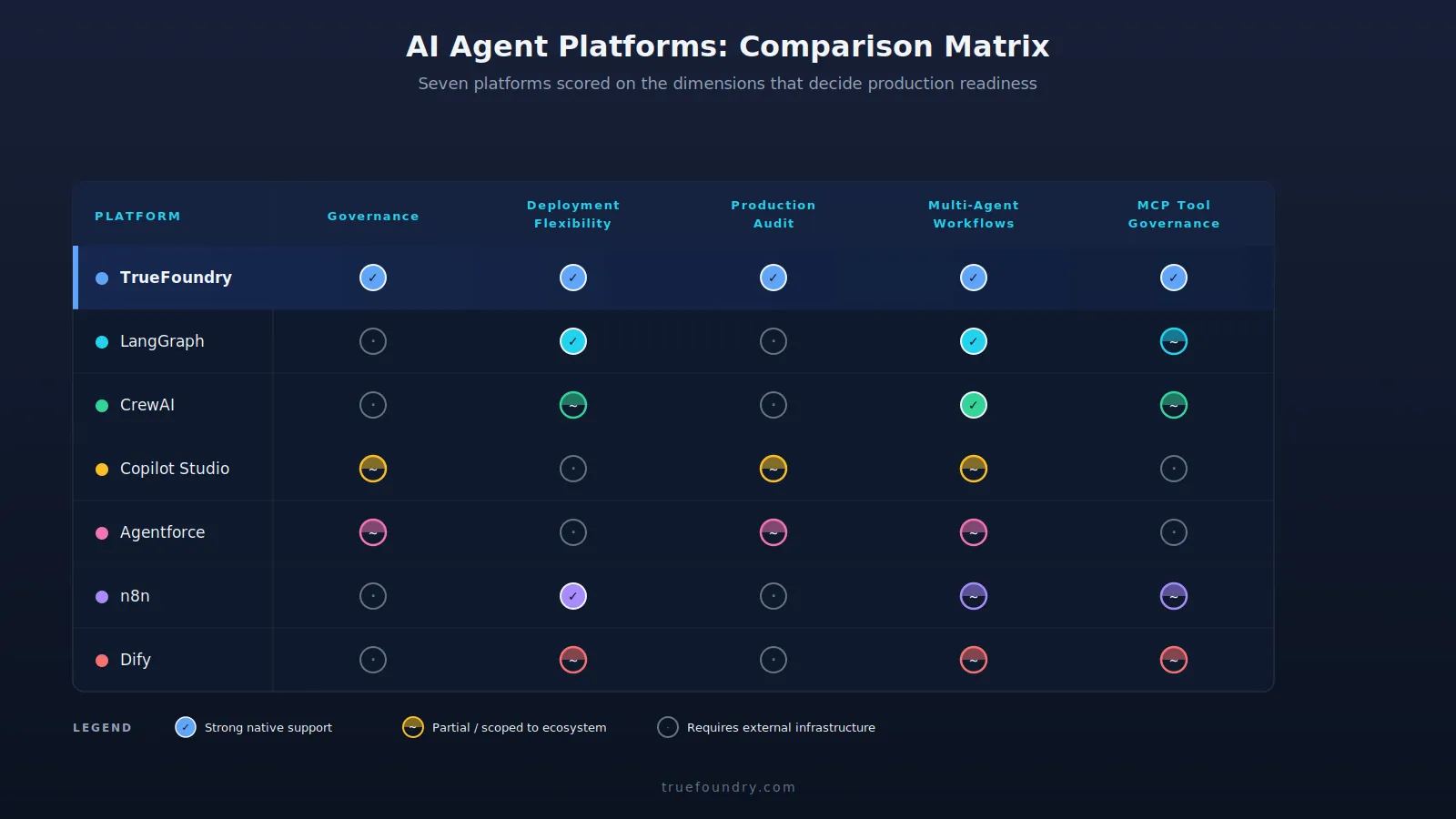
Die Wahl der besten KI-Agenten-Plattform hängt von Ihrer Teamgröße, der technischen Tiefe, den Governance-Anforderungen und dem Bereitstellungsmodell ab. Hier ist ein kurzer Vergleich:
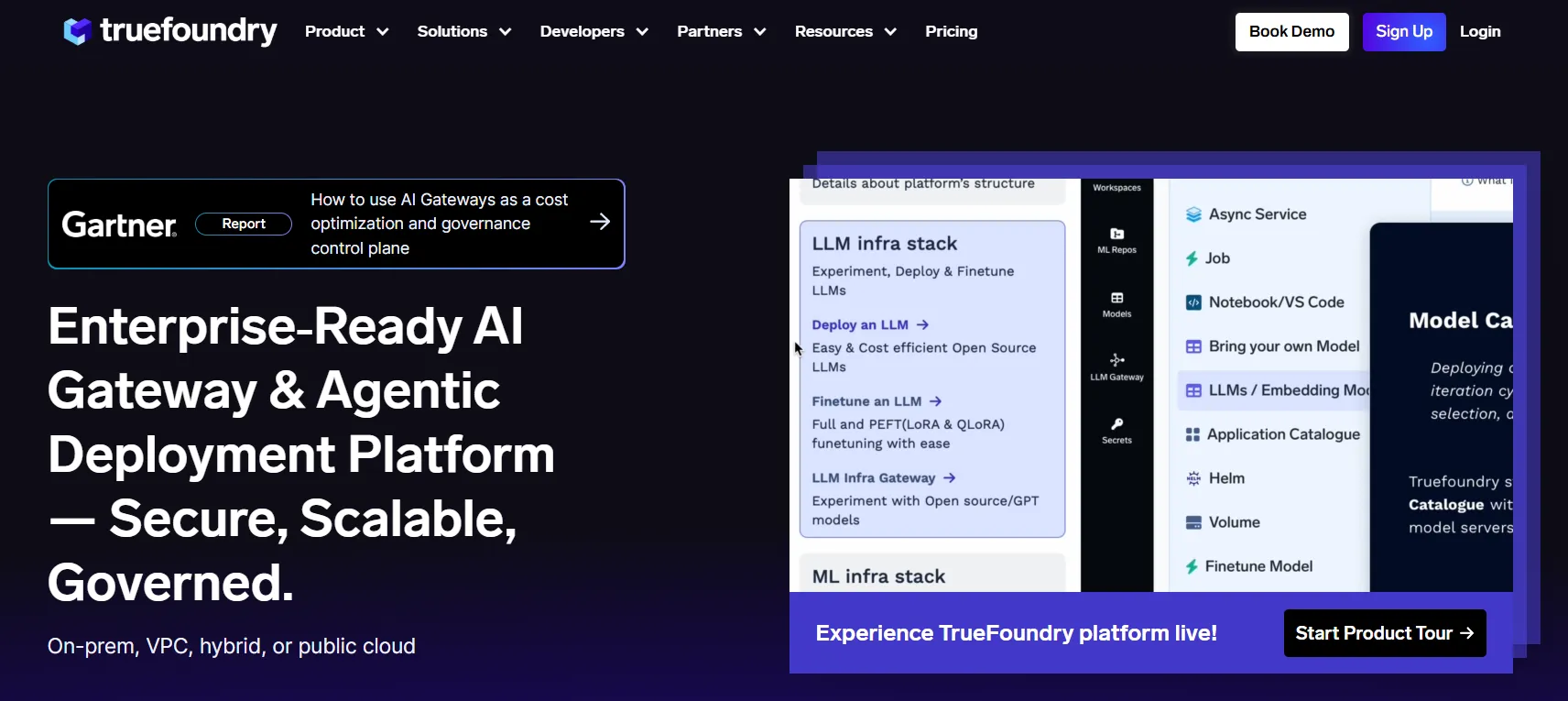
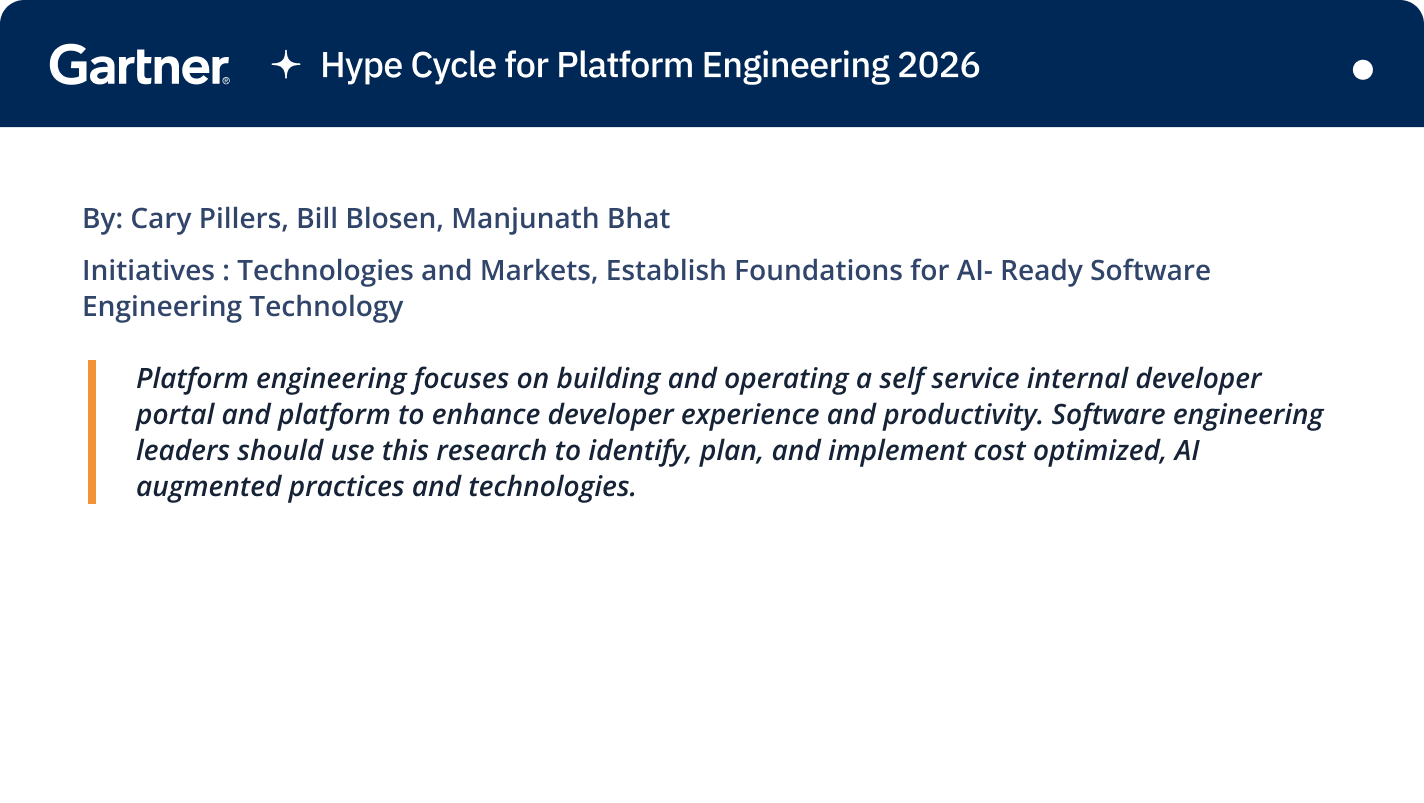
TrueFoundry ist eine KI-Agenten-Plattform auf Enterprise-Niveau sowie ein KI-Gateway , das im Gartner Market Guide 2025 für KI-Gateways anerkannt wurde. Es steuert jeden KI-Agenten, jeden Modellaufruf und jede Tool-Verbindung über eine zentrale, VPC-native Steuerungsebene. Die Plattform wird vollständig innerhalb Ihres eigenen AWS-, GCP- oder Azure-Kontos bereitgestellt, wodurch alle sensiblen Daten und Inferenz-Datenströme innerhalb Ihrer Netzwerkgrenzen bleiben. All diese Funktionen machen es zu einer der besten KI-Agenten-Plattformen.
TrueFoundry bietet vier Preisstufen an:
TrueFoundry wurde für technische Enterprise-Teams und Platform-Engineering-Gruppen entwickelt, die eine KI-Agenten-Governance auf Infrastrukturebene über Modelle, Agenten und Datenquellen hinweg benötigen. Es ist eine der besten KI-Agenten-Plattformen für Großunternehmen in regulierten Branchen, Multi-Cloud-Umgebungen und Organisationen, bei denen Datensouveränität und die vollständige Kontrolle über Compliance-Nachweise nicht verhandelbar sind.
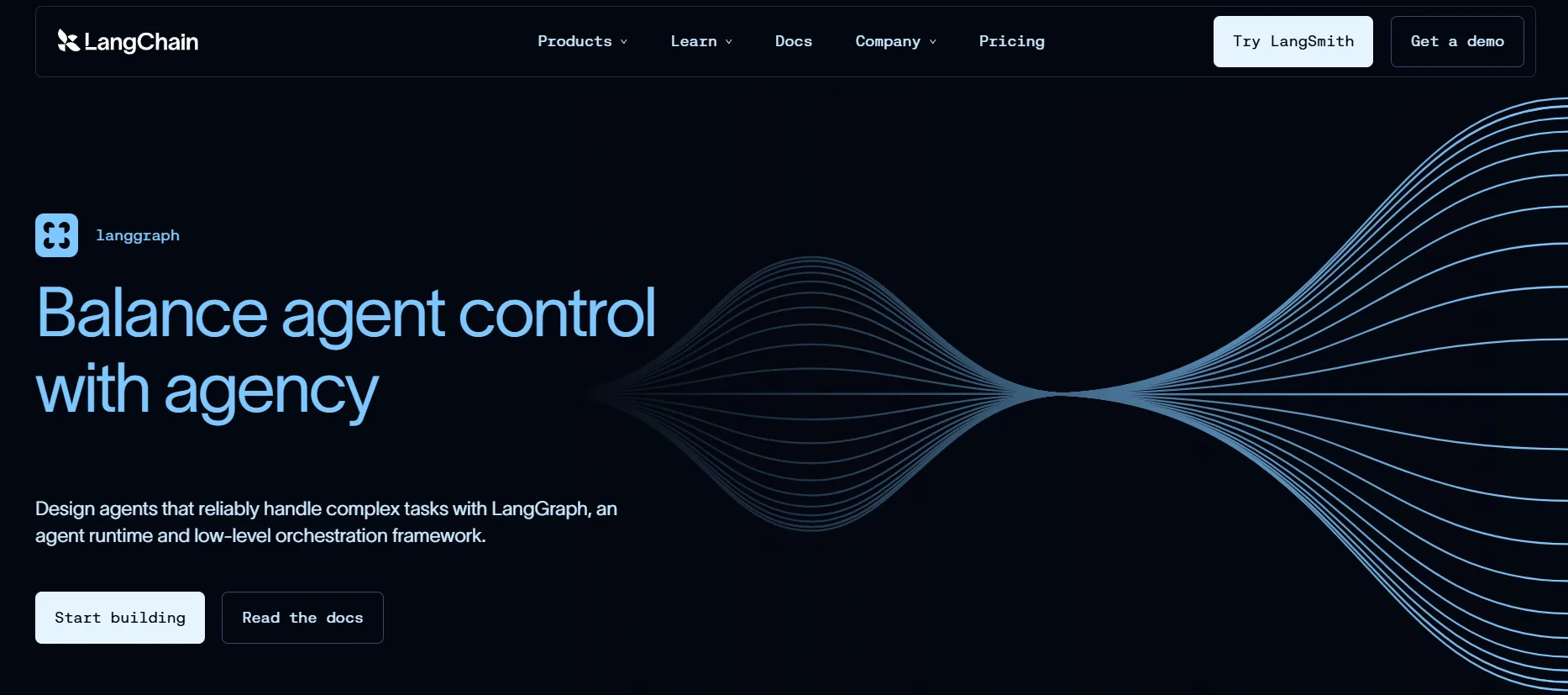
LangGraph ist ein graphbasiertes Orchestrierungs-Framework für den Aufbau zustandsorientierter, mehrstufiger KI-Agenten-Workflows. Es bietet technischen Teams deterministische Kontrolle über jeden Ausführungsübergang und jeden bedingten Verzweigungspunkt bei komplexen Aufgaben.
LangGraph ist ein leistungsstarkes Framework für den Bau komplexer Agenten, bietet jedoch von Haus aus keine Zugriffskontrollen, Kostenlimits oder Compliance-Audit-Trails. Die AI-Gateway-Plattform von TrueFoundry fügt die Governance-Ebene über LangGraph hinzu und wendet RBAC, Token-Budgets und unveränderliche Protokolle auf jeden mit LangGraph erstellten KI-Agenten-Workflow an.
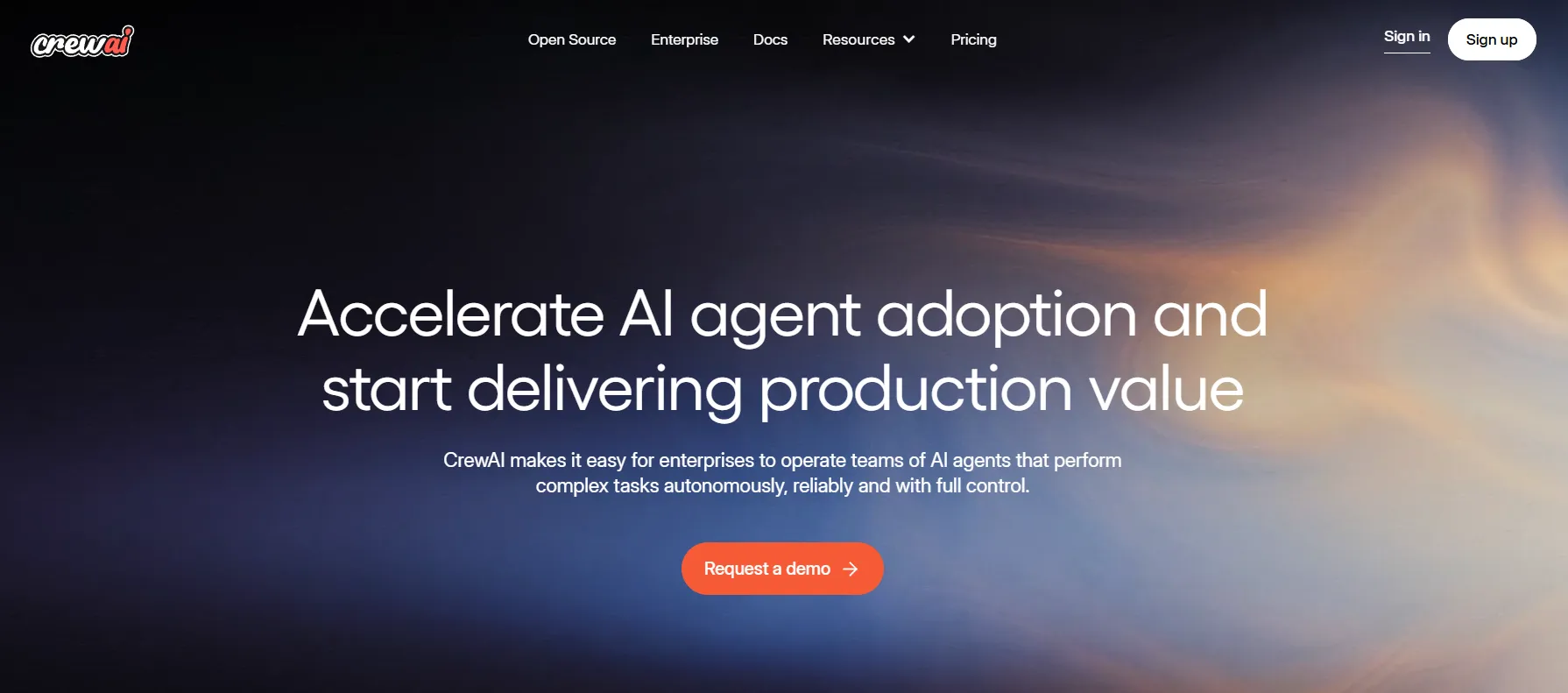
CrewAI ist ein rollenbasiertes Framework für den Agentenbau, das Multi-Agenten-Systeme als Teams mit definierten Rollen, Zielen und KI-Agenten-Toolsets modelliert. Teams berichten häufig, dass sie damit die Erstellung von Agenten für Standard-Geschäftsprozesse von Tagen auf Stunden verkürzen können.
CrewAI beschleunigt die Entwicklung von KI-Agenten für kleine Teams, bietet jedoch keine nativen Zugriffskontrollen, Kostenzuordnungen oder Audit-Protokolle für Unternehmensplattformen. TrueFoundry steuert jeden mit CrewAI erstellten Agenten über die Gateway-Ebene und wendet dieselben RBAC-Richtlinien, Kostenlimits und Compliance-Protokolle an, die große Unternehmen benötigen, ohne den Agenten-Code zu verändern.
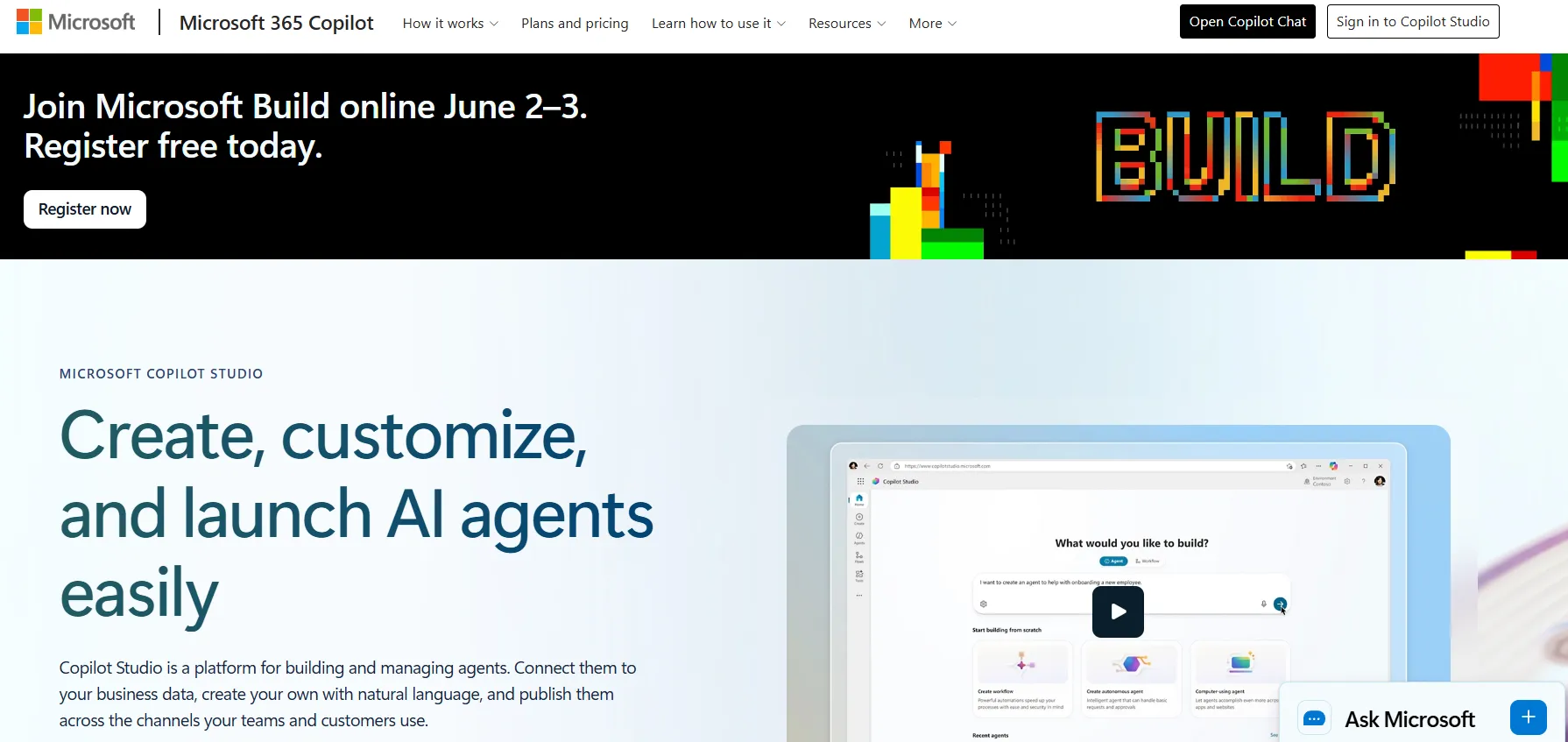
Microsoft Copilot Studio ist der Low-Code-Builder für KI-Agenten innerhalb des Microsoft 365-Ökosystems. Er bietet native Verbindungen zu SharePoint, Teams, Dynamics und dem Azure OpenAI Service. Geschäftsteams und Anwender können eigene Agenten ohne tiefgreifende technische Expertise erstellen.
Microsoft Copilot Studio steuert benutzerdefinierte Agenten nur innerhalb der Microsoft-Umgebung. Das KI-Gateway von TrueFoundry erweitert die Governance einheitlich auf Microsoft, Google Cloud, AWS und selbst gehostete Modelle. Damit ist TrueFoundry die richtige Wahl für große Unternehmen, die KI-Agenten-Plattformen in gemischten Cloud-Umgebungen betreiben.
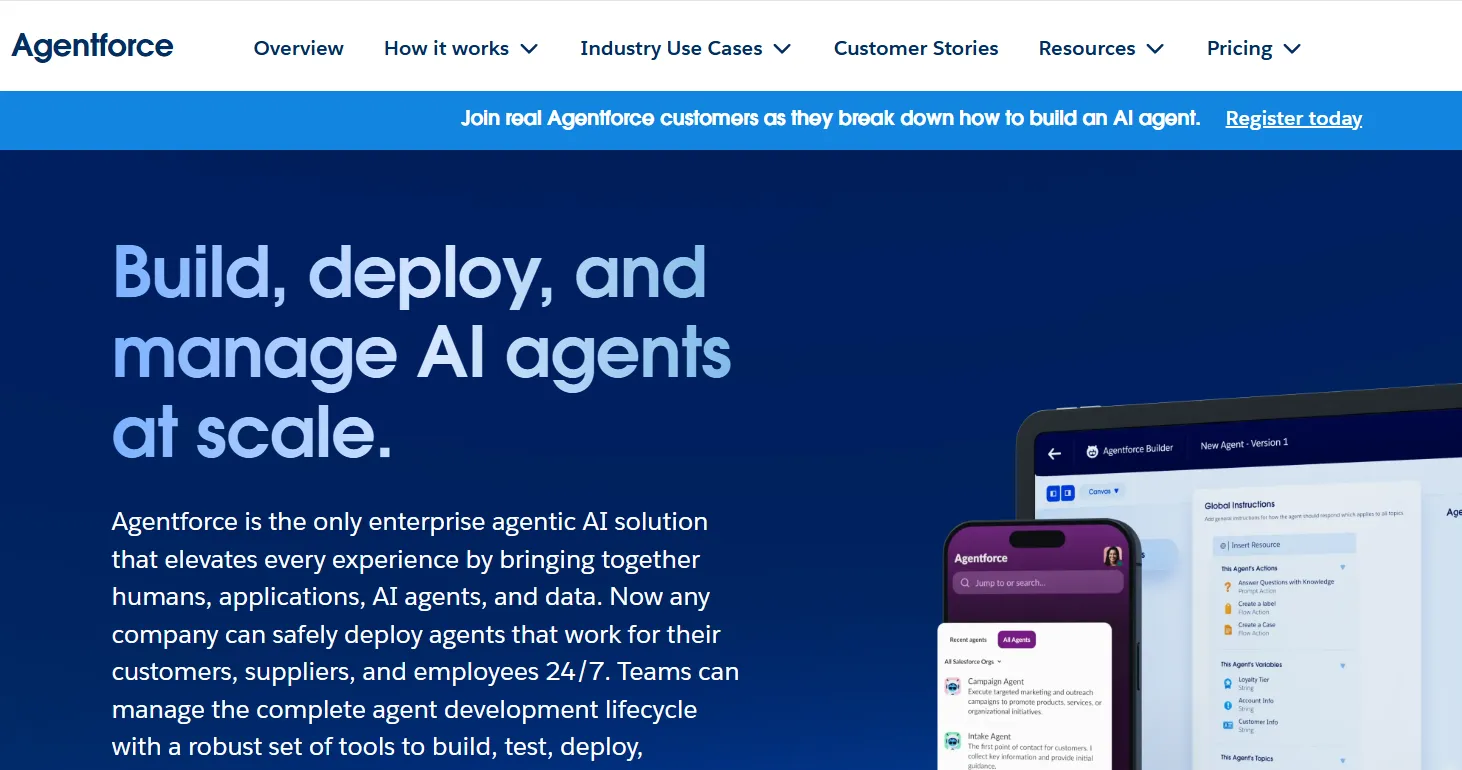
Salesforce Agentforce integriert KI-Agenten-Funktionen direkt in Salesforce Data Cloud, Sales Cloud und Service Cloud. Vertriebs-, Kundenservice- und Support-Teams profitieren von Agenten, die auf Live-CRM-Daten basieren, ohne dass benutzerdefinierte Integrationen erforderlich sind.
Agentforce ist innerhalb von Salesforce hervorragend, kann jedoch keine KI-Agenten-Workloads steuern, die über die Salesforce-Grenzen hinausgehen. Das Agent-Gateway von TrueFoundry steuert Agenten über CRM, ERP, interne APIs und externe Tools hinweg von einer zentralen Steuerungsebene aus. Dies bietet großen Unternehmen die vollständige Kontrolle, die KI-Agenten-Plattformen mit Salesforce-Fokus nicht leisten können.
n8n ist ein visueller Workflow-Builder und eine Plattform zur Workflow-Automatisierung mit nativen KI-Agenten-Funktionen. Es unterstützt über 400 Integrationen und basiert auf einer selbst hostbaren Architektur. Es ist ein flexibles KI-Agenten-Tool für technische Teams, die die Kontrolle über ihre Infrastruktur und den Umgang mit sensiblen Daten behalten müssen.
n8n ist ein starkes Tool zur Workflow-Automatisierung für technische Teams, bietet jedoch nicht die Governance, RBAC und Audit-Protokollierung für KI-Agenten, die große Unternehmen benötigen. Die KI-Gateway-Plattform von TrueFoundry ergänzt n8n-Workflows um identitätsbasierte Zugriffskontrollen und Compliance-Protokollierung, ohne die bereits erstellte Automatisierungslogik der Teams zu verändern.
Dify ist ein Open-Source-Editor für die visuelle Erstellung von KI-Agenten-Anwendungen mit RAG-Pipelines, Funktionsaufrufen und Multi-LLM-Unterstützung. Es ist eine der zugänglichsten KI-Agenten-Plattformen für kleine Unternehmen, die die Entwicklung von KI-Agenten ohne hohe Infrastrukturinvestitionen erkunden möchten.
Dify eignet sich gut für die schnelle Entwicklung und das Prototyping von KI-Agenten, wurde jedoch nicht für die Governance-Anforderungen großer Unternehmen konzipiert. TrueFoundry bietet die Produktionsinfrastruktur, die Dify-KI-Agenten benötigen, um in einem unternehmensweiten Maßstab betrieben werden zu können.
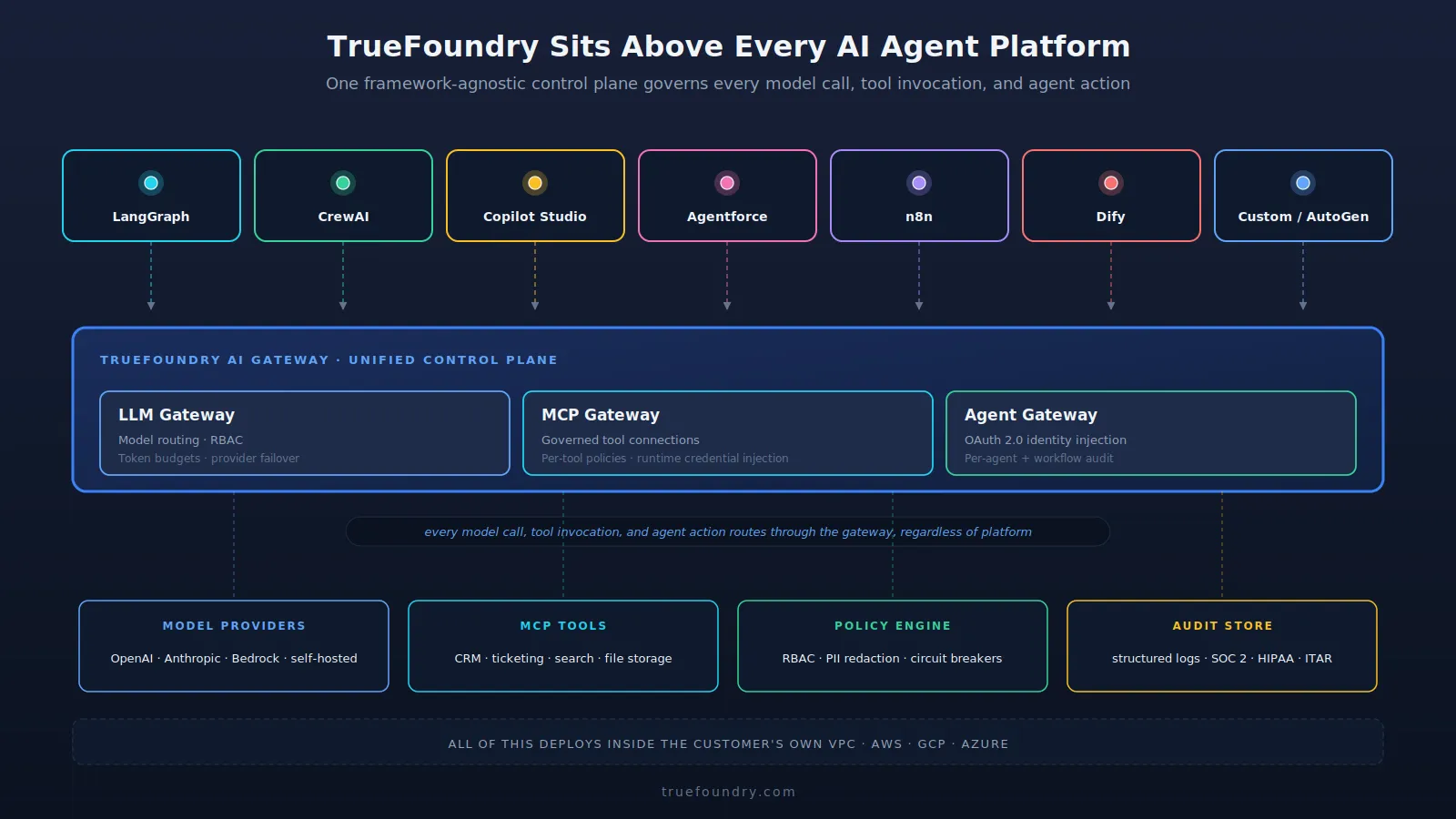
TrueFoundry ist kein konkurrierender Entwickler von KI-Agenten. Es ist eine der besten KI-Agenten-Plattformen, die über allen anderen KI-Agenten-Plattformen steht und steuert, was Agenten tun können, worauf sie zugreifen und welche Kosten ihr Betrieb verursacht.
Die Plattform ist framework-agnostisch. Ein Unternehmen, das in einem Team LangGraph, in einem anderen CrewAI, an anderer Stelle n8n und für einen vierten Anwendungsfall eine Eigenentwicklung einsetzt, erhält für alle vier Bereiche einheitlich dieselbe Governance-Ebene.
Die vier Säulen der Governance funktionieren wie folgt:
Buchen Sie eine Demo mit TrueFoundry, um zu sehen, wie das Gateway über Ihrem bestehenden Stack thront und überall eine konsistente Governance gewährleistet.
TrueFoundry AI Gateway bietet eine Latenz von ~3—4 ms, verarbeitet mehr als 350 RPS auf einer vCPU, skaliert problemlos horizontal und ist produktionsbereit, während LiteLM unter einer hohen Latenz leidet, mit moderaten RPS zu kämpfen hat, keine integrierte Skalierung hat und sich am besten für leichte Workloads oder Prototyp-Workloads eignet.





Die neuesten Nachrichten, Artikel und Ressourcen werden in Ihren Posteingang gesendet
.png)
.webp)
.png)
.png)
.png)

.png)
.png)
.png)
.png)


