


.webp)
September 14, 2026
|
5 minutos de lectura


Obtenga acceso instantáneo a un entorno TrueFoundry en vivo. Implemente modelos, dirija el tráfico de LLM y explore la plataforma completa: su sandbox estará listo en segundos, sin necesidad de tarjeta de crédito.


Published: August 3, 2026
¡Una forma increíblemente rápida de crear, rastrear e implementar sus modelos!
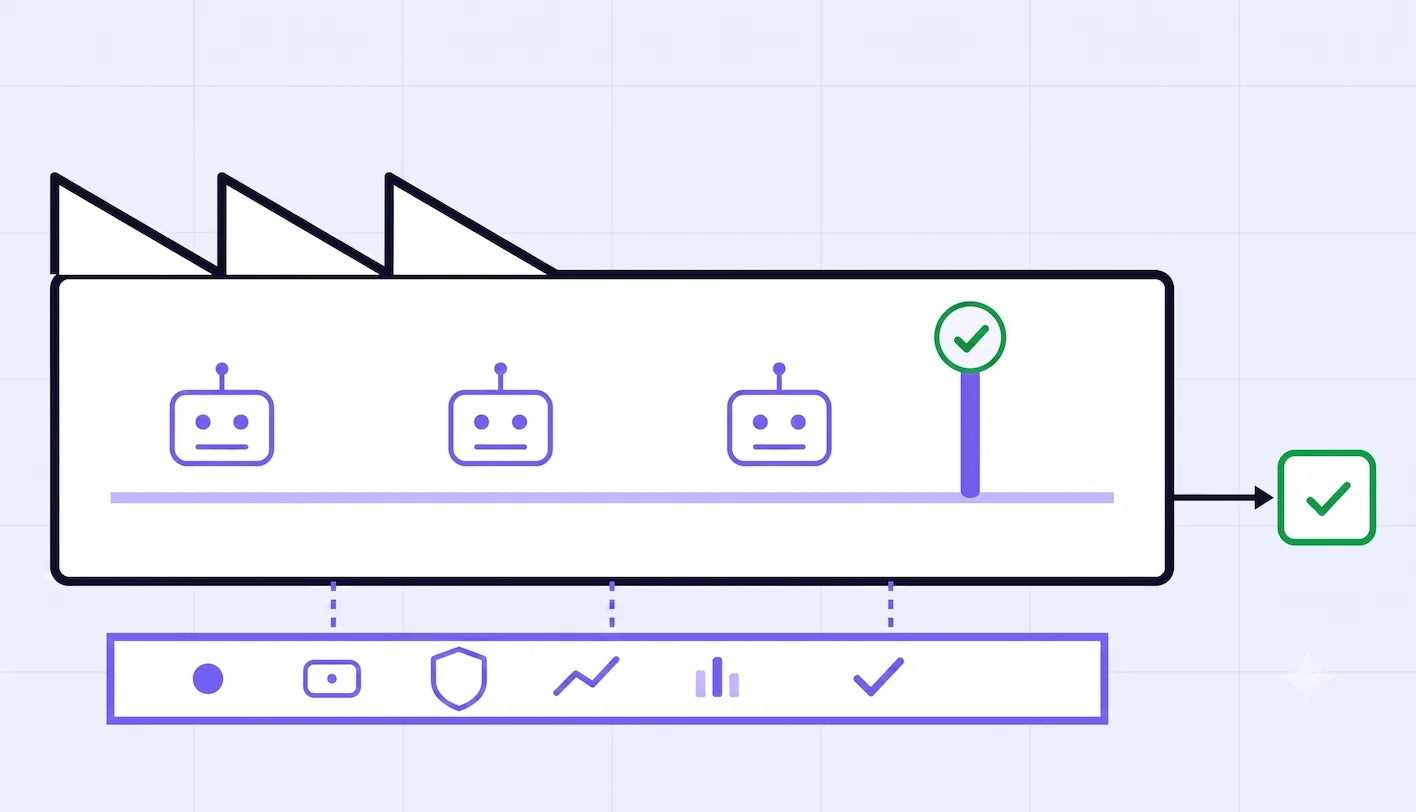
The term of the season in software delivery is industrial: the software factory — increasingly the agentic software factory or AI software factory — a system that takes signals in one end (bug reports, specs, customer feedback, business requirements) and produces deployed, verified software out the other, with fleets of AI coding agents doing the work inside a feedback loop while engineers define intent and review results. In the first half of 2026, several organizations converged on an agent-native revival of the metaphor: BCG Platinion used “Agentic Software Factory” in March, and Factory.ai published its “Factory 2.0” manifesto in June — an interconnected, end-to-end system whose incremental units are agents, with the line we quote once: "This system will be built by engineers, and in turn will build their software" (Factory.ai, June 2026). BCG Platinion declared the "Agentic Software Factory era" open, reporting that some organizations operating this model describe productivity gains of 3–5× — a reported practitioner estimate, not an independent category benchmark. Spotify's official engineering account reports more than 1,500 agent-generated pull requests merged into production, with 60–90% time savings for the migration workflows studied. And OpenAI reported building and operating an internal beta from an empty repository with three engineers steering coding agents and no manually written code — the roughly one million lines including application code, tests, CI configuration, documentation, observability, and internal tooling (BCG Platinion, 2026). The AI Engineer World's Fair put "enterprise software factories" among its five defining trends (AI Daily Brief), and practitioner definitional guides are now appearing weekly (murraycole.com; Plannotator). Plenty of those guides explain the assembly line. This one covers the part a manufacturing engineer would check first and the excitement mostly skips: the utilities. A physical factory is only as good as its power, plumbing, metering, and safety systems; an agentic software factory is only as good as its model supply, credential handling, quality control, and spend metering — the layer that isn't the agents and isn't the pipeline, and that this guide names, maps, and gives you a checklist for. As with all our young-term references, we will keep this page updated as the vocabulary and the practice evolve.
A software factory treats software delivery as a production system rather than a craft workshop: standardized inputs, a defined assembly path, intermediate quality controls, and repeatable, evidence-backed outputs. In an agentic software factory, coding agents perform a larger share of planning, implementation, testing, and review, while engineers define intent, establish acceptance criteria, govern access, and review evidence. The pattern can automate whole stations, assist humans within stations, or execute bounded subtasks. It is broader than a coding assistant because it includes the production system around the agent, and broader than CI/CD because it governs work performed inside the delivery pipeline — not only the transitions between stages.
The term has a genuinely long pedigree, and tracing it explains what is and isn't new. The software-factory idea reaches back at least to Robert W. Bemer's 1968 proposal and System Development Corporation's published 1975 factory experiment — disciplined, repeatable software production on integrated tooling. Microsoft revived and productized a related model-driven formulation in its 2004 Software Factories book — templates, reference implementations, and guidance that automate accepted patterns — while later enterprise programs such as BMW's applied the name to standardized platforms, processes, and shared delivery infrastructure supporting more than 12,000 developers and roughly 140,000 CI jobs daily. The 2026 development is not the invention of the software factory, but a renewed agent-native interpretation in which autonomous coding systems perform a larger share of the work inside the production system — changing throughput, review economics, failure modes, identity requirements, and the relationship between production controls and autonomous execution.
Three boundaries locate the term among its neighbors. Versus a coding agent: the agent is a worker; the factory is the production system the worker operates in — inputs, stations, QC, evidence — and a brilliant agent in an undefined process is a craftsman, not a factory, which is one reason reported outcomes with similar agents vary so widely across organizations. Versus loop engineering: loop engineering — the discipline our loop-engineering guide covers — is the craft of one autonomous verify-and-retry cycle: its triggers, checks, budgets, and stopping conditions. The factory is loops at industrial organization: many loops, staffed stations, shared QC, one flow from signal to ship — loop engineering is to the software factory what machine design is to the plant. Versus platform engineering: the platform team's golden paths and self-service infrastructure standardized the environment humans worked in; the factory inherits all of it and intensifies a question platform engineering has long managed for service accounts, CI bots, and machine identities — what happens when the entity using the golden path is an autonomous agent with credentials, a 24/7 duty cycle, higher variability, and no instinct for when something feels wrong. That question is the hinge into this guide's second half, because its answer is not more agents and not a better pipeline. It is utilities.
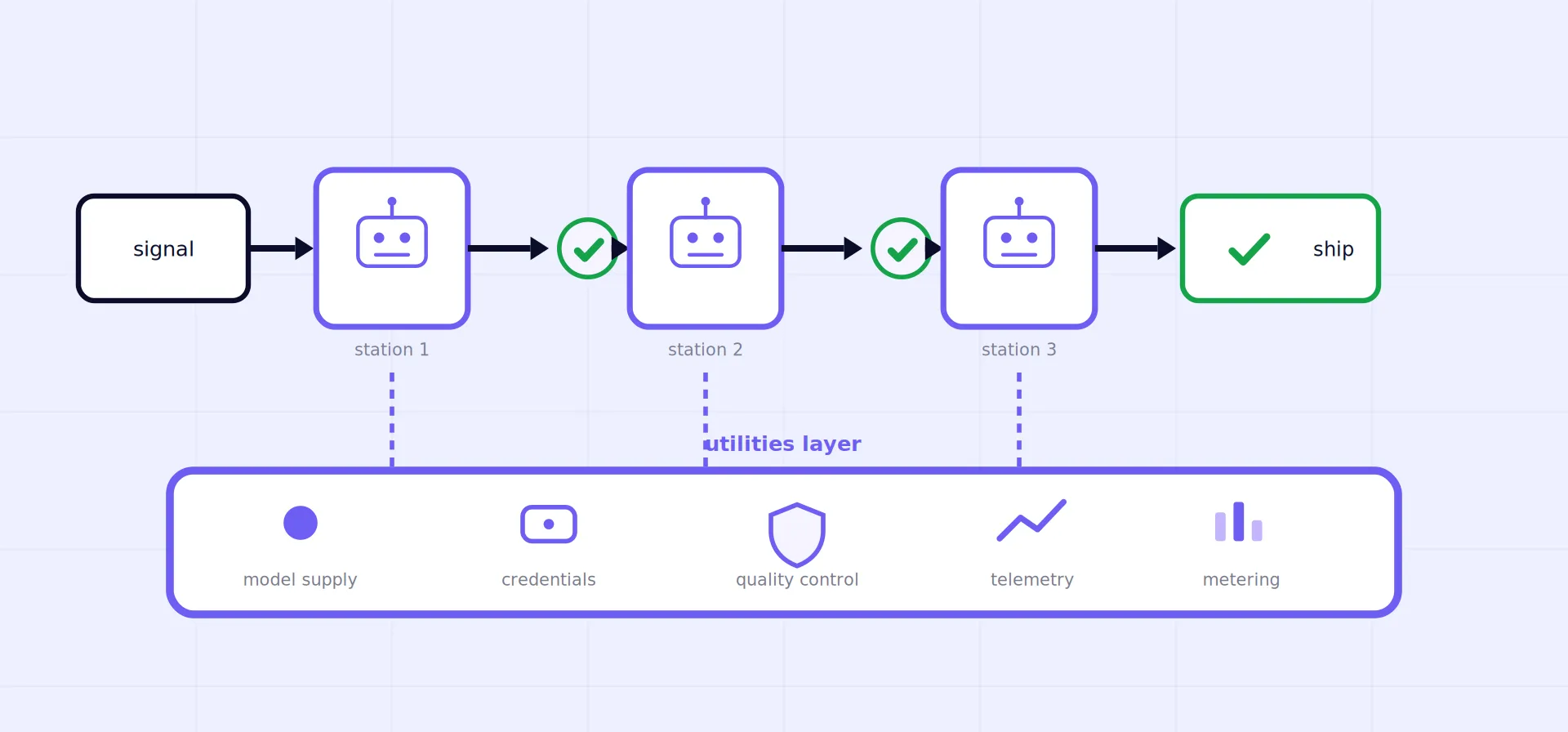
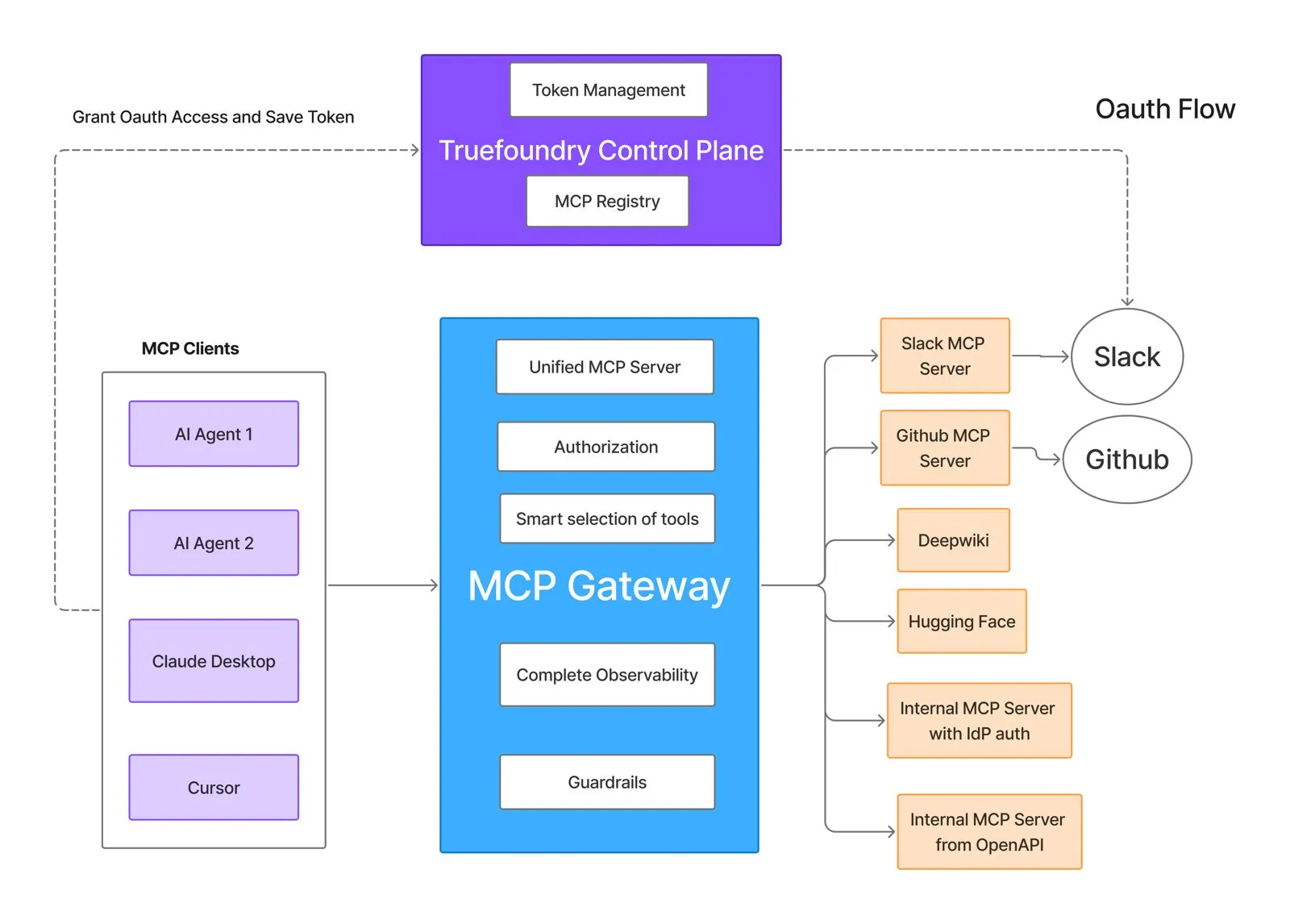
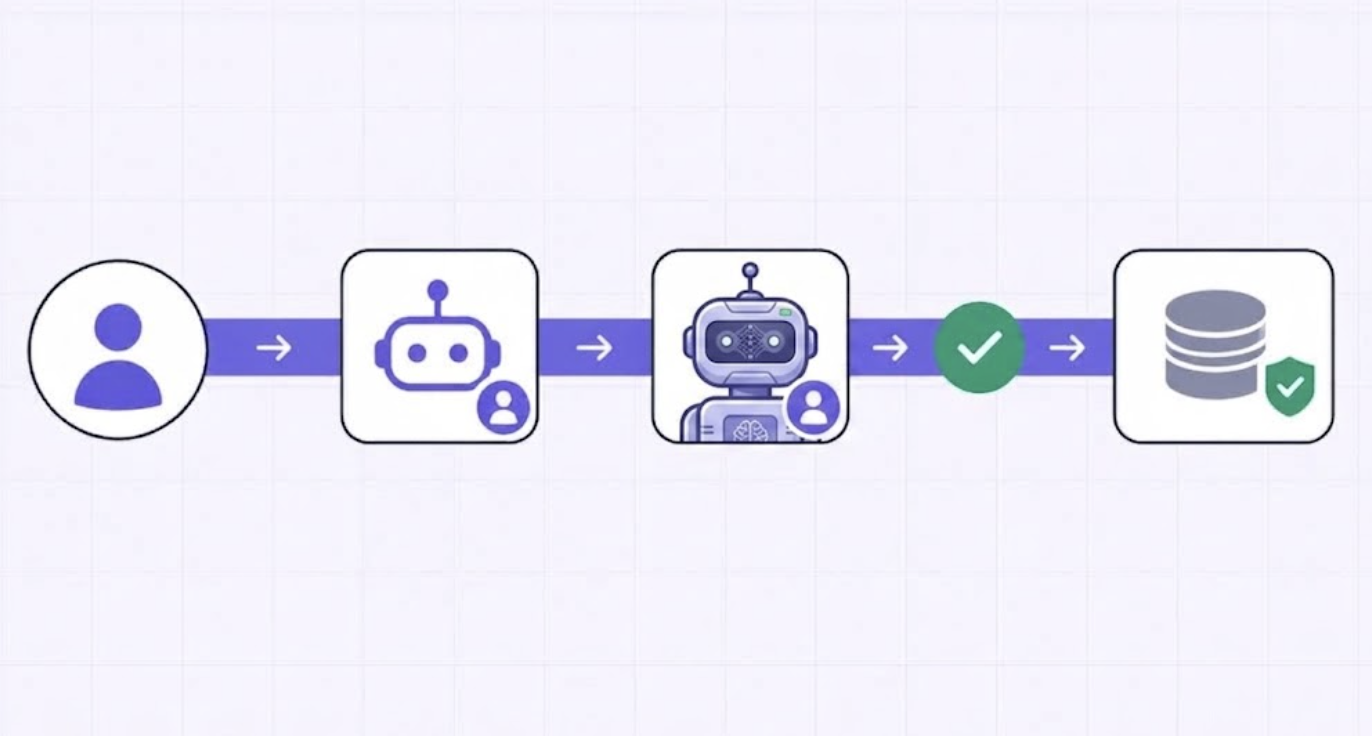
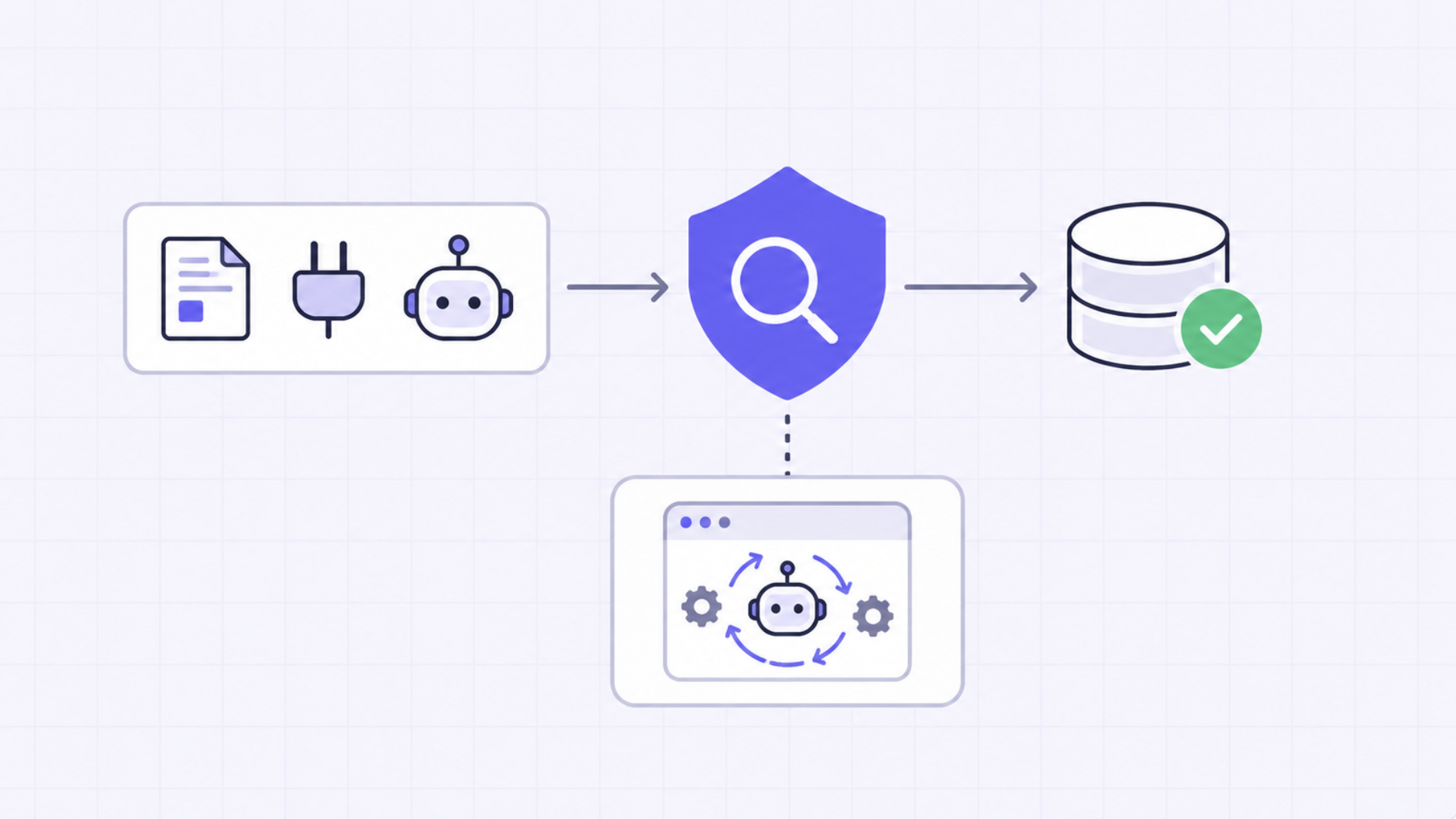
TrueFoundry's role is the utilities layer, scoped honestly to what its products mediate. Participating MCP tool calls routed through the MCP Gateway can use centralized server registration, authentication, authorization, guardrails, and observability — while direct APIs, browser access, local tools, shell operations, CI systems, and other bypass paths require separate controls. For registered MCP servers, credentials can be centrally managed and injected rather than embedded in agent definitions; configured OAuth flows and auth overrides can preserve user-specific access where supported — TrueFoundry supports current MCP authentication patterns including centrally managed credentials, per-user OAuth, token passthrough, and configured auth overrides; public documentation currently presents differing availability signals for first-class Agent Identity and OBO delegation, so confirm support for the target deployment and version before relying on complete user→agent delegation-chain attribution. Configured gateway policies can apply guardrails to matching LLM and MCP operations; repository tests, static analysis, CI checks, sandbox and egress controls, merge policy, and connected evaluators remain separate parts of the quality system. Managed Agent Harness runs can provide execution traces, and gateway records capture participating model and MCP operations. Enforced AI Gateway budget rules can block additional matching LLM requests after configured limits are exceeded; warn-only rules provide visibility — compute, CI infrastructure, tool costs, and downstream side effects require separate limits.
The factory inspector’s question. In the system’s worst hour, which operations are mediated, which identities and permissions apply, what limits are enforced, what evidence survives, and where must a human authorize continuation? A credible answer normally spans the agent runtime, model gateway, MCP gateway, sandbox and network controls, source-control and CI policy, and the downstream systems the agents can change.
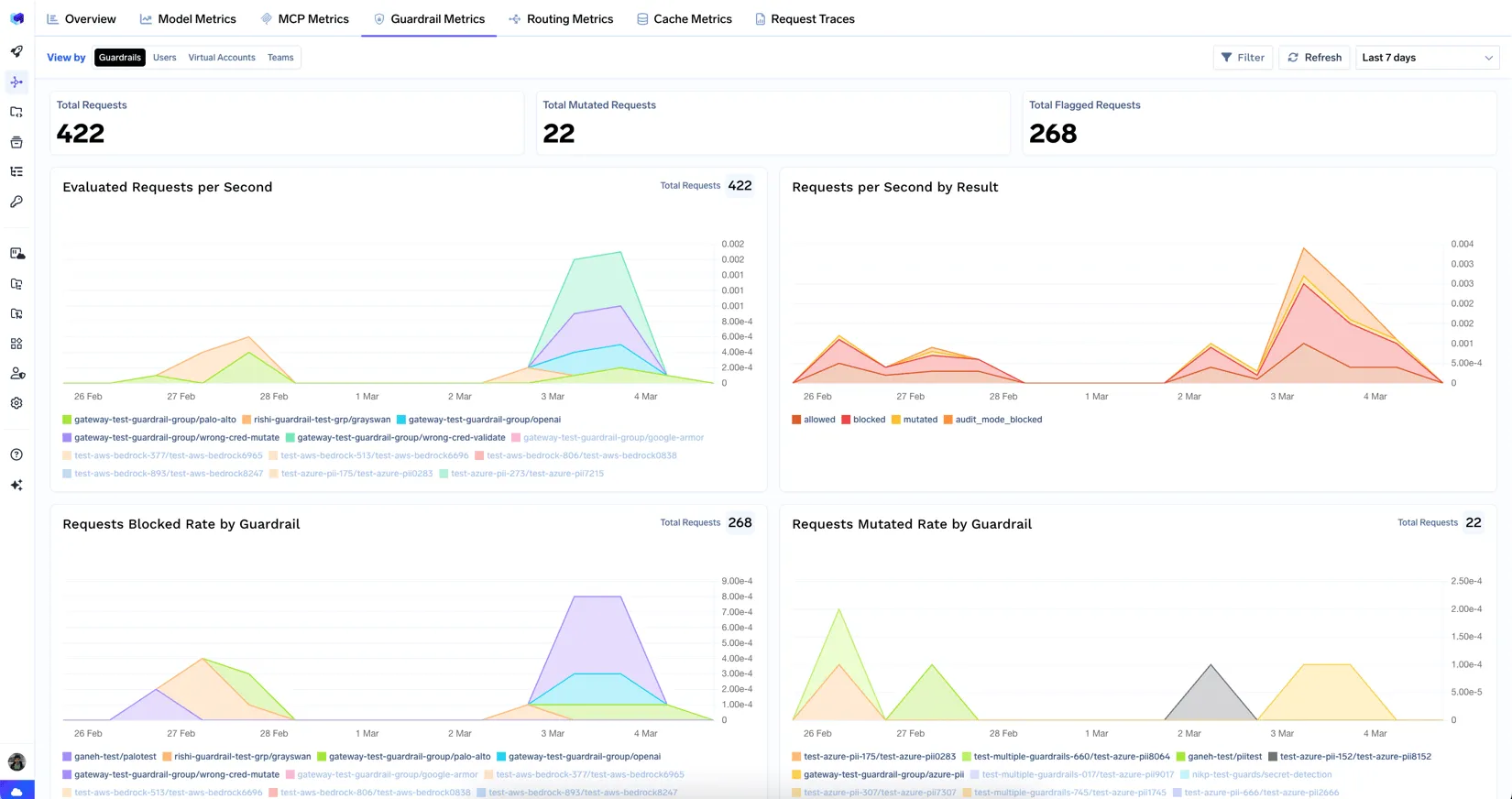
Which model calls are mediated by the gateway, and which bypass it? Where are credentials stored, injected, delegated, and refreshed? Which actions are MCP calls, direct APIs, browser actions, shell operations, or CI jobs? Which quality checks are gateway guardrails, repository tests, evaluators, or merge policies? Which costs are limited by the AI Gateway, and which require infrastructure or vendor controls? Which tool calls can Agent Harness approvals pause — and which approvals belong to source control, CI/CD, or downstream applications? These are risk-dependent evaluation criteria, not a category boundary; the answers that matter depend on what the factory builds and what it can break.
Predictions, lightly held. Watch whether organizations standardize on a common category name; whether factory platforms remain coding-specific; how repository and CI controls integrate with agent runtimes; how firms measure defect escape, review burden, cost, and rollback rates; whether vendor-neutral model and tool interfaces become normal; and how responsibility divides between factory vendors, internal developer platforms, and governance infrastructure, the same migration we watched with loop engineering and agentic engineering. Whether the factory pattern extends beyond code is worth watching: the pattern — standardized signal in, agent-staffed stations, QC, evidence-backed artifact out — describes document production, data pipeline maintenance, and security operations just as well, and "factory" may end up naming the general industrial form of agentic work, with the utilities recurring — with variation — across them. Expect the economics to force the utilities conversation upward: at Spotify's reported scale (more than 1,500 merged agent-generated PRs to date), organizations may need to treat token spend, credential exposure, and auditability as explicit operational concerns, and whether "show me the factory's meters and interlocks" becomes a standard procurement question is worth watching. Consolidation pressure between factory vendors and the platform layer is plausible, and vendor-neutral utilities may reduce switching costs and make it easier to change agent or model suppliers as capabilities evolve: a factory whose power, plumbing, and meters are your own plane can swap its robots as the frontier moves — which is the model-independence argument Factory.ai itself makes, carried to its infrastructure conclusion. We will keep this guide updated as the practice matures; one hypothesis worth testing is whether durable advantage accrues less from agent count than from the quality of the production system around them.
An agentic (AI) software factory is a repeatable delivery system in which fleets of AI coding agents execute standardized, multi-step work — planning, coding, testing, review — along a defined pipeline with automated quality control, producing evidence-backed outputs like pull requests with passing checks, while engineers define intent, set quality bars, and review results.
A coding agent is one worker or execution component; a software factory is the broader production system around it — standardized inputs, a defined assembly path, quality controls, telemetry, and metering. Enterprise adoption therefore depends on both agent capability and the workflow, controls, and evidence surrounding it.
No. The software-factory idea reaches back at least to Bemer's 1968 proposal and SDC's 1975 experiment, was reformulated in Microsoft's 2004 Software Factories book, and was later applied to enterprise delivery platforms such as BMW's. What changed in the 2026 agent-native revival is the division of labor: autonomous coding systems perform a larger share of planning, implementation, testing, and review, changing throughput, oversight economics, failure modes, and identity requirements.
Enterprise controls vary by architecture and risk. Common needs include governed model access, centrally managed credentials for participating tools, repository and CI checks, configured gateway guardrails, runtime and request evidence, separate limits for LLM and infrastructure spending, and human authorization around consequential actions. No single platform necessarily supplies or mediates every layer.
One direct quotation under fifteen words is used, from the cited Factory.ai announcement, attributed inline; all other definitions, figures, and practitioner statements — including the BCG productivity and Spotify/OpenAI numbers, which are those organizations' reported claims — are paraphrased with links to the originals. "Factory" is Factory.ai's product and brand; "software factory" is used here as the common industry term the cited sources establish, and this page makes no claims about any vendor's product. The utilities framing and the enterprise mapping are TrueFoundry editorial onto capabilities paraphrased from public documentation current at the time of writing; the product images are TrueFoundry's own documentation assets, reproduced with attribution. None of the cited companies or authors evaluates or endorses TrueFoundry. This is a living reference and will be revised as the practice and vocabulary evolve.
TrueFoundry AI Gateway ofrece una latencia de entre 3 y 4 ms, gestiona más de 350 RPS en una vCPU, se escala horizontalmente con facilidad y está listo para la producción, mientras que LitellM presenta una latencia alta, tiene dificultades para superar un RPS moderado, carece de escalado integrado y es ideal para cargas de trabajo ligeras o de prototipos.





Las últimas noticias, artículos y recursos enviados a tu bandeja de entrada
.webp)
.webp)
.webp)
.webp)


