October 10, 2026
|
5 minutos de lectura


Obtenga acceso instantáneo a un entorno TrueFoundry en vivo. Implemente modelos, dirija el tráfico de LLM y explore la plataforma completa: su sandbox estará listo en segundos, sin necesidad de tarjeta de crédito.



Published: October 7, 2026

¡Una forma increíblemente rápida de crear, rastrear e implementar sus modelos!
Lasso Security se ha consolidado como una de las plataformas líderes en seguridad de IA empresarial, ayudando a las organizaciones a proteger sus aplicaciones de IA mediante protección en tiempo ejecución, barreras de seguridad, detección de inyección de prompts y gobernanza de IA.
Sin embargo, una pregunta que surge rápidamente entre los clientes potenciales es el precio. A diferencia de muchas herramientas para desarrolladores, Lasso no publica niveles de precios estándar en su sitio web. En su lugar, las organizaciones trabajan directamente con el equipo de ventas para recibir un presupuesto personalizado basado en sus requisitos de implementación y uso.
En esta guía, explicaremos cómo funciona el modelo de precios de Lasso Security, los factores que influyen en el coste y cómo se compara con alternativas que ofrecen modelos de precios más transparentes.
Lasso se comercializa como un producto empresarial único que abarca cinco áreas de capacidad: Descubrimiento y AI-BOM (inventario de agentes y las herramientas/servidores MCP que invocan), Gestión de la postura de seguridad de IA (análisis de configuraciones erróneas y brechas de políticas frente a NIST y OWASP), Red Teaming de IA automatizado (pruebas adversarias en una biblioteca que la empresa describe como capaz de cubrir más de 3000 tipos y técnicas de ataque), Aplicación de políticas en tiempo ejecución (políticas aplicadas en la capa de proxy, API o puerta de enlace de IA) y Detección y respuesta de IA (detección de amenazas alineada con MITRE y OWASP). La empresa reporta una latencia de decisión inferior a 50 ms y una tasa de precisión de detección del 98,6 %.
Cabe destacar que Lasso aplica políticas en la capa de proxy, API o puerta de enlace de IA, lo que significa que está diseñado para integrarse junto a una puerta de enlace, no para reemplazarla. Esa distinción es importante para el precio, ya que implica que el coste de Lasso es adicional a lo que ya paga por su infraestructura de puerta de enlace de IA o enrutamiento de LLM.
Lasso está posicionado para equipos de seguridad empresarial que protegen IA agente a gran escala, y la plataforma se describe como un producto único en lugar de venderse por módulos (Discover, Assess, Test, Enforce y Protect vienen integrados, no se miden por separado). Ese tipo de empaquetado suele asociarse a acuerdos empresariales personalizados en lugar de a niveles de autoservicio.
Debido a que Lasso agrupa Discover, Assess, Test, Enforce y Protect en un solo producto en lugar de partidas individuales, existe menos riesgo de cargos sorpresa por módulos adicionales que con un modelo de precios por función. La contrapartida es una menor visibilidad sobre qué capacidades está pagando realmente si solo necesita una o dos de las cinco (por ejemplo, ejecución en tiempo de ejecución sin red-teaming completo).
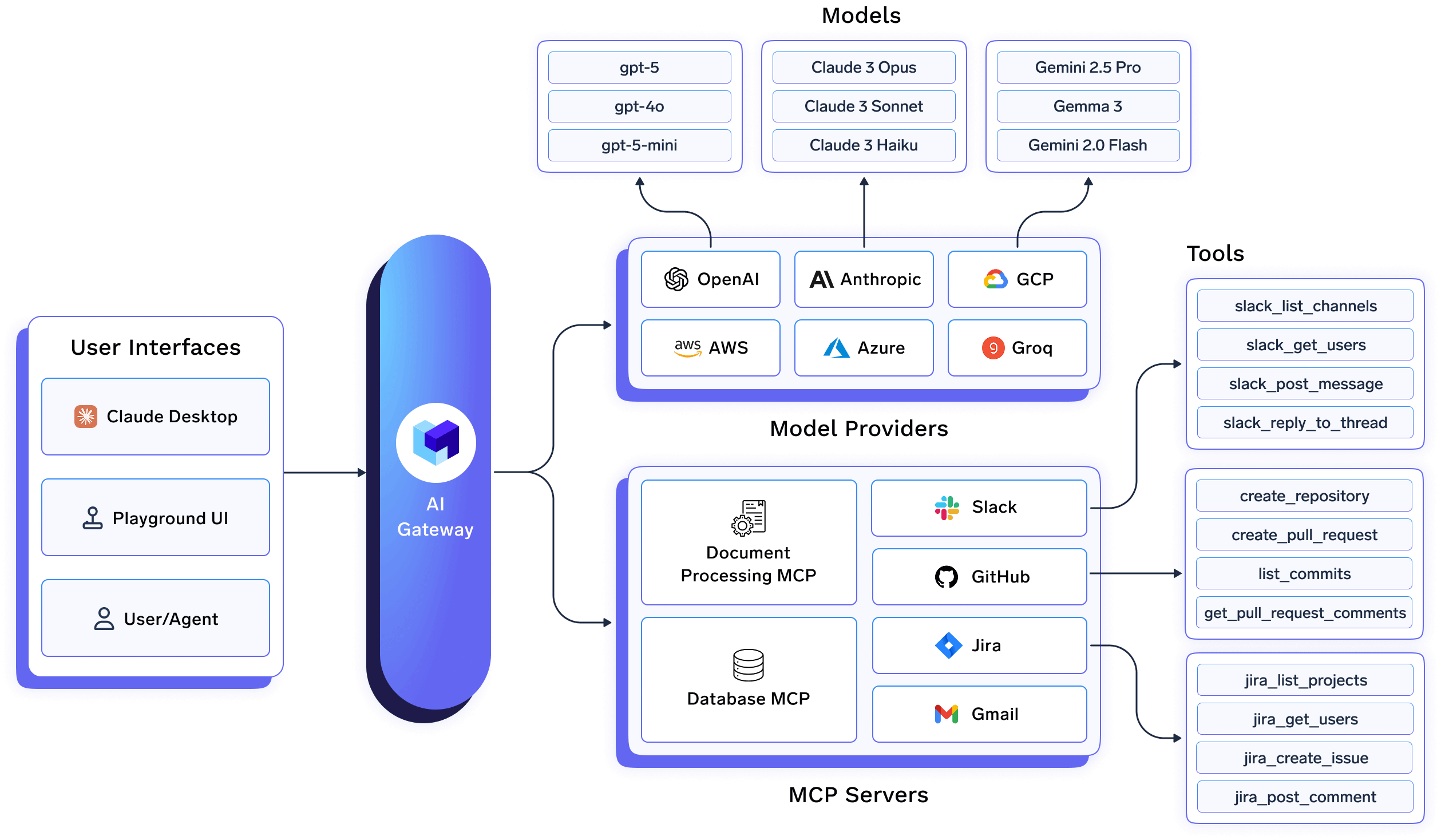
Lasso Security está diseñado para funcionar junto a un AI Gatewayexistente, añadiendo protección en tiempo de ejecución, aplicación de políticas y controles de seguridad de IA como una capa independiente. TrueFoundry adopta un enfoque diferente al integrar muchas de estas capacidades de barreras de seguridad directamente en su AI Gateway, lo que reduce la necesidad de implementar y gestionar un producto de seguridad separado para los requisitos de gobernanza comunes.
TrueFoundry incluye barreras de seguridad integradas para entrada y salida en casos de uso como la detección de PII y el filtrado de toxicidad, a la vez que se integra con proveedores externos de barreras de seguridad, incluidos OpenAI Moderation, AWS Guardrails y Azure AI Content Safety. Para organizaciones con requisitos personalizados, los equipos pueden implementar su propia lógica de barreras de seguridad mediante hooks de Python o configuración declarativa, lo que permite adaptar las políticas a modelos, aplicaciones o flujos de trabajo empresariales específicos.
TrueFoundry cubre muchos de los controles que las empresas necesitan para implementaciones de IA en producción, incluyendo la aplicación de políticas, filtrado de contenido, autenticación, enrutamiento de modelos y observabilidad, todo dentro de la misma plataforma.
Debido a que estas barreras de seguridad están integradas en el AI Gateway, las organizaciones no necesitan adquirir ni operar una capa de seguridad independiente para casos de uso de gobernanza comunes. Los equipos pueden gestionar el enrutamiento de LLM, la gobernanza de MCP, la autenticación, las barreras de seguridad y la observabilidad desde un único panel de control, simplificando las operaciones y reduciendo la complejidad de la infraestructura.
Ideal para: Organizaciones que desean AI Gateway, MCP Gateway y barreras de seguridad empresariales en una sola plataforma, en lugar de combinar múltiples proveedores para el enrutamiento, la gobernanza y la seguridad.
La verdadera pregunta presupuestaria no es "¿cuánto cuesta Lasso?" de forma aislada, sino "¿cuánto cuestan Lasso y una puerta de enlace combinados?" frente a una plataforma única que incluya barreras de seguridad de forma nativa. Si ya está ejecutando un AI Gateway sin controles de seguridad integrados, añadir Lasso es una opción razonable. Si está evaluando tanto una puerta de enlace como una capa de seguridad al mismo tiempo, vale la pena comparar los precios de una plataforma como TrueFoundry's AI Gateway, que integra el filtrado de PII, la detección de toxicidad y los hooks de barreras de seguridad personalizados en los mismos niveles de precios publicados, antes de comprometerse con dos relaciones de proveedores diferentes.
¿Los precios de Lasso Security están disponibles públicamente?
No. Lasso no publica planes ni precios iniciales. El precio se basa en presupuestos tras solicitar una demostración, y la empresa no ha revelado su estructura de tarifas públicamente.
¿Cuánto cuesta Lasso Security para empresas?
No existe una cifra pública. Lasso se vende como un producto integral que abarca descubrimiento, evaluación, red teaming y protección en tiempo de ejecución, con un coste que probablemente varía según el número de agentes y aplicaciones cubiertos, así como los puntos de integración de despliegue necesarios.
¿Cómo se comparan los precios de Lasso Security y TrueFoundry?
TrueFoundry publica cuatro niveles de precios que comienzan en 0 $/mes, con barreras de seguridad (guardrails) y filtrado de PII incluidos como parte de su AI Gateway. Lasso requiere una conversación con el equipo de ventas y está diseñado para funcionar junto a una pasarela independiente en lugar de reemplazarla.
¿Incluye TrueFoundry las mismas capacidades de barreras de seguridad que Lasso?
TrueFoundry incluye de forma nativa en su AI Gateway filtrado de PII, detección de toxicidad, integraciones de barreras de seguridad de terceros y ganchos personalizados. Lasso profundiza más en el red teaming automatizado y la detección de amenazas conductuales específicamente para cargas de trabajo de agentes; ambos no son una equivalencia exacta función por función.
¿Puedo desplegar TrueFoundry en mi propia VPC o de forma local (on-prem)?
Sí. TrueFoundry se ejecuta en su VPC, de forma local, en entornos aislados (air-gapped), híbridos o en múltiples nubes, y ningún dato sale de su dominio.
Lasso Security es una opción sólida para organizaciones que buscan una plataforma de seguridad de IA dedicada con capacidades como protección en tiempo de ejecución, detección de inyección de prompts y red teaming automatizado. Sin embargo, su precio solo está disponible mediante presupuestos empresariales personalizados, lo que dificulta estimar costos o comparar proveedores antes de contactar al equipo de ventas.
Para las organizaciones que ya cuentan con una puerta de enlace de IA y simplemente desean añadir otra capa de seguridad, Lasso puede ser una buena opción. Pero si está construyendo o modernizando su infraestructura de IA, también vale la pena considerar plataformas que combinen capacidades de puerta de enlace con gobernanza y medidas de seguridad integradas.
TrueFoundry, por ejemplo, reúne una puerta de enlace de IA, una puerta de enlace MCP, autenticación, observabilidad y medidas de seguridad en una sola plataforma con precios transparentes y opciones de implementación flexibles. En lugar de gestionar productos separados para el enrutamiento y la seguridad, los equipos pueden centralizar la gobernanza de la IA mientras reducen la complejidad operativa.
El modelo de precios de Lasso es opaco por diseño, al igual que el de la mayoría de los proveedores de seguridad de IA para empresas, y está pensado para instalarse sobre una puerta de enlace en lugar de reemplazarla. Antes de presupuestar ambos, consulte los precios publicados de TrueFoundry o reserve una demostración para ver si las medidas de seguridad integradas cubren lo que necesita sin necesidad de un segundo contrato con otro proveedor.
TrueFoundry AI Gateway ofrece una latencia de entre 3 y 4 ms, gestiona más de 350 RPS en una vCPU, se escala horizontalmente con facilidad y está listo para la producción, mientras que LitellM presenta una latencia alta, tiene dificultades para superar un RPS moderado, carece de escalado integrado y es ideal para cargas de trabajo ligeras o de prototipos.





Las últimas noticias, artículos y recursos enviados a tu bandeja de entrada
.webp)


.png)
.png)
.png)
.png)
.png)
.png)