



October 8, 2026
|
5 minutos de lectura


Obtenga acceso instantáneo a un entorno TrueFoundry en vivo. Implemente modelos, dirija el tráfico de LLM y explore la plataforma completa: su sandbox estará listo en segundos, sin necesidad de tarjeta de crédito.



Published: October 7, 2026

¡Una forma increíblemente rápida de crear, rastrear e implementar sus modelos!
IBM ContextForge, el proyecto de código abierto mcp-context-forge , hace un buen trabajo como pasarela, registro y proxy MCP gratuito: compatibilidad de transporte a través de HTTP, WebSocket, SSE y stdio, una interfaz de administración, autenticación con alcance OAuth y seguimiento con OpenTelemetry. Funciones como el descubrimiento automático, la supervisión del estado y la combinación de capacidades lo convierten en una de las ofertas arquitectónicamente más ambiciosas del ecosistema.
La plataforma también hace hincapié en la personalización y la integración a nivel empresarial. Admite múltiples métodos de autenticación, incluidos tokens JWT Bearer, autenticación básica y esquemas de cabecera personalizados, junto con credenciales cifradas con AES para un acceso seguro a las herramientas. La compatibilidad con múltiples bases de datos, como PostgreSQL, MySQL y SQLite, permite a las organizaciones integrarlo en su infraestructura existente sin necesidad de realizar cambios arquitectónicos importantes.
Un factor diferenciador clave es la composición de servidores virtuales, que permite que varios servidores MCP aparezcan como un único punto de conexión lógico para los agentes. Sin embargo, IBM etiqueta explícitamente a Context Forge como un proyecto en fase alfa/beta sin soporte comercial oficial. Aunque es potente, su complejidad operativa y su configuración, que requiere una infraestructura considerable, lo hacen más adecuado para organizaciones con una sólida experiencia interna en DevOps que para equipos que buscan soluciones MCP sencillas o totalmente gestionadas.
Sin embargo, a medida que las implementaciones crecen más allá de unos pocos agentes internos, muchas organizaciones comienzan a evaluar alternativas. Algunas desean una plataforma totalmente gestionada en lugar de operar ellas mismas Kubernetes y Redis. Otras necesitan una gobernanza unificada tanto para el tráfico de LLM como para las herramientas MCP, controles de identidad y acceso a nivel empresarial, certificaciones de cumplimiento o soporte comercial con acuerdos de nivel de servicio (SLA) definidos.
En esta guía, comparamos las mejores alternativas a IBM ContextForge en 2026, incluidas plataformas gestionadas, pasarelas de IA empresariales y opciones de código abierto, para que pueda elegir la que mejor se adapte a la pila de IA de su organización.
Los equipos empiezan a buscar en otra parte por varias razones coherentes: no quieren asumir la carga del alojamiento y la aplicación de parches, necesitan una pasarela de IA y una pasarela MCP unificadas en lugar de un proxy solo para MCP, requieren gobernanza empresarial (SSO, RBAC para toda la organización, control presupuestario, registros de auditoría) desde el primer momento, o necesitan un SLA de proveedor en lugar de soporte comunitario.
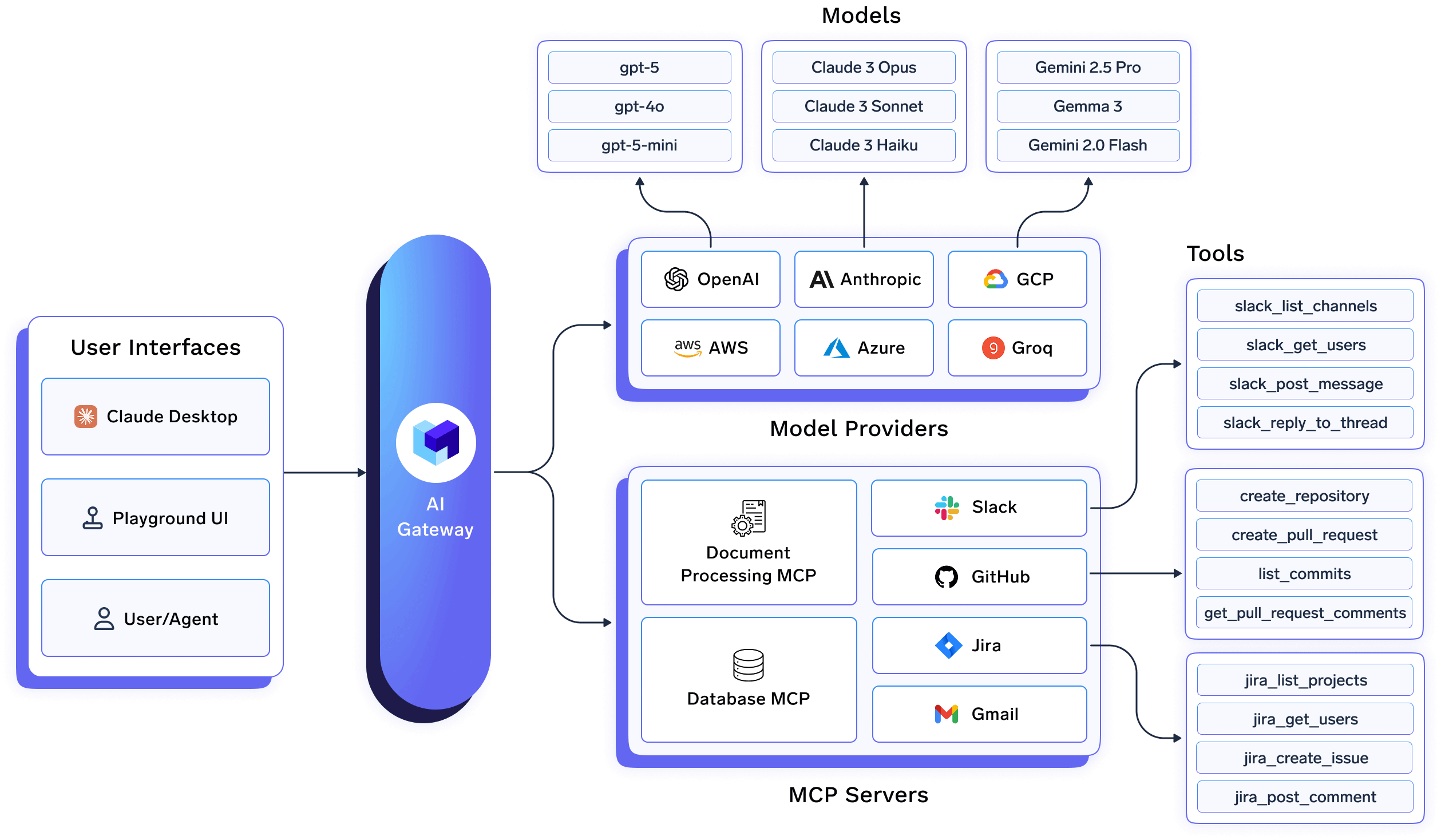
TrueFoundry combina un puerta de enlace de IA (AI Gateway)yMCP Gateway en un único plano de control, con más de 1000 LLM disponibles a través de una API compatible con OpenAI, una latencia de puerta de enlace de aproximadamente 3 a 4 ms y soporte para más de 350 solicitudes por segundo en una sola vCPU. A diferencia de ContextForge, está disponible como un producto SaaS totalmente gestionado, por lo que no es necesario aprovisionar un clúster de Kubernetes antes de poder registrar su primer servidor MCP.
En cuanto al MCP específicamente, TrueFoundry aplica RBAC a los servidores MCP registrados, admite servidores MCP virtuales y registra cada llamada a herramientas con métricas exhaustivas. Además, está preparado para SOC 2, HIPAA y GDPR, y puede implementarse en VPC, entornos locales o entornos totalmente aislados (air-gapped) para equipos con requisitos de residencia de datos.
El enfoque de TrueFoundry es sencillo: si las organizaciones ya gestionan infraestructura de IA para LLM, no tiene mucho sentido fragmentar las operaciones en sistemas separados para las herramientas MCP. En su lugar, TrueFoundry unifica la infraestructura de LLM y la gestión de MCP en un único plano de control con características compartidas de seguridad, observabilidad, gobernanza y rendimiento. Este enfoque centralizado simplifica las operaciones de IA y ofrece a los equipos de ingeniería una plataforma consolidada para la supervisión, el despliegue y la gestión de costes.
Características clave de TrueFoundry
Ventajas:
Contras:
Ideal para: Empresas que buscan gobernanza de MCP y gestión de LLM/AI Gateway en una sola plataforma, con un SLA de soporte y certificaciones de cumplimiento, en lugar de ensamblar y alojar el equivalente mediante componentes de código abierto.
La plataforma también es una opción ideal para equipos de ingeniería que buscan una solución empresarial rica en funciones y fácil de gestionar, con capacidades integradas de despliegue, monitorización, ajuste fino (finetuning) y orquestación. Los equipos que adoptan flujos de trabajo basados en agentes y ecosistemas MCP pueden beneficiarse de su simplicidad operativa, sus amplias integraciones y sus opciones de despliegue nativo en la nube.
Precios: Plan gratuito para desarrolladores (50.000 solicitudes/mes), plan Pro a 499 $/mes, plan Pro Plus a 2.999 $/mes y plan Enterprise personalizado. Desglose completo en truefoundry.com/pricing.
Probar TrueFoundry AI Gateway →
Runlayer es un plano de control de IA centrado en la identidad de agentes, la detección de Shadow AI y un gateway MCP gobernado con acceso a un catálogo de más de 18.000 MCP. Es una opción más adecuada que ContextForge para empresas que necesitan descubrir agentes no gestionados que ya operan en la organización, en lugar de limitarse a actuar como proxy del tráfico MCP conocido.
Runlayer no publica sus precios y se vende exclusivamente mediante acuerdos empresariales; a diferencia de ContextForge, no ofrece opción de autohospedaje. Cuenta con certificaciones SOC 2, HIPAA y cumple con el RGPD.
Ideal para: Grandes empresas que despliegan agentes en múltiples equipos, necesitan detección de Shadow AI además de gobernanza MCP y se sienten cómodas con una plataforma gestionada bajo presupuesto personalizado.
Lasso es una plataforma de seguridad para IA, no un gateway. Cubre la detección, evaluación de riesgos, red teaming automatizado y cumplimiento en tiempo de ejecución para agentes y aplicaciones de IA, aplicando políticas en la capa de proxy, API o gateway en lugar de ser el gateway en sí mismo.
Si el atractivo de ContextForge reside en la gobernanza y el proxy en un solo lugar, Lasso no sustituye esa función; se integra junto al gateway que ya estés utilizando. Los precios son de nivel empresarial y bajo presupuesto.
Ideal para: Equipos de seguridad que buscan red teaming profundo y detección de amenazas para IA basada en agentes y que ya utilizan un gateway por separado.
Docker ha entrado en el ecosistema MCP extendiendo su experiencia principal en la contenedorización hacia la infraestructura de herramientas de IA. Su filosofía es sencilla: los servidores MCP deben tratarse como cualquier otra carga de trabajo que requiera aislamiento, seguridad, reproducibilidad y gestión del entorno. En lugar de introducir un modelo operativo completamente nuevo, Docker permite a los equipos de ingeniería gestionar los despliegues de MCP utilizando flujos de trabajo y patrones de orquestación basados en contenedores ya conocidos.
Ideal para: Equipos que necesitan un modelo de aislamiento y seguridad de nivel empresarial sólido
La estrategia de MCP Gateway de Microsoft está estrechamente integrada con el ecosistema más amplio de Azure. En lugar de ofrecer una plataforma MCP independiente, Microsoft extiende las capacidades de MCP a través de los servicios existentes de Azure, lo que permite a las empresas aprovechar su infraestructura en la nube actual en lugar de gestionar sistemas de herramientas de IA por separado.
Una ventaja importante es la profunda integración nativa de la plataforma con Azure. Azure AD (Entra ID) simplifica la autenticación y la gestión de RBAC, mientras que Azure API Management permite la aplicación de políticas y flujos OAuth 2.0 con una configuración adicional mínima. El despliegue nativo en Kubernetes a través de Azure Container Apps también proporciona un alojamiento de MCP escalable utilizando patrones de orquestación familiares.
Ideal para: La plataforma está diseñada principalmente para grandes empresas centradas en Azure que priorizan la robustez operativa y la flexibilidad de la infraestructura.
Si su equipo ya utiliza Kubernetes a gran escala, cuenta con la capacidad de SRE necesaria para parchear y supervisar otro servicio, y busca un coste de licencia cero con control total sobre el código fuente, ContextForge es una opción legítimamente buena. IBM lo mantiene activamente, cuenta con un ecosistema de plugins real y evita por completo la dependencia de un proveedor. La contrapartida es que todo lo que va más allá de "el código es gratuito" (alojamiento, soporte, interfaz de gobernanza, cumplimiento normativo) pasa a ser responsabilidad de su equipo en lugar de la de un proveedor.
IBM ContextForge es una opción de código abierto sólida para equipos que desean un control total sobre su infraestructura MCP y cuentan con los recursos de ingeniería necesarios para operarla. Sus capacidades de puerta de enlace, registro y proxy lo convierten en una base sólida para organizaciones que se sienten cómodas gestionando por sí mismas Kubernetes, Redis, las actualizaciones y el mantenimiento continuo.
Sin embargo, a medida que los despliegues de IA crecen, muchos equipos necesitan algo más que una simple puerta de enlace MCP. También requieren una gobernanza unificada tanto para el tráfico de LLM como para el de MCP, autenticación empresarial, observabilidad, cumplimiento normativo y soporte comercial, sin tener que combinar múltiples herramientas.
Si esa es su prioridad, TrueFoundry proporciona una puerta de enlace de IA y una puerta de enlace MCP unificadas en una sola plataforma, con opciones de despliegue gestionado, gobernanza de nivel empresarial y soporte para ejecutarlo en su VPC, en sus propias instalaciones o incluso en entornos sin conexión a internet (air-gapped).
¿Cuál es la mejor alternativa a IBM ContextForge para empresas?
TrueFoundry es la opción más adecuada para empresas que desean una gobernanza de puerta de enlace de IA y de puerta de enlace MCP en una única plataforma gestionada, con precios publicados, certificaciones de cumplimiento y opciones de despliegue en VPC, en instalaciones propias o en entornos aislados.
¿Existe alguna alternativa gratuita a IBM ContextForge?
LiteLLM es la opción de código abierto gratuita más cercana, aunque se centra en el proxy de LLM en lugar de en la gobernanza de MCP. ContextForge sigue siendo gratuito y de código abierto; la mayoría de las alternativas reales son productos comerciales gestionados.
¿Alternativas a IBM ContextForge específicamente para la gobernanza de MCP?
Tanto TrueFoundry como Runlayer ofrecen gobernanza centrada en MCP (RBAC, servidores MCP virtuales, registro de llamadas a herramientas) como plataformas gestionadas, lo que elimina la carga de alojamiento de Kubernetes y Redis que conlleva el autoalojamiento de ContextForge.
¿Es compatible TrueFoundry con servidores MCP autoalojados, al igual que ContextForge?
Sí. El MCP Gateway de TrueFoundry es compatible con servidores MCP autoalojados a partir del nivel Pro Plus, junto con RBAC y servidores MCP virtuales.
¿Puedo implementar TrueFoundry en mi propia VPC o de forma local (on-prem)?
Sí. TrueFoundry se ejecuta en tu VPC, de forma local, en entornos aislados (air-gapped), híbridos o en múltiples nubes, sin que los datos salgan de tu dominio; la misma flexibilidad de despliegue que atrae a los equipos hacia soluciones de código abierto autohospedadas como ContextForge.
TrueFoundry AI Gateway ofrece una latencia de entre 3 y 4 ms, gestiona más de 350 RPS en una vCPU, se escala horizontalmente con facilidad y está listo para la producción, mientras que LitellM presenta una latencia alta, tiene dificultades para superar un RPS moderado, carece de escalado integrado y es ideal para cargas de trabajo ligeras o de prototipos.





Las últimas noticias, artículos y recursos enviados a tu bandeja de entrada


.webp)
.png)
.png)
.png)
.png)
.png)
.png)
.png)
.png)
.png)


