.webp)
October 14, 2026
|
5 minutos de lectura


Obtenga acceso instantáneo a un entorno TrueFoundry en vivo. Implemente modelos, dirija el tráfico de LLM y explore la plataforma completa: su sandbox estará listo en segundos, sin necesidad de tarjeta de crédito.


Published: October 7, 2026
¡Una forma increíblemente rápida de crear, rastrear e implementar sus modelos!
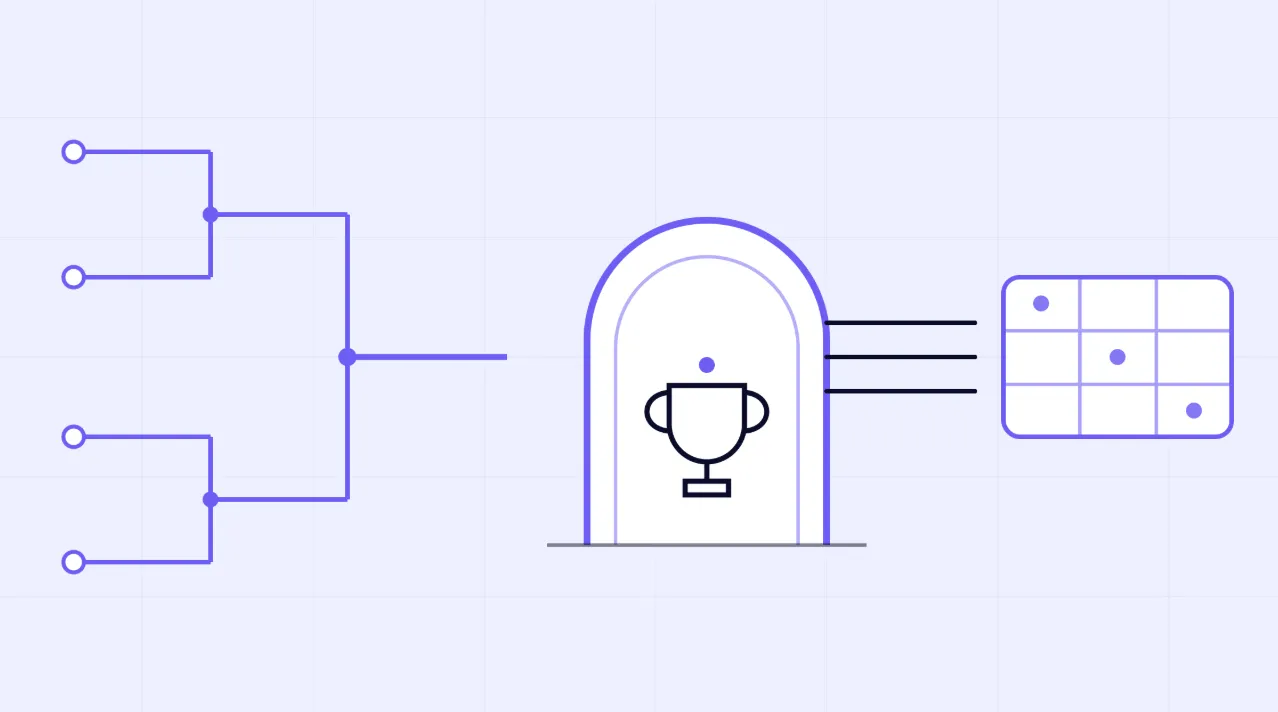
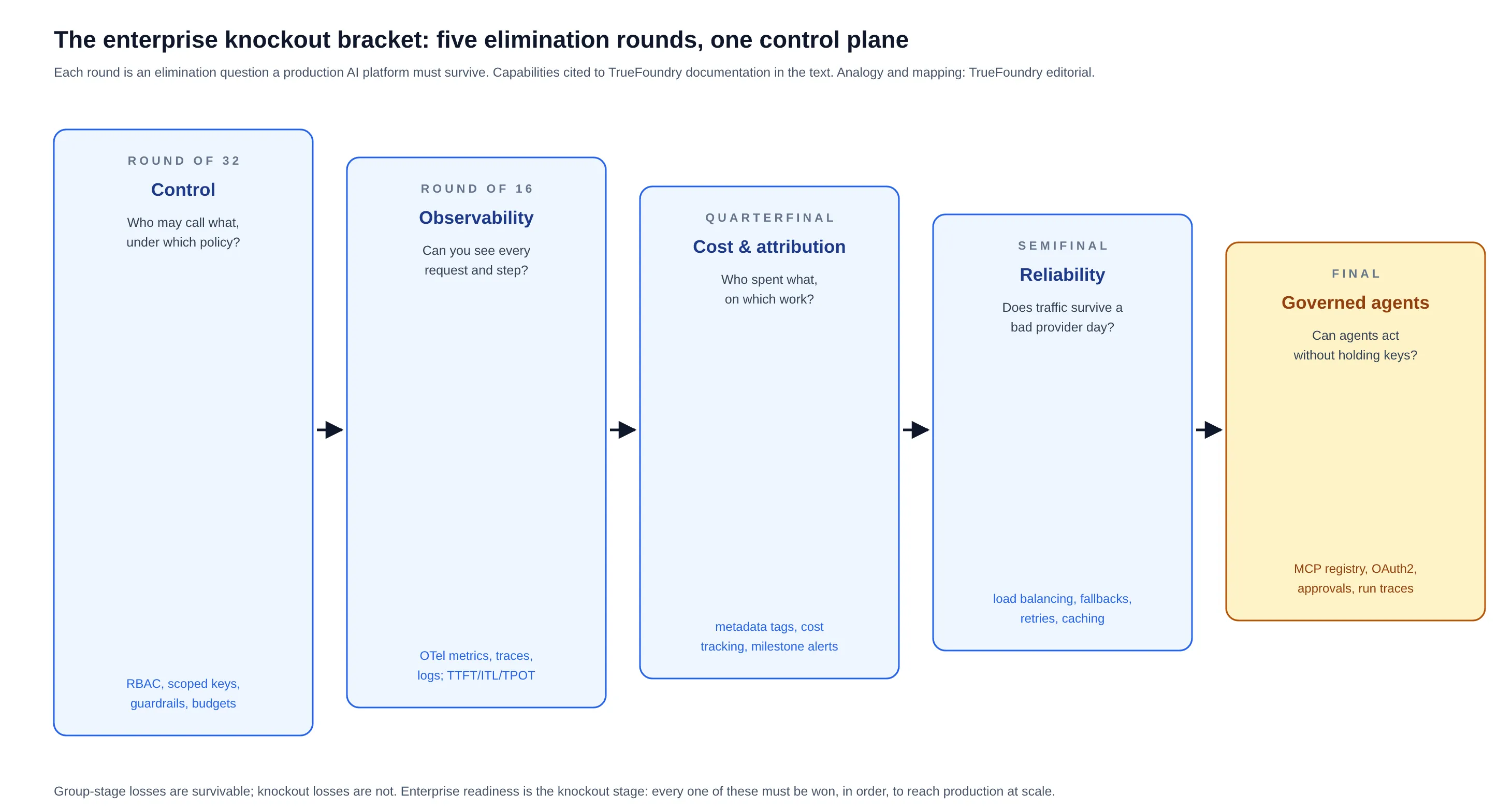
El domingo 19 de julio de 2026, en el MetLife Stadium —denominado New York New Jersey Stadium en los documentos de la FIFA—, un equipo levantará el trofeo que pone fin a la primera Copa Mundial de la FIFA™ de 48 selecciones: un torneo de 104 partidos cuya característica definitoria es un cambio de fase. Durante dos semanas, la fase de grupos fue indulgente: podías perder un partido, rotar la plantilla, probar una formación que no funcionó y aun así avanzar. Luego comenzó el cuadro eliminatorio y la aritmética se invirtió. En las rondas de eliminación directa —una ronda de 32 por primera vez, luego octavos, cuartos, semifinales y final— nadie acumula puntos. O ganas, o te vas a casa. Quien levante el trofeo el 19 de julio habrá sobrevivido a cinco partidos de eliminación consecutivos. La IA empresarial acaba de pasar por el mismo cambio de fase. Los últimos tres años fueron la fase de grupos: muchas empresas lanzaron algo —un piloto, un copiloto o un chatbot interno— y las pérdidas eran asumibles porque lo que estaba en juego era experimental. Esa fase ha terminado. Lo que decide quién llega a la producción a escala es un cuadro eliminatorio de otro tipo: preparación empresarial, que se desarrolla en cinco rondas de eliminación —control, observabilidad, atribución de costes, fiabilidad y agentes gobernados— donde una sola pregunta sin respuesta termina con la participación. Este artículo analiza cada ronda en orden, con los detalles técnicos citados de la documentación de TrueFoundry, porque el patrón que gana las cinco es el mismo que gana cualquiera de ellas: un plano de control en la ruta del tráfico. La analogía es nuestra; las capacidades están documentadas.
La fase de grupos existe para ser indulgente. Tres partidos, acumulación de puntos, una derrota es solo un dato. Los equipos la utilizan de la misma forma que las empresas utilizaron el periodo 2023-2025: para probar plantillas, formaciones e ideas cuyo fracaso cuesta poco. Esa era produjo un aprendizaje real —muchas organizaciones tienen ahora sistemas de IA en uso activo en algún lugar de la empresa—, pero también generó hábitos que la siguiente fase castiga. Claves de API pegadas en configuraciones de aplicaciones, porque era más rápido. Gastos descubiertos en la factura mensual, porque nadie vigilaba cada solicitud. Una integración de proveedor por equipo, porque cada equipo empezó solo. Ningún rastro de lo que hizo realmente el agente, porque el agente era una demo. Nada de esto hizo perder un partido de la fase de grupos. Todo ello hace perder partidos de eliminación directa, porque la fase eliminatoria cambia lo que cuesta un error. La siguiente tabla muestra el cambio de fase de un vistazo; el resto de este artículo analiza el cuadro.
El camino
Hay otra característica de los torneos que se traslada de forma incómoda: el equipo que encabeza su grupo no es necesariamente el que levanta el trofeo. El dominio en la fase de grupos mide el rendimiento en condiciones de baja presión, y la fase de grupos de la IA empresarial midió exactamente eso. El piloto que impresionó en la sala de demostraciones, el copiloto con las mejores cifras de adopción interna, el chatbot que ganó el hackathon: esos son resultados de fase de grupos. Y las victorias en la fase de grupos son victorias reales, que merecen ser celebradas y de las que aprender. Una demo brillante que impresiona a una sala llena de ejecutivos; una aplicación de IA V1 sofisticada que todos esperan que despegue; la herramienta interna que se gana un hueco en las reuniones generales: cada una es el equivalente empresarial a encabezar el grupo por diferencia de goles: prueba de calidad ofensiva, medida en condiciones donde un mal resultado no costaba más que el orgullo. Los favoritos de la fase de grupos de la historia son tanto una advertencia como una inspiración: la tradición de los torneos está llena de equipos que marcaron muchos goles durante tres partidos y se fueron a casa en la primera ronda eliminatoria ante rivales que sabían defender. Las rondas eliminatorias plantean una pregunta diferente: no "¿quién parecía mejor cuando perder era asumible?", sino "¿quién aguanta cuando un solo fallo termina con todo?".
TrueFoundry AI Gateway ofrece una latencia de entre 3 y 4 ms, gestiona más de 350 RPS en una vCPU, se escala horizontalmente con facilidad y está listo para la producción, mientras que LitellM presenta una latencia alta, tiene dificultades para superar un RPS moderado, carece de escalado integrado y es ideal para cargas de trabajo ligeras o de prototipos.





Las últimas noticias, artículos y recursos enviados a tu bandeja de entrada

.png)
.png)
.png)

.png)
.png)
.png)
.png)
.png)