


.webp)
October 21, 2026
|
Lesedauer: 5 Minuten


Erhalten Sie sofortigen Zugriff auf eine TrueFoundry-Live-Umgebung. Stellen Sie Modelle bereit, leiten Sie den LLM-Verkehr weiter und erkunden Sie die gesamte Plattform — Ihre Sandbox ist in Sekundenschnelle einsatzbereit, ohne dass eine Kreditkarte erforderlich ist.



Unglaublich schnelle Methode zum Erstellen, Verfolgen und Bereitstellen Ihrer Modelle!
Bei LangChain, LangGraph und LangSmith handelt es sich nicht um einen Wettbewerb. Alle drei stammen vom selben Unternehmen, und die meisten Teams, die Agenten auf diesem Stack entwickeln, nutzen am Ende mehrere dieser Tools gleichzeitig. Die Verwirrung ist jedoch verständlich: Die Namen ähneln sich, die Dokumentationen verweisen ständig aufeinander und von außen ist es tatsächlich nicht offensichtlich, welches Tool man wirklich braucht.
Anstatt sich für eines zu entscheiden, setzen viele Unternehmen sie gemeinsam ein, während ihre KI-Anwendungen reifen – von der Prototypenentwicklung mit LangChain über die Orchestrierung komplexer Agenten-Workflows mit LangGraph bis hin zur Sicherstellung der Zuverlässigkeit mit LangSmith.
In diesem Leitfaden vergleichen wir LangChain vs. LangGraph vs. LangSmith, erläutern die Funktionen der einzelnen Tools, beleuchten ihre Stärken und Grenzen und helfen Ihnen bei der Entscheidung, welches Tool am besten zu Ihrem KI-Entwicklungs-Workflow passt.
LangChain ist die Framework-Ebene: LCEL (LangChain Expression Language), das Runnable-Protokoll, Prompt-Templates sowie Integrationen für Hunderte von Tools und Datenquellen. Seit LangChain 1.0 ist LCEL der Standardweg, um Schritte zu kombinieren: Jeder Prompt, jedes Modell, jeder Retriever und jeder Parser implementiert dasselbe Runnable-Interface. So können Sie diese einfach mit prompt | model | parser verketten und erhalten ein einzelnes aufrufbares Objekt mit den Methoden .invoke(), .stream() und .batch(). LangChain bietet zudem eine übergeordnete create_agent-API für Teams, die Agenten-Verhalten benötigen, ohne einen Graphen manuell erstellen zu müssen.

LangGraph ist die Orchestrierungsebene für Agenten, die in Schleifen laufen, verzweigen und über viele Schritte hinweg einen Status (State) halten müssen, anstatt linear abzulaufen. Es modelliert den Agenten als StateGraph: Knoten sind Funktionen, Kanten (einschließlich bedingter Kanten) entscheiden über den nächsten Schritt, und ein gemeinsames Status-Objekt fließt durch den gesamten Prozess.

LangSmith ist die Plattform, die über beiden liegt. Wenn Sie eine Funktion mit @traceable dekorieren, werden Eingaben, Ausgaben und jeder verschachtelte Aufruf als Run in einem Run-Tree erfasst. Hier finden Sie auch Evaluations-Datensätze, LLM-as-a-Judge-Funktionen, benutzerdefinierte Evaluatoren und (via LangGraph Platform) das gehostete Deployment.
Die Empfehlung des LangChain-Teams für 2026 lautet genau diese Arbeitsteilung: LangChain für die Bausteine, LangGraph für alles, was agentisch oder mehrstufig ist, und LangSmith für die Observability.

Der praktische Unterschied zwischen LangChain und LangGraph liegt darin, wie viel Kontrolle Sie über den Ausführungspfad benötigen. Eine LangChain-Chain führt Schritt eins aus, dann Schritt zwei, dann Schritt drei. Das ist für viele Anwendungsfälle völlig ausreichend: Retrieval-Augmented Generation, einfache Tool-Aufrufe oder unkomplizierte Pipelines.
Agenten, die basierend auf dem gerade Geschehenen entscheiden müssen, was als Nächstes zu tun ist – etwa ein Tool aufrufen, das Ergebnis prüfen und dann erneut entscheiden –, stellen ein anderes Problem dar. Genau dafür wurde LangGraph entwickelt. Es stellt den Agenten als Knoten und Kanten dar, sodass Sie Schleifen, bedingte Verzweigungen und Checkpoints explizit definieren können, anstatt sie mühsam in eine lineare Kette zu zwingen. Die meisten produktiven Agenten-Frameworks, einschließlich LangGraph, setzen aus genau diesem Grund auf dieses graphenbasierte Modell.
In der Praxis müssen Sie sich nicht für eines der beiden entscheiden. LangGraph-Agenten nutzen im Hintergrund häufig weiterhin die Integrationen und Prompt-Utilities von LangChain; LangGraph ist eher eine Weiterentwicklung der Strukturierung von Agenten-Schleifen als ein vollständiger Ersatz für LangChain.
Eine LangChain LCEL-Chain ist eine Runnable-Pipeline. Jede Komponente fügt sich in die nächste ein, und die gesamte Chain verhält sich weiterhin wie ein einzelnes Runnable. Genau das sorgt dafür, dass Streaming und Batching über jeden Schritt hinweg konsistent funktionieren.
Dieses Modell deckt vieles ab: RAG-Pipelines, strukturierte Extraktion und einfache Tool-Aufrufe. Es stößt jedoch an seine Grenzen, sobald ein Agent auf Basis der gerade erfolgten Ereignisse entscheiden muss, was als Nächstes zu tun ist – etwa ein Tool aufrufen, das Ergebnis prüfen und erneut entscheiden, wobei er möglicherweise mehrere Schleifen durchläuft, bevor er fertig ist.
LangGraph modelliert dies als Graph statt als Pipeline. Der Status (State) wird explizit definiert (als TypedDict oder Pydantic-Modell), Nodes lesen und aktualisieren ihn, und bedingte Kanten (Conditional Edges) steuern die Ausführung basierend auf dem aktuellen Status anstelle einer festen Sequenz.
In der Praxis müssen Sie sich nicht für eines von beiden entscheiden. LangGraph-Nodes rufen intern routinemäßig LCEL-Chains auf; LangGraph ist eher eine zusätzliche Ausführungsebene über den Primitiven von LangChain als ein vollständiger Ersatz dafür.
Dieser Vergleich sorgt für die meiste Verwirrung, da LangGraph und LangSmith grundlegend verschiedene Probleme lösen, die jedoch häufig im selben Kontext genannt werden.
LangGraph ist die Basis, auf der Ihr Agent läuft: die Graph-Definition, der Status und die Ausführungslogik. LangSmith ist das Werkzeug, mit dem Sie nach der Ausführung sehen, was passiert ist. Jeder LLM-Aufruf, Tool-Aufruf und Statusübergang innerhalb eines LangGraph-Agenten kann in LangSmith nachverfolgt werden. Zudem beherbergt LangSmith die LangGraph Platform, falls Sie ein gehostetes Deployment bevorzugen, anstatt den Graphen auf Ihrer eigenen Infrastruktur zu betreiben.
Einfach ausgedrückt: LangGraph funktioniert auch ohne LangSmith, Sie verlieren jedoch die Sichtbarkeit darüber, was Ihr Agent tut, sowie die integrierten Hosting-Optionen. LangSmith ohne LangGraph ergibt wenig Sinn, da LangSmith etwas benötigt, das es nachverfolgen kann.
LangGraph ist die Basis, auf der Ihr Agent läuft: die Graph-Definition, der Status und die Ausführung mit Checkpoints. LangSmith ist das Werkzeug, mit dem Sie nach der Ausführung sehen, was passiert ist – und in vielen Setups auch der Ort, an dem die Anwendung gehostet wird.
Wenn Sie eine Funktion mit @traceable umschließen (oder sie über die integrierte LangSmith-Anbindung von LangGraph instrumentieren), wird jeder LLM-Aufruf, Tool-Aufruf und verschachtelte Subgraph-Aufruf zu einem Span in einem Run-Tree. Dabei zeigt der übergeordnete Run die Gesamtlatenz an, während jeder untergeordnete Run seine eigene Latenz ausweist.
Über das Tracing hinaus umfasst der Evaluierungs-Workflow von LangSmith Datensätze – Sammlungen von Input/Output-Beispielen, die über das SDK erstellt und von Evaluatoren bewertet werden, die Sie als LLM-as-a-Judge, benutzerdefinierten Code oder menschliches Feedback definieren. Online-Evaluatoren können Produktions-Traces kontinuierlich bewerten, anstatt nur während eines Pre-Release-Testlaufs. Das kommt einem Live-Qualitäts-Dashboard näher als einer einmaligen Test-Suite.
Einfach ausgedrückt: LangGraph läuft auch ohne LangSmith, Sie verlieren jedoch den Run-Tree, die Evaluierungs-Datensätze und die Option auf das Hosting über die LangGraph Platform. LangSmith ohne LangGraph leistet für sich genommen wenig, da es eine nachverfolgbare Anwendung zur Beobachtung benötigt.
Die meisten realen Agenten-Projekte wählen nicht nur eines dieser drei Tools, sondern nutzen eine Kombination. Ein typischer Stack: Die Agenten-Logik wird in LangGraph erstellt (unter Verwendung von LangChain-Integrationen, wo sinnvoll), und anschließend mit aktiviertem LangSmith-Tracing ausgeführt, damit Sie im Live-Betrieb sehen können, was der Agent tut. Auf LangSmith zu verzichten ist bei kleinen Prototypen üblich; auf LangGraph zu verzichten ist sinnvoll, wenn Ihr Anwendungsfall einfach genug ist, dass eine lineare LangChain-Pipeline ausreicht.
Komplizierter wird es in der Produktion. Das Tracing von LangSmith ist zwar äußerst nützlich, verwaltet jedoch keine Anmeldedaten für die Tools, die Ihr Agent aufruft, und bietet keine Governance auf Modellebene für ein ganzes Team. Das sind separate Probleme, die Sie lösen müssen, sobald Sie mehr als nur eine Handvoll Agenten betreiben.
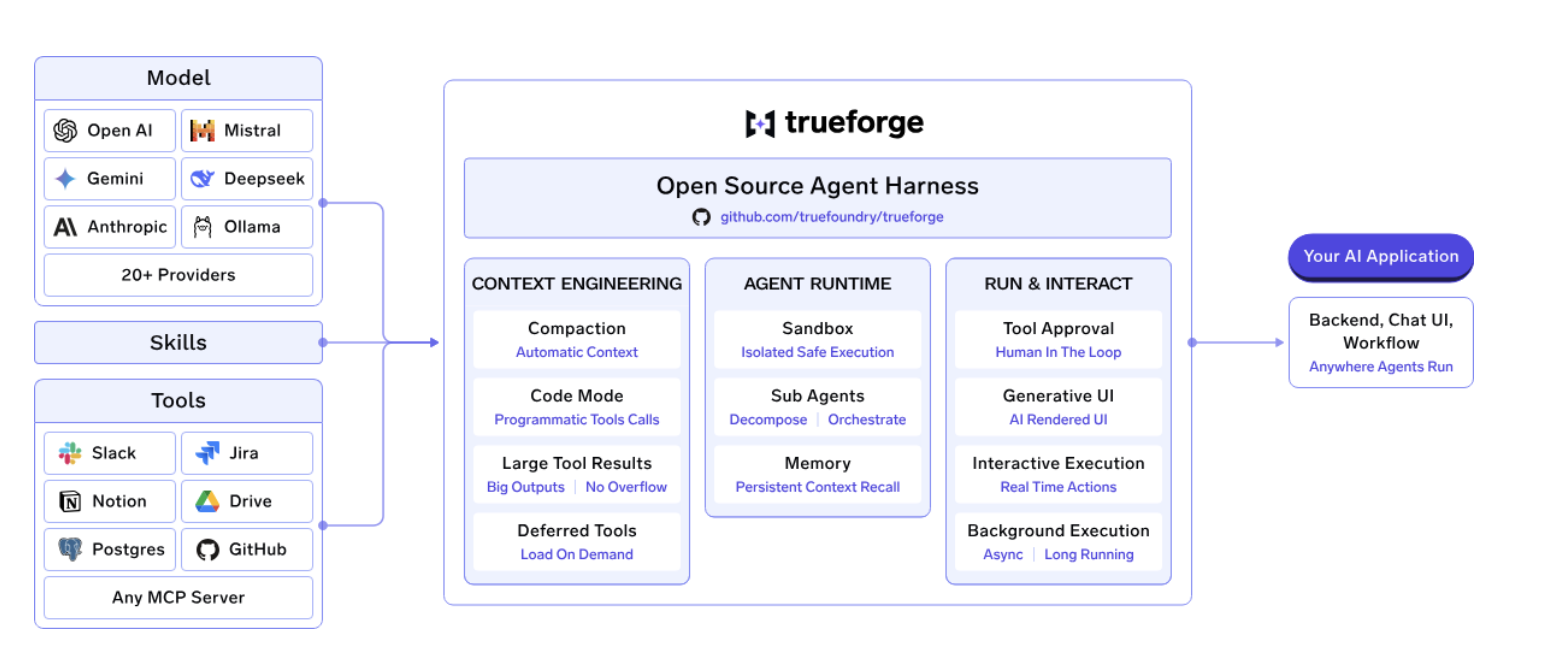
LangChain, LangGraph und LangSmith decken unterschiedliche Bereiche des KI-Anwendungs-Stacks ab: LangChain liefert die Bausteine, LangGraph übernimmt die zustandsorientierte Agenten-Orchestrierung und LangSmith sorgt für die Beobachtbarkeit (Observability). TrueForge setzt auf einer anderen Ebene an: Es ist die Runtime, die den Agenten tatsächlich ausführt. Es steuert die Schleife um das Modell herum, einschließlich Planung, Tool-Aufrufen, Kontextverwaltung, Sandboxing, Freigaben und Sitzungsstatus.
TrueForge ist ein Open-Source, anbieterneutrales Agenten-Framework. Es besteht aus einem Kernserver, der die Agentenschleife ausführt, einer HTTP-API mit TypeScript-SDK für den programmatischen Zugriff sowie einer Chat-Benutzeroberfläche mit UI-SDK, die direkt verwendet oder in Ihre eigene Anwendung eingebettet werden kann. Sie können es lokal mit npx @truefoundry/trueforgeausführen oder für ein Team mittels Docker Compose oder Helm bereitstellen.
Der entscheidende Unterschied ist, dass TrueForge die Laufzeitumgebung von Modell und Tools trennt. Modellanbieter, MCP-Server und Sandbox-Anbieter sind frei wählbar, sodass ein Modellwechsel kein Neuerstellen des Agenten erfordert. TrueForge behandelt die Sandbox zudem als Tool, anstatt jeden Agenten kontinuierlich darin auszuführen. Eine Sandbox wird nur bereitgestellt, wenn der Agent Code ausführen muss. Dadurch kann ein Server mehrere Agenten verwalten, während Schritte ohne Codeausführung schlanker bleiben.
Für Teams, die über einzelne Agenten hinausgehen, bietet TrueForge auch die operative Ebene für die Laufzeitumgebung. In Kombination mit dem AI Gateway von TrueFoundry können Teams rollenbasierte Zugriffskontrolle (RBAC), Budgets, Sicherheitsvorgaben, Anmeldedaten-Rotation und einheitliche Traces für ihre Agenten und die Modellnutzung implementieren.
Die Unterscheidung ist also einfach: LangChain bietet Ihnen Komponenten für die Entwicklung, LangGraph liefert die Grundbausteine zur Orchestrierung von Agenten-Workflows, LangSmith hilft Ihnen bei der Überwachung dieser Workflows und TrueForge stellt eine Open-Source-Laufzeitumgebung für den Betrieb des Agenten selbst bereit. Wenn Sie Agenten entwickeln, die vom lokalen Prototyp in die Produktion überführt werden sollen, ist TrueForge als Laufzeitschicht unter Ihrem Agenten-Stack eine Überlegung wert.
LangChain, LangGraph und LangSmith decken jeweils unterschiedliche Phasen des KI-Entwicklungszyklus ab. LangChain hilft Ihnen beim Aufbau von LLM-gestützten Anwendungen, LangGraph ermöglicht zustandsbehaftete, mehrstufige KI-Agenten, und LangSmith bietet die nötige Observability, um diese in der Produktion zu debuggen und zu überwachen.
Anstatt sich gegenseitig zu ersetzen, sind sie darauf ausgelegt, zusammenzuarbeiten. Wenn Sie die Rolle jedes Tools verstehen, können Sie die richtige Kombination für Ihren Anwendungsfall wählen und KI-Anwendungen entwickeln, die sowohl skalierbar als auch produktionsreif sind.
Was ist der Unterschied zwischen LangChain, LangGraph und LangSmith?
LangChain ist ein Framework zum Verketten von LLM-Aufrufen und zum Verbinden mit Tools und Datenquellen. LangGraph ist die Orchestrierungsschicht für Agenten, die Schleifen bilden, verzweigen und Zustände speichern müssen. LangSmith ist die Plattform zum Tracing, Evaluieren und optionalen Hosten von Agenten, die mit einem der beiden anderen Tools erstellt wurden.
Brauche ich alle drei, um einen Agenten zu bauen?
Nein. Eine einfache Pipeline benötigt möglicherweise nur LangChain. Ein zustandsbehafteter Agent verwendet in der Regel LangGraph, oft in Kombination mit den Integrationen von LangChain. LangSmith ist optional, wird aber dringend empfohlen, sobald ein Agent mehr als nur einen schnellen Prototyp darstellt, da es die wichtigste Methode ist, um nachzuvollziehen, was der Agent tatsächlich getan hat.
Ersetzt LangGraph LangChain?
Nicht direkt. LangGraph ändert die Art und Weise, wie Sie die Ausführungsschleife des Agenten strukturieren, aber LangGraph-Agenten nutzen weiterhin häufig die Prompt- und Integrations-Utilities von LangChain. Betrachten Sie es eher als eine zusätzliche Ebene und nicht als Ersatz.
Unterstützt TrueFoundry MCP und KI-Agenten?
Ja. TrueFoundry umfasst ein MCP-Gateway, ein Agent-Gateway sowie eine MCP- und Agenten-Registry mit Zugriffskontrolle auf Tool-Ebene. So können Agenten, die auf LangGraph, CrewAI, AutoGen oder benutzerdefinierten Frameworks basieren, über eine zentrale Steuerungsebene bereitgestellt und verwaltet werden.
Lässt sich TrueFoundry in meinen bestehenden Observability-Stack integrieren?
Ja. Die Plattform ist OpenTelemetry-kompatibel und lässt sich in Grafana, Datadog, Prometheus oder Ihren bestehenden Stack einbinden, wobei jede Anfrage vom Prompt bis zur Tool- und Modellausführung nachverfolgt wird.
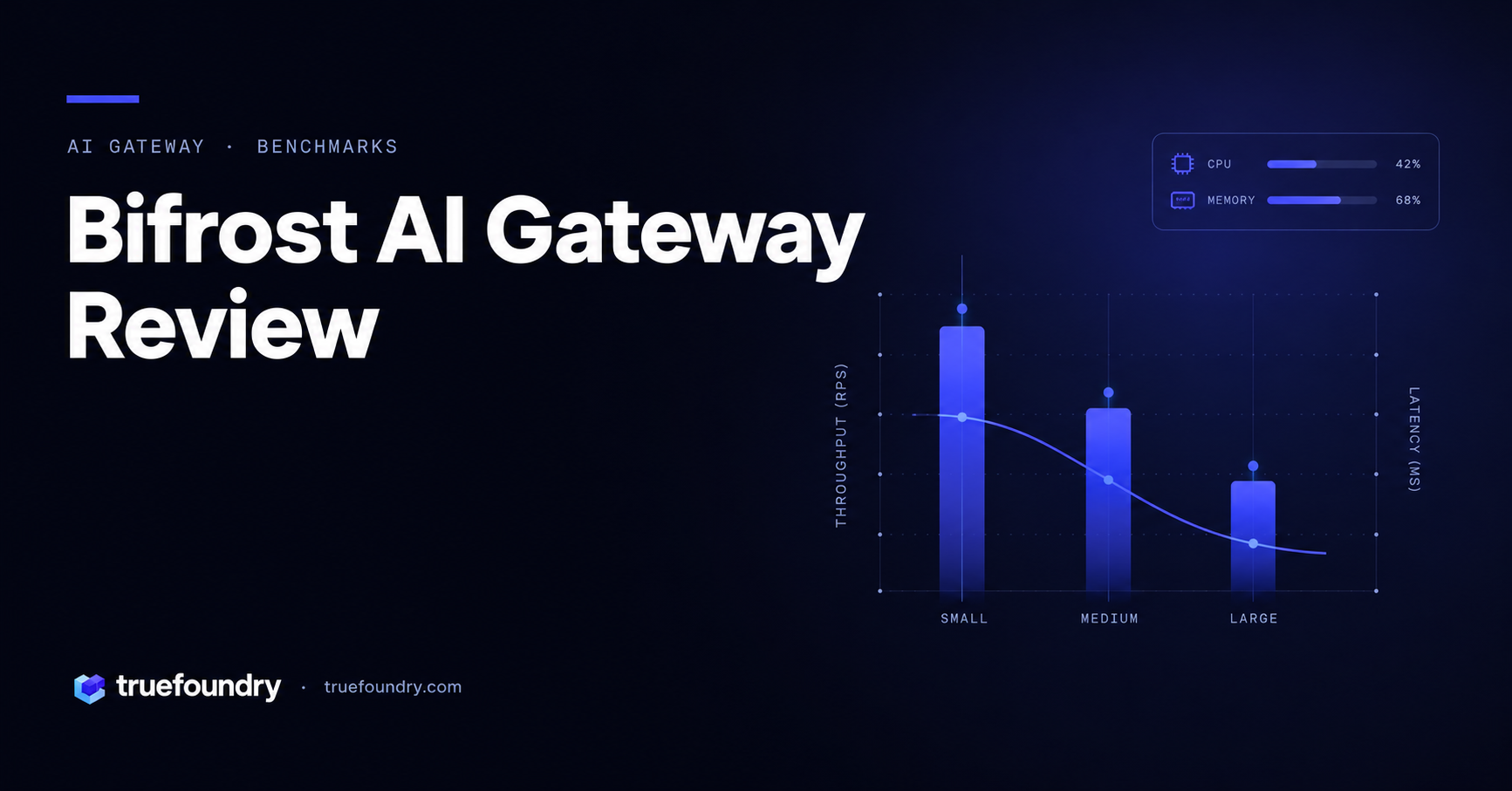
TrueFoundry AI Gateway bietet eine Latenz von ~3—4 ms, verarbeitet mehr als 350 RPS auf einer vCPU, skaliert problemlos horizontal und ist produktionsbereit, während LiteLM unter einer hohen Latenz leidet, mit moderaten RPS zu kämpfen hat, keine integrierte Skalierung hat und sich am besten für leichte Workloads oder Prototyp-Workloads eignet.





Die neuesten Nachrichten, Artikel und Ressourcen werden in Ihren Posteingang gesendet


.png)
.png)
.png)
.png)
.png)
.png)
.png)
.png)
.png)
.png)
.png)


