


October 1, 2026
|
5 min read


Published: July 4, 2026
.webp)
Blazingly fast way to build, track and deploy your models!
We conducted a webinar with the team at Palo Alto Networks with 400+ people joining from different regions and functions. Our goal at TrueFoundry was always to create infrastructure that supports your GenAI stack and we decided to pick up security as our next milestone. In this blog, we distill down all important key factors that we discussed and learnt during the webinar and boil it down to some key factors which will help you make decisions on scaling AI initiatives across your company. It’s a quick 6-7 min read, and also serves as a practical guide on AI Security that you can share with security leaders, platform teams, and AI builders.
Traditional security assumed that if an adversary couldn’t pass your firewall, they can't reach your sensitive data. Today, an engineer can paste snippets of source code into a chat to “fix a bug” and walk sensitive IP straight out the door, without any firewall being touched. In this world, context and identity become the new perimeters: who is asking, what are they asking for, and what data and tools are being pulled into that context?
It’s a fundamental shift in the threat model. Instead of blocking ports or hardening endpoints alone, we have to secure the language interface to systems and data, and everything that language can cause the system to do.
Four failure modes show up first for most teams:
If you want to learn more, OWASP's AI Top 10 is a solid map. In practice we have seen these four areas are where most programs begin.
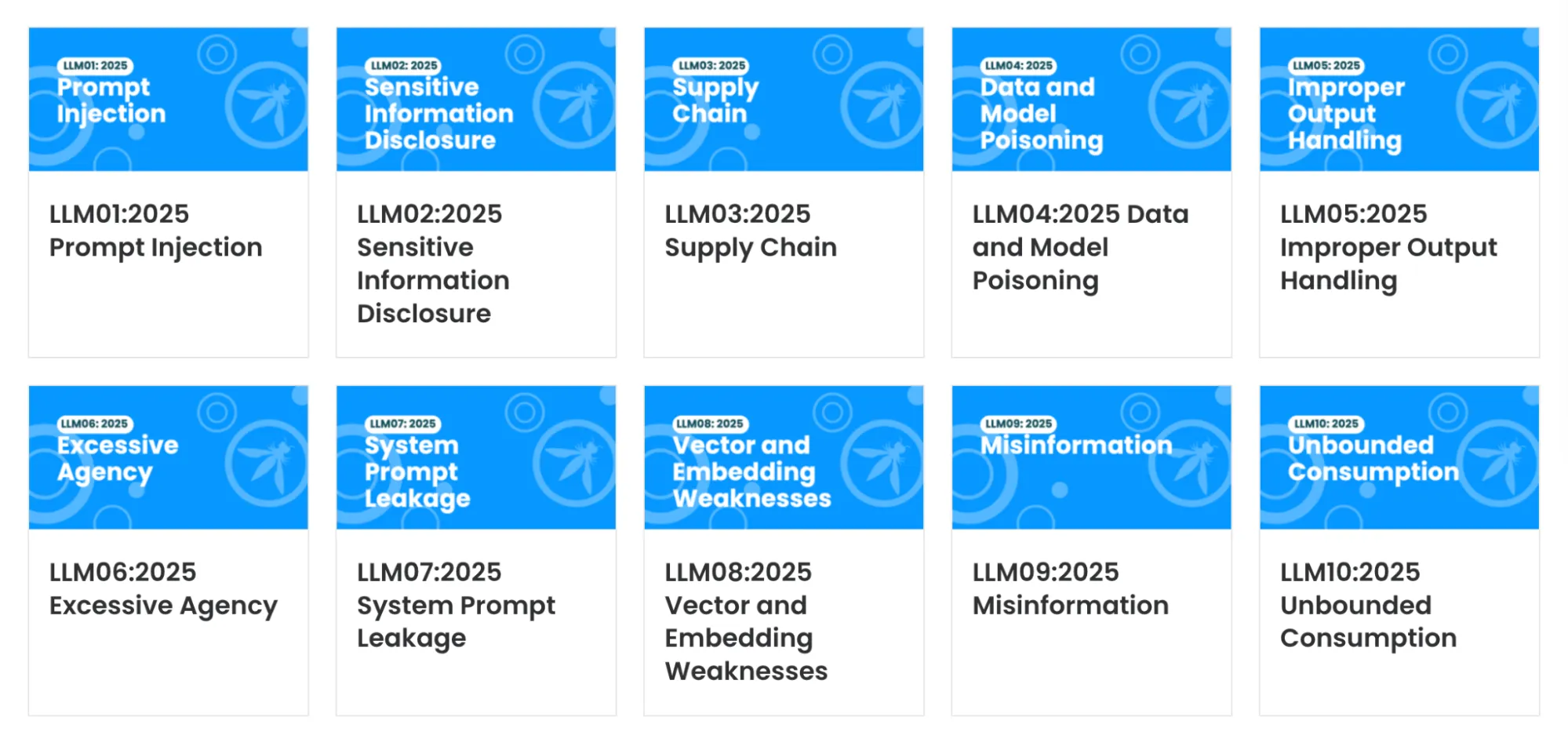
We ran quick polls during the session. The top concern, by a wide margin: data leakage/exfiltration, followed by prompt injection and lack of observability into model and agent behavior. That aligns with what we see in enterprise rollouts: if you secure inputs and outputs first, and then make every interaction traceable, you have mostly covered what's needed for AI security
Here’s the short checklist we’ve seen work across industries:
Now, LLMs no longer just talk—they can act. With the Model Context Protocol (MCP), agents discover tools and perform actions across GitHub, Jira, Slack, cloud APIs, internal systems, and more. That makes MCP a huge accelerator for developer productivity and a new class of risk. A poorly scoped agent can close 500 tickets overnight, exfiltrate data, or delete a branch because a sneaky instruction slipped in during a retrieval step.
Now you can see how the shift goes from “wrong answer” to “unauthorized actions”. Tools multiply both value and risk, so changes must be made to accommodate these.
Key Metrics for Evaluating Gateway
| Criteria | What should you evaluate ? | Priority | TrueFoundry |
|---|---|---|---|
| Latency | Adds <10ms p95 overhead for time-to-first-token? | Must Have | ✅ Supported |
| Data Residency | Keeps logs within your region (EU/US)? | Depends on use case | ✅ Supported |
| Latency-Based Routing | Automatically reroutes based on real-time latency/failures? | Must Have | ✅ Supported |
| Key Rotation & Revocation | Rotate or revoke keys without downtime? | Must Have | ✅ Supported |
| Key Rotation & Revocation | Rotate or revoke keys without downtime? | Must Have | ✅ Supported |
| Key Rotation & Revocation | Rotate or revoke keys without downtime? | Must Have | ✅ Supported |
| Key Rotation & Revocation | Rotate or revoke keys without downtime? | Must Have | ✅ Supported |
| Key Rotation & Revocation | Rotate or revoke keys without downtime? | Must Have | ✅ Supported |
When MCP enters the picture, elevate your baseline in these areas:
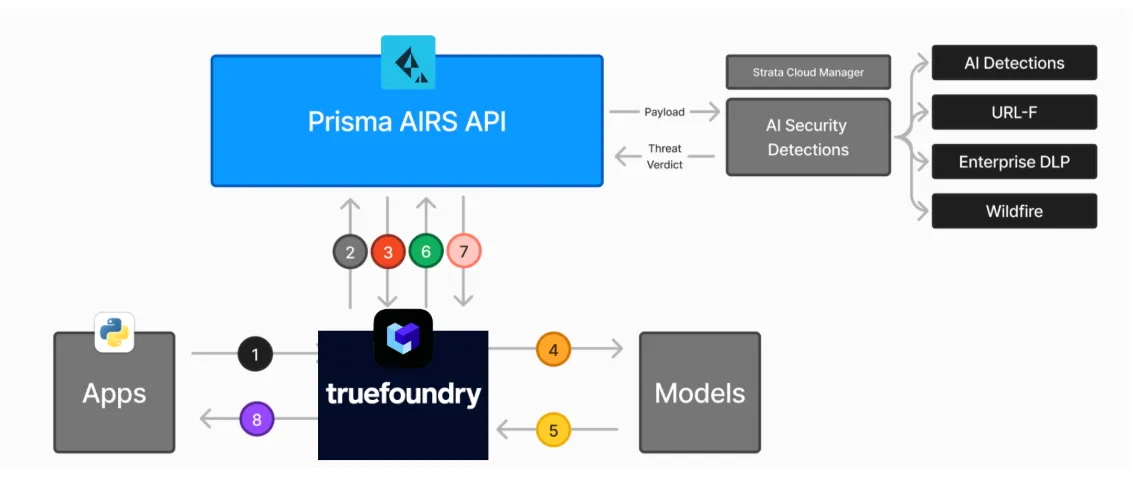
Agents are most useful when they can call tools to get real work done. MCP standardizes how agents discover and invoke those tools. But power demands control. Our recommended pattern is a two-layer design:
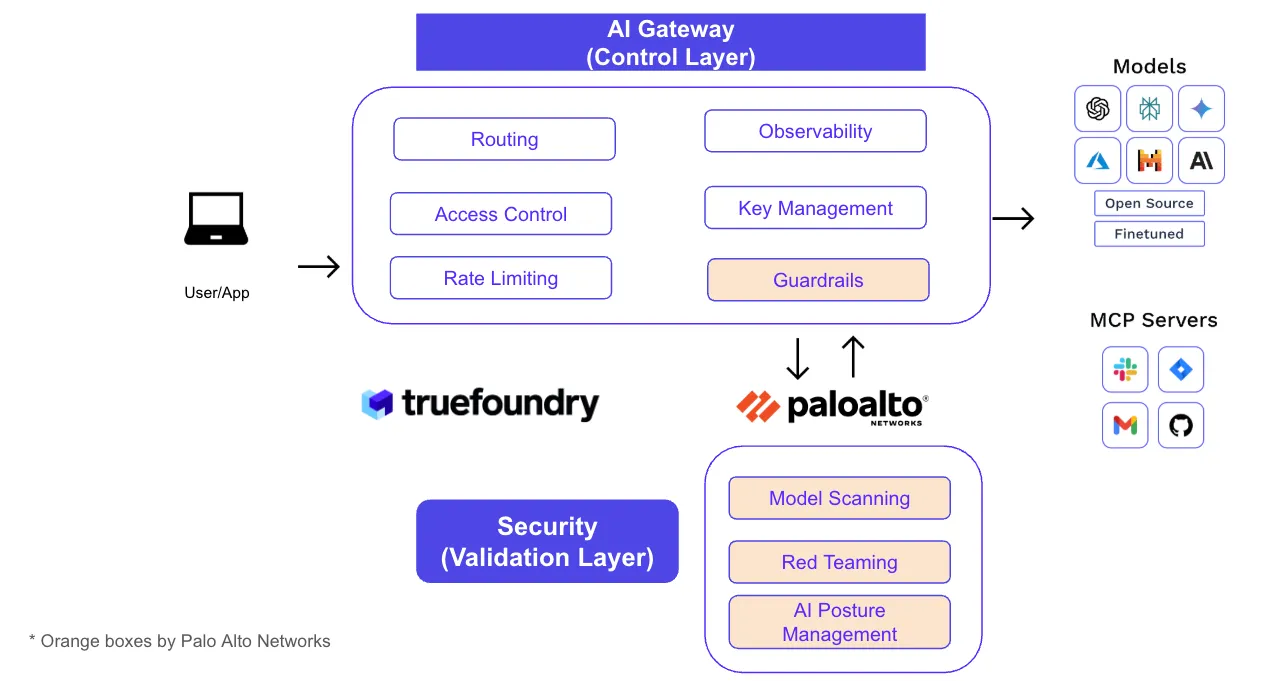
Putting control in one place gives platform teams a great developer experience (one endpoint, unified SDKs, self-serve onboarding). Putting validation in its own layer gives security teams deep hooks and evidence (guardrail verdicts, DLP masking, URL/code inspection, and posture checks) without blocking developer velocity.
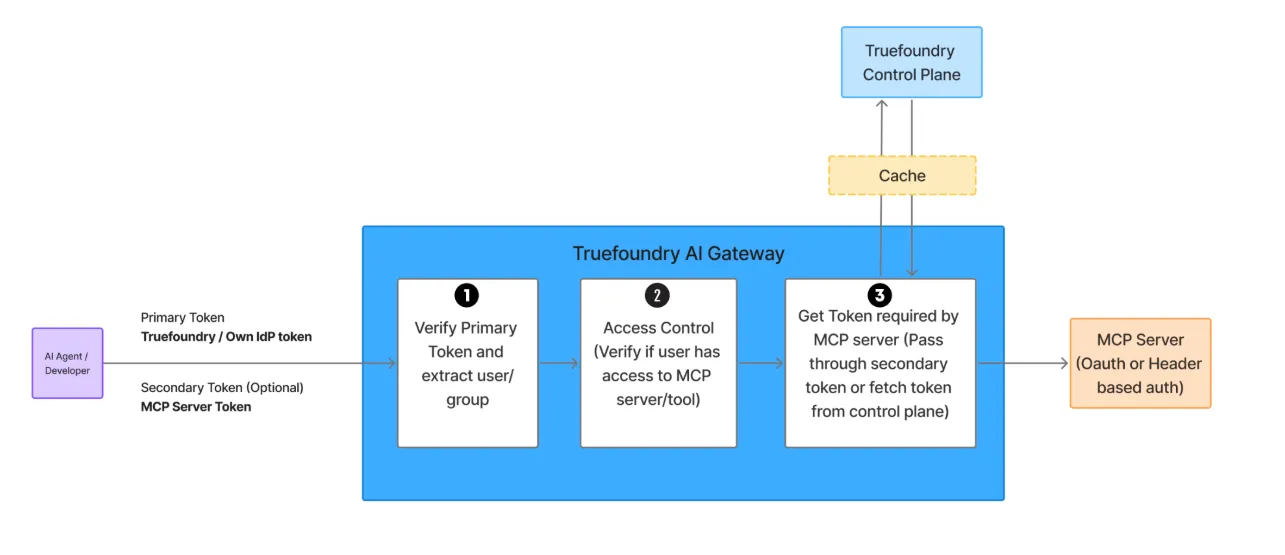
Our CTO Abhishek walkthroughs a simple model for MCP authorization within TrueFoundry's AI Gateway:
This “3-layer authN/Z” pattern removes one-off secrets, keeps attribution, and prevents over-privileged bots from doing irreversible damage.
Example: A PR-review agent can list PRs and leave comments, but AI gateway policy denies branches.delete even if a prompt tries “also delete main after summarizing.” The denial—and the identity behind the attempt—are logged.
We also covered what are virtual MCP servers. In short, don’t hand agents the entire Jira/GitHub/Confluence catalogs. Compose a Virtual MCP that exposes just what the workflow needs—for instance: Jira.create_issue, GitHub.create_pr, and Confluence.search_docs as a single Engineering MCP endpoint. You get cleaner prompts, faster approvals, and a smaller blast radius by design.
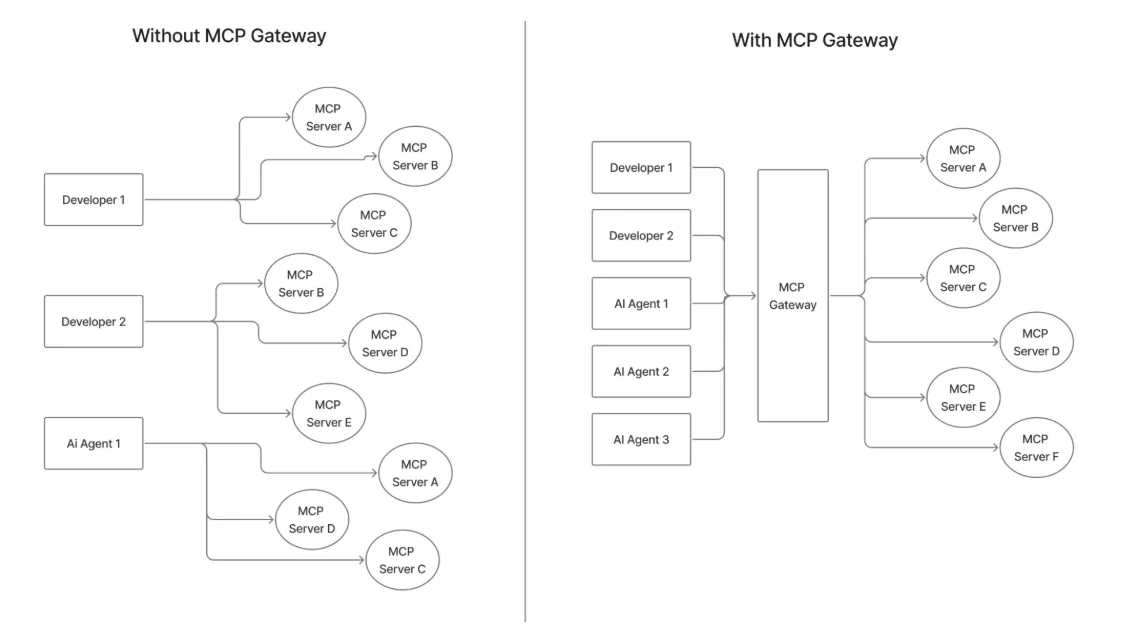
The best MCP gateways エージェントとツールの間でポリシー対応の交換台として機能します。
「MCPゲートウェイなし」と「MCPゲートウェイあり」を比較すると、その違いは歴然としています。特注の接続が減り、中央集権的な認証フロー、一元化された認証情報管理、エンタープライズグレードの監査証跡、そして管理されていないスクリプトの拡散ではなく、審査済みのサーバーカタログが提供されます。
アプリケーションごとに安全プロファイルを調整してレイテンシーと保護のバランスを取ることができ、すべての決定は監査目的でログに記録されます。
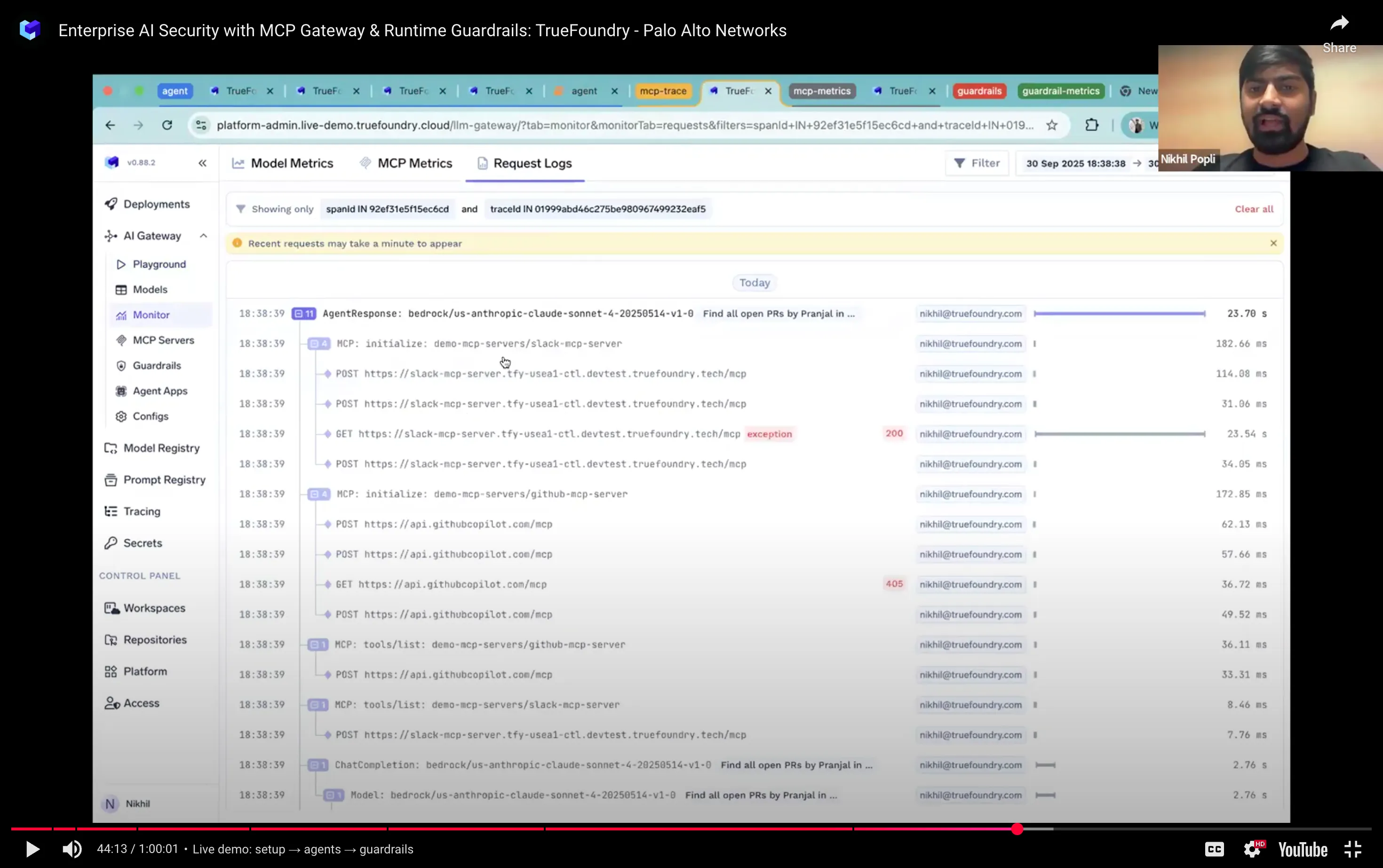
チームメイトの未解決のプルリクエストを一覧表示し、Slackで通知するエージェントをデモンストレーションしました。トレースには、ツール呼び出し、モデルの推論、タイミング、そして途中のガードレール決定など、各ステップが示されます。ダッシュボードは、どのツールが最も多くの呼び出しを消費しているか、レイテンシーの急増、ループのような動作を強調表示します。それが、 エージェントが安全であることを願うこと と、それが安全であることを知っていることとの違いです。 詳細については、ブログの後半に添付されているYouTubeリンクからご覧いただけます。
「通常のAPIゲートウェイを使えばいいのでは?」
AIワークロードには、ツールごとのトークン変換、ツールレベルのRBAC、入出力ガードレール、豊富な監査/追跡機能、スマートなツールルーティングといった新たな要件が加わるためです。従来のゲートウェイは、プロンプト、トレース、モデル/ツールのセマンティクスについて何も知りません。
「ChatGPTやクラウドIDEのような既存のツールも監視できますか?」
ツールがプロキシまたはカスタムモデルのエンドポイントを設定できる場合、ゲートウェイ経由でルーティングし、そこでガードレール/可観測性を適用します。そのような制御を公開していない場合、中間に透過的な検査を追加することはできません。
「有害なファインチューニングを避けるにはどうすればよいですか?」
データに注意してください。PII(個人識別情報)と機密情報を除外します。取り込むすべてのベースモデルの出所を検証します。トレーニング前にモデルファイルに隠された動作がないかスキャンします。
「開発者向けSDKはありますか?」
標準のMCPクライアントはすぐに使用できます。Prisma AIRSはサーバーとSDKを公開しており、ゲートウェイはPython/TypeScriptおよび一般的なエージェントフレームワーク向けのコピペ用スニペットを提供します。
見逃した方、またはプラットフォームチームやセキュリティチームに情報共有したい方は、こちらの録画をご覧ください。
YouTube: https://youtu.be/hWNV2v3C8SA
1ヶ月間のトライアルをご提供しています。 MCP Gateway—SaaSまたはセルフホスト型でご利用いただけます。コスト、レイテンシー、ガードレールプロファイルを調整するための30分間のアーキテクチャレビューをご希望でしたら、喜んでお手伝いさせていただきます。提供内容:
ご参加いただき、AIセキュリティの発展を推進してくださったPalo Alto Networksチームの皆様に心より感謝申し上げます。
エンタープライズAIセキュリティとは、プロンプトインジェクションやデータ抜き出しといった特殊な脅威からAIモデルと企業データを保護するために設計された、プロトコル、ツール、ポリシーからなる多層的なフレームワークです。モデルのインタラクションが安全かつコンプライアンスに準拠していることを保証するため、厳格なアクセス制御とリアルタイム監視の実装が含まれます。TrueFoundryはこれらの要件を単一のコントロールプレーンに集約することで、アーキテクチャの複雑さを増すことなく、様々なモデルや内部システムにわたるセキュリティ管理を可能にします。
エンタープライズAIセキュリティを維持することは、機密性の高い個人情報(PII)や知的財産が外部のモデルプロバイダーに誤って公開されるのを防ぐ上で極めて重要です。専用のセキュリティレイヤーがなければ、組織は規制違反のリスクや、自律型エージェントを危険にさらす可能性のある敵対的攻撃に対する脆弱性に直面します。TrueFoundryは、AIスタック全体をプライベートVPC内にデプロイすることでこれらの懸念に対処し、データの所在が維持され、すべてのツール呼び出しが完全に監査可能で統制されていることを保証します。
包括的なエンタープライズAIセキュリティ戦略において、MCPゲートウェイランタイムガードレールは、すべてのインタラクションをリアルタイムで検査するプロアクティブな防御レイヤーとして機能します。これらのガードレールは、機密情報を自動的に編集し、悪意のある入力をモデルや内部バックエンドシステムに到達する前にブロックします。TrueFoundryのゲートウェイは、これらのガードレールを使用してツール使用に対するきめ細かい権限を適用し、エージェントが安全で事前に定義された境界内で動作することを保証する動的な保護レイヤーを提供します。
TrueFoundry AI Gateway delivers ~3–4 ms latency, handles 350+ RPS on 1 vCPU, scales horizontally with ease, and is production-ready, while LiteLLM suffers from high latency, struggles beyond moderate RPS, lacks built-in scaling, and is best for light or prototype workloads.



.png)
.png)
.png)
.png)
.png)
.png)
.png)
.png)
.png)
.png)
.png)





