October 12, 2026
|
5 minutos de lectura


Obtenga acceso instantáneo a un entorno TrueFoundry en vivo. Implemente modelos, dirija el tráfico de LLM y explore la plataforma completa: su sandbox estará listo en segundos, sin necesidad de tarjeta de crédito.


Published: October 8, 2026
¡Una forma increíblemente rápida de crear, rastrear e implementar sus modelos!
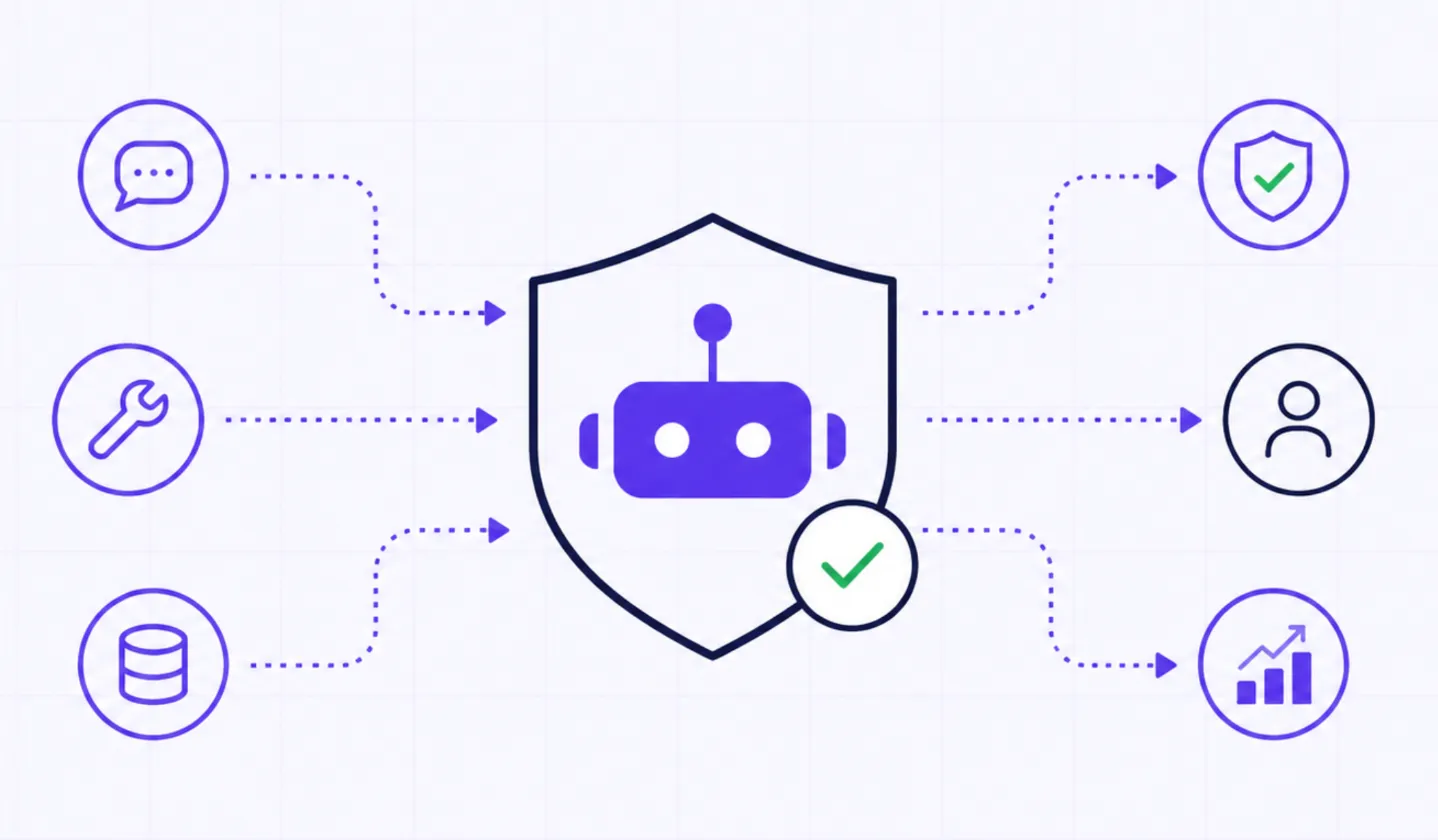
Un importante estudio de 2026 sobre la seguridad de los agentes LLM llega a una conclusión que los equipos empresariales deberían tomarse muy en serio: una vez que un modelo puede utilizar herramientas, conservar el estado y actuar en nombre de otra persona, la seguridad deja de ser principalmente un problema de filtrado de prompts. Se convierte en un problema de sistemas que abarca el flujo de información, la autoridad delegada y el estado persistente.
El estudio parte de un hecho arquitectónico sencillo: un agente LLM hace algo más que generar texto. Puede planificar, invocar herramientas, navegar, ejecutar código, actualizar el estado y coordinarse con otros agentes. Esas capacidades convierten las salidas del modelo en entradas para el flujo de control del software.
Eso cambia el modo de fallo. Una instrucción maliciosa oculta en una página web puede influir en una llamada a una herramienta posterior. El resultado de una herramienta envenenada puede convertirse en contexto para otra decisión. Una entrada de memoria comprometida puede sobrevivir a la sesión original. Una credencial delegada puede convertir un plan malintencionado en un efecto secundario real. En un sistema multiagente, la misma información contaminada puede propagarse más allá del agente que la encontró inicialmente.
Por lo tanto, el estudio estructura la seguridad de los agentes en torno a tres propiedades que interactúan entre sí:
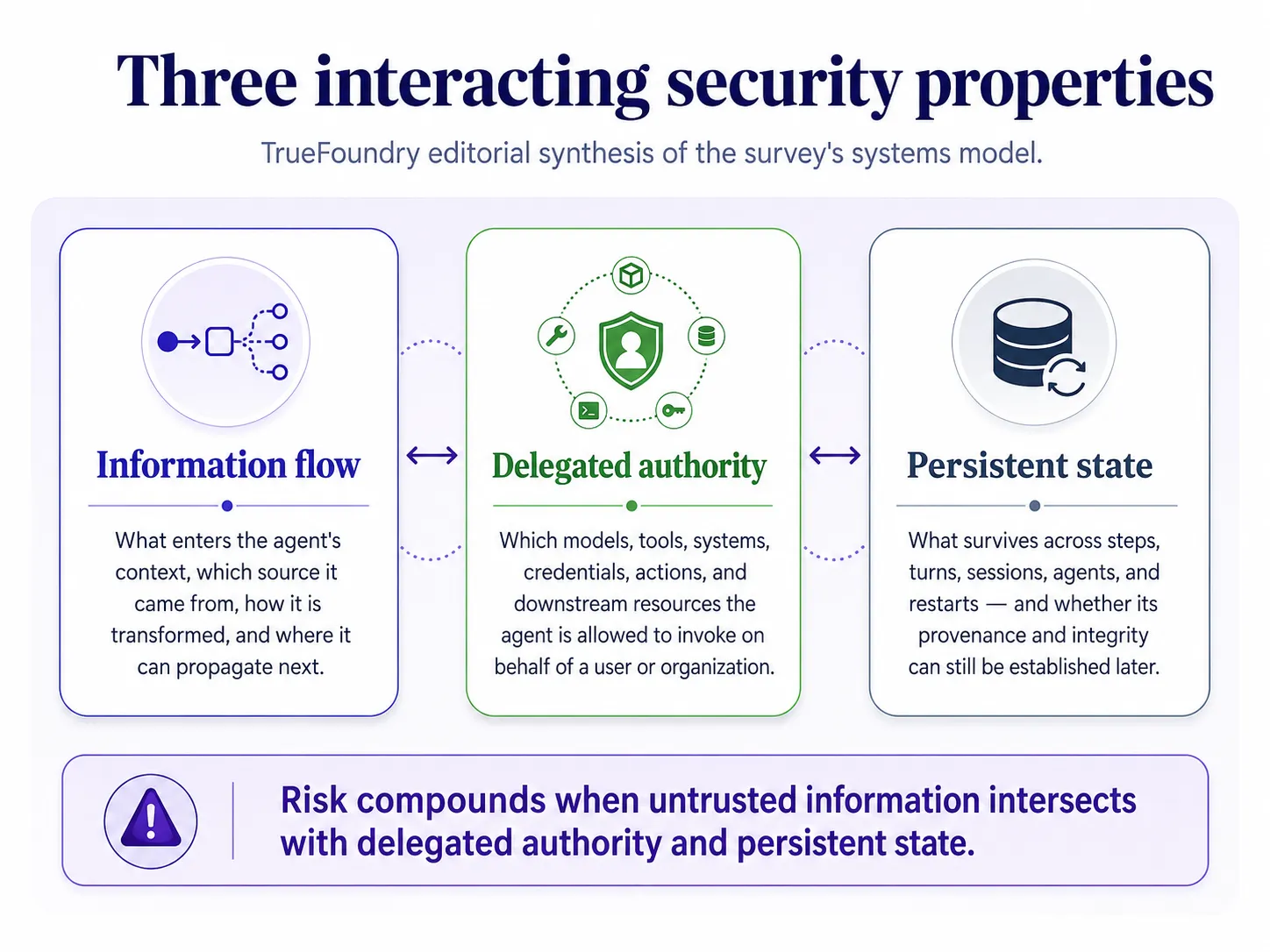
La implicación útil es que la arquitectura de agentes seguros no debería preguntarse solo: "¿Hemos bloqueado el prompt malicioso?". También debería preguntarse: ¿qué podría influir ese contenido, qué autoridad podría ejercer la trayectoria resultante y qué estado podría dejar atrás dicha trayectoria?
Ling y sus coautores utilizan un marco basado en el ciclo de vida y orientado a sistemas en lugar de una lista plana de nombres de ataques. Operativamente, es útil separar la ruta de acción principal (entrada, planificación, decisión, ejecución de herramientas y salida) de las superficies transversales como la memoria, la supervisión y la coordinación multiagente, ya que estas superficies pueden influir u observar múltiples etapas de la ejecución.
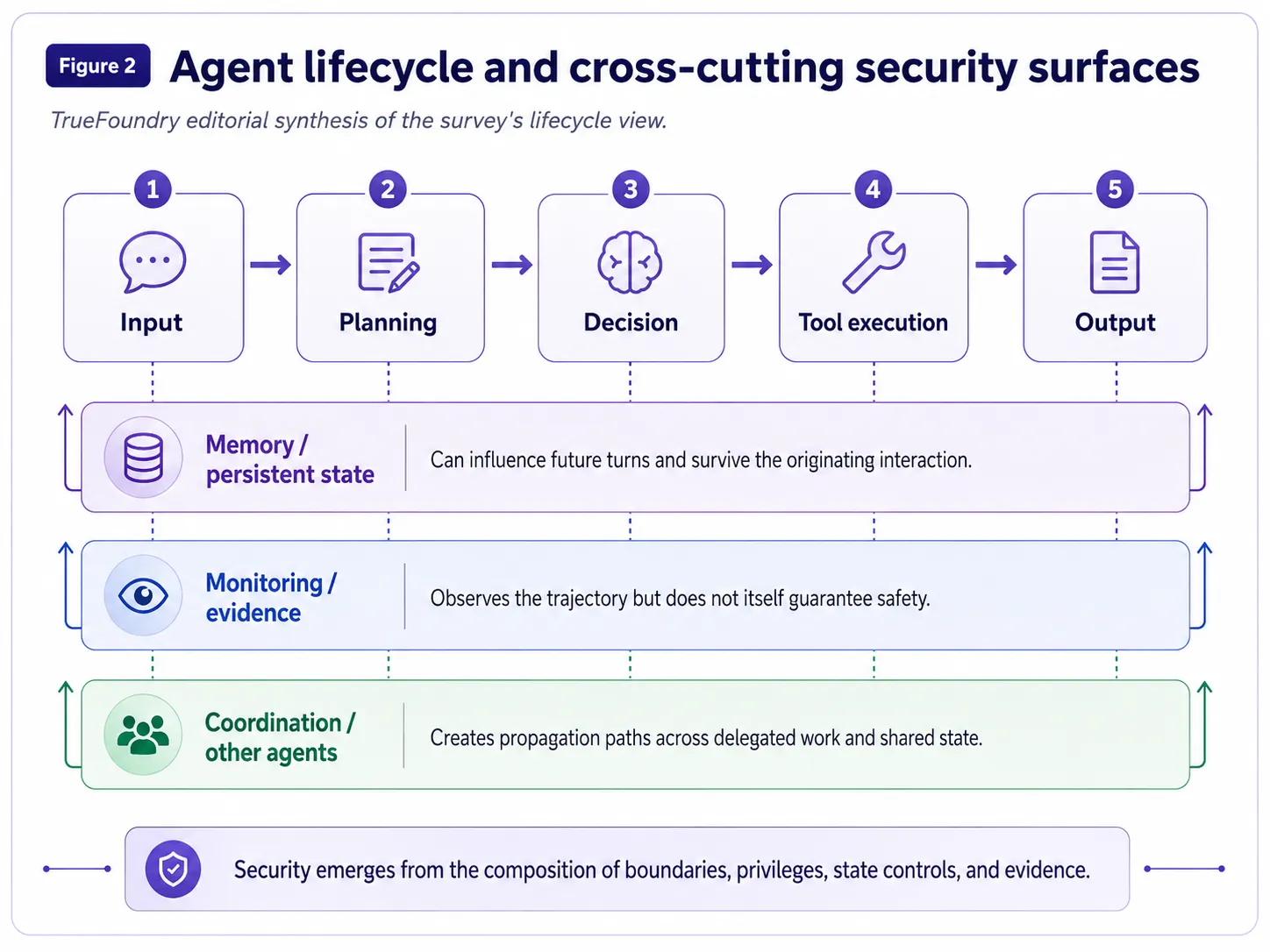
Esta perspectiva del ciclo de vida también explica por qué las defensas pueden ser "débilmente composicionales", como señala el estudio. Un filtro de contenido puede bloquear una clase de texto malicioso, pero no hacer nada respecto a las credenciales con privilegios excesivos. Un entorno aislado (sandbox) puede contener la ejecución de código, pero no impedir una llamada a una API autorizada. Una puerta de aprobación puede detener un efecto secundario, pero no una escritura en memoria envenenada. Un registro puede hacer que un incidente sea observable sin evitarlo.
La seguridad, por tanto, surge de la composición de límites, privilegios, controles de estado y evidencias.
El mapeo de producto más claro no es "TrueFoundry resuelve la seguridad de los agentes". Es preguntarse qué parte del modelo de sistemas del estudio puede gobernar de forma realista cada capa.
TrueFoundry AI Gateway ofrece una latencia de entre 3 y 4 ms, gestiona más de 350 RPS en una vCPU, se escala horizontalmente con facilidad y está listo para la producción, mientras que LitellM presenta una latencia alta, tiene dificultades para superar un RPS moderado, carece de escalado integrado y es ideal para cargas de trabajo ligeras o de prototipos.





Las últimas noticias, artículos y recursos enviados a tu bandeja de entrada
.png)
.png)
.png)
.png)
.png)
.png)