.png)
October 17, 2026
|
5 minutos de lectura


Obtenga acceso instantáneo a un entorno TrueFoundry en vivo. Implemente modelos, dirija el tráfico de LLM y explore la plataforma completa: su sandbox estará listo en segundos, sin necesidad de tarjeta de crédito.


Published: October 7, 2026
¡Una forma increíblemente rápida de crear, rastrear e implementar sus modelos!
On July 18, 2026, an explainx.ai article synthesized a fast-moving discussion around “graph engineering”: treating a multi-agent organization — its roles, dependencies, delegation paths, and runtime task structure — as an engineered graph. The label’s provenance is unsettled, and it collides with an older knowledge-graph usage; the underlying practice, graph-based orchestration, has a documented lineage.
Working definition: graph engineering designs the topology of a multi-agent system — which nodes exist (agents, deterministic functions, routers, human checkpoints), which transitions are permitted, and how runtime work graphs form and mutate — while loop engineering designs how each agentic node actually executes.
The enterprise thesis of this post: the orchestrator owns the graph; TrueFoundry governs the model and MCP-tool operations routed through its gateways and provides a managed runtime for Agent Harness agents — with an explicit product boundary stated below.
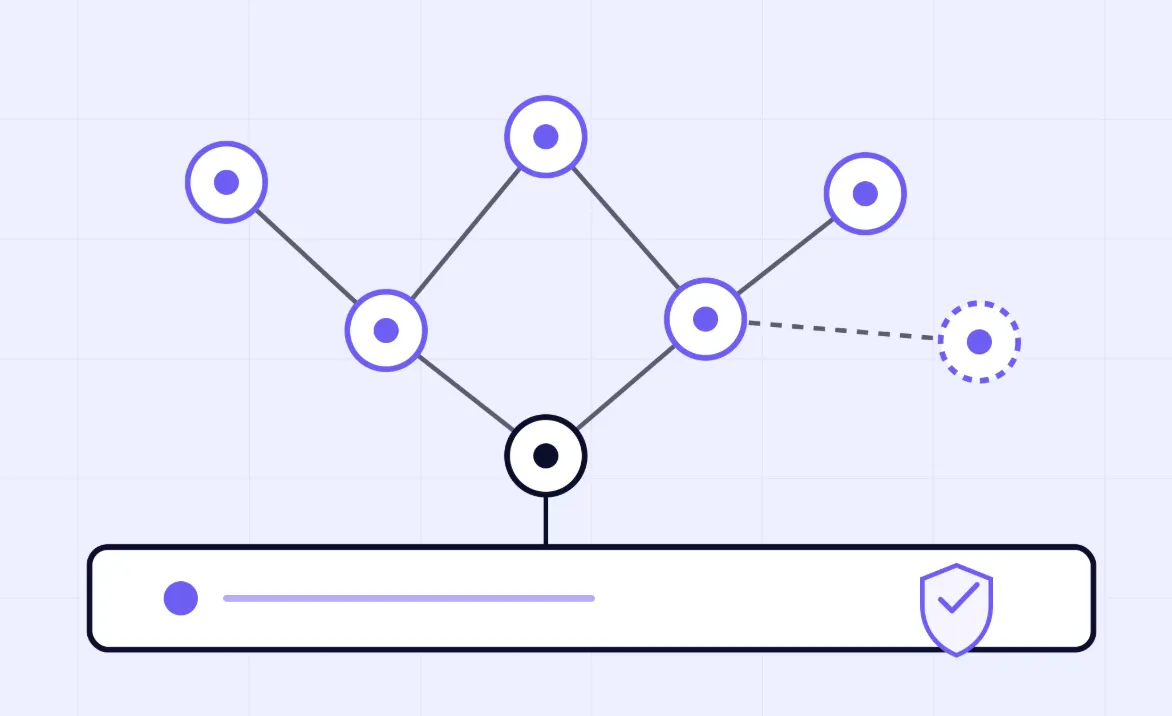
Graph engineering is the design and operation of a multi-agent system as an explicit graph of heterogeneous nodes — agents, deterministic functions, routers, joins, tools, human checkpoints — with communication and delegation as edges, and the topology itself — who exists, what each owns, who may talk to whom, how work routes — treated as a programmable, versionable artifact rather than an emergent accident. The synthesizing article's ownership example makes it concrete: a security agent that owns auth, permissions, and audit logs; a data agent that owns schema and migrations; an API agent that owns endpoints and contracts; a frontend agent that owns components and state — each a node with a mandate, wired into an organization whose structure is itself the engineered object (explainx.ai). One disambiguation matters immediately, both for readers and for anyone arriving from a search engine: this is not knowledge-graph engineering — the established discipline of building graph-structured data (entities, relationships, triple stores) for retrieval and reasoning. Knowledge graphs structure what a system knows; graph engineering in the 2026 sense structures who the system is — its members, mandates, and message paths. The two can and will co-exist in one architecture; they answer different questions.
New terms deserve their ancestry, and this one has an unusually rich line — which is worth tracing because it predicts where the practice will harden. The deepest root is the intuition that computation is a graph: early dataflow architectures explored the idea in hardware, and it resurfaced wherever work had to be decomposed and scheduled — compiler dependency graphs, MapReduce's implicit DAG, and then explicitly in the tools a generation of engineers grew up on: workflow orchestrators like Airflow made the DAG the unit of data engineering, and deep-learning frameworks made the computation graph the unit of model execution. A second root is older and closer to the point: decades of multi-agent systems research. Actor-style computation modeled independent actors exchanging messages; contract-net protocols had agents bidding for and delegating tasks — a work graph long before the label; and the distributed-AI community built vocabularies for agent communication and organization that read, today, like design docs for the systems now being wired. A third root is organizational: org charts, RACI matrices, and business-process notation are all graphs of who owns what and how work flows — and the July 18 article's "org graph" is, knowingly or not, the software import of that tradition. The modern convergence came fast: agent frameworks made graphs first-class objects in code (LangGraph's very name says so; AutoGen and CrewAI structured multi-agent conversation and crews), Google's A2A protocol (2025) proposed a standardized protocol for agent discovery, task management, messages, artifacts, and coordination between agents — a layer we examined in our multi-agent governance post — and by mid-2026 the practitioner ladder ran prompt → context → loop, with loop engineering's June synthesizing moment supplying the template graph engineering's July moment reused. Our synthesis, offered with the humility an emerging term demands: graph engineering is not an invention but a naming event — the moment a practice assembling for decades became discussable as one thing. Naming events matter; they are when tooling, hiring, and — our beat — operations discourse begins.
The synthesizing article's progression table is the cleanest way to place the term, and it rewards one addition. Prompt engineering controls one model response; its primitive is instruction text; it suffices for static, one-shot tasks. Context engineering controls what the model sees; its primitives are retrieval, memory, and window budgets. Loop engineering controls one agent's behavior cycle — the observe-reason-act-verify loop, its stopping conditions, its tool discipline — and it is where our own two-part treatment lives: Part One argued that a loop that works on a laptop and a loop that runs in an enterprise differ not in the loop but in what surrounds it (identity, budgets, guardrails, traces), and Part Two argued that many governed loops constitute a fleet — an operations problem with its own disciplines, not merely a bigger loop. Graph engineering controls topology across heterogeneous nodes — agentic loops, deterministic operations, routers, joins, tools, and human checkpoints — defining which nodes exist, what each owns, which transitions are permitted, and how work flows between them. The addition worth making explicit: these layers compose rather than supersede. A graph whose nodes have unengineered loops is an org chart of unreliable employees; a graph whose loops are excellent but whose topology is accidental is our fleet post's warning realized — coordination failure at scale. Anyone searching for whether graph engineering replaces loop engineering should leave with the answer: no; it names the layer above it, and inherits its requirements at a multiplier set by topology and runtime behavior — fan-out, retries, concurrency, tool use, context size, and caching — not by node count alone.
Now a part that depends little on how the definition evolves. Production multi-agent graphs combine agentic and deterministic components: agentic callers may hold identities, invoke models and tools, and create dynamic work, and the resulting operational load depends on topology, fan-out, retries, concurrency, and runtime mutation. Governance: each independently governed caller or service agent needs a resolved identity; in-process deterministic nodes may operate under the identity of their containing service unless the architecture requires separate policy or attribution — the virtual accounts, RBAC, and per-user delegation our agent identity census detailed — because "the graph did it" is not an audit answer; gateway-mediated model requests and MCP tool invocations emitted by the graph need policy (which nodes may reach which tools is registry configuration: tool-level restrictions and virtual MCP servers scoping each node to its mandate); and apply the four documented guardrail hooks to gateway-mediated model requests and MCP tool invocations emitted by the graph — output guardrails require non-streamed responses, and system prompts are excluded by default — llm_input, llm_output, and the pre/post tool-invoke pair — so applying those hooks can help detect, block, or redact configured classes of risky content before they propagate between participating nodes; it does not eliminate cross-agent prompt-injection risk, the graph-scale version of the indirect-injection argument in our single-token-sequence post (guardrails docs; MCP Gateway docs). Cost control: A work graph can increase model and tool calls through fan-out, retries, and dynamically spawned subtasks, so cost control must be explicit. Budget rules are created at tenant or team scope and can allocate separate limits per virtual account or metadata value. Rate-limit rules can match or partition by supported metadata dimensions. Propagating graph_id or node_id creates that mapping; the gateway does not infer graph membership (budget docs; rate-limit docs).
Authorization: Bearer <node-specific-virtual-account-token>
X-TFY-METADATA: {
  "graph_id": "release-review",
  "run_id": "run-8f31",
  "node_id": "security-reviewer"
}
Illustrative correlation pattern: a distinct virtual-account token plus propagated graph, run, and node identifiers.
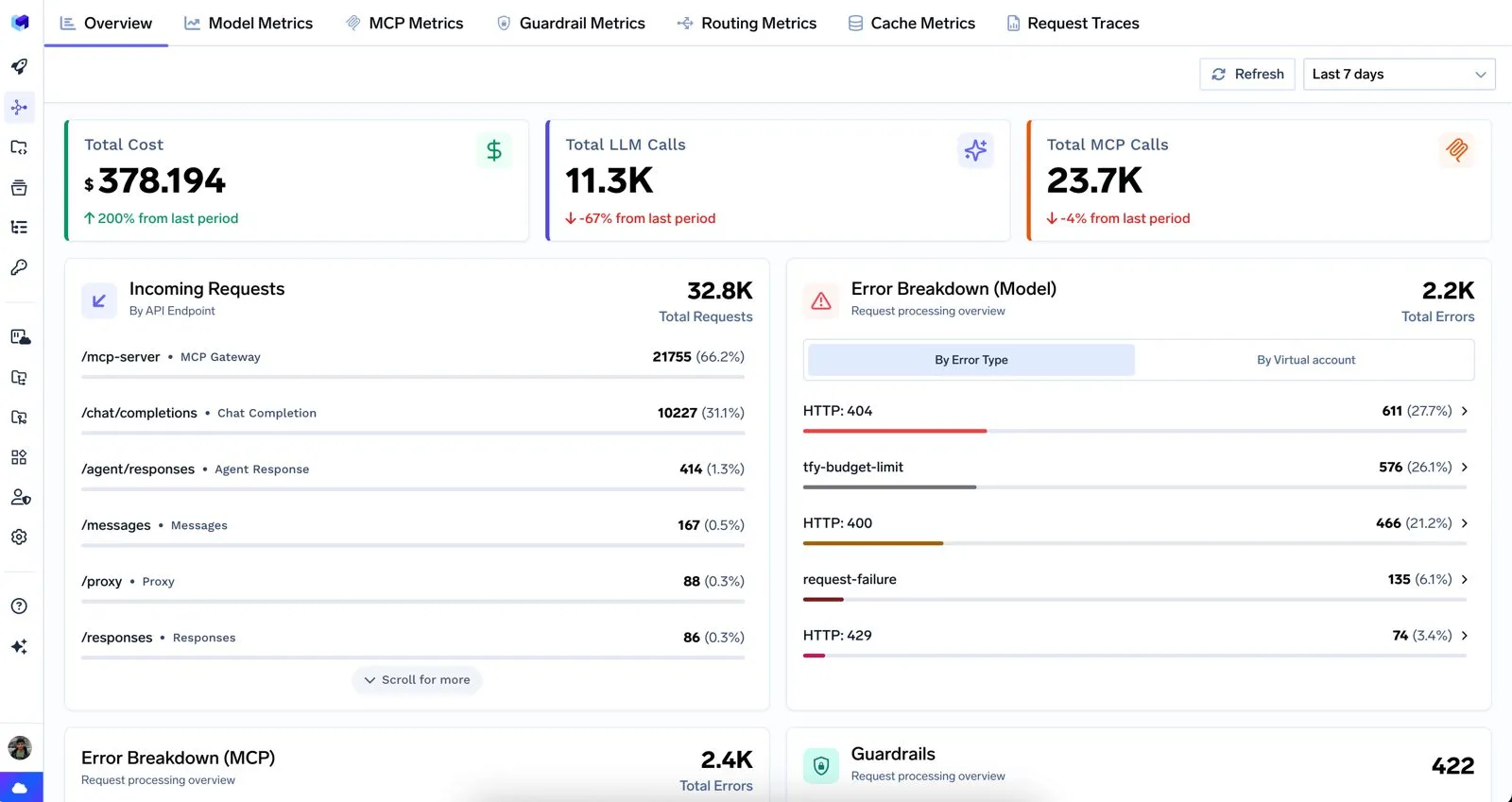
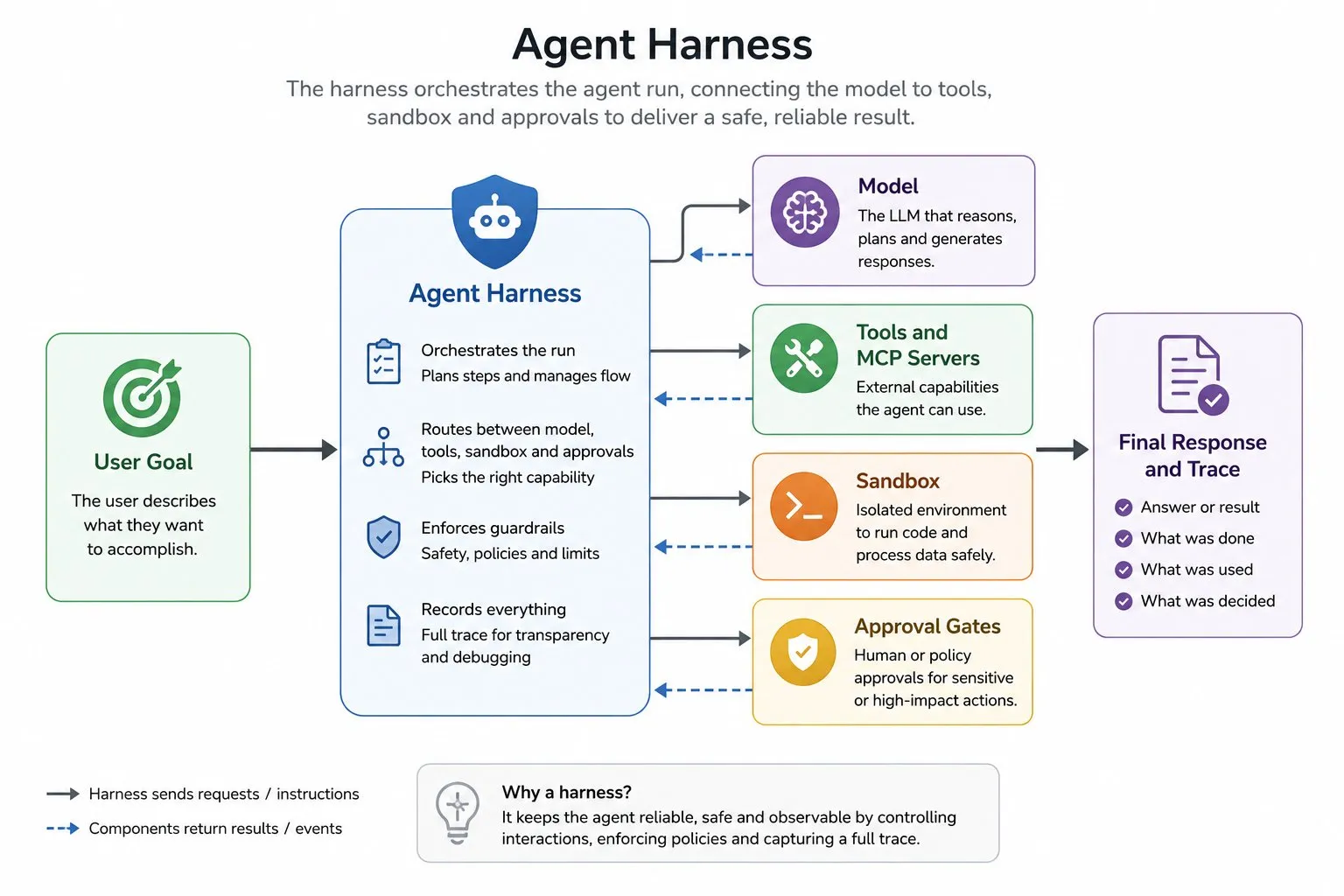
Observability: this is where the difference between intended roles and the work that actually ran becomes tractable — for gateway-mediated requests carrying stable graph, run, and node identifiers, gateway metrics and request records can support node-associated cost, latency, model, and tool analysis, alongside request-level records with caller identity and policy outcomes, which, when the orchestrator emits stable graph_id, run_id, and node_id identifiers, can be correlated with the orchestrator's own execution trace — the orchestrator remains the source of truth for topology; the gateway contributes model, tool, policy, latency, and cost evidence for the operations it observes (Metrics Dashboard docs). The managed agent runtime: agentic nodes run loops; other node types — deterministic functions, routers, joins, human checkpoints — do not, and the TrueFoundry Agent Harness is the documented place a loop runs governed — orchestration, memory, MCP tool access, step-level traces with cost per step, and human approval gates on configured sensitive actions, which in a graph become something genuinely new: structural checkpoints, human approval checkpoints before configured sensitive tool calls at exactly the edges where consequence concentrates. Optimization: node-associated attribution — available for gateway-mediated requests carrying stable identifiers — turns the graph into a tunable system — the expensive node gets a cheaper model via routing, the repeated sub-task gets semantic caching, a flaky model target can receive a gateway fallback chain; retry and recovery behavior for orchestration edges remains the graph runtime's responsibility — the same levers our gateway posts document, now with a topology to aim them at.
For the team asked this quarter to take a multi-agent graph to production, the requirements compress to seven questions, each spanning both the orchestration layer and the governed execution plane: Does every independently governed caller have a resolved identity? Do gateway-mediated model and MCP calls carry stable graph, run, and node identifiers? Does the orchestrator record the actual runtime work graph? Can orchestration traces be correlated with gateway cost, policy, latency, and tool records? Are graph- or node-associated budget rules mapped through virtual accounts or metadata? Are sensitive tool actions protected by explicit approval checkpoints? Are model changes isolated behind virtual-model routing where the request contract permits it? Each unanswered item is a plausible incident location.
Predictions, clearly labeled as such and lightly held. Expect the vocabulary to churn — "org graph" and "work graph" may not be the terms that survive, and rival framings will appear within weeks, as they did for loop engineering. Expect frameworks to race to claim the word, and expect the interesting engineering to concentrate exactly where the July 18 article's primitives meet: runtime work-graph mutation under stable org-graph policy — who may spawn a node, what a spawned node inherits, how a cancelled task's side effects unwind. The standards conversation (A2A and its successors) will continue at the edge layer. Enterprise requirements become visible as these systems move from isolated experiments into shared production, at which point the questions in the checklist above stop being a blog's framing and start being procurement criteria. We will keep this guide updated as all of that unfolds; the naming discussion is recent, and coverage of an emerging term is a commitment to revision. What is likely to remain relevant is the closing claim, because it is the oldest lesson in this blog's archive dressed in the newest vocabulary: paradigms are born on X and in frameworks, but they grow up in production. Regardless of which terminology survives, durable operation will require explicit ownership across orchestration, identity, policy, budgets, approvals, and evidence.
“Prompt engineering, context engineering, harness engineering, loop engineering, and now graph engineering — the labels will keep arriving, and some will be weekly. What has not changed once in that entire run is what it takes to put any of them in front of customers: governed access, budgets, guardrails, identity, and traces. Keep learning the new paradigms — and double down on the infrastructure that makes every one of them deployable.”
That is the practical takeaway for an enterprise reader of this post: graph engineering is early — early enough that this article had to note the term’s provenance is unsettled — but whichever way the orchestration layer evolves, some graph nodes will call models or MCP tools, while others remain deterministic or human-controlled. The gateway-mediated traffic — model calls and MCP tool invocations — needs the same governance it needs today, correlated with the orchestrator’s own record of the graph.
And the execution layer inside each agentic node — the loop — already has a managed home: the Agent Harness, the runtime in which agents plan, act, and observe under approvals, sandboxing, and step-level traces. Our loop-engineering post and its fleet-scale sequel cover that layer in depth; graph engineering, as it matures, is the discipline that will arrange those governed loops into organizations.
No. La ingeniería de grafos de conocimiento estructura datos (entidades y relaciones) para la recuperación y el razonamiento. La ingeniería de grafos, en el sentido multiagente de 2026, estructura el sistema: nodos heterogéneos, transiciones permitidas, responsabilidades y el grafo de trabajo en tiempo de ejecución. Una misma arquitectura puede utilizar ambos.
La ingeniería de grafos en producción abarca el orquestador, la instrumentación de aplicaciones y el plano de ejecución gobernado. El orquestador registra la topología y el estado del grafo en tiempo de ejecución; los llamadores participantes propagan los identificadores del grafo, de la ejecución y del nodo; y TrueFoundry puede aplicar identidad, políticas de acceso, presupuestos, límites de tasa, barreras de seguridad, aprobaciones, registros y métricas a las operaciones de modelos y MCP mediadas por puerta de enlace.
Los marcos de trabajo de grafos proporcionan la topología y la orquestación, mientras que protocolos como A2A pueden soportar la comunicación entre agentes. TrueFoundry puede proporcionar ejecución gestionada para agentes de Agent Harness, así como gobernanza, presupuestos, barreras de seguridad, registros de solicitudes y métricas para las operaciones de modelos y MCP enrutadas a través de sus puertas de enlace. La correlación a nivel de nodo requiere identidades resueltas o identificadores distintos propagados por la aplicación.
La terminología extraída del artículo del 18 de julio se atribuye en el texto; sus argumentos sustantivos se parafrasean con enlaces. El mapeo empresarial es una estructura editorial de TrueFoundry —el artículo del 18 de julio no trata sobre operaciones empresariales ni sobre ningún proveedor— y las capacidades se parafrasean a partir de la documentación pública de TrueFoundry vigente al 19 de julio de 2026. La ingeniería de grafos es un marco emergente cuya procedencia terminológica aún no está definida; esta guía se revisará a medida que el paradigma evolucione, y la fecha de su última actualización sustantiva se indica en los metadatos de la página.
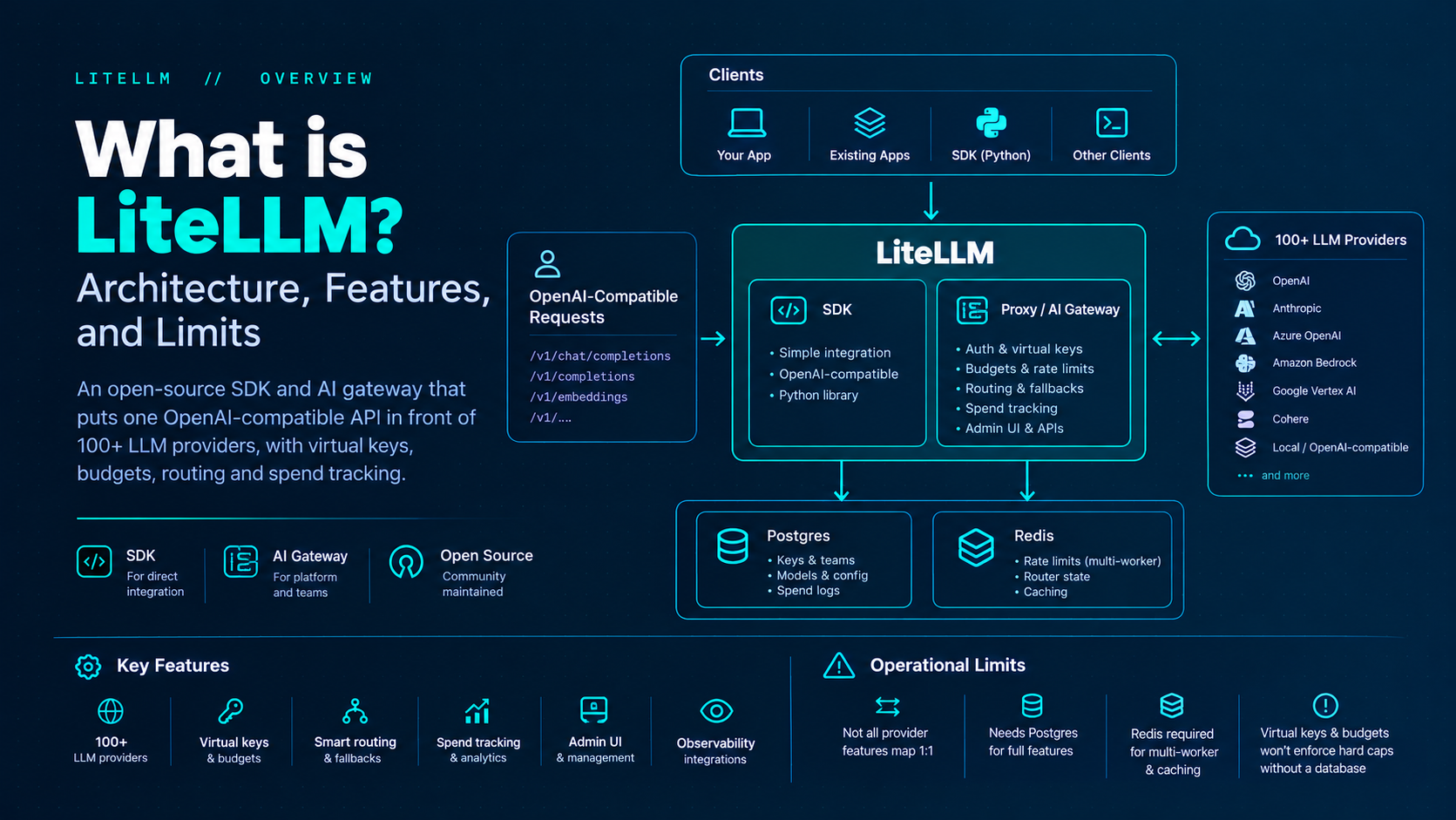
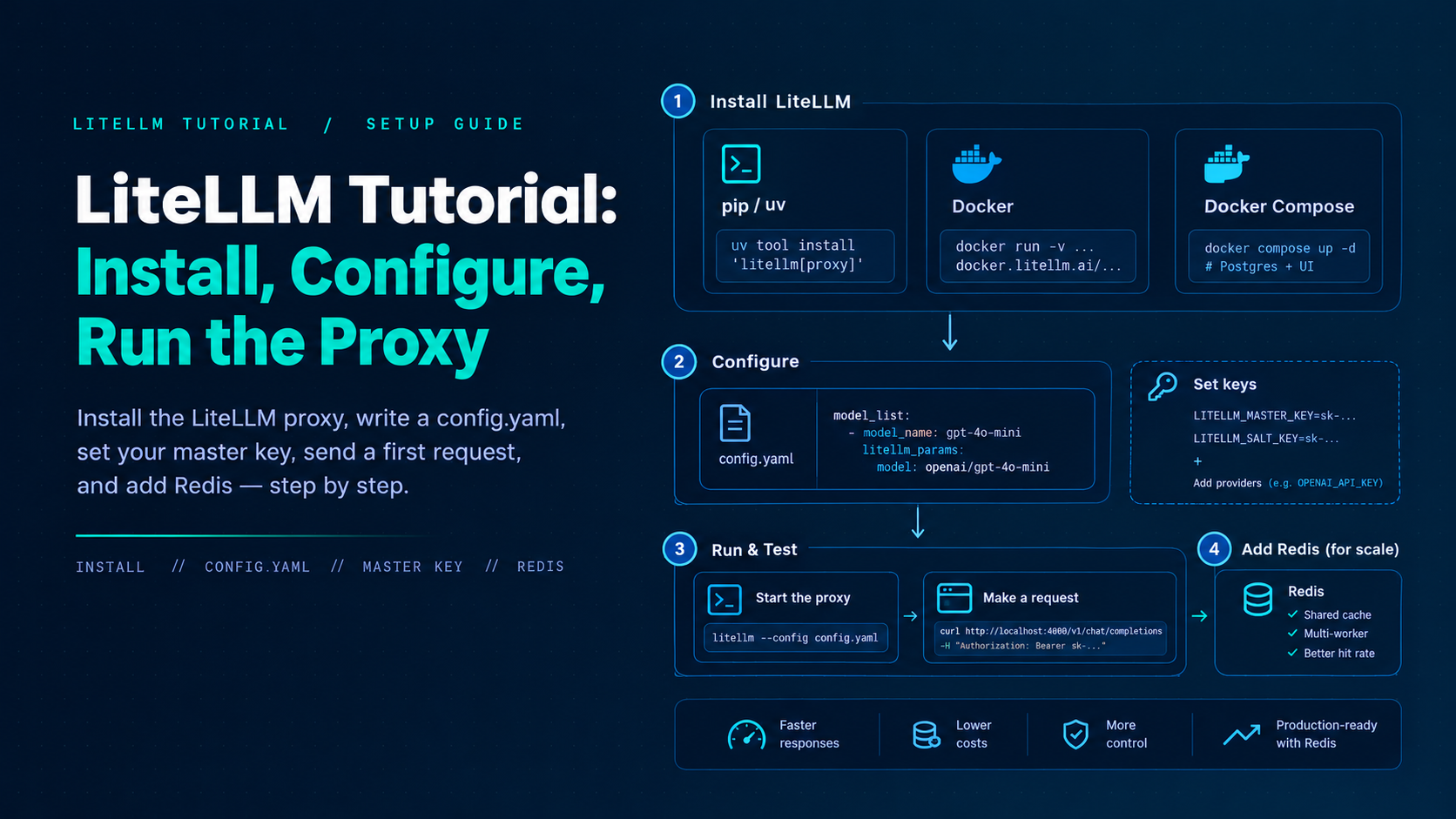
TrueFoundry AI Gateway ofrece una latencia de entre 3 y 4 ms, gestiona más de 350 RPS en una vCPU, se escala horizontalmente con facilidad y está listo para la producción, mientras que LitellM presenta una latencia alta, tiene dificultades para superar un RPS moderado, carece de escalado integrado y es ideal para cargas de trabajo ligeras o de prototipos.





Las últimas noticias, artículos y recursos enviados a tu bandeja de entrada
.png)
.png)
.png)
.png)
.png)
.png)
.png)
.png)