


.webp)
October 21, 2026
|
Lesedauer: 5 Minuten


Erhalten Sie sofortigen Zugriff auf eine TrueFoundry-Live-Umgebung. Stellen Sie Modelle bereit, leiten Sie den LLM-Verkehr weiter und erkunden Sie die gesamte Plattform — Ihre Sandbox ist in Sekundenschnelle einsatzbereit, ohne dass eine Kreditkarte erforderlich ist.



Unglaublich schnelle Methode zum Erstellen, Verfolgen und Bereitstellen Ihrer Modelle!
LangGraph hat sich zu einem der beliebtesten Frameworks für die Entwicklung langlebiger KI-Agenten entwickelt. Es wurde von den Machern von LangChain entwickelt und bietet dauerhafte Ausführung, Checkpointing, Human-in-the-Loop-Workflows und zustandsorientierte Orchestrierung.
Die Preisgestaltung von LangGraph verwirrt viele aus einem einfachen Grund: Das LangGraph-Framework selbst kostet nichts. Es ist Open Source, und Sie können damit kostenlos Agenten erstellen und ausführen. Was tatsächlich auf einer Rechnung erscheint, ist alles, was damit zusammenhängt – hauptsächlich die LangGraph-Plattform für das Hosting und LangSmith für Tracing und Evaluierung. Wenn Sie ein Budget für einen produktiven Agenten auf Basis von LangGraph planen, ist dies der Leitfaden, der zwischen kostenlosen und kostenpflichtigen Komponenten unterscheidet.
Dieser Leitfaden richtet sich an Engineering-Teams, die LangGraph evaluieren, bevor sie ein echtes Budget dafür einplanen – sei es ein Platform Lead, der eine Build-vs-Buy-Entscheidung abwägt, oder ein Entwickler, der seinem Vorgesetzten die anfallenden Kosten erklären muss.
Die kostenlosen Tarife sind für Prototyping absolut brauchbar. Zusätzliche Kosten entstehen für Teams meist dann, wenn sie von ersten Experimenten zu dauerhaftem Produktions-Traffic übergehen.
Das Trace-Volumen ist einer der ersten Punkte, die man im Auge behalten sollte. LangSmith Plus beinhaltet 10.000 Basis-Traces pro Monat; darüber hinaus wird die Trace-Nutzung nach dem Pay-as-you-go-Prinzip abgerechnet. Ein Trace repräsentiert eine einzelne Ausführung einer Anwendung und kann viele einzelne Ereignisse enthalten, einschließlich LLM-Aufrufen und Tool-Aufrufen. Bei Agenten, die eine große Anzahl an Ausführungen generieren, kann der Verbrauch daher schnell über das enthaltene Kontingent hinauswachsen.
Die Datenaufbewahrung (Retention) ist ein separater Aspekt. Basis-Traces werden 14 Tage lang gespeichert, während erweiterte Traces bis zu 400 Tage aufbewahrt werden können. Eine längere Aufbewahrungsdauer ist nützlich für langfristiges Debugging, Evaluierung und Analyse, ist jedoch mit zusätzlichen Kosten verbunden. LangSmith ermöglicht es Teams zudem, Traces selektiv hochzustufen, anstatt alles für den längeren Zeitraum zu speichern.
Die Kosten für Benutzerlizenzen (Seats) fallen pro Nutzer an. LangSmith Plus kostet 39 $ pro Nutzer und Monat. Ein fünfköpfiges Plattform-Team würde also 195 $/Monat zahlen, zuzüglich nutzungsabhängiger Gebühren. Der Plus-Tarif beinhaltet 10.000 Basis-Traces pro Monat und eine kostenlose kleine serverlose Bereitstellung; zusätzliche Bereitstellungsressourcen werden nach Verbrauch abgerechnet.
Bereitstellung und Rechenleistung können eine weitere Kostenebene hinzufügen. LangSmith Deployment ist im Plus-Tarif durch eine kostenlose kleine serverlose Bereitstellung enthalten, aber zusätzliche serverlose oder dedizierte Bereitstellungen werden basierend auf den verbrauchten Ressourcen gemessen. Die Nutzung von Engine, Fleet und Sandbox wird ebenfalls separat über LangChain Compute Units (LCUs) und Storage Units (LSUs) abgerechnet.
Das Self-Hosting von LangGraph ist etwas anderes. Das Open-Source-Framework LangGraph ist lizenzgebührenfrei, aber Sie sind selbst für die Infrastruktur verantwortlich: Rechenleistung, Speicher, Monitoring, Observability, Anmeldedaten und der operative Aufwand, der erforderlich ist, um produktive Agenten am Laufen zu halten. Dass das Framework kostenlos ist, bedeutet nicht, dass der Produktions-Stack kostenlos ist.
Ja, aber es hängt davon ab, welchen Teil des LangGraph-Ökosystems Sie nutzen. Das Kern- LangGraph-Framework ist kostenlos und Open Source unter der MIT-Lizenz.Damit können Sie KI-Agenten erstellen und auf Ihrer eigenen Infrastruktur ausführen, ohne eine Lizenzgebühr an LangChain zu zahlen.
Kosten entstehen erst, wenn Sie verwaltete Dienste hinzufügen. Das gehostete Bereitstellungsangebot von LangChain, früher bekannt als LangGraph Platform, ist jetzt Teil von LangSmith Deployment. Der Plus-Plan von LangSmith beginnt bei 39 $ pro Nutzer und Monat und beinhaltet den Zugriff auf Deployment sowie weitere LangSmith-Funktionen. Zusätzliche Bereitstellungen und Nutzungen werden basierend auf den Ressourcen abgerechnet, die Ihre Agenten verbrauchen.
LangSmith bietet zudem Funktionen für Observability, Evaluierung, Debugging und weitere Möglichkeiten zur Agentenentwicklung. Der Developer-Plan ist für einen Nutzer mit bis zu 5.000 Basistraces pro Monat kostenlos, während der Plus-Plan 10.000 Basistraces pro Monat umfasst, bevor nutzungsabhängige Gebühren anfallen.
Während also LangGraph selbst kostenlos ist, kann der Betrieb von LangGraph-Agenten in der Produktion Kosten für Bereitstellung, Rechenleistung, Speicher, Tracing, Evaluierungen und Modellnutzung verursachen. Wenn Sie das Open-Source-Framework selbst hosten, vermeiden Sie die Plattformgebühren von LangChain, übernehmen jedoch die Verantwortung für den Betrieb der zugrunde liegenden Infrastruktur.
LangGraph selbst ist kostenlos und Open Source, aber LangChain bietet zusätzliche Dienste für Teams, die verwaltete Bereitstellung, Observability, Evaluierung und weitere Produktionsinfrastruktur benötigen.
Im Überblick:
Das richtige Setup hängt davon ab, ob Sie mit Agenten experimentieren, einige wenige Anwendungen bereitstellen oder diese im Unternehmensmaßstab betreiben. Bei einer selbst gehosteten Lösung fallen für das Framework selbst keine Lizenzgebühren an, Sie müssen jedoch die Kosten für Ihre eigene Rechenleistung, Speicherung, Überwachung und Betriebsinfrastruktur berücksichtigen.
Hinweis: Die Preisgestaltung von LangChain ist über die enthaltenen Kontingente hinaus nutzungsabhängig, daher gibt es keinen pauschalen monatlichen Festpreis für den Betrieb von LangGraph-Agenten in der Produktion.
Das LangGraph-Framework ist vollständig kostenlos nutzbar und wird unter der MIT-Lizenzveröffentlicht. Es fallen keine LangChain-Lizenzgebühren für das Open-Source-Framework an, und es kann für kommerzielle Anwendungen verwendet werden.
Mit dem Open-Source-Framework können Sie agentenbasierte Anwendungen mit folgenden Funktionen erstellen:
Dadurch eignet sich LangGraph für:
Der wichtige Unterschied ist, dass kostenlos nicht bedeutet, dass keine Produktionskosten anfallen. Die LangGraph-Bibliothek stellt das Orchestrierungs-Framework bereit, aber beim Self-Hosting sind Sie selbst für die dazugehörige Infrastruktur verantwortlich: Rechenleistung, Speicher, Datenbanken, Monitoring, Observability, Sicherheit, Bereitstellung und Skalierung. Zudem zahlen Sie den jeweiligen Modellanbietern für die Token, die Ihre Agenten verbrauchen.
Für Teams, die diese Infrastruktur nicht selbst betreiben möchten, bietet LangSmith verwaltete Dienste für Observability und Deployment. LangSmith Deployment wurde speziell für den Betrieb von langlebigen, zustandsbehafteten und schwankenden Agenten entwickelt und bietet Funktionen wie dauerhafte Ausführung, Persistenz, Streaming, Aufgabenwarteschlangen und horizontale Skalierung.
Während LangGraph die Agenten-Orchestrierung übernimmt, ist LangSmith die Plattform von LangChain für das Tracing, Debugging, Evaluieren und Monitoring von LLM-Anwendungen. Sie ist als eigenständige Entwicklerplattform verfügbar und lässt sich eng mit LangGraph integrieren – für Teams, die Transparenz darüber benötigen, wie sich ihre Agenten in der Produktion verhalten.
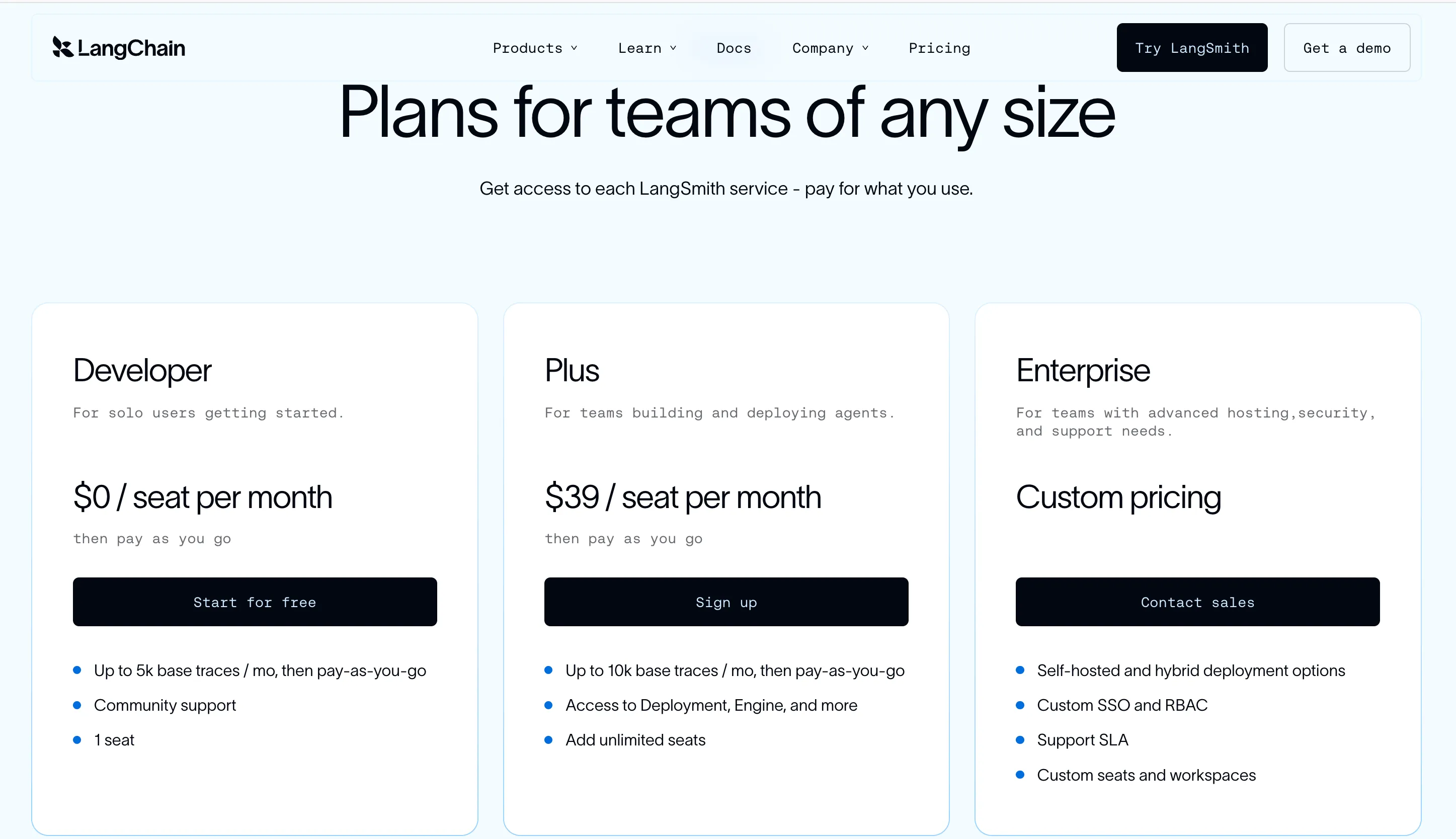
Der Developer-Plan ist für Einzelentwickler und kleine Projekte konzipiert. Er beinhaltet:
Sobald Sie das enthaltene Trace-Kontingent überschreiten, wird die Nutzung nach Hinterlegung einer Zahlungsmethode nutzungsabhängig abgerechnet.
Für einzelne Entwickler, die mit LangGraph und LangSmith experimentieren, reicht dies in der Regel aus, um ohne monatliches Abonnement loszulegen.
Der Plus-Plan kostet 39 $ pro Nutzer und Monat und richtet sich an Teams, die Agenten entwickeln und bereitstellen.
Er beinhaltet:
Die aktuelle nutzungsbasierte Preisgestaltung von LangSmith trennt Tracing von Rechenleistung und Speicher. Basistraces werden mit 0,0005 $ pro Traceberechnet, während Traces, die für den erweiterten Zeitraum von 400 Tagen gespeichert werden, insgesamt 0,005 $ pro Tracekosten.
Die Stufe mit erweiterter Aufbewahrungsdauer ist relevant, wenn Sie Traces für langfristige Auswertungen, Fehlerbehebungen oder Analysen benötigen. Basistraces werden standardmäßig 14 Tage lang aufbewahrt, während erweiterte Traces 400 Tage lang gespeichert bleiben. Bestimmte Funktionen, wie das Hinzufügen von Feedback oder das Ausführen spezifischer Evaluatoren und Automatisierungsregeln, können einen Trace automatisch in die erweiterte Stufe hochstufen.
Der Enterprise-Plan nutzt Individuelle Preisgestaltung und richtet sich an Unternehmen, die erweiterte Funktionen für Sicherheit, Bereitstellung, Verwaltung und Support benötigen.
Dazu gehören Funktionen wie:
Unternehmen müssen LangChain kontaktieren, um Preise für die Enterprise-Version zu erhalten.
Es ist zudem wichtig, den Abonnementpreis für LangSmith von den Kosten für den Betrieb von Agenten zu trennen. Die Nutzung von LangSmith kann Gebühren für Tracing, Rechenleistung und Speicher umfassen. Das aktuelle Preismodell verwendet LangChain Compute Units (LCUs) zu 1,50 $/LCU und LangChain Storage Units (LSUs) zu 1,00 $/LSU, wobei der tatsächliche Verbrauch davon abhängt, was Ihre Agenten ausführen.
Für LangSmith Deployment fallen ebenfalls nutzungsabhängige Gebühren an. Beispielsweise werden für bereitgestellte LangGraph-Agenten derzeit 0,005 $ pro Deployment-Laufberechnet, zuzüglich der Kosten für die Bereitstellungszeit.
Die Kosten für den produktiven Einsatz von LangGraph beschränken sich also nicht nur auf das Plus-Abonnement für 39 $. Ihre Gesamtrechnung kann sich zusammensetzen aus Lizenzen + Traces + erweiterte Speicherdauer + Rechenleistung + Speicherplatz + Bereitstellungsnutzung, zusätzlich zu den Kosten für die zugrunde liegende LLM-API.
Der Listenpreis ist nur ein Teil der Kosten. Sobald Sie LangGraph-Agenten produktiv einsetzen, müssen Sie auch die Infrastruktur und den operativen Aufwand berücksichtigen, der damit verbunden ist.
Bei einer selbst gehosteten LangGraph-Bereitstellung sind Sie für die zugrunde liegende Rechenleistung, Datenbanken, Speicher, Netzwerk, Monitoring und Skalierung verantwortlich. Wenn Sie LangSmith für Observability und Managed Deployment nutzen, fallen für diese Dienste eigene Kosten für Lizenzen, Tracing, Rechenleistung, Speicher und Bereitstellungsnutzung zusätzlich zu Ihrer Rechnung des LLM-Anbieters an.
Hinzu kommt die Infrastruktur für die Tools, die Ihre Agenten aufrufen. Agenten, die beispielsweise MCP-Server oder interne APIs nutzen, erfordern möglicherweise separate Systeme für Anmeldedatenverwaltung, Zugriffskontrolle, Ratenbegrenzung, Revisionssicherheit und agentenbezogene Kostenverfolgung. Da diese nicht zwingend Teil des LangGraph-Frameworks selbst sind, müssen Teams diese Funktionen unter Umständen separat entwickeln oder integrieren.
Hier setzen Plattformen wie TrueFoundry Agent Harness auf einen umfassenderen Ansatz. Anstatt Agent-Runtime, Modellzugriff, MCP-Tools und Observability als separate Komponenten zu behandeln, führt TrueFoundry diese Funktionen in einer einzigen Steuerungsebene zusammen. Teams können Modellzugriffe, MCP-Anmeldedaten und Governance, Agenten-Ausführung, Sandboxing, Freigabeprozesse und Observability über dieselbe Plattform verwalten.
Für Teams, die nur eine Handvoll Agenten betreiben, mag es absolut sinnvoll sein, diese Komponenten separat zu verwalten. Mit zunehmender Anzahl an Agenten, Modellen, Benutzern und Umgebungen können jedoch die operativen Kosten für die Verknüpfung dieser Systeme zu einem erheblichen Teil der Gesamtkosten für den produktiven Betrieb von LangGraph werden.
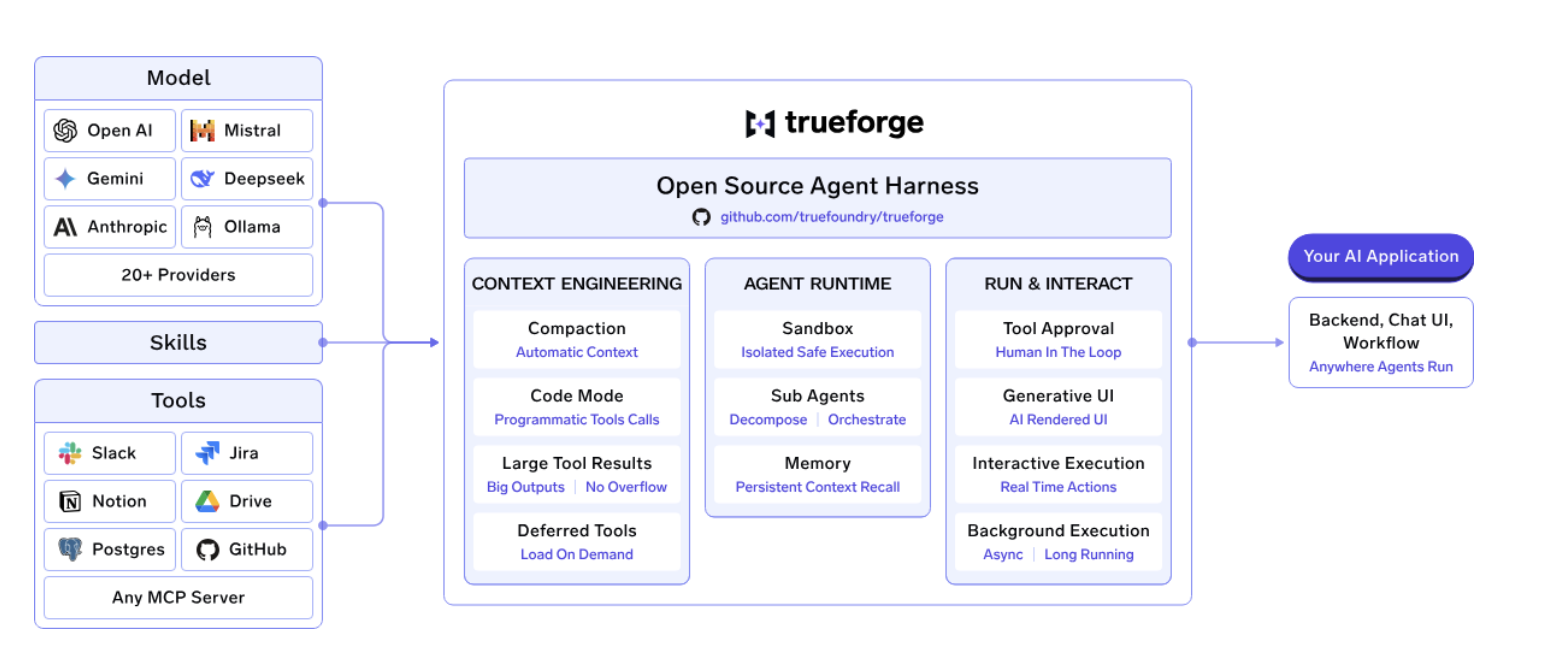
TrueForge ist die Runtime-Ebene, die ein LLM in einen funktionsfähigen Agenten verwandelt – inklusive integrierter MCP-Tools, Fähigkeiten, Sandboxing, Freigabeprozessen und Sub-Agenten. Es handelt sich um ein Open-Source-Agenten-Framework bestehend aus drei Teilen: einem Core-Server , der die Agenten-Schleife ausführt, einer HTTP-API und einem TypeScript-SDK zur Steuerung von Agenten über Code sowie einer Chat-Benutzeroberfläche mit React-UI-SDK für die Interaktion mit Agenten direkt im Browser.
Der Einstieg erfordert nur einen Befehl: npx @truefoundry/trueforge startet TrueForge lokal ohne zusätzliche Infrastruktur. Die Schnellstart-Dokumentation führt Sie durch die Auswahl eines Modellanbieters und die Anbindung Ihres ersten MCP-Servers.
Im Gegensatz zu Frameworks, bei denen Sie die Laufzeitumgebung und die dazugehörige Infrastruktur selbst zusammenstellen müssen, enthält TrueForge bereits mehrere Komponenten, die für den produktiven Einsatz von Agenten erforderlich sind:
Ein architektonisches Detail, das besonders hervorzuheben ist, ist die Art und Weise, wie TrueForge das Sandboxing handhabt. Anstatt den gesamten Agenten in einer Sandbox auszuführen, betrachtet TrueForge die Sandbox als Werkzeug und stellt sie nur dann bereit, wenn der Agent tatsächlich Code ausführen muss. Dies ermöglicht es einem einzelnen TrueForge-Server, mehrere Agenten gleichzeitig auszuführen, während der Sandbox-Overhead für Durchläufe ohne Codeausführung vermieden wird.
Die Architektur hat zudem direkte Auswirkungen auf die Kosten. In TrueFoundrys Benchmark von 14 Unternehmens-Agentenaufgaben erzielten TrueForge und Claude Managed Agents bei Verwendung von Opus 4.8 in etwa die gleiche Genauigkeit, während TrueForge etwa 40 % weniger Token verbrauchte und ungefähr 30 % günstiger pro Durchlauf war. In Kombination mit GLM-5.2 erreichte TrueForge in etwa das gleiche Ergebnis bei Kosten von 2,90 $ pro Durchlauf gegenüber 11,80 $ bei Claude Managed Agents, was einer Ersparnis von etwa 75 % entspricht.
Die gesamte Laufzeitumgebung ist MIT-lizenziert und Open Source, der Code ist im TrueForge GitHub-Repositoryverfügbar. Für Teams, die die Preisgestaltung von LangGraph evaluieren, ist der entscheidende Unterschied, dass TrueForge die Laufzeitschicht selbst bereitstellt, während die Wahl des Modells, die Infrastruktur und das Deployment unter Ihrer Kontrolle bleiben.
LangGraph ist ein flexibles Framework für die Erstellung zustandsbehafteter Multi-Step-Agenten, doch die Kosten für deren Betrieb hängen von mehr als nur dem Framework selbst ab. Modellnutzung, Tool-Aufrufe, Observability, Infrastruktur und die Laufzeitschicht tragen alle zur endgültigen Rechnung bei.
TrueForge verfolgt einen anderen Ansatz, indem es die Laufzeitumgebung als Open-Source-Agenten-Framework bereitstellt, das modellunabhängig ist. Es umfasst die zentrale Agentenschleife, MCP-Tools, Sandboxing, Freigabeprozesse, Kontextverwaltung, Observability, APIs und eine Chat-Benutzeroberfläche, während Teams ihre Modelle und Infrastruktur frei wählen können.
Für Teams, die die Flexibilität eines Open-Source-Agenten-Stacks wünschen, ohne jedes Teil der Laufzeitumgebung selbst zusammenstellen und betreiben zu müssen, ist TrueForge eine Überlegung wert. Es gibt Ihnen die Kontrolle darüber, wie Agenten ausgeführt werden, welche Modelle sie verwenden und wie hoch die Gesamtkosten des Systems sind.
Ist die Nutzung von LangGraph kostenlos?
Das Framework LangGraph ist kostenlos und Open Source. Sie zahlen nur, wenn Sie die LangGraph Platform für gehostete Deployments (ab 35 $/Monat) oder LangSmith für Tracing und Evaluierung nutzen (kostenlose Stufe verfügbar, 39 $/Nutzer/Monat für Plus).
Was kostet LangGraph für den produktiven Einsatz?
Für ein kleines Team liegen die Kosten für LangSmith Plus und die LangGraph Platform bei etwa 75 bis 150 $ pro Monat, zuzüglich der Kosten für LLM-APIs und eventueller Mehrkosten für Traces. Größere Teams mit mehr Nutzern oder höherem Trace-Volumen sollten mit deutlich höheren Kosten rechnen.
Ist LangSmith erforderlich, um LangGraph zu nutzen?
Nein. LangGraph funktioniert auch ohne LangSmith einwandfrei. Allerdings entfällt dann das integrierte Dashboard für Tracing und Evaluierung, weshalb die meisten Teams, die mehr als nur einen Prototyp betreiben, eine Observability-Lösung einsetzen – sei es LangSmith oder ein anderes Tool.
Unterstützt TrueFoundry MCP und KI-Agenten?
Ja. TrueFoundry umfasst ein MCP-Gateway, ein Agenten-Gateway sowie eine Registry für MCP und Agenten mit Zugriffskontrolle auf Tool-Ebene. Agenten, die auf LangGraph, CrewAI, AutoGen oder eigenen Frameworks basieren, können über dieselbe Steuerungsebene bereitgestellt und verwaltet werden.
Lässt sich TrueFoundry in meinen bestehenden Observability-Stack integrieren?
Ja. Die Plattform ist OpenTelemetry-kompatibel und lässt sich an Grafana, Datadog, Prometheus oder jedes andere bereits genutzte System anbinden, um jede Anfrage vom Prompt bis zur Tool- und Modellausführung nachzuverfolgen.
TrueFoundry AI Gateway bietet eine Latenz von ~3—4 ms, verarbeitet mehr als 350 RPS auf einer vCPU, skaliert problemlos horizontal und ist produktionsbereit, während LiteLM unter einer hohen Latenz leidet, mit moderaten RPS zu kämpfen hat, keine integrierte Skalierung hat und sich am besten für leichte Workloads oder Prototyp-Workloads eignet.





Die neuesten Nachrichten, Artikel und Ressourcen werden in Ihren Posteingang gesendet


.png)
.png)
.png)
.png)
.png)
.png)
.png)
.png)
.png)
.png)
.png)


