


.webp)
October 24, 2026
|
5 min read


Obtenha acesso instantâneo a um ambiente TrueFoundry ao vivo. Implante modelos, direcione o tráfego de LLM e explore a plataforma completa — seu sandbox estará pronto em segundos, sem necessidade de cartão de crédito.



Blazingly fast way to build, track and deploy your models!
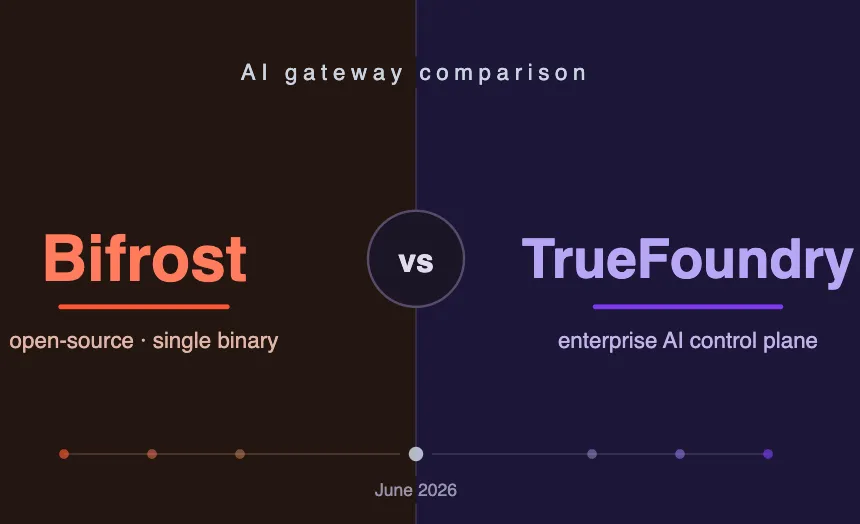
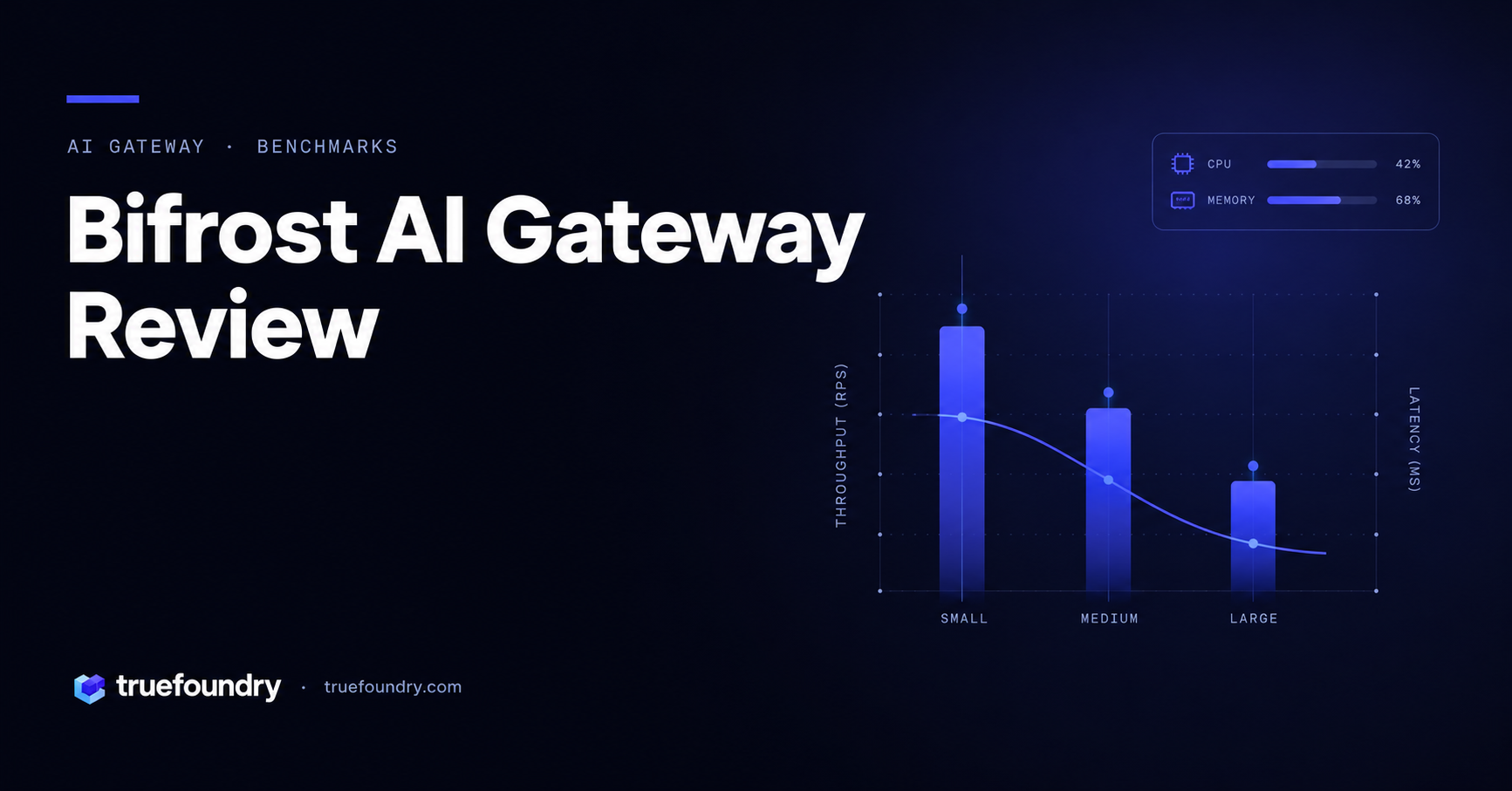
Bifrost is an open-source, single-binary Go gateway, self-hosted on infrastructure you run, that now handles LLM routing, MCP, and agent-mode auto-execution. TrueFoundry is an enterprise AI platform whose gateway is one layer of a larger control plane. Here's a hands-on, primary-source comparison.
If you're choosing an AI gateway in 2026, Bifrost and TrueFoundry will both land on your shortlist — and they look more alike on a feature grid than they are in practice. We ran Bifrost locally and read both vendors' documentation to write this from primary sources: Bifrost's runtime behavior comes from a running v1.5.7 instance, its enterprise, compliance, and deployment claims from Bifrost / Maxim's docs, and every TrueFoundry claim from its official docs.
Bifrost is a gateway you run: one Go binary, zero external dependencies to start (it boots on a local SQLite store), Apache-2.0 licensed, and self-hosted. TrueFoundry is a platform you adopt: an LLM + MCP + Agent gateway that's part of a Kubernetes-native stack which also deploys and trains models, hosts MCP servers, and runs agents — installable as SaaS, VPC, on-prem, or air-gapped. One is a single, self-contained tool; the other is the governed control plane for the whole AI lifecycle.

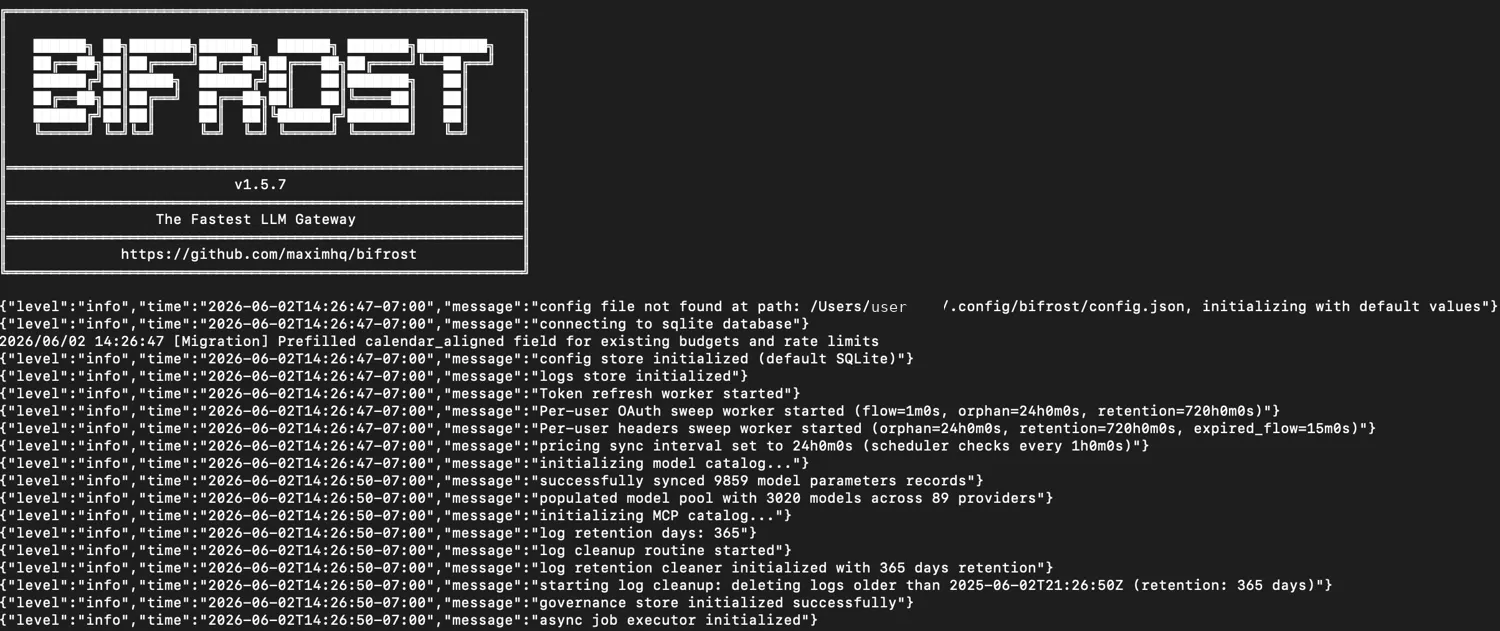
Bifrost's startup tells the story. On first run it finds no config and initializes defaults, connects to a local SQLite database, and stands up config, logs, and governance stores — no external database to begin. It starts workers for token refresh, a per-user OAuth sweep, and a pricing sync, then loads its catalog: in this build, 3,020 models across 89 providers, with 365-day default log retention.
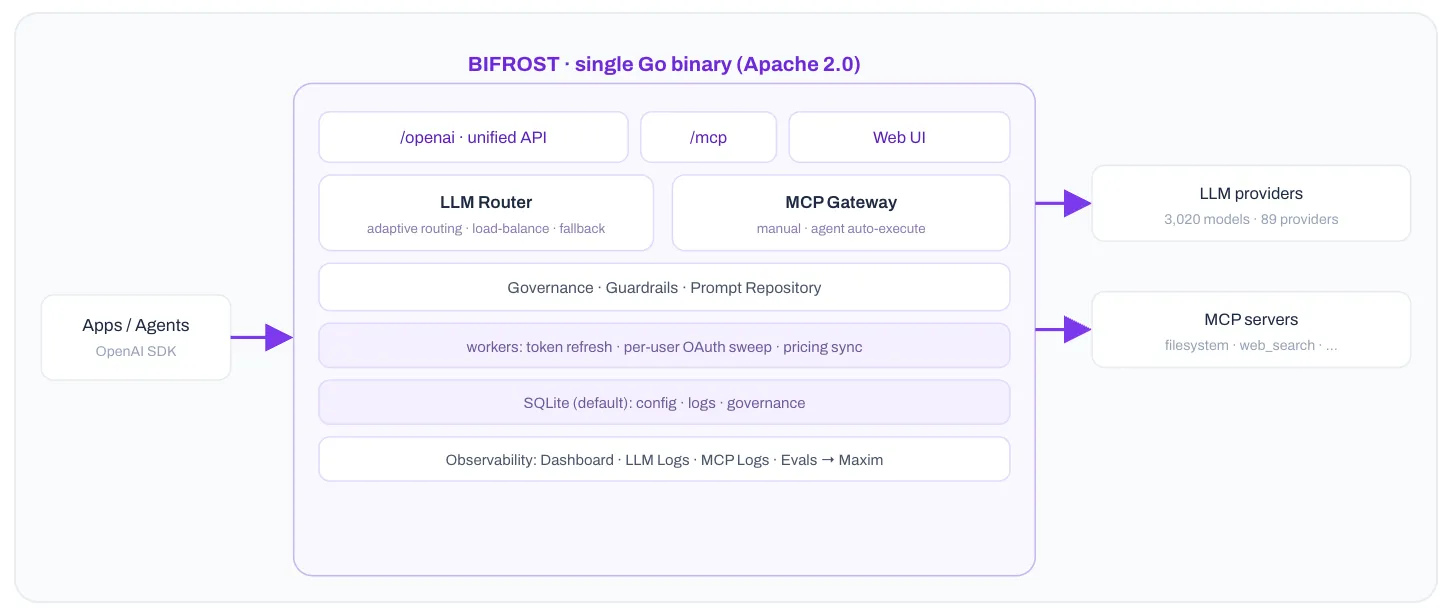
Put together, that's the shape of Bifrost: one process that contains the routing, the MCP gateway, governance, guardrails, prompt storage, the workers, the data stores, and the UI — nothing else required to run it.
TrueFoundry AI Gateway delivers ~3–4 ms latency, handles 350+ RPS on 1 vCPU, scales horizontally with ease, and is production-ready, while LiteLLM suffers from high latency, struggles beyond moderate RPS, lacks built-in scaling, and is best for light or prototype workloads.





As últimas notícias, artigos e recursos enviados para sua caixa de entrada


.png)
.png)
.png)
.png)
.png)
.png)
.png)
.png)
.png)
.png)
.png)


