


.webp)
October 21, 2026
|
5 min read


Obtenha acesso instantâneo a um ambiente TrueFoundry ao vivo. Implante modelos, direcione o tráfego de LLM e explore a plataforma completa — seu sandbox estará pronto em segundos, sem necessidade de cartão de crédito.




Blazingly fast way to build, track and deploy your models!
Organizations in regulated industries, such as healthcare, financial services, insurance, government, and defense face a different set of challenges. Connecting AI agents to sensitive systems isn't just a technical problem; it's a security and compliance challenge. Every tool invocation must be authenticated, authorized, logged, and governed.
The EU AI Act's provisions for high-risk systems become fully enforceable in August 2026, and SOC 2, HIPAA, and ISO 27001 all expect specific technical controls around access, logging, and explainability that a standard tool integration was never built to provide. Connecting an agent directly to an electronic health record system or a claims database without a governing layer in front of it isn't a shortcut, it's an audit finding waiting to happen.
This is where an MCP Gateway becomes essential. Rather than allowing AI applications to connect directly to MCP servers, an MCP gateway acts as a centralized control plane that enforces authentication, authorization, policy controls, audit logging, and network security. It enables organizations to adopt MCP while maintaining the governance standards required by frameworks such as SOC 2, HIPAA, GDPR, PCI DSS, and ITAR.
In this guide, we'll explain what regulated industries should look for in an MCP gateway, compare the leading options available in 2026, and explore why platforms like TrueFoundry are increasingly being adopted for secure, enterprise-scale AI deployments.
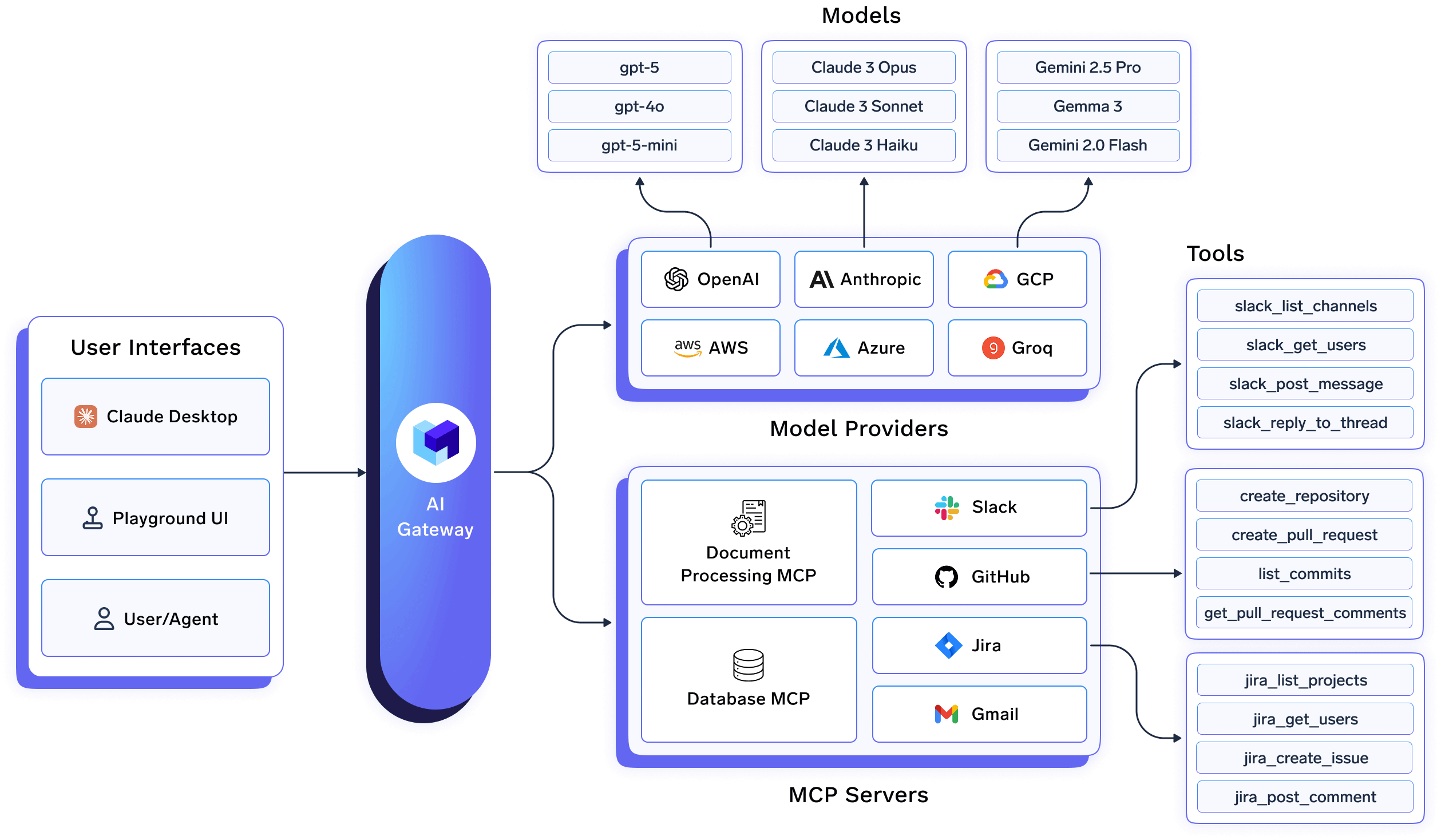
TrueFoundry's MCP gateway centralizes MCP server access behind admin-configured policies rather than leaving each developer to wire up their own connections. Admins register approved servers, configure outbound auth per server, and developers get a ready-to-use connection URL. On managed devices, a managed-mcp.json file pushed through MDM takes exclusive control over which MCP servers a client can reach, overriding whatever a developer configures locally, which matters in regulated environments where policy needs to be enforced rather than merely suggested.
Identity runs through SSO by default: a developer's first MCP connection triggers a browser sign-in that provisions their TrueFoundry account automatically, with SCIM available for teams that want provisioning automated ahead of time. The underlying managed infrastructure carries SOC2 Type II, ISO 27001, GDPR, and HIPAA compliance, and the platform deploys in your VPC, on-prem, air-gapped, or hybrid, so patient or financial data never has to leave your own environment. MCP governance and model routing run in the same control plane, with tool-level RBAC, ~3 to 4 ms of gateway latency overhead, and 350+ RPS on a single vCPU.
Best for: Regulated organizations that need MCP access enforced at the device level, with SSO onboarding and full audit trails, managed in the same platform as model routing.
MintMCP's whole value proposition is speed to compliance: it takes a local, STDIO-based MCP server and wraps it with OAuth brokering and audit logging in what the vendor describes as close to one click, converting an ungoverned local setup into a managed, audited one without a lengthy re-architecture. That matters specifically for regulated organizations that already have MCP servers running locally and need them brought under governance quickly rather than rebuilt from scratch.
The platform is SOC 2 Type II audited with continuous compliance monitoring through Drata, and HIPAA documentation with BAAs is available for healthcare deployments. Its architecture starts from SSO, SCIM-driven RBAC, and IdP groups before agents are enabled, with Virtual MCP Bundles and tool-level allowlisting for granular control, plus complete audit logs. For a regulated organization whose biggest pain point is a pile of local MCP servers nobody has governed yet, this is a genuinely fast path to closing that gap.
Pros: Fast conversion from local, ungoverned MCP servers to managed and audited ones; SOC 2 Type II with continuous Drata monitoring; HIPAA documentation and BAAs available; tool-level allowlisting via Virtual MCP Bundles.
Cons: Narrower in scope than a full gateway-plus-model-routing platform; teams running their own model serving or broader LLM gateway needs will run this alongside a separate system.
Best for: regulated organizations with existing local MCP servers that need the fastest path to a SOC 2/HIPAA-documented managed deployment, without needing model routing in the same product.
Tyk brings MCP support into an API management platform that's already handled production API traffic, and specifically data-residency requirements, for financial services teams for years. For an organization already running Tyk as its API gateway, extending governance to MCP traffic through the same platform avoids introducing an entirely new piece of infrastructure, and Tyk's existing policy and access-control engine applies to MCP the same way it applies to conventional APIs.
The tradeoff is similar to any general-purpose API gateway extending into MCP: the depth of MCP-specific governance, tool-level allowlisting, agent-specific audit granularity, is tied to how the broader platform is deployed and configured, rather than being a purpose-built MCP compliance product from the ground up. Teams evaluating Tyk purely for MCP governance, with no existing Tyk footprint, are taking on a full API management platform to get there.
Pros: Proven production track record in financial services with data-residency requirements already handled; unified policy engine across API and MCP traffic; mature enterprise support.
Cons: MCP governance depth depends on the broader Tyk deployment rather than being purpose-built for regulated compliance specifically; heavier adoption if you don't already run Tyk.
Best for: organizations already running Tyk for API management, particularly in financial services, that want to extend the same platform to MCP traffic.
The table below compares the three platforms on criteria specific to regulated-industry MCP governance. TrueFoundry capabilities are based on its published documentation; MintMCP and Tyk capabilities reflect their public product pages at the time of writing.
CapabilityTrueFoundryMintMCPTykDevice-level (MDM) enforcementYes, managed-mcp.jsonNot the primary mechanismNot the primary mechanismCompliance certificationsSOC2 Type II, ISO 27001, GDPR, HIPAASOC2 Type II (Drata-monitored), HIPAA docs/BAAsEnterprise-tier dependentSSO / SCIM onboardingYes, auto-provisioningYes, SSO/SCIM-driven RBACEnterprise-tier dependentDeploymentVPC, on-prem, air-gapped, hybridManaged deploymentSelf-hosted or cloudLocal-to-managed MCP migrationCentral server registrationOne-click STDIO-to-managed conversionNot the primary focusModel routing includedYes, one control planeNot the primary focusNot the primary focusExisting infrastructure fitAny cloud, on-prem, or hybridNew, dedicated MCP compliance layerBest if already running Tyk for APIs
Choose TrueFoundry if: you need MCP access enforced at the device level with SSO onboarding, and want MCP governance and model routing managed together regardless of cloud or on-prem environment.
Choose MintMCP if: you have existing local MCP servers that need the fastest path to a SOC 2/HIPAA-documented managed deployment, and don't need model routing in the same product.
Choose Tyk if: you're already running Tyk for API management, particularly in financial services with data-residency needs, and want MCP governance extended into that same platform.
Q: What's the best MCP gateway for regulated industries?A: It depends on what you're solving for first. TrueFoundry fits organizations that need device-level MCP enforcement, SSO onboarding, and model routing unified in one platform, regardless of cloud provider. MintMCP fits organizations with existing local MCP servers that need the fastest path to a documented, audited deployment. Tyk fits organizations already running it for API management that want to extend the same platform to MCP.
Q: Is MintMCP HIPAA compliant?A: MintMCP offers HIPAA documentation and BAAs for healthcare deployments, alongside SOC 2 Type II certification with continuous compliance monitoring through Drata.
Q: Can Claude Code's or an agent's MCP access actually be locked down at the device level?A: With TrueFoundry, yes. A managed-mcp.json file deployed through MDM takes exclusive control over which MCP servers a device can reach, overriding whatever a developer configures locally.
Q: Can I deploy an MCP gateway for a regulated industry in my own VPC or on-prem?A: With TrueFoundry, yes. It runs in your VPC, on-prem, air-gapped, or hybrid, and no data leaves your domain, which matters for the credentials MCP servers use to reach patient records, financial systems, or other regulated data.
Q: Does TrueFoundry support MCP and AI agents beyond a single framework?A: Yes. The MCP gateway's tool-level access control applies to agents built on LangGraph, CrewAI, AutoGen, or custom frameworks, alongside Claude Code, Claude Desktop, and Cursor.
MintMCP solves a specific, real problem well, getting local MCP servers under compliant governance fast, and Tyk extends a proven API management platform into MCP for teams already standardized on it. TrueFoundry's case for regulated industries comes down to combining device-level enforcement, SSO-based onboarding, and verifiable compliance certifications with model routing in a single platform deployable inside your own VPC or on-prem environment. If your organization is evaluating how to govern MCP access to regulated data with an audit trail that can survive scrutiny, book a demo to see how the gateway handles it in practice.
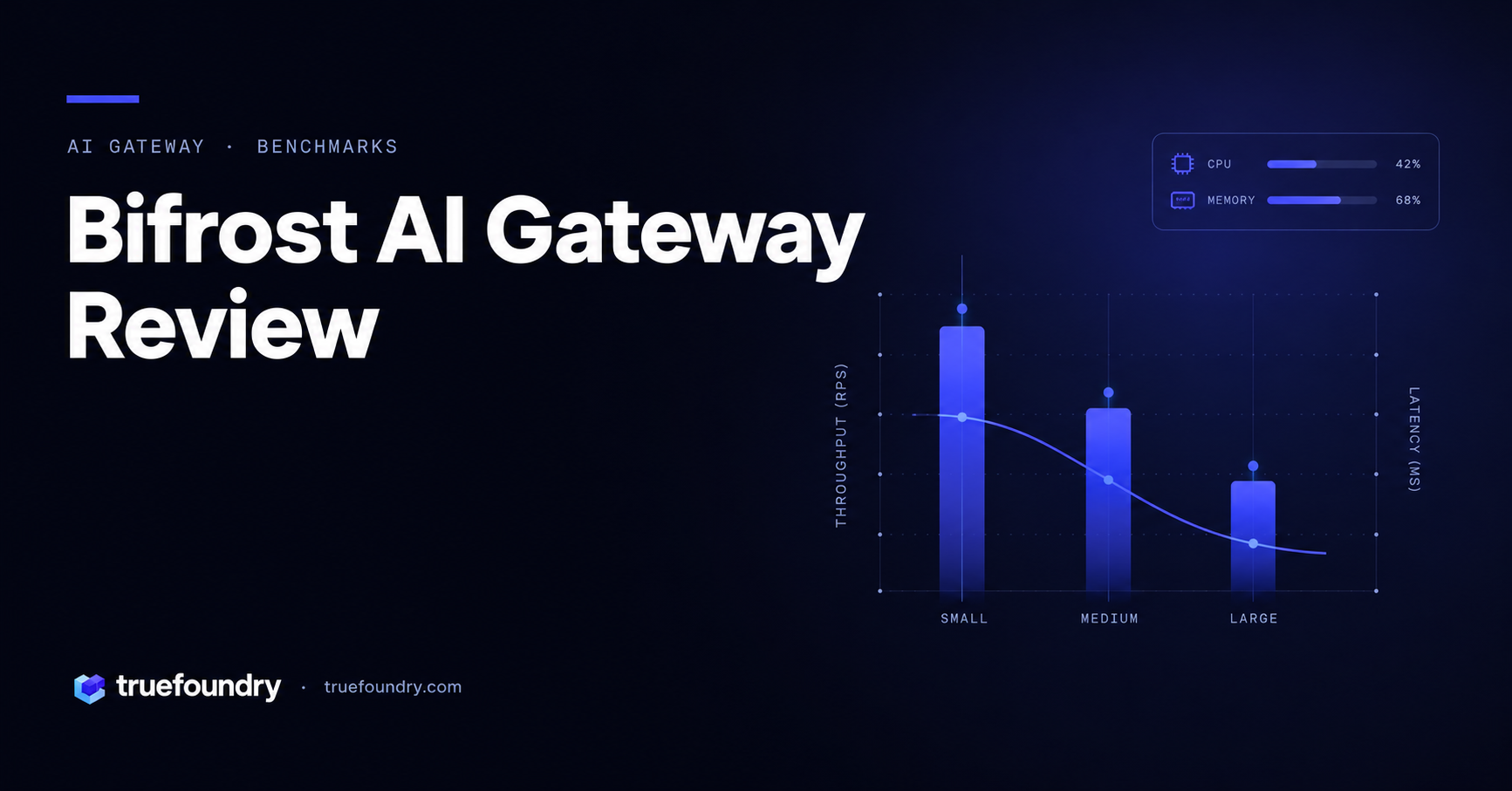
TrueFoundry AI Gateway delivers ~3–4 ms latency, handles 350+ RPS on 1 vCPU, scales horizontally with ease, and is production-ready, while LiteLLM suffers from high latency, struggles beyond moderate RPS, lacks built-in scaling, and is best for light or prototype workloads.





As últimas notícias, artigos e recursos enviados para sua caixa de entrada


.png)
.png)
.png)
.png)
.png)
.png)
.png)
.png)
.png)
.png)
.png)


