



August 31, 2026
|
5 min read


Published: August 3, 2026

Blazingly fast way to build, track and deploy your models!
Between 2023 and 2024, the primary challenge in AI infrastructure revolved around prompt optimization and efficient access to Large Language Models (LLMs). The solution? LLM Gateways — lightweight middleware that unified API calls, abstracted provider differences, and added basic capabilities like caching, logging, and token tracking.
But 2025 has shifted the conversation entirely. We’ve moved beyond chatbots and one-off completions. Today, organizations are building autonomous agents - systems that plan, reason, and act across tools, APIs, and databases. These agents operate as decision-makers, not just text generators. They browse websites, execute multi-step workflows, invoke external services, and update business-critical state, all without constant human supervision.
This new level of autonomy introduces new risks and requirements: agents that retry on failure, hallucinate commands, or trigger high-stakes actions like financial refunds or server updates. A basic prompt-to-response loop simply can’t govern this complexity.
This shift has given rise to a new piece of infrastructure: the Agent Gateway and it’s rapidly becoming the most critical control point in the AI stack.
To understand the Agent Gateway, we must first distinguish it from the infrastructure that came before it.
An Agent Gateway is a governance and orchestration layer that sits between LLM-powered agents and the external systems they interact with, such as APIs, databases, cloud tools, and proprietary backends. It acts as the execution firewall for autonomous AI behavior.
Whereas an LLM Gateway routes prompts and responses (statelessly), an Agent Gateway manages long-lived, stateful, and multi-step tasks. It understands the lifecycle of an agent’s plan from initial intent through tool selection, execution, validation, retry, and final result and enforces policies throughout that flow.
Core responsibilities of an Agent Gateway include:
In essence, the Agent Gateway is the prefrontal cortex of your AI architecture: filtering and controlling what the reasoning engine (the LLM) is allowed to execute, and how it interacts with the real world.
Key Metrics for Evaluating Gateway
| Criteria | What should you evaluate ? | Priority | TrueFoundry |
|---|---|---|---|
| Latency | Adds <10ms p95 overhead for time-to-first-token? | Must Have | ✅ Supported |
| Data Residency | Keeps logs within your region (EU/US)? | Depends on use case | ✅ Supported |
| Latency-Based Routing | Automatically reroutes based on real-time latency/failures? | Must Have | ✅ Supported |
| Key Rotation & Revocation | Rotate or revoke keys without downtime? | Must Have | ✅ Supported |
| Key Rotation & Revocation | Rotate or revoke keys without downtime? | Must Have | ✅ Supported |
| Key Rotation & Revocation | Rotate or revoke keys without downtime? | Must Have | ✅ Supported |
| Key Rotation & Revocation | Rotate or revoke keys without downtime? | Must Have | ✅ Supported |
| Key Rotation & Revocation | Rotate or revoke keys without downtime? | Must Have | ✅ Supported |
Selecting the right agent gateway is critical to scaling AI systems securely, efficiently, and with minimal friction. The gateway acts as the intermediary between your agents and the external world — orchestrating requests, enforcing policies, logging activity, and managing access. Here are the most important capabilities to look for when evaluating an agent gateway:
1. Multi-Model Routing and Provider Abstraction
Your gateway should support seamless routing across multiple LLM providers (OpenAI, Anthropic, Mistral, etc.) and internal models. A strong gateway abstracts provider-specific APIs and offers a unified interface for all model calls, which becomes especially important when teams evaluate OpenRouter vs AI gateway approaches for long-term flexibility and governance.
2. Token-Level Observability and Cost Tracking
AI workloads are priced per token. A good gateway should give fine-grained visibility into input/output token usage per call, user, model, or team. This enables accurate cost attribution and helps avoid surprise bills.
3. Programmable Guardrails and Policies
The gateway should allow you to enforce guardrails like rate limits, content filters, access restrictions, and input/output validations. These programmable policies are essential to maintaining safe, compliant, and controlled AI interactions.
4. Authentication and Authorization Controls
Robust identity management (via API tokens, OAuth, RBAC) is non-negotiable. The gateway must verify who is calling the model and what they’re allowed to do — especially in multi-tenant or enterprise setups.
5. Centralized Logging and Auditing
Every agent action — from a tool invocation to a model query — should be logged in a structured, searchable way. This enables debugging, monitoring, and post-mortem analysis, and is often required for compliance or governance reviews.
6. Caching and Efficiency Optimizations
Look for features like semantic caching, batch inference, or model fallback to reduce duplicate queries and optimize performance. This helps balance latency, cost, and load across systems.
7. Deployment Flexibility (Self-hosted, Cloud, Hybrid)
Enterprises often require control over where and how the gateway runs — on-prem, cloud, or hybrid. Choose a gateway that supports your infrastructure and data residency needs without vendor lock-in.
8. Developer Experience & Extensibility
The gateway should offer SDKs, observability dashboards, admin APIs, and a smooth developer onboarding experience. Support for plugins, webhooks, or integration with orchestration frameworks is a major plus.
The market for Agent Gateways has matured rapidly. In early 2024, the landscape was dominated by simple proxy tools that merely forwarded API requests. By 2025, the ecosystem will have bifurcated into specialized categories: Enterprise Control Planes that govern internal tooling, Developer Utilities that offer raw flexibility for engineers, and Infrastructure Ecosystems that bake agent capabilities directly into the edge network.
The following five platforms represent the best-in-class solutions for different architectural needs. Whether you are a solo developer building a consumer agent or an enterprise architect governing thousands of internal autonomous workflows, one of these gateways will fit your stack.
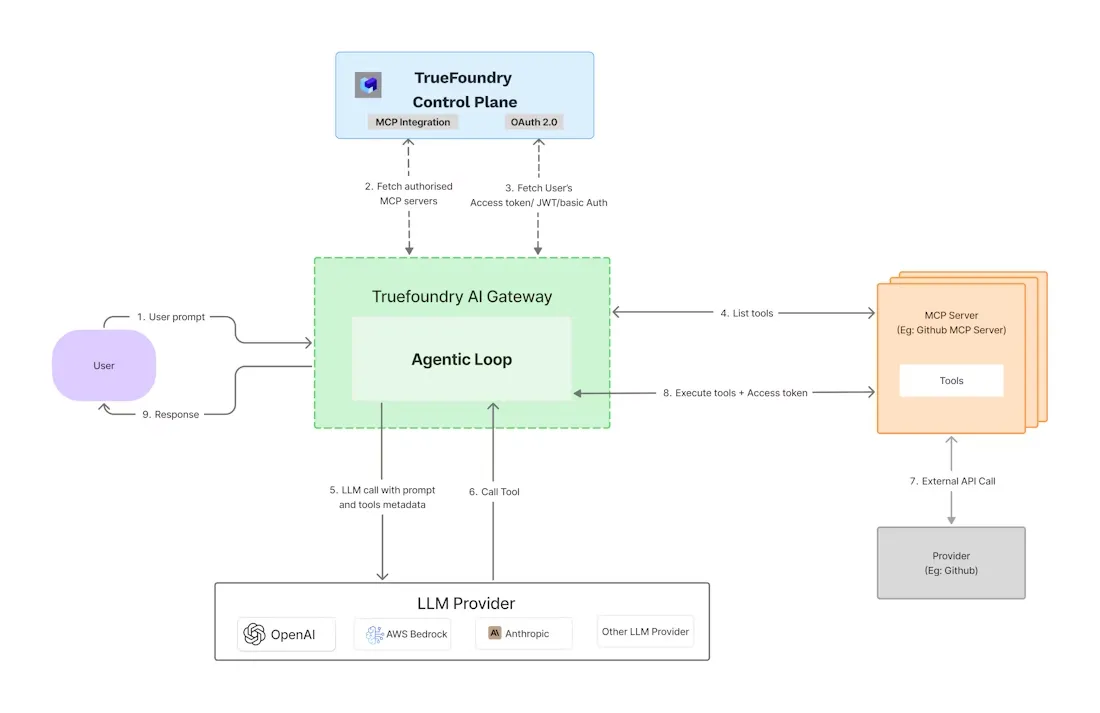
Truefoundry has positioned itself as the heavyweight champion for enterprise AI governance. Addressing the "M×N integration problem", where every new agent requires individual connections to tools, databases, and APIs, Truefoundry functions as a centralized traffic controller for agentic workflows. It is specifically engineered to eliminate the "security blind spots" that arise when developers scatter API keys and credentials across disparate agent codebases.
Key Differentiator: The Centralized MCP Registry Truefoundry tackles the chaos of unmanaged tools by offering a Centralized Registry & Discovery system. Instead of hard-coding tool integrations, administrators define a catalog of approved MCP servers and tools in one place.
Agents simply point to the gateway to discover and utilize these vetted tools. This creates a "single MCP endpoint" architecture, drastically reducing configuration overhead and preventing "shadow MCP servers" from popping up within the organization.
Agentic Features:
Best For: Enterprises and regulated industries (Finance, Healthcare) that require strict governance (SOC 2, HIPAA compliance) and need to manage complex multi-agent systems without compromising on security or observability.
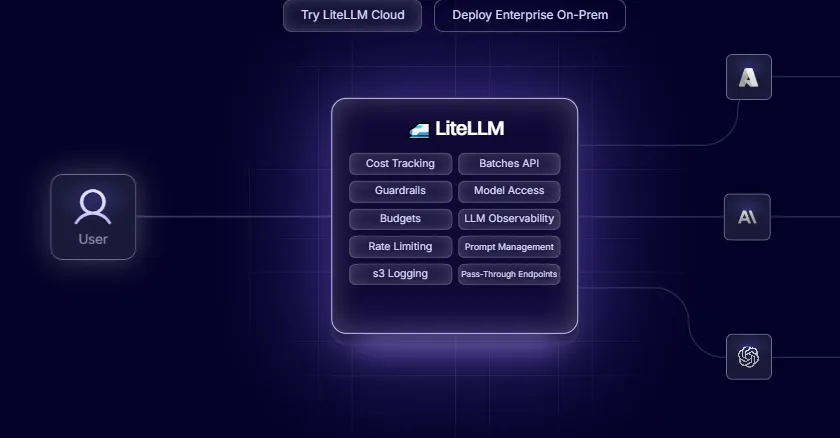
LiteLLM is the Swiss Army Knife of the AI engineering world. Starting as a Python library to normalize API calls, it has grown into a highly performant Gateway Proxy Server. Its philosophy is "flexibility above all."
Key Differentiator: The Standardization Layer Agents are notoriously fragile when you switch models. A prompt that works for GPT-4 might break Claude 3.5 because of differences in how they format tool calls. LiteLLM solves this by normalizing inputs and outputs into a standard OpenAI format. This allows you to write your agent's tool-calling logic once and swap the underlying brain (model) without rewriting your code.
Agentic Features:
Best For: Engineering teams who want full control, are comfortable with self-hosting, and prioritize avoiding vendor lock-in.
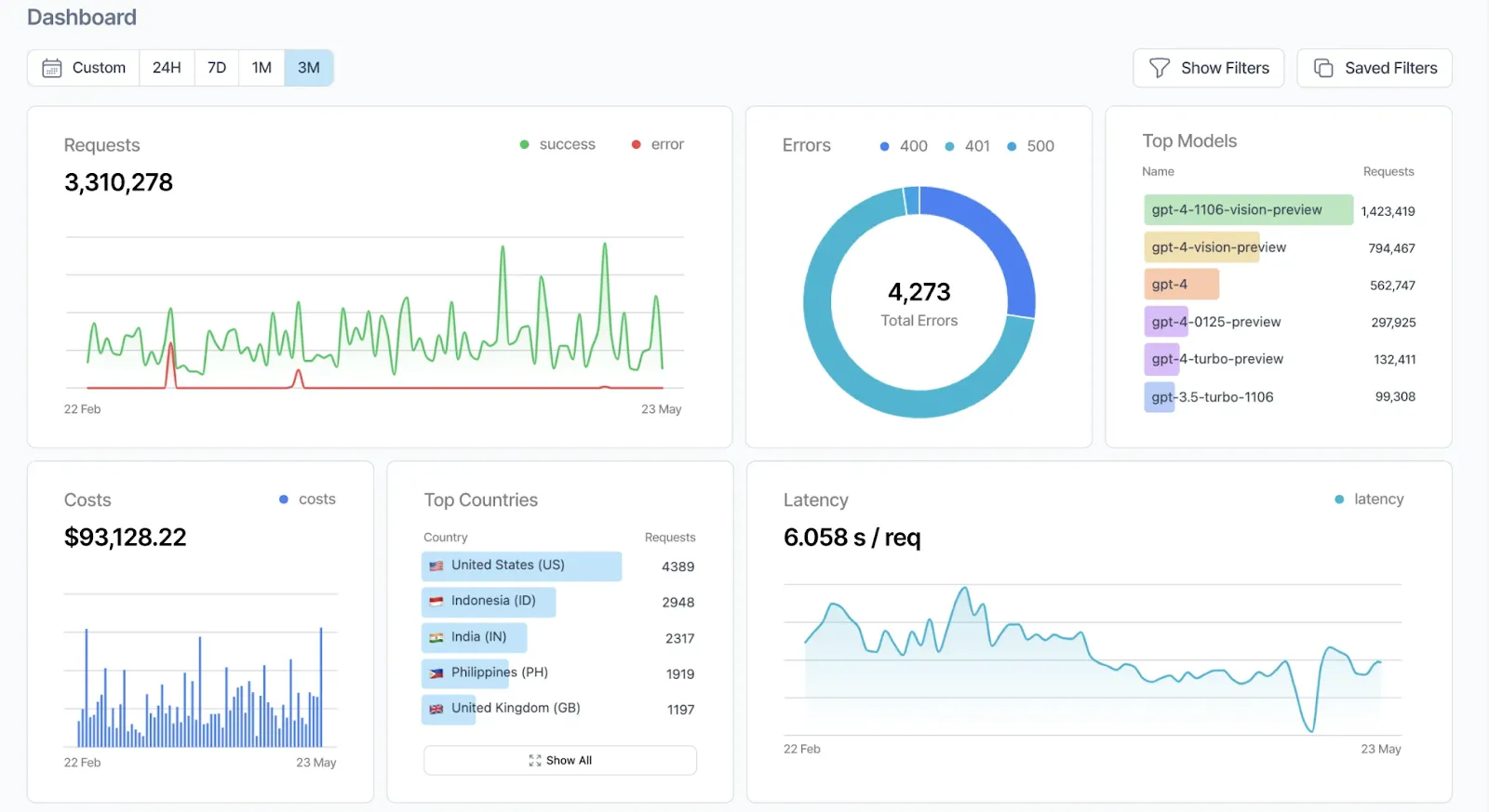
Helicone is technically an observability platform that acts as a gateway. In the world of agents, where systems are non-deterministic "black boxes," observability is not a luxury; it is the only way to debug. This makes it a strong choice among teams considering Heliconeの代替案.
主な差別化要因: セッションリプレイと実験 Heliconeは「思考チェーン」の可視化に優れています。エージェントがタスクの完了に失敗した場合、Heliconeはその特定のセッションを開き、ロジックがどこで破綻したかを正確に確認できます。プロンプトが悪かったのか?ツールが500エラーを返したのか?モデルがツールの出力を無視したのか?そのセッションリプレイ機能により、失敗につながった正確な一連のイベントを再生でき、実際のユーザーに影響を与えることなく、現実世界のデータに対して修正をテストできます。
エージェント機能:
最適な用途: エージェントの動作をデバッグし、成功率を向上させるために「システムプロンプト」を反復改善する必要がある開発者やプロダクトマネージャー。
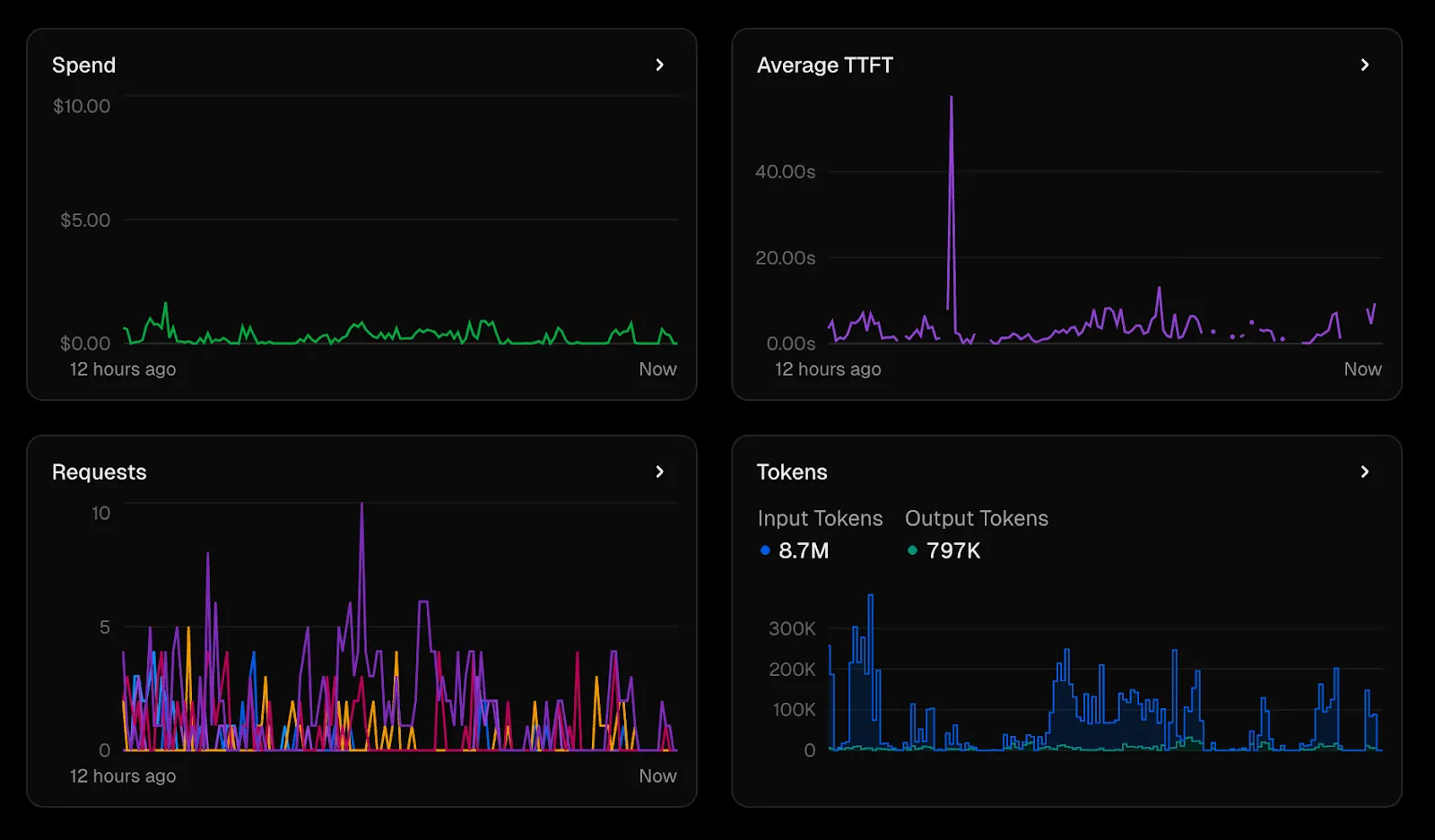
Vercelは、AI SDKと統合されたAI Gatewayを携え、AI分野に積極的に参入しています。彼らのアプローチは、特に以下の点に重点を置いているため、ユニークです。 クライアントサイド および エッジ エクスペリエンスを提供し、低遅延と豊富なインタラクティブ性を必要とするユーザー向けエージェントアプリケーションの頼れる存在となっています。
主な差別化要因: データストリームプロトコルと生成UI。生のJSONを返すバックエンド重視のゲートウェイとは異なり、Vercelのアーキテクチャはフロントエンド向けに設計されています。Vercelのデータストリームプロトコルにより、エージェントはテキスト、ツール呼び出し、さらにはUIの更新を単一の接続でストリーミングできます。これにより生成UIが可能になり、エージェントは天気をテキストで伝えるだけでなく、完全にインタラクティブなReactコンポーネント(例:天気ウィジェット)をユーザーの画面に直接ストリーミングします。これにより、 「体感遅延」 の問題が解決され、エージェントが処理している間もユーザーのエンゲージメントを維持します。
エージェント機能:
最適な用途: シームレスな 「Code-to-Production」 ワークフローとインフラ管理ゼロを求める、消費者向けAIアプリ(SaaS、B2Cエージェント)を構築するフルスタック開発者やスタートアップ企業。
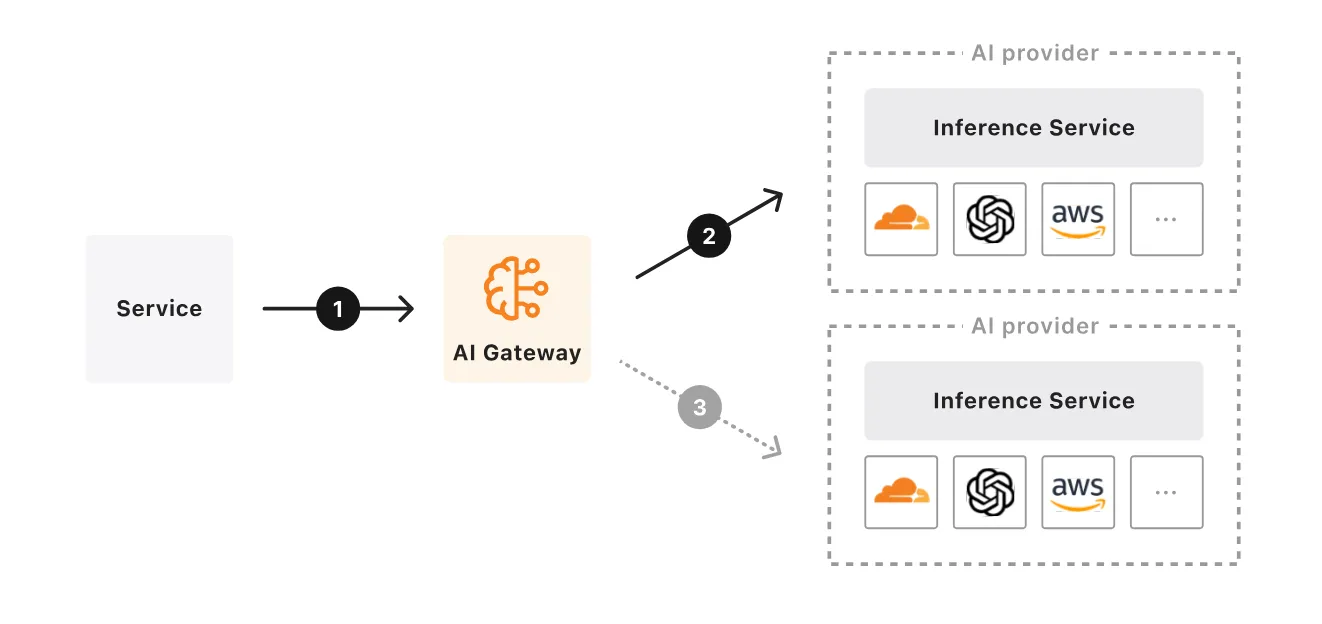
Cloudflareは、そのグローバルネットワークを活用し、エージェント向けに最も強力なエコシステムの一つを密かに構築してきました。エージェントエンジニアリングにおける最も困難な問題である「状態(State)」に対処しているため、2025年に際立った選択肢となるでしょう。
主な差別化要因: Durable ObjectsとリモートMCP Cloudflareは、Durable Objectsと呼ばれる技術を使用し、各エージェントに明確な「状態(state)」を提供します。これは、エージェントが単なるクラウド上で実行されるスクリプトではなく、ネットワーク上に「存在する」永続的なエンティティであり、遅い集中型データベースに問い合わせる必要なく、ユーザーコンテキストを瞬時に記憶することを意味します。
エージェント機能:
最適な用途:高性能なステートフルエージェントを構築し、数百万人のユーザーにスケールする必要があるものの、「メモリ」のための複雑なデータベースインフラを管理したくない開発者。
AIエージェントがエンタープライズワークフローの実行レイヤーとなるにつれて、それらをサポートするインフラは、単純なプロンプトルーティングを超えて進化する必要があります。LLMゲートウェイの時代はエージェントゲートウェイに道を譲りつつあります。これは、モデルを提供するだけでなく、意思決定、ツール利用、そして成長するAIエコシステム全体での安全な多段階操作をオーケストレーションするために構築されたシステムです。
適切なエージェントゲートウェイの選択は、もはや好みの問題ではありません。コスト、セキュリティ、ガバナンス、速度に影響を与える戦略的な決定です。LiteLLMのようなオープンソースツールはローカルでの実験には適しており、Vercelのようなプラットフォームはレイテンシーとシンプルさを最適化するものの、大規模なエージェントエコシステムのエンタープライズレベルの複雑さに対処するには不十分です。
TrueFoundry は、この課題に対する最も完全な解決策を提供します。統合されたゲートウェイアーキテクチャ、管理されたツールレジストリ(MCP経由)、きめ細かなアクセス制御、そして本番環境対応の可観測性により、チームがプロトタイプエージェントからエンタープライズ自動化へと安全にスケールアップすることを可能にします。これは、AIを機能させるだけでなく、AIを管理可能、監査可能、そして運用上健全なものにすることです。
主要なエージェントゲートウェイには、エンタープライズガバナンス向けのTrueFoundryと、開発者の柔軟性向けのLiteLLMがあります。Heliconeのような他のエージェントゲートウェイは可観測性に重点を置いており、VercelやCloudflareはエッジパフォーマンスを優先しています。これらのシステムは、本番環境で自律型AIワークフローを効果的に管理、保護、拡張するために不可欠なインフラストラクチャを提供します。
エージェントゲートウェイは、ロールベースアクセス制御(RBAC)とプログラマブルなガードレールを通じて、きめ細かな権限を適用します。エージェントが特定の操作を実行する権限を持っているか検証することで、不正なツール使用を防ぎます。ガバナンスを一元化することで、主要なエージェントゲートウェイはセキュリティの死角をなくし、エンタープライズの安全基準への準拠を保証します。
主要なエージェントゲートウェイは、OAuth2やOIDCなどの業界標準をサポートすることで、すべてのモデルおよびツールインタラクションにおけるID管理を一元化します。これらのゲートウェイは、自動シークレットローテーションを処理し、個々のエージェントの利用状況を追跡するための仮想キーを提供します。これにより、すべての自律的なアクションが完全に認証され、追跡可能であり、ポリシーによって管理されることが保証されます。
TrueFoundry AI Gateway delivers ~3–4 ms latency, handles 350+ RPS on 1 vCPU, scales horizontally with ease, and is production-ready, while LiteLLM suffers from high latency, struggles beyond moderate RPS, lacks built-in scaling, and is best for light or prototype workloads.






.png)
.png)
.png)
.png)
.png)
.png)
.png)
.png)
.png)
.png)
.png)





