


.png)
October 27, 2026
|
5 minutos de lectura


Obtenga acceso instantáneo a un entorno TrueFoundry en vivo. Implemente modelos, dirija el tráfico de LLM y explore la plataforma completa: su sandbox estará listo en segundos, sin necesidad de tarjeta de crédito.



¡Una forma increíblemente rápida de crear, rastrear e implementar sus modelos!
Pregunte a diez expertos en seguridad qué hace una puerta de enlace de IA y obtendrá diez respuestas distintas: un proxy que intercambia claves API, un lugar para registrar prompts, un firewall para chatbots. Ninguna es incorrecta, pero ninguna ofrece una visión completa. La brecha entre estar "parcialmente en lo cierto" y "gobernar realmente el uso de la IA" es donde ocurren las brechas de seguridad.
El informe de IBM de 2025 sobre el coste de una brecha de datos reveló que el 20% de las organizaciones afectadas fueron comprometidas a través de IA en la sombra, es decir, empleados que utilizaban herramientas de IA generativa que el equipo de seguridad nunca aprobó ni conoció, lo que añadió aproximadamente 670.000 dólares al coste medio de la brecha. Entre esas organizaciones, el 97% carecía de controles de acceso adecuados, y una encuesta del Ponemon Institute a 600 organizaciones descubrió que el 63% no tenía ninguna política de gobernanza de IA. [1]
La visibilidad de costes y la gobernanza no son problemas que se resuelvan comprando una herramienta más. Este artículo aborda el tema tal y como lo plantearía un CISO: ¿puedes ver y gobernar todo el uso de IA en tu organización?, ¿qué puedes hacer una vez que lo ves? y ¿puede funcionar con la infraestructura que ya utilizas?
Pida a la mayoría de los líderes de seguridad que enumeren todas las herramientas de IA utilizadas en su empresa y no podrán hacerlo. El uso de la IA llega a través de al menos cuatro puertas, y cada una requiere una respuesta diferente.
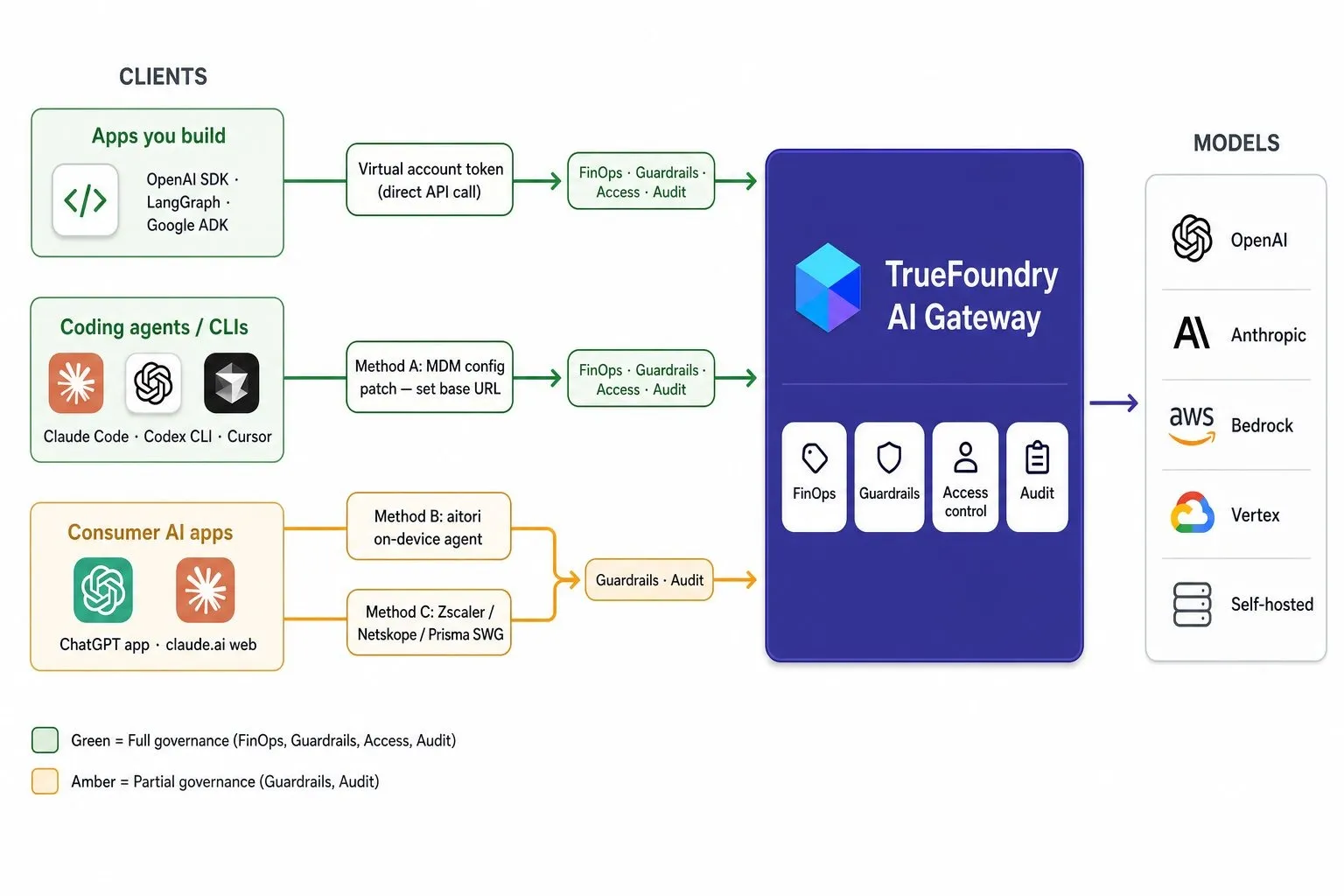
Cada categoría de cliente de IA llega a la puerta de enlace de IA de TrueFoundry a través de una ruta distinta, y recibe un nivel de gobernanza diferente según el grado de cooperación de la herramienta.
Aplicaciones y agentes creados por tus propios desarrolladores. El caso más sencillo, ya que tus equipos son los dueños del código. Dirige las llamadas a través de una credencial con alcance limitado y revocable en lugar de una clave API sin restricciones. TrueFoundry lo hace con un Token de Cuenta Virtual: vinculado a una sola aplicación, visible en los registros como esa aplicación y capaz de ser revocado de forma independiente.
Herramientas de escritorio y CLI que los empleados ya utilizan. Cursor, Claude Code y Codex CLI suelen permitirte configurar el endpoint con el que se comunican. Eso convierte la aplicación de políticas en un problema de configuración, no de interceptación: despliega el endpoint de la puerta de enlace de TrueFoundry en toda la flota a través de tu MDM (Jamf, Intune).
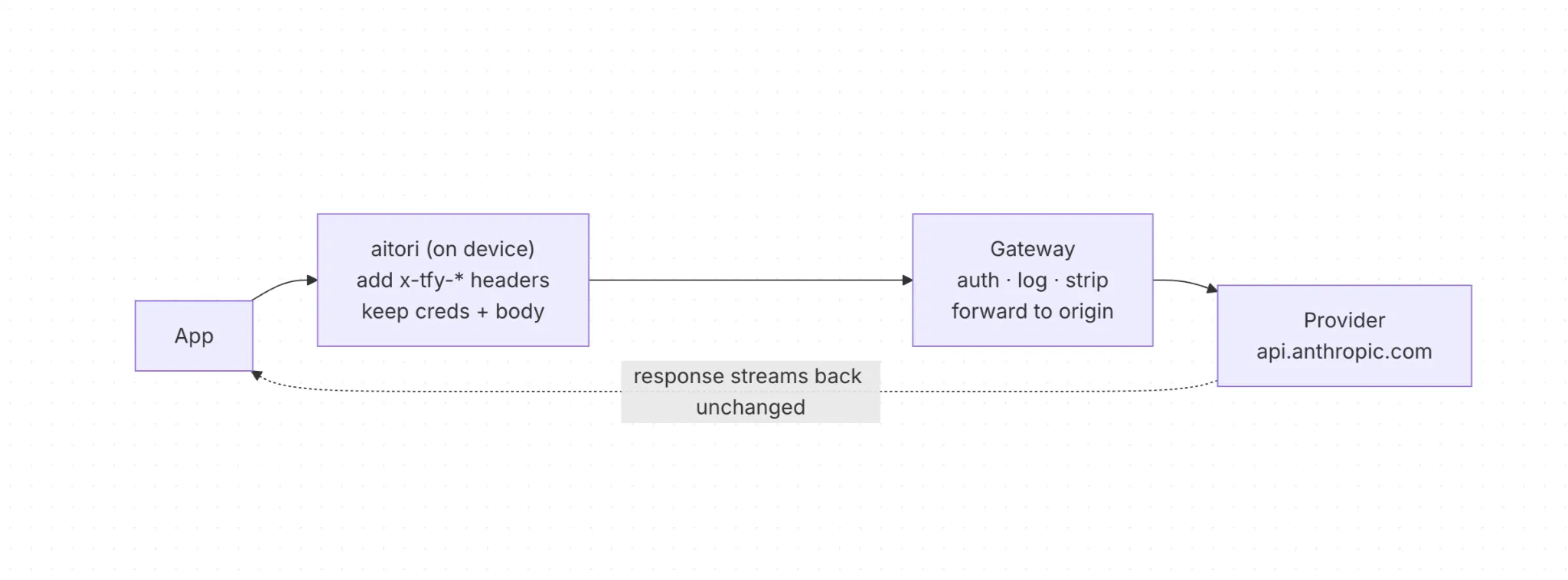
Aplicaciones web de consumo. La interfaz web de ChatGPT y Claude es el caso difícil: no hay archivo de configuración ni código que cambiar. TrueFoundry resuelve esto con aitori, un proxy en el dispositivo que funciona como un cliente VPN, interceptando el tráfico a nivel de sistema operativo y redirigiéndolo a la puerta de enlace mediante un certificado de dispositivo. Es de código abierto: el código está en GitHub.
IA integrada en herramientas SaaS por las que ya pagas. Einstein de Salesforce, los resúmenes de IA de Slack y funciones similares son la excepción honesta. La llamada al modelo nunca sale de los servidores del proveedor, por lo que no hay nada que interceptar. Ninguna puerta de enlace, incluida la de TrueFoundry, resuelve esto hoy en día; la alternativa son los controles de tipo CASB o los ajustes de administración del propio proveedor.
Tres de las cuatro puertas se pueden resolver hoy. La cuarta no, y cualquier proveedor que afirme lo contrario merece ser analizado con lupa.
TrueFoundry AI Gateway ofrece una latencia de entre 3 y 4 ms, gestiona más de 350 RPS en una vCPU, se escala horizontalmente con facilidad y está listo para la producción, mientras que LitellM presenta una latencia alta, tiene dificultades para superar un RPS moderado, carece de escalado integrado y es ideal para cargas de trabajo ligeras o de prototipos.





Las últimas noticias, artículos y recursos enviados a tu bandeja de entrada
.png)
.png)
.png)

.png)
.png)
.png)
.png)
.png)
.png)
.png)
.png)


