.png)
September 17, 2026
|
5 minutos de lectura


Obtenga acceso instantáneo a un entorno TrueFoundry en vivo. Implemente modelos, dirija el tráfico de LLM y explore la plataforma completa: su sandbox estará listo en segundos, sin necesidad de tarjeta de crédito.


Published: June 19, 2026

¡Una forma increíblemente rápida de crear, rastrear e implementar sus modelos!
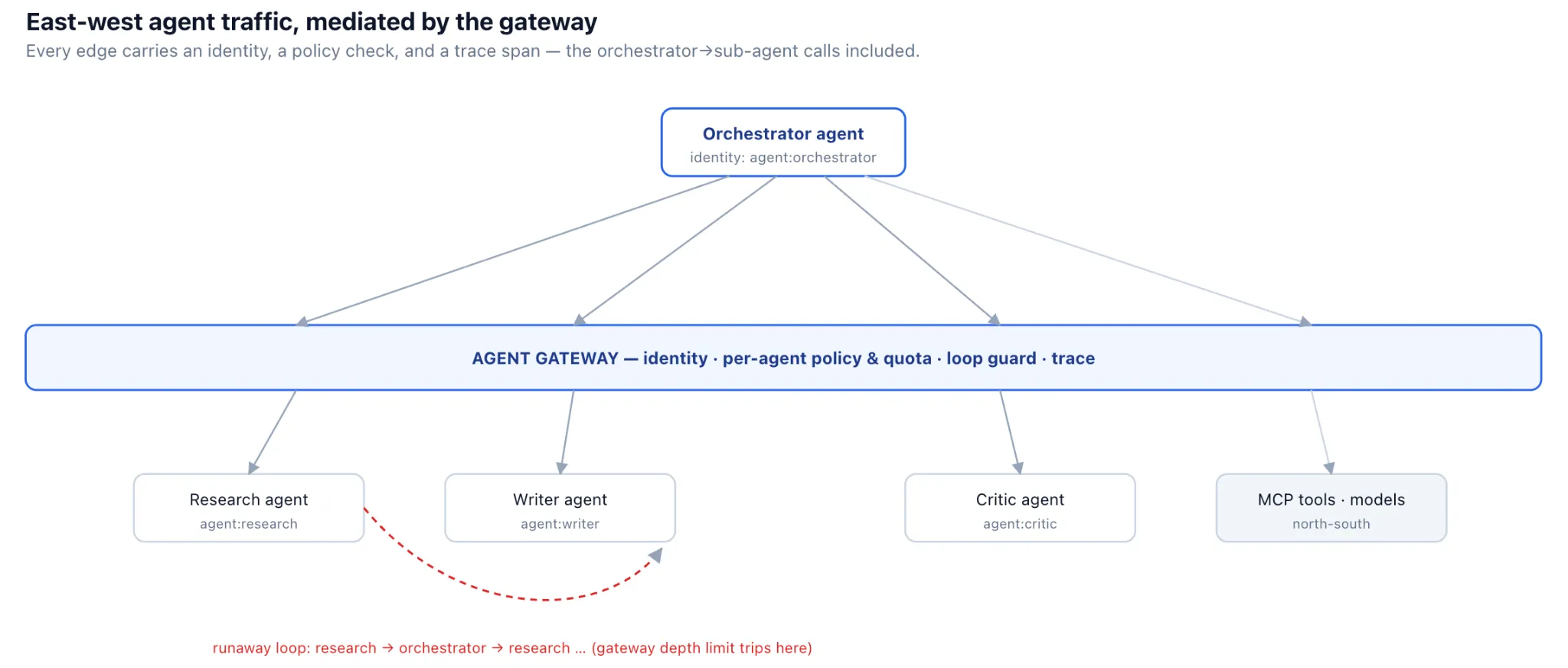
Single-agent systems call models and tools. Multi-agent systems add something new: agents calling agents. That east-west traffic — an orchestrator delegating to sub-agents, agents handing work to each other over the still-young Agent2Agent protocol — is where cost runs away, blast radius widens, and "which agent did what" becomes unanswerable. The protocols standardize how agents discover one another and exchange work, and they provide security hooks — but they don’t prescribe your enterprise identity model, policy graph, budget model, or observability and control plane. This post is that governance layer, and why it belongs at the gateway.
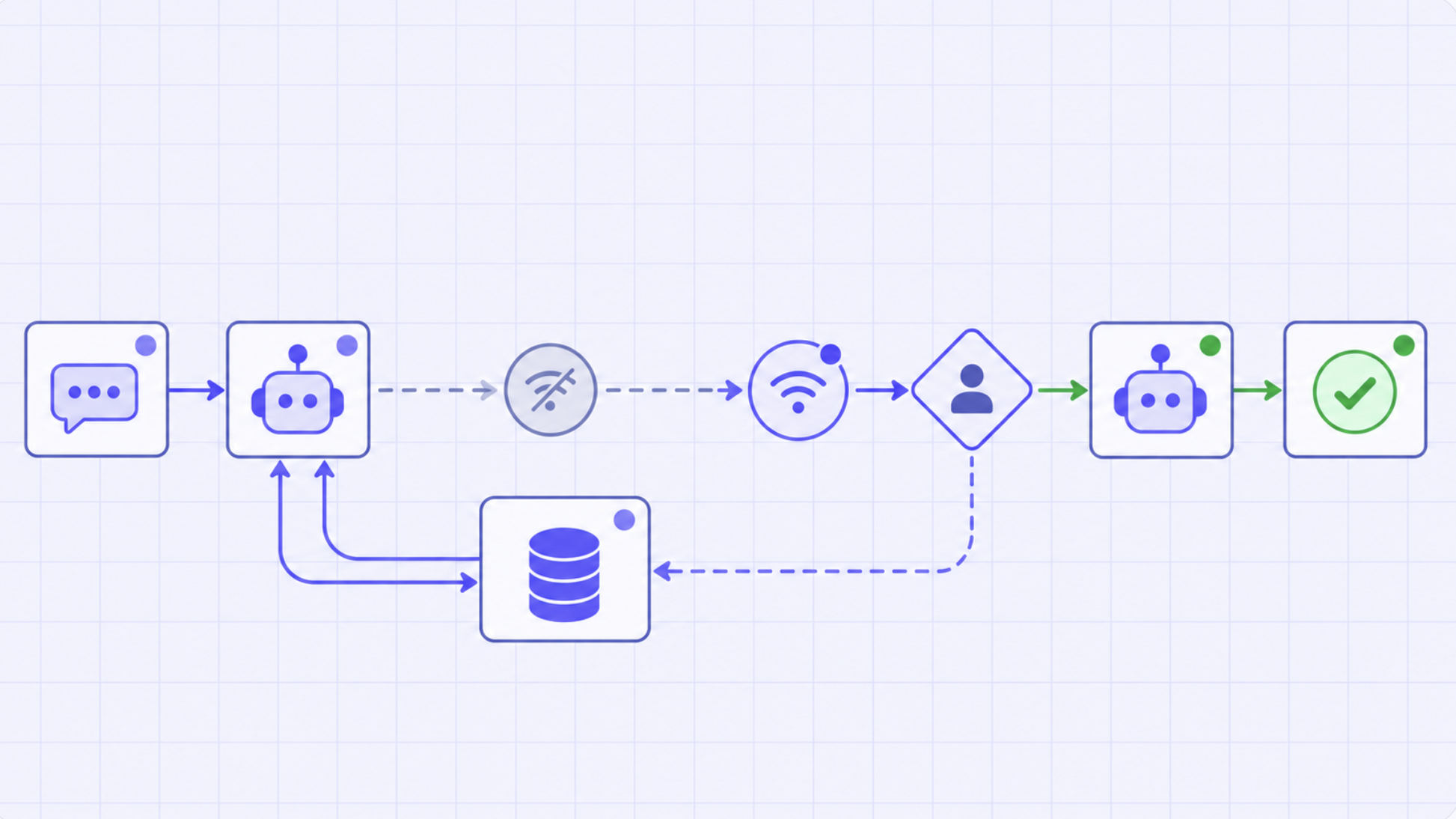
Tomás, a platform engineer, walked in to a cost alert and a mystery. Overnight, the company's new multi-agent research workflow had spent more than its entire previous month. An orchestrator agent delegated subtasks to a set of sub-agents; one sub-agent, hitting a transient error, retried by re-invoking the orchestrator, which delegated again — a loop that ran for hours. By morning the agents had called each other tens of thousands of times. Tomás wanted to know which agent started it and where the cycle formed, and found he couldn't: every agent authenticated with the same shared service key, the calls between agents weren't recorded as a graph, and there was no per-agent rate limit that would have tripped. The system had governance for calls to the model provider. It had almost none for calls between its own agents.
This is the gap multi-agent systems open. The moment agents start delegating to one another, you have a new internal network — one with no identity, no policy, and no trace by default. The agent frameworks help you build the workflow; they don't govern it. This post is how to give that internal network the same identity, limits, and observability you'd never run a microservice mesh without.
For most of the gateway story so far, traffic has been north-south: an application calls a model, maybe through a tool. Multi-agent systems add east-west traffic — agents invoking other agents. An orchestrator delegates to specialists; a specialist consults another; results flow back up. The still-young Agent2Agent (A2A) protocol gives this a standard shape, with agents publishing capability descriptions (agent cards) that others discover, and exchanging tasks and messages over a common interface, much as MCP standardized how agents reach tools.
The analogy worth holding onto is the move from a monolith to microservices. The instant your agents talk to each other, you have a distributed system with the failure modes of one: cascading retries, cycles, fan-out amplification, and the loss of a single clear call stack. And like microservices, the answer isn't to wish the calls away but to put them behind a layer that gives every caller an identity, every call a policy, and every flow a trace. That layer, for agents, is the agent gateway.
TrueFoundry AI Gateway ofrece una latencia de entre 3 y 4 ms, gestiona más de 350 RPS en una vCPU, se escala horizontalmente con facilidad y está listo para la producción, mientras que LitellM presenta una latencia alta, tiene dificultades para superar un RPS moderado, carece de escalado integrado y es ideal para cargas de trabajo ligeras o de prototipos.





Las últimas noticias, artículos y recursos enviados a tu bandeja de entrada
.png)
.png)
.png)
.png)
.png)
.png)
.png)
.png)
.png)
.png)