

What is LangWatch?
LangWatch is an LLM observability and evaluation platform that accepts traces via standard OpenTelemetry Protocol (OTLP) endpoints. It captures LLM call traces, evaluates them against custom criteria, and provides analytics, annotation tools, and dataset management for AI applications. LangWatch is compatible with any OpenTelemetry-instrumented source and maps received spans to its own data model automatically.Key Features of LangWatch
- OpenTelemetry Ingestion: Accepts OTLP traces over HTTP and gRPC, compatible with all OpenTelemetry SDKs and exporters including the TrueFoundry AI Gateway.
- Evaluations: Run automated evaluations on captured traces to measure quality, safety, and correctness of LLM responses.
- Annotations and Datasets: Annotate traces manually or programmatically and build datasets for fine-tuning and regression testing.
- Analytics: Visualize trace volume, latency, token usage, and cost trends across models and time periods.
Prerequisites
Before integrating LangWatch with TrueFoundry, ensure you have:- TrueFoundry Account: Create a TrueFoundry account and follow the instructions in our Gateway Quick Start Guide.
- LangWatch Account: Sign up at app.langwatch.ai. A free tier is available.
- LangWatch API Key: Create an API key from the LangWatch dashboard under Settings → API Keys.
Integration Steps
1
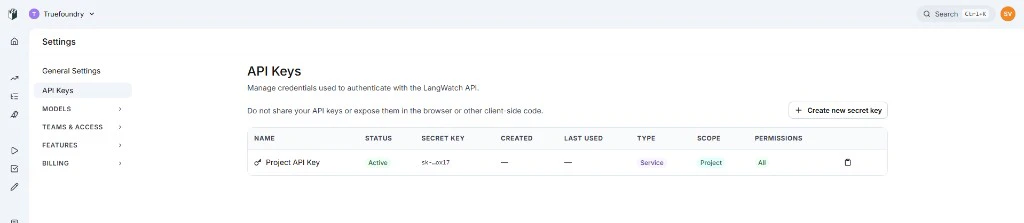
Get Your LangWatch API Key
- Log in to app.langwatch.ai.
- In the left sidebar go to Settings.
- Navigate to API Keys and click Create API Key.
- Give it a name (for example
tfy-gateway) and copy the key.
2
Configure OTEL Export in TrueFoundry
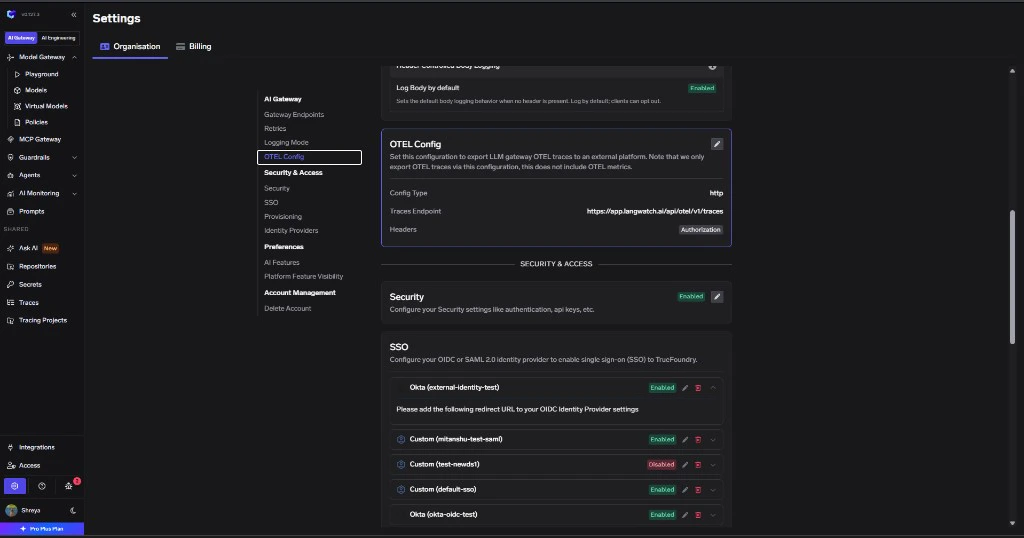
- Go to AI Gateway → Controls → Settings in the TrueFoundry dashboard.
- Scroll down to the OTEL Config section and click the edit (✏️) button.
- Enable the Otel Traces Exporter Configuration toggle and fill in:
| Field | Value |
|---|---|
| Toggle | Enabled |
| Protocol | HTTP Configuration |
| Endpoint | https://app.langwatch.ai/api/otel/v1/traces |
| Encoding | Proto |
| Header Key | Authorization |
| Header Value | Bearer <your-langwatch-api-key> |
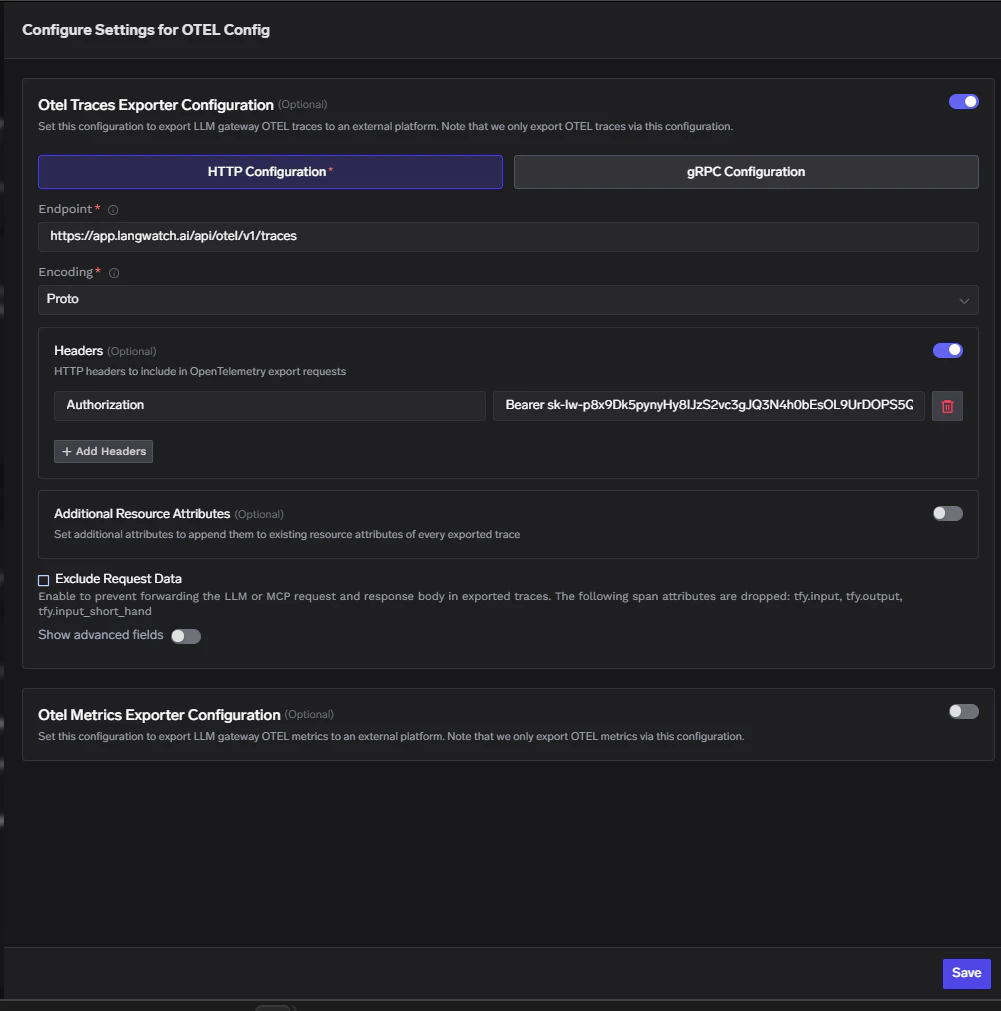
- Click Save to apply the configuration.
LangWatch does not currently support OTLP metrics ingestion — only configure the Traces Exporter. Leave the Otel Metrics Exporter Configuration disabled.
3
Verify the Integration
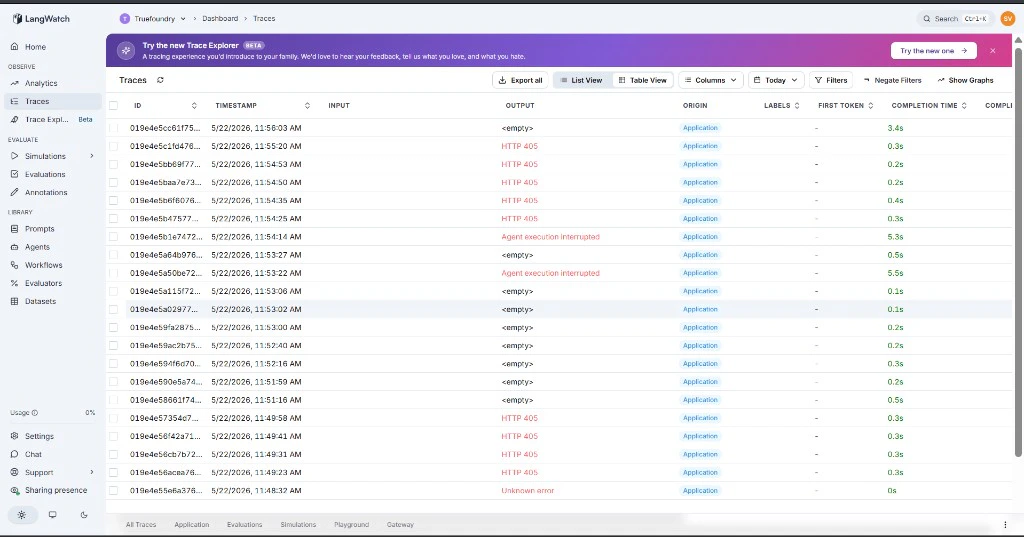
- Make a request through the TrueFoundry AI Gateway (for example from the Playground).
- Log into app.langwatch.ai and click Traces in the left sidebar.
- Confirm traces from
tfy-llm-gatewayare appearing with timestamps matching your test request.
Configuration Reference
| Configuration | Value |
|---|---|
| Traces Endpoint | https://app.langwatch.ai/api/otel/v1/traces |
| Metrics Endpoint | Not supported |
| Protocol | HTTP |
| Encoding | Proto |
| Auth Header Key | Authorization |
| Auth Header Value | Bearer <your-langwatch-api-key> |