


September 22, 2026
|
Lesedauer: 5 Minuten


Erhalten Sie sofortigen Zugriff auf eine TrueFoundry-Live-Umgebung. Stellen Sie Modelle bereit, leiten Sie den LLM-Verkehr weiter und erkunden Sie die gesamte Plattform — Ihre Sandbox ist in Sekundenschnelle einsatzbereit, ohne dass eine Kreditkarte erforderlich ist.



Published: September 22, 2026
.png)
Unglaublich schnelle Methode zum Erstellen, Verfolgen und Bereitstellen Ihrer Modelle!
Ask three teams what their LLM router does and you get three answers that do not overlap. One runs GPT-4o on both Azure and OpenAI and wants traffic to survive an outage. One got their bill and wants the easy 70% of requests served by something cheaper. One has a German subsidiary whose prompts must not leave the EU. All three need different configuration, and two of the three would get nothing from what the others built.
The taxonomy is worth stating precisely, because it is what most llm routing content skips:
The tell is what each reads to decide. Load balancing reads infrastructure state, model selection reads the request body, data routing reads metadata and identity. Three inputs, so three features — and they compose rather than compete.
This is the oldest and least interesting sense of the word, which is why it is also the most reliable. You have several ways to reach the same capability — azure/gpt-4o and openai/gpt-4o, or two deployments in different regions — and you want requests spread across them so no single failure is your failure.
The premise is that every target is equivalent for correctness. Any could serve the request; you are choosing on availability, capacity, and speed. That is what makes llm load balancing safe to automate. And provider latency is not stable enough to ignore — it varies by model, region, provider, and hour:
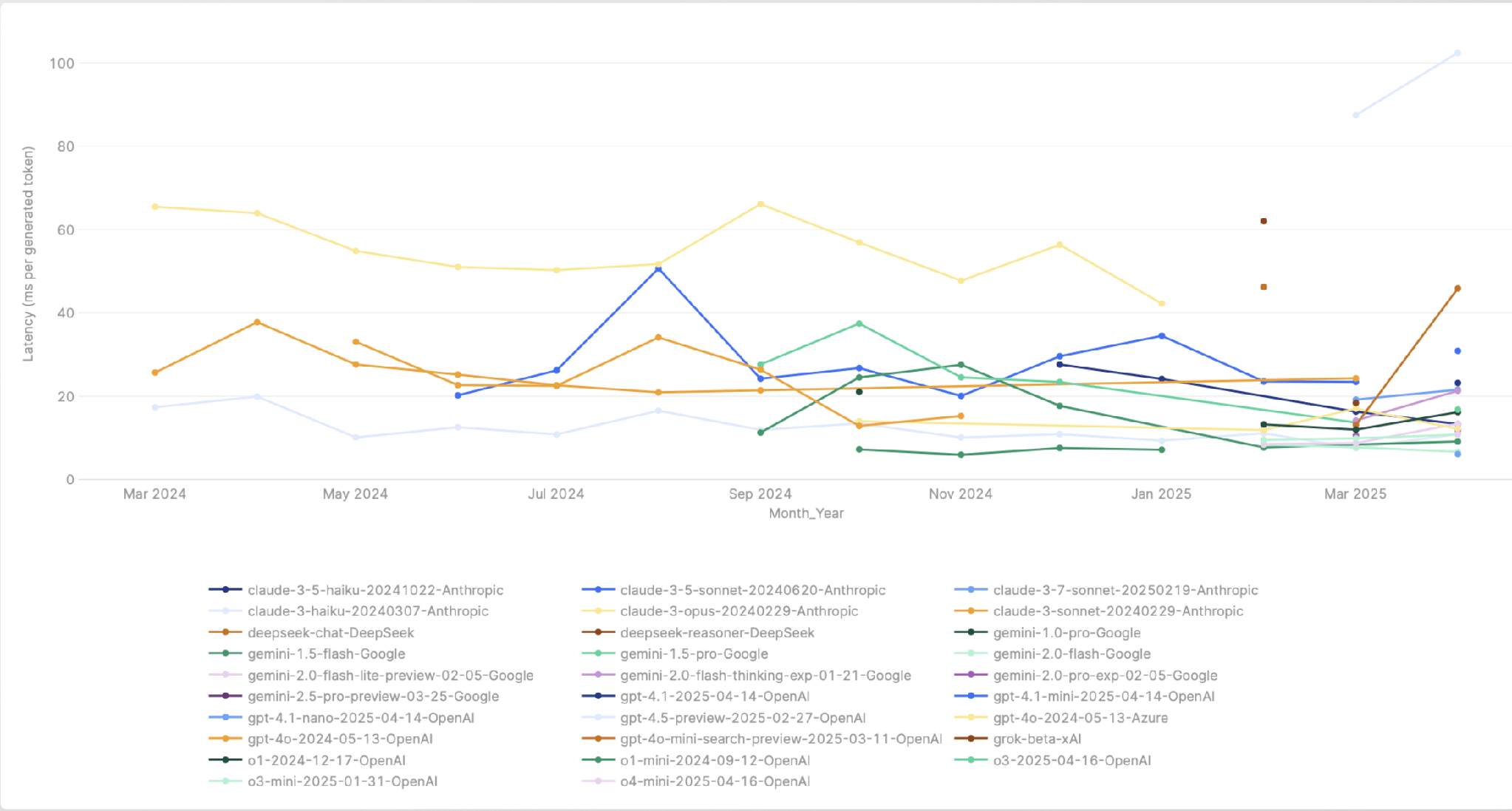
Chart of measured latency variance across several LLM providers over one month
TrueFoundry configures this on a virtual model — a name your application calls, like my-group/production-chat, with one routing strategy and a list of real targets behind it. Three strategies qualify as load balancing:
TrueFoundry AI Gateway bietet eine Latenz von ~3—4 ms, verarbeitet mehr als 350 RPS auf einer vCPU, skaliert problemlos horizontal und ist produktionsbereit, während LiteLM unter einer hohen Latenz leidet, mit moderaten RPS zu kämpfen hat, keine integrierte Skalierung hat und sich am besten für leichte Workloads oder Prototyp-Workloads eignet.




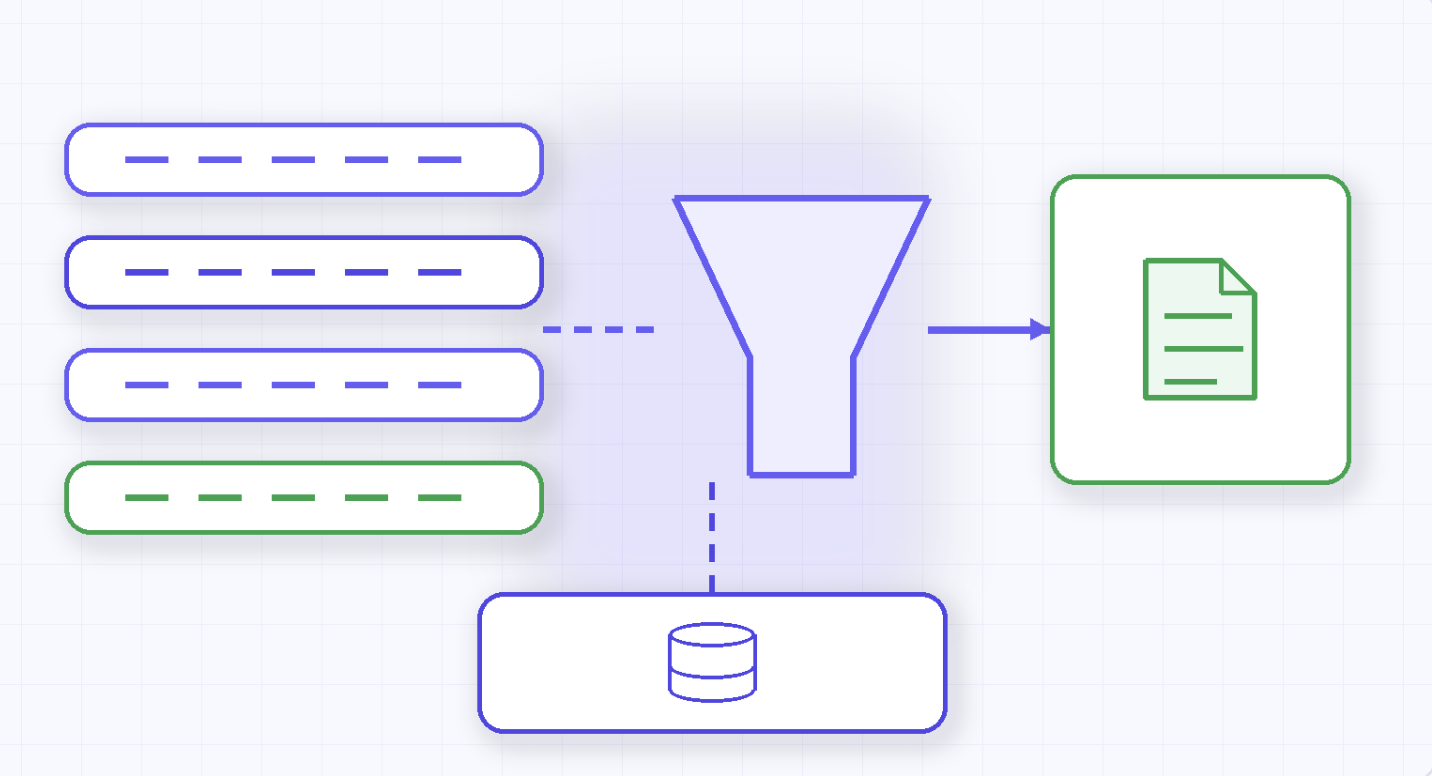
An LLM router sits between your application and your models and decides which model or deployment serves each request. The term covers three distinct jobs: load balancing across interchangeable targets for throughput and failover, model selection between a cheaper and a stronger model, and data routing constraining where a request may be processed and where its logs land. Each reads different inputs, so the first question is which one you need.
Model selection routing does; load balancing and data routing generally do not. TrueFoundry’s Auto Routing benchmarked at 69% cost savings with 98% of quality retained across 550 graded prompts, and up to 80% on production-shaped traffic. Savings depend on your traffic mix: break the routing decisions metric down by resolved tier and multiply each tier’s share by the price gap.
Complexity-based routing on one virtual model with the free heuristic classifier, because it needs no application change and no classifier spend. Add a priority chain across two providers once an outage has cost you something. Add data routing when someone asks where the data goes.
Yes — VPC, on-prem, air-gapped, hybrid, or across multiple clouds, with no data leaving your domain.
Roughly 3-4 ms of overhead, handling 350+ RPS on a single vCPU, across 1,000+ supported LLMs. The exception is the optional LLM classifier, which adds a real model call before the request is forwarded.
Yes. The gateway is OpenTelemetry-compliant and plugs into Grafana, Datadog, or Prometheus. Each LLM classifier call produces its own span, so classifier latency is visible separately from the served model’s.



Die neuesten Nachrichten, Artikel und Ressourcen werden in Ihren Posteingang gesendet



.png)
.png)
.png)
.png)
.png)
.png)
.png)
.png)
.png)
.png)


