Obtenha acesso instantâneo a um ambiente TrueFoundry ao vivo. Implante modelos, direcione o tráfego de LLM e explore a plataforma completa — seu sandbox estará pronto em segundos, sem necessidade de cartão de crédito.
A financial services firm runs three AI systems that have never worked together. One model scores transactions for fraud. Another reads customer messages for sentiment. A third route supports tickets through a case-management workflow.
Each system works well alone, yet the real challenge appears during a high-risk transaction. The firm suddenly needs sentiment context, compliance history, relevant information, and a routing decision within seconds. None of the systems was built to coordinate with the others.
That gap is what AI orchestration exists to close. It is not about replacing individual models. It is about the orchestration layer that helps models, agents, tools, and data sources act as one governed AI system.
This guide explains what AI orchestration is, how it works in production, why it matters now, and how it changes once agentic AI enters the picture. If a team has connected several models with brittle glue code, it has already met the problem AI orchestration solves.
Your AI Models Are Capable. The Gap Is in Coordinating and Governing Them.
TrueFoundry provides the orchestration control plane that connects, observes, and governs AI models, agents, and tools from one place.
AI orchestration is the practice of coordinating multiple AI models, agents, tools, and data sources so they operate as a single system working toward a shared goal. It gives enterprise teams a structured way to connect AI components across models, data, tools, and workflows.
Here is the distinction that matters. A single model answers a question. AI orchestration routes the question to the appropriate model, retrieves the required data, passes the outputs to the next step, verifies permissions, and logs the outcome.
The AI orchestration meaning has expanded over time. Earlier, it mostly referred to machine learning pipelines, training jobs, and model deployment. In 2026, it often means governing autonomous agents that make decisions, call external systems, and hand off work to one another with limited manual intervention.
This makes AI orchestration a broader coordination layer for enterprise AI. It connects large language models, workflow engines, data pipelines, automation tools, and business applications. It also helps teams enforce governance policies at the right time, before agents or models act.
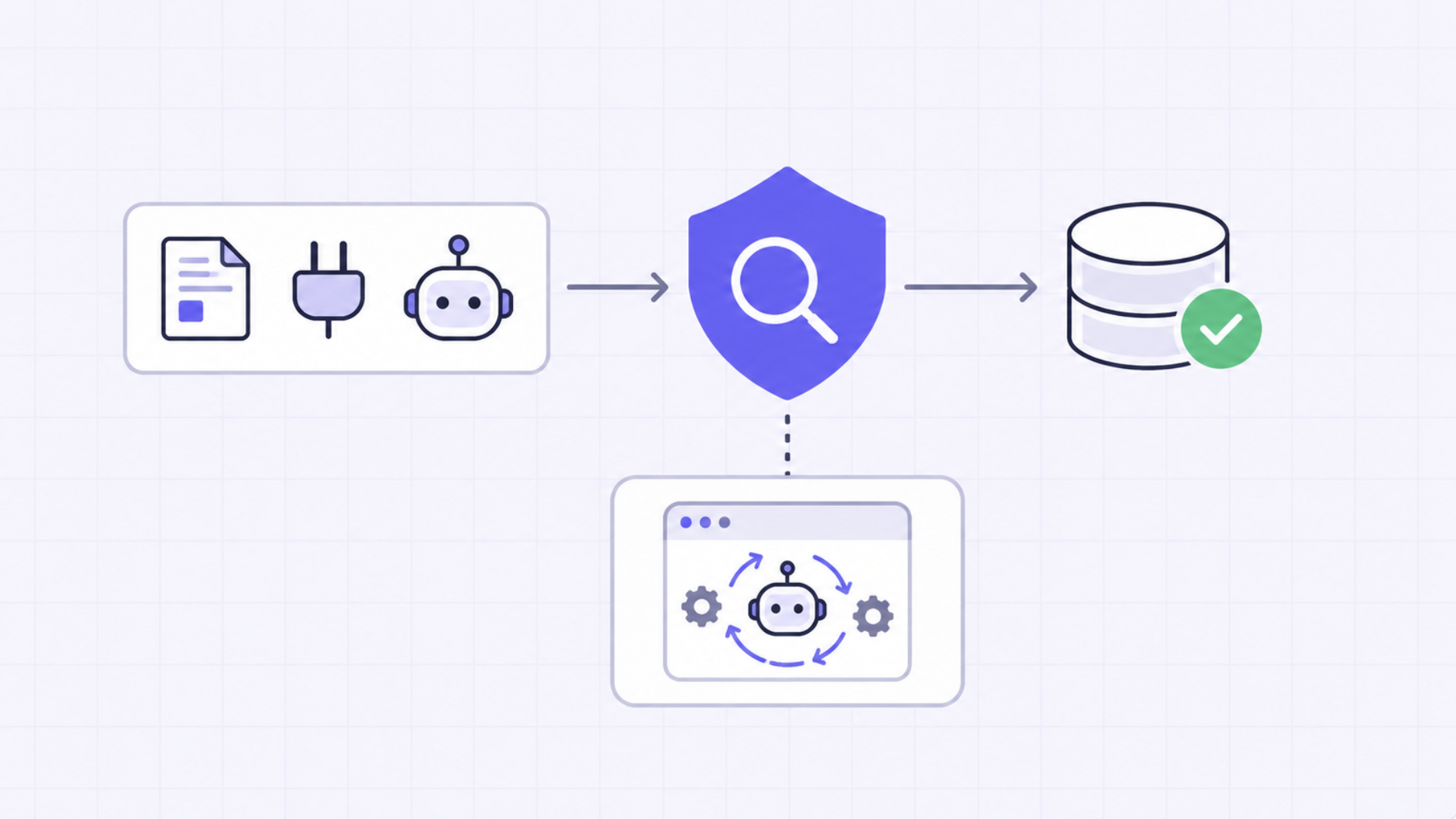
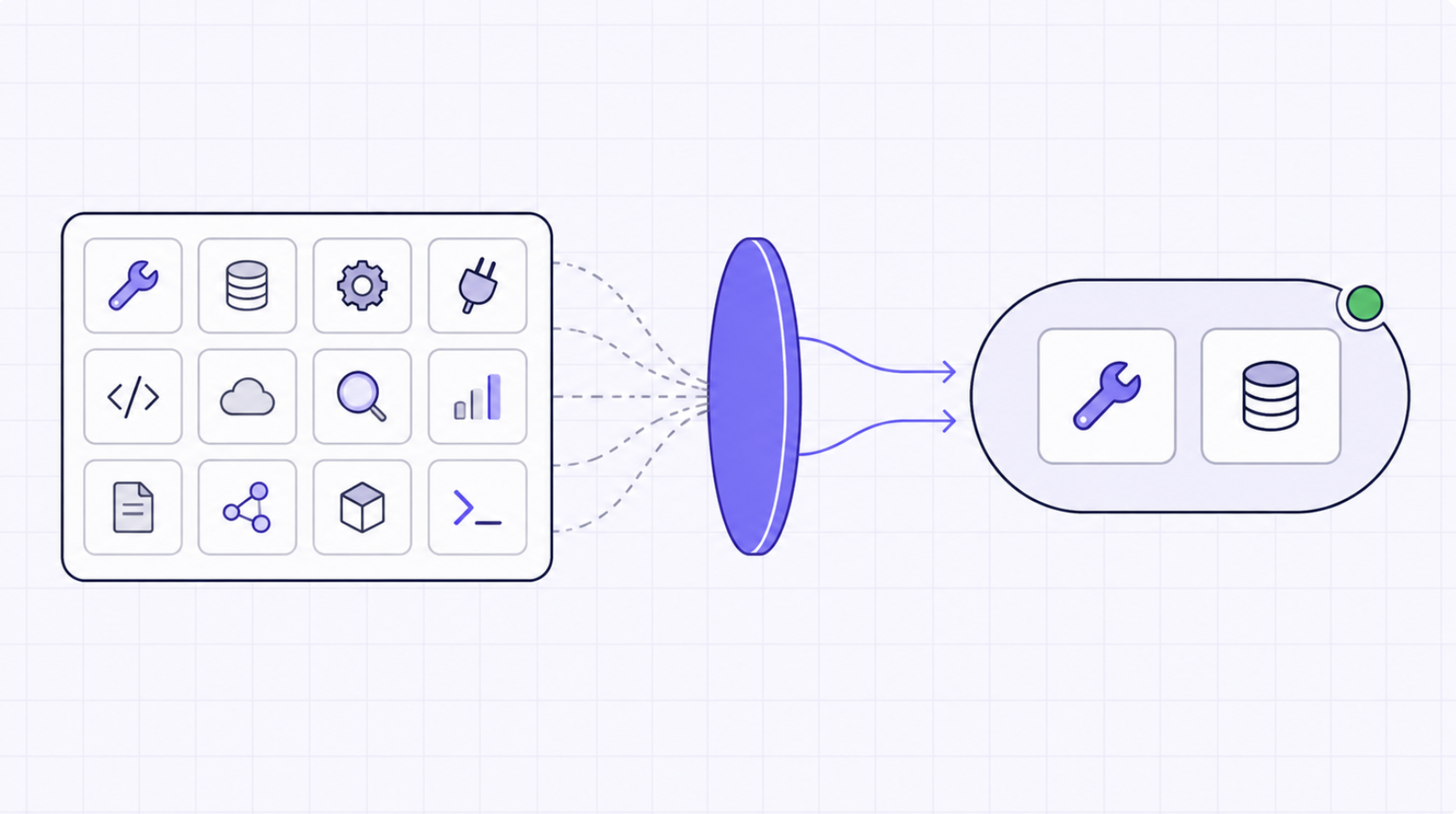
Figure 1: The orchestration layer coordinates models, agents, tools, and data sources from above.
How AI Orchestration Works
Every orchestrated workflow moves through five stages, turning a trigger into a governed and observable result. The exact architecture may vary, although the same operating pattern appears across orchestration platforms, agent workflows, and enterprise automation systems.
Trigger: Something that starts the workflow, such as a user request, a scheduled job, a system event, or an alert from enterprise systems. The trigger may come from a chat interface, ticketing system, fraud engine, monitoring tool, or business applications.
Planning: The orchestrator decides which models, agents, tools, and data sources the job needs. This planning step uses business rules, permissions, task type, resource availability, and the expected outcome to define the next step.
Execution: Components run in sequence or parallel, depending on the workflow. One step can retrieve enterprise data, another can classify intent, and another can generate output through natural language processing or a specialized model.
Governance: Access policies, guardrails, and compliance checks apply at the orchestration layer. This keeps enforcement consistent across all models, tools, agents, and workflows, rather than leaving controls scattered across individual components.
Observability: Every action, decision, data access, and dollar spent gets logged with structured metadata. These logs create audit trails that help teams debug failures, review agent behavior, and produce evidence for auditors.
The order matters less than the principle. Coordination and control live in the layer above individual components. That is the core operating model behind enterprise AI orchestration.
AI Orchestration vs. Related Concepts
“AI orchestration” is often used loosely, and it overlaps with several neighboring terms. The difference matters because each concept solves a different part of the enterprise AI stack.
Concept
Scope
Key Difference
AI orchestration
Coordinates multiple AI models, agents, and tools across end-to-end workflows
Manages the whole system, not individual components
AI workflow automation
Automates specific tasks or steps inside a defined process
Runs within the orchestration layer, not above it
ML orchestration
Manages model training, evaluation, and deployment pipelines
Focused on the model development lifecycle, not production agent coordination
API gateway
Routes and manages traffic between services
Doesn't understand agent context, tool calls, or LLM-specific semantics
Agent framework
Provides the building blocks for agent behavior
Defines how one agent works, not how a system of agents is governed
The main takeaway is simple. AI orchestration owns the full system from trigger to outcome. Traditional automation, workflow automation, ML pipelines, gateways, and agent frameworks each handle one slice of that system.
For example, Apache Airflow can help teams schedule and manage data workflows. An orchestration framework can help developers define agent behavior. An AI orchestration platform connects the broader system, manages policies, tracks state, and governs the full workflow.
This is why technical teams need architectural clarity before choosing tools. A workflow engine can automate a step, while orchestration governs how many steps work together. That distinction shapes security, cost, state management, and long-term maintainability.
Why AI Orchestration Matters for Enterprise Teams
The business case for AI orchestration is becoming more concrete. In SS&C’s 2025 survey of 1,650 enterprise leaders, nearly 94% called process orchestration essential to managing AI end-to-end. That makes orchestration a mainstream enterprise priority.
The root problem is fragmentation. Most teams do not suffer from too few AI tools. They usually have too many tools running in separate silos, with no shared state, no common governance, and no single view of data flows or outcomes.
AI orchestration helps in four practical ways:
Scale without chaos: It manages how work spreads across models, agents, compute, and data integration workflows. This helps teams add new AI capabilities without hand-coordinating every new system.
Consistent governance: Policies, access controls, guardrails, and data governance rules are enforced once at the orchestration layer. This prevents each tool from becoming its own isolated policy environment.
Audit and compliance: Every action is captured in a unified record. Producing evidence for SOC 2, HIPAA, GDPR, or internal compliance requirements becomes easier than reconstructing disconnected logs.
Faster incident response: When something breaks, teams can trace which agent acted, which model responded, and what customer data it touched. That shortens root-cause analysis and improves human review workflows.
These benefits of AI orchestration directly affect business outcomes. They improve reliability, reduce duplication, and help business leaders connect AI investments with measurable outcomes. They also support better change management when new AI capabilities reach production.
Figure 2: Fragmented AI tools on the left, one governed orchestration layer on the right.
AI Orchestration in Practice: Real-World Use Cases
The pattern appears across very different domains. AI orchestration is most useful when multiple systems must coordinate decisions, data, and actions across complex processes.
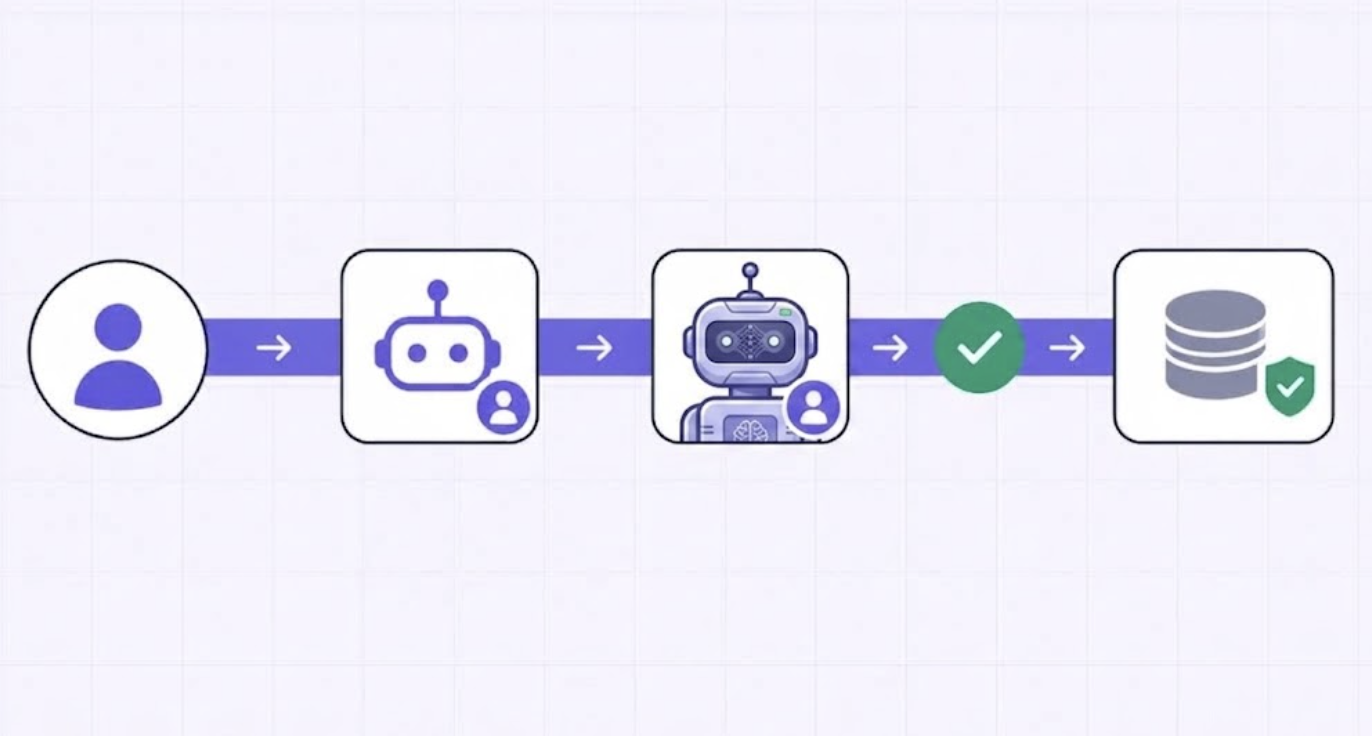
Financial services: A fraud-detection agent flags a transaction and passes context to a compliance agent. The compliance agent checks regulatory history, then routes the case to a human reviewer. The orchestration layer manages permissions, order, and the final audit trail.
Customer service: A query enters through a support channel. An intent classifier sends it to the right agent, an LLM drafts an answer from the knowledge base, and the case system updates itself. Context remains consistent across every handoff.
IT operations: Monitoring agents detect an anomaly, while a root-cause agent reviews the relevant logs. An incident-response agent then alerts the right team with a suggested fix. Three systems operate on a single coordinated timeline.
Software development: A planning agent breaks a GitHub issue into subtasks. A coding agent implements the change, a testing agent validates it, and a deployment agent triggers the CI/CD pipeline. The chain runs without pressing go at every step.
Recommendation engines: A user action can trigger a retrieval model, a ranking model, a personalization model, and a content-generation model. AI orchestration coordinates these different models so the recommendation reaches the user at the right time.
The same backbone appears in each example. The orchestration layer decides what runs next, which data is allowed, and where the result should go. It also maintains human oversight for high-risk decisions that need review.
What Generative AI Orchestration Adds
Generative AI orchestration extends the same idea to systems where LLMs generate output rather than only classify, rank, or route. This introduces additional concerns because artificial intelligence outputs can vary across prompts, models, contexts, and access to tools.
Prompt management: Teams need to version and monitor prompts across models. This keeps output quality stable and makes every change to production prompts traceable.
Context window management: Agents need enough context to reason well. They should not receive so much context that latency rises, costs increase, or model performance degrades.
Guardrails: Input and output validation should prevent harmful, off-policy, or sensitive data from moving through the system unchecked. This is especially important when workflows use enterprise data.
Cost management: Token usage across a chain of LLM calls compounds quickly. Strong orchestration tracks cost at the model, agent, and team level before runaway loops create unexpected spend.
Agent orchestration: AI agent orchestration adds another layer of complexity. AI agents can reason, call tools, request data, and act across enterprise systems. The system must govern agent logic, not only model routing.
That is where agentic AI changes the orchestration problem. A workflow may include autonomous agents, AI tools, and enterprise APIs. The orchestration layer must coordinate them safely while preserving speed, traceability, and policy enforcement.
Orchestrate Models, Agents, and Tools Without Building the Governance Layer Yourself
Sign up for TrueFoundry and get unified access control, observability, and compliance for your entire AI stack in your VPC.
How TrueFoundry Delivers Enterprise AI Orchestration
TrueFoundry gives enterprise teams the AI orchestration control plane without forcing them to stitch together separate products for gateway, observability, access control, and deployment. It provides a single governing layer across models, tools, agents, and AI workloads.
One AI Gateway for LLMs, MCP tools, and agents: The AI Gateway orchestrates access to models, tools, and agents from a single control plane. It routes requests, enforces policy, logs every call, and supports consistent governance across providers and frameworks.
Identity-aware execution and RBAC: Every orchestrated request ties back to a real user or role. Access is governed centrally rather than managed separately inside each tool. This helps security teams review permissions across all models, agents, and tools.
LLM Gateway for provider flexibility: The LLM Gateway routes across hosted, open-source, and self-hosted models. This helps teams choose the right model for each task while keeping cost, latency, and fallback controls consistent.
MCP Gateway for governed tool access: The MCP Gateway governs how agents and applications reach tools, APIs, databases, and internal systems. It adds authentication, permissions, observability, and tool-call logging to AI workflows.
Agent Gateway for agentic systems: The Agent Gateway governs autonomous agents, tool execution, runtime policies, and workflow limits. It helps teams control agent behavior before an action reaches a live enterprise system.
VPC-native deployment: The orchestration layer can run inside the customer’s AWS, GCP, or Azure account. Prompts, tool schemas, model outputs, and logs remain inside the security perimeter. This supports SOC 2, HIPAA, ITAR, and internal compliance programs.
Cost controls and observability built in: Token usage, latency, and cost are tracked at model, agent, and team levels in real time. Budget limits and guardrails can trip before spend or policy violations get out of control.
This is the core idea behind TrueFoundry’s enterprise AI orchestration approach. Teams can connect models, MCP tools, agents, and guardrails through a single control plane. They can also maintain consistent governance across production AI workflows.
Book a demo to see how TrueFoundry moves teams from fragmented AI tools to a governed, observable orchestration layer.
TrueFoundry AI Gateway delivers ~3–4 ms latency, handles 350+ RPS on 1 vCPU, scales horizontally with ease, and is production-ready, while LiteLLM suffers from high latency, struggles beyond moderate RPS, lacks built-in scaling, and is best for light or prototype workloads.


.webp)



.webp)
.webp)
.webp)





.webp)
.webp)
.webp)
.webp)


