


.png)
October 27, 2026
|
5 min read


Obtenha acesso instantâneo a um ambiente TrueFoundry ao vivo. Implante modelos, direcione o tráfego de LLM e explore a plataforma completa — seu sandbox estará pronto em segundos, sem necessidade de cartão de crédito.



Blazingly fast way to build, track and deploy your models!
Pergunte a dez profissionais de segurança o que um gateway de IA faz e você terá dez respostas diferentes: um proxy que troca chaves de API, um local para registrar prompts, um firewall para chatbots. Nada disso está exatamente errado, mas não é o quadro completo, e a lacuna entre "parcialmente correto" e "governar efetivamente o uso de IA" é onde as violações acontecem.
O Relatório de Custo de uma Violação de Dados de 2025 da IBM constatou que 20% das organizações violadas foram comprometidas por meio de IA sombra (shadow AI), ou seja, funcionários usando ferramentas de IA generativa que a segurança nunca aprovou ou das quais nunca teve conhecimento, adicionando cerca de US$ 670.000 ao custo médio da violação. Entre essas organizações, 97% não possuíam controles de acesso adequados, e uma pesquisa do Ponemon Institute com 600 organizações descobriu que 63% não tinham nenhuma política de governança de IA. [1]
A visibilidade de custos e a governança não são problemas que podem ser resolvidos comprando mais uma ferramenta. Este post aborda o assunto da maneira que um CISO costuma perguntar: você consegue ver e governar todo o uso de IA na sua organização, o que você pode fazer depois de vê-lo e isso pode funcionar com a pilha tecnológica que você já utiliza?
Peça à maioria dos líderes de segurança para listar todas as ferramentas de IA usadas dentro de suas empresas e eles não conseguirão. O uso de IA chega por pelo menos quatro portas, e cada uma precisa de uma resposta diferente.
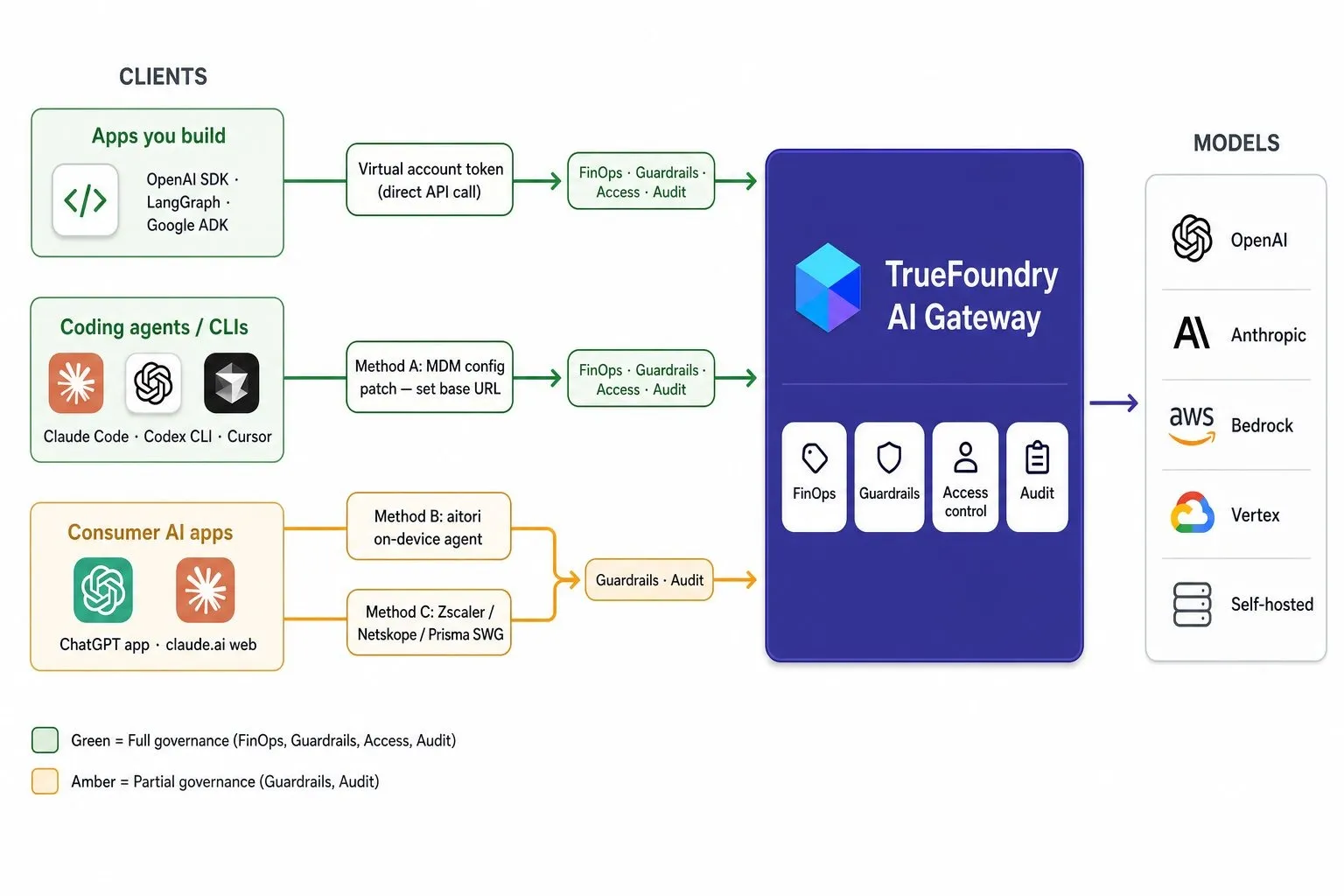
Cada categoria de cliente de IA chega ao Gateway de IA da TrueFoundry por um caminho diferente — e recebe um nível diferente de governança, dependendo do grau de cooperação da ferramenta.
Aplicativos e agentes criados pelos seus próprios desenvolvedores. O caso mais fácil, já que suas equipes são donas do código. Roteie as chamadas por meio de uma credencial com escopo definido e revogável, em vez de uma chave de API bruta. A TrueFoundry faz isso com um Token de Conta Virtual: vinculado a um aplicativo, visível nos logs como aquele aplicativo e passível de ser desativado individualmente.
Ferramentas de desktop e CLI que os funcionários já utilizam. Cursor, Claude Code e Codex CLI geralmente permitem que você defina com qual endpoint eles se comunicam. Isso torna a aplicação uma questão de configuração, não de interceptação: distribua o endpoint do gateway da TrueFoundry para toda a frota por meio do seu MDM (Jamf, Intune).
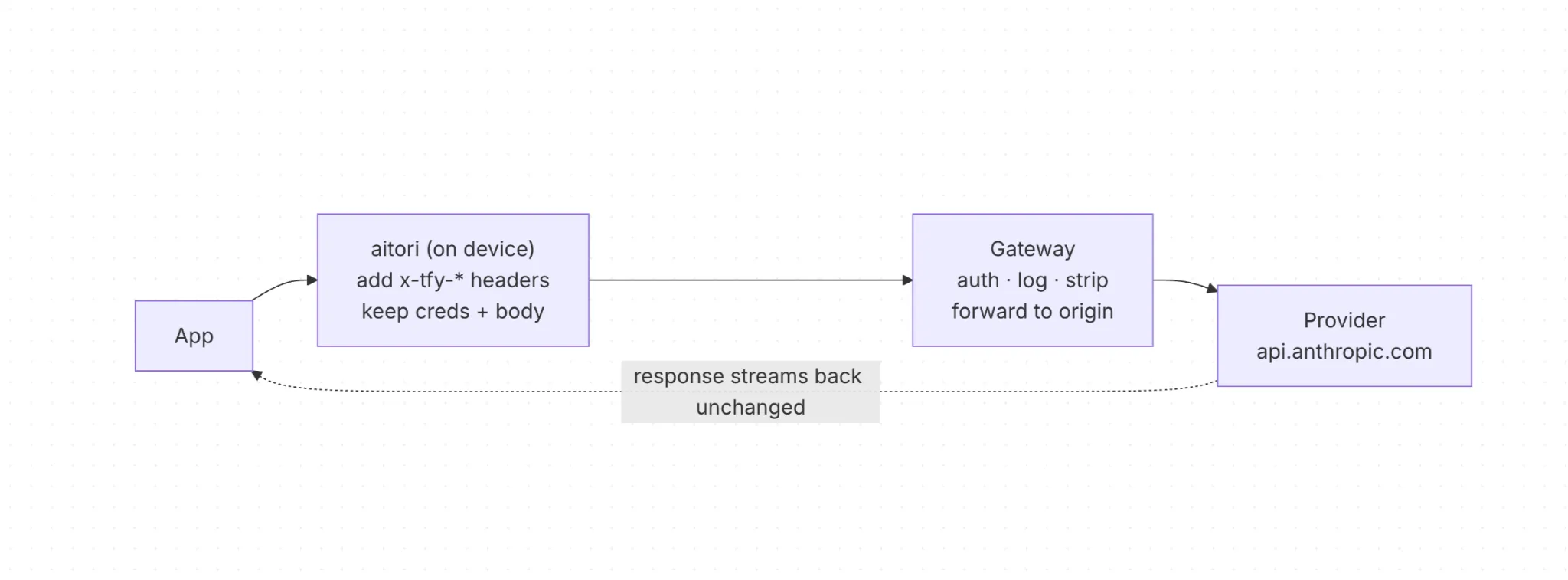
Aplicativos web de consumo. A interface web do ChatGPT e do Claude é o caso difícil: sem arquivo de configuração, sem código para alterar. A TrueFoundry resolve isso com aitori, um proxy no dispositivo que funciona como um cliente VPN, interceptando o tráfego no nível do sistema operacional e redirecionando-o para o gateway por meio de um certificado de dispositivo. É código aberto: o código está no GitHub.
IA incorporada em ferramentas SaaS pelas quais você já paga. O Einstein do Salesforce, os resumos de IA do Slack e recursos semelhantes são a exceção honesta. A chamada do modelo nunca sai dos servidores do fornecedor, então não há nada para interceptar. Nenhum gateway, incluindo o da TrueFoundry, resolve isso hoje; a alternativa são controles no estilo CASB ou as próprias configurações de administrador do fornecedor.
Três das quatro portas são solucionáveis hoje. A quarta não é, e qualquer fornecedor que alegue o contrário merece uma segunda análise.
TrueFoundry AI Gateway delivers ~3–4 ms latency, handles 350+ RPS on 1 vCPU, scales horizontally with ease, and is production-ready, while LiteLLM suffers from high latency, struggles beyond moderate RPS, lacks built-in scaling, and is best for light or prototype workloads.





As últimas notícias, artigos e recursos enviados para sua caixa de entrada
.png)
.png)
.png)

.png)
.png)
.png)
.png)
.png)
.png)
.png)
.png)


