


October 1, 2026
|
5 min read


Obtenha acesso instantâneo a um ambiente TrueFoundry ao vivo. Implante modelos, direcione o tráfego de LLM e explore a plataforma completa — seu sandbox estará pronto em segundos, sem necessidade de cartão de crédito.



Published: June 30, 2026
Blazingly fast way to build, track and deploy your models!
AI systems are evolving fast, but getting them to work seamlessly with real-world tools and data is still a major hurdle. Model Context Protocol (MCP) is a new standard that promises to make AI integration smoother and more secure by giving models structured access to external data and services.
Sounds familiar?
That’s because APIs have been doing something similar for decades, acting as the backbone of how software systems talk to each other. At first glance, MCP and APIs might seem like two versions of the same idea. But in reality, they operate at different layers and solve different problems.
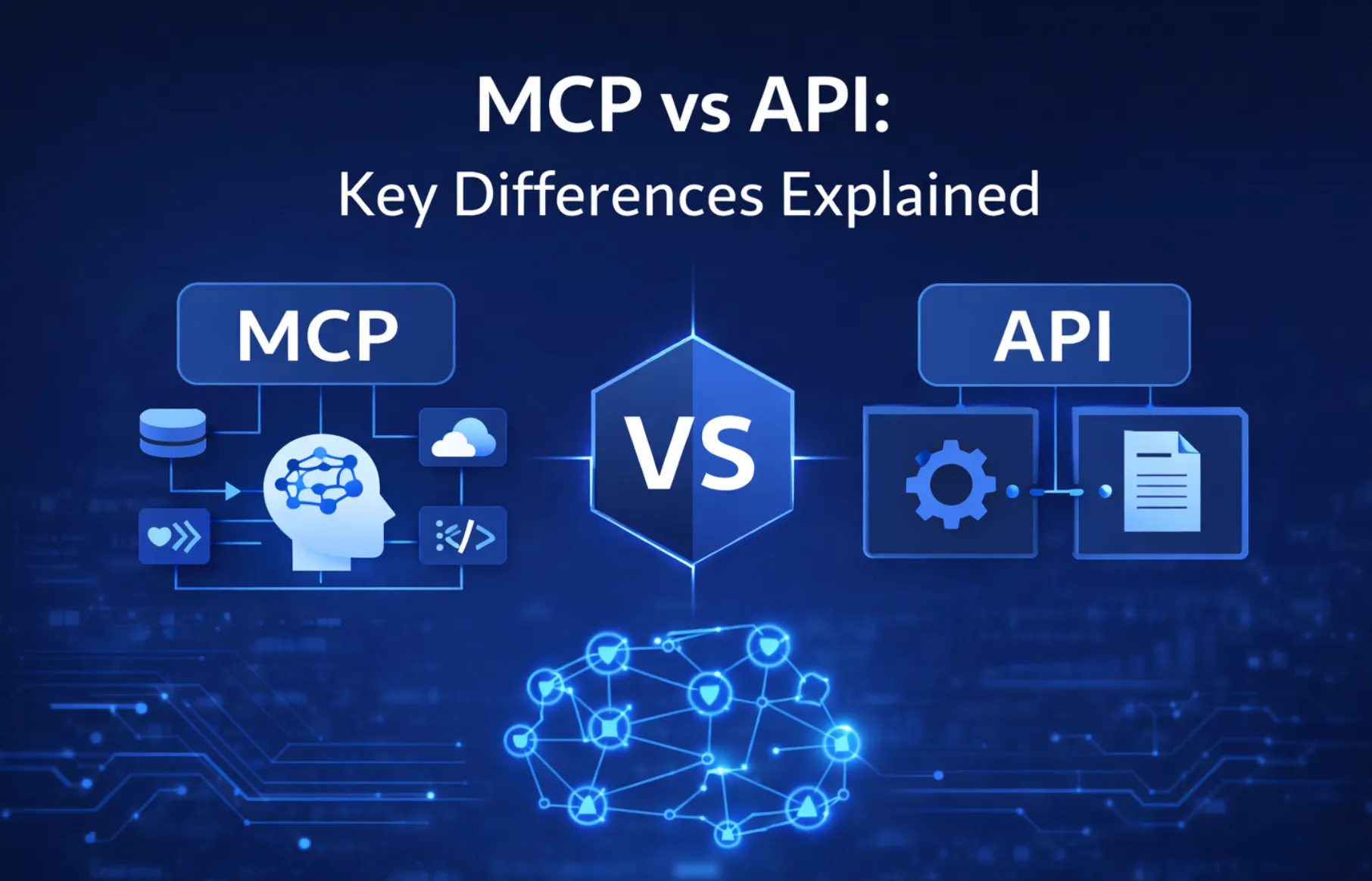
In this MCP vs API article, we’ll break down what MCP actually is, how it compares to APIs, where each shines, and what it all means for developers, enterprises, and the future of AI integration.
A standard interface that lets AI models dynamically access and orchestrate tools and data for secure, context-aware workflows.
The Model Context Protocol (MCP) is an open standard that allows AI models to connect with external tools, data sources, and services in a safe and structured way. Instead of hardcoding integrations or relying on custom connectors, MCP defines a consistent protocol for exchanging context between a model and its environment.
This makes it easier for developers to extend model capabilities, ensure secure access to sensitive data, and standardize how AI interacts with external systems.
Standardized Communication: MCP establishes a standardized, open protocol for communicating context between AI models and other external tools. This eliminates the need to deal with the messy landscape of proprietary connectors and hardcoded integrations. All tools, data sources, or services communicate with each other with a common language. This greatly reduces the engineering effort required to integrate AI with other enterprise tools. TrueFoundry's MCP Gateway serves as a single endpoint for agents to call any registered MCP Server, which could be an internal API, a cloud service, or a pre-built integration such as Slack, Confluence, or Datadog.
Security and Governance: MCP enables controlled and permissioned access to all tools and services. With TrueFoundry's implementation, this includes federated identity with enterprise IdPs such as Okta or Azure AD, OAuth 2.0 with dynamic token discovery, and Role-Based Access Control (RBAC) on a per MCP Server or per Tool basis. An agent can only call tools for which it has been explicitly granted access. Therefore, an over-privileged agent cannot act as a "superuser" across your entire enterprise tools landscape. Additionally, all activity is audit logged, which makes MCP-based workflows inherently friendly for heavily regulated industries such as healthcare or finance.
Extensibility: MCP has been architected to allow new tools or new data sources to be easily plugged in without having to change the underlying model or application code. In TrueFoundry, this means that you can use pre-built MCP Servers for popular enterprise platforms out of the box, or you can easily onboard any internal service – a proprietary REST API, legacy application, or custom database – as an MCP Server in minutes. Once registered, it’s immediately discoverable and callable by any agent.
Unified Discovery: A unified MCP Server Registry allows agents (and developers) to discover all the tools and services that are available. Instead of having to hardcode which tools an agent can use, we can now leverage the unified registry to expose to the agent at runtime the complete catalog of authorized, online MCP Servers.
Observability: All MCP Server calls, tool invocations, agent decisions are now traceable end-to-end. TrueFoundry captures rich telemetry – latency, errors, usage, cost – which can be filtered by user, tool, team, or environment. This effectively transforms what has traditionally been a black box (what did the agent do?) into a completely auditable, debuggable activity.
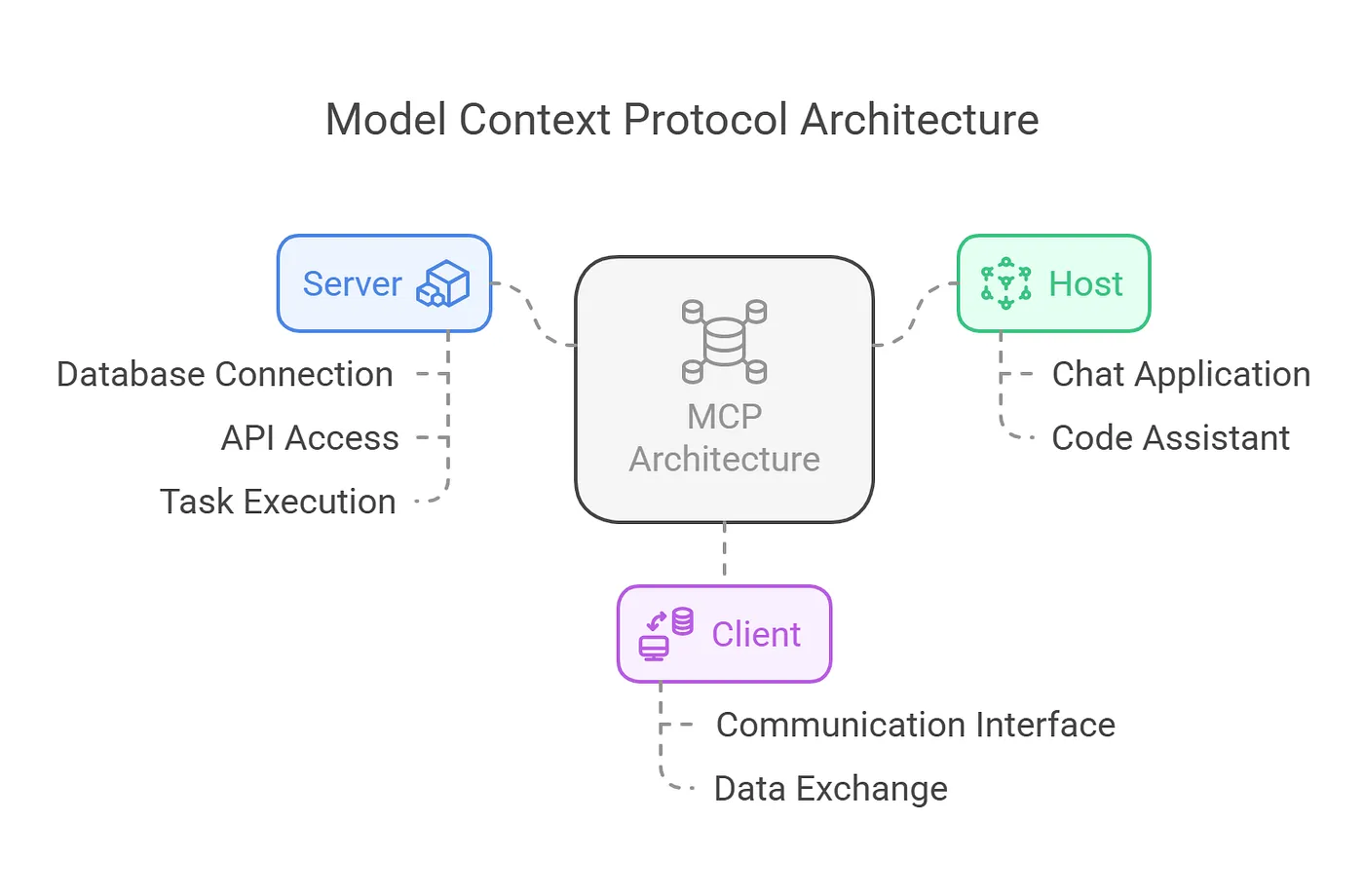
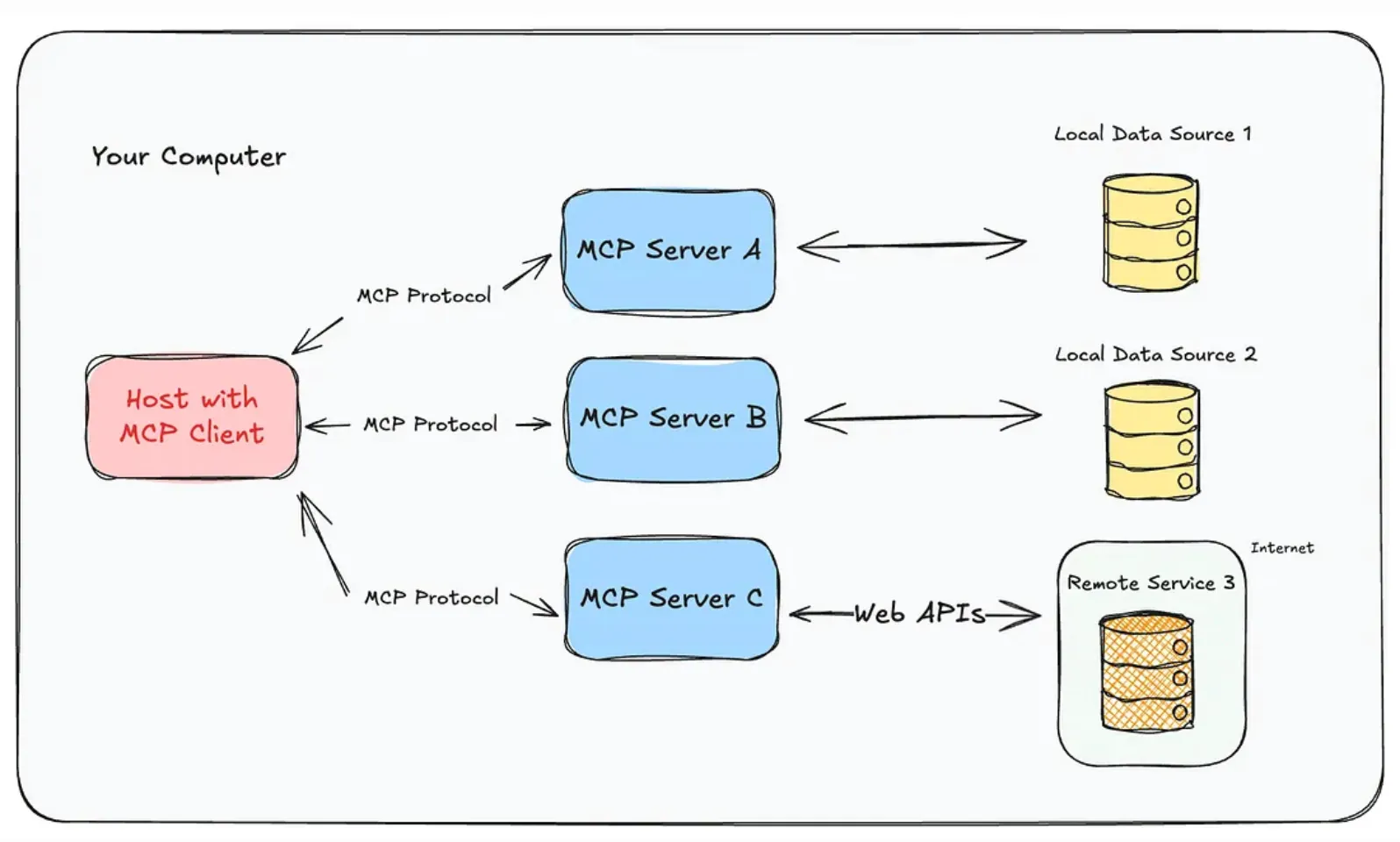
The architecture of MCP is built to balance flexibility with strict security controls. It follows a layered design that separates the model, external services, and communication channel. This separation ensures clear responsibilities, reduces complexity, and makes it easier to scale or extend the system without breaking existing workflows.
This layered approach ensures that models can interact with external environments while remaining secure, scalable, and easy to extend.
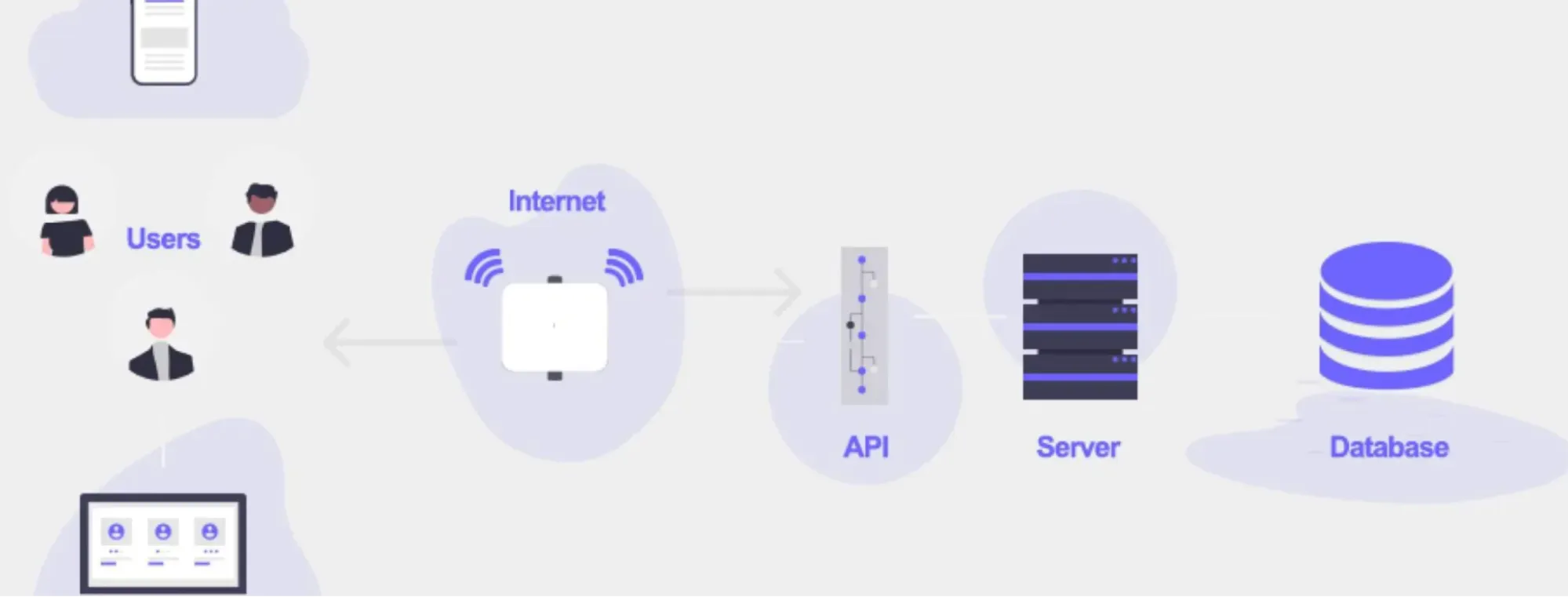
An Application Programming Interface (API) is a defined set of rules that allows two software applications to communicate with each other. Instead of directly accessing a system’s code or database, developers use APIs to request specific services or data in a structured and reliable way.
APIs are the backbone of modern software development, powering everything from mobile apps and web platforms to enterprise integrations.
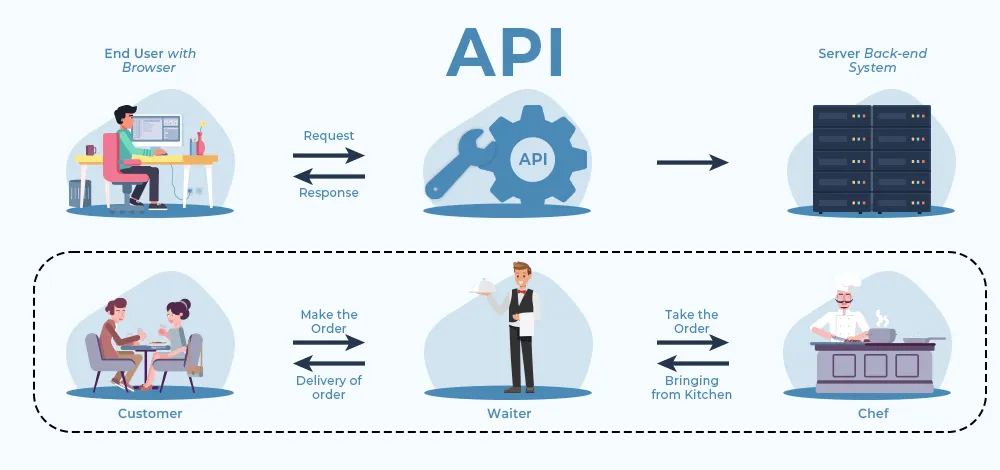
API architecture is developed with the aim of facilitating communication between two or more systems while at the same time ensuring that the process is reliable and secure. Most modern APIs use REST or GraphQL protocols. However, the underlying principles remain the same across the two. Therefore, the following is a description of the key concepts used in API architecture:
This structure makes APIs flexible, scalable, and essential for building connected ecosystems
Both MCP and APIs are designed to connect systems, but they approach integration from very different angles. MCP focuses on giving AI models a secure, standardized way to access external tools and data, while APIs are built to let applications talk to each other using defined requests and responses.
When deciding between the two, it’s important to see how they compare across aspects like architecture, scalability, security, and developer experience.
The table below highlights ten key differences:
MCP enables AI models to access tools and data securely, while APIs connect software applications reliably. Understanding their differences helps you choose the right integration for each scenario. Together, they can complement each other to build scalable, secure, and efficient systems.
Understanding the core difference between architectures of API vs MCP is crucial for building scalable, secure, and efficient systems. While both aim to facilitate communication between components, their design philosophies and technical implementations differ substantially.
MCP is designed for AI/LLM-driven workflows, enabling models to securely and efficiently interact with external tools, data sources, and services in a structured, standardized manner. Its layered, modular, and context-aware architecture makes it ideal for today’s autonomous AI agents, real-time enterprise applications, and multi-step reasoning tasks.
Key Components:
APIs are designed for general-purpose application integration, emphasizing predictable request-response patterns, scalability, and interoperability across diverse systems. They remain a cornerstone of enterprise software, cloud services, and web-scale applications, providing reliable connectivity for both traditional and modern AI-driven workflows.
Key Components:
In real-world applications, API and MCP serve different but complementary roles. MCP empowers AI models to interact with multiple tools and datasets dynamically, while APIs provide standardized, reliable connectivity between software systems. Understanding their practical applications helps organizations choose the right integration strategy.
-world applications, MCP and APIs serve different but complementary roles. MCP empowers AI models to interact with multiple tools and datasets dynamically, while APIs provide standardized, reliable connectivity between software systems. Understanding their practical applications helps organizations choose the right integration strategy.
MCP is ideal for dynamic, context-aware AI workflows, while APIs excel in structured, predictable software integration. By leveraging both together, organizations can build systems where AI models intelligently utilize API-driven data and services to deliver smarter, real-time solutions.
Security and governance are critical considerations for both MCP and APIs, but they address different challenges based on their design and use cases.
MCP (Model Context Protocol) focuses on secure AI model interactions. Its architecture includes host-managed access controls, session isolation, and transport-level security. MCP allows hosts to define which tools, datasets, or services a model can access, reducing the risk of unauthorized actions or data leaks. Schema-based tool descriptions help models understand input/output constraints, preventing accidental misuse or injection attacks. Logging and auditing of model-tool interactions enable governance and compliance tracking in enterprise environments. MCP’s security model is particularly suited for agentic AI applications where LLMs execute multi-step workflows across sensitive data sources.
API Security and Governance emphasizes application-level protection and standardization. APIs implement authentication and authorization mechanisms such as API keys, OAuth, and JWT tokens, alongside rate limiting and throttling to prevent misuse or overloading. Logging, monitoring, and versioning policies ensure compliance, traceability, and backward compatibility across systems. Enterprises can enforce governance policies at the API gateway level, controlling who can access which endpoints and under what conditions.
MCP prioritizes context-aware, AI-specific security, while APIs provide broad, standardized application security and governance. Using both together allows organizations to maintain robust security across AI-driven workflows and traditional software integrations.
Developer experience plays a crucial role in adoption and productivity for both MCP and APIs. MCP (Model Context Protocol) is designed to streamline AI model integration with external tools, offering SDKs, reference servers, and client libraries in multiple programming languages.
Developers can quickly set up hosts and servers, define tool schemas, and connect LLMs to services without extensive boilerplate code. Its structured JSON-RPC transport, schema validation, and dynamic discovery capabilities reduce errors and simplify debugging in complex AI workflows.
MCP:
As APIs, em contraste, oferecem um ecossistema maduro para integração de software em geral. Os desenvolvedores se beneficiam de especificações padronizadas como OpenAPI/Swagger, bibliotecas de cliente e gateways de API que simplificam a autenticação, o versionamento e o monitoramento. Contratos de endpoint claros e documentação abrangente tornam o onboarding e a manutenção previsíveis. Ferramentas para testar, simular e monitorar APIs aumentam a produtividade do desenvolvedor, ao mesmo tempo em que garantem que as integrações permaneçam estáveis e seguras.
APIs:
No geral, o MCP otimiza o desenvolvimento focado em IA, facilitando a orquestração de múltiplas ferramentas, enquanto as APIs fornecem suporte robusto e padronizado para desenvolvedores em aplicações de software em geral.
Desempenho e escalabilidade são essenciais tanto para MCP quanto para APIs, mas seus focos de design diferem devido aos seus casos de uso alvo
Comunicação de Baixa Latência
O MCP é otimizado para fluxos de trabalho orientados por IA, permitindo interações de baixa latência entre clientes LLM e múltiplos servidores de ferramentas usando JSON-RPC sobre HTTP ou stdio. Esquemas estruturados reduzem a sobrecarga de processamento, garantindo respostas rápidas para tarefas de IA de várias etapas. As APIs, por outro lado, dependem de REST, GraphQL ou WebSockets, fornecendo latência previsível para requisições de aplicações gerais. Embora as APIs sejam altamente confiáveis, elas podem não se adaptar dinamicamente a fluxos de trabalho de IA complexos e multi-ferramentas em tempo real.
Escalabilidade Horizontal e Concorrência
O MCP suporta escalabilidade horizontal através de múltiplas instâncias de servidor lidando com requisições de modelo concorrentes. O isolamento de sessão previne conflitos de fluxo de trabalho e garante desempenho consistente. As APIs também escalam horizontalmente em servidores distribuídos e infraestrutura de nuvem, lidando com grandes volumes de requisições de clientes com balanceamento de carga, cache e limitação de taxa. Embora a escalabilidade de APIs seja madura e bem compreendida, a escalabilidade do MCP foca especificamente em operações de IA paralelas com acesso dinâmico a ferramentas.
Eficiência e Otimização do Fluxo de Trabalho
O design baseado em esquema do MCP permite que modelos de IA raciocinem sobre as capacidades das ferramentas e executem tarefas de forma eficiente, minimizando computações redundantes e busca de dados. As APIs alcançam eficiência através de endpoints otimizados, estratégias de cache e ferramentas de monitoramento que mantêm o throughput e a confiabilidade. Ao contrário do MCP, a eficiência da API é centrada em padrões de requisição-resposta previsíveis e de propósito geral, em vez de raciocínio dinâmico de IA.
O MCP garante operações de baixa latência e otimizadas para IA, enquanto as APIs fornecem desempenho escalável e robusto para comunicação de software tradicional, destacando-se em seus respectivos domínios.
A escolha entre MCP e APIs depende do fluxo de trabalho, das necessidades da aplicação e do nível de integração de IA necessário:
MCP e APIs são tecnologias complementares que frequentemente trabalham juntas em ecossistemas modernos de IA e software. Enquanto as APIs fornecem endpoints estáveis e padronizados para acessar serviços, bancos de dados e aplicativos, o MCP permite que modelos e agentes de IA descubram, raciocinem e orquestrem dinamicamente essas ferramentas em tempo real.
Essencialmente, o MCP utiliza as APIs como interface subjacente, adicionando sensibilidade ao contexto, tomada de decisão adaptativa e orquestração de fluxo de trabalho em várias etapas sobre a funcionalidade previsível que as APIs oferecem.
Esta combinação permite que as organizações construam sistemas onde os modelos de IA podem interagir de forma inteligente com serviços baseados em API, garantindo flexibilidade e confiabilidade.
Em 2026, tais arquiteturas híbridas MCP-API são cada vez mais padrão na IA empresarial, suportando agentes autônomos, fluxos de trabalho seguros e tomada de decisão em tempo real sem comprometer a interoperabilidade ou o desempenho.
À medida que a IA continua a evoluir, MCP e APIs estão moldando a forma como os sistemas inteligentes interagem com ferramentas e dados. Compreender os seus futuros papéis ajuda as organizações a construir fluxos de trabalho impulsionados por IA adaptativos, seguros e eficientes.
MCP como uma Interface de IA Padronizada: O MCP está a evoluir como uma interface universal, agnóstica ao modelo, por vezes referida como o “USB-C para IA.” Permite que os agentes de IA se conectem perfeitamente a uma vasta gama de aplicativos e serviços sem a necessidade de integrações personalizadas e codificadas para cada ferramenta.
Descoberta e Uso Dinâmico de Ferramentas: Ao contrário das APIs tradicionais, que exigem endpoints pré-definidos e codificação manual para cada interação, o MCP permite que os modelos de IA descubram e interajam com novas ferramentas dinamicamente. Isso torna os fluxos de trabalho de IA mais adaptáveis e capazes de responder às necessidades de negócios em constante mudança em tempo real.
Do Acesso a Dados às Ações Controladas: Enquanto as APIs fornecem principalmente dados brutos e estruturados para sistemas confiáveis, o MCP capacita os agentes de IA a executar tarefas com segurança, interpretar respostas complexas e lidar com feedback de erro rico e estruturado. Isso permite operações de IA mais seguras e autônomas em ambientes corporativos.
Arquitetura Híbrida – Envolvendo APIs: O MCP não substitui as APIs; em vez disso, ele as complementa atuando como uma camada que torna os dados e serviços baseados em API utilizáveis para IA. As APIs continuam a gerenciar endpoints confiáveis e padronizados, enquanto o MCP adiciona inteligência, reconhecimento de contexto e recursos de orquestração.
Expansão Rápida do Ecossistema: O ecossistema MCP está crescendo rapidamente, com centenas de servidores e serviços construídos pela comunidade que dão aos modelos de IA a capacidade de interagir com aplicações e ferramentas do mundo real. Isso acelera a adoção da IA agêntica, permitindo fluxos de trabalho mais inteligentes e autônomos que combinam raciocínio em tempo real com acesso seguro e confiável a dados.
MCP e APIs desempenham papéis distintos, mas complementares, nos ecossistemas modernos de software e IA. O MCP se destaca em fluxos de trabalho orientados por IA e cientes do contexto, permitindo que os LLMs acessem dinamicamente várias ferramentas e conjuntos de dados, mantendo interações seguras e estruturadas.
As APIs fornecem comunicação robusta e padronizada entre aplicações, microsserviços e plataformas externas, garantindo desempenho e escalabilidade previsíveis. Compreender as diferenças em arquitetura, casos de uso, segurança, experiência do desenvolvedor e desempenho permite que as organizações escolham a estratégia de integração correta.
Ao combinar as capacidades do MCP focadas em IA com a conectividade de propósito geral das APIs, as equipes podem construir sistemas inteligentes, eficientes e seguros que atendam tanto às necessidades de IA quanto às de software tradicional.

Use APIs tradicionais para conexões fixas e codificadas por desenvolvedores entre sistemas de software. Escolha o MCP ao capacitar agentes de IA para interagir com várias ferramentas dinamicamente. O MCP é ideal para ambientes de produção onde os modelos precisam descobrir recursos e buscar contexto sem configuração manual de endpoint para cada nova integração.
Não, o MCP funciona como um wrapper padronizado em vez de um substituto para as APIs tradicionais. Ele abstrai os endpoints de API existentes em um esquema legível por máquina que os LLMs podem entender. Ao usar MCP e API juntos, as empresas aproveitam sua infraestrutura existente, tornando-a acessível a agentes de IA autônomos por meio de uma interface universal.
No contexto de MCP vs API, o MCP é melhor para fluxos de trabalho agênticos que exigem orquestração de múltiplas ferramentas. Ele se destaca quando os modelos de IA precisam escolher entre várias fontes de dados dinamicamente. Usar um gateway centralizado como o TrueFoundry para gerenciar essas conexões MCP fornece a governança, segurança e auditoria que as integrações básicas de API não possuem.
Não, MCP e APIs não são a mesma coisa. APIs fornecem endpoints padronizados e fixos para integração de software, enquanto o MCP é projetado para fluxos de trabalho de IA/LLM, permitindo a descoberta dinâmica de ferramentas, orquestração sensível ao contexto e raciocínio estruturado. O MCP frequentemente utiliza APIs como interfaces subjacentes, mas adiciona inteligência, adaptabilidade e execução segura em várias etapas.
O MCP não é inerentemente mais rápido que as APIs na transferência de dados brutos. Em vez disso, ele é otimizado para fluxos de trabalho de IA, reduzindo a sobrecarga para raciocínio em várias etapas e orquestração de ferramentas. APIs fornecem latência previsível para solicitações padrão, enquanto o MCP prioriza interações dinâmicas e tomada de decisões sensível ao contexto, melhorando a eficiência em tarefas complexas impulsionadas por IA.
Para converter uma API em um servidor MCP, defina esquemas legíveis por máquina para os endpoints, entradas e saídas da API. Implemente uma camada de servidor que exponha essas ferramentas através dos protocolos de transporte do MCP (JSON-RPC/HTTP). Adicione controles de acesso, isolamento de sessão e metadados para raciocínio de IA, permitindo que os LLMs descubram e usem a API de forma dinâmica e segura.
TrueFoundry AI Gateway delivers ~3–4 ms latency, handles 350+ RPS on 1 vCPU, scales horizontally with ease, and is production-ready, while LiteLLM suffers from high latency, struggles beyond moderate RPS, lacks built-in scaling, and is best for light or prototype workloads.





As últimas notícias, artigos e recursos enviados para sua caixa de entrada
.png)
.png)
.png)
.png)
.png)
.png)
.png)
.png)
.png)
.png)
.png)


