September 16, 2026
|
5 min de lecture


Accédez instantanément à un environnement TrueFoundry en direct. Déployez des modèles, acheminez le trafic LLM et explorez la plateforme complète : votre sandbox est prête en quelques secondes, aucune carte de crédit n'est requise.



Published: June 17, 2026
.webp)
Une méthode incroyablement rapide pour créer, suivre et déployer vos modèles !
Most enterprises have an AI policy. Few teams enforce it across every AI interaction. Intent is rarely the missing piece. A policy document, acceptable usage rules, and governance committees usually exist. Most enterprises deploying artificial intelligence at scale already have these foundations.
The deeper problem is mechanical. A PDF cannot intercept a model request. It cannot weigh context or block an action before execution. Once a violation is logged, the request has already run. The data has crossed the boundary. The cost has already appeared on the cloud bill.
AI policy enforcement closes that gap. It turns written rules into runtime control. These policies apply to every model call, agent action, and tool invocation when they happen. This guide explains what is AI policy enforcement, where traditional AI governance breaks down, what enforcement must cover, and how TrueFoundry delivers it as infrastructure.
AI policy enforcement is the practice of applying organizational rules, access controls, and compliance requirements to AI systems in real time. It works at the point of execution instead of relying on documentation or post-event review.
The AI policy enforcement meaning spans three distinct domains:
Access policy enforcement controls which users, teams, and agents can interact with models, tools, and downstream systems. Content policy enforcement blocks prompts and outputs that break organizational rules. These include requests involving sensitive data, unsafe instructions, prohibited topics, or weak data handling.
Operational policy enforcement caps budgets, applies rate limits, and writes audit records as workloads run. This keeps cost and compliance aligned without constant manual oversight. What sets AI policy enforcement apart from traditional governance is the behavior of AI systems themselves. AI outputs are probabilistic and context-dependent. A policy that holds for one prompt may fail when the request is reworded.
Enforcement has to live at the infrastructure layer. It cannot sit only inside the prompt template or model weights. The same controls must apply regardless of the request path or provider. That structural difference explains why written policy alone falls short. The same prompt that triggers refusal today may pass tomorrow. A model swap can also invalidate assumptions from the original policy review.
Enforcement at the infrastructure layer holds steady across providers, models, agents, and applications.
A written policy is necessary. It just isn't sufficient on its own. The reasons cluster into four interlocking failures, each one compounding the others.
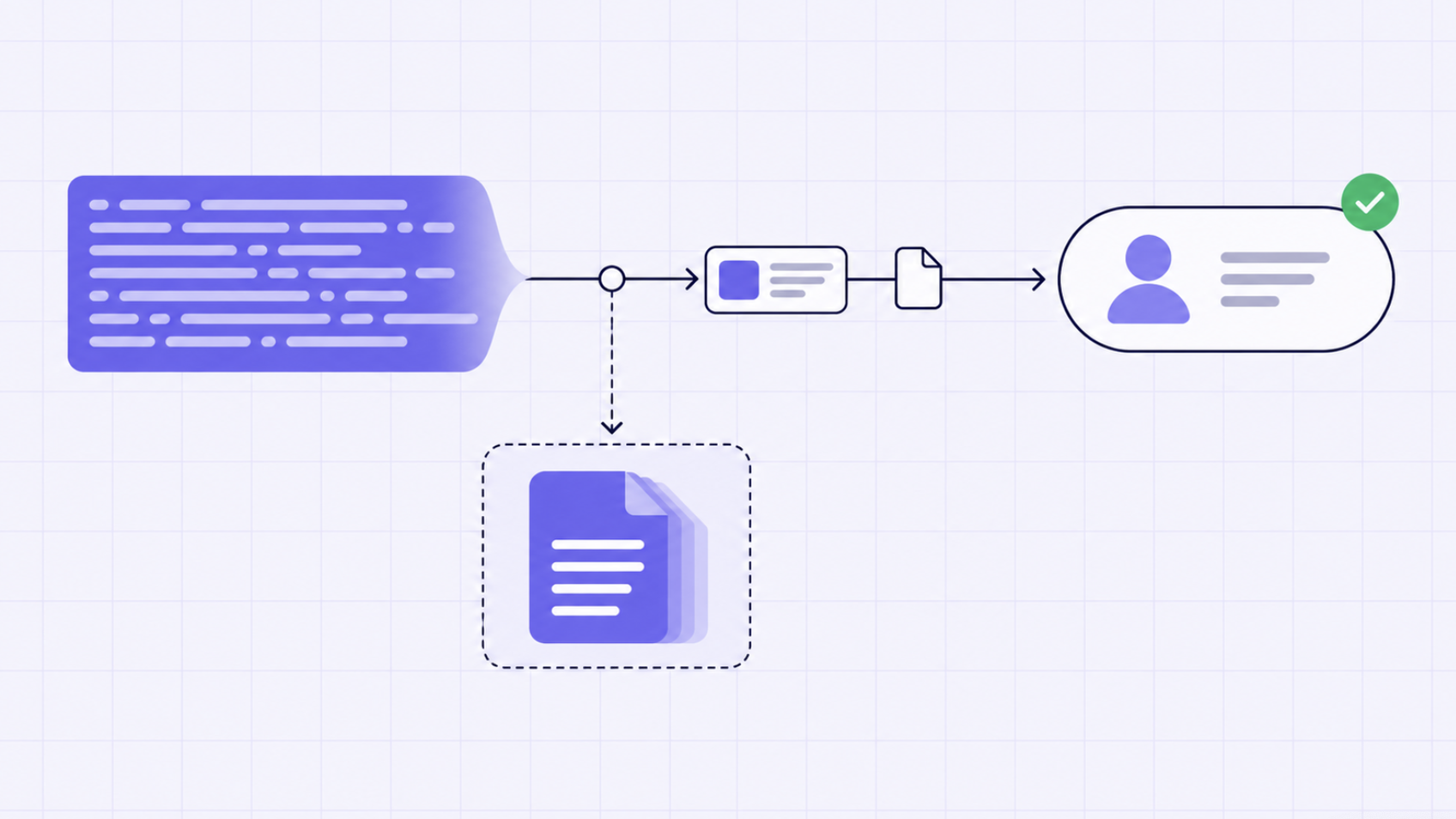
A written rule prohibiting the transmission of customer PII to external models is unenforceable when no technical controls sit between the application and the model endpoint.
After-event enforcement through log review, incident response, and post-mortems catches violations after exposure. Audit trails record history. They support review, while prevention needs inline controls.
This is the first step toward stronger AI control. Teams must move policy from documents into runtime infrastructure.
Safety filters at the model level address what the model says. They do not govern what an agent does with tool calls, retrieval lookups, or external API invocations. The research on this gap is unambiguous: the Multitask Mayhem study found that fine-tuned LLMs answered 73-92% of harmful prompts across translation and classification tasks.
Additionally, the Virus attack bypassed guardrail moderation with leakage ratios as high as 100 percent. Model safety remains a necessary layer, but it covers only part of the surface area an enterprise actually has to defend.
Teams using personal accounts or unapproved tools operate outside any framework that depends on user compliance. They never touch the governed gateway, so the gateway never sees them.
Automated discovery of AI use across the organization is a prerequisite for enforcement. It cannot be treated as a downstream audit activity. Policy without visibility into where AI runs has limited reach. This is where shadow AI becomes a governance and risk management problem.
The regulatory environment is moving in one direction. The EU AI Act takes effect for high-risk systems on August 2, 2026, and requires continuous monitoring with structured logs of inputs, outputs, and parameters, which must be retained for at least 6 months.
US state laws, including Colorado SB24-205, impose comparable obligations on developers and deployers of high-risk AI systems. Organizations that cannot produce audit trails showing what their AI accessed, when, and under which policy conditions face enforcement liability regardless of what the written governance documents say.
Each failure points to the same conclusion. Enforcement has to happen in infrastructure, not on paper.
.webp)
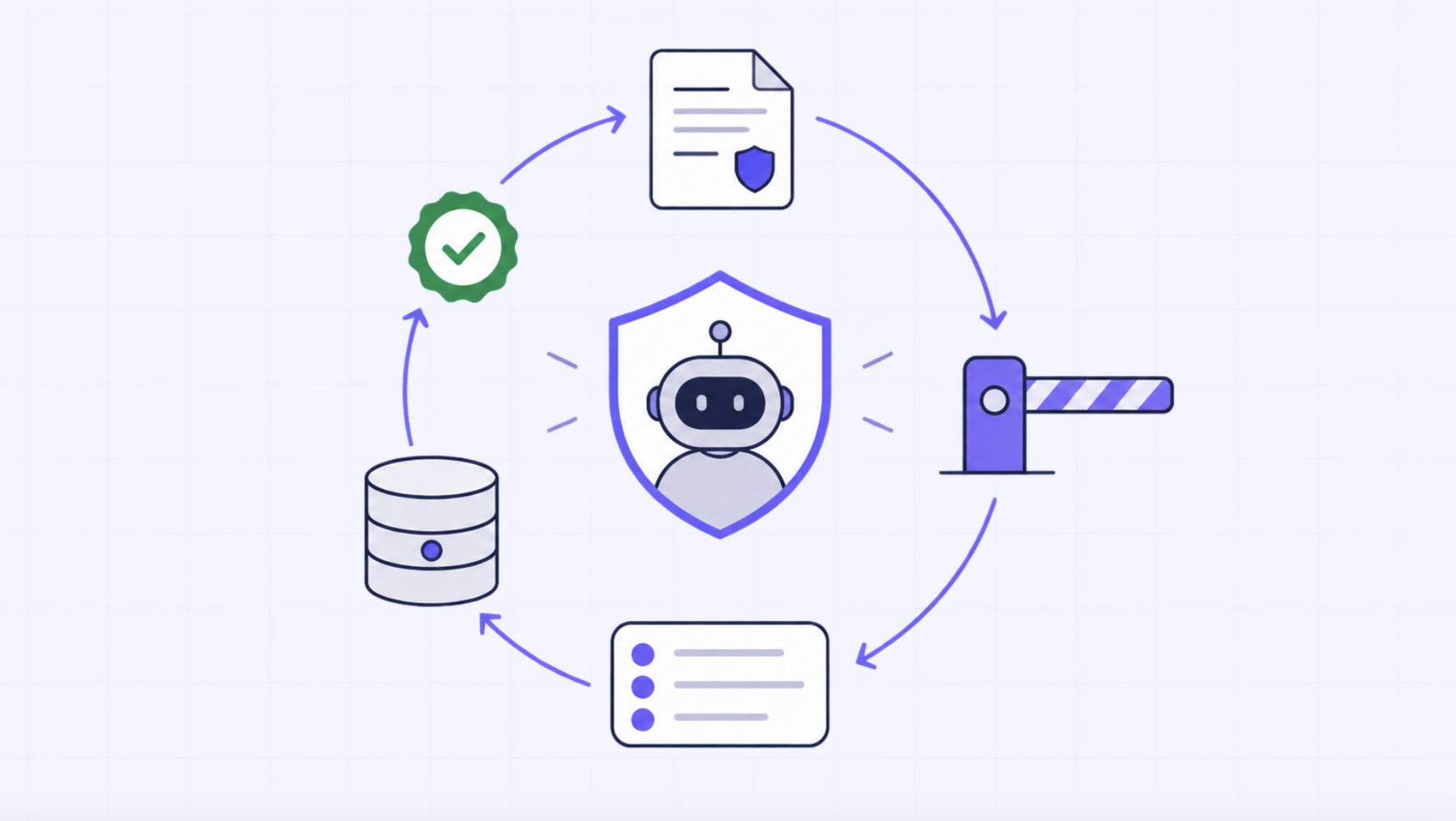
Effective AI policy enforcement spans four layers of the AI stack. Each layer addresses a distinct failure mode. Skipping any layer creates a gap the others cannot close.
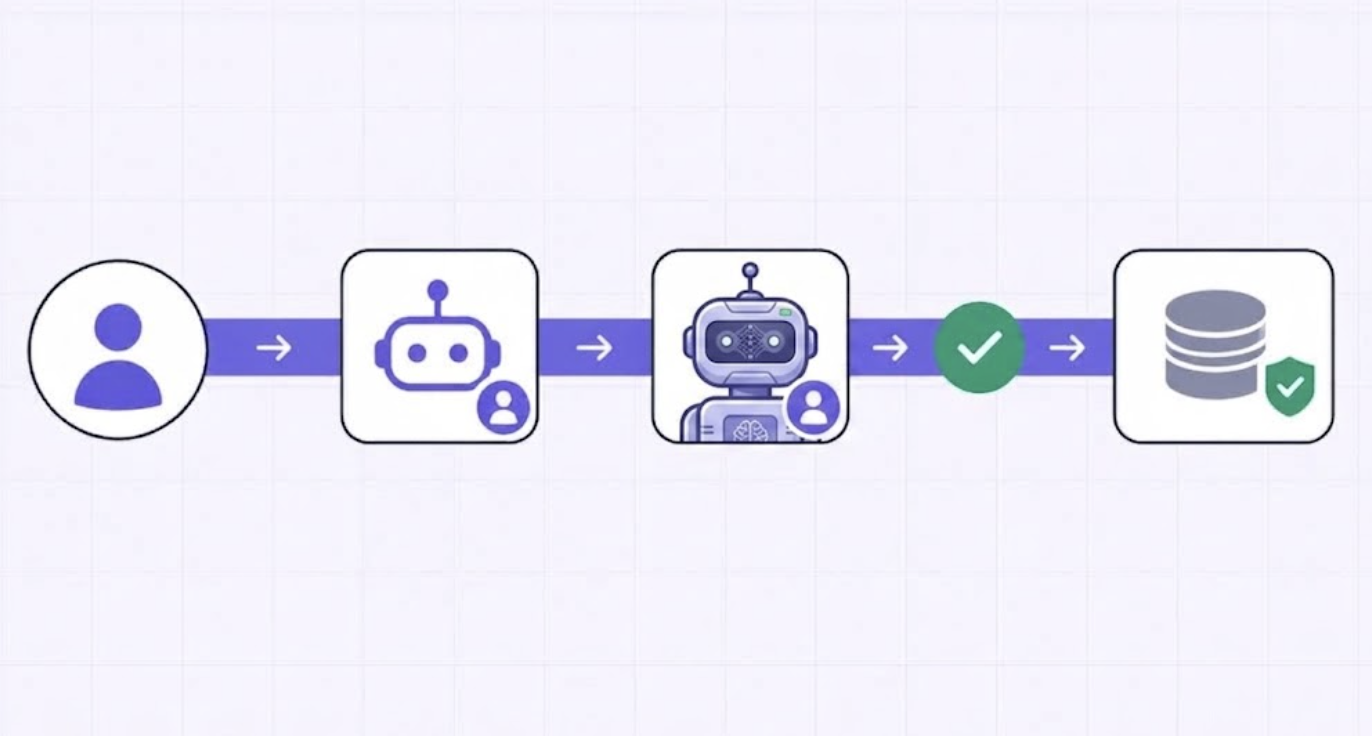
Every model call, agent invocation, and tool connection has to tie back to a verified identity with a defined permission scope. Access policies must apply at the gateway layer before requests reach any model or tool, making unauthorized access structurally impossible rather than merely prohibited on paper.
RBAC alone won't cut it for agentic systems — identity claims need to flow through to MCP tool calls so each agent acts within the requesting user's scope, never as an over-privileged service account holding the union of every permission anyone on the team needs. The principle is least privilege for agents, applied at the same layer that already authenticates them.
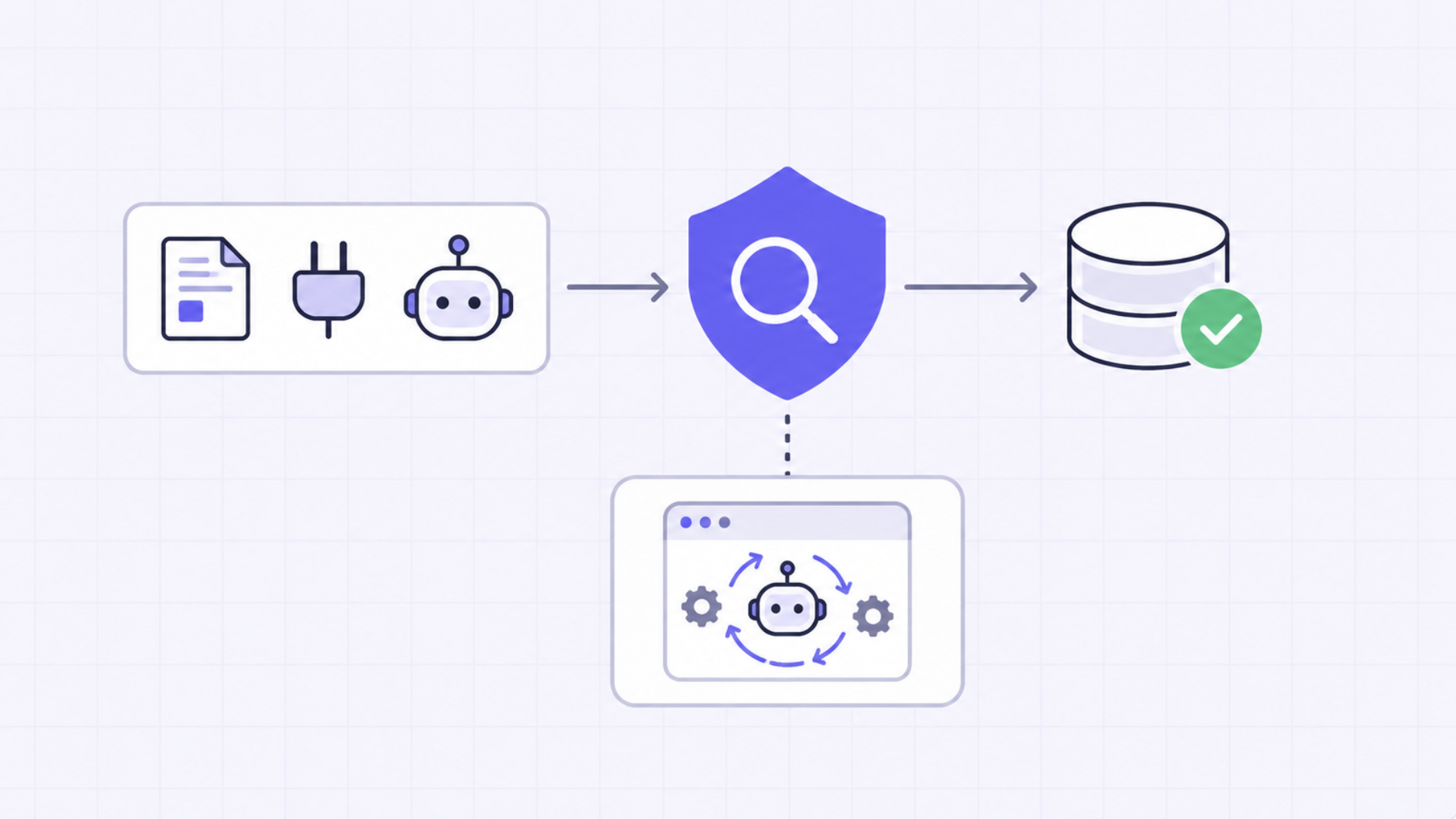
Input guardrails must intercept confidential information, prompt injections, and prohibited content before they reach the model. Output guardrails must evaluate model responses before they return to users. Both checks need to run inline with the request. Background analysis on stored logs is too late for prevention.
This layer is central to data protection, regulatory compliance, and safe use of AI systems. It also reduces accidental exposure in daily work across teams.
Token budgets, rate limits, and per-team spending caps must be enforced before execution, not after the cloud invoice arrives at the end of the billing cycle. Agent actions must scope to the minimum permissions required for the task at hand, preventing the over-privileged service account problem that creates an outsized blast radius in agentic systems.
Per-tool circuit breakers and result-size bounds protect against runaway behavior in autonomous workflows. A single misfired loop can otherwise burn through a quarterly budget in an afternoon, and an unbounded retrieval call can return five megabytes of database rows the agent neither needed nor was meant to see. Operational controls catch these failure modes at request time. They reduce cost surprises and support safer automation.
Every policy evaluation, access grant, content filter decision, and budget enforcement event must log with structured metadata for compliance reporting. Audit records must stay inside the organization's own environment, not on a third-party SaaS platform, so the data residency and sovereignty requirements actually hold.
Under the EU AI Act, runtime event logs must capture inputs, outputs, parameters, and operator identity, and persist for at least six months from the event timestamp.
With those four layers as the target, the obvious next question is why most existing tooling fails to cover all four at once.
.webp)
Most enterprises already run some form of policy tooling. Very few reach genuine runtime enforcement. The gap usually comes from picking the wrong layer for the job, then bolting more tools on top when the first layer doesn't hold.
The common thread is clear. Each tool covers part of the surface area. None covers every place where AI risk concentrates in production. Stitching three or four systems together creates operational drag. It produces overlapping logs, inconsistent edge cases, and longer security reviews.
AI policy enforcement becomes easier to understand when mapped to real enterprise use cases. The table below shows where policy rules must become runtime controls.
These examples show why written policies need runtime enforcement. Teams need controls that work during execution, not after a review cycle.
Law firms need to protect privileged documents. Security teams need request-level visibility. Product and platform teams need governed workflows that support faster AI adoption.
A strong enforcement layer also helps address ethical issues, AI principles, responsible practices, and corporate social responsibility. These goals require technical enforcement, not policy language alone.
We built the TrueFoundry AI Gateway as enforcement infrastructure, not as a dashboard for after-the-fact review. The gateway applies controls to every LLM call, agent action, and MCP tool invocation from a single control plane running in the customer's own cloud environment — not in our SaaS, not behind a third-party proxy.
If your team is mapping a path from written AI policy to enforced AI policy, we can walk through how TrueFoundry handles identity, guardrails, budgets, and audit through a single control plane that runs entirely in your own cloud.
Book a demo, and we will run the gateway against your own models and agents — not against a sandbox.
.webp)
TrueFoundry AI Gateway offre une latence d'environ 3 à 4 ms, gère plus de 350 RPS sur 1 processeur virtuel, évolue horizontalement facilement et est prête pour la production, tandis que LiteLM souffre d'une latence élevée, peine à dépasser un RPS modéré, ne dispose pas d'une mise à l'échelle intégrée et convient parfaitement aux charges de travail légères ou aux prototypes.





Les dernières nouvelles, articles et ressources envoyés dans votre boîte de réception

.webp)
.webp)