


.png)
October 15, 2026
|
5 minutos de lectura


Obtenga acceso instantáneo a un entorno TrueFoundry en vivo. Implemente modelos, dirija el tráfico de LLM y explore la plataforma completa: su sandbox estará listo en segundos, sin necesidad de tarjeta de crédito.


Published: October 10, 2026
¡Una forma increíblemente rápida de crear, rastrear e implementar sus modelos!
El mapa de Andrew Ng es un marco de habilidades, no una arquitectura de producto. Este artículo plantea una cuestión empresarial más específica: ¿qué mecanismos deben comprender y dominar los ingenieros, y qué primitivas repetibles de tiempo de ejecución, acceso, gobernanza, reutilización y evidencia puede estandarizar una plataforma sin reemplazar ese criterio?
Las cuatro habilidades principales de Andrew Ng son engañosamente simples:
La señal útil es lo que la lista se niega a simplificar. La ingeniería de IA no se reduce a la creación de prompts; los agentes de codificación no eliminan los fundamentos del software; el despliegue es parte del oficio; y el criterio de producto va de la mano de la implementación. Por tanto, el mapa trata la ingeniería de IA como una combinación de trabajo de sistemas, ingeniería de software, desarrollo asistido por agentes y criterio.
La forma incorrecta de utilizar el mapa de Ng sería dibujar cuatro casillas y afirmar que una plataforma "resuelve" cada una de ellas. Las habilidades son capacidades humanas. El criterio de producto, el criterio de arquitectura, la capacidad de depuración, el diseño de evaluación y la comprensión del cliente no desaparecen porque una empresa compre infraestructura.
La traducción empresarial más útil es la siguiente: estandarizar los mecanismos repetibles para que los ingenieros puedan dedicar más de su escaso criterio a las partes que realmente lo requieren.
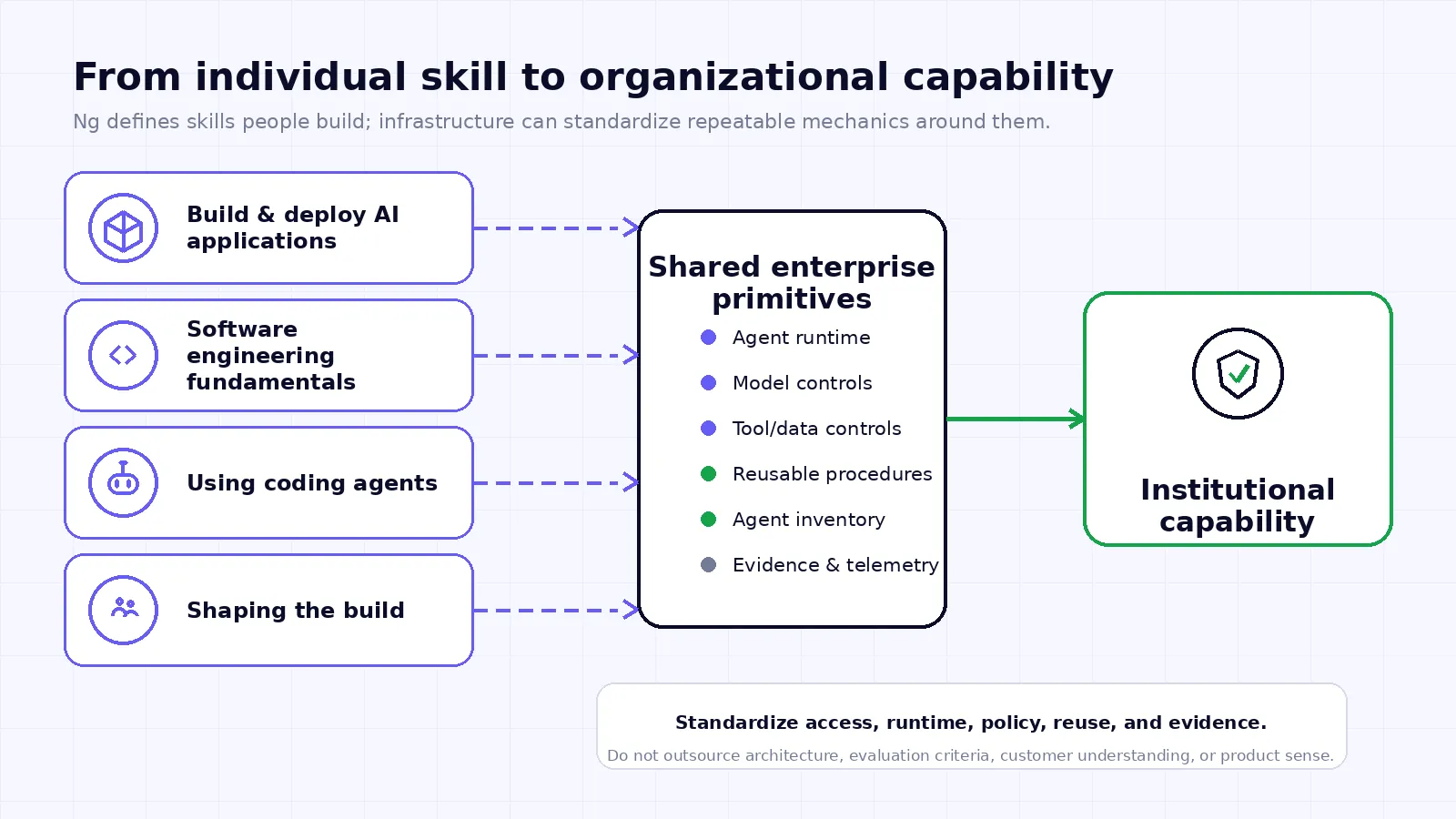
El seguimiento del 21 de agosto de Ng desglosa la creación y el despliegue de aplicaciones de IA en seis capacidades: fundamentos de LLM, fundamentación de modelos con datos, creación de sistemas agentes, desarrollo basado en evaluación, operación en producción y fundamentos de aprendizaje automático. El punto importante es que se trata de habilidades de ingeniería, no de categorías de proveedores. Una plataforma puede operacionalizar partes del trabajo; no puede sustituir el conocimiento de por qué una arquitectura, un modelo, un evaluador o una política de fallos son adecuados.
Los ingenieros aún necesitan entender el comportamiento de los modelos: ventanas de contexto, almacenamiento en caché, fechas de corte de conocimiento, muestreo, esfuerzo de razonamiento, llamadas a herramientas, latencia, coste y el comportamiento específico de cada proveedor. TrueFoundry AI Gateway puede estandarizar cómo se accede y se gobierna el tráfico de modelos enrutado (APIs unificadas, enrutamiento y alternativas, RBAC, límites de tasa, presupuestos, salvaguardas y observabilidad compatible con OpenTelemetry), pero no elimina la necesidad de comprender las contrapartidas de dichos modelos.
Ng trata la fundamentación como un menú arquitectónico en lugar de como un sinónimo de búsqueda vectorial: los ingenieros pueden elegir entre contexto de prompt, recuperación, llamadas a herramientas, índices vectoriales, grafos de conocimiento, capas semánticas sobre datos estructurados o combinaciones de estos. No existe una correspondencia universal de «fundamentación → MCP Gateway». Cuando una aplicación expone la recuperación o el acceso a datos a través de herramientas MCP, MCP Gateway puede gobernar esa ruta de acceso mediante descubrimiento, autenticación, permisos a nivel de herramienta, credenciales de flujo descendente, salvaguardas, aprobaciones, observabilidad y auditoría. Si la fundamentación ocurre directamente dentro de la aplicación o a través de un almacén vectorial, grafo de conocimiento o capa semántica que no atraviesa MCP, esa ruta permanece fuera de MCP Gateway.
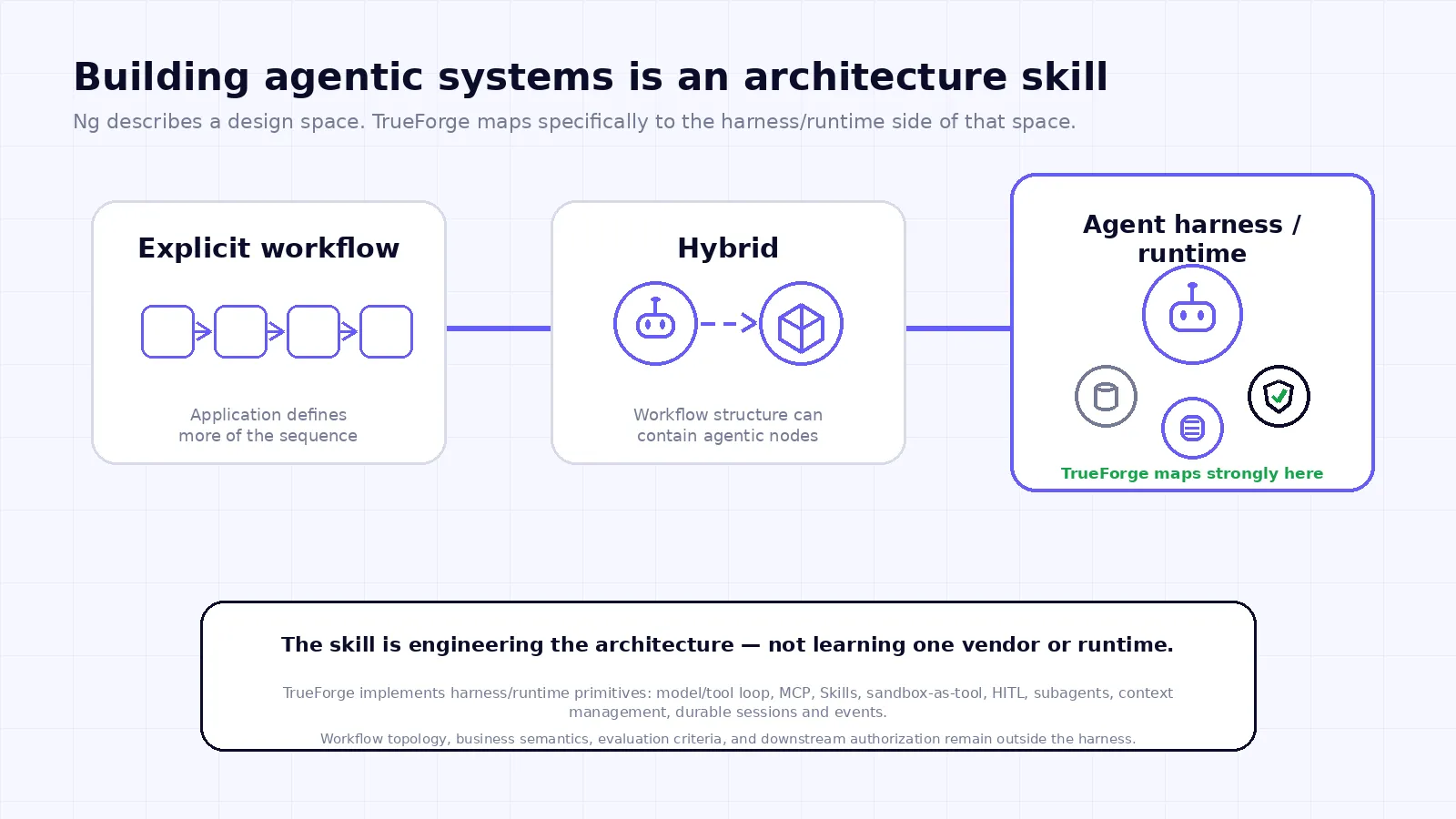
La expansión de Ng del 21 de agosto trata los sistemas agentes como un espectro arquitectónico en lugar de como una elección de marco de trabajo única. En un extremo, una aplicación puede ejecutar un flujo de trabajo de llamadas a modelos comparativamente explícito. En el extremo más abierto, un arnés de agentes permite que el modelo elija repetidamente su siguiente paso mientras el entorno de ejecución circundante gestiona las herramientas, el contexto, la ejecución, los límites de seguridad y la continuación. Entre medias se encuentran sistemas híbridos que combinan una estructura de flujo de trabajo explícita con nodos agentes.
Esto significa que la habilidad subyacente es criterio arquitectónico: decidir qué debe ser determinista, qué debe delegarse a un modelo, qué puede ejecutarse en paralelo, qué herramientas puede llamar el sistema, cómo deben funcionar la memoria y el contexto de sesiones largas, cuándo ayudan múltiples agentes y qué alternativas, salvaguardas y gobernanza son necesarias.
TrueForge se asigna fuertemente a la rama de arnés/entorno de ejecución de ese espacio de diseño. Su documentación define un arnés de agentes de código abierto que ejecuta el bucle de modelo/herramienta, se conecta a servidores MCP, gestiona el contexto de tareas largas, trata la ejecución en sandbox aislado como una herramienta, hace pausas para la aprobación humana, admite subagentes y persiste las sesiones tras reconexiones y reinicios.
La correspondencia se vuelve concreta en el AgentSpec. Una definición de agente reutilizable puede especificar el modelo y los parámetros, las instrucciones, los servidores MCP y los filtros de herramientas, la política de aprobación, las habilidades, el comportamiento del sandbox, la gestión del contexto, el formato de respuesta y el límite de iteración. Esas son decisiones de tiempo de ejecución que un ingeniero puede necesitar al implementar una arquitectura de arnés de agentes.
Ng considera que la evaluación disciplinada y el análisis de errores son habilidades fundamentales de la ingeniería de IA. La implicación para la plataforma no es "comprar un evaluador", sino que las evaluaciones requieren evidencia fiable sobre lo que realmente sucedió: prompts y respuestas retenidos, elecciones de modelos y herramientas, pasos intermedios, fallos, latencia, costes y el contexto de la tarea.
TrueForge hace explícita su estructura de tiempo de ejecución a través de un Agente → Sesión → Turno → Evento → Delta modelo. La documentación distingue estos objetos con precisión:
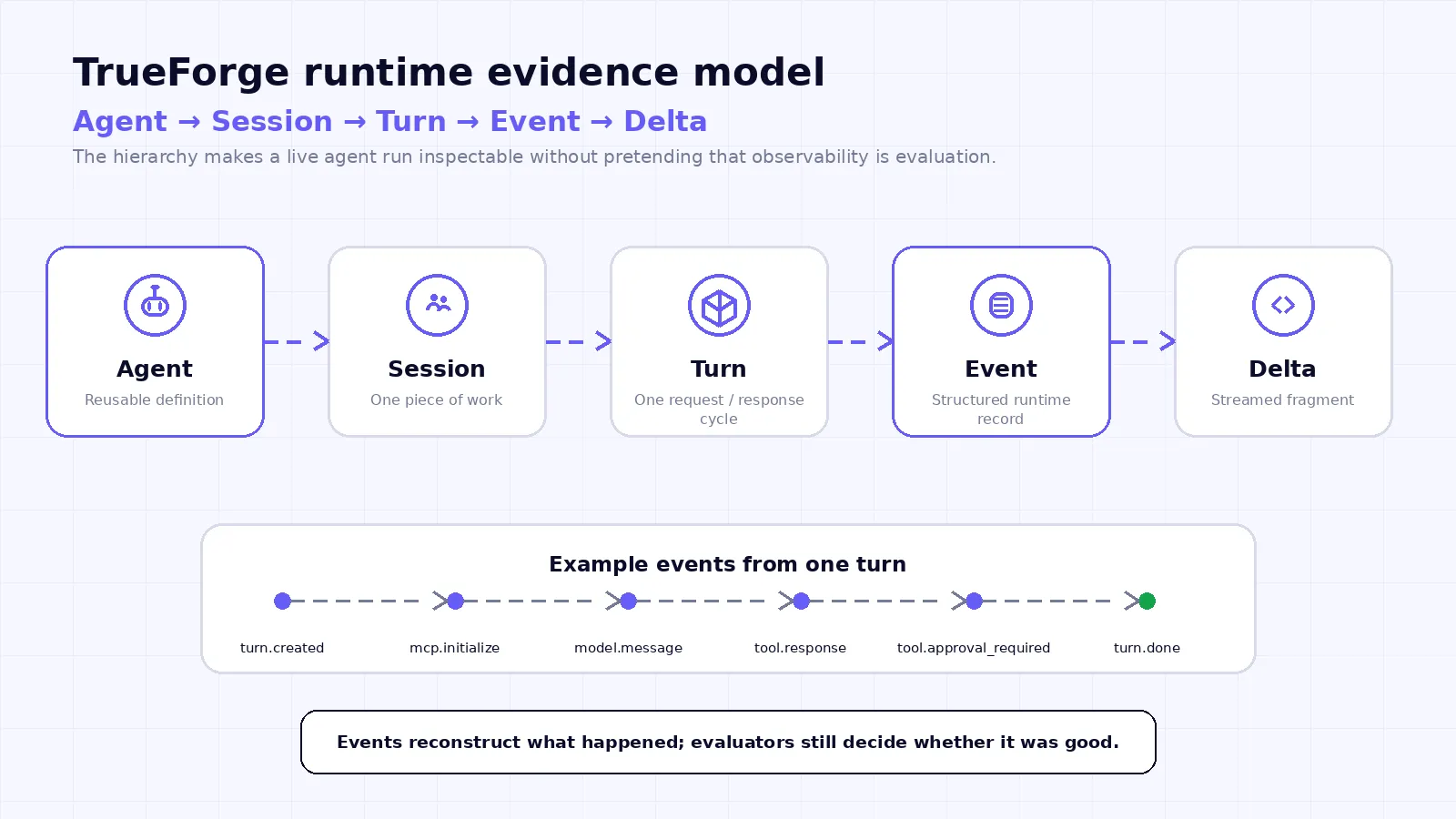
El modelo de Evento es técnicamente útil porque la documentación también especifica un ID de evento, un thread_id que distingue al agente raíz de los hilos de los subagentes, además de información de secuencia utilizada al reanudar tras una desconexión. Esto proporciona evidencia de ejecución estructurada en lugar de una respuesta final opaca.
Para el tráfico enrutado a través de TrueFoundry Gateways, los seguimientos y métricas de los límites de modelos y MCP añaden otra capa de evidencia. Pero el límite sigue siendo importante: los eventos y seguimientos no determinan si una respuesta fue correcta, si la acción de una herramienta fue apropiada o si un resultado de negocio fue exitoso. La aplicación sigue necesitando conjuntos de datos específicos para la tarea, aserciones deterministas, jueces LLM cuando sea apropiado, revisión humana u otra lógica de evaluación.
La rama de producción de Ng incluye observabilidad, fallos, seguridad, pruebas de regresión y compensaciones entre coste y latencia. Aquí, la correspondencia con TrueFoundry es más sólida cuando se formula como controles operativos compartidos, no como un reemplazo de la ingeniería de producción.
puerta de enlace de IA (AI Gateway) documenta el acceso unificado a modelos, control de acceso detallado, limitación de tasa, equilibrio de carga de modelos virtuales con reintentos/alternativas, limitación de presupuesto, barreras de seguridad y métricas/registros compatibles con OpenTelemetry para el tráfico de modelos enrutado a través de él. MCP Gateway añade visibilidad centralizada y políticas en torno al tráfico de herramientas MCP, incluyendo barreras de seguridad pre/post-herramienta, flujos de trabajo de aprobación y registros de auditoría. Registro de Agentes proporciona un catálogo además de métricas y seguimientos centralizados para agentes registrados, incluidos los agentes remotos.
Esas capacidades pueden reducir la duplicación de infraestructura operativa entre equipos. No definen los SLO de la aplicación, la política de incidentes, la semántica de reversión, la estrategia de idempotencia, los requisitos de retención de datos ni el manejo de fallos específico del negocio.
Aquí no hay, de forma intencionada, una sustitución de producto. Comprender el sesgo/varianza, la calidad de los datos, la evaluación, las compensaciones de los modelos y la dinámica de aprendizaje sigue siendo una habilidad humana. La infraestructura puede respaldar el flujo de trabajo, pero no puede reemplazar los modelos mentales necesarios para razonar sobre resultados inciertos.
El seguimiento de Ng del 28 de agosto hace explícita la relación con los agentes de codificación: los fundamentos del software siguen siendo esenciales porque los ingenieros aún deben reconocer y gestionar las compensaciones que el agente no puede deducir solo a partir del contexto empresarial. Él organiza esta rama en torno a desarrollar aplicaciones full-stack, gestionar datos, diseñar arquitecturas de sistemas, hacer que los sistemas sean seguros y fiables, y escalar y operar en producción.
El mapeo de TrueFoundry aquí es indirectamente intencionado. Una plataforma puede estandarizar algunos elementos básicos de implementación (autenticación y autorización en límites compartidos, políticas de acceso a modelos/herramientas, controles de presupuesto/tasas, aislamiento en sandbox, estado de tiempo de ejecución persistente del agente y telemetría), pero no puede proporcionar al ingeniero la comprensión de los modelos de datos, la coherencia, las pruebas, los dominios de fallo, el diseño de seguridad o la arquitectura del sistema.
El principio es sencillo: los agentes de codificación pueden acelerar la implementación, pero la arquitectura sigue determinando la forma del fallo.
Ng convierte el uso de agentes de codificación en una habilidad de alto nivel independiente. En el Mapa de Habilidades original, esto se refiere a la propia capacidad operativa del desarrollador: tener un modelo mental útil de cómo funcionan y fallan los agentes de codificación, gestionar su contexto, decidir cuánta autonomía otorgar, proporcionar verificadores o evaluaciones, saber cuándo intervenir y actualizar continuamente el flujo de trabajo a medida que cambian las herramientas.
Eso no es algo que TrueFoundry pueda reemplazar. El mapeo de producto natural es solo para partes del entorno que rodea a los agentes de codificación. Para clientes de codificación compatibles que utilizan MCP, MCP Gateway puede centralizar el descubrimiento de servidores, la autenticación entrante, el control de acceso a nivel de herramienta, las credenciales descendentes, las barreras de seguridad, las aprobaciones y la auditoría. Eso puede hacer que la superficie de la herramienta sea más coherente y gobernable entre usuarios y clientes.
Registro de Habilidades aborda un problema diferente: el conocimiento procedimental reutilizable. TrueFoundry documenta las Habilidades como artefactos versionados que pueden publicarse una vez y reutilizarse en TrueFoundry Agents, Claude Code y Cursor, heredando el RBAC del repositorio, el historial de versiones y los registros de auditoría.
La cuarta rama es el lugar menos apropiado para la promoción de productos. El enfoque de Ng se mueve aguas arriba, desde la implementación hacia el sentido del producto, el contexto empresarial, los objetivos del cliente, la propiedad, la selección de problemas que merecen la pena y el criterio sobre cuándo lanzar un MVP frente a cuándo el riesgo o la calidad exigen una construcción más cuidadosa.
Ninguna puerta de enlace, arnés, registro o panel de control proporciona ese criterio. La infraestructura puede mejorar el bucle de retroalimentación: el tráfico de puerta de enlace enrutado puede exponer el uso, la latencia, los fallos y el gasto; el Registro de Agentes puede centralizar métricas y seguimientos para los agentes registrados; los controles presupuestarios pueden limitar los experimentos. Esos son elementos para el juicio, no sustitutos para decidir qué se debe construir o qué resultado es importante.
Esta es la interpretación empresarial útil del mapa: estandarizar los mecanismos indiferenciados para que los ingenieros puedan dedicar más tiempo a la arquitectura, la evaluación, la comprensión del cliente y las decisiones de producto que no pueden centralizarse.
Si el mapa de Ng describe al ingeniero moderno, una plataforma de IA empresarial debería responder a una pregunta paralela: ¿qué debería obtener cada ingeniero por defecto?
La consecuencia empresarial más importante del mapa de competencias de Ng puede ser que la ingeniería de IA se está volviendo demasiado amplia como para operativizarla mediante el heroísmo individual.
Un ingeniero excelente puede entender modelos, RAG, agentes, evaluaciones, sistemas distribuidos, seguridad, agentes de codificación, compensaciones de producto y operaciones. Pero si cada ingeniero también debe reconstruir adaptadores de modelos, gestión de credenciales, descubrimiento de MCP, autorización de herramientas, estado de aprobación, contabilidad de costes y trazabilidad dentro de cada proyecto, la organización está desperdiciando esa experiencia en infraestructura indiferenciada.
Una división del trabajo más sólida es:
Nota editorial: Andrew Ng y DeepLearning.AI no están afiliados a este artículo y no respaldan a TrueFoundry. Su mapa de competencias de ingeniería de IA se utiliza como marco externo; todos los mapeos de infraestructura son análisis editorial de TrueFoundry. Las capacidades del producto se verificaron con la documentación pública de TrueFoundry y TrueForge disponible el 31 de agosto de 2026.
TrueFoundry AI Gateway ofrece una latencia de entre 3 y 4 ms, gestiona más de 350 RPS en una vCPU, se escala horizontalmente con facilidad y está listo para la producción, mientras que LitellM presenta una latencia alta, tiene dificultades para superar un RPS moderado, carece de escalado integrado y es ideal para cargas de trabajo ligeras o de prototipos.





Las últimas noticias, artículos y recursos enviados a tu bandeja de entrada
.png)
.webp)
.png)
.png)
.png)

.png)
.png)
.png)
.png)


